
If you have ever walked into the utility room and found a damp spot you swear was not there yesterday, you are not alone. In a lot of homes, the culprit is simple: the AC is making condensate like it should, but the primary drain line is clogged so the water has nowhere to go.
The good news is that most clogs are very DIY-friendly. The key is doing it safely so you do not flood your ceiling, burn out a shop vac, or accidentally force gunk back into the air handler.
What clogs the primary condensate line
Your air conditioner pulls humidity out of the air. That moisture drips into the drain pan under the evaporator coil and is supposed to run out through a PVC drain line to a floor drain or outside.
Over time, the line becomes the perfect little science experiment. Common clog makers include:
- Algae and biofilm that thrive in dark, wet PVC.
- Dust and insulation fibers that wash off the coil area and collect in the slime.
- Rust flakes or scale from old metal fittings or pans.
- Outdoor debris like mulch, dirt, and insects if the termination is near the ground.
In my own 1970s ranch, the first clog I dealt with was basically green pudding. It did not look dangerous, but it sure knew how to find the lowest point in the ceiling drywall.
Symptoms of a clogged AC drain line
A clog usually announces itself before it turns into real damage. Watch for:
- Water around the indoor unit (attic, closet air handler, basement, or garage).
- A float switch trip that shuts the system off to prevent overflow.
- Musty smell near vents or the air handler (bio growth in the pan or line).
- Little to no dripping outside from the condensate line on a humid day.
- Water stains on ceilings or walls near the air handler location.
Heads up: if you see active dripping or ceiling bubbling, shut the AC off at the thermostat right now. Then go to the air handler and confirm the pan is not overflowing.
Clogged drain line vs. condensate pump failure
This is where a lot of troubleshooting pages get muddy. A clogged line and a failed condensate pump can look similar because both end with water where you do not want it. Here is the quick separation:
If your system drains by gravity
- You likely have a PVC line leaving the air handler and running downhill to a drain or outside.
- If water backs up, it is usually a clog, a sag in the pipe, or a poor slope.
If your system uses a condensate pump
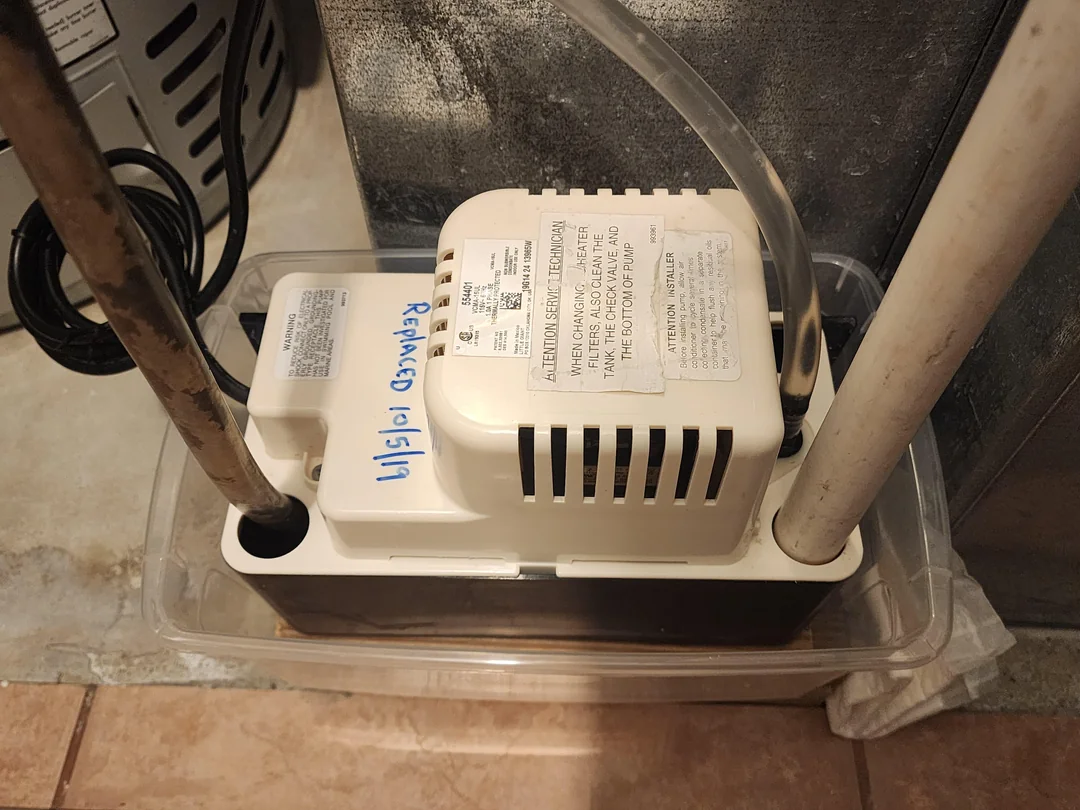
- You will see a small plastic pump reservoir near the furnace or air handler with a thin discharge tube.
- Symptoms of pump trouble include the pump not turning on, loud buzzing/humming, or water sitting in the reservoir even though the float rises.
- You can also have a pump discharge line clog, which acts like a clog but is downstream of the pump.
If you have a pump and the reservoir is full, do not keep running the AC. You can burn out the pump or trigger overflow protection.
Safety first: before you clear anything
- Turn the system off at the thermostat. If the air handler is in an attic, I also flip the air handler switch or breaker for peace of mind.
- Protect the area with a towel or shallow tray under the drain connection and pan overflow point.
- Locate the float switch (if you have one). If it tripped, that is a clue the water level got high.
- Skip harsh chemicals like drain opener. They can damage components and are not needed for most AC slime clogs.
Find the primary drain and cleanout
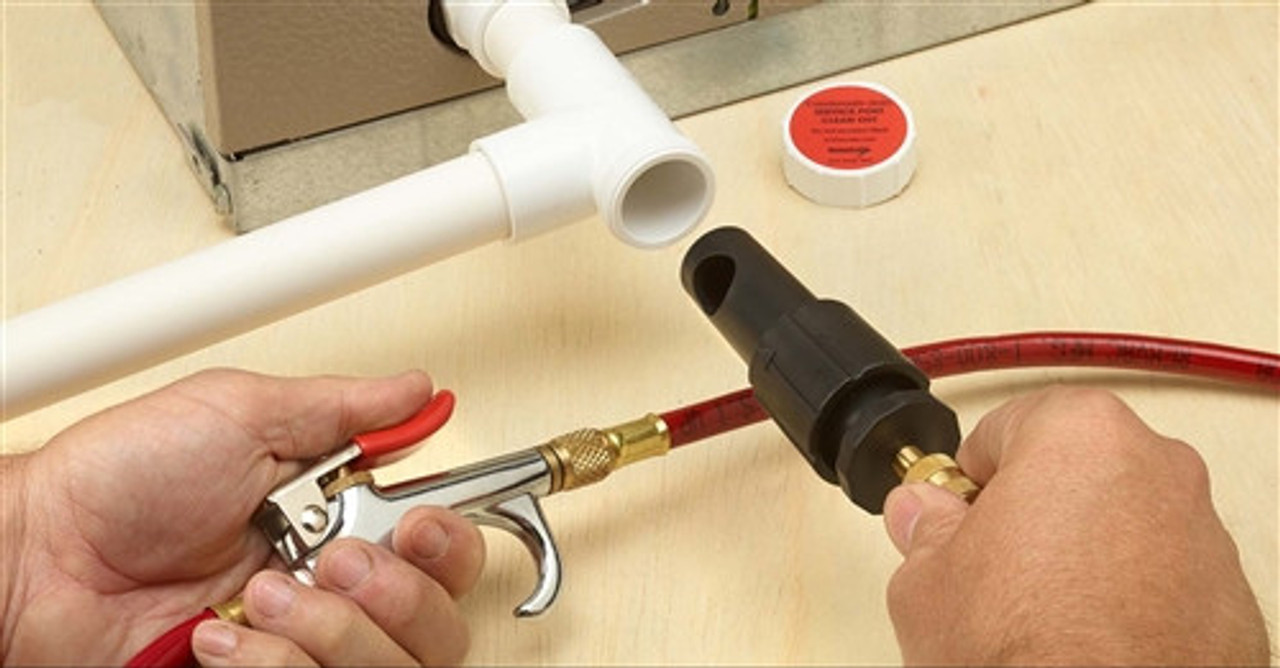
Most modern installs include a vertical tee with a cap near the air handler. That is your best access point. If you do not see a tee, you may have a capped stub-out or only an exterior termination.
- Primary drain: the main PVC line that should carry water away during normal operation.
- Secondary drain or overflow: a backup line (often higher) that should stay dry. If it is dripping, the primary is probably blocked.
Method 1 (best for most homes): clear the line with a wet vac
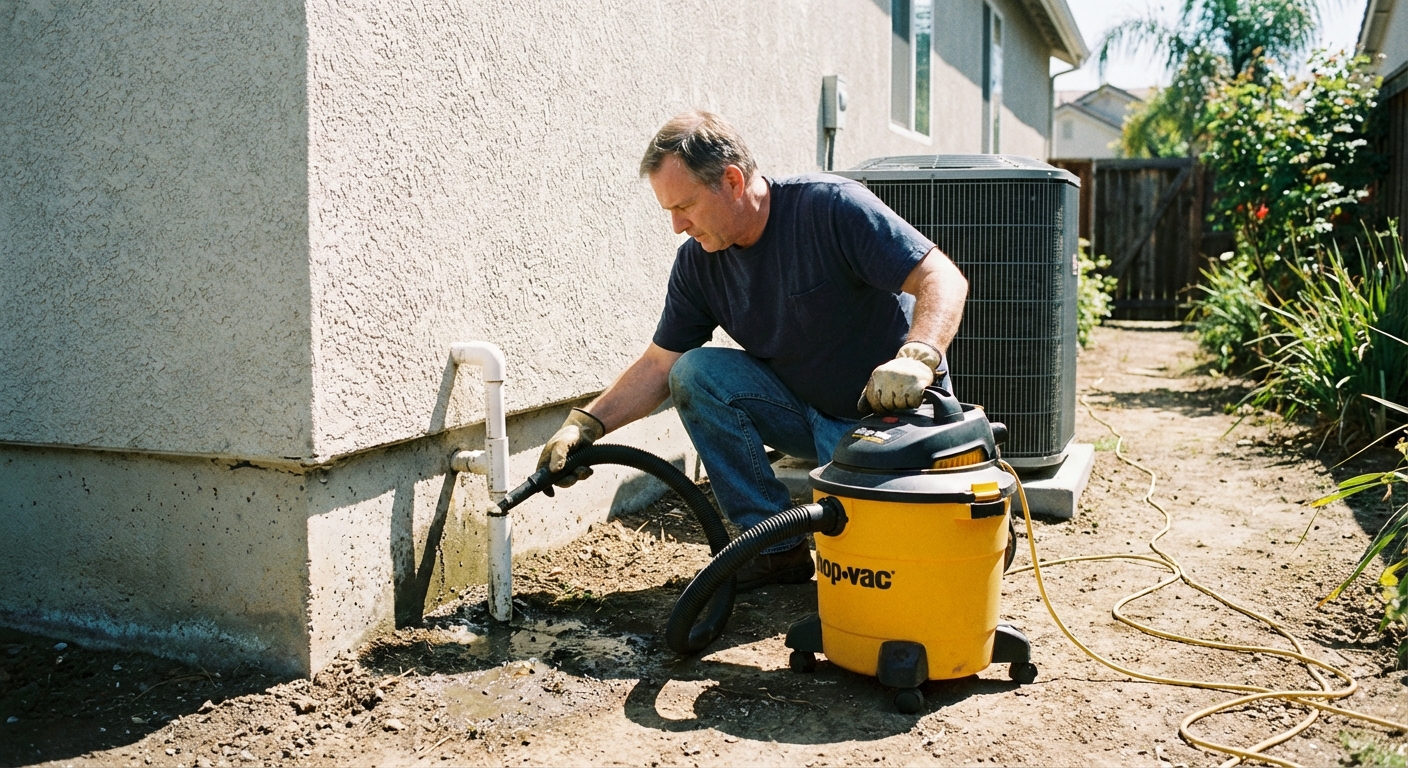
If your condensate line terminates outdoors, a wet dry vac is my go-to because it pulls the clog out instead of pushing it deeper.
What you need
- Wet dry vacuum (set up for wet pickup)
- Remove the paper filter (the dry filter) from the vac before you start, or you will turn it into a soggy mess fast
- Duct tape or a rubber coupler to seal the vac hose to the pipe
- Gloves and eye protection
Steps
- Find the outside pipe end. It is usually a 3/4 inch PVC pipe near the condenser or a wall exit.
- Seal the vac hose to the pipe. The tighter the seal, the better the suction. I wrap duct tape around the connection until it is snug.
- Keep the cleanout cap on while vacuuming. If you open the tee at the air handler, the vacuum often just pulls room air through that opening instead of pulling on the clog. A closed system helps suction reach back toward the indoor unit.
- Run the vacuum for 1 to 2 minutes. You are trying to pull slime and debris through.
- Check the vac canister. If you see green or black gunk, you likely got it.
- Repeat once. A second pull often gets the “second wave” of sludge.
Pro tip: If you cannot get good suction, focus on improving the seal at the outside pipe with tape or a coupler, and double check you are on the primary drain termination (not a secondary/overflow outlet). A tiny air leak at the hose connection can make a big difference.
Method 2: flush the line from the cleanout
Flushing is useful when the line does not have a good exterior termination for vacuuming, or after vacuuming to help rinse leftovers.
What you need
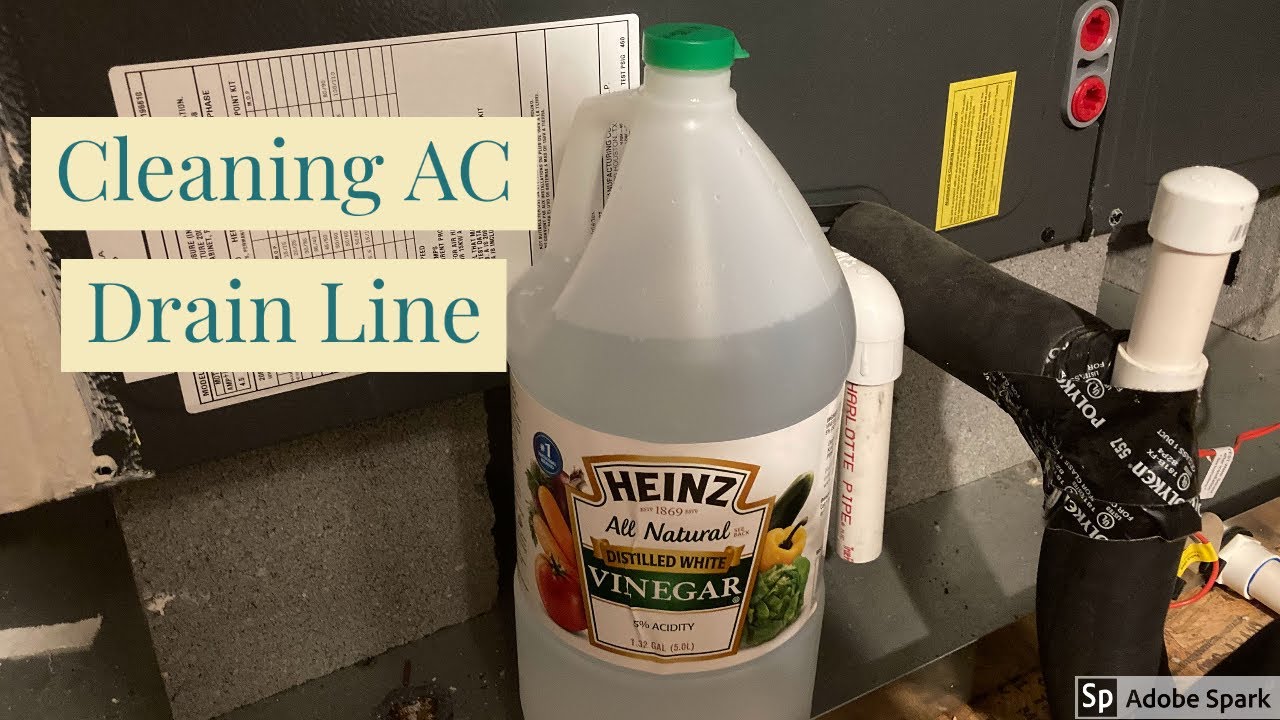
- White vinegar (safe and effective for light buildup)
- Warm water
- Small funnel or squeeze bottle
Steps
- Open the cleanout cap at the tee near the air handler.
- Slowly pour in vinegar (about 1 cup), then follow with a cup or two of warm water.
- Wait 10 to 15 minutes so the vinegar can work on the biofilm.
- Flush again with water and watch the outside termination to confirm flow.
Important: Pour slowly. The goal is to rinse the line, not overflow the pan by dumping too fast.
If you still have no flow
Some clogs are stubborn, and some problems are not clogs at all. Here is the escalation ladder I use:
- Check for a sag or belly in the PVC line that holds water and sludge. Re-hanging the pipe to restore slope can be the real fix.
- Inspect the trap (if present) for blockage. Some systems have a U-shaped trap near the air handler that collects debris.
- Confirm the outlet is not buried under mulch or dirt outside.
- Try a second vacuum pull after a vinegar soak.
If the pan is cracked, the coil is freezing, or water is coming from a place that is not the drain connection, it is time to call an HVAC pro. Water damage gets expensive fast.
Preventive maintenance that actually works
Most condensate line clogs are preventable with simple habits. Here is what I recommend for a typical homeowner:
- Monthly during cooling season: Pour 1 cup of white vinegar into the cleanout tee, then a little water. Skip this if your manufacturer or installer advises otherwise for your setup.
- Change filters on schedule: A dirty filter can increase dust buildup near the coil and pan area.
- Keep the termination clear: Do a quick glance outside when mowing or edging. Make sure the pipe end is not clogged with dirt or insect nests.
- Test the float switch once or twice a year if you have one. Many can be lifted gently to confirm they shut the system down.
- Annual HVAC maintenance: Ask the tech to verify drain slope, pan condition, and line cleanliness.
Quick checklist: what to do when you see water
- Turn off cooling at the thermostat.
- Confirm the pan is not overflowing and note if the float switch tripped.
- Vacuum the line from the outside termination if possible (with the shop vac set up for wet pickup and the paper filter removed).
- Flush from the cleanout with vinegar and warm water.
- Restore power and run the AC for 10 to 15 minutes, then re-check for steady draining.
If you catch it early, clearing a condensate line is one of those satisfying, low-cost fixes that can save you from patching drywall later. And speaking from personal experience, it is a lot more fun to empty a shop vac than to repaint a ceiling.

About Marcus Vance
Content Creator @ Grit & Home
Marcus Vance is a lifelong DIY enthusiast and self-taught home renovator who has spent the last decade transforming a dilapidated 1970s ranch into his family's dream home. He specializes in budget-friendly carpentry, room-by-room renovations, and demystifying power tools for beginners. Through his writing, Marcus shares practical tutorials and hard-learned lessons to help homeowners tackle their own projects with confidence.