
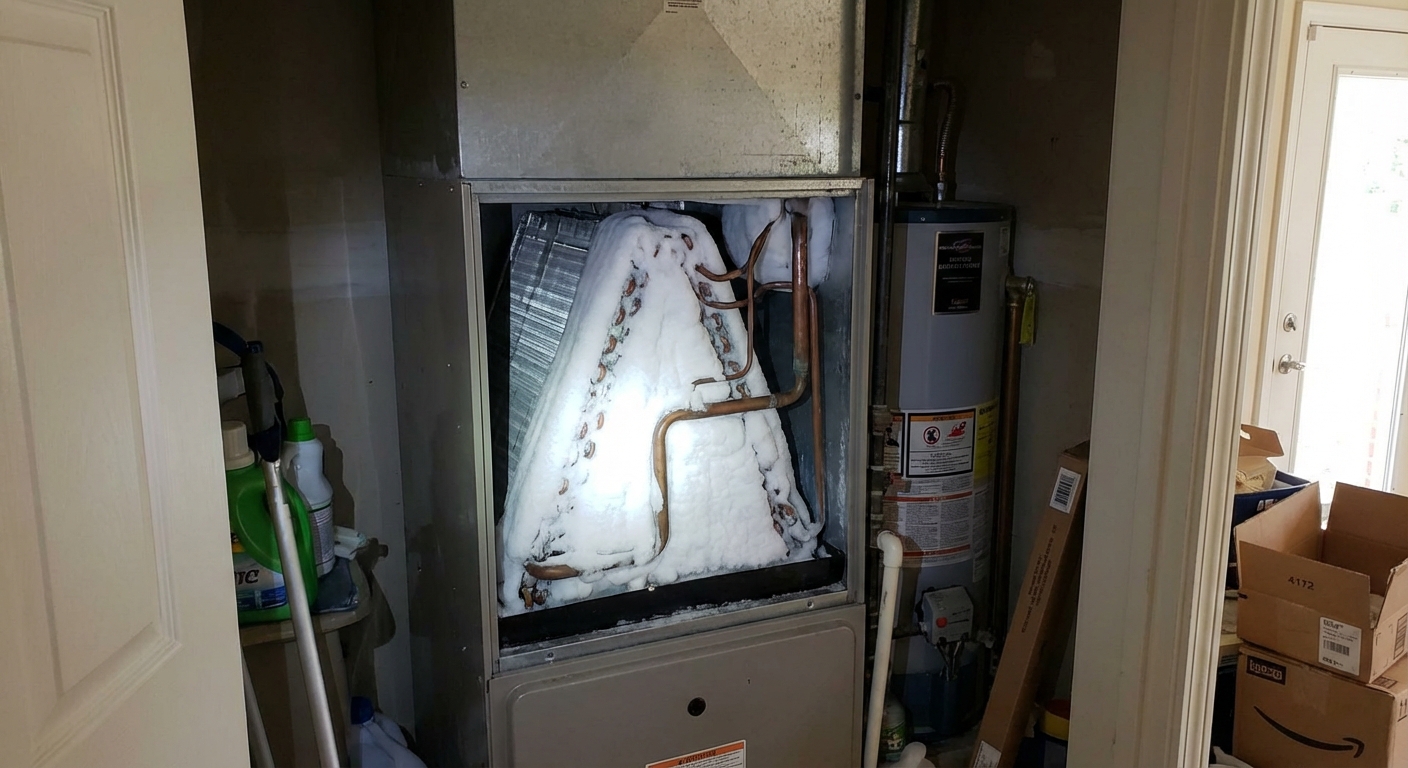
If you walk outside and see a fat, frosty suction line, or you peek in the indoor unit and find the evaporator coil wrapped in ice, your AC is not “working extra hard.” It is in trouble. And the longer it runs frozen, the more likely you are to end up with water damage, a burned-out blower motor, or a compressor that quits when you need it most.
The good news is that many freeze-ups start with a simple airflow problem you can fix yourself. But low refrigerant or a restriction can cause the same symptom, so the trick is knowing what to check first and what not to touch.
Before you start
- Do not touch sealed refrigerant parts (copper lines, valves, service ports). If the issue is charge, restriction, or a leak, that is a technician job.
- Power safety matters. If you are opening any access panel, turn power off at the air handler switch or breaker first.
- If you see water near wiring or controls inside the unit, leave the system off and call a pro.
Why ice forms on an AC coil
Your AC cools by moving warm house air across a cold evaporator coil. Refrigerant inside that coil absorbs heat and carries it outside. Under normal conditions, the coil runs cold, but not cold enough to freeze.
Ice forms when the coil temperature drops below 32°F. That usually happens for one of two reasons:
- Not enough warm air is moving across the coil (airflow problem). With less heat coming in, the coil gets too cold and moisture freezes.
- Refrigerant pressure is too low (often from low refrigerant or a restriction). Low pressure makes refrigerant boil at a lower temperature, which drops coil temperature into the freezing range.
Once the coil starts icing, airflow gets even worse because the ice blocks the fins, which makes the coil even colder. It is a snowball effect.
Emergency steps: thaw it safely
If you see ice anywhere on the indoor coil, the indoor refrigerant line, or you hear an unusual loud hissing that is new and persistent, do this first. (Some soft refrigerant noise can be normal. The red flag is loud, new, and paired with poor cooling or visible ice.)
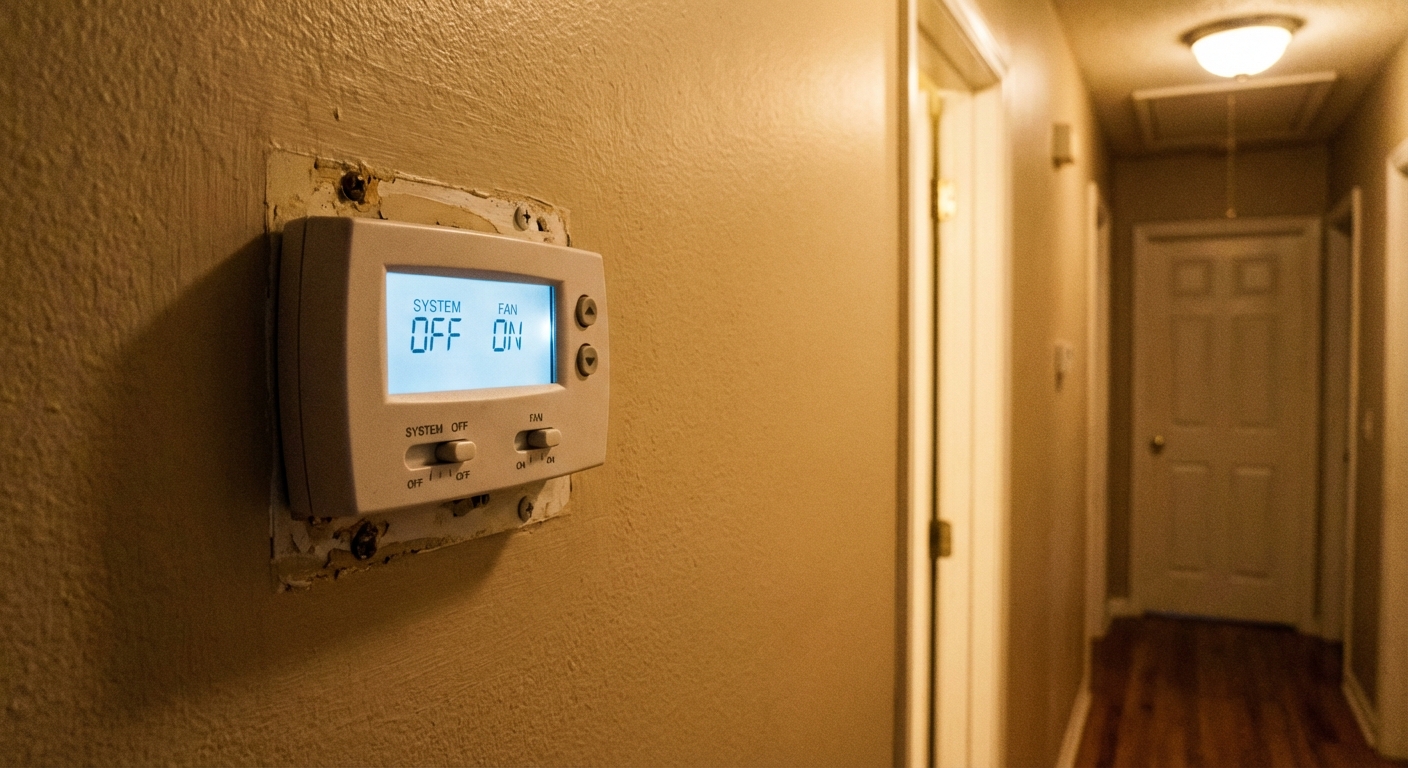
Step 1: Turn cooling off
- Set the thermostat to OFF (not just a higher temperature).
- Leave the fan set to ON if your system allows it. That moves warmer air across the coil to melt ice faster.
Safety note: If you suspect water is dripping onto electrical components, or you can see standing water in the unit, leave the fan off and call a technician.
Step 2: Protect against overflow
- Put towels under the indoor unit if it is in an attic, closet, or above a finished ceiling.
- If you have a condensate pan, keep an eye on it. A frozen coil can dump a lot of water during thaw.
Step 3: Let it fully thaw
Plan on a few hours. Often 2 to 6 hours, but in severe cases it can take much longer (even 12+). Do not restart cooling until all ice is gone.
Step 4: Never do these “quick fixes”
- Do not chip ice off with a screwdriver or anything metal. One puncture to the coil can turn this into a major repair.
- Do not use a heat gun inside the air handler. You can warp plastic parts and damage wiring.
- Do not keep running the AC hoping it will “work through it.” It will not.
Most common causes (in the order I check them)
After everything is thawed, work down this list. I start with the cheap and easy stuff because it solves a big percentage of freeze-ups.
1) Dirty air filter
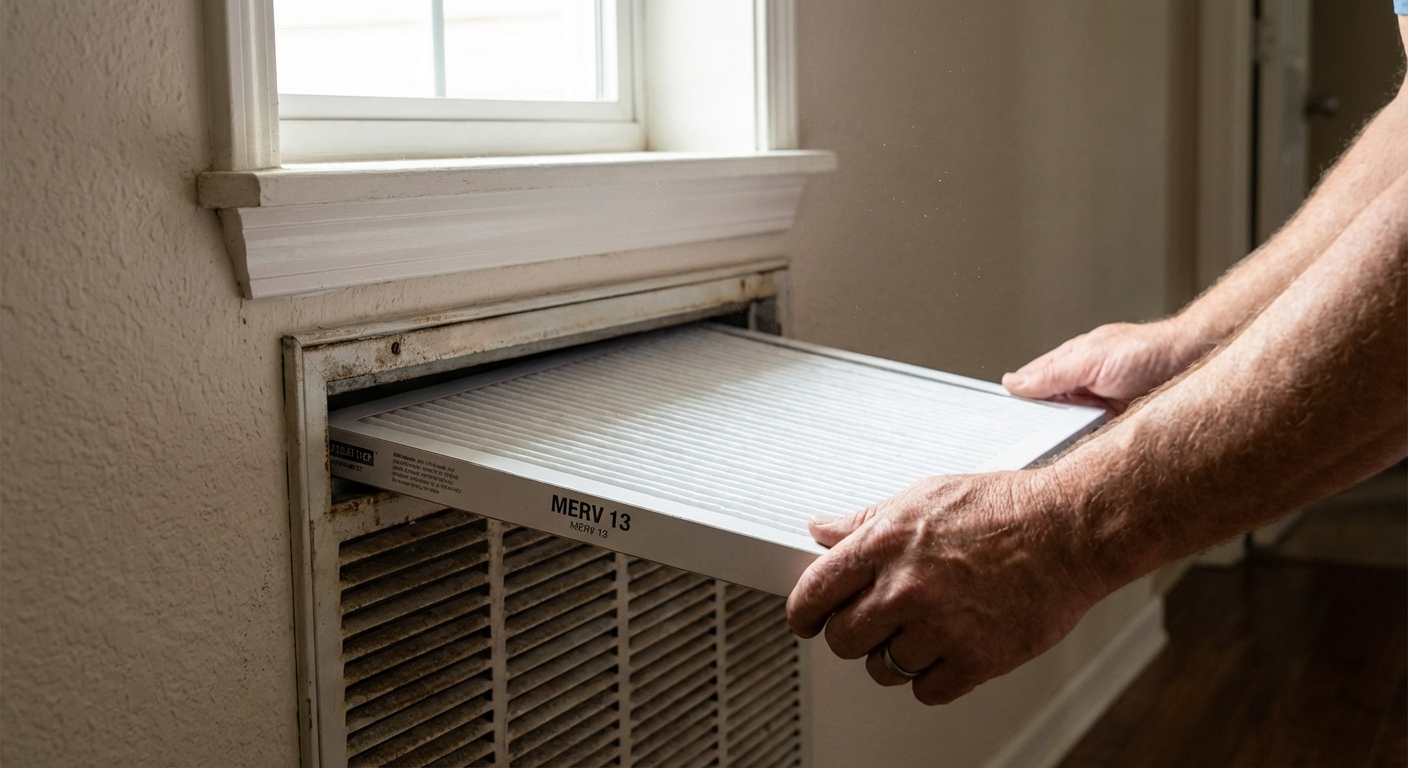
This is the number one culprit. A clogged filter starves the system of airflow, the coil gets too cold, and moisture freezes.
- What you will notice: weak airflow at vents, dustier house, icing after running for a while
- DIY fix: replace the filter with the same size. Make sure the arrow points toward the blower.
- Pro tip: super high MERV filters can restrict airflow on some systems. If freezing keeps happening and you are using a very dense filter, try a standard pleated filter and see if airflow improves. If you need a high-MERV filter for health reasons, ask a technician about airflow, filter size, and static pressure instead of just going denser.
Small nuance: a little frosting right near the indoor coil or metering device can happen briefly. The problem is sustained ice buildup that spreads and chokes airflow.
2) Blocked returns or supply vents
Your system needs a clear path for air to return to the air handler and then flow back out through supply vents. Closed registers, furniture covering returns, or a crushed flex duct can drop airflow enough to freeze the coil.
- What you will notice: certain rooms barely blowing, whistling at a return grille, doors slamming shut from pressure changes
- DIY fix: open all supply registers, uncover returns, replace kinked return filters if you have them, and check visible flex duct for crushing or sharp bends
3) Dirty evaporator coil
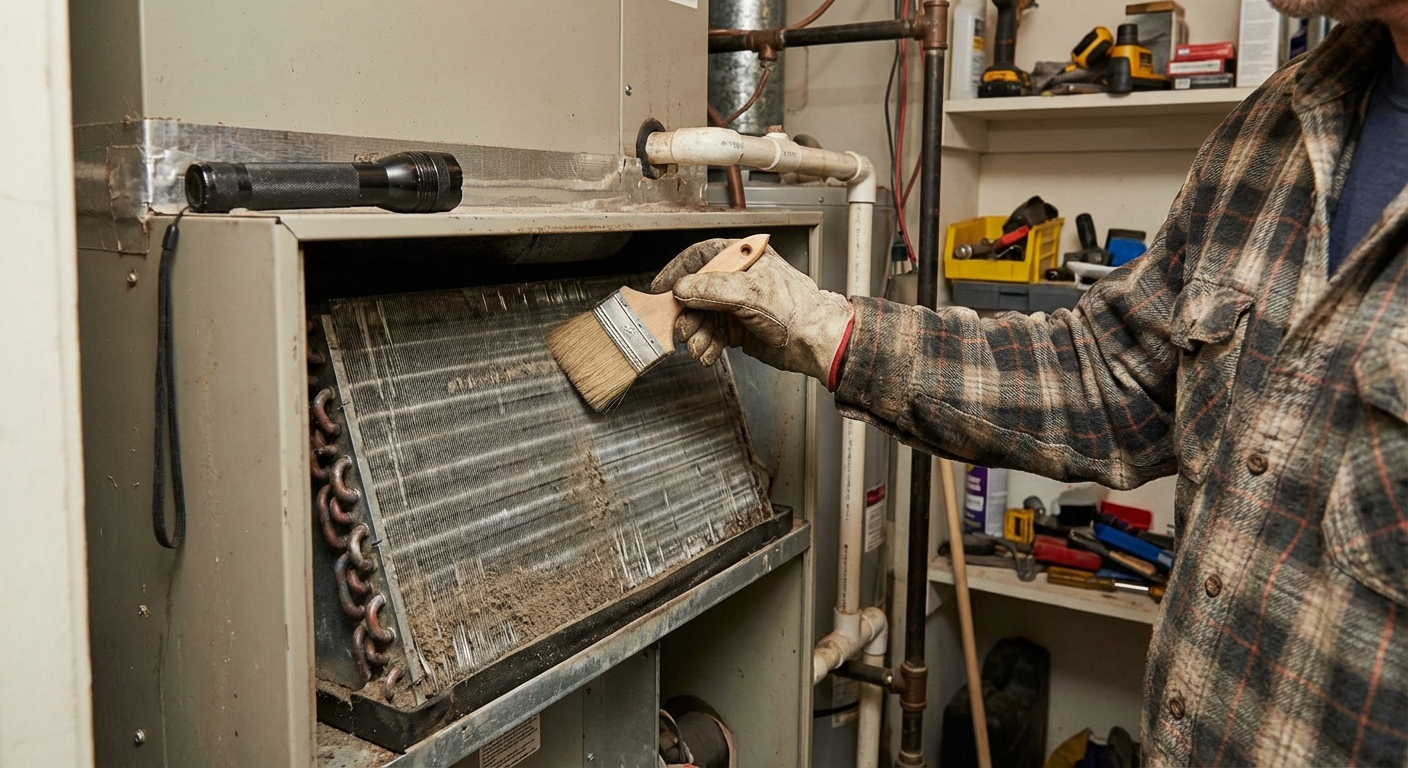
If a filter was missing, installed backward, or left too long, the evaporator coil can get a blanket of dust. That dust acts like a sweater, reducing heat transfer and airflow through the fins.
- What you will notice: musty smell, repeated freezing even with a clean filter, visible dust on the coil face
- DIY friendly? Sometimes. If you can access the coil safely without dismantling panels that expose wiring, you can do a light cleaning.
DIY coil cleaning (light cleaning only)
- Turn off power at the air handler switch or breaker.
- Remove the access panel.
- Use a soft brush and a vacuum with a brush attachment to remove loose dust.
- Apply a no-rinse evaporator coil cleaner (follow the can directions).
- Reinstall panels tightly so you do not create an air leak.
If the coil is matted with grime, or you cannot access it without pulling the whole case apart, call a technician. A deep clean often involves removing panels, protecting electronics, and confirming the condensate drain is clear.
4) Low refrigerant (usually from a leak)
Refrigerant is not “used up” like gas in a car. If it is low, it is usually because it leaked out, or because it was never charged correctly after a past install or repair. Low refrigerant lowers system pressure, which can drop coil temperature below freezing.
- What you will notice: icing on the larger refrigerant line, AC runs constantly but does not cool well, bubbling or hissing near the indoor coil, higher electric bills
- DIY fix: there is not a safe DIY fix here. In many jurisdictions (including the U.S.), you cannot legally “top off” refrigerant without proper tools and certification.
- What a pro should do: confirm charge with gauges and temperature measurements, find and repair the leak when possible, evacuate and recharge to spec
Important: If someone offers to just add refrigerant without addressing leakage, you will likely be right back where you started.
5) Blower fan problems
The indoor blower is what pushes air across the evaporator coil. If it is failing, running at the wrong speed, or the capacitor is weak, airflow drops and icing follows.
- What you will notice: little to no air from vents, blower hums but does not spin, intermittent airflow, rattling or squealing noises
- DIY checks: verify the thermostat fan setting works, check the breaker, and turn off power at the breaker before opening any blower compartment or looking for loose wires
- When to call: if the blower is not spinning, spins slowly, or stops randomly. Capacitors and motors can bite if you are not comfortable working around stored electrical energy.
Other causes worth knowing
- Clogged condensate drain or float switch: a clogged drain does not usually cause freezing by itself, but it often shows up during a freeze-up (because of all the meltwater). A tripped float switch can also shut the system down and confuse the diagnosis.
- Dirty outdoor condenser coil: usually reduces cooling capacity and raises pressures, but it can contribute to long run times and overall poor performance. Cleaning the outdoor coil is a good maintenance step.
- Thermostat or control issues: uncommon, but a stuck relay can keep the system running when it should cycle off.
- Refrigerant restriction (TXV/capillary or filter drier issue): mimics low refrigerant symptoms and requires a technician.
- Oversized equipment: not a common direct cause of icing, but it can create comfort and humidity issues that make the system behave strangely. If you have chronic clammy air and short cycles, it is worth discussing with a pro.
DIY checklist (after thaw)
Here is my simple, no-drama order of operations. Stop when you find the issue.
- Replace the air filter and confirm it is installed correctly.
- Open all vents and uncover return grilles.
- Confirm panels are seated on the air handler. A loose blower door or access panel can create an air leak that hurts airflow (and some systems will not run correctly with the door off).
- Check airflow at several vents. If it is weak everywhere, suspect blower or a major duct issue.
- Inspect the larger copper line at the outdoor unit while running. It should feel cool and may sweat, but it should not ice.
- Look for water draining from the condensate line when the system runs. (No drain does not always mean a clog, but it is a clue.)
- Run cooling for 30 to 60 minutes and re-check for frost starting on the line or coil access area.
If it starts freezing again with a clean filter and open vents, your odds are high that you are dealing with low refrigerant, a dirty coil, a blower problem, or a restriction.
When to call a technician
I am all for DIY, but there are a few “hands off” lines with HVAC that save money in the long run.
- Ice comes back quickly after you replaced the filter and verified vents are open.
- You see oil residue on refrigerant line connections or around the indoor coil case. That can indicate a refrigerant leak.
- Blower will not run, runs intermittently, or makes electrical burning smells.
- Breaker trips when the system starts.
- Water is leaking from the air handler into ceilings, walls, or onto flooring.
- You have a heat pump and are unsure whether ice is from cooling mode or a defrost issue. (Outdoor icing in winter is a different conversation.)
When you call, tell them: “The indoor coil froze up, I thawed it, replaced the filter, and it refroze within X minutes.” That single sentence helps them show up prepared.
How to prevent it
- Change filters on a schedule: every 1 to 3 months for most homes. More often with pets, renovations, or allergies.
- Keep returns clear: do not block them with furniture or rugs.
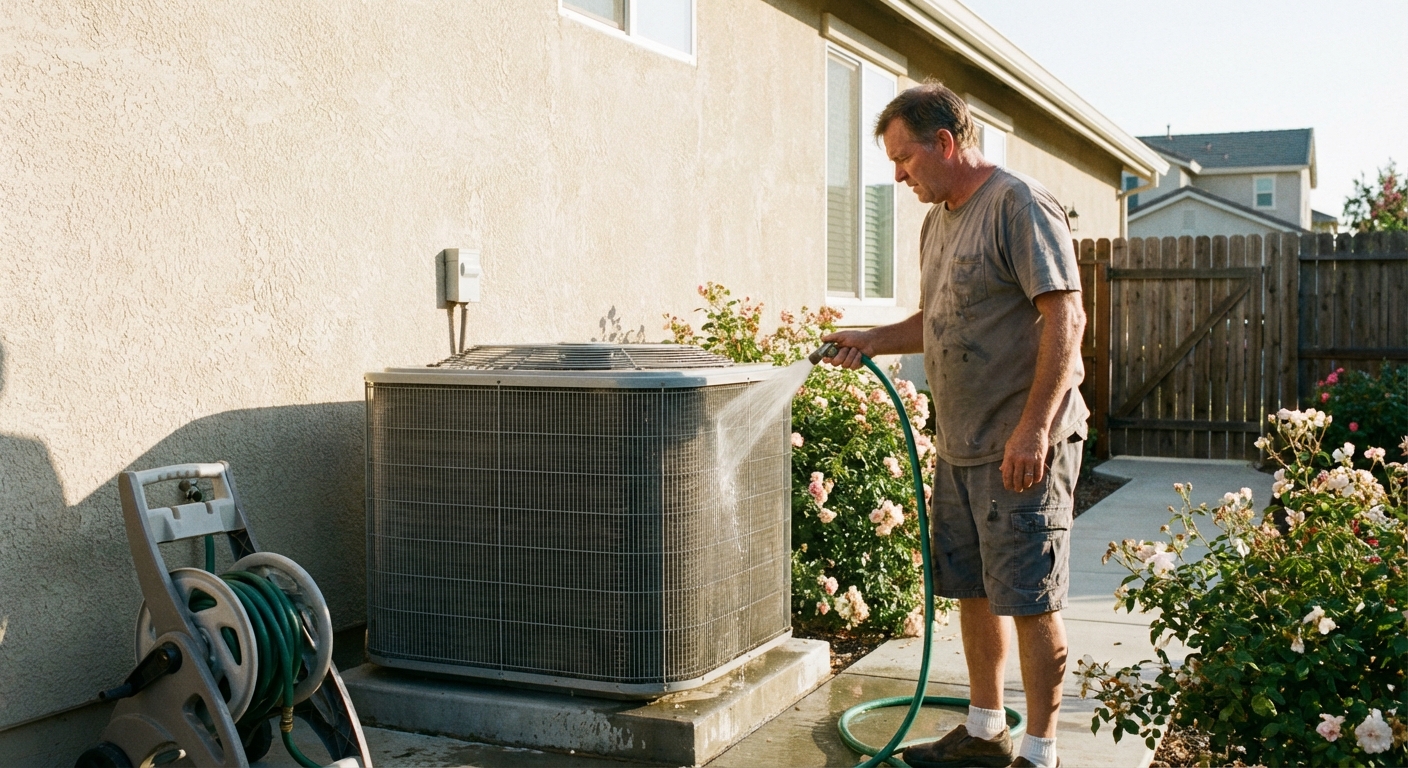
- Clean the outdoor condenser coil (DIY-safe method): turn power off first, then gently rinse by spraying downward at an angle along the fins. No pressure washer. (The best clean is inside-out, but that usually requires removing panels or the fan top, so leave that to a technician if you are not experienced.)
- Get a tune-up: a yearly check can catch low airflow, drain issues, and early refrigerant problems before a freeze-up.
- Listen for changes: new noises and weaker airflow are early warnings.
Quick FAQ
Is it OK if the refrigerant line is sweating?
Yes. A cool, sweating suction line is normal in humid weather. Ice is not.
Can I just run the fan to melt it and keep cooling later?
Use the fan to thaw, then troubleshoot. If you go right back to cooling without fixing the cause, it will freeze again, often faster.
What if my AC freezes only at night?
Nighttime temps can be lower and your system may run longer with less heat load. That can expose borderline issues like a dirty filter, slightly low refrigerant, a restriction, or weak blower airflow.

About Marcus Vance
Content Creator @ Grit & Home
Marcus Vance is a lifelong DIY enthusiast and self-taught home renovator who has spent the last decade transforming a dilapidated 1970s ranch into his family's dream home. He specializes in budget-friendly carpentry, room-by-room renovations, and demystifying power tools for beginners. Through his writing, Marcus shares practical tutorials and hard-learned lessons to help homeowners tackle their own projects with confidence.