
🚨 In a DIY emergency or rush?
Skip the details and jump straight to our 30-second cheat sheet for the most crucial info.
If your AC or heat pump kicks on, runs for a minute or two, shuts off, then does it again a few minutes later, you are not imagining it. That pattern is called short cycling.
Simple definition: short cycling is when the system turns on and off before completing a normal cycle, often without reaching or stabilizing at the set temperature.
I am all for DIY, but HVAC has a line. In this article I will walk you through what short cycling looks like, the safest homeowner checks to try first, and the specific situations where I would stop and call a pro.
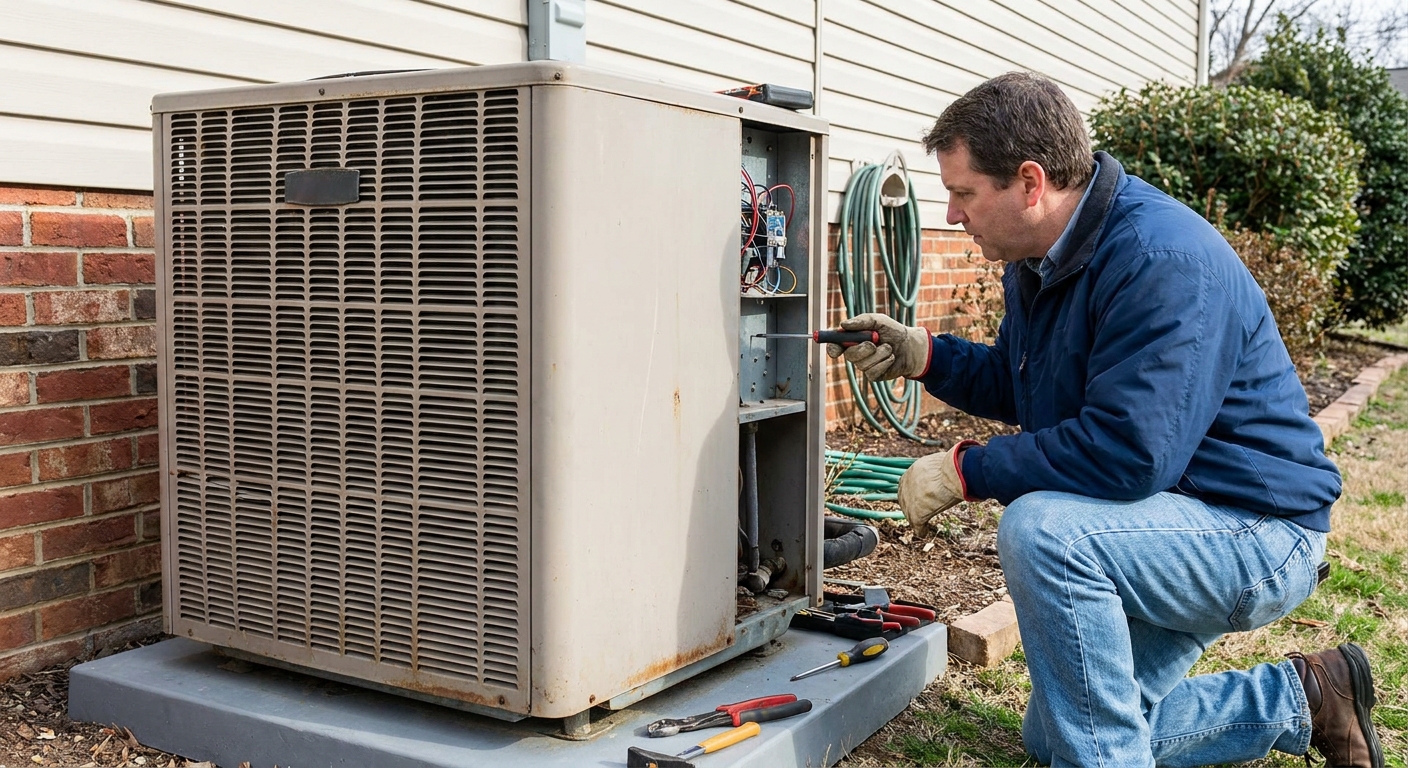
What short cycling looks like
In normal operation, your system should run long enough to move a meaningful amount of heat. Exactly what “normal” looks like varies by system type (single-stage vs multi-stage vs inverter), outdoor temperature, humidity, and how tight your home is. The key is that run times are generally steady, not rapid hard on and off bursts.
Common short cycling symptoms
- Rapid on and off: the outdoor unit and indoor blower start, stop, and restart frequently, sometimes every few minutes.
- Uneven temperatures: one room feels fine while others swing hot and cold.
- Sticky humidity (in cooling mode): the air feels clammy because the system does not run long enough to pull moisture out.
- Higher energy bills: frequent starts can add losses and extra wear, especially on single-stage systems. On modern variable-speed or inverter equipment, the energy penalty may be less dramatic, but rapid hard cycling is still not ideal.
- More noise: repeated startups and shutdowns, relays clicking, or the outdoor unit thumping as it tries to start.
Why it matters
Short cycling is hard on compressors, contactors, capacitors, and blower motors. Think of it like city driving versus highway driving. The stop and go is what wears things out.
Safety first: two quick rules
- Do not open sealed refrigerant lines or try to “top off” refrigerant. That is specialized, regulated work.
- Turn power off at the thermostat first, then at the disconnect or breaker if you are inspecting anything near the outdoor unit or air handler.
If you smell burning insulation, hear arcing or buzzing, see smoke, or the breaker keeps tripping, shut it down and skip straight to the “call a pro” section.
First fixes to try (in the order I would do them)
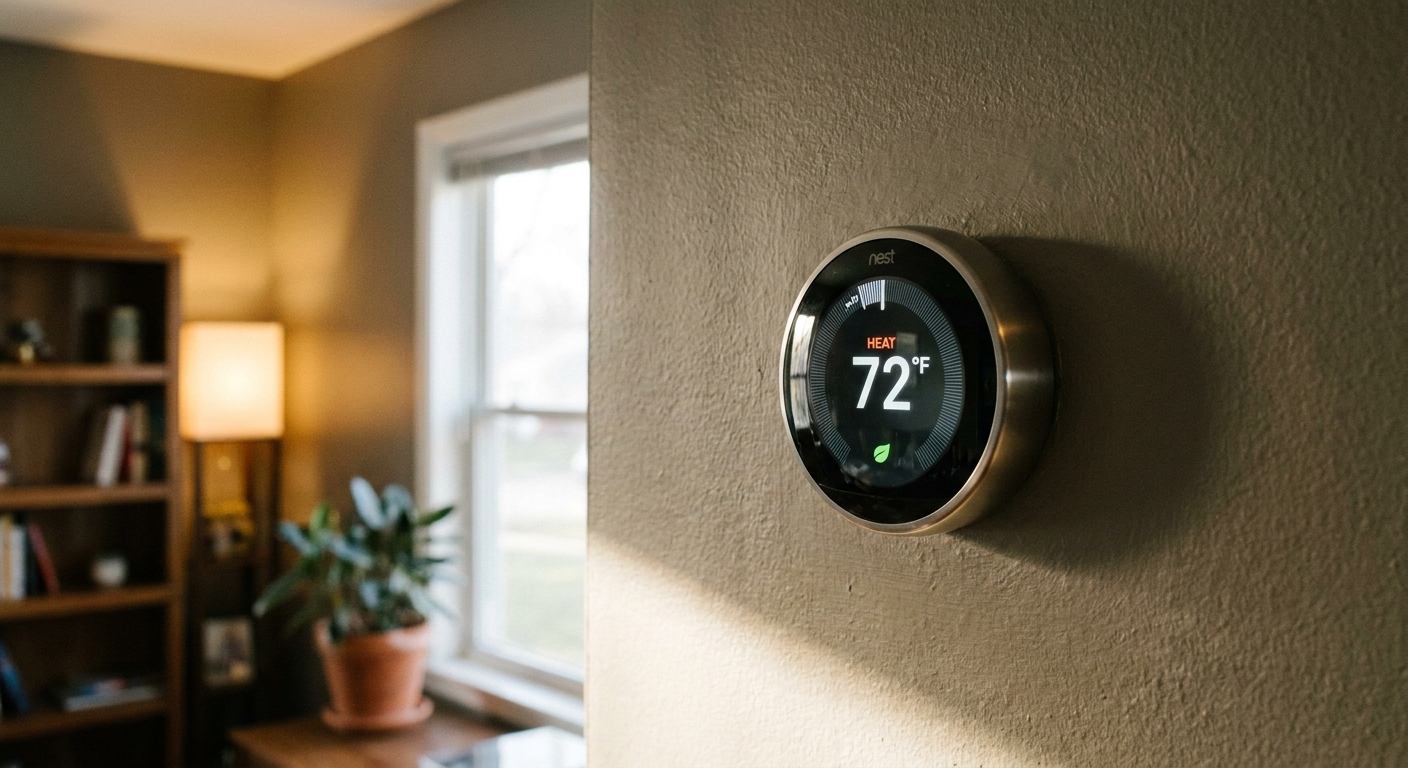
1) Check thermostat settings and schedule
This sounds too simple, but it is the number one homeowner fix.
- Mode: confirm it is set to COOL or HEAT, not AUTO with aggressive temp swings.
- Fan: set to AUTO for testing. “ON” runs the blower constantly and can mask other symptoms.
- Schedule: temporarily disable schedules and smart routines. A bad schedule can mimic short cycling.
- Temperature differential: some smart thermostats have “cycle rate,” “comfort,” or “swing” settings. If the swing is set too tight (like 0.5°F), the system can start and stop constantly.
- Location matters: if the thermostat is in direct sun, near a supply vent, or above a TV, it can get false readings and shut the system down early.
Quick test: set the thermostat 3 to 5 degrees past the current room temperature and see if the system will run a steady 10 to 15 minutes.
Note for variable-speed systems: what looks like “frequent cycling” may actually be normal modulation. True short cycling is more like rapid, hard on and off behavior with noticeable starts and stops.
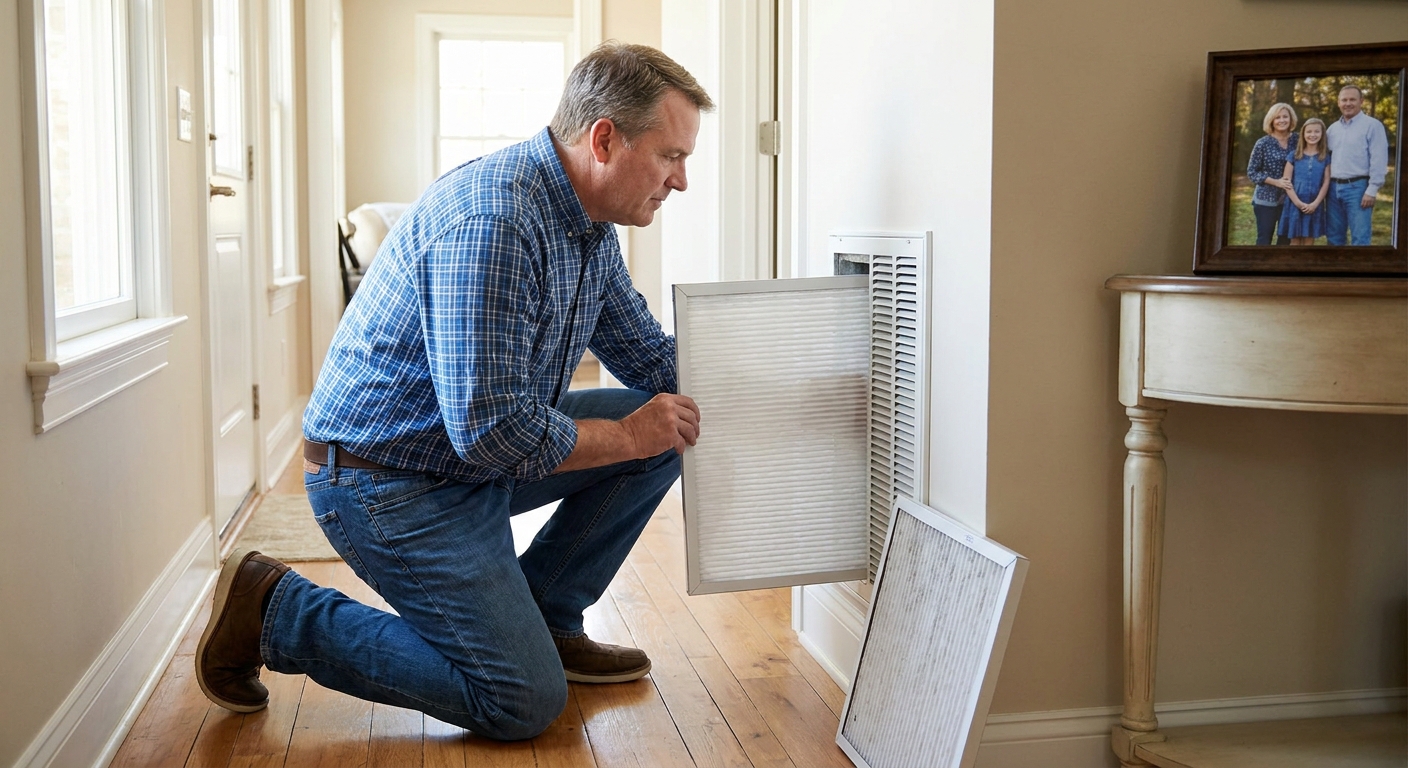
2) Replace a dirty air filter
A clogged filter reduces airflow. Low airflow can cause:
- the indoor coil to get too cold and freeze in cooling mode
- pressure or temperature issues that trigger safety shutoffs
- the system to satisfy the thermostat unevenly, then restart quickly
What I do: I replace the filter if it is visibly loaded with dust, if airflow from vents seems reduced, or if it has simply been too long. The “light test” can be a rough rule of thumb, but it is not foolproof because some higher-MERV filters look opaque even when new. For most homes, every 1 to 3 months is the sweet spot, depending on pets, allergies, and construction dust.
Important: do not jump to an ultra high MERV filter unless your system is designed for it. Some systems struggle with restrictive filters and airflow gets worse, not better.
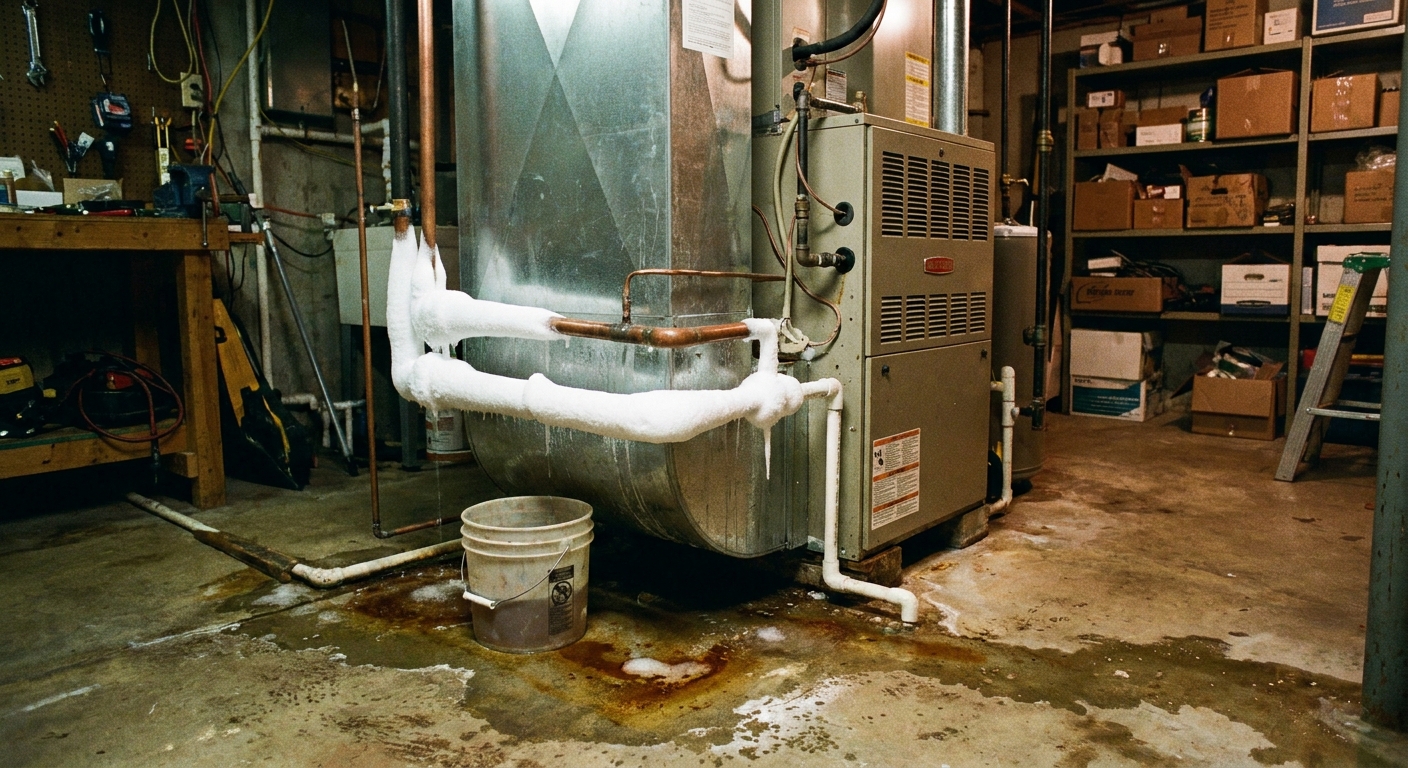
3) Look for ice: the iced coil check
If your system short cycles and cooling feels weak, the next safe check is whether something is freezing.
Signs of an iced evaporator coil
- ice on the copper refrigerant line near the indoor unit
- frost on the outdoor unit (for heat pumps in cooling mode)
- very low airflow from vents even though the blower is running
- water around the air handler after it thaws
What to do if you see ice
- Turn the system OFF at the thermostat.
- Set the fan to ON to help thaw the coil.
- Let it thaw fully. This can take a few hours.
- Replace the filter if it is dirty and make sure supply and return vents are open and unobstructed.
Why ice can lead to short cycling: sensors and safety controls may shut the system down to protect equipment, and airflow can drop so much that the system behaves erratically.
Important nuance: ice is not only a refrigerant issue. Low refrigerant can cause freezing, but so can dirty evaporator coils, blower problems or incorrect blower speed, duct restrictions, closed returns, and metering device issues. If it freezes again within a day after you fix airflow basics, that is when I stop guessing and call a technician.
4) Check for simple airflow blockages
Before you assume the unit is dying, do the boring checks. They matter.
- Supply registers: open them. Closed vents raise static pressure and can cause weird cycling behavior.
- Return grilles: do not block them with rugs, furniture, or stacked storage bins.
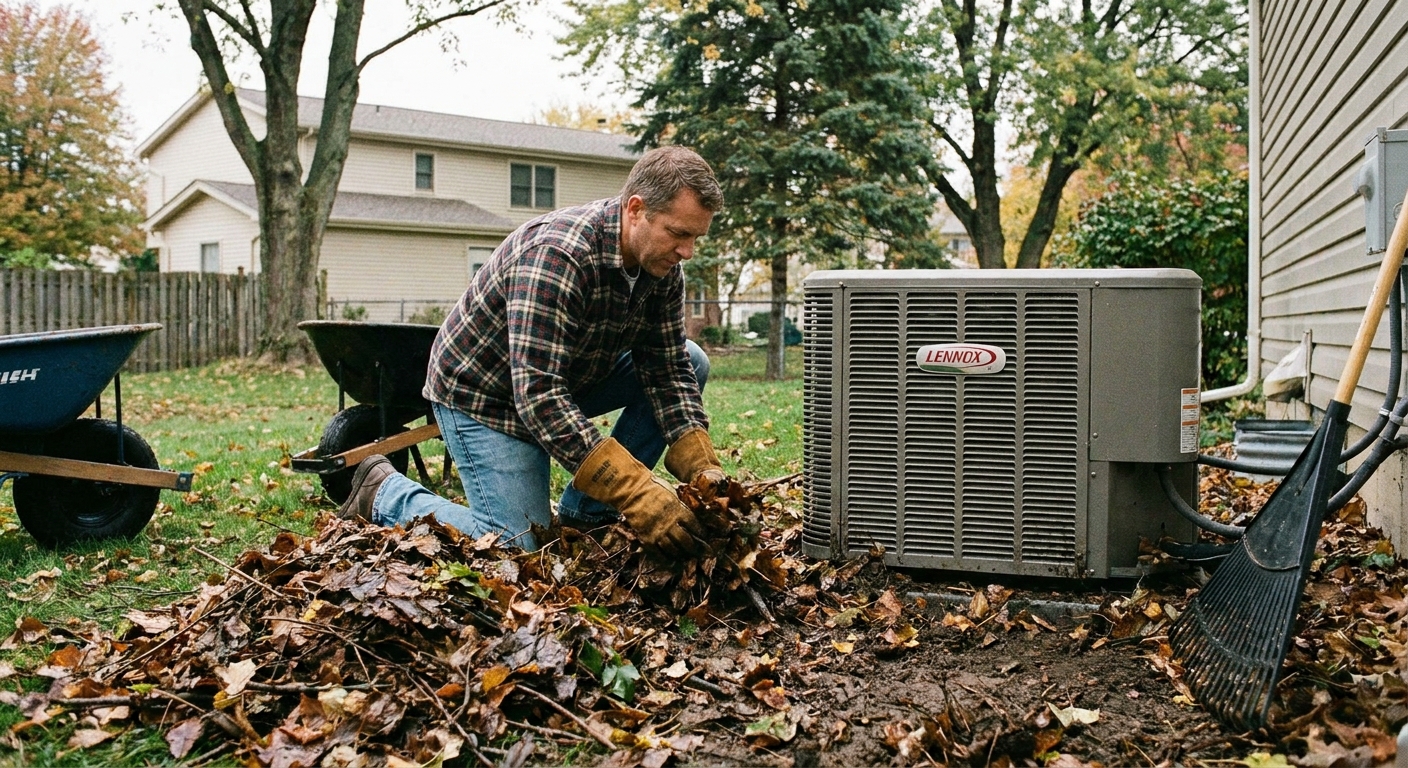
- Outdoor unit: clear leaves, grass clippings, and shrubs. Follow manufacturer clearance requirements when you can (often about 18 to 36 inches on the sides and more above), because airflow around the coil really does matter.
On my own house, I once chased a “system problem” for half a day before realizing a kid had shoved a beanbag chair against the main return. Humbling, but cheap.
5) Check the condensate drain and float switch (a common “fake short cycle”)
In cooling mode, your system makes water as it dehumidifies. If the condensate drain clogs, many systems have a float switch that shuts the system off to prevent an overflow. To a homeowner, that can look exactly like short cycling.
- Clues: the system shuts off unexpectedly, you see water in the drain pan, you notice dripping near the air handler, or the shutoffs happen more on humid days.
- DIY boundary: if you can safely see standing water in the pan, shut the system off and call a pro if you are not sure how to clear the drain properly. Persistent water can damage ceilings, floors, and the unit itself.
Clues it could be low refrigerant (and why that is a pro call)
Refrigerant is not “used up.” If it is low, there is a leak. Leaks need to be found, repaired, and then the system charged correctly.
Common signs
- the system runs, then shuts off and restarts repeatedly
- cooling is weak and takes forever
- ice keeps returning even after you replaced the filter and opened vents
- hissing or bubbling sounds near the indoor coil or outdoor unit
- oil stains around refrigerant line connections (not always present)
Call a pro if: you suspect low refrigerant, or ice returns quickly after thawing. Continuing to run it can damage the compressor, which is the expensive part.
Could the unit be oversized?
Oversizing is a sneaky cause of short cycling. A too large AC or heat pump can cool the house so fast that it shuts off before it properly dehumidifies or evens out temperatures. Then it starts again soon after because other areas never stabilized.
Signs of an oversized system
- very short run times even on hot days, yet the house feels clammy
- big temperature differences between rooms
- the system seems “strong,” but comfort is poor
- you recently replaced the system and the issue started after the swap
What you can do: this is not a DIY fix, but it is useful information for a technician. Ask whether they can evaluate sizing and airflow. Sometimes improvements like duct sealing, better returns, blower settings, or adding zoning can reduce symptoms even if the unit is technically oversized.
Next-level causes: capacitor and contactor (what to know, when to stop)
If the thermostat is fine and airflow basics are handled, short cycling can come from electrical components that help the outdoor unit start and run. (Technicians may also look at pressure switches and control boards, but that is firmly in pro territory.)
Capacitor issues
A weak capacitor can cause hard starts, brief runs, then shutoffs. You might hear a hum, then a click, then it stops.
Contactor issues
A pitted or failing contactor can chatter or drop out, interrupting power to the compressor or fan.
DIY boundary: even though these parts are “simple,” they live in high-voltage compartments. If you are not comfortable verifying power is off and working inside an electrical panel, do not push it. A licensed HVAC tech can test these quickly with the right meter and replace them safely.
Heat pump specific: defrost cycles versus short cycling
In heating mode, a heat pump will periodically go into a defrost cycle to melt frost on the outdoor coil. That can look odd if you have never watched it.
Defrost can look like
- steam coming off the outdoor unit on a cold day
- the outdoor fan may stop briefly (depends on the unit and controls)
- air inside feeling cooler for a short time as the system reverses
What is normal: occasional defrost events that last a few minutes.
What is not normal: constant defrosting, repeated hard on and off every few minutes, or the system failing to heat. If your heat pump is defrosting constantly, it could be a sensor issue, airflow issue, refrigerant issue, or control board problem. That is a technician visit.
Clear “call a pro now” triggers
- Breaker trips, buzzing, burning smell, smoke, or visible arcing.
- Ice returns quickly after a full thaw and a clean filter.
- Suspected refrigerant leak, hissing, or oily residue near lines.
- Outdoor unit tries to start repeatedly but cannot, or it runs for seconds then stops.
- Any short cycling plus water leaking from the air handler, or signs a float switch is tripping due to a backed-up drain.
- You are not comfortable working around high voltage components.
If you call, tell them exactly what you observed: cycle pattern, whether you saw ice, filter status, thermostat model, any water in the drain pan, and any recent changes (new thermostat, renovation dust, landscaping around the outdoor unit). Those details save diagnostic time, which usually saves money.
A simple troubleshooting flow (my homeowner checklist)
- Disable schedules and set thermostat to a steady temp. Fan on AUTO.
- Replace filter if it is dirty or overdue.
- Open vents, clear returns, check outdoor unit clearance (follow manufacturer guidelines if you can).
- Look for ice. If iced, thaw fully with system off and fan on.
- Check for water at the air handler and signs the condensate drain backed up.
- If it short cycles again, ice returns, or you suspect electrical or refrigerant issues, stop and call a pro for refrigerant and electrical testing.
Short cycling feels like a mysterious HVAC gremlin, but most of the time it starts with airflow or controls. Handle the safe basics first, and you will either fix it outright or you will have clean, useful symptoms to hand to a technician.
The 30-Second Cheat Sheet
Essential takeaways for: AC or Heat Pump Short Cycling: Causes and First Fixes
What “short cycling” is
- Your AC or heat pump turns on and off repeatedly before finishing a normal heating or cooling run, often every few minutes (it varies by equipment and conditions).
- Comfort clues: uneven room temps, clammy air in cooling mode, higher bills, more startup noise.
First fixes to try (safe homeowner checks)
- Thermostat: set to a steady temp, disable schedules, fan on AUTO. Make sure it is not in sun or near a supply vent.
- Air filter: replace it if it is visibly loaded with dust, airflow seems reduced, or it has been in too long.
- Airflow: open supply vents, unblock return grilles, clear debris and shrubs around the outdoor unit. Follow manufacturer clearance requirements (often ~18–36 inches on the sides and more above).
- Ice check: if you see frost or ice on the indoor coil line, shut system OFF and run the fan to thaw fully.
- Drain/float switch: if the system shuts off and you see water in or near the air handler, a condensate float switch may be tripping due to a clogged drain.
Signs it is likely a pro issue
- Ice returns within a day after thawing and fixing airflow basics.
- Weak cooling or heating plus hissing or oily residue near refrigerant lines (possible leak).
- Outdoor unit struggles to start, runs briefly, then stops (possible capacitor or contactor).
- Heat pump defrosting constantly in winter.
Call a pro immediately if
- Breaker trips, buzzing or arcing, burning smell, or smoke.
- You suspect low refrigerant.
- You are not comfortable near high voltage panels.
What to tell the technician
- Approximate cycle pattern (example: runs 3 minutes, off 5 minutes).
- Filter condition and when it was changed.
- Whether you saw ice and where.
- Any water in the drain pan or signs the drain backed up.
- Thermostat model and any recent changes (new thermostat, renovation dust, landscaping).
💡 Tip: Scroll up to read the full article for detailed, step-by-step instructions.
⬆️ Back to top
About Marcus Vance
Content Creator @ Grit & Home
Marcus Vance is a lifelong DIY enthusiast and self-taught home renovator who has spent the last decade transforming a dilapidated 1970s ranch into his family's dream home. He specializes in budget-friendly carpentry, room-by-room renovations, and demystifying power tools for beginners. Through his writing, Marcus shares practical tutorials and hard-learned lessons to help homeowners tackle their own projects with confidence.