
🚨 In a DIY emergency or rush?
Skip the details and jump straight to our 30-second cheat sheet for the most crucial info.
When your AC or heat pump will not start, most articles online lump everything into one big bucket called “AC not turning on.” The reality is that the outdoor unit has a few common failure points, and two of the biggest are the capacitor and the contactor.
This guide is about recognizing symptoms and doing a few safe, outside-the-panel checks so you can describe the problem clearly to an HVAC tech. It is not a how-to for replacing parts.
Big safety note from one DIYer to another: the outdoor unit contains high voltage and components that can stay energized even after a shutoff. Capacitors can store a dangerous charge. Do not remove access panels, do not touch wiring, and do not try to “discharge” anything. If you suspect a capacitor or contactor, the safe move is to call a licensed HVAC pro for replacement.
Quick checklist (safe checks)
- Thermostat: set to Cool (or Heat for heat pump heating), adjust setpoint past room temp, and confirm the screen is on.
- Wait 5 minutes: many systems have a 3 to 5 minute anti-short-cycle delay after power loss or changes.
- Filter and airflow: replace a packed filter and make sure supply vents are open.
- Condensate overflow: if you have a drain line and float switch, a full pan can shut the system off.
- Breaker: reset once if tripped. If it trips again, stop.
- Outside: listen (hum, click, silence), look (fan spinning), smell (burnt odor).
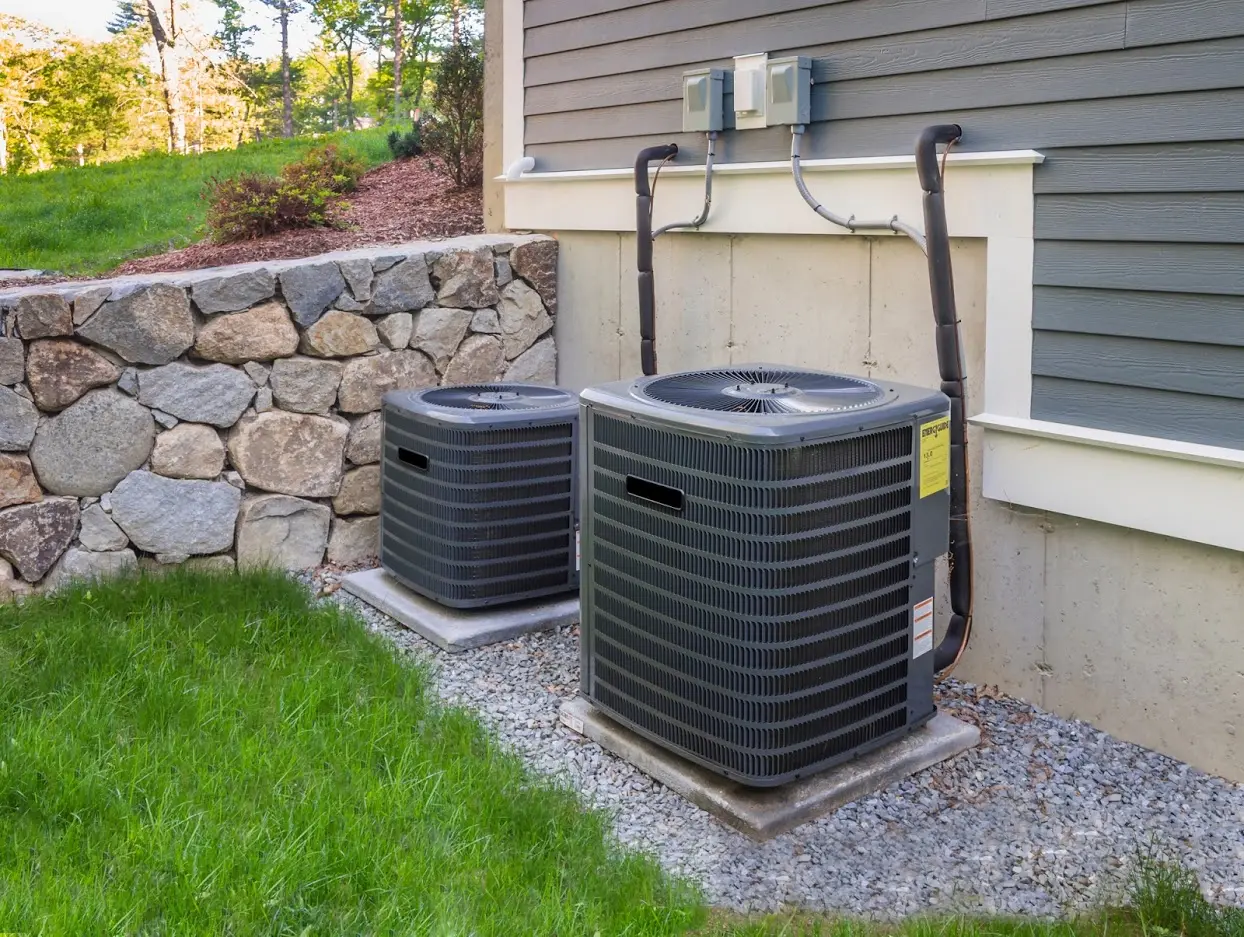
What the capacitor and contactor do
Capacitor (start and run help)
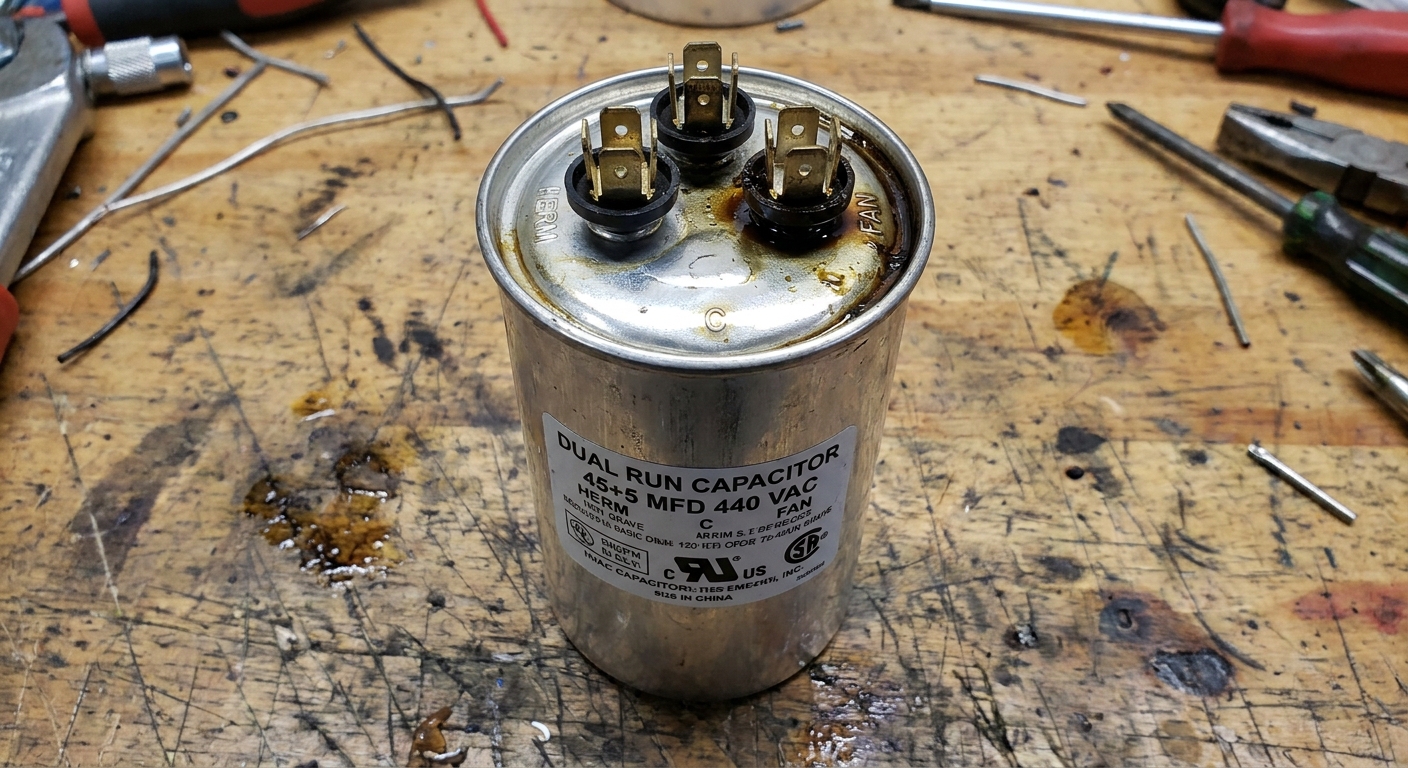
The capacitor is like a small energy “boost” and stabilizer that helps electric motors start and run efficiently. In many systems, one dual-run capacitor supports the compressor and the condenser fan motor.
Contactor (high-voltage switch)
The contactor is a heavy-duty electrical switch. When your thermostat calls for cooling or heating, a low-voltage signal tells the contactor to pull in, which sends high voltage to the compressor and fan.
In plain homeowner terms:
- Capacitor trouble often means the unit tries to run but cannot get a motor moving.
- Contactor or power-path trouble often means the outdoor unit never truly gets power to start, or it starts intermittently. This can also be caused by a pulled disconnect, blown fuses (on some systems), or a safety/control lockout.
Safe homeowner checks (no panels)
These checks keep you on the “outside looking in” side of the safety line.
1) Confirm the thermostat call
- Set the thermostat to Cool (or Heat for heat pump heating) and drop or raise the setpoint a few degrees past room temp.
- If the thermostat screen is blank, replace batteries (if your model uses them) or check that it is seated correctly.
- Wait 3 to 5 minutes before assuming failure. Many systems have a built-in delay to protect the compressor.
2) Check the filter and indoor airflow
A filthy filter will not usually make the outdoor unit completely dead, but it can contribute to icing and weird behavior. If the filter is packed, replace it and give the system time to recover.
3) Look for condensate overflow (if applicable)
Many AC systems have a condensate float switch that shuts the system down if the drain pan fills. Depending on your setup, you may be able to safely see signs like:
- Water in the auxiliary pan (often in an attic installation)
- A backed-up drain line near the indoor unit
If you suspect overflow and you are not sure what you are looking at, stop and call. Water damage is expensive and so is guessing.
4) Check the breaker pattern
- If the breaker is tripped, reset it once.
- If it trips again quickly, stop. Repeated resets can damage equipment or signal a serious electrical fault.
Clue, not a diagnosis: a breaker that trips immediately on a call for cooling can point to a shorted component, damaged wiring, a grounded motor, or a compressor problem. Some compressor problems trip after a brief start attempt instead of instantly. Breaker timing is helpful, but it is not a single-part verdict.
5) Go outside and observe
- Listen: do you hear a hum, a click, rapid clicking, or nothing?
- Look: is the top fan spinning?
- Smell: any burnt electrical odor near the unit? If yes, shut the system off at the thermostat and call for service.
Optional visual-only check: if your home has an external switch-style outdoor disconnect (no cover to open), make sure it has not been turned off. If your disconnect requires opening a cover or pulling a handle inside a box, skip this. That crosses into “not homeowner territory.”
What you should not do
- Do not push-start the fan with a stick or tool through the grille.
- Do not open panels to “take a look” at the capacitor or contactor.
- Do not hose down electrical areas while troubleshooting a no-start issue.
- Do not keep resetting a breaker or replacing fuses without diagnosing the cause.
Symptoms that can point to capacitor trouble
Capacitor problems are extremely common, especially in hot climates and on older equipment. Still, treat symptoms as trends, not certainty.
Outdoor unit hums but the fan is not spinning
This is a classic clue homeowners notice: you hear the unit trying, but the fan on top does not move.
- Very often, the fan motor is not getting the “boost” it needs to start due to a weak or failed capacitor.
- It can also be a failing fan motor, seized bearings, an obstruction, or the compressor struggling.
Important: shut the system off and call for service. Running in this condition can overheat the compressor.
Fan runs, but the compressor does not (or vice versa)
With a dual-run capacitor, one side can weaken more than the other. Sometimes the fan will run but the compressor will not start, or the compressor tries, struggles, then stops.
Short cycling or struggling starts
A weak capacitor can cause hard starts that sound like the unit starts, bogs down, then quits. Ignoring this can overheat motors and lead to bigger failures.
Visible capacitor damage (look only)
If you can see the capacitor without opening the unit, obvious signs include:
- Bulging top (not flat anymore)
- Oil leaking or residue
- Rusty, swollen can
In many units you cannot see it without removing a panel. If you would need tools to access it, do not.
Symptoms that can point to contactor trouble
Contactors fail from age, arcing, insects, debris, and heat. They can also chatter if there is a low-voltage control issue, which is a different problem that still needs a pro.
Outdoor unit is silent when the thermostat calls
If the indoor blower runs but outside you get nothing, a contactor issue is on the shortlist. Other common causes include a pulled disconnect, blown fuses (on some systems), a tripped breaker, broken thermostat wire, or a safety/control lockout.
Clicking or chattering
A healthy contactor usually makes a single, confident “clunk” as it pulls in. Rapid clicking or buzzing can mean:
- weak control voltage (transformer, thermostat wire, board issue)
- a failing contactor coil
- loose connections (not homeowner territory)
Intermittent operation
If the system works sometimes, then refuses to start other times, contactor contacts may be pitted or burnt, or the coil may be failing as it warms up. Some systems can also lock out temporarily after repeated failed starts.
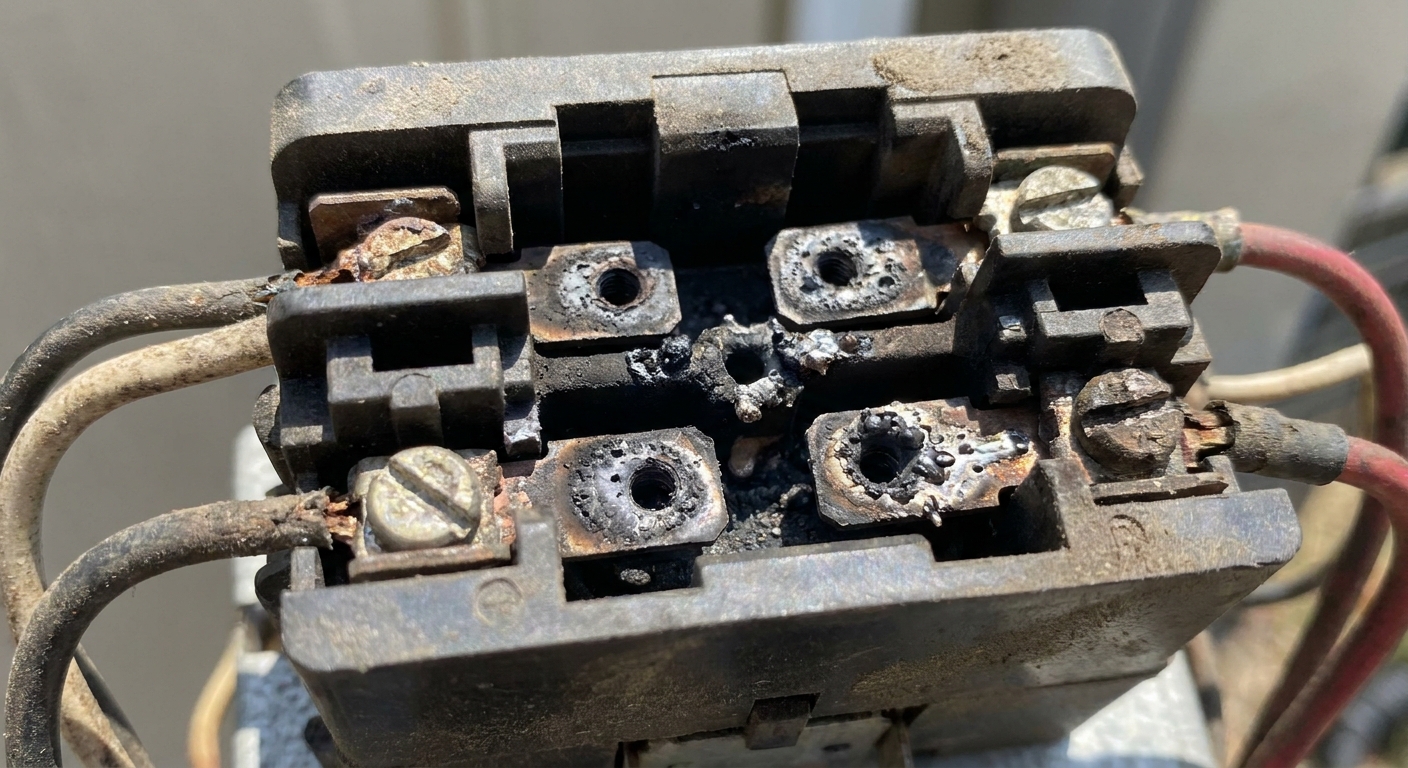
Visible burnt contact points (look only)
If you can safely view it without removing panels, signs include:
- dark, charred, or heavily pitted contact surfaces
- melted plastic near the contactor
- insect nests or debris interfering with movement
Humming unit, fan not spinning
This is the scenario that sends most homeowners searching. Here is the honest breakdown:
- Very common: weak or failed capacitor.
- Also very common: failing fan motor, seized bearings, or debris obstruction.
- Higher-stakes possibility: compressor struggling to start, which can be capacitor-related or something bigger.
If you hear persistent humming from the outdoor unit and the fan is not spinning, shut the system off at the thermostat and call for service. The goal is to protect the compressor from overheating.
Breaker clues (and limits)
Breakers are useful clues, but they are not a perfect map to a single part.
Trips immediately
- More suggestive of a short, grounded motor winding, damaged wiring, or a compressor problem.
- Not a “keep trying” situation.
Holds, but the unit hums and will not start
- Often consistent with a capacitor that cannot provide starting torque.
- Could also be a mechanically stuck motor or compressor.
Trips after a minute or two
- Could indicate overheating, high load, a failing motor, a dirty coil causing high pressures, or weak start components.
My rule: if the breaker trips more than once, stop and call. Your goal is to prevent a small problem from becoming an expensive one.
Why “AC not turning on” lists miss the point
Most general troubleshooting lists mix together problems from three different layers:
- Control layer: thermostat settings, batteries, condensate float switch, control board, time delays and lockouts
- Power layer: breaker, disconnect, fuses (on some systems), contactor, wiring
- Motor start layer: capacitor, fan motor, compressor
That is why you will see advice like “check the thermostat” and “replace the capacitor” in the same breath. They are not wrong, they are just talking at different layers.
The safest homeowner win is to observe symptoms that narrow down which layer is failing, then hand that info to a pro.
Heat pump notes (winter)
If you have a heat pump, remember that the outdoor unit runs in heating mode too. Also, during defrost it is normal to see steam and to hear changes in sound, and the outdoor fan may stop briefly. If the unit will not start at all, or you smell anything electrical, treat it like any other no-start and call for service.
What to tell the HVAC tech
When I call in help, I try to be the customer that makes the visit efficient. Here is what to write down:
- Thermostat mode and setpoint when the problem happens
- Whether the indoor blower runs
- Whether the outdoor fan spins
- Whether you hear humming, a single click, repeated clicking, or silence
- Breaker behavior (did it trip, and when)
- Any burnt smell or visible damage (from the outside)
- Approximate system age and any recent storms, power outages, or electrical work
When to stop and call a pro
- Breaker trips more than once
- Burning smell, smoke, or melted plastic
- Outdoor unit hums continuously and the fan does not spin
- Clicking or chattering from the unit
- Any time you would need to open a panel to “check one more thing”
Capacitors and contactors are usually straightforward for a trained tech to replace, but they are not beginner-safe DIY parts. If you are sweating in the house and tempted to take risks, that is the moment to step back and schedule service.
The 30-Second Cheat Sheet
Essential takeaways for: AC or Heat Pump Won’t Start: Capacitor vs. Contactor Symptoms
Safety first
- Do not open the outdoor unit. High voltage inside. Capacitors can hold a dangerous charge even when power is off.
- If you smell burning, see melted plastic, or the breaker trips repeatedly, turn the system off and call an HVAC pro.
Quick symptom clues
- Humming outside + fan not spinning: very often a weak or failed capacitor, but it can also be a stuck fan motor, obstruction, or compressor issue. Shut it off and call for service.
- Indoor blower runs but outdoor unit is totally silent: points toward a power delivery problem like a contactor, disconnect, fuses (on some systems), breaker, wiring, or controls.
- Rapid clicking or chattering: often contactor/control voltage trouble. Needs a pro.
- Intermittent starts: can be pitted contactor, a weakening capacitor, or a control lockout.
Breaker patterns (useful, not a diagnosis)
- Trips immediately: possible short, grounded motor, wiring, or compressor issue. Stop resetting.
- Does not trip but unit hums and will not start: often consistent with a weak capacitor or a mechanically stuck motor or compressor.
What to tell the tech
- Thermostat setting, whether the indoor blower runs
- Whether the outdoor fan spins
- Sounds: hum, single click, repeated clicking, or silence
- Breaker behavior and any burnt smell
- Recent power outage or storm, and approximate system age
💡 Tip: Scroll up to read the full article for detailed, step-by-step instructions.
⬆️ Back to top
About Marcus Vance
Content Creator @ Grit & Home
Marcus Vance is a lifelong DIY enthusiast and self-taught home renovator who has spent the last decade transforming a dilapidated 1970s ranch into his family's dream home. He specializes in budget-friendly carpentry, room-by-room renovations, and demystifying power tools for beginners. Through his writing, Marcus shares practical tutorials and hard-learned lessons to help homeowners tackle their own projects with confidence.