
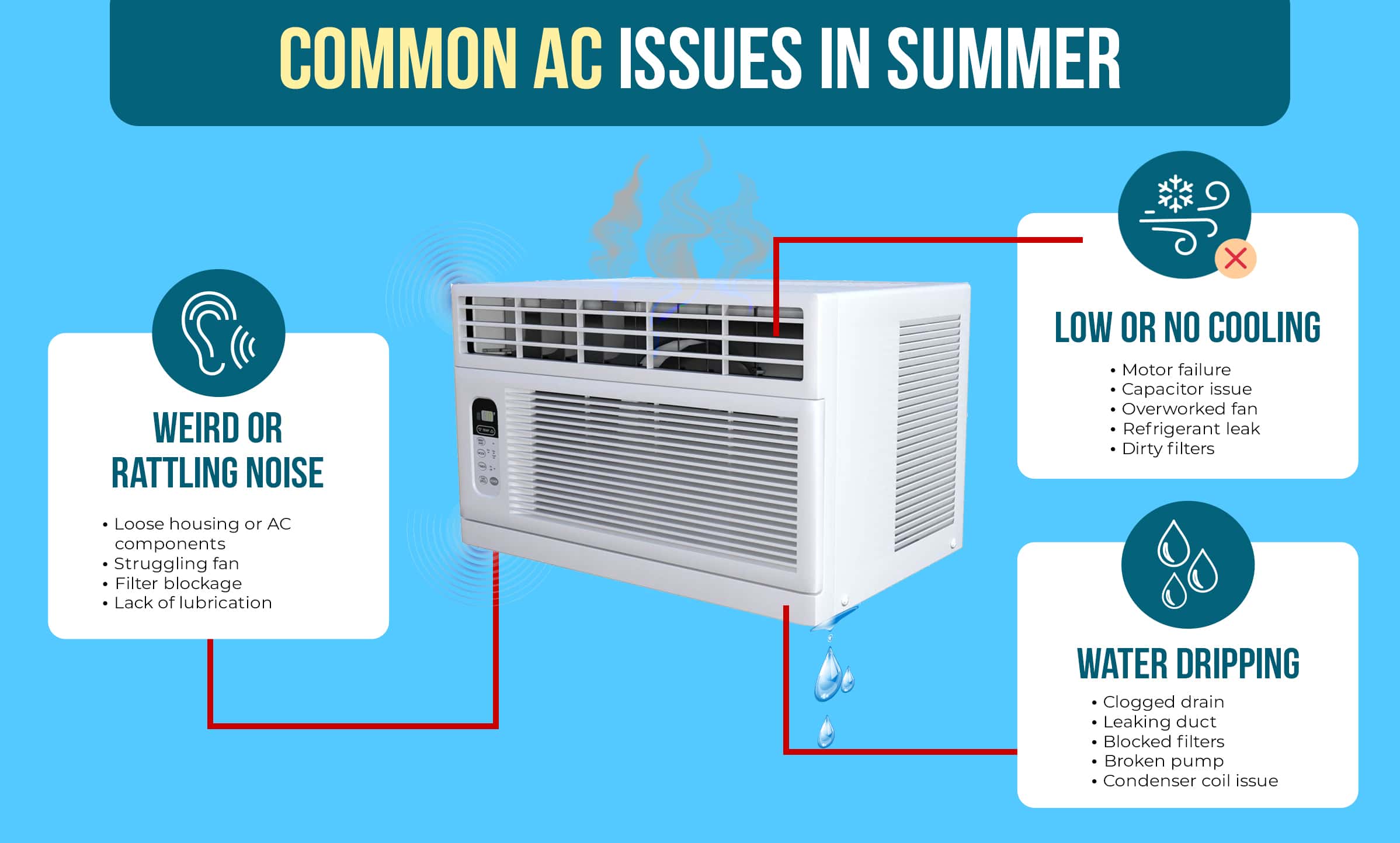
If your outdoor AC unit is humming, feels warm to the touch, or is just sitting there while the indoor blower still pushes air through the vents, you are in a very specific and very common lane of AC trouble: the outdoor condenser fan is not spinning.
I’ve been the guy standing in the yard in July, hand on the thermostat, thinking, “Well, at least the house is blowing air.” The truth is: indoor air blowing only tells you the indoor blower has power. Cooling depends on the outdoor unit doing its job, and the fan is a big part of that.
This page stays fan-focused. We are not going to rehash every reason an AC won’t turn on or won’t cool. Instead, we will separate the likely culprits, show what you can safely verify, and spell out what you should not open.
What “indoor air still blows” means
Most central AC systems have two major sections:
- Indoor unit (furnace or air handler): runs the blower that moves air through your ducts.
- Outdoor unit (condenser): runs the compressor and the condenser fan that dumps heat outside.
So if your vents are blowing but the air is not getting cold, it is completely possible the indoor side is fine while the outdoor unit has a fan-related failure.
Typical clues you are in the “outdoor fan” problem category:
- Outdoor unit is quiet and the fan never starts, even though the thermostat is set to cool.
- Outdoor unit makes a humming or buzzing sound, but the fan is still.
- Outdoor fan starts, then stops after a short run (overheating or a weak capacitor is a common reason).
- Air from vents is room temperature or slightly cool at first, then gets warmer as the outdoor unit struggles.
Safety first: what you can check
Safe checks (no panels removed)
- Thermostat settings (cool mode, set temperature below room temp, fan set to auto).
- Outdoor disconnect box is ON and breaker is not tripped.
- Outdoor unit is clear of leaves, grass, pet hair, and junk around the sides.
- Visible ice on the refrigerant line (especially the large insulated line) or at the indoor coil area.
- Obvious damage: burnt smell, melted wire insulation visible through the grille, or a severely dented fan top.
Things not to do
- Do not open the electrical service panel on the condenser unless you are trained. Capacitors can store energy even when power is off.
- Do not “help start” the fan by poking it with a stick through the grille. You can bend blades, damage the motor, or hurt yourself.
- Do not keep resetting breakers. Repeated trips can point to a short or failing motor.
- Do not run the system for long with the outdoor fan not spinning. The compressor can overheat and shut down, or worse, fail.
If the outdoor unit is humming or buzzing and the fan is not spinning, turn cooling OFF at the thermostat right away. That sound can be the compressor or the fan motor trying to run, and either way, continuing to feed it power is a great way to upgrade a small problem into an expensive one.
If you see smoke, sparking, or a strong electrical burning smell: turn the system off at the thermostat and shut off power at the disconnect and breaker, then call for service.
Quick triage: what is it doing?
Stand by the outdoor unit with the thermostat calling for cooling (set it 3 to 5 degrees lower than indoor temperature). Depending on your thermostat and equipment, it may take 5 to 10 minutes to allow a restart because of built-in anti-short-cycle delays. Listen and look.
- Completely silent outside: could be no power to the condenser, a contactor not pulling in, or a control lockout.
- Humming or buzzing, fan not spinning: often a bad capacitor, failing motor, or a stuck fan blade. Also note that the hum could be the compressor, not the fan motor, so shut it down.
- Fan tries to start then stops: weak capacitor, overheating motor, or a safety shutdown.
- Fan spins, but it is slow or noisy: motor bearings, capacitor issues, or debris causing drag.
Causes and first fixes
1) Power issue at the disconnect or breaker
This is the cheapest fix and the first thing I check because it requires zero tools and zero bravery.
- Find the outdoor disconnect (small gray box near the condenser). Confirm it is in the ON position. Some have a pull-out block that can be inserted upside down for OFF. Make sure it is seated correctly for ON.
- Check your main electrical panel for an AC or condenser breaker. If it is tripped, reset it once.
If the breaker trips again, stop. That is not a “keep trying” situation. A shorted motor, bad capacitor, or wiring problem needs a technician.
2) Debris jam or physical blockage
Condenser fan blades sit under a grille. Sticks, pine cones, and even roofing granules can find their way in, especially after storms or yard work.
- Turn the system off at the thermostat.
- Turn off power at the outdoor disconnect.
- Look through the top grille for obvious debris touching the blades.
If you cannot clearly remove debris without disassembly, leave it. A pro can safely pull the top and clear it without damaging wiring.
3) Dirty condenser coil causing high heat and shutdown
A filthy coil can make the outdoor unit run hotter and drive pressures up. On some systems, that can trip a high-pressure switch (if equipped) or kick the compressor off on thermal protection. Depending on the design and wiring, the fan might keep running, the whole unit might stop, or it may behave intermittently as things cool and retry.
What you can do safely:
- Turn power off at the disconnect.
- Gently rinse the coil from the outside using a garden hose with light pressure.
- Keep the spray angle shallow to avoid bending fins.
Skip the pressure washer. It is very good at turning coil fins into a crumpled soda can.
4) Ice on the system
Ice is a big clue because it often points to low airflow (dirty filter, blocked return, blower issue) or low refrigerant. It is not “just” an outdoor fan problem, but it can create symptoms that look like it.
What to look for (most common first):
- Ice on the large insulated suction line near the outdoor unit.
- Ice on the indoor coil cabinet, or water around the furnace or air handler.
Outdoor coil ice can happen, but most homeowners spot the suction-line ice and indoor icing first.
What to do:
- Turn cooling OFF.
- Set the thermostat fan to ON to help thaw.
- Replace a dirty air filter and make sure vents are open.
If icing returns quickly, you likely need a technician to check refrigerant charge and system health.
Capacitor vs contactor vs motor
These categories cover most “outdoor fan not spinning” calls. Here is how they typically present from a homeowner’s point of view.
Bad capacitor (very common)
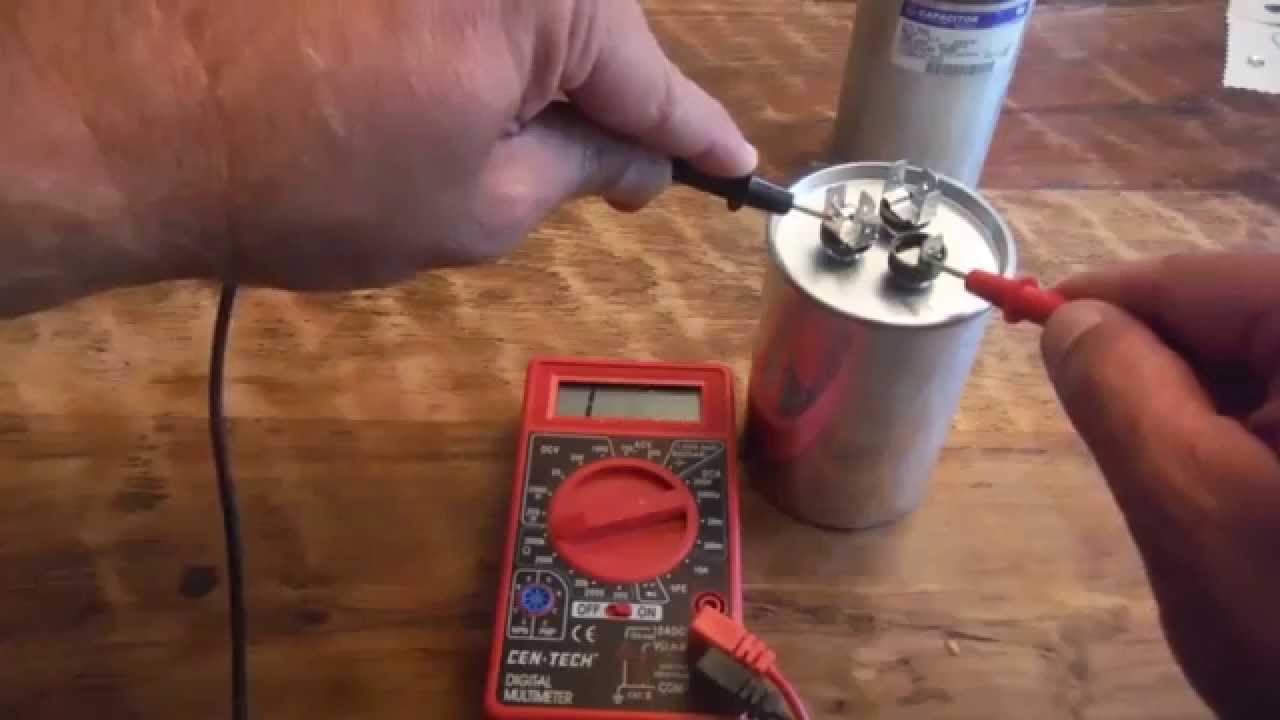
Many condensers use a run capacitor to help the fan motor start and run efficiently. When it weakens, the fan may not start, may start late, or may stop after running hot.
One extra detail that explains a lot of weird symptoms: many units use a dual run capacitor that serves both the compressor and the fan. So one part can cause a no-fan issue, a compressor issue, or both at the same time.
- What you might notice: humming from the outdoor unit, fan blade not moving, sometimes intermittent operation.
- What you can check: nothing safe without opening the electrical panel. Some failed capacitors bulge, but that requires panel removal, which I do not recommend for beginners.
- Best move: call a pro. Capacitor replacement is common and relatively quick, but it involves high voltage and stored energy risk.
Faulty contactor
The contactor is like a heavy-duty relay. When the thermostat calls for cooling, it pulls in and sends power to the outdoor unit components.
- What you might notice: outdoor unit totally dead and silent even though the indoor blower runs.
- What you can check: verify power at the disconnect and breaker, and listen for any change at the condenser when cooling is called. Beyond that, diagnosing the contactor requires opening the panel.
- Best move: if power is confirmed ON and the condenser remains silent, schedule service.
Failed fan motor
Fan motors live a hard life: heat, rain, dust, and long run times. Bearings can seize and windings can fail.
- What you might notice: loud grinding or squealing, fan starts then stops, fan moves very slowly, or the top of the unit feels unusually hot.
- What you can check: look for physical wobble through the grille, listen for bearing noise, and confirm the unit is not clogged with debris.
- Best move: call a pro. Motor replacement involves wiring, capacitor matching, and sometimes a new fan blade.
Lockout or safety shutdown
Sometimes the fan is not the real problem. The system is protecting itself. Common triggers include pressure switches (on systems that have them), condensate safety switches, control board issues, or compressor thermal overload.
- What you might notice: outdoor unit starts then quits, or will not restart for a long time; indoor air may still blow; behavior can be intermittent.
- What you can check: ice, dirty filter, blocked airflow, and obvious coil blockage. These are the homeowner-friendly items that can lead to lockouts.
- Best move: if you correct airflow basics and it still locks out, it is time for a technician.
10-minute checklist
If you want a simple, organized approach, here is the exact order I would run as a homeowner who wants to be helpful, not heroic.
- Thermostat check: set to COOL, setpoint 3 to 5 degrees below room temp. Wait 5 to 10 minutes in case your system has a built-in restart delay.
- Indoor filter: replace if dirty or unknown. Restricted airflow can cause icing and shutdown behavior.
- Outdoor power: confirm disconnect ON and breaker not tripped.
- Listen: silent, humming, buzzing, or clicking? Note it for the service call.
- If you hear humming or buzzing and the fan is not moving: turn cooling OFF to protect the compressor.
- Look for ice: especially on the large insulated suction line and near the indoor coil cabinet. If iced, shut cooling off and thaw.
- Clear the area: remove leaves and debris at least 2 feet around the condenser.
- Rinse coil lightly: only if it is visibly dirty and you can do it gently.
If the fan still does not spin after these checks, you have likely narrowed it down to capacitor, contactor, motor, or a control lockout. Those are professional-diagnosis items for most homeowners.
When to call a pro
- Breaker trips more than once.
- You hear buzzing plus the unit smells hot or electrical.
- The fan starts and stops repeatedly (short cycling).
- There is ice that returns after thawing and a clean filter.
- The outdoor unit is extremely hot to the touch on top or near the compressor area.
- You see any melted wire insulation or scorch marks.
One practical note from my own “learned it the hard way” file: running a condenser with a dead fan can cook the compressor. A compressor replacement is the opposite of budget-friendly.
What to tell the tech
A good service call goes faster when you can describe symptoms clearly. I like to share:
- Whether the outdoor unit is silent or humming or buzzing.
- Whether the fan ever starts, and if it stops after a few minutes.
- Any recent events: power outage, lightning, storm debris, lawn service edging close to the unit.
- Whether you saw ice on the large insulated suction line or at the indoor coil cabinet.
- Filter condition and when it was last changed.
That information helps them decide whether to arrive ready for a capacitor, a contactor, a motor, or deeper diagnostics.
FAQ
Can I keep the AC running if the outdoor fan is not spinning?
No. Shut cooling off. Without the fan, the condenser cannot reject heat properly, and the compressor can overheat and fail.
Why does my indoor fan blow but the outside unit does nothing?
The indoor blower is on a different circuit and can run even if the outdoor condenser has no power, a failed contactor, a tripped breaker, or a safety lockout.
Is a non-spinning fan always a bad capacitor?
No. A capacitor is common, but so are contactor problems, failed fan motors, and lockouts caused by icing or pressure issues.
What if the outdoor fan spins but the air is still warm?
That can be a different problem category (compressor not running, refrigerant issues, airflow problems). This page is fan-specific, so at that point you would want a broader AC cooling diagnosis.

About Marcus Vance
Content Creator @ Grit & Home
Marcus Vance is a lifelong DIY enthusiast and self-taught home renovator who has spent the last decade transforming a dilapidated 1970s ranch into his family's dream home. He specializes in budget-friendly carpentry, room-by-room renovations, and demystifying power tools for beginners. Through his writing, Marcus shares practical tutorials and hard-learned lessons to help homeowners tackle their own projects with confidence.