
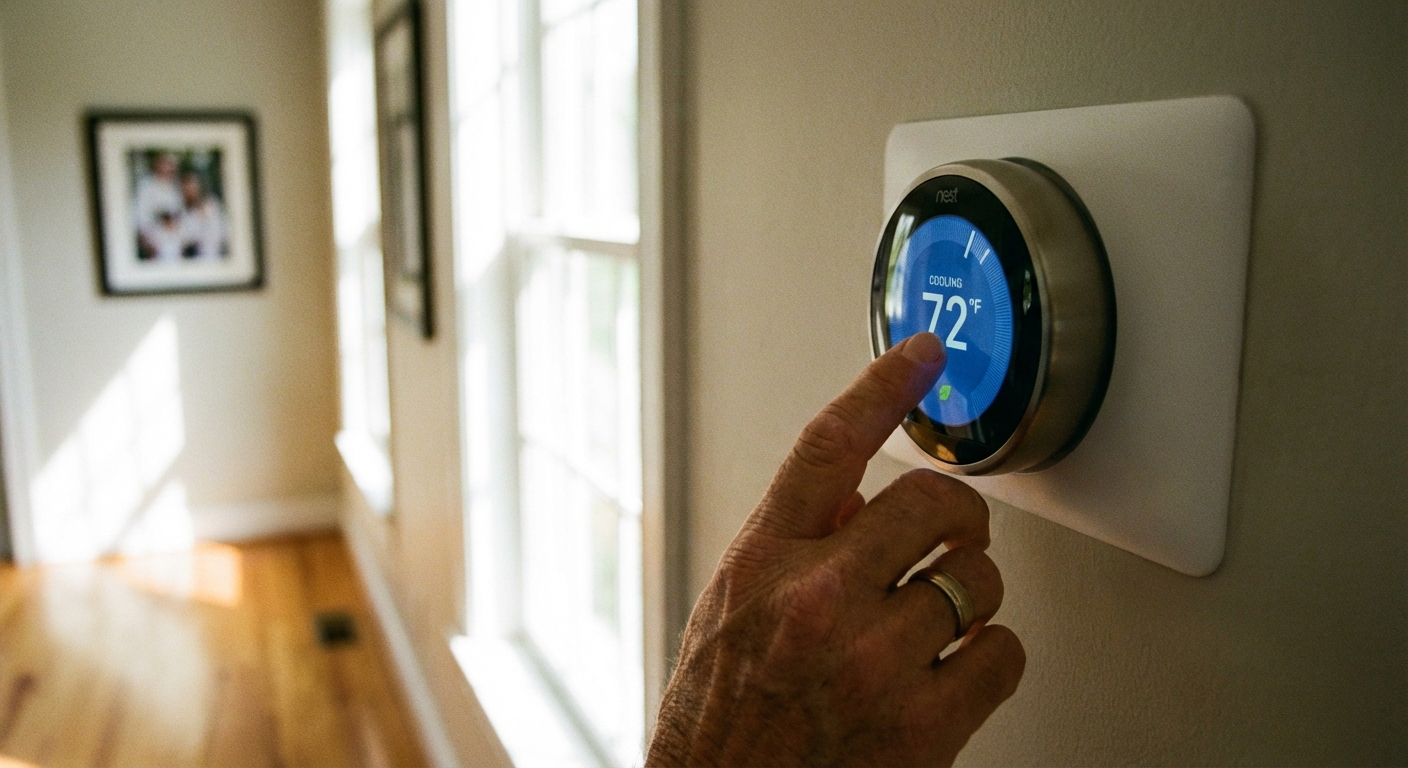
If your air conditioner is running but the air coming out feels lukewarm, you are not alone. This is one of the most common hot-weather panic moments, and a surprising number of “no cool” calls turn out to be a simple setting, a dirty filter, or a clogged drain.
I’m going to walk you through seven fixes in the order I’d do them at my own 1970s ranch. We will start with the no-tools checks and work up to the “open a panel” stuff. I’ll also tell you exactly when to stop and call a technician so you do not turn a small issue into an expensive one.
Before you start: safety and a quick reality check
- Turn the system off at the thermostat, then shut off power at the breaker and the outdoor disconnect before opening any panels. A thermostat is not a true power disconnect.
- Do not poke or scrape coil fins. They bend easily and restrict airflow.
- If you see ice on refrigerant lines or the indoor coil, skip ahead to Fix 7. Running the system while iced can damage the compressor and worsen the icing.
Helpful tools
- New air filter (correct size)
- Shop vacuum or wet/dry vacuum
- Garden hose with gentle spray
- Flashlight
- Screwdriver or nut driver (often 1/4 inch)
- Basic thermometer (optional)
What’s normal (optional 2-minute check)
If you have a thermometer, measure the air at a return grille and then at a nearby supply vent after the system has been cooling for 10 to 15 minutes. A rough rule of thumb is a typical 16 to 22°F drop at the supply compared to the return, but it varies with humidity, airflow, and where you measure. Short cycling and low airflow can skew the numbers too, so use this as a clue, not a verdict.
Fix 1: Check thermostat settings
This is the fastest win, and it catches the “wrong mode” and “fan setting” scenarios.
What to check
- Mode: Set to Cool, not Heat. If you use Auto, be aware some thermostats use auto changeover and can call for heat if the setup or setpoints are off.
- Set temperature: Put it at least 3 to 5 degrees below room temp to force a cooling call.
- Fan setting: Set to Auto for troubleshooting. Fan On can make supply air feel warmer between cycles and can hide the real issue.
- Batteries: If your thermostat uses batteries, replace them. Low power can cause weird behavior.
- Heat pump note: If you have a heat pump, confirm you are not in Emergency Heat or a heat-only mode.
What you should hear
Within a few minutes, you should hear the indoor blower. Shortly after, the outdoor unit should kick on. Some systems have a built-in 3 to 5 minute delay after power loss or shutoff, so give it a moment before you assume something is wrong.
If the indoor fan runs but the outdoor unit does nothing, jump to Fix 6. If the outdoor unit runs but you still do not get cool air, keep going in order.
Fix 2: Replace a dirty air filter
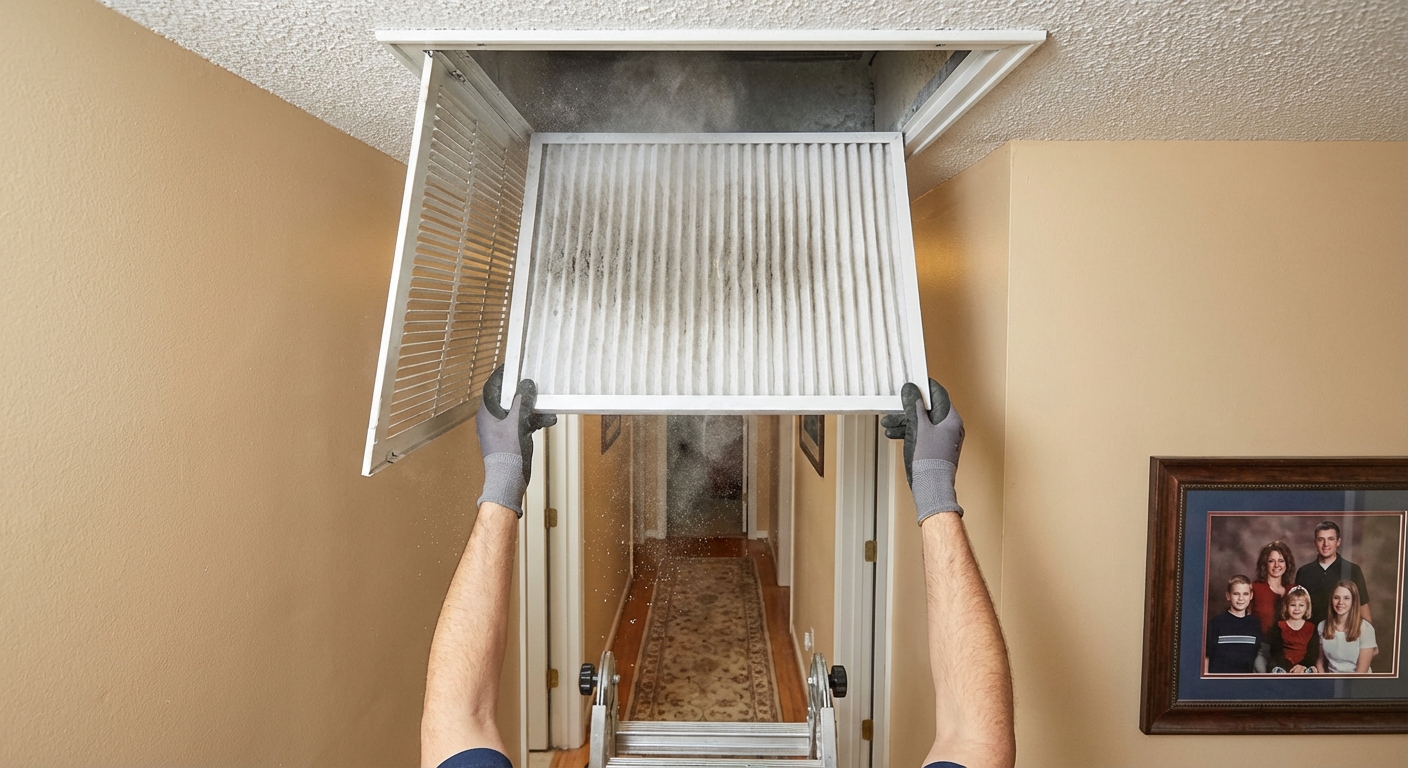
A clogged filter is like trying to breathe through a pillow. Your system can run constantly and still not move enough air across the coil to cool the house.
Steps
- Turn the system off at the thermostat.
- Locate your filter at the return grille, air handler, or furnace.
- Check the size printed on the frame and install the new one with the airflow arrow pointing toward the unit.
- Turn the system back on and give it 15 minutes.
Pro tip from my own mistakes
I once installed a filter backwards in a rush and spent the rest of the day wondering why airflow felt weak. If you only take one detail seriously here, take the arrow seriously.
When to call a pro: If you replace the filter and the system still will not cool, continue. If you see ice, stop running it and jump to Fix 7.
Fix 3: Check vents and airflow
This one sounds almost too simple, but it matters. Low airflow can make cooling weak and can even contribute to a frozen coil.
Quick checks
- Make sure return grilles are not blocked by rugs, furniture, or piled-up stuff.
- Make sure supply vents are open in multiple rooms. Closing too many registers can reduce airflow.
- If you have a very dirty return grille, vacuum it so air can actually get in.
When to call a pro: If airflow is weak everywhere even with a new filter and open vents, you could have a blower, duct, or coil issue that needs a technician.
Fix 4: Clear a clogged condensate drain line
Your AC removes humidity, and that water has to go somewhere. If the drain line clogs, many systems trip a safety switch and stop cooling even though the thermostat is calling for it.
Common signs
- Indoor unit runs, then stops unexpectedly
- Water around the indoor unit or a full drain pan
- A float switch near the air handler is raised (if your system has one)
Steps (most homes)
- Turn off power to the air handler at the breaker.
- Find the PVC drain line coming off the indoor unit, usually 3/4 inch white pipe.
- Locate the end where it exits near a floor drain, utility sink, or outside.
- Use a wet/dry vacuum on the end of the pipe for 1 to 2 minutes. Seal the hose connection with a rag for better suction.
- If you have a cleanout tee near the unit, you can also remove the cap and gently vacuum there.
About chemicals: Do not keep pouring harsh chemicals down the line. A careful vacuum-out is usually safer and more effective for DIY. Some homeowners use diluted vinegar or an approved condensate treatment occasionally for maintenance, but if you are unsure what your system can handle, skip it and stick with the vacuum method.
When to call a pro: If you cannot find the drain termination, the pan is overflowing, or the clog returns quickly, you may have a deeper blockage or a drain slope problem.
Fix 5: Clean the outdoor condenser
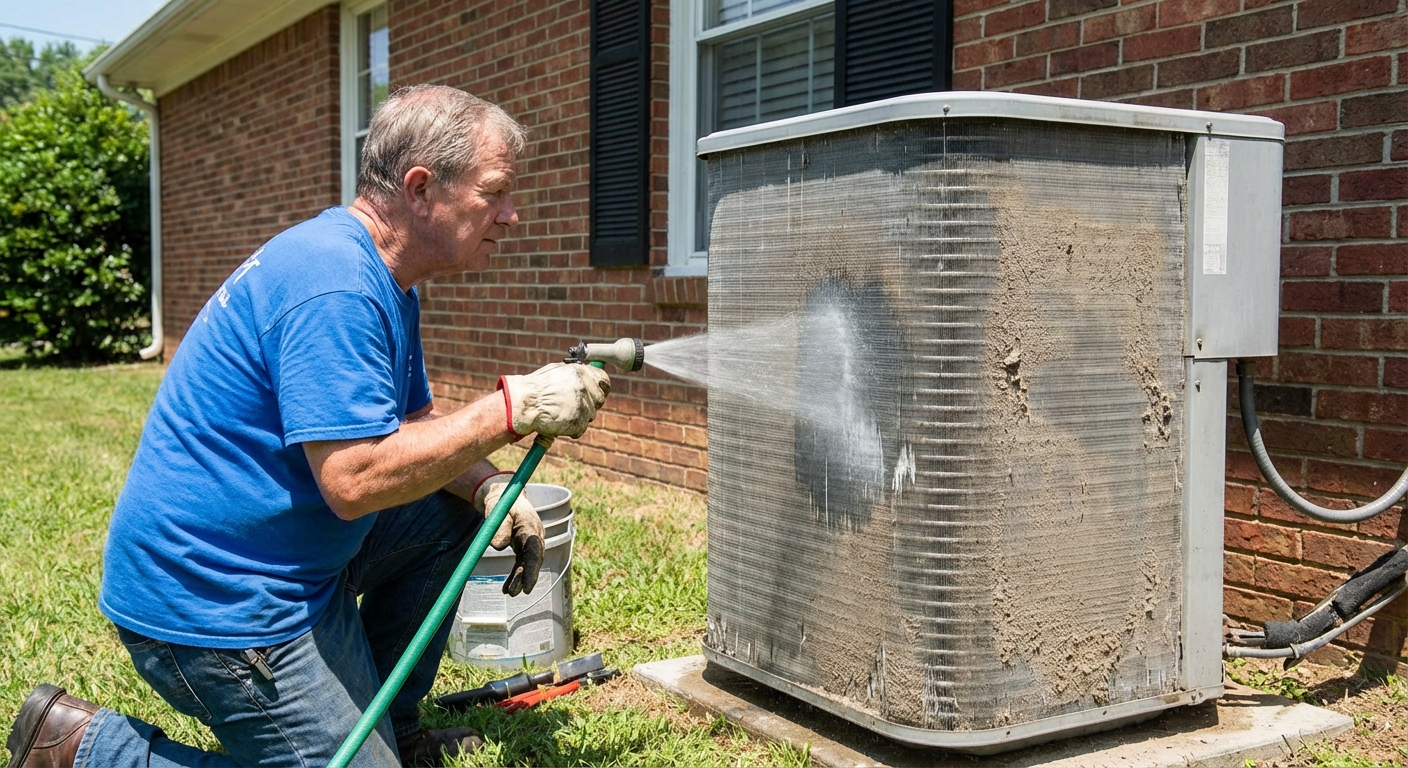
The outdoor unit’s job is to release the heat your house is trying to get rid of. If the coil is packed with cottonwood fluff, grass clippings, or leaves, cooling capacity can drop fast.
Steps
- Shut off power at the disconnect box near the unit and at the breaker.
- Clear debris around the unit. Aim for 12 to 24 inches of open space on all sides (follow the clearance on your unit’s label or manual if you can find it).
- Remove the top grille if needed to access the inside (some units allow cleaning without removal).
- Rinse the coil fins with a gentle hose spray. Work from inside out if you can.
- Let it dry, reassemble, and restore power.
What not to do
- Do not use a pressure washer. It can flatten fins and make the coil perform worse.
- Do not spray into electrical components.
When to call a pro: If the coil is greasy (common near dryers or busy roads) or heavily impacted, a technician can do a deeper cleaning with the right chemicals and fin protection.
Fix 6: Check power and switches
If the indoor fan runs but the outdoor unit does not, power is one of the first suspects.
Steps
- At your main electrical panel, look for a breaker labeled AC, Condenser, or Heat Pump.
- If it is tripped, reset it by switching it fully off, then back on.
- Check the outdoor disconnect box near the condenser. Make sure it is fully seated in the on position.
- Check for a tripped service switch near the furnace or air handler. It often looks like a regular light switch on the side of the unit or on a nearby wall.
Quick read on what you see outside
- Outdoor unit is totally dead: Likely a power issue, disconnect issue, or an electrical fault.
- Outdoor unit hums but fan will not spin: Commonly a capacitor or fan motor issue.
- Outdoor fan runs but air is not cool inside: Could be a dirty coil, airflow issue, or refrigerant problem. Keep going, and if it persists, call a pro.
Important caution
Do not stick anything into the fan, and do not open the electrical access panel on the condenser. If the breaker trips again quickly, stop resetting it. That usually means an electrical fault, a failing capacitor, a seized fan motor, or a compressor problem. That is technician territory.
Fix 7: Thaw and check the indoor coil
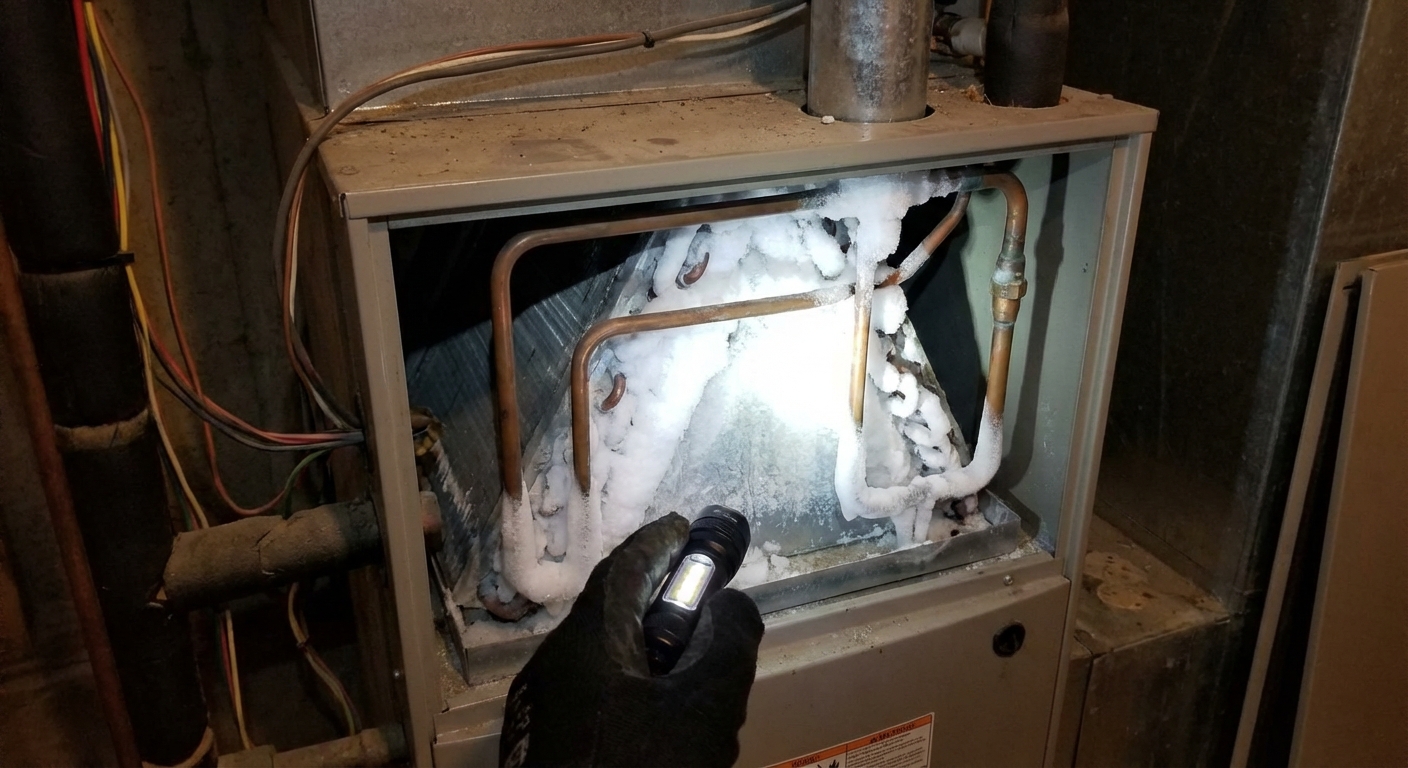
The evaporator coil is the cold part of the system, usually inside near your furnace or air handler. If airflow is low or refrigerant is low, the coil can get too cold and freeze. Once it ices over, it cannot absorb heat well, so you get little to no cooling.
How to spot a frozen coil
- Ice on the large copper refrigerant line near the indoor unit
- Little airflow from vents even though the blower is running
- Water on the floor after the system shuts off and the ice melts
What to do (DIY-safe)
- Turn cooling off at the thermostat.
- Set the fan to On to help thaw the coil.
- Let it thaw completely, often several hours to overnight depending on how iced it is.
- Replace the air filter if you have not already.
- After thawing, run cooling again and monitor airflow and temperature.
Light inspection only
If you can safely remove the access panel and see a coil that is just dusty, you can gently vacuum loose dust around the compartment. Do not bend fins or soak the area. If the coil is matted with grime, that cleaning is best left to a pro since it can involve coil cleaner, rinsing, and careful protection of electronics.
When to call a pro: If the coil freezes again after you fixed airflow (new filter, open vents, clean condenser), you likely have a refrigerant issue, metering device problem, or blower problem. Refrigerant work is not a DIY job.
When to stop and call a technician
I love saving money with DIY, but AC systems have a hard line between “homeowner maintenance” and “specialized repair.” Call for service if you notice any of the following:
- Breaker trips repeatedly
- Outdoor unit hums but the fan will not spin, or the fan starts only if you push it (possible capacitor)
- Hissing sounds, oily residue on lines, or suspected refrigerant leak
- Evaporator coil keeps freezing after replacing the filter and improving airflow
- Burning smell, melting wires, or visible electrical damage
- AC is older and you have weak cooling even with clean coils and good airflow
Cooling checklist
- Thermostat: Cool mode, set lower, fan Auto, fresh batteries (avoid Emergency Heat on heat pumps)
- Filter: replace, confirm arrow direction
- Airflow: returns not blocked, supply vents open in multiple rooms
- Drain line: vacuum out, check for overflow or float switch
- Outdoor unit: 12 to 24 inches of clearance, gently rinse coil
- Power: breaker, disconnect, and indoor service switch, stop if it keeps tripping
- Indoor coil: thaw ice, restore airflow, call pro if it refreezes
If you work through those in order, you will either fix the problem or you will have clean, specific symptoms to tell the technician, which usually saves time and money.

About Marcus Vance
Content Creator @ Grit & Home
Marcus Vance is a lifelong DIY enthusiast and self-taught home renovator who has spent the last decade transforming a dilapidated 1970s ranch into his family's dream home. He specializes in budget-friendly carpentry, room-by-room renovations, and demystifying power tools for beginners. Through his writing, Marcus shares practical tutorials and hard-learned lessons to help homeowners tackle their own projects with confidence.