
🚨 In a DIY emergency or rush?
Skip the details and jump straight to our 30-second cheat sheet for the most crucial info.
Gutter guards can be worth it. They just do not do what the marketing photos imply.
In the real world, a guard is less like a “never clean again” miracle and more like a bouncer at the door. It keeps out the big troublemakers (leaves, twigs, tennis balls), but plenty of smaller stuff still gets in (pine needles, shingle grit, seed pods). And even when debris stays on top of the guard, it can mat up and cause overflow.
If you are deciding whether to buy guards, or you already have them and water is still spilling over the edge, this page is for you.
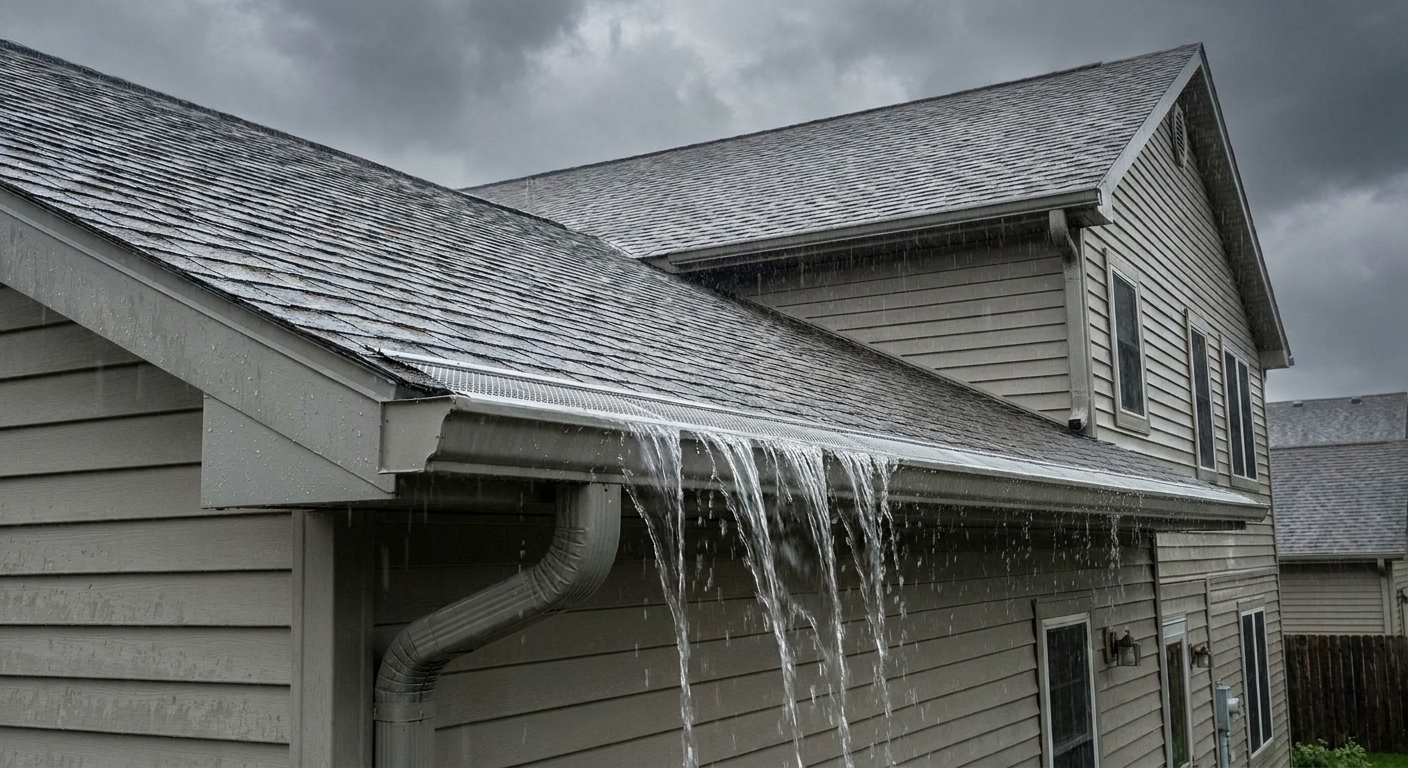
When guards are worth it
I put gutter guards on parts of my 1970s ranch after I got tired of cleaning the same valleys and back corners twice a season. The payoff was real, but only in the right spots.
Worth it if you have:
- Tall trees near the roof that dump leaves, helicopters, or needles for weeks.
- Hard-to-reach gutters over steep landscaping, a porch roof, or a second story.
- Basement or crawlspace water issues where a clogged gutter quickly becomes a wet foundation.
- A lot of downspouts that clog because you get roof grit or small debris.
Usually not worth it if:
- Your gutters are easy to clean and you only deal with a couple light leaf drops per year.
- You have mostly pine needles and you pick the wrong guard style.
- Your gutters are undersized or pitched wrong. A guard will not fix a capacity problem.
- You are trying to avoid maintenance entirely. Guards reduce cleaning frequency. They do not eliminate it.
What guards cost
If “worth it” is the question, cost has to be part of the answer. Prices vary a lot by region, gutter height, how complex your rooflines are, and whether you are paying someone to work off a tall ladder.
- DIY screen, brush, and foam: commonly the cheapest per linear foot. You usually trade lower upfront cost for more frequent cleaning, and sometimes replacement (especially foam).
- DIY micro-mesh kits: typically mid-range. They cost more than basic screens, but they can cut down on needle and seed debris if installed correctly.
- Professional installation (any style): usually the big jump. You are paying for labor, ladder risk, and getting the fit right around corners, valleys, and roof edges.
My ROI reality check: guards pay you back in fewer cleanings and fewer “surprise overflows,” not in magic. If you clean once a year and it is easy, guards might not pencil out. If you have a second story, a roof valley that dumps debris nonstop, or foundation water problems when a downspout clogs, guards can be cheap insurance.
Before you install anything
This is the part most people skip, then blame the guard later. A guard on a sick gutter system is like putting a new air filter in an engine with no oil.
- Check the gutter is solid: no sagging sections, loose hangers, or separated seams.
- Check the fascia: soft wood and rotten edges do not hold fasteners well.
- Check the drip edge: if water is sneaking behind the gutter now, a guard can make that worse unless the edge details are corrected.
- Check the downspouts: if they are already slow, a guard will not fix the bottleneck.
Pick the right type
Before we get into the pros and cons, here is the honest truth: the “best” gutter guard is the one that matches your debris and lets you service the gutter without cussing for an hour.
- Big leaves: screens and surface-tension covers usually do well, assuming the roof edge and drip edge details cooperate.
- Pine needles: fine micro-mesh is often the best bet, but it must be installed correctly.
- Roof grit and shingle granules: micro-mesh helps, but you still need a way to flush fines over time.
- Seed pods and tiny blossoms: expect some maintenance no matter what.
Types of guards
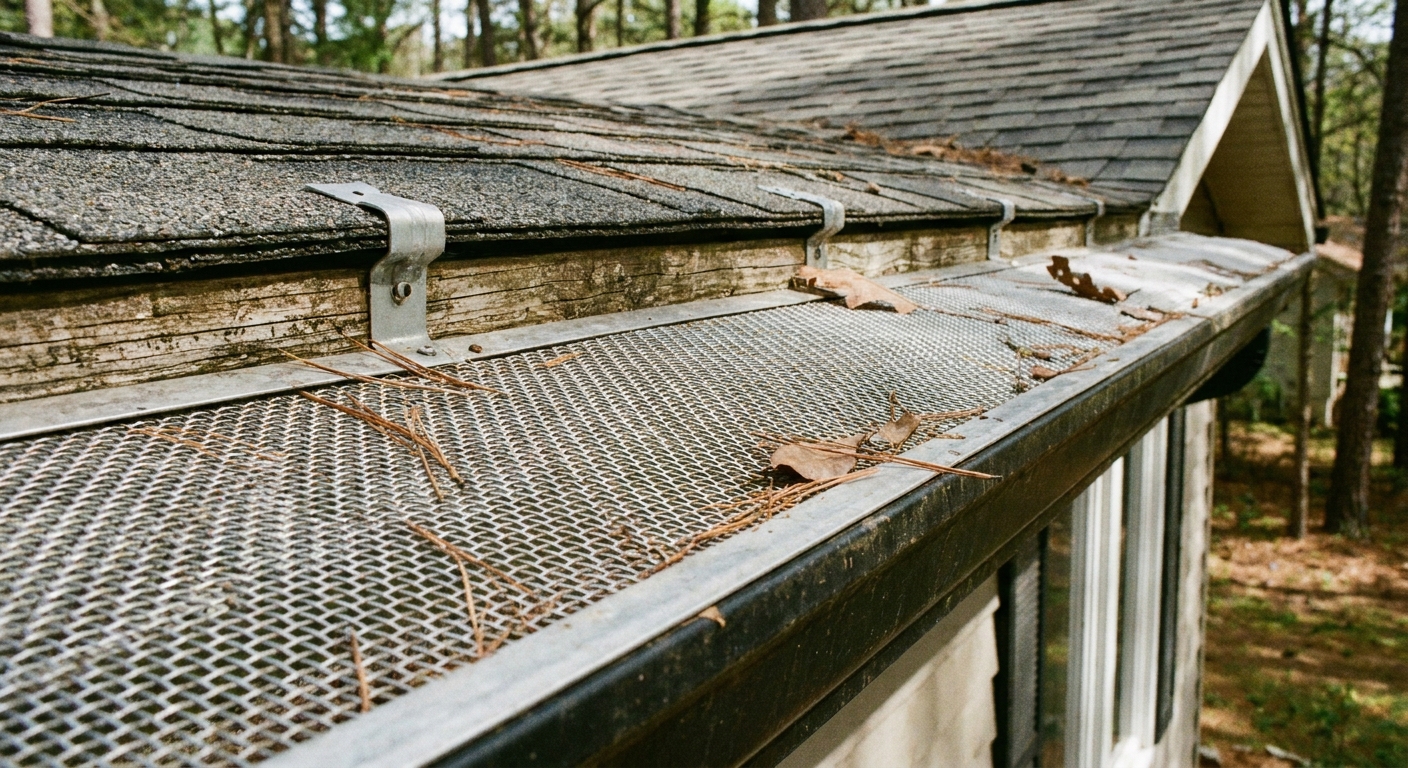
1) Screen guards (plastic or metal)
What they are: A perforated screen that sits on top of the gutter and lets water through the holes.
Stops well: Leaves, twigs, roof debris chunks.
What slips through: Small seed debris, shingle grit, fine pine needles (depending on hole size).
Clog and overflow pattern: Debris mats on top, water skates over the surface and spills past the front edge.
Cleaning access: Usually decent. Many snap in and can be removed section-by-section.
Ice and snow notes: In freeze-thaw climates, screens can get locked in by ice. Also, water can refreeze on top if the guard is cold and the flow is thin.
2) Brush guards
What they are: A cylindrical brush that sits inside the gutter, like a giant pipe-cleaner.
Stops well: Big leaves and chunks, especially in short bursts.
What slips through: Fine debris, shingle grit, small seeds.
Clog and overflow pattern: Leaves get tangled in the bristles and form a dam. Water can back up and overflow the front.
Cleaning access: Easy to pull out, but messy. Expect to carry a bucket and gloves.
Ice and snow notes: Can hold slush and refreeze into a stiff, clogged mass in cold snaps.
3) Foam inserts
What they are: A porous foam wedge that fills the gutter channel and lets water soak through.
Stops well: Leaves and larger debris, at least initially.
What slips through: Fine roof grit can embed in the foam over time. Small organic debris can break down inside it.
Clog and overflow pattern: Foam gets saturated with fines and organic matter, then it stops draining fast enough and you get overflow.
Cleaning access: Simple to remove, but once foam is packed with grit it is hard to truly “clean.” Many folks end up replacing sections.
Ice and snow notes: Wet foam in freezing weather can become a solid block.
4) Micro-mesh guards
What they are: A very fine stainless or aluminum mesh over a frame that lets water in but blocks small debris.
Stops well: Leaves, seeds, and many pine needles if the mesh is fine enough.
What slips through: Fine asphalt shingle grit can still accumulate underneath over time.
Clog and overflow pattern: Debris packs at the front edge and water rides over it, or fine sediment builds underneath and slows drainage.
Cleaning access: Varies. Some systems are easy to remove. Others are basically “installed forever” and are a pain to service.
Ice and snow notes: Like any covered system, it can change where meltwater refreezes, but it does not create the underlying heat-loss issue that causes ice dams.
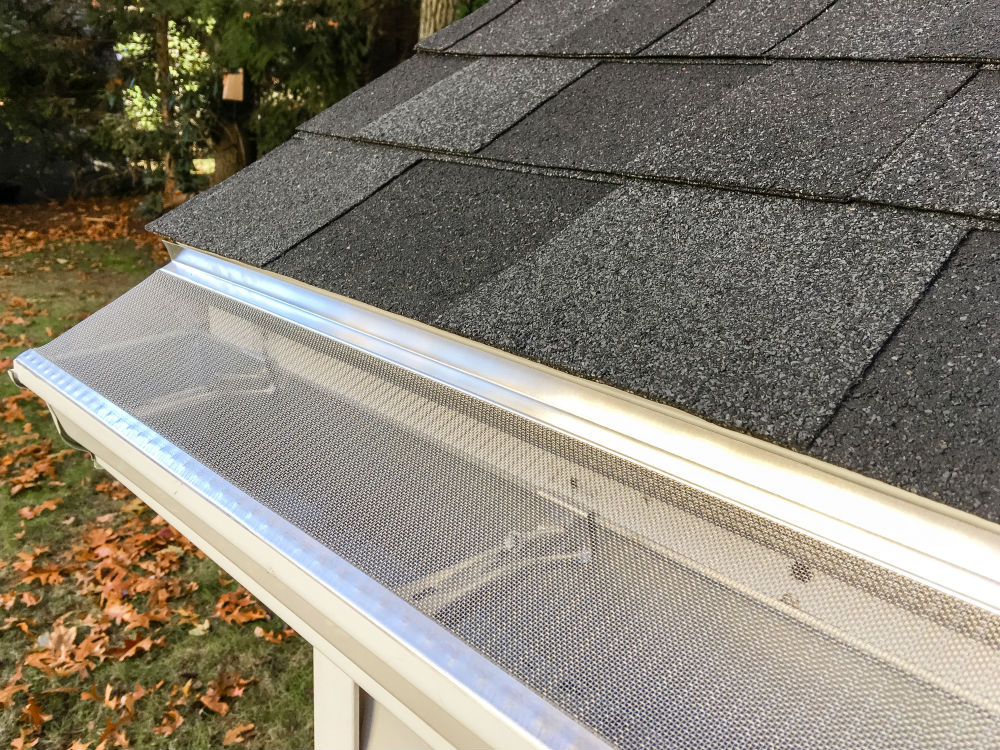
5) Surface-tension (helmet-style) covers
What they are: A solid cover with a curved nose. Water wraps around the curve and drops into the gutter while debris slides off.
Stops well: Big leaves and twigs. It can shed needles, but performance depends heavily on roof edge details, pitch, and installation.
What slips through: In heavy rain, water can overshoot if the cover angle is off. Small debris can wash in at seams.
Clog and overflow pattern: Water shoots past the nose in a downpour because the cover angle is wrong, or debris packs at the front edge and water rides over it.
Cleaning access: Varies. Some systems are removable, others are not.
Ice and snow notes: It can shift where meltwater refreezes along the eave. Ice dams can happen with or without gutters, so focus first on air sealing and insulation.
Maintenance you still need
If you buy guards expecting zero maintenance, you will be disappointed. If you buy guards expecting to do less work, less often, they can feel like a smart upgrade.
- Twice per year: Walk the perimeter after the big leaf drops and after spring pollen and blossoms. Look for overflow stains and plant growth.
- After big storms: Spot check valleys and inside corners where debris piles.
- Every 1 to 3 years: Plan a deeper clean for fine sediment, especially with micro-mesh systems.
My rule: If you cannot service your guard system without damaging it, that is not “low maintenance.” That is “delayed headache.”
Why guards still overflow
Most overflow complaints come down to one of these issues.
1) Debris mats at the leading edge
Leaves and needles can form a dam right at the front lip. Water hits the dam, then rides over the top.
2) The guard is at the wrong angle
If a cover is too flat, water does not drop in. If it is too steep, water can shoot past in heavy rain.
3) Heavy rain plus limited capacity
A 5-inch K-style gutter can be overwhelmed on certain roof sizes and pitches, especially in high-intensity rainfall or long runs with few downspouts. A guard cannot add capacity.
4) Fine sediment builds under the guard
Even if leaves stay out, shingle grit and tiny organic debris can accumulate. Eventually the gutter holds less water and drains slower.
5) The downspout clogs, not the gutter
Water backs up in the trough because the downspout is blocked, then it spills over the edge. People blame the guard because that is what they can see.
Fixes that work
Safety note from a guy who has had too many ladder “learning moments”: use a stable extension ladder, keep your hips between the rails, and do not overreach. If the ground is soft or sloped, take the time to set up a ladder leveler or move the ladder. It is cheaper than urgent care.
Do this first
- Clean the front edge where debris mats.
- Hose test by running water down the shingles, not straight into the gutter.
- Check the downspout for a partial clog.
- Check pitch and then think about capacity if overflow only happens in downpours.
Fix 1: Clean the top edge and valleys
If overflow happens only in a couple spots, start there.
- Use a gloved hand or a plastic putty knife to lift off matted debris along the front lip.
- Pay extra attention to roof valleys and inside corners. Those are debris magnets.
- Rinse lightly with a hose to confirm water is dropping in instead of skating over.
Fix 2: Reseat a test section
Before you rip off the whole run, pick one problem section and treat it like a test.
- Pop or unscrew a 3 to 4 foot section.
- Clear the gutter trough underneath.
- Reinstall carefully so it sits tight at the back (near the fascia) and does not bulge up at the front.
- Run water from a hose above it and watch the flow.
Two cautions: Check your warranty language before unfastening anything, and do not pry up shingles unless the system is designed for it. If you have to force it, you are probably doing roof damage to solve a gutter problem.
If the test panel behaves after reseating, your issue is probably installation alignment, not the guard concept.

Fix 3: Flush under the guard
For micro-mesh and covers, fine debris often hides underneath. A controlled flush can help.
- Start at the end opposite the downspout.
- Use a hose with a gentle spray, not a pressure washer.
- Work toward the downspout to push sediment the right direction.
- If water backs up quickly, jump to the downspout fixes below.
Avoid this mistake: blasting water upward under the guard. That can force debris into seams and create more problems.
Fix 4: Fix the pitch
A gutter that is nearly level will overflow faster because water lingers. Many installers aim for a modest slope toward the downspout. You will hear numbers like 1/16 to 1/4 inch per 10 feet depending on gutter size, site conditions, and who you ask. The goal is simple: steady movement to the outlet without ugly, obvious tilt.
DIY check: With the gutter clean, run water at the far end and see if it moves steadily to the downspout or pools.
DIY fix (basic): If you have spike-and-ferrule or hangers, you can often adjust hanger height slightly. Go slow. Small moves make a big difference.
If multiple sections are wrong or the fascia is rotted, it might be time for a pro. Bad fascia makes “perfect pitch” basically impossible.
Fix 5: Fix the downspout bottleneck
If your gutter fills up like a bathtub in one area, the downspout is a prime suspect.
- Install a small downspout outlet screen at the drop into the downspout to catch big chunks that sneak under guards.
- If you already have an outlet screen, clean it. These can clog fast in heavy leaf fall.
- Consider a downspout cleanout at the bottom if you are fighting recurring clogs.
Pro tip: If you add a filter at the outlet, you must be able to reach it to clean it. A “perfectly protected” clogged filter still causes overflow.
Fix 6: Recheck cover alignment
Surface-tension covers are picky. If the nose is too far out or the angle is off, water can shoot right past during heavy rain.
- Look for water marks on the fascia or along the gutter face.
- During a hose test, mimic rain by running water down the shingles above the guard, not directly into the gutter.
- If water consistently overshoots, the cover likely needs adjustment or a different style for your roof pitch and runoff volume.
Fix 7: Upgrade the weak link
If you hate your current guards, you do not always have to start from scratch.
- Keep the existing gutters if they are sound.
- Replace only the problem runs (valleys, pine-heavy sides, second-story back wall).
- Consider upsizing gutters or adding a second downspout where water volume is the real issue.
Ice and snow
Ice dams are mostly an attic insulation and ventilation problem. Warm roof melts snow, cold eaves refreeze it.
Where guards fit in:
- They can change the path of meltwater and where it refreezes along the eave.
- They can make mid-winter cleaning harder because the gutter is covered.
- They do not create the underlying cause (heat loss). Ice dams can happen with or without gutters.
If you routinely get big ice dams, spend your money on air sealing and insulation first. Then decide what guard style is easiest to service and least likely to trap slush.
What I would buy
This is not brand advice, just the practical pattern I have seen on real houses.
I lean toward:
- Quality micro-mesh when pine needles and small debris are the main problem and the system is removable for periodic flushing.
- Simple screens when the main enemy is big leaves and I want easy DIY access.
I am cautious about:
- Foam inserts in gritty roof situations or freeze-thaw climates.
- Brush guards in heavy leaf fall because they can turn into a compost log fast.
- Any system you cannot service without bending, snapping, or unfastening half the run.
FAQ
Do guards increase home value?
Usually not directly. Their value is more about preventing water damage and reducing routine maintenance, which can indirectly protect the home and your weekends.
Can I install guards myself?
Many screen and some micro-mesh systems are DIY friendly if you are comfortable on a ladder and your gutters are in good shape. If your fascia is soft, your gutters are sagging, or you need pitch corrections, fix that first.
Why does water run behind my gutters after installing guards?
Often the drip edge and guard are not playing nicely together, or the guard is pushing water back toward the fascia. You may need to adjust how the guard tucks under the shingles or drip edge, fix edge flashing, or switch styles.
The 30-Second Cheat Sheet
Essential takeaways for: Are Gutter Guards Worth It?
Are gutter guards worth it?
- Yes if you have heavy leaf drop, hard-to-reach gutters, or frequent downspout clogs.
- No if you expect zero maintenance or your real issue is undersized, poorly pitched, or sagging gutters.
Ballpark cost
- DIY screens/brush/foam: often the lowest cost, but expect more upkeep and occasional replacement.
- DIY micro-mesh kits: mid-range, better at small debris, still needs periodic flushing.
- Pro-installed systems: highest cost, best fit and finish when done right. Ask how you service it later.
Pick the right style
- Screen: Great for leaves and twigs, mediocre for pine needles and fine debris.
- Brush: Easy to install, can trap leaves and overflow.
- Foam: Starts strong, often clogs with roof grit and can freeze solid.
- Micro-mesh: Best for small debris when installed correctly, but still needs occasional flushing and access.
- Surface-tension cover: Sheds big debris well, but is picky about roof edge details and install angle.
If guards still clog or overflow, do this first
- Clear the leading edge where debris mats and water rides over.
- Remove and reseat one test section, clean underneath, then hose-test.
- Flush under the guard gently toward the downspout to move fine sediment.
- Check downspouts, add an outlet screen or cleanout if they clog.
- Check pitch and capacity so water moves steadily and the system can handle heavy rain.
Ice and snow reality check
- Guards do not fix ice dams. Insulation and air sealing do.
- Covered guards can shift where meltwater refreezes and make ice issues more noticeable, but they do not create the heat-loss problem.
- Choose a guard you can service when things freeze.
💡 Tip: Scroll up to read the full article for detailed, step-by-step instructions.
⬆️ Back to top
About Marcus Vance
Content Creator @ Grit & Home
Marcus Vance is a lifelong DIY enthusiast and self-taught home renovator who has spent the last decade transforming a dilapidated 1970s ranch into his family's dream home. He specializes in budget-friendly carpentry, room-by-room renovations, and demystifying power tools for beginners. Through his writing, Marcus shares practical tutorials and hard-learned lessons to help homeowners tackle their own projects with confidence.