
🚨 In a DIY emergency or rush?
Skip the details and jump straight to our 30-second cheat sheet for the most crucial info.
If your yard, driveway, or basement suddenly started acting like it lives next to a lake, a beaver dam is one of those sneaky “upstream causes” that can turn normal drainage into a full-on flood. I love a good DIY fix as much as anyone, but beavers are not like cleaning a clogged gutter. There are safety issues, legal rules, and some hard limits on what a homeowner should tackle solo.
This guide will help you (1) confirm it is beavers, (2) reduce damage and protect key drainage points like culverts, (3) use safe, humane deterrents that are commonly allowed, and (4) document things the right way so your county, road authority, HOA, or a licensed wildlife pro can actually help.
First: stay safe and avoid risky DIY
When water is backing up, the urge is to grab a rake, yank the sticks out, and call it a day. Two problems:
- Dams can release water fast. If you breach one suddenly, you can send a surge downstream, wash out a driveway, undermine a bank, or flood a neighbor harder.
- Beavers defend their work. They are usually shy, but they can bite when cornered. Add deep mud, steep banks, and cold water and it gets dangerous quickly.
Skip these common mistakes
- Do not climb on the dam. It can collapse and trap a leg in mud or debris.
- Do not use poisons, fuel, or chemicals. It is unsafe, often illegal, and can contaminate waterways.
- Do not block the culvert inlet with scrap materials. Scrap fencing, plywood, and similar “quick fixes” often make the clog worse and can cause a washout.
- Do not trap or relocate beavers yourself unless your state explicitly allows it. Many states require permits. Relocation is often restricted or illegal because agencies cite disease risk, high mortality, and the fact it simply transfers the conflict somewhere else.
Extra safety note: Avoid wading. Even shallow fast water can knock you down, and cold water can cause hypothermia faster than people expect.
If floodwater is threatening your home, septic system, electrical service, or a public road, treat it like an emergency. Call your local public works or road commission right away.
How to tell if beavers are the cause
You do not need to be a wildlife biologist. Beavers leave a pretty specific “signature.” Walk your property edge and any ditch or creek line, and look for these clues.
Signs of a beaver dam nearby
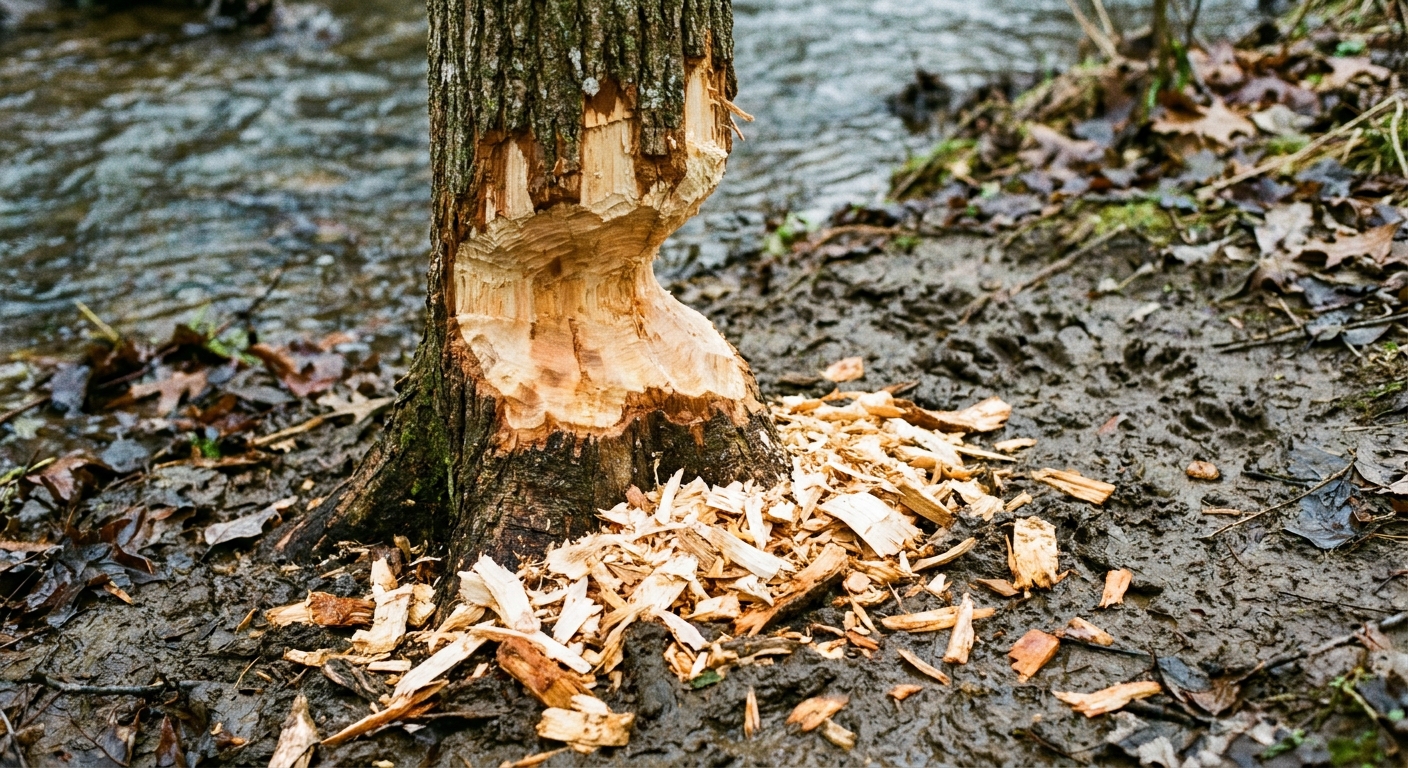
- Freshly cut stumps with a pencil-sharp point. Beaver cuts look like someone sharpened the tree with a giant hand tool.
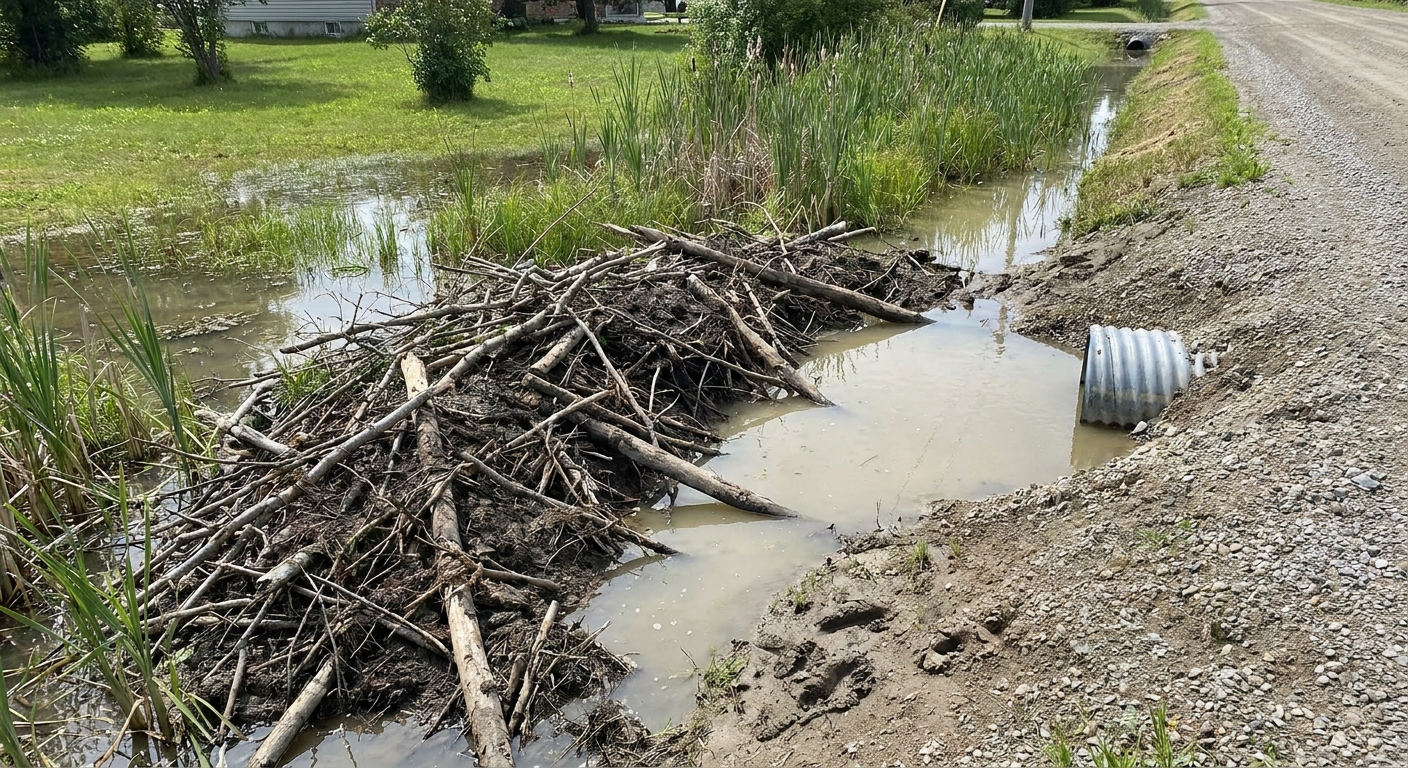
- Branches and sticks packed crosswise with mud. Dams look intentional, not like a random log jam.
- A lodge or bank den. A lodge is a mound of sticks in the water. A bank den is a hole in the bank with a slick “slide” into the water.
- New high-water line. Wet leaves, debris, or a dark line on grass and brush that did not used to be there.
Beaver vs. muskrat vs. storm debris
- Muskrats more commonly use bank burrows and smaller structures. They can pile vegetation and, in some situations, make small dams, but they do not usually dam flowing streams the way beavers do.
- Storm debris usually collects at a choke point but lacks mud packing and fresh cut branches.
Why beavers plug culverts and ditches
Culverts and roadside ditches are basically man-made streams. Beavers often respond to the sound and feel of running water and will try to slow it down or “fix the leak.” If a culvert makes a steady trickle sound, it can become a magnet.
Once they start plugging the inlet, water backs up, slows down, and spreads out. That higher water level can:
- Flood lawns and gardens
- Saturate a driveway base and cause potholes or washouts
- Push water toward a foundation or crawlspace
- Overtop a ditch and cut new erosion channels
Do this today: protect your house and document
Quick protection steps (low risk)
- Move valuables and tools out of low areas. Basements, sheds, and garages go first.
- Keep water away from the foundation. Clear your downspouts and extend them. If gutters dump next to the house, you are adding fuel to the fire.
- Mark rising water. A piece of painter’s tape on a fence post can show the water level over time.
- Keep kids and pets out of the water. Flooded ditches can hide sharp debris and deep holes.
How to document flooding so people act
If you end up needing county help, an insurance conversation, or a pro to bid a fix, good documentation is your best friend.
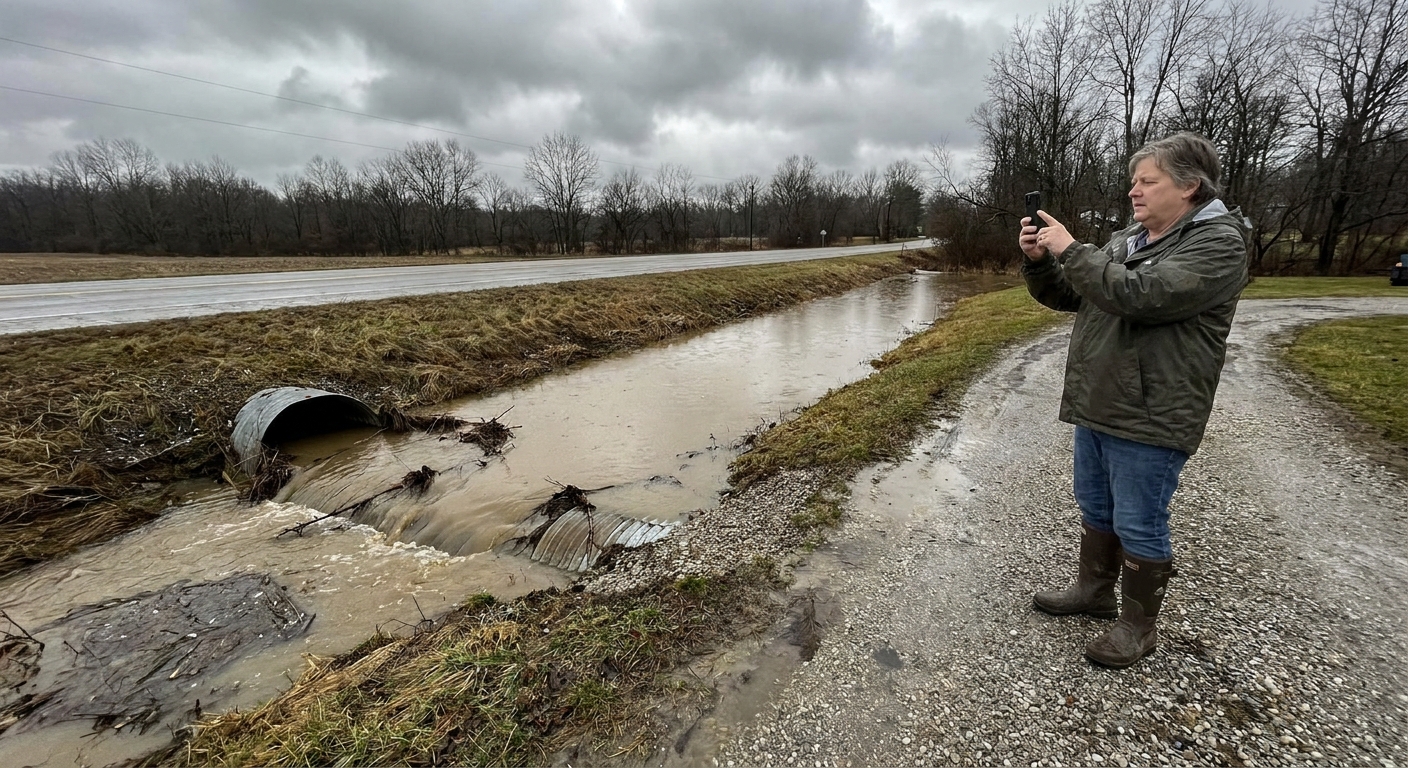
- Take wide shots and close-ups. Show the flooded area, then the dam or plugged culvert.
- Include a reference point. A shovel, tape measure, or known object in the photo helps show scale.
- Note dates and weather. “Flooding started after 1 inch rain on May 12” is useful context.
- Map the location. Screenshot a pin from your phone map or note the nearest cross street.
Permits and property lines matter
One of the biggest surprises for homeowners is that you can “own the land” and still be restricted from doing work in the water. Permit triggers often include:
- Working in or near a stream, creek, or regulated drain
- Wetlands or floodplain areas
- Road right-of-way culverts and ditches
- Stormwater easements (common in subdivisions and HOA neighborhoods)
If any of those apply, focus on documentation and calls first, not shovel work. It saves time and keeps you out of the liability zone.
Legal and humane deterrents homeowners can use
Rules vary by state and county, especially around streams, wetlands, and public road culverts. The safest approach is to focus on exclusion and water control rather than removal. These are commonly used by road commissions and pond managers because they reduce damage without harming the animal.
1) Culvert protection: “beaver deceiver” fences
The goal is simple: stop beavers from reaching and plugging the exact spot where water is trying to flow.
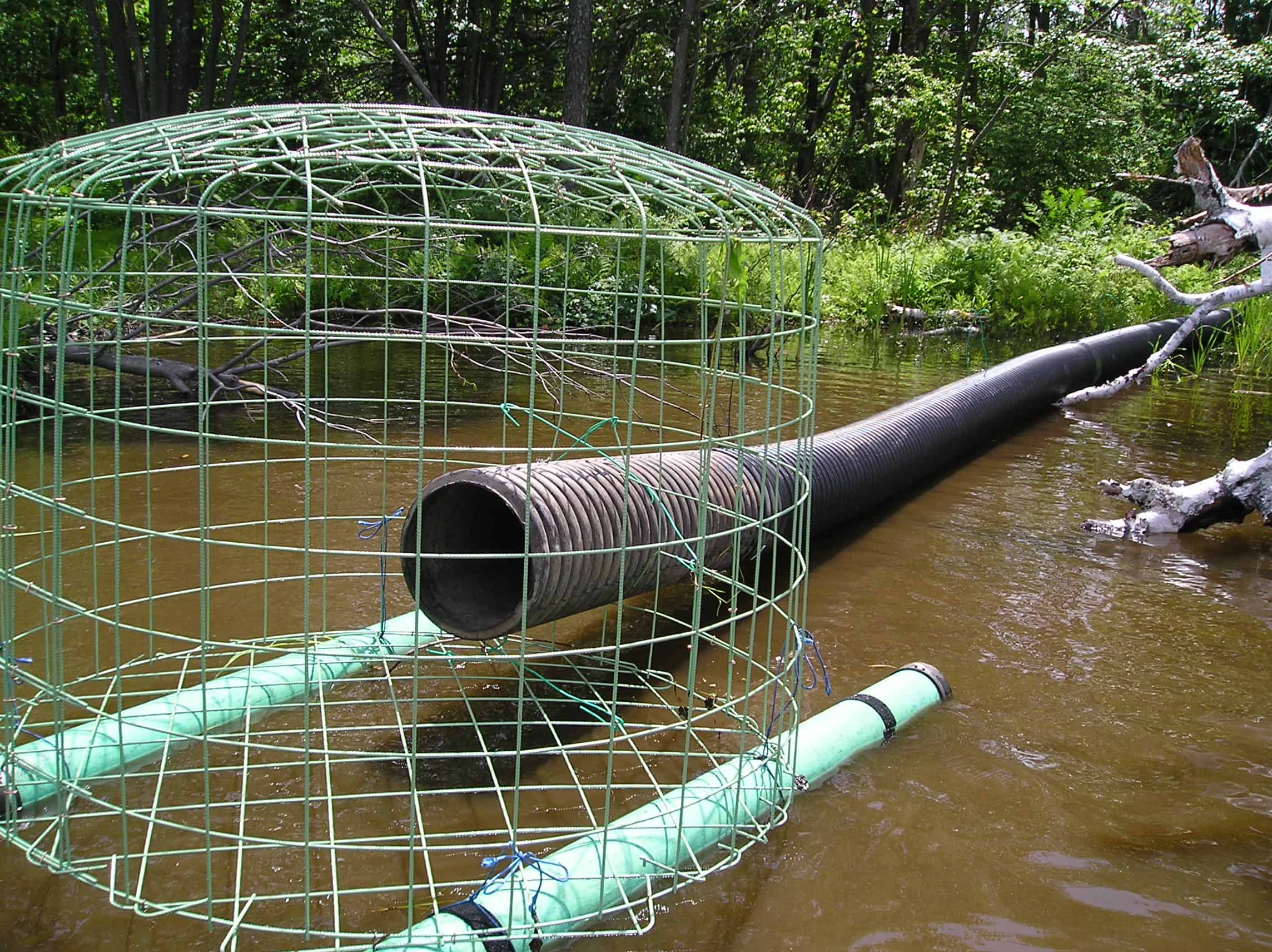
- What it is: A heavy-gauge wire fence built around the culvert inlet so the beaver cannot pack sticks right at the mouth.
- Why it works: Beavers prefer plugging the loud, high-flow point. When you move that “work zone” away from the pipe opening, the culvert keeps flowing.
- DIY reality check: If this is on a public road right-of-way or inside a stormwater easement, do not install anything without permission. For a private drive culvert, you can often do it yourself if you can work safely and anchor it well.
Build tips (general): Use rigid welded wire, sturdy posts, and leave enough space around the inlet that debris does not instantly mat across the whole fence. If you build it too tight to the pipe, you just created a bigger strainer that clogs.
Simple sizing example: Many successful culvert fences extend several feet out from the pipe and flare wider than the opening, so water can still get around light debris. If you want a proven diagram before you build, look up guidance from your state extension service, a state wildlife agency, or the Beaver Institute.
2) Pond levelers and flow devices
If the real problem is that a dam is raising the water level above what your property can handle, a flow device is often the most humane long-term solution.
- What it is: A pipe system that lets water pass through the dam or around it while reducing the sound and feel of running water that triggers beaver behavior.
- Why it works: The intake is placed in deeper, calmer water and protected with fencing. Beavers cannot easily find the exact “leak” to plug.
- Who should install it: Many homeowners hire a wildlife control operator or a contractor familiar with drainage and permitting. In regulated wetlands, you may need approvals.
3) Tree protection
Even if the immediate problem is flooding, it helps to cut off the buffet.
- Wrap trunks with heavy wire mesh. Hardware cloth or welded wire can protect favorite trees. Leave a little gap so the tree can grow.
- Focus on commonly targeted species. Willow, aspen, cottonwood, birch, maple, and similar softwoods and young trees are frequent picks, but local preferences vary.
4) Repellents, noise, and lights
I put these in the “maybe, but do not bet your basement on it” category.
- Repellents: Often wash off in rain, and beavers are persistent.
- Motion lights/noise: Sometimes work briefly, then the beavers adapt.
- Dogs: A dog can discourage daytime activity, but beavers work at night and dogs near water can get hurt.
If you must clear a plugged culvert
Sometimes the culvert is already blocked and water is rising fast. If the culvert is on your private drive and you can access it safely, you may be able to remove loose surface debris to restore some flow. The key is to avoid a sudden blowout and avoid wading in unstable muck.
Safer approach
- Work from the bank if possible. Use a rake, shovel, or a long pole.
- Start small. Pull loose sticks and leaves first. Let the water level drop gradually.
- Stand downstream or to the side. Avoid being in the direct line of a sudden surge.
- Stop if you hit packed mud and interwoven branches. That is dam structure, not simple debris.
Gear that helps
- Chest waders only if the bank is stable and water is shallow enough to be safe
- Work gloves and eye protection
- A heavy landscaping rake or manure fork
- A headlamp for early morning checks, plus a buddy if you are near deep water
Important: If this is a roadside culvert, call the road authority. Many places treat culverts as public infrastructure, and you do not want liability if a washout happens.
When to call a licensed wildlife pro
Humane deterrents are great, but there are situations where removal by a licensed wildlife control operator is the practical next step. Rules vary widely by location.
Call a pro if any of these are true
- The dam is causing repeated flooding even after you clear debris
- Water is threatening a foundation, septic, or wellhead
- The dam is on or near public road drainage
- You suspect a bank den that could undermine a driveway, pond berm, or slope
- You are in an area with wetlands or protected streams where permits are likely
A good operator will explain local rules, discuss flow devices, and give you options that reduce repeat problems. In many regions, trapping requires permits, seasons, and reporting, but the details vary widely.
If you see a beaver in daylight
Daytime sightings are not automatically an emergency. Beavers sometimes move during the day due to weather, time of year, food availability, or simple habit. Keep your distance. If one acts unusually bold or you are concerned about illness, call local animal control or your wildlife agency.
Bite note: Rabies in beavers is uncommon, but any wildlife bite needs prompt medical attention.
When an engineering fix is the answer
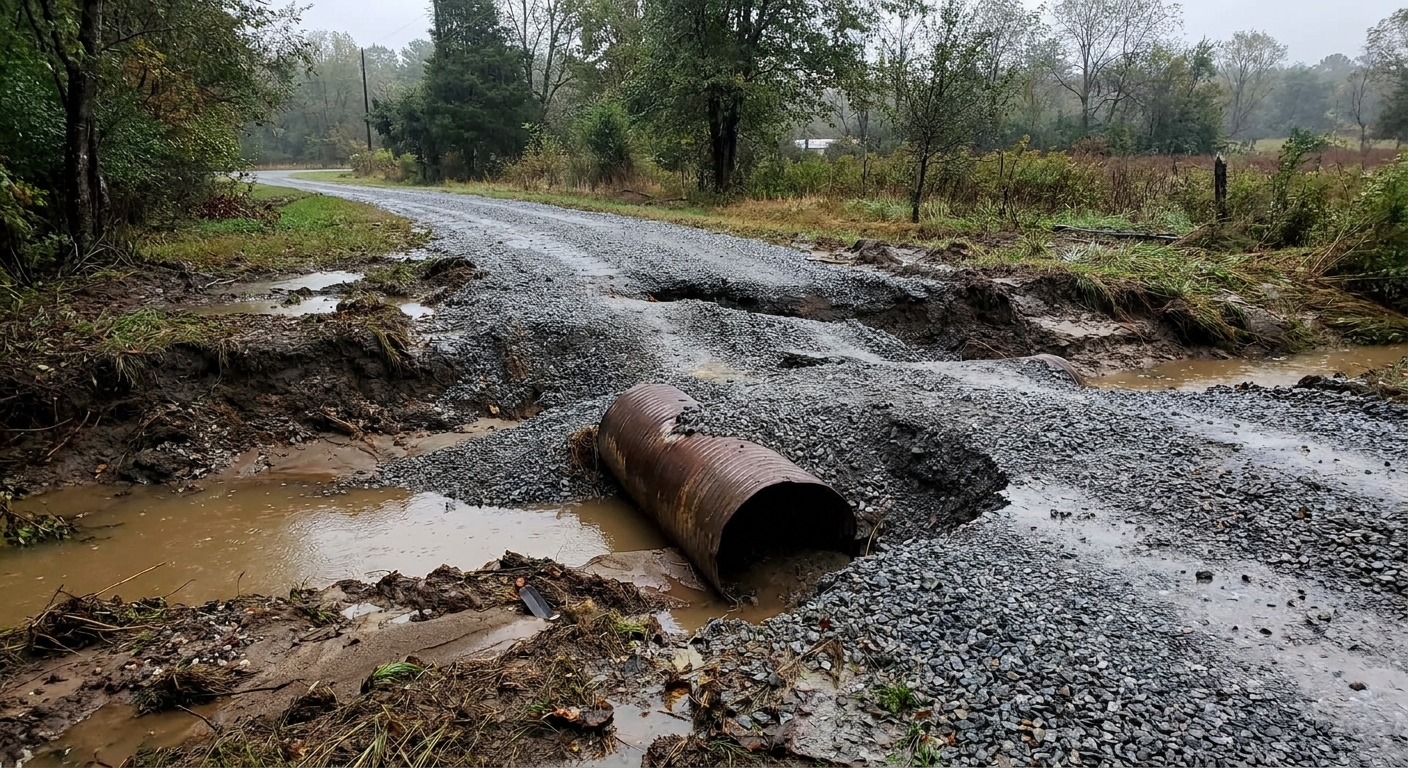
Sometimes the beaver is just exposing a design problem: undersized culvert, poor ditch grade, or a low spot that always wants to be a pond.
Signs you need more than deterrence
- Culvert is too small and overtops during normal storms
- Ditch has collapsed banks or severe sediment buildup
- Driveway is acting like a dam because of bad crown or no overflow path
- Water is cutting around the culvert ends (classic washout warning)
At that point, you are looking at options like a larger culvert, a second overflow culvert, regrading the ditch, armoring with rock, or adding a controlled spillway. This is where a local excavation contractor or civil engineer earns their keep.
Who to call and what to say
If you are not sure where responsibility falls, here is a simple call list. Start at the top and work down.
- Road commission or public works: If a roadside ditch or culvert is involved.
- County drainage district or stormwater office: If your area has one.
- HOA or property manager: If the flooding touches a shared pond, stormwater basin, or mapped drainage easement.
- State wildlife agency: For rules, permits, and lists of licensed operators.
- Licensed wildlife control operator: For assessment, trapping (if legal and needed), and flow device installs.
- Excavation contractor or civil engineer: If a culvert upgrade or ditch regrade is needed.
A script that gets results
“My property is flooding due to suspected beaver activity. Water is backing up at [culvert location] and is within [X feet] of [house/driveway/road]. I have photos and dates. Can you advise the proper next step and whether permits or an approved contractor are required?”
FAQ
Can I legally remove a beaver dam myself?
It depends on your state and the waterway. Many places regulate disturbance of dams, wetlands, and streams, even on private land. Call your state wildlife agency or local conservation office before you start pulling material.
Will the beavers just rebuild?
Often, yes. If the sound and flow conditions are still there, they will keep trying. That is why exclusion and flow devices are usually more effective than repeated tear-outs.
Is a beaver dam ever “good”?
Ecologically, beaver ponds can improve habitat and sometimes help with drought resilience. Practically, if it is flooding your home, septic, driveway, or public road, it needs management.
How much does professional help cost?
It varies widely by region and access. Trapping and site visits are often hundreds, and engineered culvert upgrades can run into the thousands. The cheapest long-term win is usually the fix that stops repeat clogs.
The 30-Second Cheat Sheet
Essential takeaways for: Beaver Dam Flooding Your Property? Safe Deterrents and Next Steps
What to do in the next 30 minutes
- Keep people and pets out of the flooded ditch or creek. Mud, sharp debris, cold water, and sudden surges are real hazards.
- Do not rip open a dam. A sudden breach can cause a downstream surge and make you liable for damage.
- Take photos and video. Wide shot of flooding, close-up of the dam or plugged culvert, and a reference object for scale.
- If a public road culvert is involved, call your road commission or public works.
How to confirm it is beavers
- Fresh “pencil-point” chewed stumps and wood chips
- Sticks packed with mud in a deliberate wall shape
- Lodge mound or a bank den with a smooth slide into the water
Best humane fixes (most repeat-proof)
- Culvert fence (beaver deceiver style): Keeps beavers from packing sticks right at the pipe mouth.
- Flow device or pond leveler: A protected intake and pipe system that quietly controls water level so beavers cannot easily plug it.
- Tree wrapping: Heavy wire mesh around trunks to reduce attraction.
When to call a pro immediately
- Water is approaching your foundation, septic system, or wellhead
- Flooding involves a roadside ditch or culvert
- You suspect a bank den undermining a driveway or slope
- You are in wetlands, an easement, or a regulated stream corridor
What to say when you call
“My property is flooding due to suspected beaver activity at [location]. I have photos, dates, and the water is within [X feet] of [house/driveway/road]. Who handles this, and do I need permits or an approved contractor?”
💡 Tip: Scroll up to read the full article for detailed, step-by-step instructions.
⬆️ Back to top
About Marcus Vance
Content Creator @ Grit & Home
Marcus Vance is a lifelong DIY enthusiast and self-taught home renovator who has spent the last decade transforming a dilapidated 1970s ranch into his family's dream home. He specializes in budget-friendly carpentry, room-by-room renovations, and demystifying power tools for beginners. Through his writing, Marcus shares practical tutorials and hard-learned lessons to help homeowners tackle their own projects with confidence.