
🚨 In a DIY emergency or rush?
Skip the details and jump straight to our 30-second cheat sheet for the most crucial info.
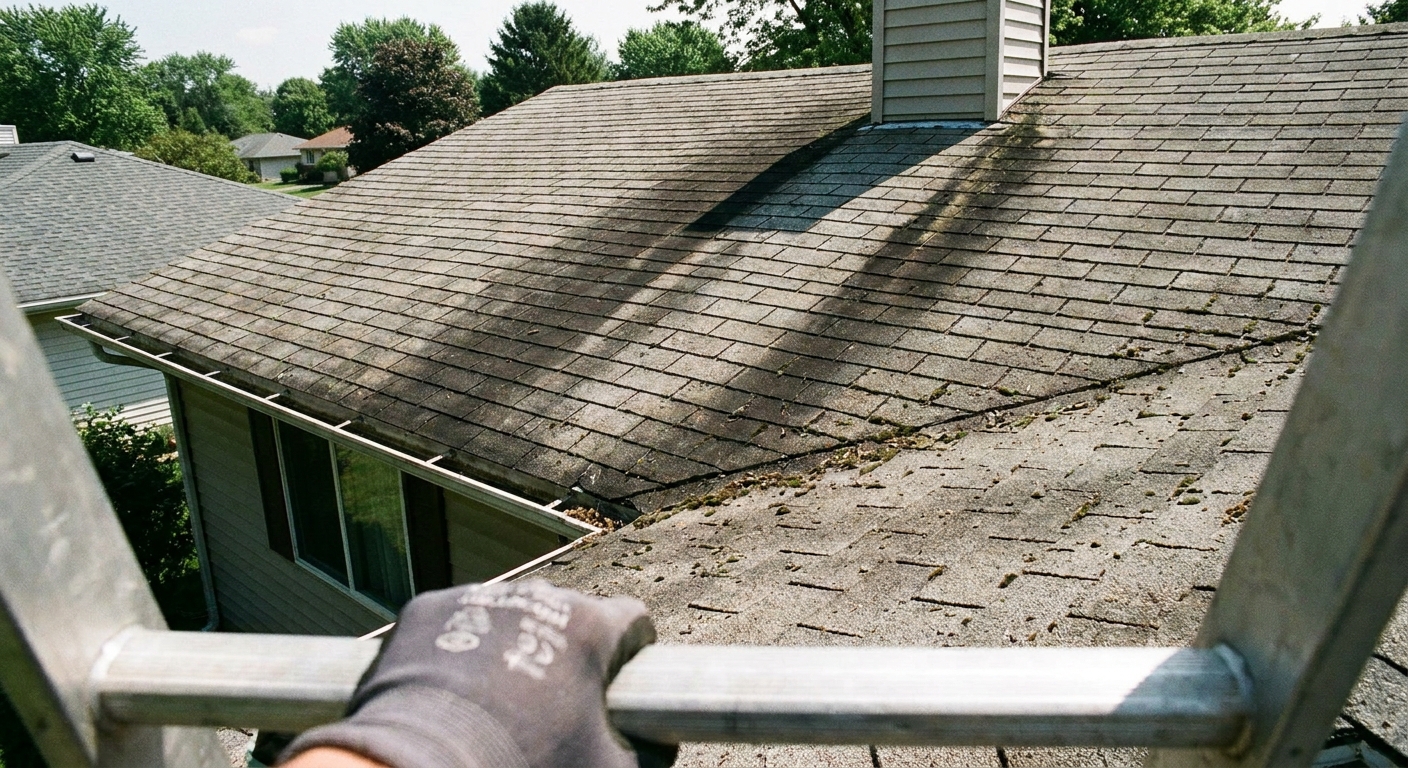
Those black streaks on asphalt shingles have a way of making a perfectly decent roof look worn out years early. The good news is that in many cases, they are not a sign your shingles are failing. They are usually staining caused by a living organism, algae, that thrives in the same humid, slow-drying conditions that grow moss.
I have battled this on my own 1970s ranch. My first instinct was to “blast it clean,” and I am glad I didn’t. Roof cleaning is one of those jobs where the wrong method makes the roof look better today and age faster tomorrow.
What those black streaks usually are
Roof algae (most common)
Most black streaks on asphalt shingles are commonly attributed to Gloeocapsa magma, a type of algae associated with dark smudges or vertical streaks. It tends to start and spread where the roof stays damp longer, like the north-facing side, under tree canopy, or below areas that don’t see much sun.
Important detail: the algae itself is not “eating” your shingles like termites eat wood. It is mainly a stain. But heavy growth can hold moisture on the surface and make a roof look prematurely aged, which is why homeowners want it gone.
Moss (different problem)
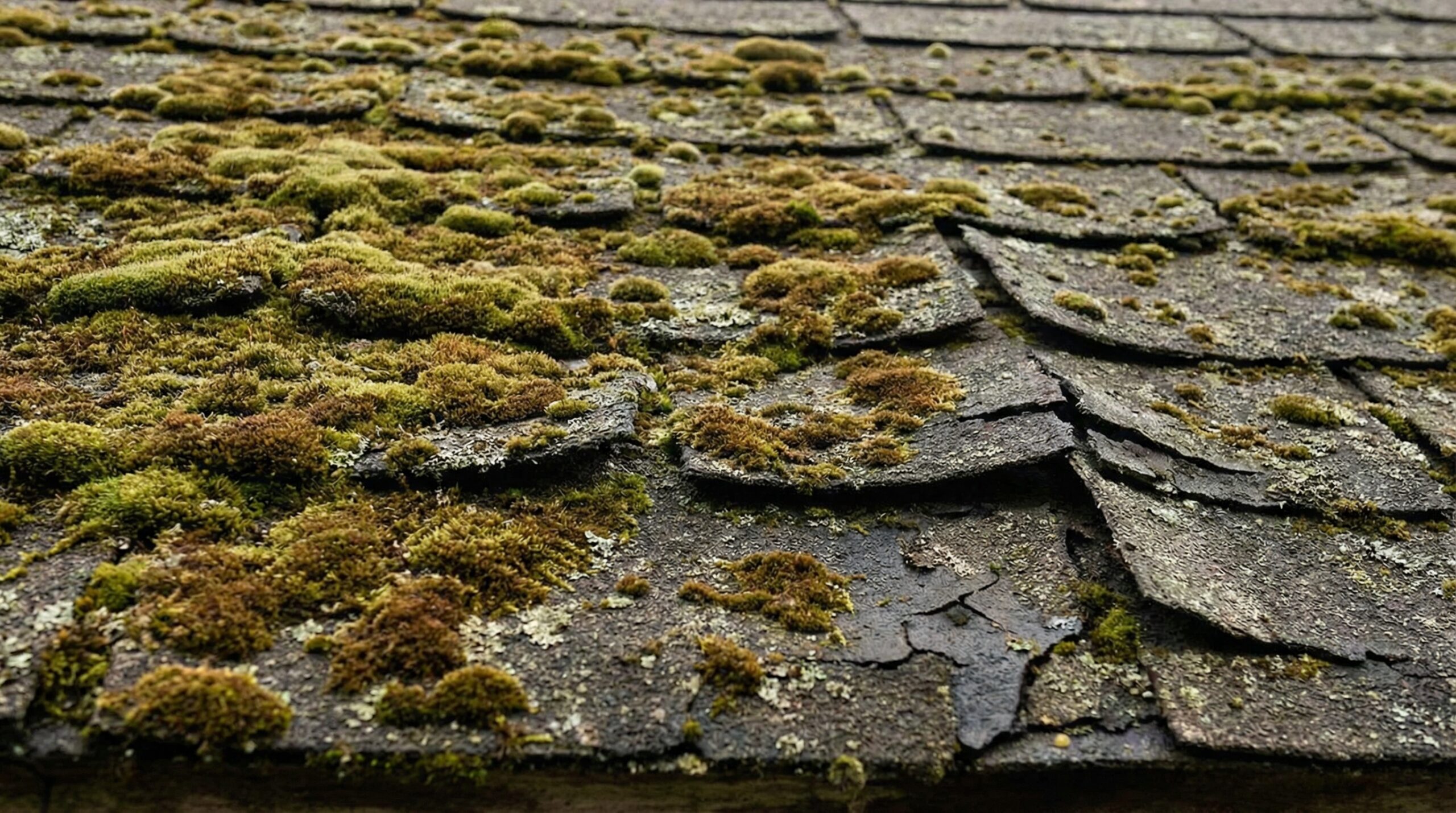
Moss looks fuzzy, thick, and three-dimensional. You can usually see little clumps or mats, especially between shingle tabs or at roof edges. Moss can lift shingle edges and trap water. If you have moss, think in terms of removal and prevention, not just “cleaning.”
Lost granules or shingle wear (not a stain)
Granule loss looks like:
- Bare spots where asphalt shows through, often lighter or patchy rather than black.
- Uneven, “balding” areas on high wear zones like valleys, near downspouts, or where water concentrates.
- Lots of granules in gutters or at downspout outlets.
If you are seeing bald patches, curling, cracking, or exposed fiberglass mat, cleaning will not solve it. That is inspection territory.
Quick comparison
If you like a fast gut-check, here is the simplest way to sort it out.
| What you see | What it usually is | What to do |
|---|---|---|
| Flat dark streaks or smudges | Algae staining | Gentle cleaner, soft-wash approach |
| Green, raised clumps or mats | Moss | Removal plus prevention, consider a pro if heavy |
| Bald patches, rough wear zones, granules in gutters | Granule loss or shingle wear | Inspect, cleaning will not fix it |
Why algae shows up on shingles
Roof algae is an outdoor chemistry and moisture problem, not a housekeeping problem. A few common drivers:
- Humidity and slow drying: Shaded roofs, north-facing slopes, and tight tree canopy stay wet longer.
- Airborne spores: Algae spreads easily by wind and rain splash, so one neighborhood can have it everywhere.
- Modern shingles: Some roofing pros note that certain shingle compositions and fillers can make a more algae-friendly surface in the right conditions.
- Roof design details: Valleys, dormers, and areas below chimneys can stay damp and collect debris.
It is also common to see streaking below ridge vents or roof penetrations. Often it is simply because water flow and drying patterns can change in those areas.
Before you clean
I am all for DIY, but roofs are where “just one quick job” can turn into a hospital visit or a roof replacement.
Skip DIY cleaning if any of these are true
- The roof is steep (anything that feels sketchy underfoot).
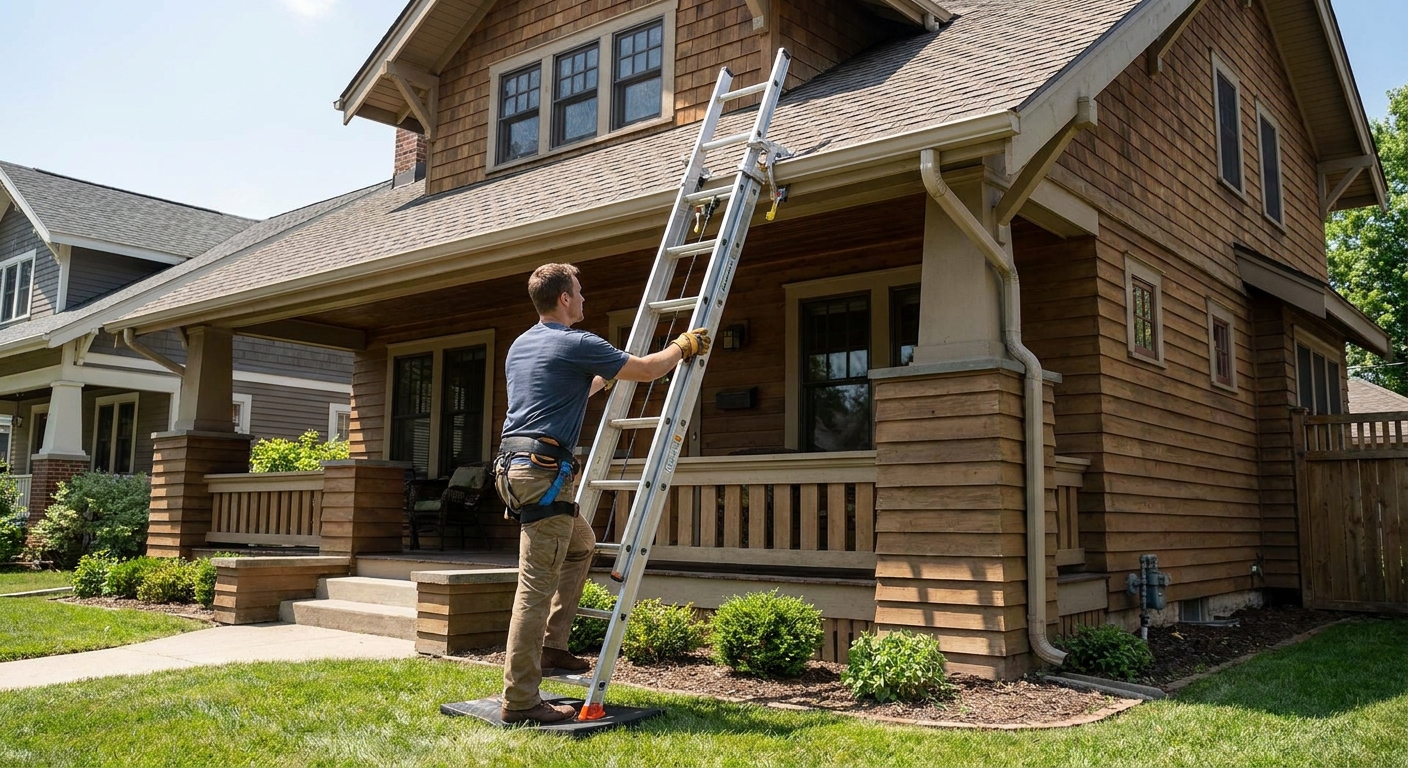
- You cannot safely set and tie off a ladder.
- Shingles are brittle, curling, or already shedding granules.
- You see soft spots, sagging, or signs of leaking in the attic.
PPE that matters
- Safety glasses: Especially when spraying overhead or in wind.
- Chemical-resistant gloves: A must with bleach-based products and still smart with oxygen bleach.
- Long sleeves and closed-toe shoes: Basic skin protection from overspray.
Two roof rules that save shingles
- No pressure washing: It can strip granules, force water under shingles, and shorten shingle life.
- No harsh scraping: Aggressive brushing can remove granules and damage the asphalt coating.
How to tell algae from moss or dirt
Use this quick field test from the ground or a ladder at the eave.
- Algae: Flat dark staining, often in streaks. It does not have a fuzzy texture.
- Moss: Raised green growth that looks like a sponge or carpet.
- Dirt: Usually more uniform and dusty. Often rinses away near roof edges after rain.
If you are unsure, take a photo zoomed in and compare texture. Texture is the giveaway.
Gentler cleaning options
There are two broad approaches: low impact DIY “soft wash” style cleaning, or hiring a roof cleaning company that uses the same principle. Either way, the goal is to kill the algae and let weather rinse it away rather than scrubbing shingles like a driveway.
What to expect: Even with the right cleaner, results can be quick or gradual. Some roofs improve in days, others take a few good rains to really lighten up.
Option 1: Roof wash products
Look for roof cleaning products labeled for asphalt shingles. Many are sodium percarbonate or other oxygen-based cleaners, and some are bleach-based formulas. Follow the label exactly, including dilution and dwell time.
- Work on a cool, overcast day if possible.
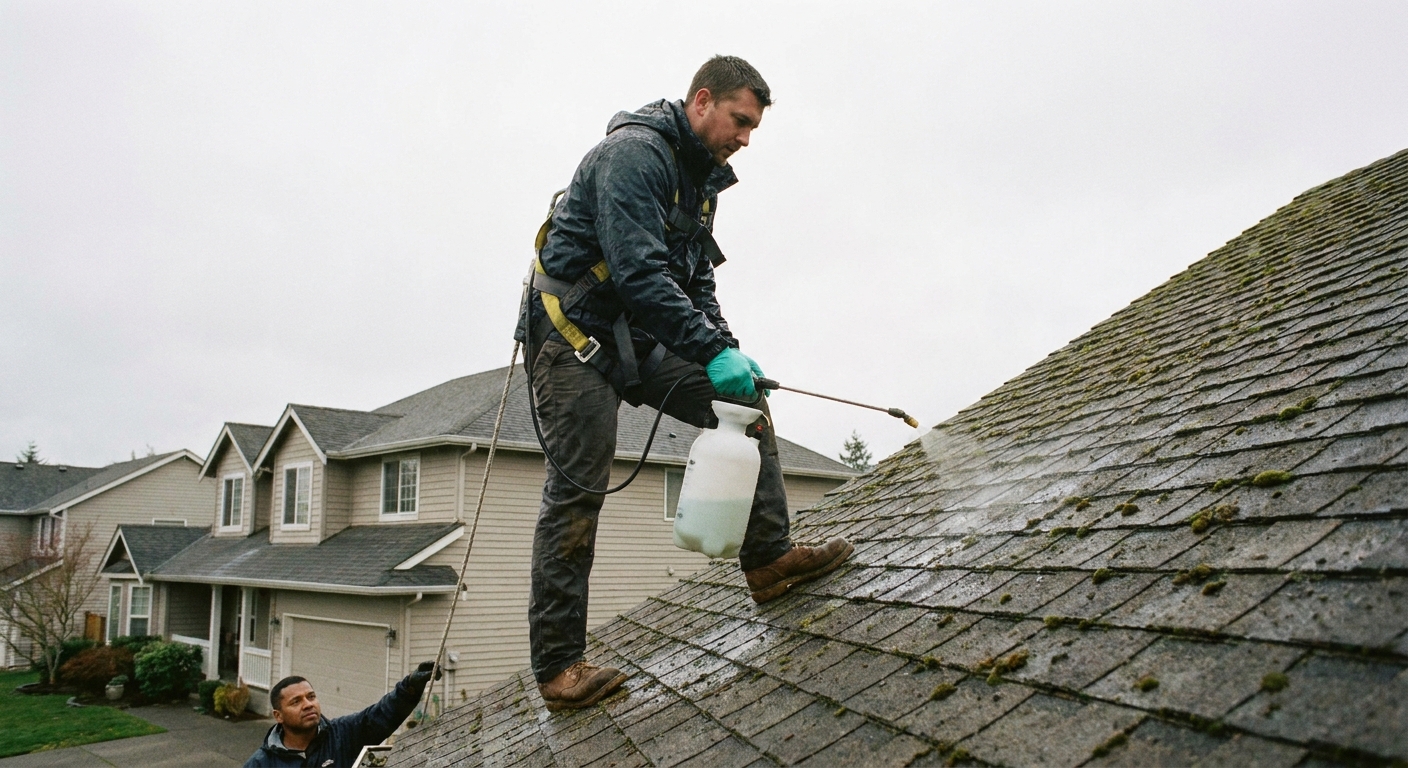
- Use a pump sprayer rather than any high-pressure nozzle.
- Rinse plants and pre-wet landscaping, then rinse again after.
Option 2: The classic “soft wash” mix (use caution)
Many pros use a diluted sodium hypochlorite solution with a surfactant. It works, but it is also easy to overdo and harm landscaping, corrode metals, and discolor surfaces if misapplied.
If you go this route, protect what you care about:
- Wear PPE: Safety glasses and chemical-resistant gloves are non-negotiable when spraying.
- Cover sensitive plants and keep them wet before and after.
- Watch overspray on aluminum gutters, painted siding, galvanized flashing, and outdoor furniture.
- Control runoff so it does not flow into storm drains, ponds, or waterways.
Because mixes and concentrations vary, I am not going to toss a one-size-fits-all ratio here. Read your shingle manufacturer guidance and the product label you are using, and when in doubt, hire it out.
Option 3: Let the rain do the work
Some homeowners apply an algae-killing cleaner and do not rinse aggressively. Over the next several rains, staining lightens as dead algae washes away. It is slower, but often safer for shingles.
Step-by-step: a safe DIY workflow
This is the approach I recommend for most beginners who have easy roof access and mild staining.
1) Pick the right day
- Cool surface temperature, little wind, no rain forecast for the dwell time recommended on your product.
- Avoid midday heat. Hot shingles plus chemicals can increase damage risk.
2) Prep landscaping and runoff
- Thoroughly pre-soak plants with clean water.
- Move patio furniture and cover anything you cannot rinse.
- Check that gutters and downspouts are not overflowing onto delicate areas.
- Plan runoff: divert downspouts away from storm drains, ponds, and sensitive beds if possible, and rinse everything with clean water after treatment.
3) Put on PPE
- Safety glasses, chemical-resistant gloves, long sleeves.
- If you are spraying above your head, do not skip eye protection.
4) Apply cleaner gently
- Use a pump sprayer and apply from the bottom upward to reduce streaking during application.
- Keep it on the shingles, not everywhere else.
5) Let it dwell, then rinse lightly if required
- Follow the product dwell time.
- If the label calls for rinsing, use a garden hose with gentle flow, not a pressure washer.
6) Repeat only if needed
Two light treatments are usually safer than one aggressive attempt. If the roof looks worse after you started, stop and reassess. You might be seeing granule loss, not algae.
7) Final rinse and cleanup
- Rinse plants again.
- Flush downspouts with clean water.
- Dispose of leftover solution according to the product label and local rules.
What not to do
- Do not pressure wash shingles. It can void or reduce warranty coverage depending on the manufacturer, and it can accelerate aging. Check your shingle warranty language.
- Do not scrub with a stiff brush. Granules are your UV protection.
- Do not use straight bleach without a plan. It can kill landscaping and stain other surfaces.
- Do not walk on a wet roof. It is slick even on a low slope.
- Do not ignore the why. If shade and debris are the root cause, staining will come right back.
Prevention that works: zinc or copper strips
If you want a longer-term fix, focus on prevention, not repeated cleaning.
How metal strips help
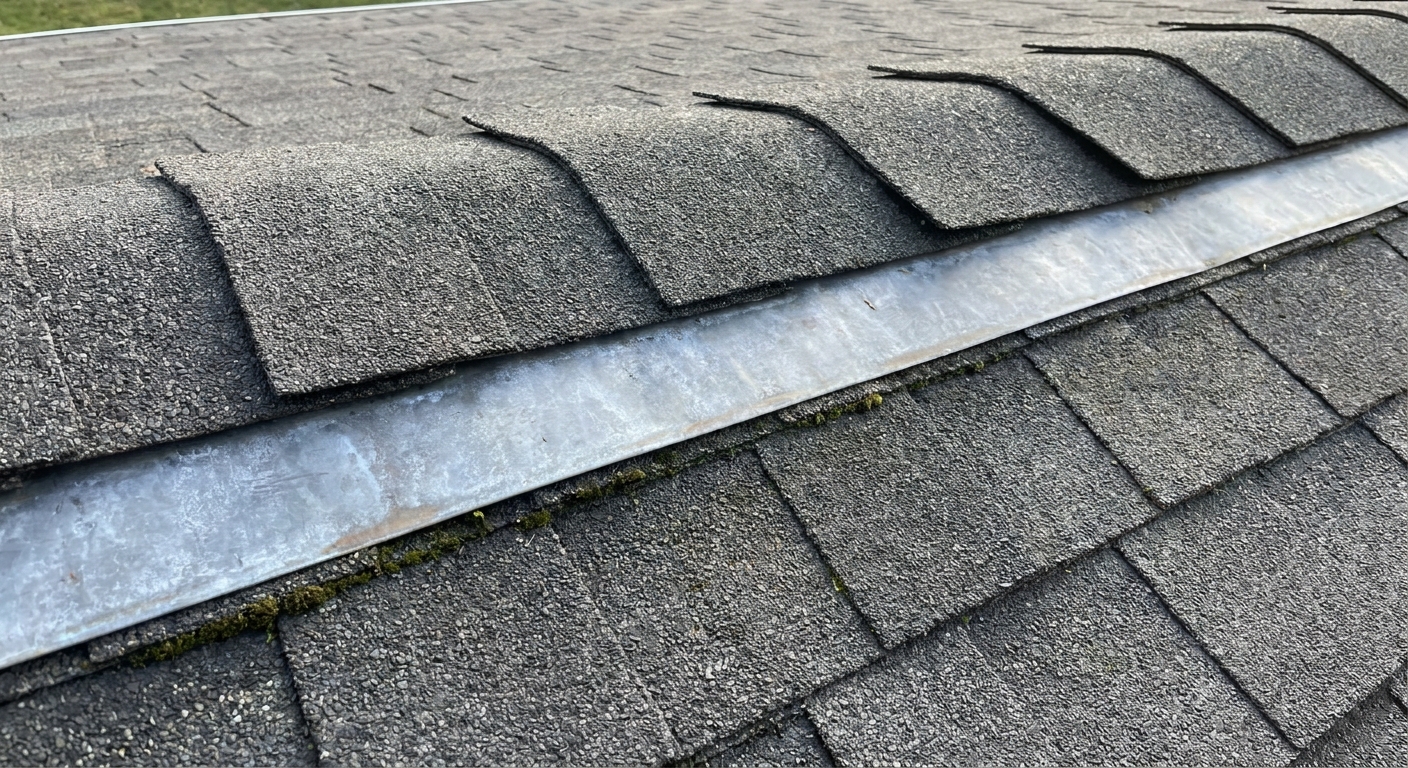
Installed near the ridge, zinc or copper strips release tiny amounts of metal ions when it rains. That runoff discourages algae growth as it flows down the roof. Over time, you will often see a cleaner zone below the strip.
One honest caveat: results depend on roof pitch, rainfall frequency, and how much shade the roof gets. In heavy shade, strips can help a lot but still may not keep the roof spotless.
Zinc vs. copper
- Zinc: Common, effective, generally more budget-friendly.
- Copper: Often more durable and highly effective, usually pricier.
Installation notes
- Placement matters. Strips are typically installed near the ridge under the shingle course so only a small portion is exposed.
- Different roofs need different lengths and layouts.
- If you are not comfortable lifting shingles and nailing near the ridge, this is a good job for a roofer or experienced handyman.
Other prevention habits
- Trim back tree branches to increase sun and airflow.
- Keep gutters flowing so water does not back up and wet the roof edge.
- Clear roof debris gently with a leaf blower from a ladder or from the ground when possible.
When black streaks mean inspect
Algae is often cosmetic. These situations are different, and I would treat them as a prompt to inspect or call a pro.
Call for an inspection if you notice
- Streaks plus curling, cracking, or missing shingles
- Granules piling up in gutters or at downspouts
- Soft spots when walking the roof (or visible sagging from the ground)
- Water stains on ceilings or in the attic
- Heavy moss lifting shingle edges
A quick attic check
On a bright day, peek in the attic for:
- Dark staining on roof decking
- Musty odor
- Rusty nail heads
- Sunlight showing through
If anything looks suspicious, stop cleaning and switch to diagnosing.
Will cleaning shorten shingle life?
Gentle cleaning done correctly is far less risky than pressure washing, but any time you apply chemicals or walk on shingles, there is some risk. The goal is to choose methods that protect the granules and avoid forcing water under the shingle courses.
If your roof is older and already brittle, you might be better off living with mild staining until replacement, then choosing algae-resistant shingles for the new roof.
FAQ
Are black streaks mold?
Usually no. On asphalt shingles, black streaking is most often algae. Mold can show up on other building materials, but roof streaks that look like vertical runs are commonly algae staining.
Can I clean algae from the ground?
Sometimes, yes, if you can reach the lower roof area safely with a pump sprayer and a gentle hose rinse. The moment you are tempted to climb higher than you can safely handle, it is time to call a pro.
How long does it take for stains to disappear after treatment?
It depends on the product, severity, and weather. Some roofs look better in days. Others improve gradually over several weeks of rain and sun.
Do algae-resistant shingles help?
Yes. Many manufacturers offer algae-resistant shingles that include copper-containing granules. They do not make algae impossible, but they can delay staining significantly.
The 30-Second Cheat Sheet
Essential takeaways for: Black Streaks on Roof Shingles: Algae, Causes, and Safe Cleaning
What black streaks usually are
Most black streaks on asphalt shingles are roof algae (commonly attributed to Gloeocapsa magma), especially on shaded or north-facing slopes. Moss is different because it is green and raised. Granule loss looks like bald, worn patches, not a flat stain.
Fast identification
- Algae: flat dark streaks or smudges
- Moss: fuzzy, clumpy, three-dimensional growth
- Wear/granule loss: patchy thinning, lots of granules in gutters
Safest cleaning approach
- Do not pressure wash shingles.
- Use a roof-safe cleaner and a pump sprayer.
- Wear PPE: safety glasses and chemical-resistant gloves, especially when spraying above eye level.
- Let the cleaner kill the algae and allow rain to rinse over time, or rinse gently with a garden hose if the label requires it.
- Protect landscaping by pre-wetting and post-rinsing plants.
- Make sure runoff does not flow into storm drains, ponds, or waterways.
What not to do
- No pressure washer.
- No stiff brushing or scraping.
- No reckless bleach use without plant protection and runoff control.
Prevention that works
Install zinc or copper strips near the ridge. Rainwater carries metal ions down the roof, discouraging algae regrowth. Effectiveness depends on rainfall, roof pitch, and shade, so it may reduce staining more than eliminate it. Also trim overhanging branches and keep debris off the roof.
When to inspect instead of clean
- Curling, cracking, missing shingles
- Heavy granules in gutters or downspouts
- Soft spots, sagging, or interior leak stains
- Thick moss lifting shingle edges
💡 Tip: Scroll up to read the full article for detailed, step-by-step instructions.
⬆️ Back to top
About Marcus Vance
Content Creator @ Grit & Home
Marcus Vance is a lifelong DIY enthusiast and self-taught home renovator who has spent the last decade transforming a dilapidated 1970s ranch into his family's dream home. He specializes in budget-friendly carpentry, room-by-room renovations, and demystifying power tools for beginners. Through his writing, Marcus shares practical tutorials and hard-learned lessons to help homeowners tackle their own projects with confidence.