
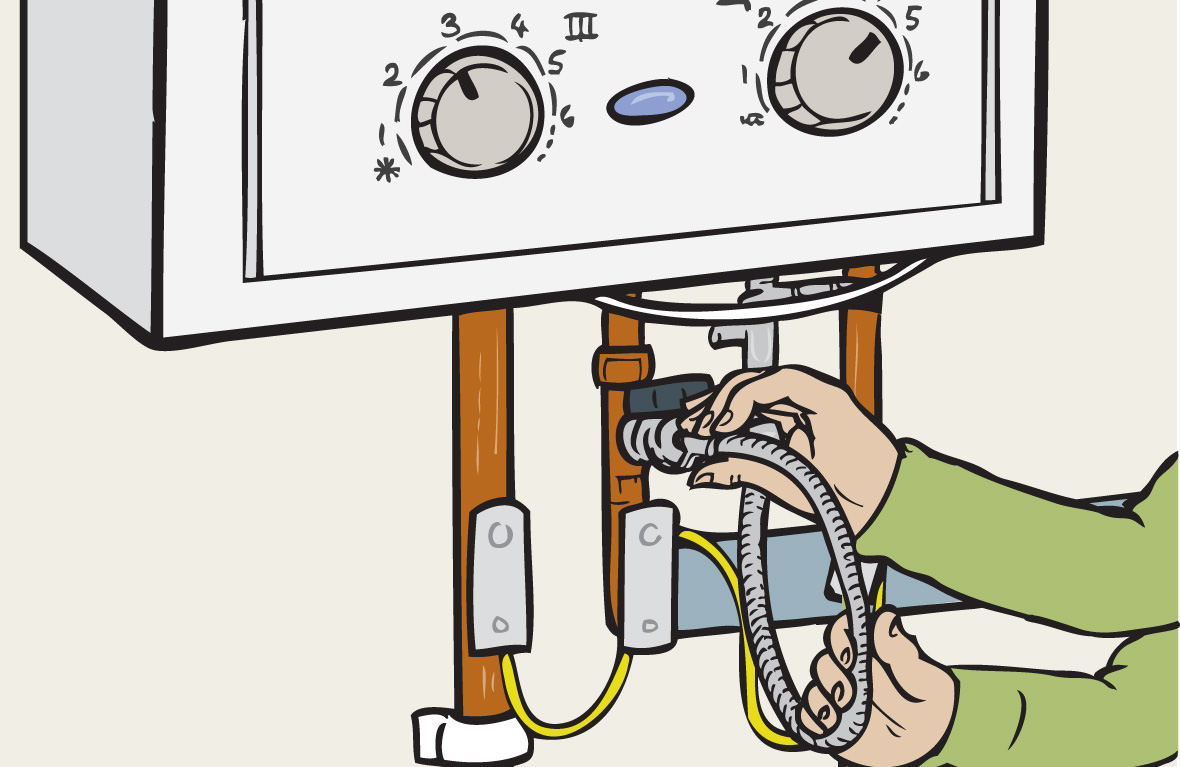
Boiler pressure is one of those things you can ignore for years, until one cold morning your heat cuts out and the boiler is flashing a fault code you have never seen before. The good news is that basic pressure checks are homeowner-friendly. The important part is knowing what is normal, what is not, and when to stop before you turn a small issue into a wet, expensive one.
This guide focuses on common sealed central heating systems (typical combi boilers and system boilers with a pressure gauge). If you have an open vented system with a feed and expansion tank in the loft, the advice below will not fit perfectly and it is worth calling a pro.
What boiler pressure should be
For many domestic sealed systems, a good target is roughly 1.0 to 1.5 bar when the system is cold. When the heating is running and the water expands, it is common to see it rise to around 1.5 to 2.0 bar.
That said, these numbers are typical, not universal. Some manuals specify a lower cold fill pressure (for example, around 0.8 to 1.0 bar), and the “normal” hot pressure depends on the system, the expansion vessel size, and your cold fill pressure. If your boiler’s sticker or manual gives a target, follow that.
Two quick notes from my own trial and error:
- Always judge “normal” from cold. If you top up while the boiler is hot, it can look fine in the moment and then jump too high once it heats again.
- Your boiler’s manual wins. If your front panel sticker or manual lists a cold fill pressure, use that as your number.
How to read the gauge
Many boilers have an analog dial with a green zone, or a digital display that shows pressure in bar. If yours has a needle, take a photo of it when everything is working. That “known good” picture is gold later.
First, do this safety check
Before you touch any valves, take 60 seconds to look for signs you should stop and call a heating engineer:
- Water dripping steadily from a pipe outside (often a copper pipe pointing down). That is usually the pressure relief discharge.
- Visible leaks under the boiler, at radiator valves, or at any exposed pipe joints.
- Pressure on the gauge is near 0 bar and you cannot see an obvious reason. Do not run the boiler until it is corrected.
- Pressure is over about 2.5 bar when cold or climbing fast.
- You smell gas or suspect flue issues. In that case, stop immediately and follow your local gas safety guidance.
If everything looks dry and stable, continue.
If boiler pressure is too low
Low pressure usually shows up as the boiler refusing to fire, radiators not heating fully, or a fault code. Fault codes vary by brand, so if you see one, it is worth checking the manual for pressure-related guidance.
The root cause is usually either (1) you lost water somewhere, or (2) you vented air (for example, when bleeding radiators) and did not top back up.
Common causes
- Bleeding radiators released air and dropped system pressure.
- A small leak at a radiator valve, towel rail joint, hidden pipe run, or the boiler itself.
- Recently drained work such as replacing a radiator or valve.
How to top up (filling loop)
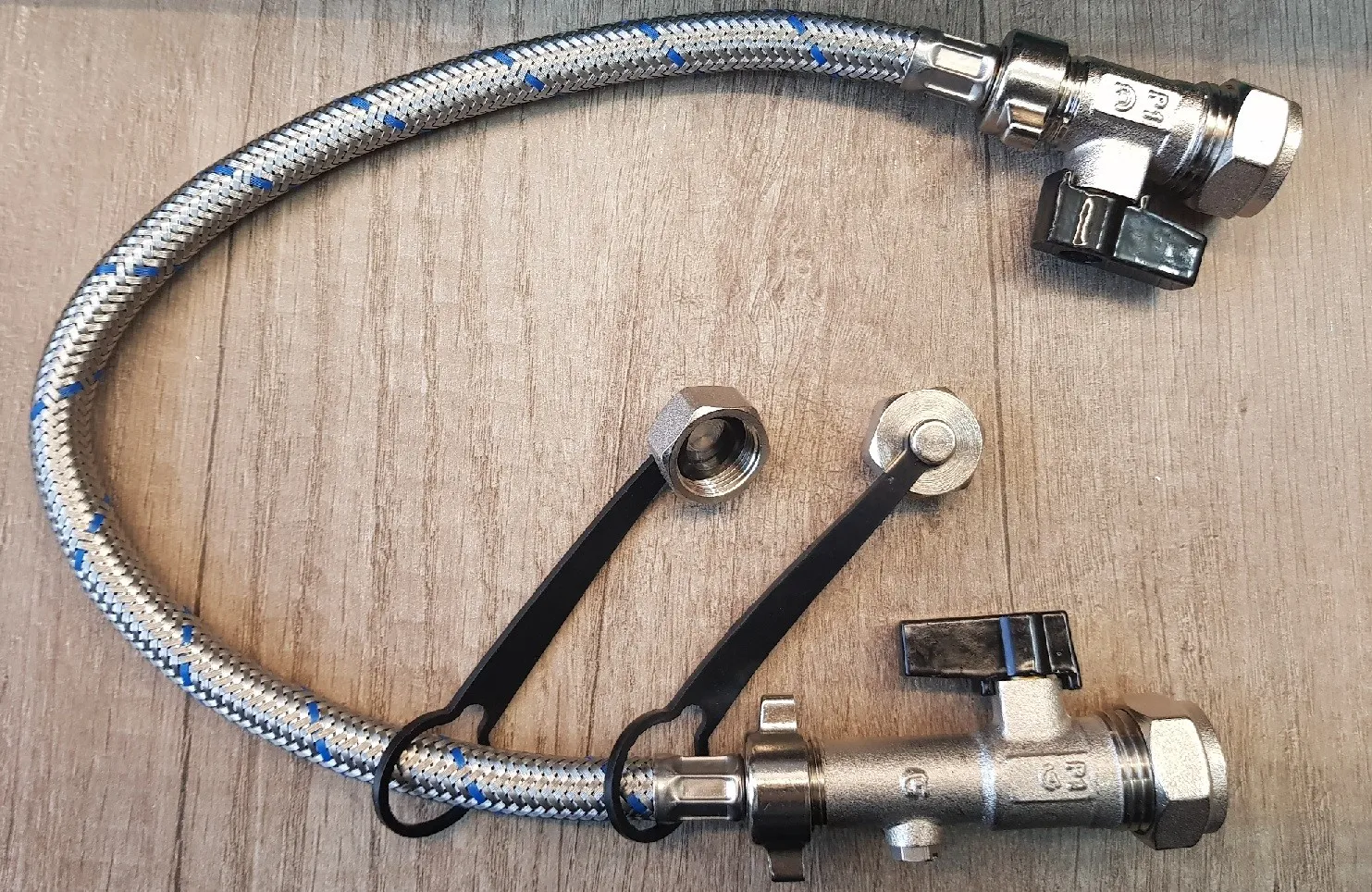
The filling loop is the small connection that lets mains water into the sealed heating circuit. It often looks like a short braided hose under the boiler with one or two valves.
Depending on your setup, it might be:
- External and removable (a braided hose you attach when needed). If yours is detachable, it should be removed again after topping up.
- External but permanent (still a braided hose, always fitted).
- Internal (a built-in key, lever, or hidden valve arrangement). Your manual will show it.
- Let the boiler cool if it has been running. Aim to top up when the system is cold.
- Find your gauge and note the current pressure.
- Locate the filling loop valves. Some setups have two valves (one on each side). Others have a built-in key or lever system.
- Open the valve(s) slowly. You should hear water moving. Watch the gauge while you do this.
- Stop at roughly 1.0 to 1.5 bar cold (or your boiler’s stated target). Do not chase a perfect number. Close is fine.
- Close the valve(s) firmly. If you have two valves, close both. Then watch the gauge for a minute to confirm it stops rising.
- If your loop is detachable, remove it once the valves are shut (and refit any blanking caps). This helps prevent accidental overfilling later.
- Run the heat for 10 to 15 minutes, then recheck pressure. A small rise is normal.
- Recheck again the next day when cold. That tells you whether the system is actually holding steady.
If pressure drops again
If you need to top up repeatedly, that is not “just a quirk.” It usually means a leak or a failing component. Frequent refilling also introduces fresh oxygenated water, and over time that is not great for corrosion or your inhibitor protection.
Do a calm, methodical check:
- Look at radiator valves and pipe joints for dampness, crusty white limescale, or rusty staining.
- Check under the boiler casing area for drips or signs of past dripping.
- Look at the outside discharge pipe for moisture.
If you cannot find the source, it is time for a pro. Hidden leaks can damage floors and walls long before you see them.
If boiler pressure is too high
High pressure can trigger lockouts and can also cause the pressure relief valve to open and dump water outside. The tricky part is that high pressure is often a symptom, not the problem itself.
What “too high” means
As a homeowner rule of thumb (and assuming a typical sealed domestic setup):
- Cold over about 2.0 bar is worth investigating.
- Hot around 2.5 bar can be normal on some systems, but if it is new behavior, or it keeps rising, it is worth investigating.
- Approaching 3.0 bar is where many domestic PRVs commonly open (often set around 3 bar). Check your manual or boiler specs for the exact value.
Common quick causes
- Overfilling via the filling loop. The valve was not fully closed, or it was opened too far.
- A passing filling loop valve. Even when it looks “off,” a worn valve can let mains water slowly creep into the system and push pressure up over hours or days.
- Air and circulation issues leading to bleeding and topping up cycles. Air alone does not usually explain chronic pressure loss, but it often shows up alongside small leaks, auto air vent issues, or maintenance needs.
How to reduce pressure safely
There are a couple of homeowner-safe ways to bring pressure down. Pick the cleanest option you can control. Always do this with the heating off and the system cool, and take care as water can still be hot.
- Bleed a radiator slightly: Crack the bleed screw just enough to release a little water into a cup. Close it, then check the gauge. Go slowly. It does not take much.
- Use a drain point if you have one: Some systems have a small drain cock on a radiator or near the boiler. Attach a hose if possible, and drain a little into a bucket. Close and recheck.
Important: Bleeding or draining is fine occasionally, but if you are doing it a lot, you are repeatedly adding fresh water later, which can dilute inhibitor and increase corrosion risk. If your pressure keeps climbing when the heat comes on, do not keep bleeding and refilling in a loop. That pattern often points to an expansion vessel problem.
What the relief valve means
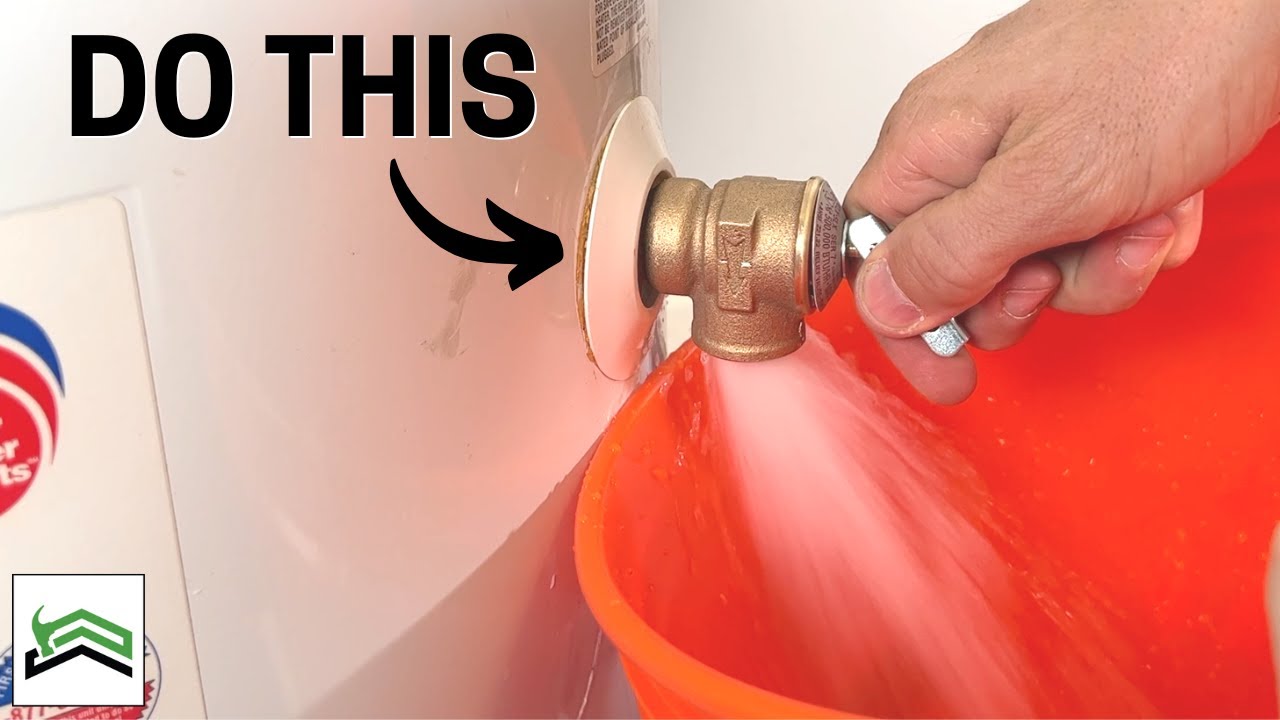
The pressure relief valve (PRV) is a safety device. If boiler pressure gets too high, it opens to release water and prevent damage.
Signs the PRV has opened
- Water dripping from the discharge pipe outside
- Pressure that was high, then suddenly low after the boiler cooled
- A wet patch on the ground under that pipe
One hard-learned lesson: once a PRV has dumped water a few times, it can sometimes fail to reseal perfectly and continue to drip. If you see ongoing dripping, treat it as a service call, even if the gauge looks “normal.”
Expansion vessel problems
If your boiler pressure is fine when cold, then spikes high when heating runs, the expansion vessel is one of the first things a good tech will suspect.
The expansion vessel (sometimes called an expansion tank) contains a pocket of air separated by a rubber diaphragm. That air cushion absorbs the water’s expansion when it heats. If the air charge is lost or the diaphragm fails, pressure has nowhere to go except up.
Clues to watch for
- Pressure rises quickly when the heating starts, then drops a lot when it cools.
- The PRV discharge pipe drips during or after heating cycles.
- You are stuck in a routine of topping up, then bleeding, then topping up again.
What you can do (and where to stop)
Some expansion vessels can be recharged with air, similar to a tire valve, but doing it correctly often requires isolating and partially draining the system, then setting a specific pre-charge pressure. That crosses the line into “call a pro” for most homeowners, especially on gas appliances.
If you strongly suspect the expansion vessel, the safest move is to stop adjusting pressure repeatedly and book service. It is cheaper than dealing with a PRV that will not reseal or water damage from frequent discharge.
Air in the system
Air pockets can make radiators cold at the top, cause gurgling sounds, and lead to uneven circulation. Bleeding radiators removes air, but it also drops pressure, so you usually need to top back up afterward.
How to bleed radiators
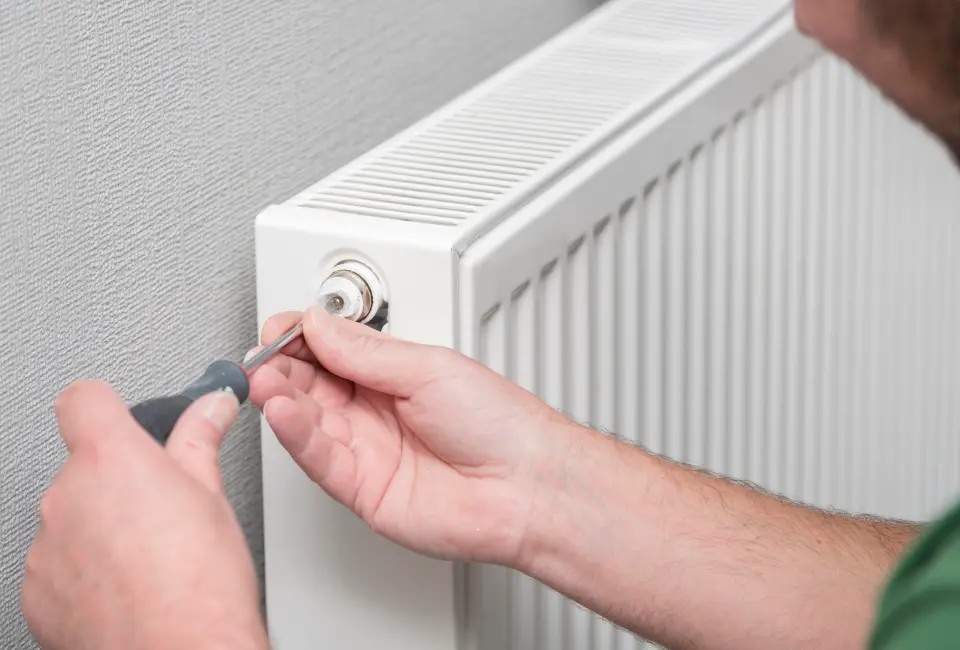
- Turn heating off and let the system cool a bit.
- Start with the lowest floor radiators and work up, if you have multiple floors.
- Bleed until air stops and a steady stream of water appears, then close the valve snugly.
- After bleeding a few radiators, check the boiler gauge and top up to the cold target range.
- Check again the next day when cold, especially if you bled several radiators.
If you are bleeding air often, that can point to an underlying issue like a small leak pulling air in, a failing auto air vent, poor inhibitor protection, or system corrosion. That is another good point to call in help.
When to call a pro
I am all for sweat equity, but boilers are not the place for hero moves. Call a qualified heating engineer if any of the following are true:
- You top up and the pressure won’t hold for more than a day or two.
- Pressure keeps climbing into the high range when the heating runs, or is regularly close to PRV lift territory.
- The relief pipe is dripping regularly or the PRV appears to be stuck open.
- You suspect an expansion vessel failure or need it recharged.
- There are any signs of water near electrics, inside the boiler, or around the control board area.
- You are not sure which valve is which. Guessing with a filling loop is how overpressure happens.
- You suspect the filling loop valve is passing and pressure is rising even though you have not topped up.
Quick cheat sheet
- Typical cold pressure: about 1.0 to 1.5 bar (some systems specify lower, check your manual).
- Typical hot pressure: often 1.5 to 2.0 bar, sometimes higher depending on setup.
- Low pressure fix: top up slowly with the filling loop, stop at your cold target.
- High pressure fix: carefully bleed or drain a little water off, then investigate why it went high (including a passing filling loop valve).
- Dripping outside pipe: likely PRV discharge, do not ignore it.
- Big pressure swings hot vs cold: expansion vessel is a prime suspect.
If you want one practical habit that prevents most boiler-pressure headaches, it is this: check the gauge once a month when the system is cold. It takes 10 seconds and saves a lot of panic later.

About Marcus Vance
Content Creator @ Grit & Home
Marcus Vance is a lifelong DIY enthusiast and self-taught home renovator who has spent the last decade transforming a dilapidated 1970s ranch into his family's dream home. He specializes in budget-friendly carpentry, room-by-room renovations, and demystifying power tools for beginners. Through his writing, Marcus shares practical tutorials and hard-learned lessons to help homeowners tackle their own projects with confidence.