
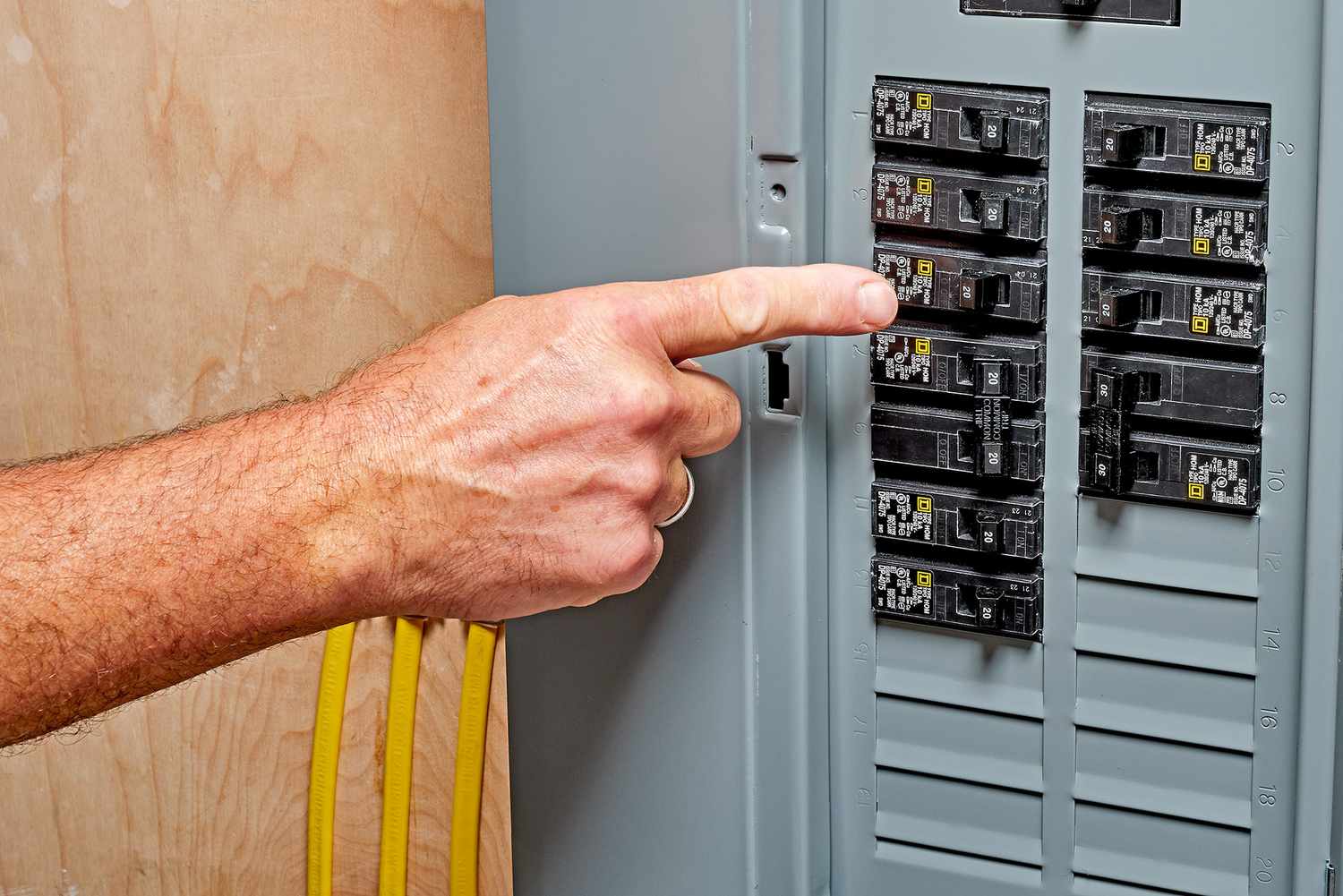
A breaker that trips and then immediately trips again after you reset it is different from a single, isolated trip. It usually means there is an active problem on that circuit right now, or the breaker itself is no longer doing its job reliably.
I have been there. Early on in my fixer-upper days, I kept slapping the same breaker back on because I just wanted the lights. It turned out a cheap space heater and a vacuum on the same circuit were basically arm wrestling the wiring. The breaker was the only adult in the room.
This page focuses on repeat or instant re-tripping, not the basic reset steps. If the breaker will not hold, use the checks below to narrow it down safely.
First: what kind of trip is it?
Most immediate re-trips fall into one of these buckets. Knowing the difference saves a lot of guesswork.
1) Overload (too much plugged in)
An overload happens when the circuit is asked to deliver more current than it is designed for. This is common with portable heaters, hair dryers, air fryers, microwaves, vacuums, and shop tools.
- Typical clue: The breaker may stay on briefly, then trip when you start a device, or trip after a few minutes of use.
- Common locations: bedrooms (space heaters), bathrooms (hair tools), kitchens (multiple counter appliances), garages (compressors and chargers).
2) Short circuit (hot touching neutral or ground)
A short circuit is a direct electrical fault, like when a hot conductor contacts neutral or ground. It can be caused by damaged cords, pinched wires, a failed appliance, or a wiring issue in a switch, outlet, or light fixture.
- Typical clue: The breaker trips instantly when you reset it, or the moment you turn something on.
- Other clues: Burn smell, scorch marks, a popping sound, or a device that died suddenly.
3) Ground fault (hot leaking where it should not)
Ground faults are especially common anywhere moisture is involved, but they can also come from damaged insulation or a failing appliance.
- Typical clue: A GFCI outlet or a GFCI breaker trips, sometimes right away.
- Common locations: kitchens, bathrooms, laundry, basements, garages, exterior outlets.
4) Failing breaker (or a panel connection issue)
Breakers can wear out. They can also become heat-damaged or develop a poor connection where the breaker clips onto the panel bus. A failing breaker may trip too easily, feel loose, or refuse to reset reliably.
- Typical clue: It trips with very little load, trips unpredictably, or will not latch even when the circuit appears disconnected.
- Important: Panel work has real shock risk. If you suspect the breaker or panel is the problem, that is usually a stop-and-call point.
Stop signs: when not to troubleshoot
There is a difference between careful isolation and risky electrical work. If you see any of the items below, stop and call a licensed electrician (or your utility, if the service equipment is involved).
- Burning smell, smoke, buzzing or sizzling from the panel, or visible arcing
- Panel is hot to the touch or you see melted plastic
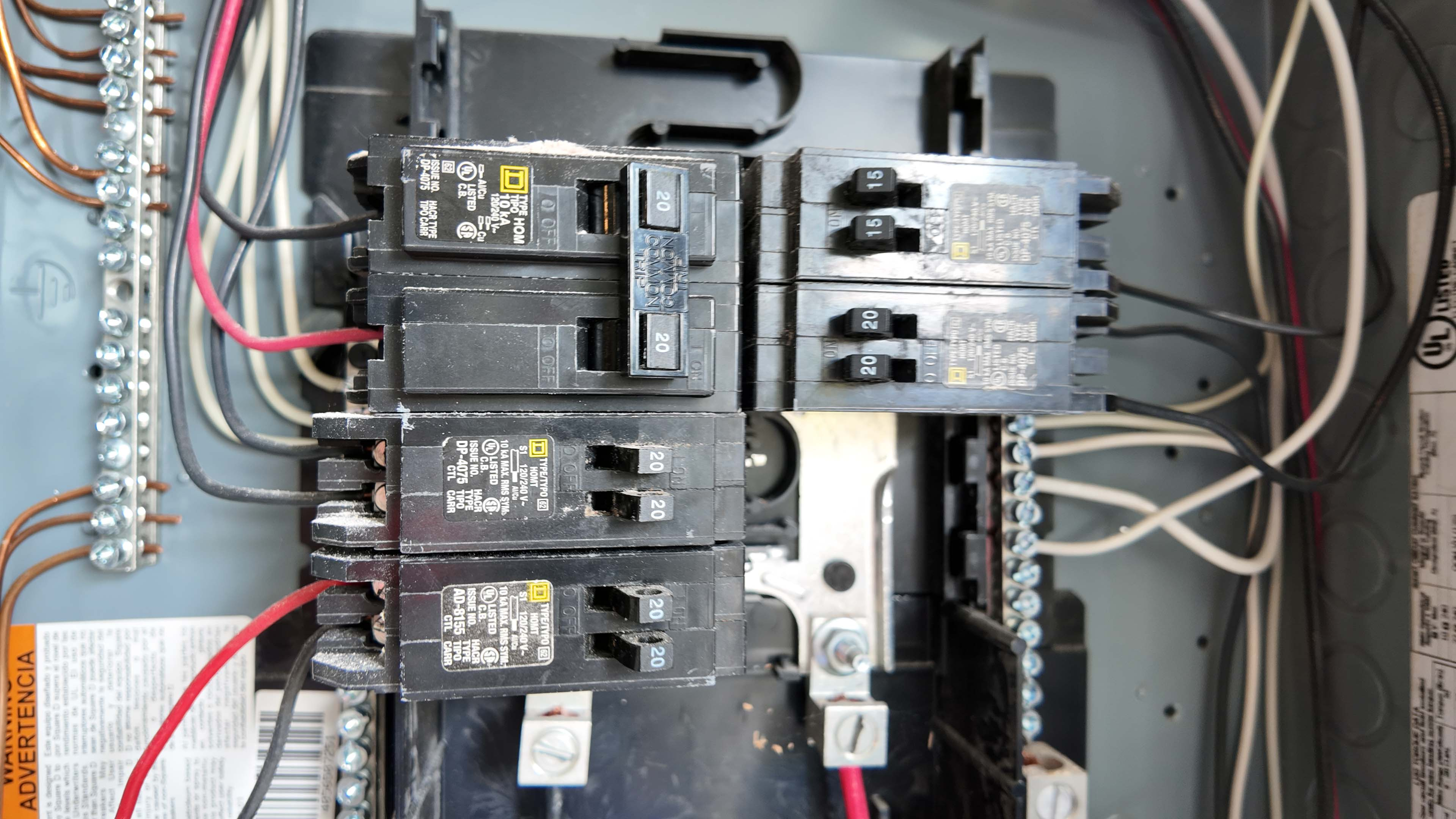
- Breaker will not reset even with everything unplugged and all lights switched off
- Water near the panel, outlets, or along a basement wall where wiring runs
- Repeated trips on a circuit that serves medical equipment or a sump pump
- Any aluminum branch wiring concerns (common in some mid-century homes)
- Any signs of shared-neutral or multi-wire branch circuit issues (this is electrician territory)
Safe isolation steps
The goal is simple: figure out whether the problem is a device, something plugged in, or the circuit wiring itself.
Step 1: Reset it the right way
Many breakers will not reset unless you push them firmly to OFF first. Then flip to ON.
- Extra note for AFCI and GFCI breakers: They often feel “picky.” Fully OFF, then ON is not optional.
- Do not do this: Do not hold or force the handle in the ON position. If it will not latch, it is telling you there is an active fault.
If it instantly trips again, move to the next steps.
Step 2: Unplug everything on that circuit
Unplug all appliances, chargers, lamps, power strips, and anything else on the affected circuit. Do not forget the garage, exterior outlets, or a basement receptacle that shares the same circuit.
- If you are not sure what is on the circuit, plug a lamp into an outlet you believe is on that circuit. When you reset the breaker during testing, the lamp becomes your simple “power is back” indicator.
Step 3: Turn off lights and fans
Switch all the room switches to OFF, including ceiling fans. A failing light fixture, loose connection, or damaged cable can still trip a breaker even when nothing is plugged in, but shutting switches off removes a few variables.
Step 4: Remember hardwired loads
“Everything unplugged” does not disconnect hardwired stuff. Depending on the circuit, that can include a dishwasher, disposal, furnace, well pump, built-in microwave, or a bathroom fan.
- If you can safely turn those off at their switch (or an accessible disconnect), do that.
- If you cannot, do not start pulling things apart. Just treat it as still connected and move to the next step.
Step 5: Try the breaker with the circuit as empty as you can make it
Now reset the breaker.
- If it holds: the problem is very likely an appliance, plug-in device, or overload.
- If it trips immediately: the issue is more likely short circuit, ground fault, or breaker/panel trouble. At that point, calling an electrician is usually the safest move.
Step 6: Add items back one at a time
If the breaker held with everything disconnected, plug things back in slowly.
- Plug in one item.
- Wait 30 to 60 seconds.
- Turn that item on if it has a motor or heating element.
- Repeat.
When it trips, you have likely found the offender or at least narrowed down the section of the circuit.
Narrow it down
If it only trips when you run certain appliances
This points to overload or a failing appliance.
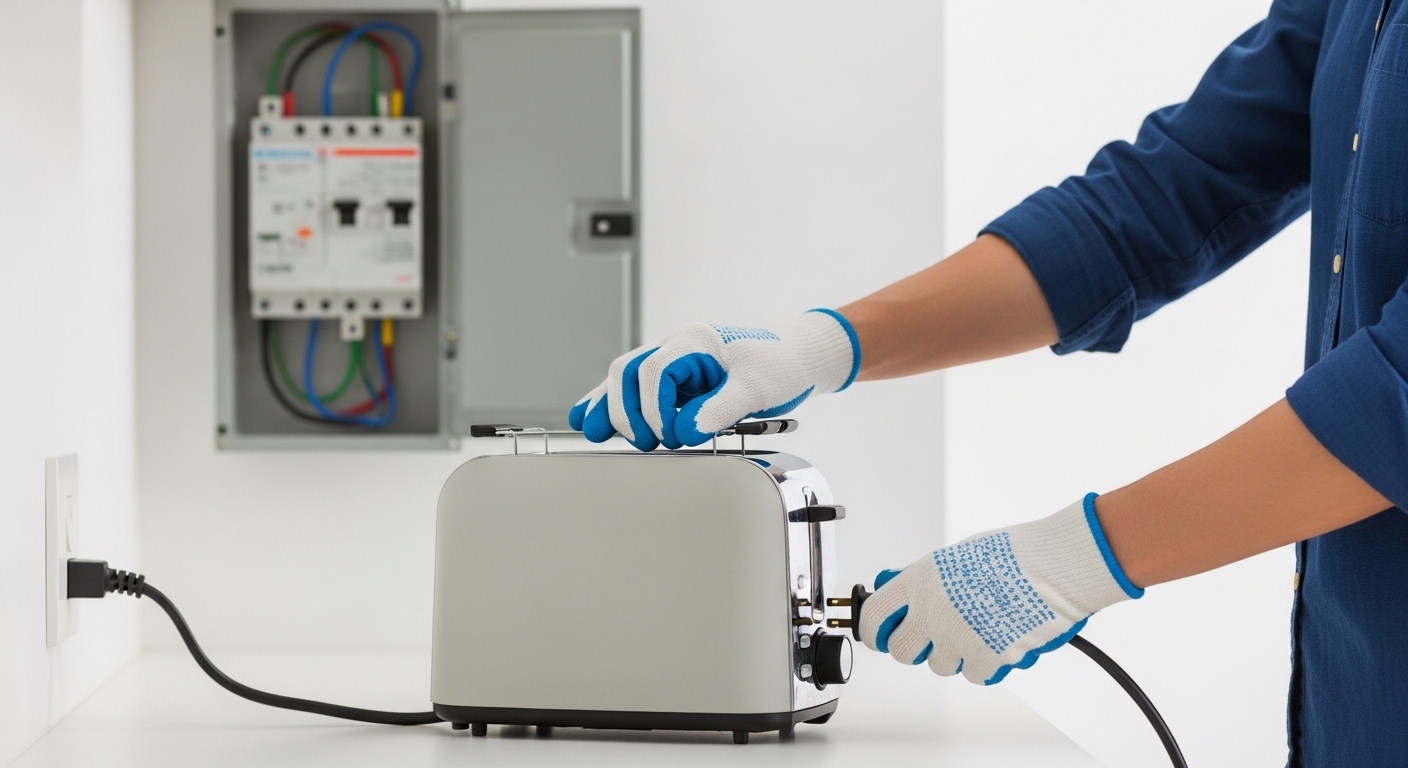
- Overload pattern: trips when two high-draw items run together (space heater + vacuum, air fryer + microwave, toaster + kettle).
- Appliance fault pattern: trips when one specific device turns on, even by itself.
What to do: Try the suspect device on a different circuit that you know works. If it trips that circuit too, stop using the device and replace or repair it.
If it trips immediately even with everything unplugged
This points to a short circuit, a ground fault, a hardwired load, or a bad breaker.
- Check for any obvious damage: a crushed extension cord under furniture, a chewed cord, a loose outlet, a light fixture that smells hot.
- If the circuit feeds outdoor outlets, check if a weather cover is broken or if there is moisture in a box.
What to do: At this stage, most DIYers should call an electrician. Finding a fault in fixed wiring often requires opening boxes and testing, which can get unsafe fast if you are not comfortable with electrical diagnostics.
GFCI and AFCI basics
GFCI: protects people from shock
A GFCI watches for current “leaking” where it should not, often through water or a person. You might have:
- a GFCI receptacle (with TEST and RESET buttons), or
- a GFCI breaker in the panel.
Common gotcha: A tripped GFCI outlet can make multiple downstream outlets dead. People reset the breaker, but the circuit still “seems off” because the GFCI is tripped.
AFCI: helps prevent electrical fires
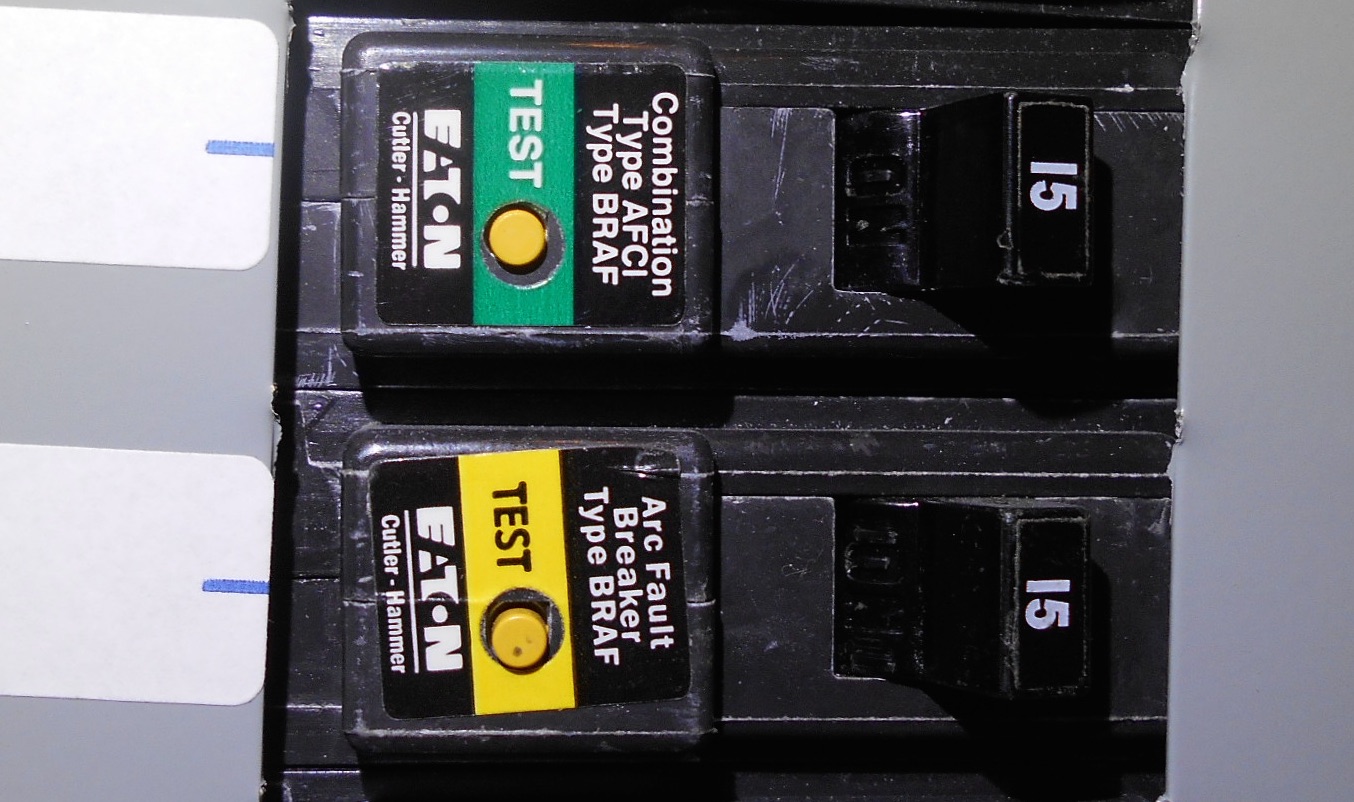
An AFCI breaker (common in bedrooms and many newer panels) looks for arcing patterns that can indicate damaged cords or loose connections.
- Typical clue: The breaker has a TEST button and may trip when you plug in certain electronics, vacuums, treadmills, or anything with a motor or switching power supply.
Dual-function breakers
Some breakers are AFCI/GFCI combined. They can trip for either type of fault, plus overload and short circuit like a standard breaker.
Helpful tip: Some modern breakers have a small indicator light or trip code. Check the panel label, the breaker paperwork, or the manufacturer’s guide for your exact model.
Quick checks for instant re-trips
Check outdoor and garage outlets
These are the most likely to get moisture or physical abuse. If your breaker holds with everything unplugged inside but trips when rain hits, you likely have a wet exterior box or failing device outdoors.
Look for a half-tripped GFCI
If you have dead outlets but the breaker is on, walk the home and press RESET on every GFCI you can find, including bathrooms, garage, basement, kitchen backsplash, laundry, and exterior.
Inspect cords and plugs for heat damage
A browned plug, a loose-fitting plug, or a power strip that feels warm is a red flag. Replace the cord or strip. Do not keep using it.
Be honest about heaters
Portable heaters are repeat-trip champions. Many are 1500W, which is about 12.5 amps at 120 volts (1500 ÷ 120 = 12.5). That is a big bite out of a 15A circuit even before you add lights, TV, and chargers.
What you can do safely
DIY-safe moves
- Unplugging devices and adding them back one at a time
- Resetting GFCI outlets and checking downstream outlets
- Replacing a damaged appliance cord or retiring a questionable power strip
- Reducing load by moving high-draw appliances to different circuits
Stop-and-call moves
- Opening the electrical panel beyond the door cover
- Pulling outlets or switches out of boxes to inspect wiring
- Replacing a breaker if you are not experienced and permitted to do so
- Anything involving burnt wiring, melted insulation, or repeated arcing
If you do call an electrician, your isolation work is still valuable. Tell them:
- Which breaker number trips
- Whether it trips immediately with everything unplugged (and which hardwired loads might still be connected)
- What device causes the trip when plugged in
- Whether the breaker is standard, GFCI, AFCI, or dual-function
FAQ
Why does my breaker trip the moment I flip it on?
Most often it is an active short circuit or ground fault on that circuit. If it trips even with everything unplugged and all switches off, call an electrician because the fault may be in fixed wiring, a hardwired load, the breaker, or the panel connection.
Can a breaker go bad and start tripping for no reason?
Yes. Breakers can weaken with age, heat, or poor contact at the bus. A failing breaker is not something I recommend guessing on. A pro can confirm with proper testing and replacement.
Is it dangerous to keep resetting a breaker?
It can be. If a breaker trips repeatedly, it is preventing overheating or responding to a fault. Resetting over and over can allow wiring, devices, or connections to heat up. Use the isolation steps once. If you cannot pinpoint a plug-in cause, stop.
What if a GFCI outlet trips but the breaker does not?
That is normal. A GFCI outlet protects itself and any downstream outlets. Reset the GFCI at the outlet, then test. If it immediately trips again with nothing plugged in, you likely have moisture, a wiring issue, or a failing GFCI device.
My simple rule
If the breaker holds with everything unplugged, you are usually dealing with a device or overload you can find by adding items back slowly.
If it trips immediately with the circuit “empty,” treat it like a wiring, breaker, hardwired load, or fault problem and bring in a licensed electrician. Your home is not the place to win an argument with electricity.

About Marcus Vance
Content Creator @ Grit & Home
Marcus Vance is a lifelong DIY enthusiast and self-taught home renovator who has spent the last decade transforming a dilapidated 1970s ranch into his family's dream home. He specializes in budget-friendly carpentry, room-by-room renovations, and demystifying power tools for beginners. Through his writing, Marcus shares practical tutorials and hard-learned lessons to help homeowners tackle their own projects with confidence.