
🚨 In a DIY emergency or rush?
Skip the details and jump straight to our 30-second cheat sheet for the most crucial info.
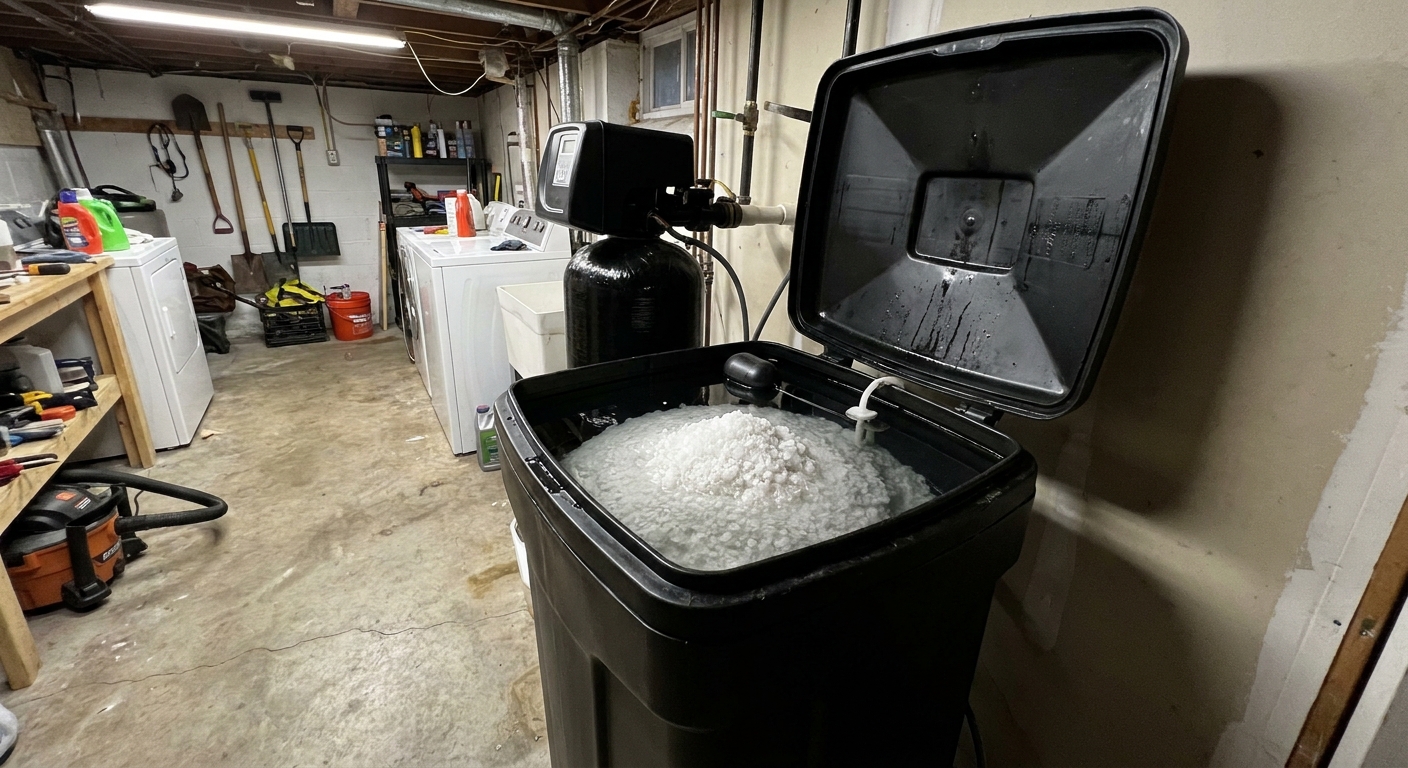
When a water softener is working normally, the brine tank is supposed to have some water in it. That water dissolves salt and makes brine for the next regeneration. The problem is when the brine tank is too full or keeps rising cycle after cycle. In most homes, that points to one of two paths: it is not drawing brine out during regeneration, or it is refilling too much or at the wrong time.
I have dealt with this on my own 1970s ranch setup, and it feels backwards because you expect the softener to “use water” in the brine tank. But the tank is not a storage barrel. It is a measuring cup. If it never gets emptied, the system never gets real brine into the resin tank, and your water goes hard again.
Quick safety and what to grab
Before you start poking around, do these two things. They prevent a mess and protect the softener’s valve.
- Bypass the softener (so the house still has water, but it is not going through the softener).
- Unplug the softener (unless you are actively running a manual regeneration step).
Tools and supplies that make this easier:
- Bucket or shallow pan
- Old towels
- Wet/dry vac or large sponge
- Adjustable pliers
- Small screwdriver and a soft toothbrush
- White vinegar (for mineral buildup)
- Flashlight
What “full of water” usually means
Most brine tanks that stay full trace back to one of these categories:
- Drain line problem: kinked line, clogged flow control, frozen drain, or drain line routed incorrectly so the valve cannot maintain the right drain flow. Weak drain flow can kill injector suction.
- Injector or venturi clog: the valve cannot create suction, so it never pulls brine.
- Brine line tubing issue: a kink, internal clog, cracked tube, or air leak at a fitting can prevent suction even if the injector and float are fine.
- Stuck brine float (in the brine well): it can stop brine draw or cause weird refilling behavior depending on design.
- Control valve not cycling correctly: the unit is skipping the brine draw stage, stuck mid-cycle, or refilling at the wrong time.
- Brine fill valve / solenoid issue (on some models): a failed fill valve can overfill independent of brine draw.
- Programming or settings issue: wrong hardness, wrong capacity, wrong salt setting, or regeneration frequency that causes confusing symptoms.
Separate issue to keep in the back of your mind: a salt bridge can make it look like the softener is not working, but a brine tank that is high with water is usually a different failure mode. If you suspect a hardened crust of salt, check our salt bridge troubleshooting article on Grit & Home, then come back here for the brine draw checks.
Step 1: Confirm it is actually “too full”
Pop the lid and look for these clues:
- Water above the salt by several inches, or salt floating like slush.
- Water line rising every regeneration instead of dropping during draw and then refilling to a consistent level.
- Softener “not using salt” at all over weeks, even though your hardness is increasing.
Normal water height varies by model. Many units keep water below the top of the salt most of the time. If you have no baseline, the real tell is repeat behavior: it never seems to draw down during brine draw, or it draws down normally and then refills higher than it used to.
Step 2: Lower the brine tank level
If the tank is on the verge of overflow or you need a clean slate for troubleshooting, lower the water level first. You can do this without disconnecting anything.
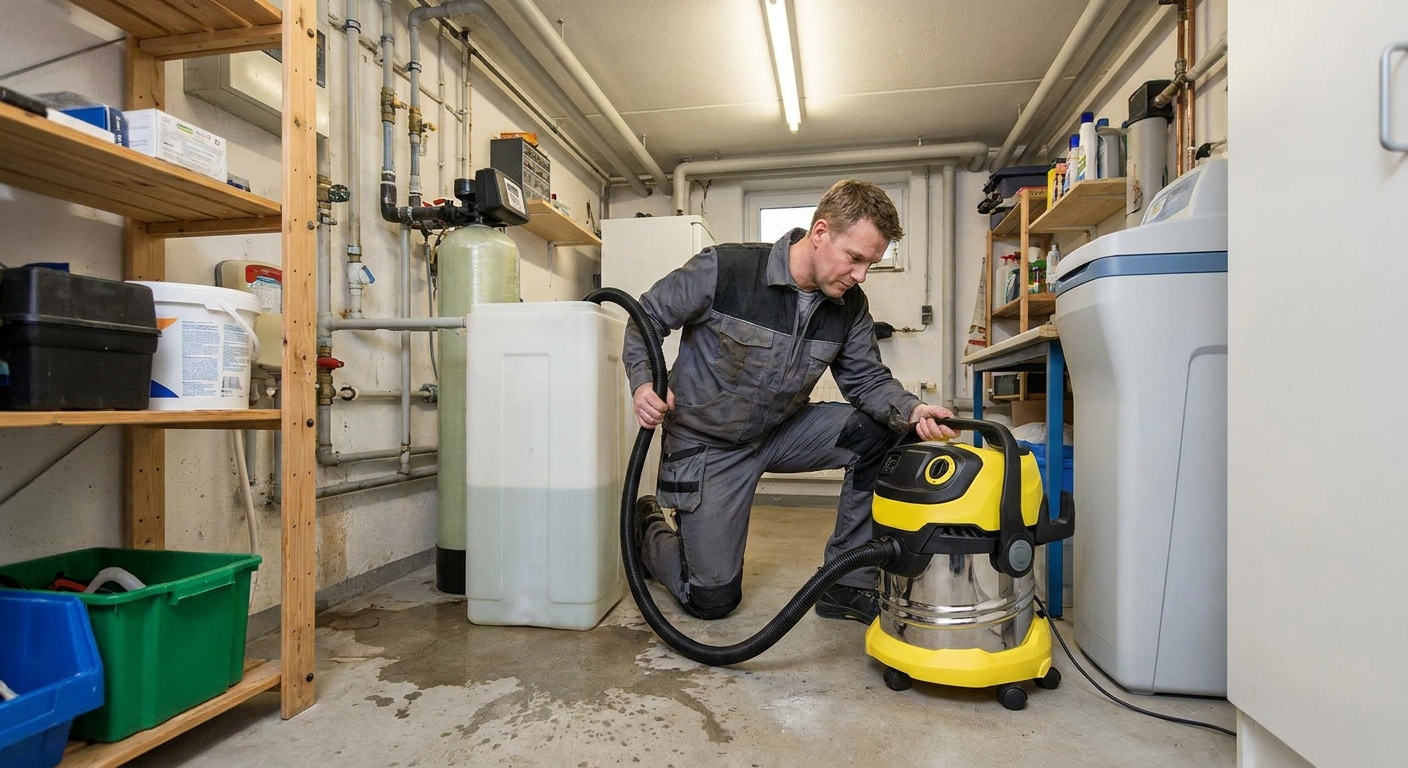
Option A: Wet/dry vac
- Bypass and unplug the softener.
- Remove the brine tank lid.
- Vacuum water off the top. Stop when the level is low enough to prevent overflow and easy to see a drop during your brine draw test.
Option B: Scoop and sponge
- Scoop water into a bucket, then finish with a sponge.
- Do not dig aggressively into the salt. You are trying to remove water, not excavate the whole tank.
Option C: Drain via brine line (only if you are comfortable)
Some brine tanks let you disconnect the brine line at the brine well and drain into a bucket. If you do this, take a photo first so you reconnect everything correctly.
Tip: If the salt is mushy and full of sediment, you may be better off doing a full brine tank cleanout later. For now, just lower the water enough to prevent overflow and let you test brine draw.
Step 3: Run a brine draw test
This is the moment of truth. During the brine draw portion of regeneration, the valve should create suction on the brine line and pull brine from the tank. Many systems then do a separate brine refill stage later. So you are looking for the water level to drop during brine draw, not necessarily throughout the entire regeneration.
How to test (generic approach)
- Open the bypass to service so the unit can operate normally for the test.
- Plug the softener back in.
- Start a manual regeneration.
- Advance the cycle until you reach brine draw (some controls label it “Brine” or “Draw”).
- Watch the brine well. After a few minutes, the level should start to drop.
If the level does not drop, you likely have an injector, drain, brine line, or float issue. If the level drops but then refills too high later, you are in the refill and control/settings lane.
My first-time mistake: I watched for 30 seconds, saw nothing, and assumed it was not working. Give it a few minutes. Some valves take a bit to establish suction.
Cause 1: Drain line problems
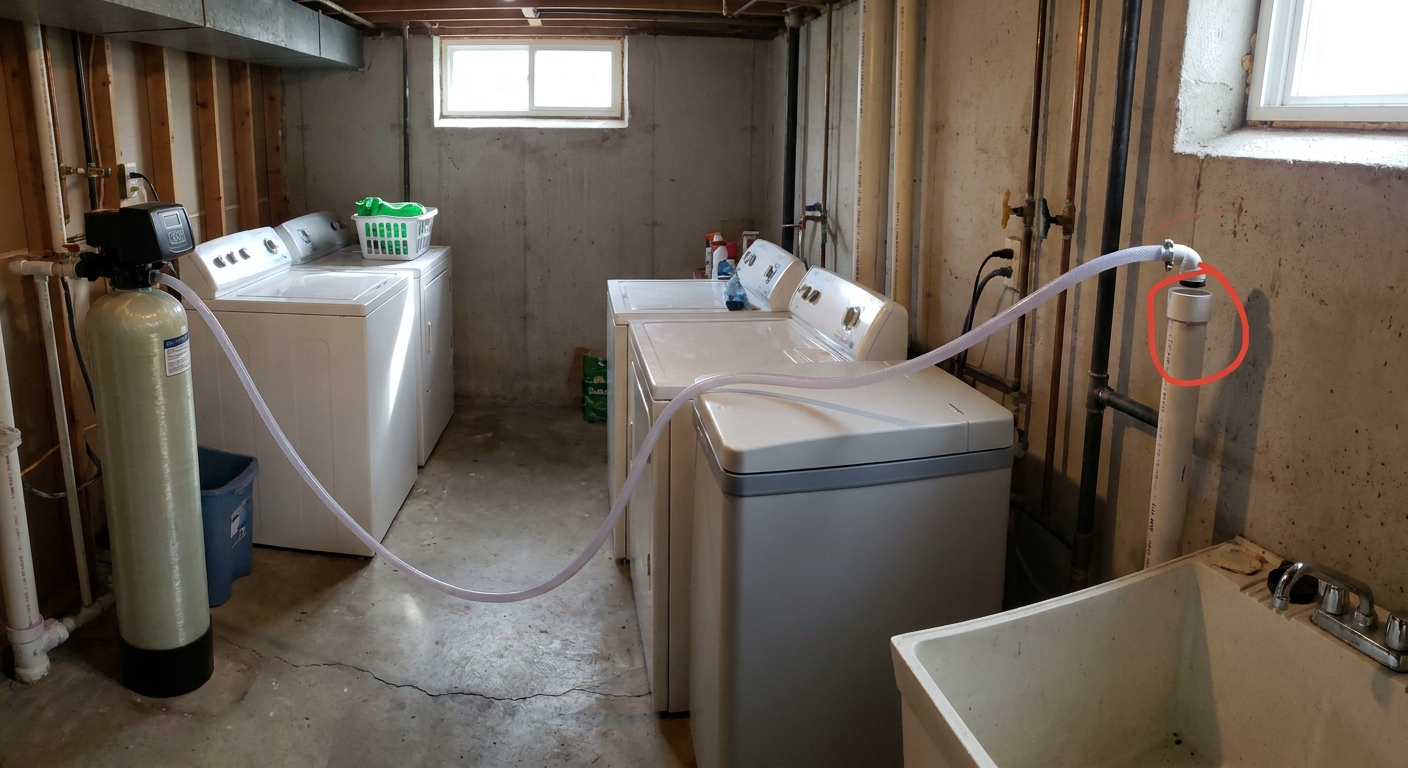
During regeneration, the softener sends water to the drain through a flow control. If the drain line is blocked, kinked, frozen, or installed wrong, the valve cannot maintain the correct drain flow. That matters because the injector effect depends on proper flow to drain to create suction on the brine line.
What to check
- Kinks or pinches behind the unit.
- Clogged air gap or standpipe restriction at the drain.
- Too much lift: drain line routed uphill beyond what your valve can handle.
- Improper drain connection: submerged drain line end can create backpressure. Maintain an air gap per code and manufacturer instructions.
Quick test
Put the unit into a cycle that sends water to the drain. You should see a strong, steady stream. A weak trickle, pulsing, or no flow suggests a restriction.
Cause 2: Injector or venturi clog
The injector or venturi is a small nozzle assembly in the control valve that creates suction to pull brine. Iron, sediment, and scale love to clog it, especially if you have well water or heavy mineral content.
Symptoms
- Brine tank water level does not drop during brine draw.
- Drain flow may look normal, but there is no brine movement.
- Softener regenerates but water stays hard.
What to do
- Bypass and unplug the softener.
- Relieve pressure by opening a nearby softened water faucet briefly, then close it.
- Open the control valve cover.
- Remove the injector and screens per your manual.
- Soak parts in white vinegar and gently brush. Do not enlarge openings with wire.
- Rinse, reassemble, and run a manual regeneration to re-test brine draw.
Important: Injector parts are model-specific. If you are unsure, take a clear photo before pulling anything apart so you can match orientation and gasket placement.
Cause 3: Brine line tubing and air leaks
The brine line is the small tube (often 3/8 inch) that runs from the control head to the brine well. If it cannot hold suction, the softener cannot draw brine, even with a clean injector and a healthy drain flow.
What to check
- Kinks or tight bends along the tubing run.
- Cracks in the tubing, especially near the ends.
- Loose compression nut, damaged ferrule, or a fitting that was cross-threaded.
- Internal blockage: pellet crumbs, grit, or iron sludge can clog the line or the brine pickup fitting in the brine well.
Fix
- Snug fittings gently. Do not muscle plastic threads.
- If tubing is brittle or cloudy, replace it. It is cheap insurance.
- If you suspect an internal clog, disconnect the line at the tank and valve (photo first), then flush with clean water into a bucket.
Cause 4: Stuck float or brine safety assembly
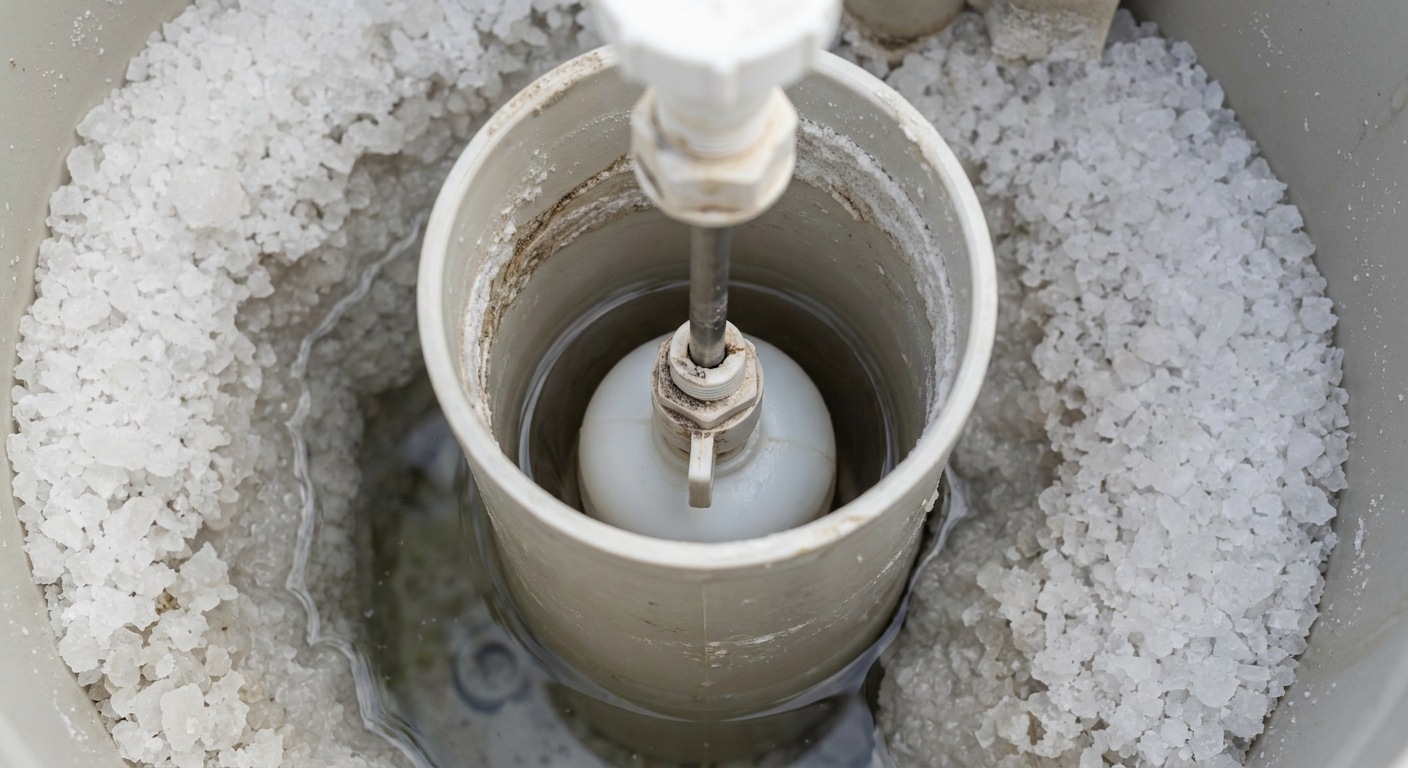
Inside the brine tank is a “brine well” with a float assembly. Its job is to prevent overfilling and manage brine pickup. If that float sticks, the system can fail to draw brine, fail to refill correctly, or do both in a frustrating loop.
What to look for
- Float jammed in the up position.
- Salt crust or pellet fragments packed around the float rod.
- Air leaks or loose connections at the brine line fitting.
Fix
- Lift the brine well cap and move the float gently up and down. It should slide freely.
- Rinse debris out with a cup of clean water and vacuum excess if needed.
- Check the brine line nut and ferrule for cracks, and snug it up. Do not over-tighten plastic fittings.
Cause 5: Control valve or refill problems
If the softener never actually enters brine draw, if it refills when it should not, or if refill is set too long, you can end up with a brine tank that keeps getting water added.
Common control-side problems
- Motor or gear issue in timer-based valves, causing the cam to stick.
- Stuck piston or worn seals in some valve designs, allowing refill leakage during the wrong stage.
- Brine refill time set too long, adding more water than needed.
- Brine fill valve / solenoid failure (where used), allowing overfill independent of draw.
What you can do without becoming a valve technician
- Watch a full manual regeneration and note whether each stage appears to run: backwash, brine draw, rinse, refill.
- Listen for the motor turning or see if the indicator advances.
- Check your manual for the factory default brine refill setting and compare.
- If the valve is not advancing reliably, it is often time for a service kit (seals and spacers) or a pro visit.
When the valve is suspected, I focus on proving the simple stuff first (drain, injector, brine line, float). It saves money and keeps you from shotgun-replacing parts.
Cause 6: Settings and schedule
A wrong hardness setting will not usually cause a brine tank to physically overflow by itself, but it can create symptoms that look like a brine problem: inconsistent salt use, frequent regenerations, or water that never feels soft.
- If hardness is set too low, the unit may not regenerate often enough, and you might notice persistent hardness and think the brine tank is the issue.
- If hardness is set too high or the unit is set to regenerate too frequently, you might see odd water levels and rapid salt consumption.
Best practice is to test your water hardness (strip or drop test) and confirm the settings match your measured hardness plus any iron compensation recommended by the manufacturer.
If your main complaint is “my softener is not using salt,” that is a related but different troubleshooting path. We cover that in a dedicated Grit & Home article, and it pairs well with this brine-tank-overfull checklist.
If you need a full cleanout
If the brine tank is full of muddy water, has a lot of pellet crumbs, or smells off, a full cleanout can help. Do it in a controlled order so you do not clog the valve with debris.
Safe cleanout order
- Bypass and unplug the softener.
- Scoop out salt into a trash bag or bucket. If it is fused into a block, break gently with a broom handle.
- Vacuum or sponge out remaining water.
- Remove and rinse the brine well and float assembly with clean water. Check that the float moves freely.
- Wipe the tank bottom. If there is heavy sediment, rinse and vacuum again.
- Reinstall the brine well, add fresh salt, then add water only if your manufacturer instructs it. Many systems will refill automatically during regeneration.
Thrifty note: If your salt is clean and dry, you can sometimes reuse it. If it is brown, slimy, or full of grit, it is not worth the risk of sending that mess toward your valve.
After the fix: what “normal” looks like
Once brine draw is restored, here is what you should see over the next 1 to 2 cycles:
- During brine draw, the brine level in the well drops steadily.
- After regeneration, the brine tank refills to a consistent level, not higher every time.
- You begin to see salt use again over the next week or two.
- Your water tests softer after the next full cycle.
If the tank keeps refilling above the normal line after you have verified drain flow, a clear injector, a clear brine line, and a free-moving float, the remaining suspects are usually control valve internal seals, a fill valve issue (if your model has one), or a programming issue that is commanding excessive refill.
When to call a pro
I am all for DIY, but there are a few times I stop and make the call:
- You see continuous drain flow when the softener is not regenerating (possible valve failure).
- There is electrical damage at the control head or repeated error codes you cannot clear.
- You cleaned the injector and verified the drain line and brine line, but there is still no suction during brine draw.
- You suspect a brine fill valve or solenoid failure and you cannot confirm it safely.
- The unit is old enough that parts are scarce, and you are deciding between a rebuild and replacement.
When you do call, tell them: your model, what you observed during brine draw, whether drain flow looked normal, whether the brine line looks sound, and whether the brine tank level changes at all. That short summary can save you a whole diagnostic visit.
The 30-Second Cheat Sheet
Essential takeaways for: Brine Tank Full of Water? Fix Brine Draw and Drain Issues
What it usually means
- A brine tank that keeps filling is most often a brine draw problem (it is not pulling brine out during regeneration) or an overfill problem (it is refilling too much or refilling at the wrong time).
- Common root causes include a drain restriction (kills injector suction), a clogged injector or venturi, a stuck brine float, an air leak or clog in the brine line tubing, or a control head / fill valve issue.
Do this first (fast checks)
- Bypass the softener and unplug it.
- Check the drain hose for kinks, clogs, freezing, or a submerged end. Make sure there is a proper air gap.
- Inspect the brine line tubing from the valve to the brine tank for kinks, cracks, loose fittings, or blockage.
- Lower the brine tank water level with a wet/dry vac or sponge so it cannot overflow.
Test brine draw (the key test)
- Put softener back in service.
- Start a manual regeneration and advance to brine draw.
- Wait a few minutes and watch the brine well. The level should drop during the brine draw stage.
If the level does not drop
- Confirm strong, steady drain flow during brine draw. A restriction can kill suction.
- Clean the injector or venturi and screens (soak in vinegar, brush gently).
- Check the brine float moves freely.
- Check for air leaks or internal clogs in the brine line tubing and fittings.
If it drops but refills too high
- Check brine refill settings (time or salt dose) against your manual defaults.
- Watch a full regeneration to confirm it is not skipping stages or refilling at the wrong time.
- If your system has a brine fill valve/solenoid, a failure there can also cause overfill.
Call a pro if
- Water runs to the drain nonstop, the control head will not advance, you suspect a fill valve failure, or you still have no brine draw after drain, injector, brine line, and float checks.
💡 Tip: Scroll up to read the full article for detailed, step-by-step instructions.
⬆️ Back to top
About Marcus Vance
Content Creator @ Grit & Home
Marcus Vance is a lifelong DIY enthusiast and self-taught home renovator who has spent the last decade transforming a dilapidated 1970s ranch into his family's dream home. He specializes in budget-friendly carpentry, room-by-room renovations, and demystifying power tools for beginners. Through his writing, Marcus shares practical tutorials and hard-learned lessons to help homeowners tackle their own projects with confidence.