
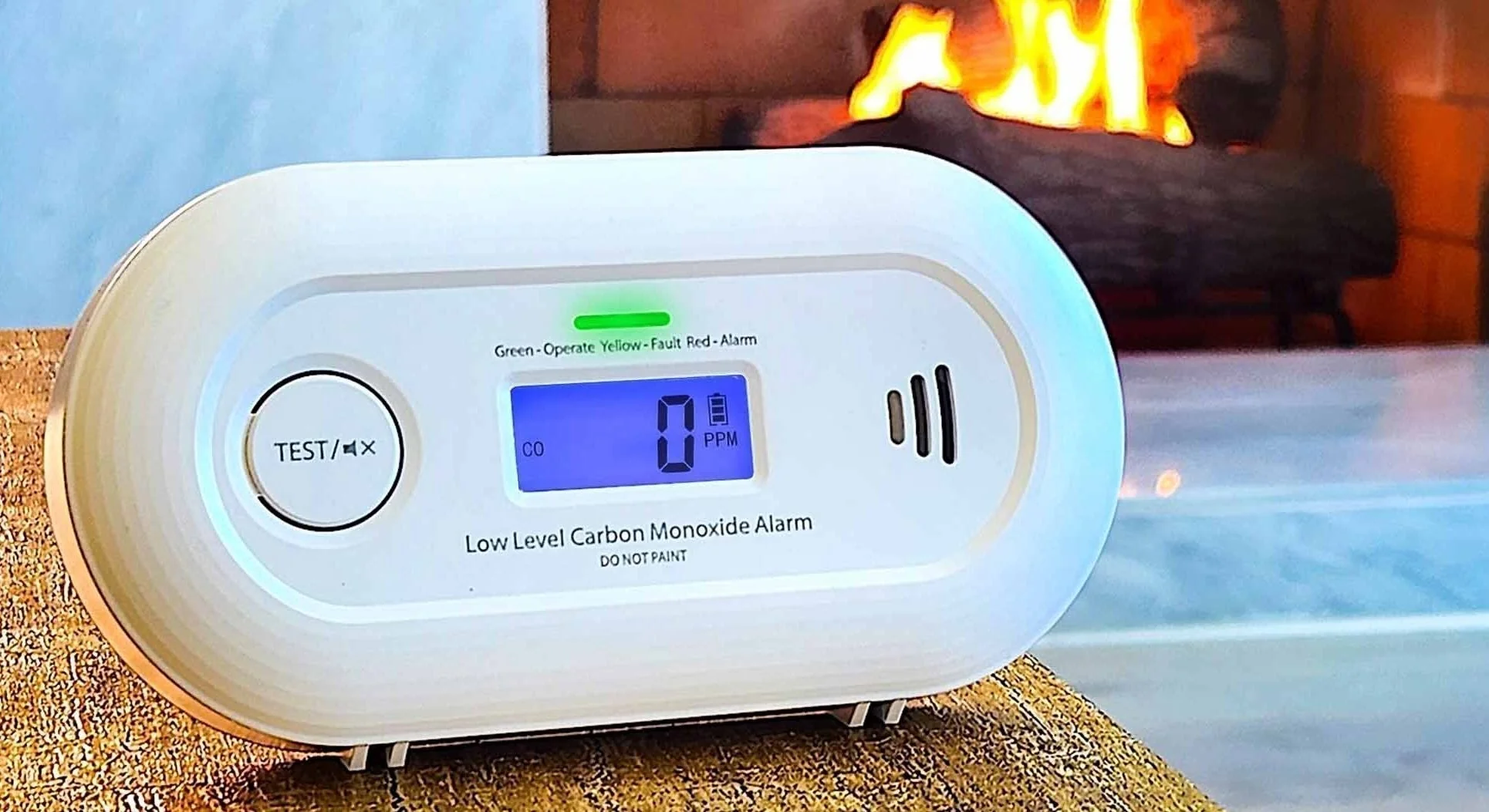
Carbon monoxide (CO) is sneaky. You cannot see it, you cannot smell it, and the first “symptoms” often feel like the flu. So when a CO detector starts beeping, I treat it like a message that deserves a clear, calm response, not a guess.
Here’s the tricky part: a CO detector can beep for a few totally different reasons, and the action you take changes depending on the pattern. Below I will walk you through the most common beep patterns, what they usually mean, and exactly what to do next.
First: Alarm or chirp?
Before you do anything else, stand close to the unit and look at the face of the alarm. Most modern CO alarms give you at least one of these clues:
- A display reading (often in ppm, parts per million)
- A red flashing light for alarm, and a green light for power
- Words or icons like “ALARM,” “ERROR,” “END,” or a battery symbol
If the alarm is loud and clearly in “ALARM” mode, skip down to the emergency steps. If it is a small periodic chirp, you are usually looking at battery, end-of-life, or a fault condition.
Common beep patterns
Manufacturers vary, so always confirm with your model’s label or manual. Still, these patterns cover what most homeowners run into.
1 chirp every 30 to 60 seconds: Low battery
This is the classic “polite” chirp. It tends to happen at night because batteries sag in cooler air, and because the house is quieter so you notice it.
- What to do: Replace batteries right away with fresh ones (match the type: AA, AAA, or 9V).
- Pro tip: If it still chirps, check the battery door. Many alarms chirp if the door is not fully latched.
Chirping after new batteries: End of life or error
CO sensors do not last forever. Many alarms are designed to nag you until you replace the entire unit.
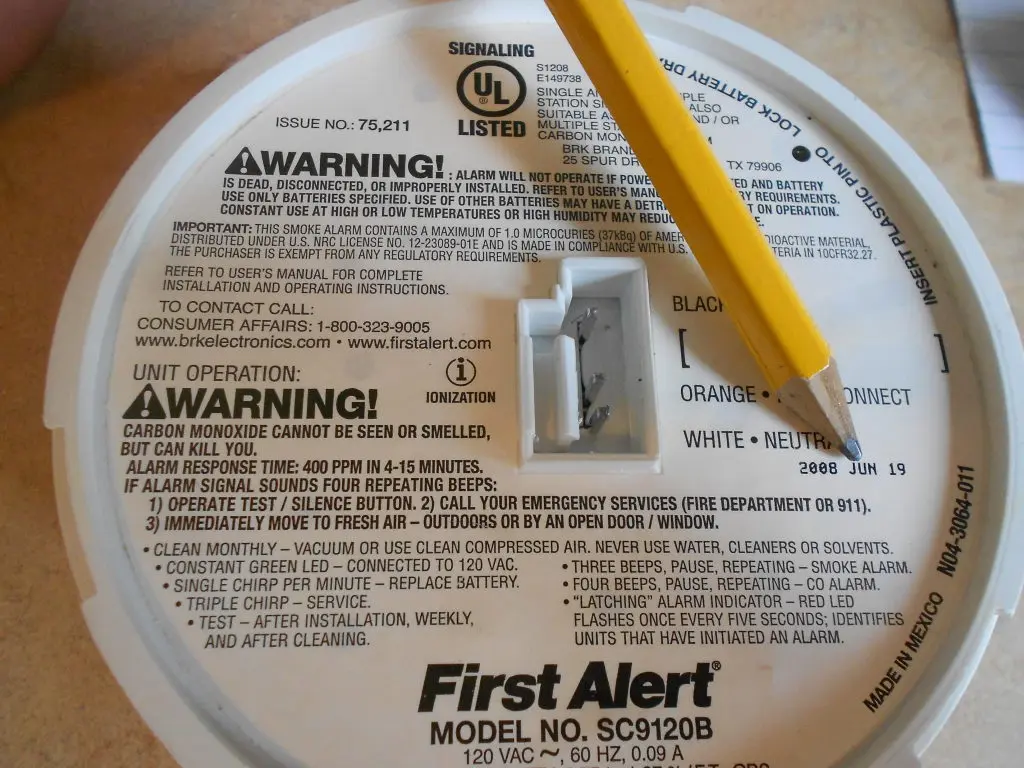
- What to look for: A date stamp on the back, or a message like “END” or “EOL.”
- What to do: Replace the whole alarm. For many common residential models, expect 5 to 10 years of service life depending on the brand and model.
- Do not ignore it: An expired CO alarm may still beep and “test,” but the sensor can be unreliable.
4 quick beeps, pause, repeating: CO alarm
This is a very common emergency pattern for CO alarms: four beeps, pause, repeat. Many combination smoke and CO units use different patterns to distinguish smoke vs CO.
- What to do: Treat this as a real event. Move to the emergency steps section below.
3 beeps, pause, repeating: Smoke or CO (combo varies)
On many combo alarms, three beeps, pause is the smoke pattern. But not every model follows the same “language,” especially older units.
- What to do: Look for indicator text or LEDs on the unit (often it will say whether it is smoke or CO). If you cannot confirm quickly, err on the safe side and follow the emergency steps.
Random chirps: Power issue, dust, humidity, or fault
If you have a plug-in CO alarm or a hardwired combo unit, intermittent chirping can come from power hiccups, a failing backup battery, or a fault condition.
- What to do: Replace backup batteries, press the “test/reset” button once, and check for error lights or codes.
- If it continues: Replace the unit. In my experience, once they start acting weird, you will chase it for weeks.
If you suspect CO: Do this
I am going to be direct here. Carbon monoxide is not a wait and see situation. If the alarm pattern indicates CO, or you have symptoms (headache, nausea, dizziness, confusion, unusual fatigue), take it seriously.
Step 1: Get to fresh air
- Wake everyone up.
- Move outside or to fresh air immediately, especially kids, older adults, and pets.
- Do a headcount.
Step 2: Call emergency services outside
Call 911 (or your local emergency number) once you are outside. Many fire departments will respond with meters to check CO levels.
Step 3: Do not ventilate or reset
Once you are evacuating, focus on getting everyone out. Do not open windows, run fans, silence alarms repeatedly, or try to “air it out.” Clearing the air can make it harder for responders to measure CO and track down the source.
Step 4: Do not re-enter until cleared
Even if the beeping stops, that does not guarantee the air is safe. CO can build and clear depending on appliance cycling and ventilation. Wait for the fire department or a qualified professional to tell you it is safe.
Step 5: Get appliances checked
Common sources include malfunctioning furnaces, blocked flues, water heaters, fireplaces, and running vehicles in attached garages. A qualified HVAC tech or plumber can test combustion appliances and venting before you use them again.
Placement that works
Placement rules vary slightly by state and manufacturer, but these guidelines are widely recommended and work well in typical houses.
Put alarms where they wake you
- Outside each sleeping area (hallway near bedrooms)
- On every level of the home, including basements
- In bedrooms if recommended by your local code or you want extra protection
Height basics
CO mixes with air and can be detected at different heights. The most important thing is following the manufacturer’s installation instructions for your exact unit (especially for plug-in models). In general:
- For wall mounted units, place them at a standard outlet height unless the manual specifies otherwise.
- For ceiling mounted units, keep them away from corners and dead-air spaces.
Avoid false alarm spots
- Avoid placing right next to fuel-burning appliances, unless the manufacturer allows it.
- Keep away from very humid areas like directly outside a steamy bathroom.
- Do not install behind curtains, inside cabinets, or in tight corners.
Replacement rules
Batteries
- Replace as soon as you hear a low-battery chirp.
- If your alarm takes replaceable batteries, consider changing them on a set schedule (many homeowners choose a twice-a-year reminder).
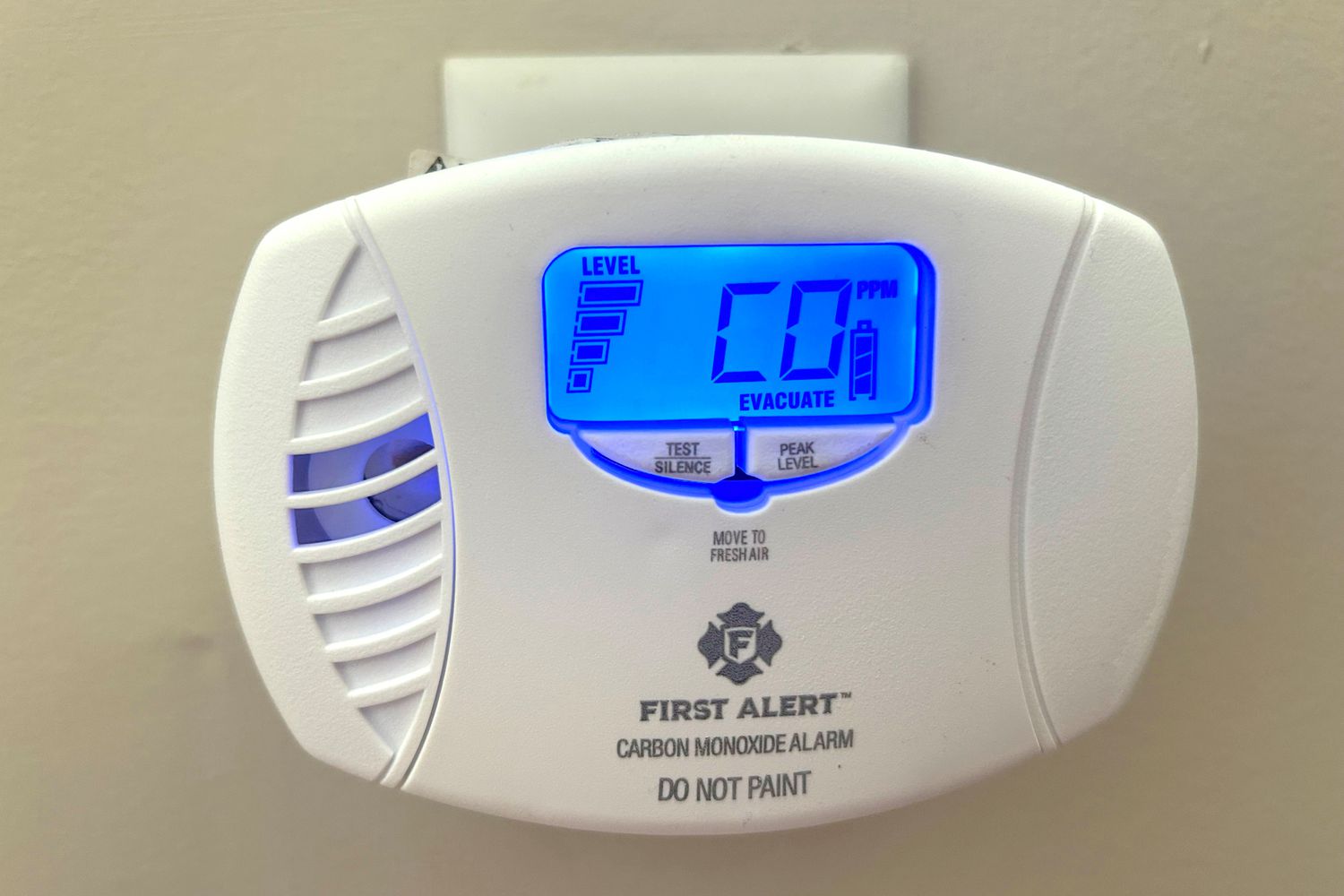
The alarm itself (end of life)
Most CO alarms have a fixed service life. Common ranges are 5 to 10 years. Look for:
- A “replace by” date on the back
- Manufacture date plus a service life statement in the manual
- An end-of-life chirp pattern that will not stop until replaced
After a confirmed CO event
If the fire department or a technician confirms CO in the home, I recommend replacing the alarm that went into alarm mode unless the manufacturer specifically says otherwise. Sensors can be stressed by high exposure.
CO vs smoke alarms
This is where a lot of DIYers get tripped up. Smoke alarm chirps are annoying, but they are usually a straightforward battery issue. CO alarms have different priorities.
- CO is invisible and odorless, so your nose cannot confirm or deny the danger.
- CO alarms are exposure-based. Many alarms trigger based on CO level and how long you have been exposed, not just a single spike.
- End of life matters a lot. A smoke alarm that is 15 years old is also a problem, but CO sensors are particularly time-limited.
- Combo units have multiple beep languages. Three beeps might mean smoke on one device and something else on another.
Troubleshooting checklist
If you have confirmed it is not in CO alarm mode and nobody has symptoms, use this quick checklist.
- Replace the batteries (and confirm the battery door is fully closed).
- Check the date on the back. If it is past end of life, replace the unit.
- Press test/reset once. Do not mash it repeatedly.
- Vacuum the vents gently with a soft brush attachment to remove dust.
- Move it if needed (too close to a bathroom, cooking area, or a drafty exterior door).
- If it still chirps, replace it. Your time is worth more than wrestling a flaky alarm.
FAQ
Can I unplug a beeping CO detector?
If it is a low-battery or end-of-life chirp, you can temporarily silence it while you replace it, but do not leave the home unprotected. If it is a real CO alarm, unplugging is the wrong move. Get outside and call emergency services.
Why does my CO detector beep at night?
Low batteries often show up at night due to cooler temperatures and because everything is quieter. It can also be tied to a furnace cycling overnight. If the pattern indicates an alarm, treat it as real and evacuate.
How do I tell smoke vs CO on a combo alarm?
Look at the unit’s indicator lights and any printed legend on the face. Many models use different beep patterns, but the easiest confirmation is the visual indicator and any display message.
Do I need a CO alarm with all-electric appliances?
If your home is truly all-electric and you have no attached garage or fuel-burning equipment, risk is lower. But many homes still have an attached garage, a fireplace, or a gas water heater you forgot about. Check your setup and local code requirements.
My bottom line
A chirp is usually a maintenance issue. A repeating alarm pattern is a safety issue. When in doubt, I tell friends the same thing I do at my own 1970s ranch: take the alarm seriously first, then troubleshoot once everyone is safe.

About Marcus Vance
Content Creator @ Grit & Home
Marcus Vance is a lifelong DIY enthusiast and self-taught home renovator who has spent the last decade transforming a dilapidated 1970s ranch into his family's dream home. He specializes in budget-friendly carpentry, room-by-room renovations, and demystifying power tools for beginners. Through his writing, Marcus shares practical tutorials and hard-learned lessons to help homeowners tackle their own projects with confidence.