
🚨 In a DIY emergency or rush?
Skip the details and jump straight to our 30-second cheat sheet for the most crucial info.
I still remember the first time my living room carpet “grew a wave.” I blamed the dog. Then I blamed my kids. Turns out, it was mostly me and a rainy spring. Carpet wrinkling and buckling is common, and the good news is it is often fixable. The bad news is that sometimes the carpet is telling you the pad, the backing, or the original install is failing.
Let’s sort out what you are seeing, why it is happening, and how to decide between a restretch and a full replacement.
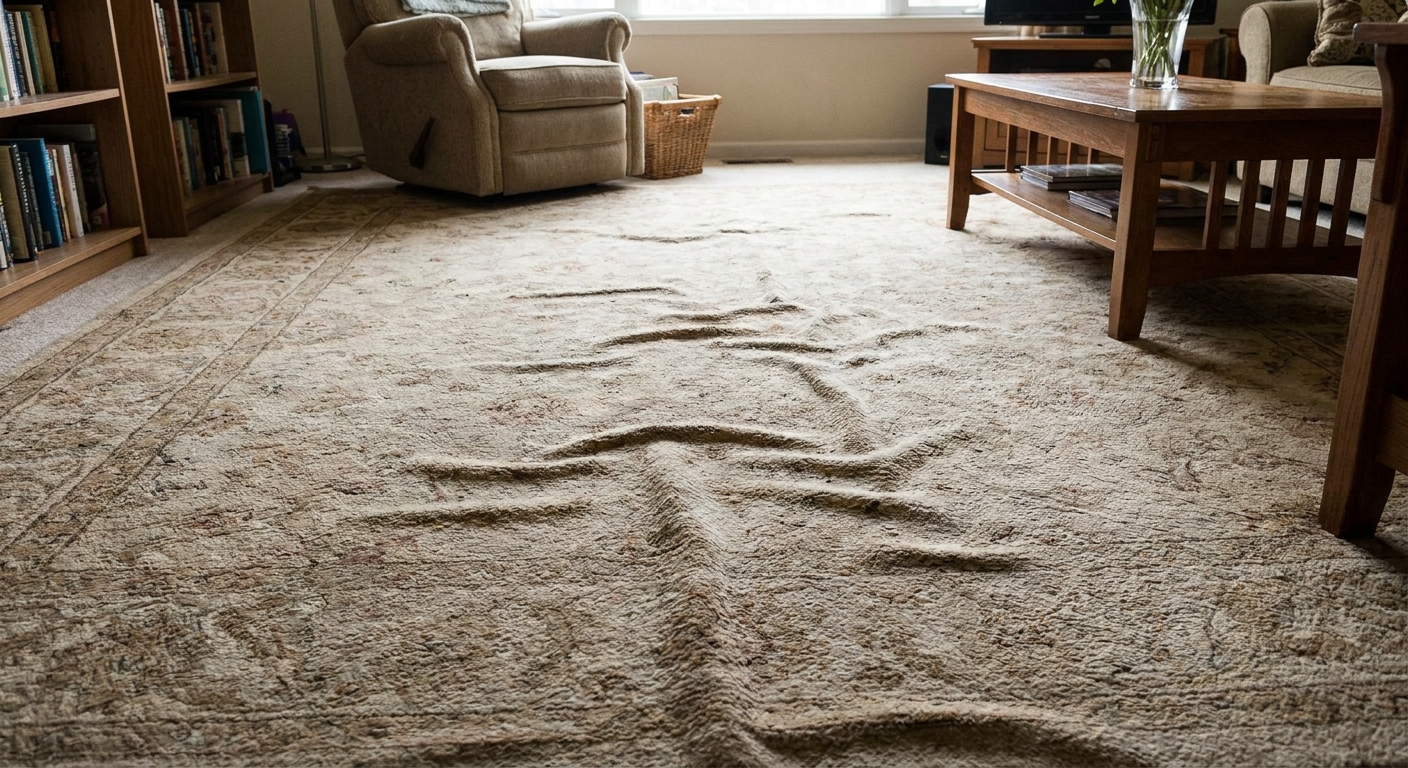
Buckling vs. wrinkling: what is the difference?
Most homeowners use these words interchangeably. In the field, they usually mean the same thing: the carpet is no longer pulled flat and tight, so it forms ripples, waves, or loose areas.
- Wrinkling: softer waves, often broad and shallow. Common after humidity swings or furniture moving.
- Buckling: more pronounced ridges that can feel like speed bumps. These can become trip hazards fast, especially in hallways.
Either way, your goal is the same: figure out why the carpet lost tension before you pay to stretch it, because stretching without fixing the cause is how the ripple comes right back.
Five common causes of carpet ripples
1) Humidity and moisture swings
Carpet and the materials under it respond to moisture. In humid months, some carpet backings relax slightly. Wood-based subfloors in particular can expand and shift a bit. If the carpet was installed with minimal tension or without a power stretcher, seasonal movement can push it over the edge into ripples.
Clue: Ripples show up during muggy weather or after you have run a humidifier, and they improve when the home is drier.
2) Pad failure or the wrong pad
The pad is the shock absorber. When it breaks down, gets crushed, or shifts, the carpet above can no longer stay evenly supported. You can stretch a carpet over a bad pad, but it is like putting new tires on a bent wheel. It might look better for a bit, but it will not stay right.
Clue: The carpet feels mushy, lumpy, or uneven underfoot, especially in traffic lanes. You may also hear a faint crunching sound if the pad is disintegrating.
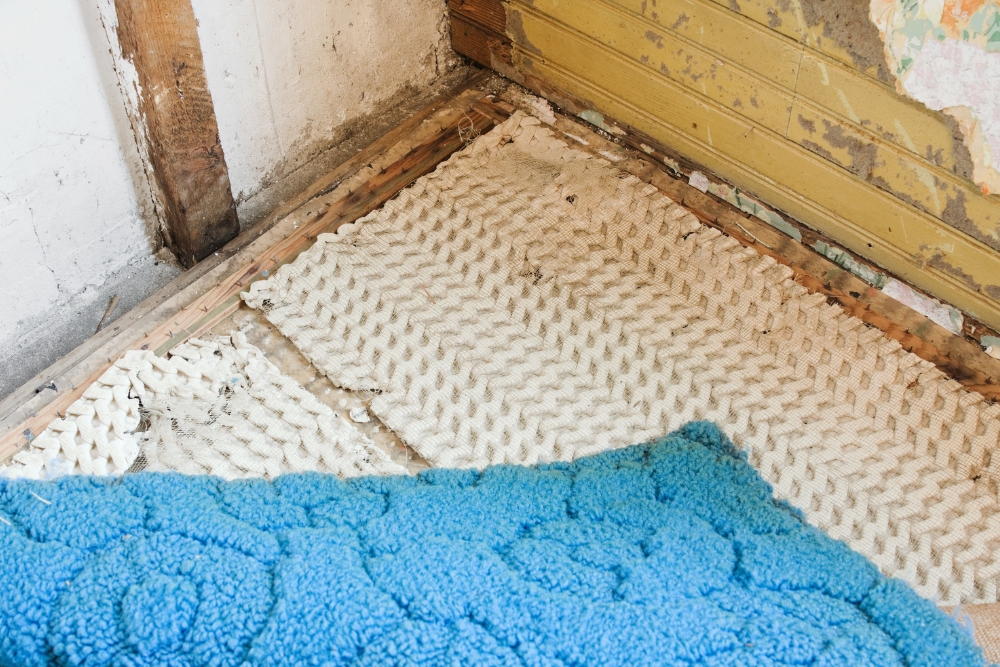
3) Poor installation: not stretched enough or not anchored well
This is the big one. The proper method uses a power stretcher (a long tool that braces against the opposite wall) to pull the carpet tight before setting it onto tack strips, the spiky wood strips around the perimeter that grip the carpet backing.
If the installer used only a knee kicker, or if they rushed, the carpet can loosen in months.
Clue: Ripples show up within the first year or two after installation, and the carpet feels loose at edges or near doorways.
Worth knowing: If this started soon after a new install, check your paperwork. Some installers and manufacturers treat wrinkling as a callback item. It never hurts to ask for a warranty visit before you pay out of pocket.
4) Dragging heavy furniture (or appliances)
Carpet is tough, but it is not meant to have a 300-pound couch dragged across it. When you pull furniture without lifting or using sliders, you can stretch the carpet in one direction, pull it off the tack strip, or distort the backing.
Clue: Ripples start right after moving furniture, and they often point in the direction the piece was dragged.
5) Delamination: the backing is separating
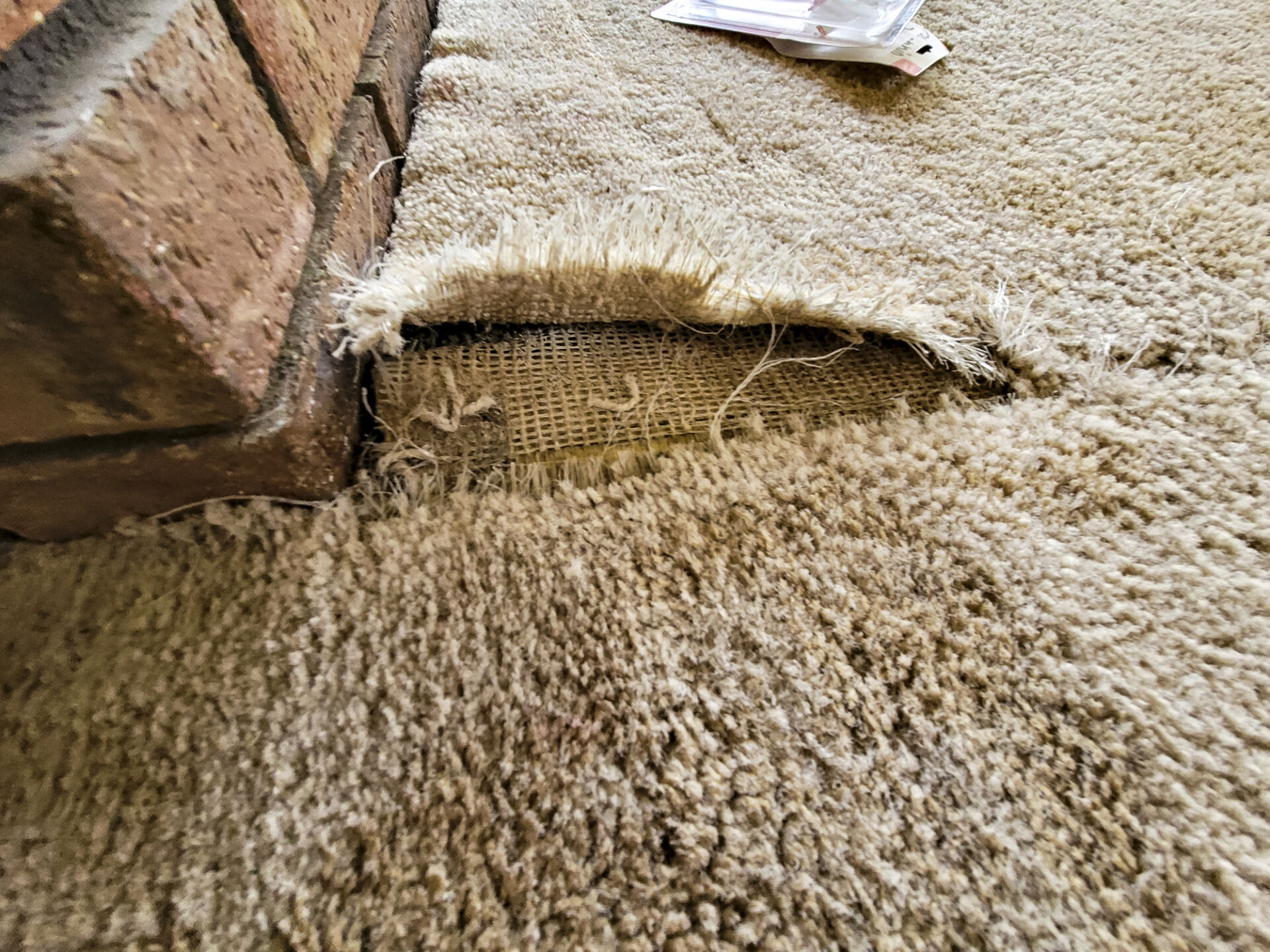
This is the replace conversation more often than not. Some carpets develop delamination, where the primary and secondary backing separate. Once that happens, you can stretch it today and it will loosen again because the structure is failing.
Clue: The carpet ripples repeatedly after being stretched, or it feels oddly floppy when lifted. Sometimes you will see powdery latex residue under the carpet.
Safety check: is this a trip hazard now?
If a ridge is high enough to catch your toe, treat it like a safety issue, not a cosmetic one.
- Simple temporary move: Clear the walking path. If you can, re-route traffic until it is fixed.
- Short-term cover: Lay down a non-slip runner or area rug over the ridge. If you do this, make sure the edges are flat so you do not create a new trip hazard.
- Short-term block: If it makes sense in the room, place a stable piece of furniture so people do not step on the buckle. This is not a repair, just risk reduction.
- About the “board trick”: A flat board with weight can press a ripple down for a short time, but it does not remove slack and can crease some carpets. Consider it a temporary safety measure only.
If you have seniors, toddlers, or anyone using a walker or cane, I would move this up the priority list.
When a restretch usually makes sense
A restretch is often the right call when the carpet itself is still in good shape and the issue is mostly tension.
- The carpet still has resilience and is not worn bald in traffic lanes. Age can be a clue, but condition matters more than the number.
- No signs of backing separation (no repeated loosening right after a stretch, no obvious structural failure when lifted).
- The pad still feels supportive and not crunchy, lumpy, or heavily compressed.
- The ripples appeared after humidity swings or after furniture was moved.
- The edges have enough material to re-hook onto tack strips without running short.
If you are on the fence, a good flooring pro can often lift a corner and tell in two minutes whether your carpet is a restretch candidate.
What a pro restretch looks like
If you have never watched it done, here is what you are usually paying for:
- Release: The installer lifts the carpet edge off the tack strips (often along one wall, sometimes more depending on the room).
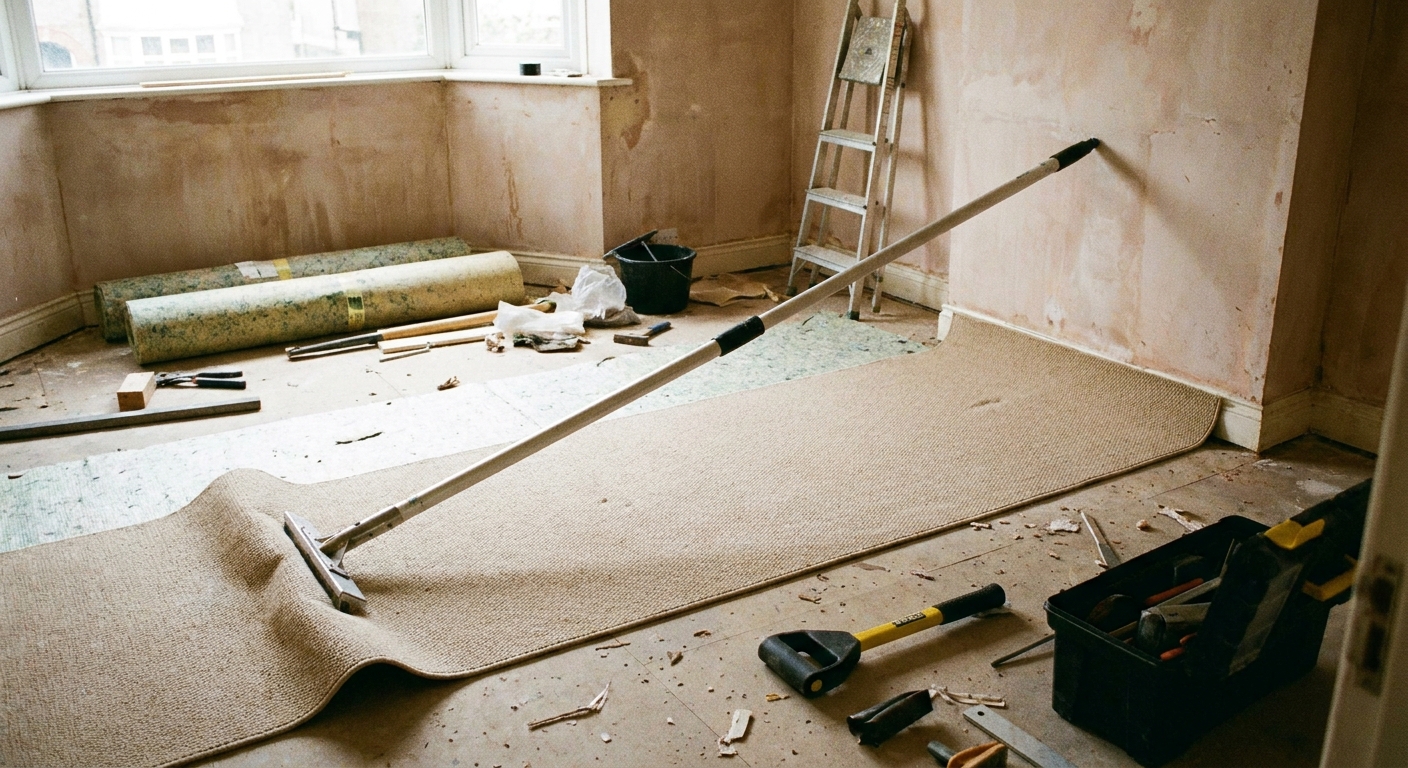
- Stretch: They use a power stretcher to pull the carpet evenly across the room, wall to wall, until the slack is gone.
- Set and finish: They re-seat the carpet onto the tack strips, tuck edges, then trim carefully if needed.
If tack strips are loose, broken, or rotted, or if the pad is failing, that needs to be handled too. Otherwise the tension will not hold.
When replacement is the smarter move
I am all for saving what you can, but there are times when restretching is money spent twice.
Replace the carpet (or carpet and pad) if:
- The pad is shot. If you can feel hard subfloor in traffic lanes, the pad has shifted and balled up, or it smells after getting wet, plan on replacing the pad at minimum. Often, carpet has to come up anyway.
- You see delamination signs. Once backing separates, ripples are a symptom of structural failure.
- The carpet is near end-of-life. If it is stained, smells, fraying at seams, or worn thin, put the restretch money toward new flooring.
- Multiple restretches have failed. If it was stretched and ripples returned quickly, the cause was not solved or the carpet cannot hold tension.
- There is water damage or mold risk. After leaks or flooding, the pad can hold odors and moisture. If the water was from a backup, flood, or anything you would not wash your hands in, it is smart to get a professional assessment. In many of those cases, the pad needs to come out.
DIY reality: knee kicker vs. power stretcher
Here is the honest take, neighbor to neighbor.
Knee kicker: what it can and cannot do
A knee kicker is the short tool you bump with your knee to nudge carpet onto tack strips. It is useful for:
- Small adjustments near a doorway
- Re-seating a corner that popped loose
- Tightening a small area in a closet
But a knee kicker is not great at creating whole-room tension. It is also easy to overdo it in one spot and distort the carpet, which can create a new ripple somewhere else.
DIY limit in plain English: If you have big waves in the middle of a room, a knee kicker often makes you feel like you are working hard while the carpet politely refuses to cooperate.
Power stretcher: why pros use it
A power stretcher braces against the opposite wall and pulls the carpet evenly across the room. That even tension is the secret sauce for a stretch that lasts.
- Better tension across large areas
- Less chance of bounce-back ripples
- More consistent results, especially in living rooms and hallways
My recommendation: If the wrinkling is more than a small localized spot, hire a pro or rent a power stretcher and learn carefully. Most of the long-lasting fixes I have seen came from power stretching, not knee kicking.
If you want to DIY: a safe checklist
If you are determined to handle it yourself, set yourself up for success.
Quick note for renters: If you rent, this is usually a landlord call, especially if it is a safety hazard or it started soon after installation.
Tools you will likely need
- Power stretcher (rentable at many tool rental shops)
- Knee kicker (still helpful for corners and edges)
- Carpet knife with sharp blades
- Stair tool or carpet tucker
- Pliers
- Work gloves and knee pads
Before you stretch
- Control humidity first. Run AC or a dehumidifier for a few days if the home is very humid.
- Inspect the pad. Lift a corner in a closet or at an edge. If the pad is crumbly, crushed, or wet, stretching is not the first step.
- Check tack strips. Loose or rotted tack strips cannot hold tension. Also, be careful. Those strips are sharp.
During the stretch
- Work wall to wall, not random spots in the middle.
- Use the power stretcher for broad tension, then a knee kicker to set edges.
- Trim conservatively. You can always take more off, but you cannot put carpet back on.
When to stop and call a pro
- The carpet keeps slipping off the tack strip.
- You cannot remove ripples without creating new ones.
- You suspect seam failure or delamination.
- You are working near built-ins, delicate baseboards, or radiator pipes where mistakes get expensive.
What it costs: restretch vs replacement
Prices vary by region and room layout, but here is the realistic pattern:
- Professional restretch: Often in the $100 to $400 range for a standard room, with higher totals for large rooms, hallways, multiple rooms, or if furniture moving is included. Minimum service calls can push the low end up.
- Re-pad and reinstall (if carpet is reusable): Often several hundred to over $1,000 depending on square footage, pad choice, and labor. It is more work because the carpet has to come up and go back down correctly.
- Full replacement: Highest upfront cost, but it resets everything, especially if your pad is failing or the carpet is worn out.
If your carpet is older or the pad is questionable, ask for two quotes: (1) restretch only and (2) re-pad and restretch. That comparison usually makes the decision obvious.
How to prevent ripples from coming back
- Use furniture sliders and lift heavy items when possible. Never drag a fridge across carpet.
- Keep indoor humidity steady. A dehumidifier in summer and avoiding over-humidifying in winter helps.
- Address spills and leaks fast. Wet pad leads to long-term problems even after the carpet looks dry.
- Choose a quality pad. It matters as much as the carpet.
- When installing new carpet, insist on power stretching. If it is not in the plan, ask why.
My bottom line
If your carpet is in decent condition and the pad and backing are healthy, restretching is a reasonable, budget-friendly fix. If the pad is failing, the tack strips are not holding, or the backing is separating, replacement is usually the better long-term decision.
And if you take only one thing from this: a knee kicker can help, but a power stretcher is what makes a whole-room stretch actually stay tight.
The 30-Second Cheat Sheet
Essential takeaways for: Carpet Buckling or Wrinkling: Restretch or Replace?
Fast diagnosis
- Wrinkles after humid weather: likely a tension issue. Often fixable with a proper restretch (especially if the pad and backing are healthy).
- Wrinkles right after moving heavy furniture: carpet may have shifted off tack strips (the spiky wood strips around the room edges). Restretch usually works unless the backing is damaged.
- Mushy, lumpy, crunchy feel underfoot: pad failure or pad shifting. Stretching alone will not last.
- Wrinkles come back soon after stretching: delamination, failing tack strips, or install issues. Replacement or a deeper repair is often smarter.
Restretch is usually worth it when
- Carpet is in good shape (not worn thin, not heavily stained, still has resilience)
- Pad still feels supportive and even
- No signs of backing separation
- Wrinkles are new and tied to humidity or furniture moving
Replace (or re-pad) when
- Pad is crushed, shifting, wet, or smelly
- Backing is separating (delamination)
- Carpet is near end-of-life or has repeated wrinkle returns
- There was water damage with mold or odor risk (get it assessed if the water was dirty or flooding-related)
DIY tool reality
- Knee kicker: OK for small edge tweaks, closets, minor doorway issues.
- Power stretcher: best chance at a lasting fix for whole rooms and big waves.
Quick safety note
If the buckle is a trip hazard, treat it as urgent. Clear the area and schedule a restretch or replacement as soon as possible. For a short-term risk reducer, lay down a non-slip runner or area rug, or block the ridge with a stable piece of furniture until help arrives.
💡 Tip: Scroll up to read the full article for detailed, step-by-step instructions.
⬆️ Back to top
About Marcus Vance
Content Creator @ Grit & Home
Marcus Vance is a lifelong DIY enthusiast and self-taught home renovator who has spent the last decade transforming a dilapidated 1970s ranch into his family's dream home. He specializes in budget-friendly carpentry, room-by-room renovations, and demystifying power tools for beginners. Through his writing, Marcus shares practical tutorials and hard-learned lessons to help homeowners tackle their own projects with confidence.