
🚨 In a DIY emergency or rush?
Skip the details and jump straight to our 30-second cheat sheet for the most crucial info.
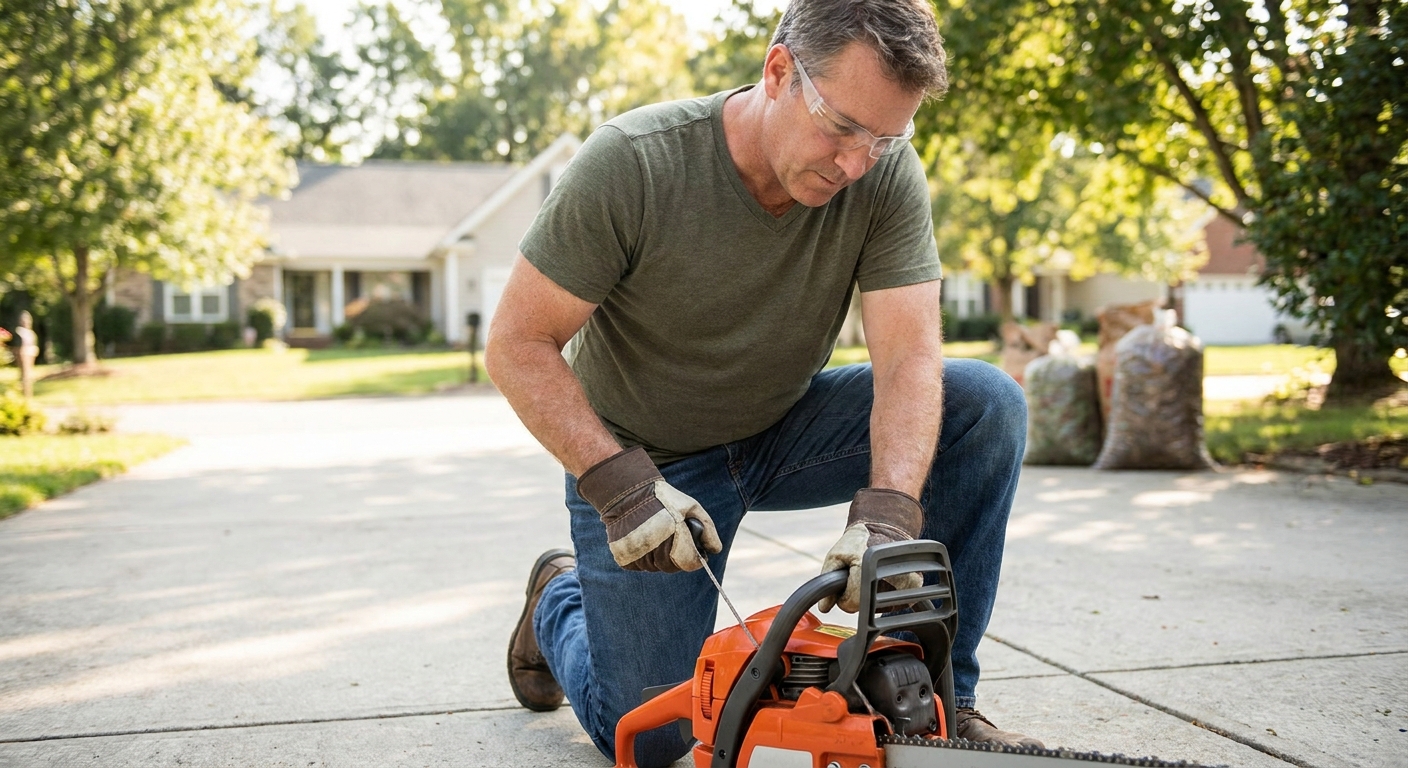
If your chainsaw will not start, it is most often one of three things: fuel, spark, or air. The trick is checking them in a smart order so you do not chase your tail or accidentally flood the saw worse than it already is. If those basics check out, then we start thinking about compression or air leaks.
I have been there, pulling until my shoulder is mad at me, only to learn I was using last season’s gas or I had the controls in the wrong position. Let’s walk through the most common fixes in the same order a small-engine tech would, but in plain homeowner language.
Quick checklist
If you just want the fastest path before you read the details, run this quick list:
- Switch set to RUN.
- Chain brake engaged for starting (unless your manual says otherwise).
- Fresh, correctly mixed 2-stroke fuel, measured and shaken.
- Correct choke sequence: full choke only until it pops once, then half choke or RUN.
- Spark plug not soaked or fouled, and the boot fits tight.
- If equipped, press the decompression valve.
Safety first, always
A chainsaw that suddenly starts is not the moment you want surprises. Before troubleshooting:
- Wear PPE: eye protection, hearing protection, gloves. If you will be running the saw, add chaps and sturdy boots.
- Work outside or in a well-ventilated area. Fuel vapors build up fast.
- Set the saw down on the ground when starting, with the bar clear of anything it could hit.
- Engage the chain brake for starting unless your manual says otherwise.
- Keep the spark plug lead off when you are inspecting the plug or near the chain.
If the saw is under warranty and brand-new, it is fair to do the quick user-error checks in this article, but avoid carb adjustments or deep disassembly that could complicate a warranty claim.
Start with the fastest “oops” checks
1) Chain brake and safety interlocks
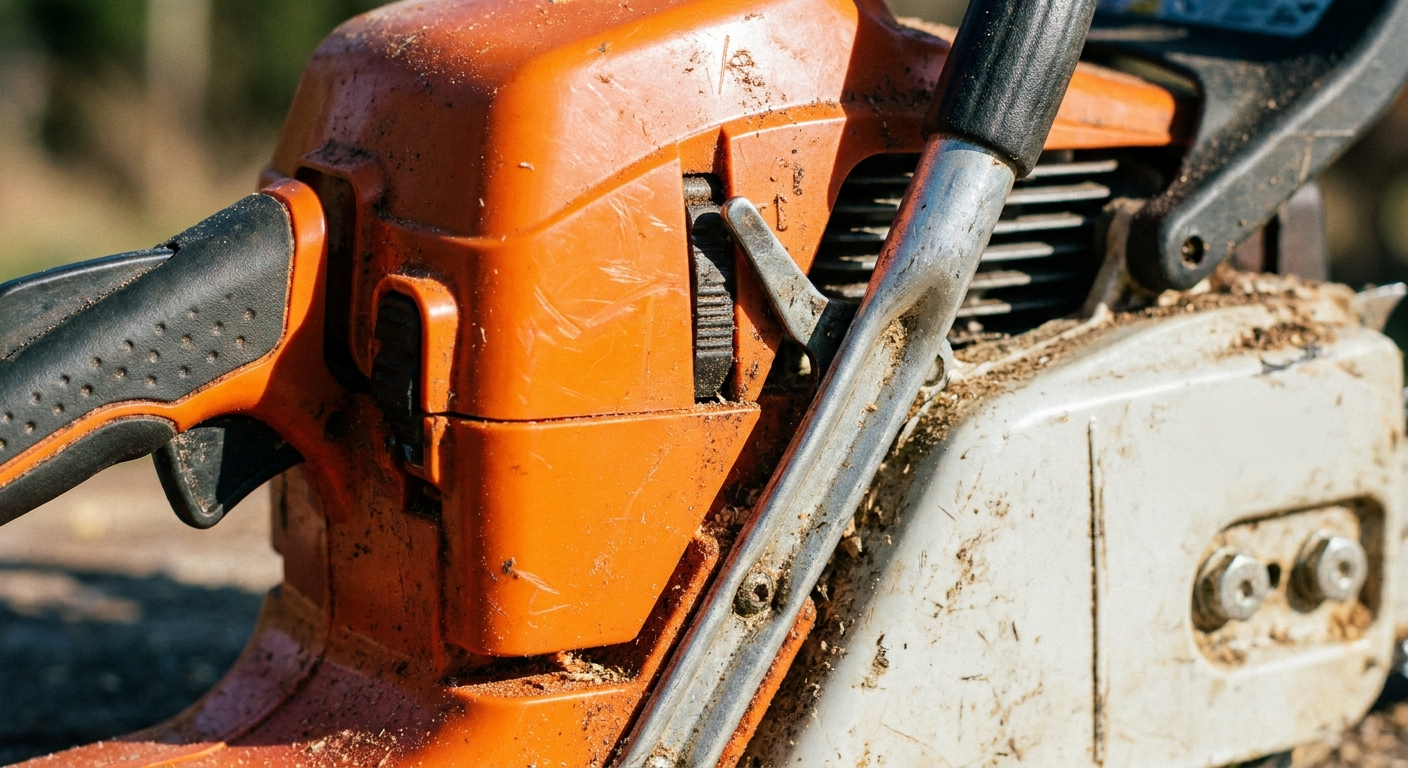
On most saws, the engine will start fine with the chain brake engaged. What the brake changes is whether the chain can move. If the clutch cover is misassembled, the brake band is binding, or the area is packed with debris, the saw can feel like it is dragging or it may stall right after it fires.
- Chain brake: make sure you understand which position is ON and OFF. Typically forward is engaged, pulled back toward the handle is released.
- Stop switch: confirm the kill switch is in RUN.
- Bar nuts and clutch cover: if things are loose or misassembled, the brake band or clutch drum area can bind.
Fuel: the most common real problem
Most homeowner saws are 2-stroke. That means they need fresh gasoline mixed with 2-stroke oil at the correct ratio (often 50:1, but check your cap or manual). Bad fuel causes hard starts, no starts, and engines that only run on choke.
Important: Never run straight gas in a 2-stroke saw. Even a short run can score the cylinder and turn a small problem into an expensive one.
2) Dump old fuel and mix fresh
If the fuel is more than about 30 days old without stabilizer (or unknown), treat it as suspicious. Ethanol-blended fuel pulls in moisture and can leave gummy varnish behind as it ages. With a good stabilizer and a sealed container, some mixes can last longer, often a few months. Always verify the stabilizer label and do not push it if you are chasing a no-start.
- Dispose of old mix properly at your local hazardous waste or recycling facility.
- Mix a fresh batch using the correct ratio and a quality 2-stroke oil.
- Measure the oil. Use a marked mixing bottle or measuring cup. Do not eyeball it.
- If you can, use ethanol-free gas for small engines. It costs more, but it saves headaches.
- Fill the saw with fresh mix and try starting again before you do anything deeper.
Quick sniff test: stale gas often smells sour or “varnishy.” Fresh gas smells sharp.
3) Check the primer bulb and fuel delivery
If your saw has a primer bulb:
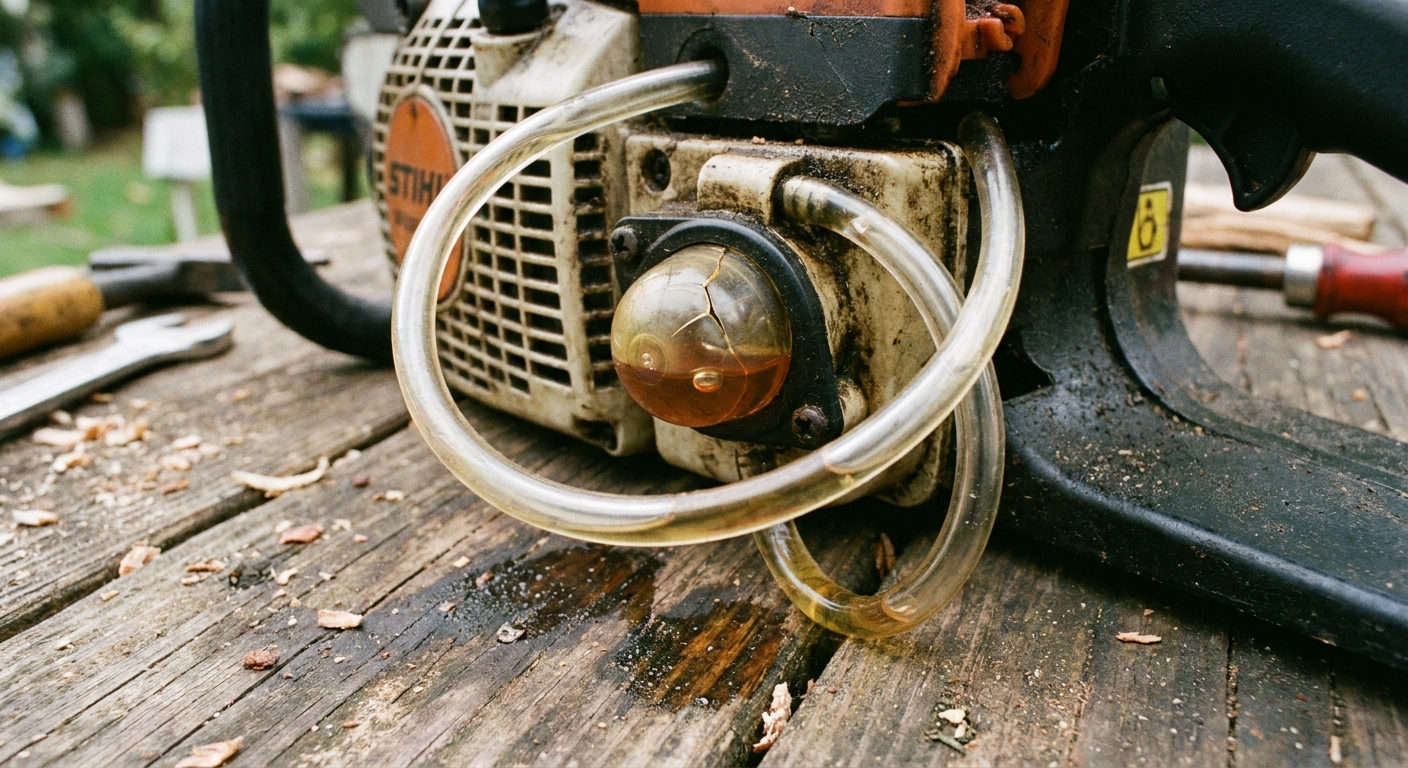
- Press it several times. You should see fuel moving through the line, and the bulb should firm up slightly.
- If the bulb never fills, you may have a cracked fuel line, a clogged fuel filter in the tank, or a venting issue.
Also check venting. A plugged tank vent (often built into the fuel cap on some models) can create a vacuum that starves fuel. If the saw starts briefly and dies, then restarts after sitting, venting is a strong suspect.
One more sneaky clue: if it runs, then dies when you tip it or swing it around, the fuel pickup filter or fuel line inside the tank may be cracked, stiff, or not reaching fuel consistently.
Air: the quiet troublemaker
Engines are basically air pumps. If the saw cannot breathe, it will run rich, foul the plug, and fight you on starting.
4) Clean or replace the air filter
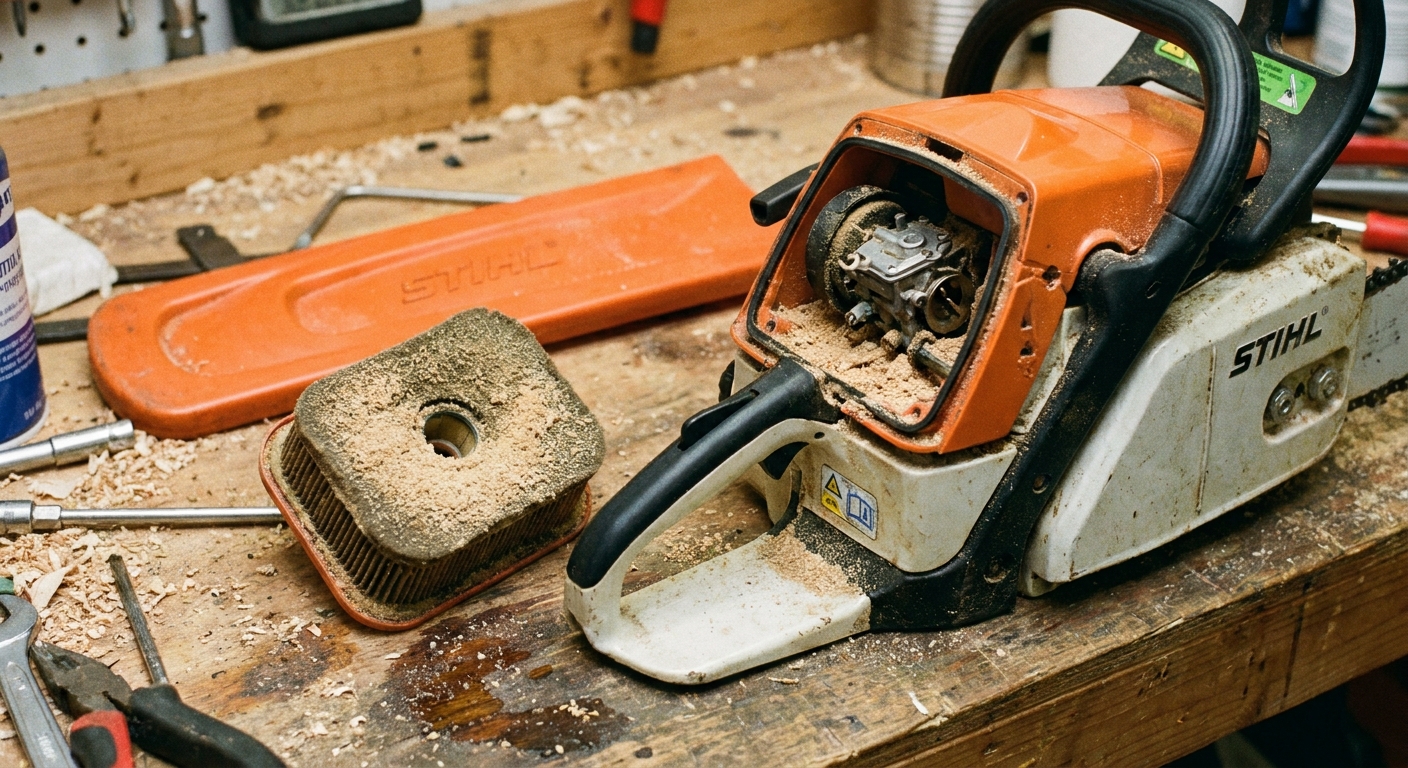
Pop the top cover and inspect the air filter. If it is caked with fine dust or oily sawdust, it is time to clean it.
- Foam filter: wash with warm soapy water, rinse, let fully dry. Lightly oil only if your manual specifies it.
- Felt or paper style: tap gently to knock off dust. Replace if it is dark, damaged, or still clogged.
- Do not run it without a filter “just to test.” One bad gulp of dust is all it takes to score an engine.
While you are in there, brush out the airbox so debris does not get sucked back into the carb throat.
Spark: simple checks that solve a lot
If you have fresh fuel and a clean air filter and it still will not even cough, it is time to confirm spark.
5) Inspect the spark plug and boot
Pull the spark plug boot off. It should fit tight and feel “snappy” when you remove and reinstall it. If it is loose, torn, or corroded inside, replace the boot or lead as appropriate for your saw.
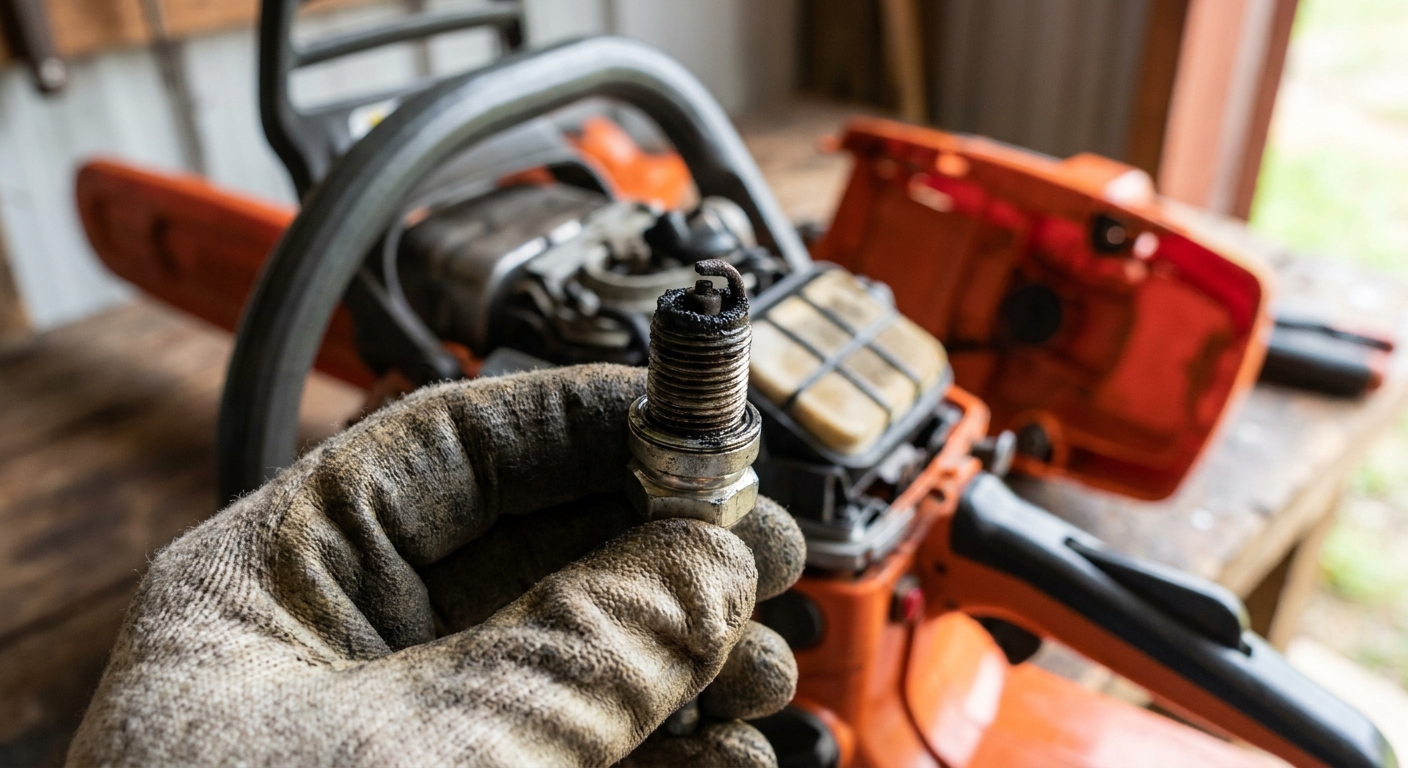
Remove the plug and look at the tip:
- Dry, light tan: often normal.
- Wet with fuel: likely flooded or not igniting.
- Black and sooty: running too rich, dirty filter, too much choke use, or plug due.
If the plug is questionable, replace it. They are cheap, and I treat them like a wear item on small engines.
6) Quick spark test
The safest and most reliable method is an inline spark tester if you have one. If you are comfortable and you do the old-school test with the plug out, do it carefully:
- Reconnect the boot to the spark plug.
- Hold the metal threads of the plug firmly against bare metal on the engine, away from the plug hole.
- Pull the starter and watch for a crisp blue spark.
Safety note: keep fuel vapors away, keep fingers off the electrode, and make sure the chain cannot move unexpectedly. Also avoid pulling the starter with the plug lead disconnected and ungrounded, since the ignition needs a safe place to send that energy.
If you have no spark, common causes are a bad plug, damaged boot or lead, faulty kill switch wiring, or a failing ignition module. At that point, it may be time for a manual-specific diagnostic or a shop visit.
Choke settings and starting technique
More chainsaws get flooded by well-meaning choke use than by any mechanical issue.
7) Use the right choke sequence
Most saws want something like this:
- Cold start: full choke until it pops once or briefly fires.
- Then: move to half choke or run position and pull again until it starts.
- Warm start: usually no choke, or just a high-idle setting.
Your exact positions depend on the saw. Some have a combined choke and fast-idle lever. Follow your manual if your controls look different. If you keep pulling on full choke after it has already popped, you are basically pouring fuel into a motor that does not need it.
8) Clear a flooded chainsaw
Signs of flooding: strong fuel smell, wet spark plug, no hint of firing, and it got worse the more you pulled.
To clear it (and yes, check your manual for any model-specific clear-flood position):
- Set the switch to RUN.
- Move the choke to OFF or RUN.
- Engage the chain brake. This matters because a flooded saw can suddenly light off, and with the throttle open the chain can spin immediately.
- Hold the throttle wide open (or use the saw’s clear-flood setting).
- Pull the starter 5 to 10 times.
- If it still will not fire, remove the spark plug, dry it, and pull the cord a few times with the plug out to vent the cylinder. Then reinstall and try again.
Give your shoulder a break between attempts. Rapid pulls often just keep adding fuel and frustration.
Carburetor screen and “starts on choke only” problems
If your chainsaw starts on full choke but dies when you move to run, that is a classic sign it is not getting enough fuel through the normal idle and low-speed circuit.
9) The clogged carb screen issue
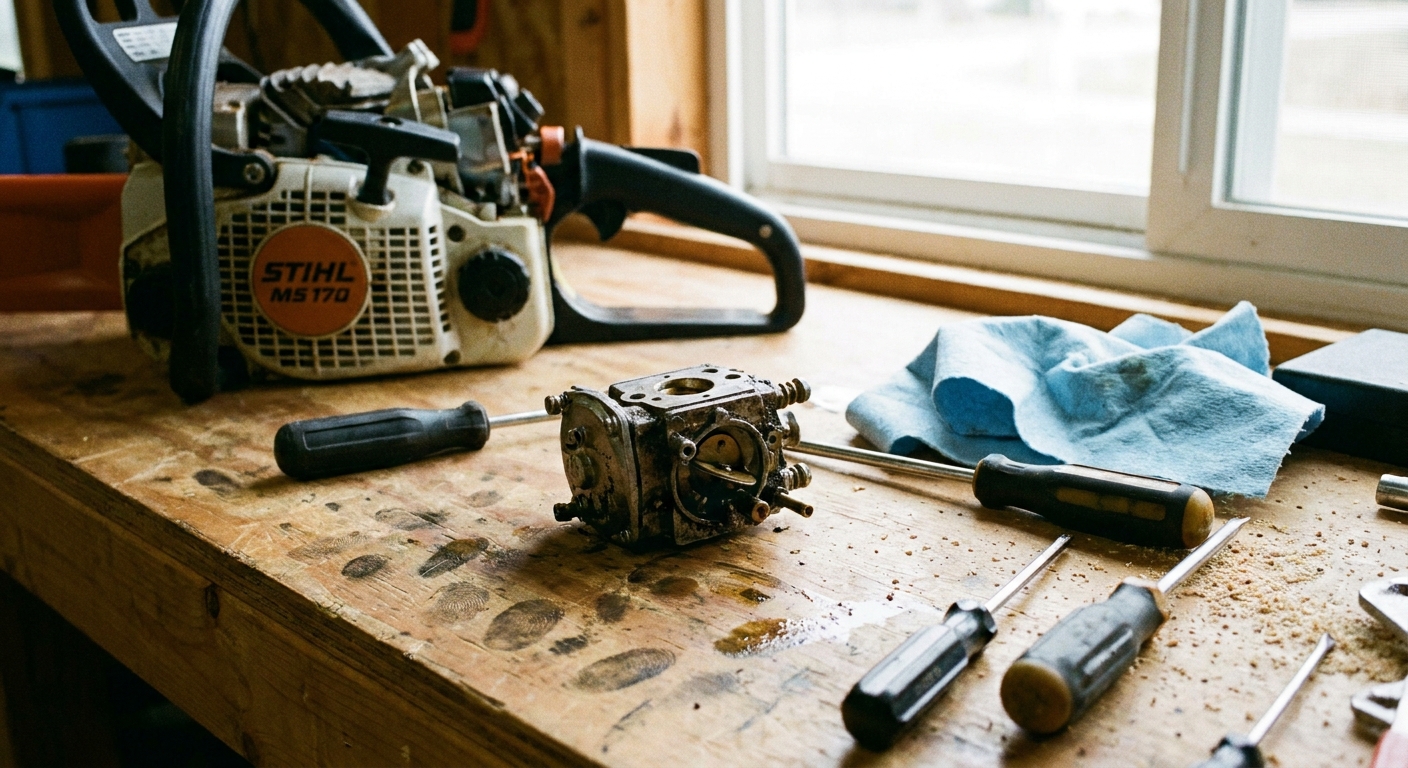
Many carburetors have a tiny inlet screen that catches fine debris. Old fuel varnish and tank grit can plug it. The saw may only run with choke because choke richens the mixture and helps pull fuel through marginal passages.
What you can do without getting too deep:
- Replace the in-tank fuel filter if it is old.
- Check fuel lines for cracks or softness.
- If you are comfortable removing the carb, inspect the inlet screen and clean it with carb cleaner and compressed air. Replace gaskets and diaphragms if they look stiff or wrinkled.
If that sounds like a lot, it is okay. Carb work is where many DIYers decide it is worth paying a shop, especially on a pro saw where downtime matters.
When it starts, but will not stay running
If you can get it to fire and then it stalls, these are the next common culprits:
- Dirty air filter or clogged spark arrestor screen in the muffler.
- Plugged tank vent (often in the cap) causing vacuum lock after a minute.
- Idle speed too low after storage or temperature changes. Some saws have an external idle adjustment, others do not.
- Old fuel that lights off once then quits.
If you suspect the muffler spark arrestor screen, let the saw cool completely, then remove it and clean it gently with a soft brush and an appropriate solvent. Avoid gasoline or other highly flammable cleaners, and avoid aggressive scraping that can tear the mesh. If the screen is heavily carboned or damaged, replacement is often the cleanest fix.
Storage tips
Starting problems are often created at the end of the last job, not at the beginning of this one.
- Do not store mixed fuel for months. Mix small batches you can use up.
- Use a fuel stabilizer if you know the saw will sit. Follow the product directions for storage life.
- Before long storage: either drain the tank and run the carb dry, or fill with stabilized ethanol-free fuel and run it long enough to get treated fuel into the carb. Pick one method and be consistent.
- Clean the air filter after dusty cuts.
- Check bar oil and keep the chain sharp so you are not overworking the engine next time.
My thrifty rule: the cheapest repair is the one you never have to make, and small engines reward a little end-of-day discipline.
When to stop and call a pro
If you have confirmed fresh fuel, a clean air filter, and good spark, but the saw still will not start, it may have a compression issue, crank seals leaking air, exhaust restrictions beyond the arrestor screen, or internal carb problems that need pressure testing and model-specific parts.
Also consider a shop visit if:
- The saw is hard to pull and never “pops,” even with the right choke sequence.
- It feels unusually easy to pull and never tries to fire (possible low compression).
- You see scoring through the spark plug hole.
- It repeatedly starts then races at high RPM (possible air leak).
There is no shame in handing it off when the next step requires specialty tools. Your goal is a safe, reliable saw, not winning an argument with an engine.
The 30-Second Cheat Sheet
Essential takeaways for: Chainsaw Won’t Start? Fix Fuel, Spark, and Air First
Start-safe checklist
- Wear eye and hearing protection, gloves. Start on the ground with the bar clear.
- Switch to RUN. Engage chain brake for starting unless your manual says otherwise.
- If equipped, press the decompression valve before starting.
Fix order (fastest wins first)
- Safety and “oops” checks: kill switch on RUN, chain brake position understood, cover assembled correctly, nothing binding.
- Fuel: dump old mix. Use fresh 2-stroke mix at the correct ratio (often 50:1). Measure oil, do not eyeball. Prefer ethanol-free gas. Never run straight gas in a 2-stroke.
- Primer and venting: primer should move fuel. If it will not, suspect clogged in-tank fuel filter, cracked line, or plugged tank vent (often in the cap).
- Air: clean or replace the air filter. Do not run without it.
- Spark: inspect plug and boot. Replace plug if wet, fouled, or old. Inline spark tester is safest if you have one.
- Choke technique: full choke only until it pops once, then half choke or RUN.
- Clear flooding: choke OFF, throttle wide open (or clear-flood setting). Chain brake engaged. Pull 5 to 10 times. If needed, remove and dry plug, then vent cylinder by pulling a few times with plug out.
- Starts only on choke: suspect restricted fuel delivery or clogged carb inlet screen. Replace in-tank fuel filter first, then consider carb service.
- Compression (when basics check out): if it never pops and feels unusually easy to pull, suspect low compression or an air leak. Consider a compression test or a shop.
Storage to prevent repeat problems
- Do not store mixed fuel for months. Use stabilizer if it will sit.
- For long storage, either drain and run dry, or store with stabilized ethanol-free fuel and run it into the carb.
💡 Tip: Scroll up to read the full article for detailed, step-by-step instructions.
⬆️ Back to top
About Marcus Vance
Content Creator @ Grit & Home
Marcus Vance is a lifelong DIY enthusiast and self-taught home renovator who has spent the last decade transforming a dilapidated 1970s ranch into his family's dream home. He specializes in budget-friendly carpentry, room-by-room renovations, and demystifying power tools for beginners. Through his writing, Marcus shares practical tutorials and hard-learned lessons to help homeowners tackle their own projects with confidence.