
🚨 In a DIY emergency or rush?
Skip the details and jump straight to our 30-second cheat sheet for the most crucial info.
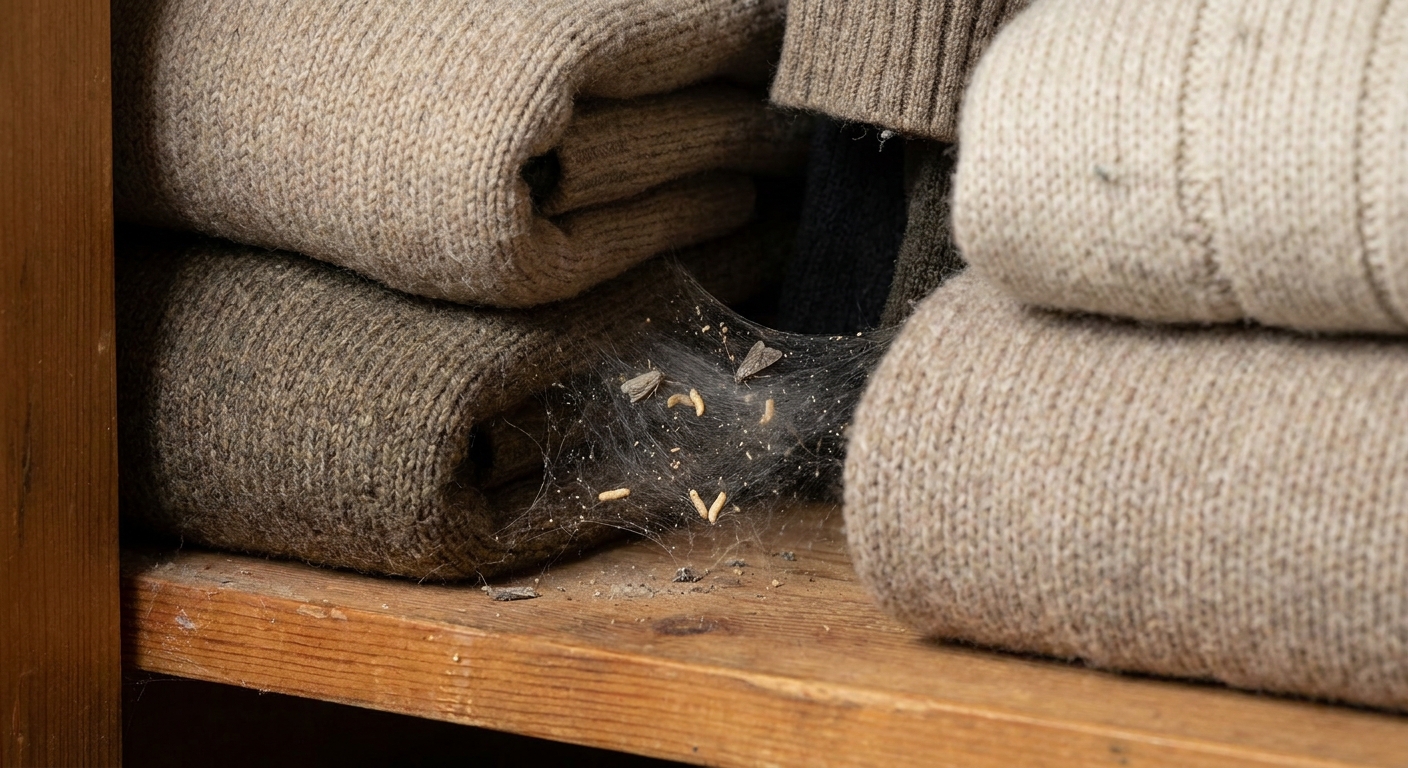
First, confirm it’s clothes moths
If you are finding tiny moths near stored woolens, little tubes or cases stuck to fabric, or mysterious holes that show up after storage, you are probably dealing with clothes moths. Two of the most common closet culprits are the webbing clothes moth (Tineola bisselliella) and the casemaking clothes moth (Tinea pellionella).
One quick clarity point because it trips up a lot of homeowners: pantry moths are a different problem. Pantry moths go after grains, pet food, and dry goods in the kitchen. Clothes moths go after keratin-based materials like wool, hair, and feathers, especially when items are stored in quiet, dark areas and have a little body oil or dust on them.
Clothes moths vs pantry moths
- Clothes moths: usually found near natural-fiber materials in closets, attics, basements, rugs, upholstery, and stored woolens. Adults are small, tan to golden, tend to avoid light, and are less likely to be noticed.
- Pantry moths: usually found near the kitchen or food storage. Adults often have a two-tone look and are more likely to be seen fluttering around lights and ceilings.
Important: Adult moths are not the fabric-eaters. The larvae do the damage. Your job is to break the life cycle by removing larvae, eggs, and the food they thrive on.
Webbing vs casemaking: what you see
In real closets, you will not be identifying species with a microscope. You will be identifying them by the mess they leave and how the larvae behave.
Webbing clothes moths
- Calling card: silky webbing on fabric, in folds, or in corners of shelves and baseboards.
- Larvae behavior: larvae tend to feed in one area and leave webby tunnels or mats.
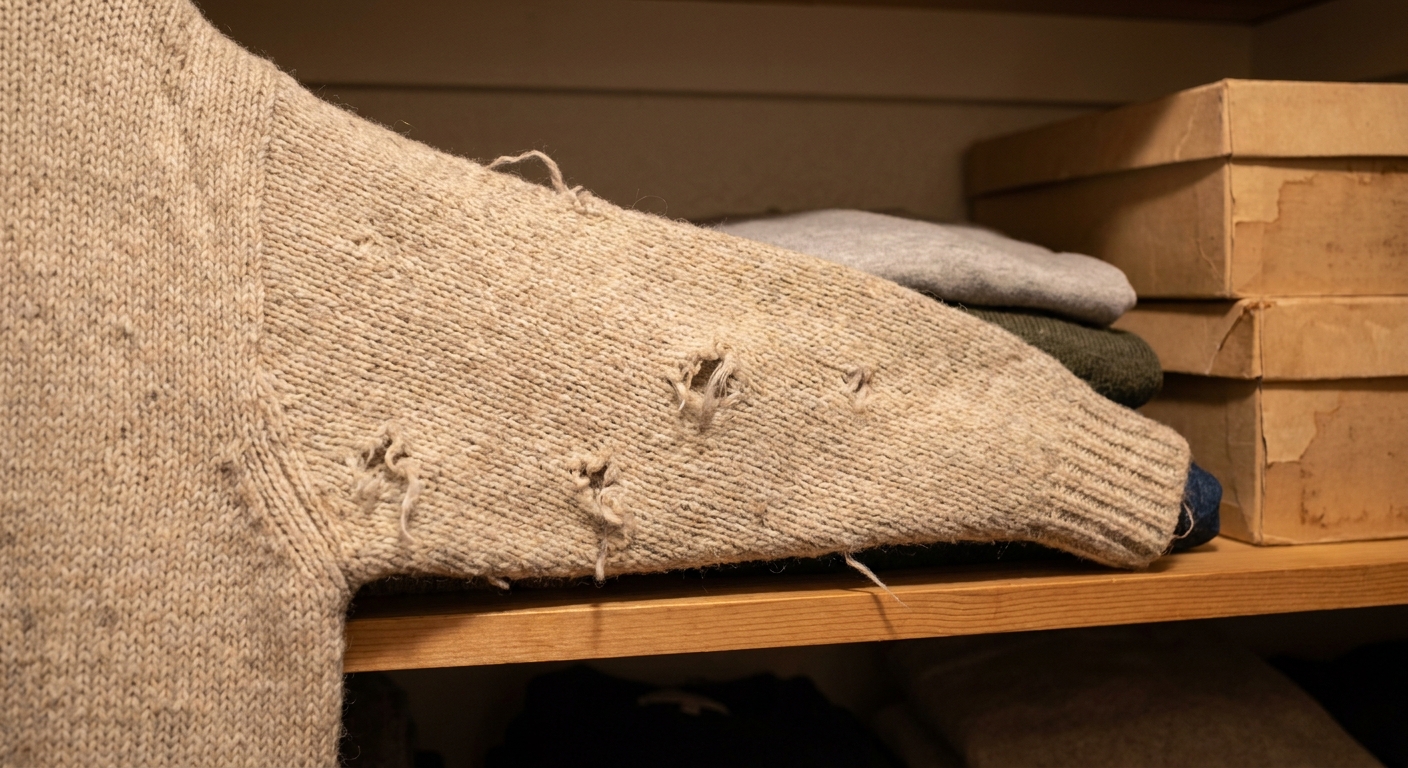
- Damage pattern: scattered holes, thinning spots, and surface grazing, often in hidden areas like under collars or along seams.
Casemaking clothes moths
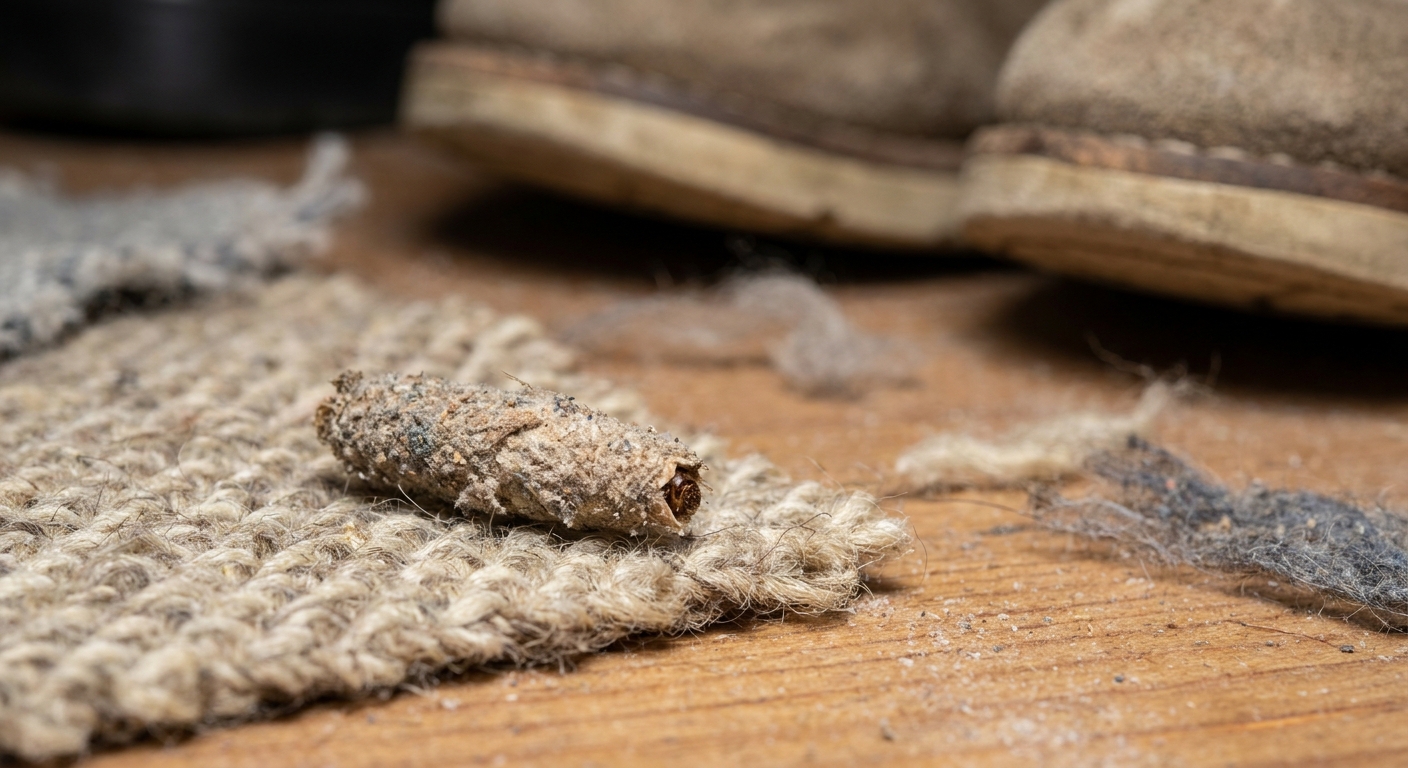
- Calling card: larvae carry a little case that looks like a tiny lint-covered tube or seed husk, often the color of the fabric they are feeding on.
- Larvae behavior: the larva drags the case around and feeds while partially protected inside it.
- Where you find them: along baseboards, under rugs, on felt pads, and in quiet corners of closets.
Quick reality check: could it be carpet beetles?
This is the most common misdiagnosis. Carpet beetles also damage wool and other natural fibers, and they show up in the same places.
- Clothes moth signs: webbing, casemaking tubes, and damage that often hides along seams, folds, and protected edges. You may also see gritty pellets (frass) mixed into the webbing.
- Carpet beetle signs: small bristly larvae, shed skins that look like tiny striped husks, and scattered damage in rugs, closets, and along baseboards.
If you are seeing bristly larvae or shed skins but no webbing or cases, adjust your plan toward carpet beetle control. The cleaning and storage basics still help either way.
What’s at risk (and what usually is not)
Clothes moth larvae are picky. They are built to digest keratin, the protein found in animal-based fibers. They also love dust, lint, pet hair, and skin oils, so a worn sweater is more attractive than a freshly cleaned one.
High-risk fibers and materials
- Wool (including merino, cashmere, alpaca)
- Silk
- Fur and feathers
- Felt (piano felt, wool-based craft felt, hat felt)
- Rugs and carpet made from wool or wool blends
- Upholstery with natural fiber content
- Leather items can be affected indirectly, especially if they are soiled or lined with wool or felt. Larvae are usually going after the organic residue or the lining, not the leather itself.
Usually low-risk
- Polyester, nylon, acrylic and other synthetics
- Most cotton and linen, unless heavily soiled or blended with wool
Heads up: blends are where people get burned. A “mostly synthetic” item with 10 to 30 percent wool can still be a snack.
Why they show up in “clean” closets
Every time I have helped a friend with moths, the closet looked tidy. The problem is not always visible clutter. It is the quiet stuff: a dark closet, low airflow, and natural fiber items stored for months with a little body oil, perfume residue, pet hair, or dust on them.
- Dark, undisturbed storage gives larvae time to feed.
- Dust and lint act like an all-you-can-eat buffet, especially when they contain hair, wool fibers, and skin flakes.
- Dirty “one more wear” clothes are more attractive than freshly cleaned items.
The simple plan: clean, treat, store, monitor
Here is the routine that works in real houses. You are going after eggs, larvae, and food sources, then making the closet a bad place for them to come back.
Step 1: Pull everything out and sort
- High-risk natural fibers in one pile: wool, cashmere, silk, fur, wool rugs, felt items.
- Low-risk synthetics in another pile.
- Anything with visible webbing, cases, frass, or damage goes in a “treat first” pile.
If you can, move piles to a hard floor area. You want to avoid spreading lint and larvae around carpet.
Step 2: Heat-treat what can be washed
Heat kills eggs and larvae. For items that can handle it, wash and dry using the hottest settings the care label allows.
- Hot wash if the fabric allows.
- High heat dryer is often the real knockout step, but it only works if the item reaches sustained heat all the way through. Thick knits and tightly packed loads may need more time.
If you are unsure, err on the side of protecting the garment and use the freezing method below.
Step 3: Dry clean items that cannot be washed
Structured wool coats, suits, delicate silks, and vintage pieces often do best with professional dry cleaning. Tell the cleaner you are dealing with clothes moths so they can handle and bag items appropriately.
Step 4: Freeze delicates at home
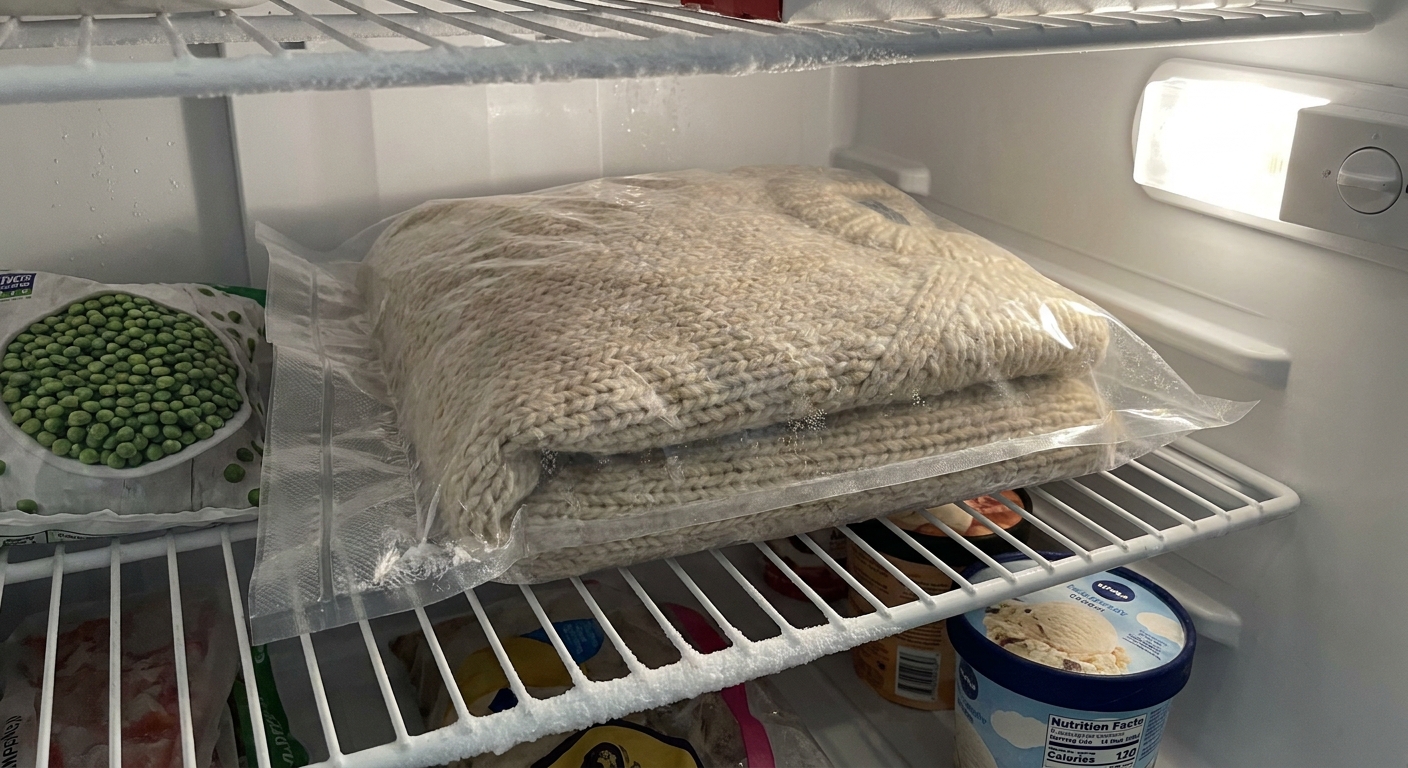
Freezing is my go-to for sweaters I do not want to gamble with. The goal is sustained cold long enough to kill larvae and eggs. For the 72-hour timeline to be meaningful, your freezer should be 0°F (-18°C) or colder.
- Bag it: place the item in a sealed plastic bag and squeeze out excess air. This reduces moisture and protects from freezer smells.
- Freeze: put it in the coldest part of the freezer for at least 72 hours.
- Thaw in the bag: let it come back to room temp while still sealed to avoid condensation on the fibers.
- Go longer for bulky items: thick blankets, lined coats, and dense knits can take longer to fully chill. If in doubt, add a couple days.
- Optional double-freeze: a second 72-hour freeze after a day at room temperature can add a little extra certainty, especially with a frequently opened freezer.
Step 5: Vacuum hard
This is the step most people do too gently. Larvae and eggs hide in cracks, corners, and edges. Use a crevice tool and hit these areas:
- Shelf corners and shelf pin holes
- Closet floor perimeter and baseboards
- Door trim and the track area if you have sliding doors
- Carpet edges under the closet threshold
- Any nearby wool rugs or upholstered bench
Do not skip disposal: when you are done, immediately empty the canister into a sealed bag or toss the vacuum bag outside. If you leave it sitting, you can re-seed the problem.
Step 6: Wipe down hard surfaces
After vacuuming, wipe shelves and baseboards with warm soapy water or a gentle all-purpose cleaner. You are removing dust, lint, and any tiny eggs that did not get picked up.
Step 7: Store the right items airtight
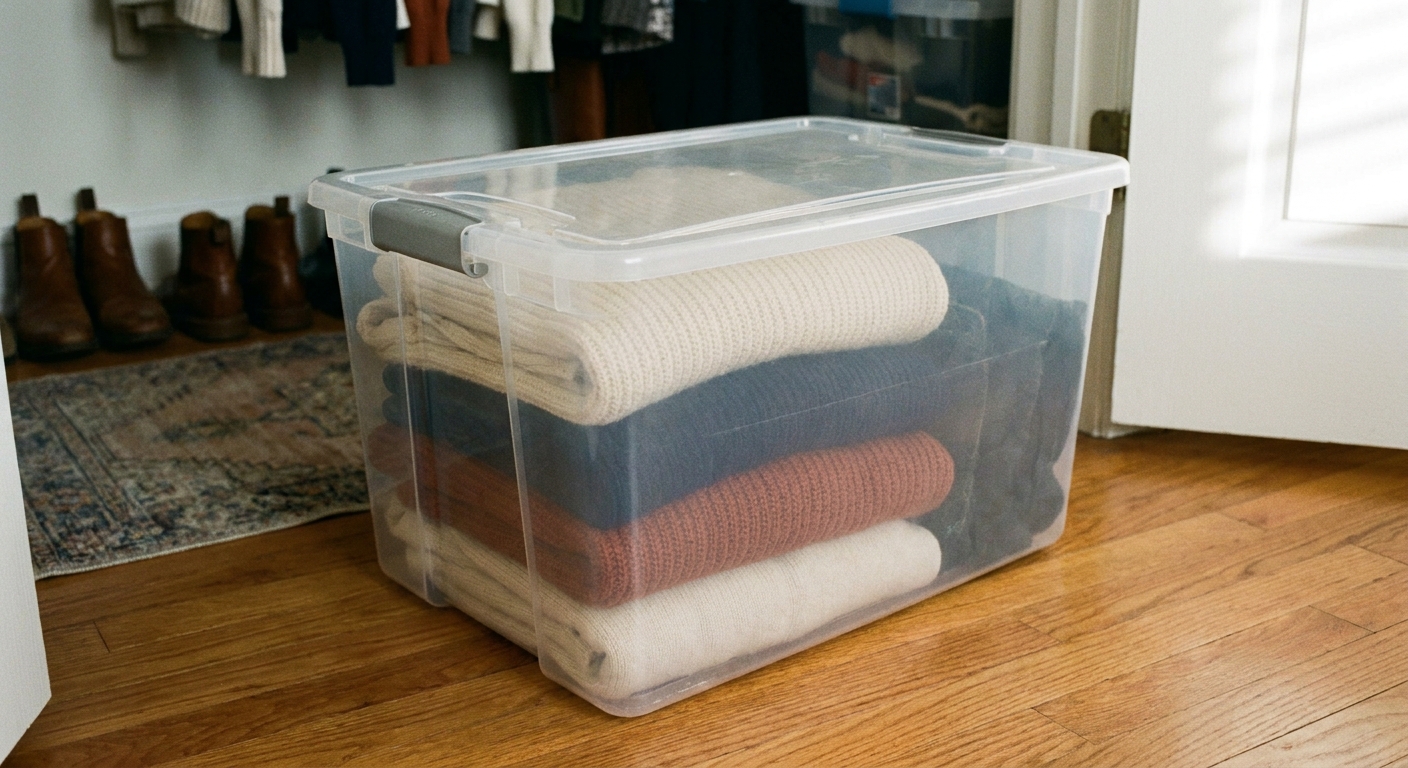
If you only change one habit, make it this: airtight storage for off-season natural fibers.
- Use sealed plastic bins with snug lids, or zippered garment bags designed to seal well.
- Breathable cotton garment bags are not moth-proof. They are great for dust, not great for moths.
- For sweaters, bins work better than hanging because they reduce stress on the shoulders.
- Only store items clean. Even tiny stains and body oils can attract larvae.
Monitoring: traps and placement
Pheromone traps are great for monitoring and reducing adult male moths. They are not a complete solution by themselves, because they do not kill eggs and larvae.
How to use traps
- Place 1 trap per closet where you have seen activity, plus one nearby if you have an adjacent room with wool rugs or upholstered furniture.
- Keep traps away from open windows and strong airflow so the lure stays effective.
- Check weekly for the first month.
What trap results mean: catching moths tells you adults are present and helps you gauge whether activity is rising or falling. A trap with zero moths does not prove you are in the clear if larvae are still tucked away in carpet edges or stored items.
When to re-treat
Clothes moth control is rarely a one-and-done weekend. Expect to do a strong initial reset, then a couple follow-ups.
A simple follow-up schedule
- Day 0: clean or freeze items, vacuum, wipe down, and switch to airtight storage.
- Day 7 to 10: vacuum closet edges again and re-check stored natural fiber items for webbing or cases.
- Week 4: check traps and re-vacuum. If you are still catching moths, repeat item treatment for anything you did not clean or freeze the first time.
If you keep finding new damage after 4 to 6 weeks of consistent cleaning and monitoring, it is time to broaden the search. Look at wool rugs, felt pads under furniture, stored blankets, and even pet bedding nearby.
Common mistakes
- Only treating hanging clothes: larvae love the closet edges, baseboards, and carpet perimeter.
- Storing “worn but not dirty” woolens: those are the first to get hit.
- Keeping items in cardboard boxes: cardboard is not airtight and it holds dust. Switch to sealed bins.
- Relying on traps as the fix: traps are a monitor, not the whole plan.
- Vacuuming and then leaving the bag indoors: that is basically a moth daycare.
- Assuming cedar or lavender will solve an active problem: they may help discourage adults in a small space, but they do not kill larvae or eggs. Cedar also loses its volatile oils over time, so it becomes less effective unless refreshed (for example by sanding) or replaced.
- Using mothballs casually: mothballs can work in truly sealed containers, but they are pesticides and the fumes can be hazardous indoors. Follow the label exactly and do not use them in open closets.
When to call a pro
If you have moths across multiple rooms, repeated reinfestation, or valuable textiles you cannot risk, a licensed pest control pro can help locate hidden sources and recommend targeted treatment. Depending on the situation, this may include crack-and-crevice treatment and growth regulators as part of an integrated plan. A good pro will still tell you to do the cleaning and storage steps, because chemistry alone does not replace good housekeeping in a moth-prone closet.
Quick checklist
- Confirm: clothes moths vs pantry moths, and rule out carpet beetles
- Treat textiles: hot wash and dry, dry clean, or freeze 72 hours at 0°F (-18°C) or colder
- Vacuum edges, corners, and cracks, then empty vacuum outside
- Wipe shelves and baseboards
- Store clean natural fibers in airtight bins or sealed garment bags
- Monitor with pheromone traps and re-vacuum in 7 to 10 days
The 30-Second Cheat Sheet
Essential takeaways for: Clothes Moths in Closets: Stop Webbing and Casemaking Moths
Identify the pest fast
- Clothes moths attack natural fibers in closets, rugs, and upholstery. Pantry moths attack dry food in kitchens.
- Webbing moths: silky webbing in fabric folds and shelf corners.
- Casemaking moths: tiny tube-like cases the larvae carry around.
- Lookalike: carpet beetles can also leave holes in wool. Look for shed larval skins and bristly larvae instead of webbing or cases.
What’s at risk
- High risk: wool, cashmere, alpaca, silk, fur, feathers, felt, wool rugs.
- Lower risk: synthetics like polyester and nylon (but watch blends with wool).
Fix it in this order
- Treat clothes: hot wash and high-heat dry what you can. Dry clean structured wool and delicate items.
- Freeze delicates: seal in a bag and freeze 72 hours at 0°F (-18°C) or colder. Thaw in the bag to prevent condensation.
- Vacuum aggressively: crevices, shelf corners, baseboards, carpet edges. Dump the vacuum contents outside immediately.
- Wipe surfaces: shelves and baseboards to remove lint and eggs.
- Store airtight: clean natural fibers in sealed bins or well-sealed garment bags.
Monitor and re-treat
- Use pheromone traps in each affected closet to track adults (traps are not the whole solution).
- Re-vacuum in 7 to 10 days, then check traps weekly for a month.
- If you still see webbing, cases, or fresh damage after 4 to 6 weeks, expand your search to rugs, felt pads, and nearby storage, or call a pro.
💡 Tip: Scroll up to read the full article for detailed, step-by-step instructions.
⬆️ Back to top
About Marcus Vance
Content Creator @ Grit & Home
Marcus Vance is a lifelong DIY enthusiast and self-taught home renovator who has spent the last decade transforming a dilapidated 1970s ranch into his family's dream home. He specializes in budget-friendly carpentry, room-by-room renovations, and demystifying power tools for beginners. Through his writing, Marcus shares practical tutorials and hard-learned lessons to help homeowners tackle their own projects with confidence.