
🚨 In a DIY emergency or rush?
Skip the details and jump straight to our 30-second cheat sheet for the most crucial info.
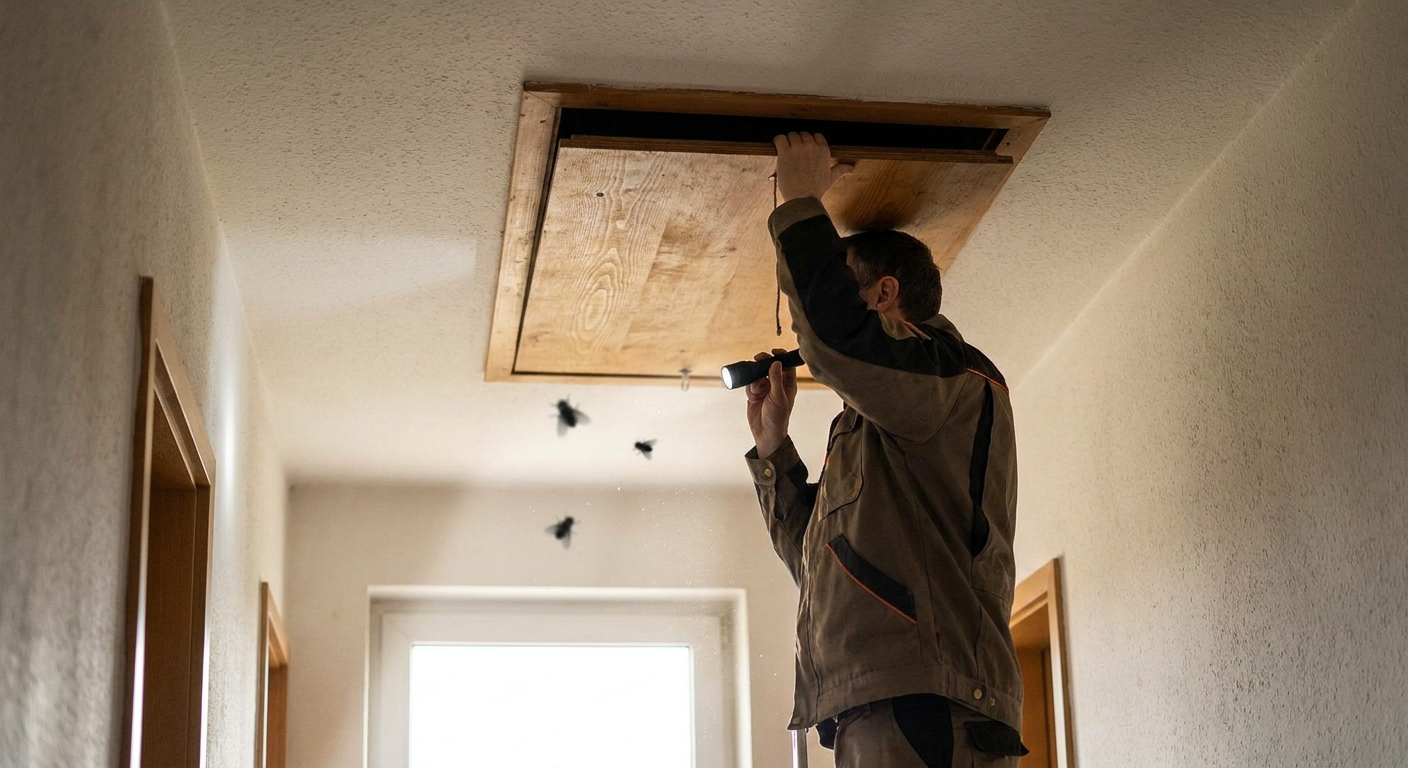
If you have ever popped your attic hatch in October and had a handful of sluggish flies wobble toward your face, you are not alone. Cluster flies love to sneak into attics and wall voids to ride out winter. The good news is they are more of an annoying houseguest than a full-blown pest emergency.
I have dealt with them in my own 1970s ranch. The first year, I chased them room to room with a fly swatter and felt like I was losing my mind. The second year, I learned the trick: remove what is inside now, then focus on sealing and timing so next fall is a non-event.
What cluster flies are and why they show up in fall
Cluster flies are outdoor flies that spend most of their life cycle outside, then move indoors for shelter when temperatures drop. In a typical cluster fly situation, they are not breeding in your drains, trash cans, or attic insulation.
Important caveat: other fly species absolutely can breed indoors. If your ID is off, the fix changes, so do not skip the ID section below.
The quick life cycle
- Spring and summer: Adults live outdoors. Females lay eggs in soil.
- Larvae stage: Larvae commonly parasitize earthworms in the ground (gross, but outdoors).
- Late summer into fall: New adults emerge and start looking for warm, protected places to overwinter.
- Winter: They gather in clusters inside wall cavities, attics, and around windows. On warm sunny days they may wake up and wander into living spaces.
The key point: if you are seeing them inside, it is usually because they entered to overwinter, not because something indoors is rotting or filthy.
Why attics and upper floors
Cluster flies follow sun-warmed exterior walls and rooflines. They slip in through tiny gaps near soffits, fascia boards, gable vents, attic fans, chimney flashing, and around old window trim. Once inside, they tuck into insulation, framing gaps, and wall voids where it stays relatively stable in temperature.
How to tell cluster flies from other flies
This is where most homeowners get tripped up. Cluster flies, houseflies, and drain flies get lumped together as “flies,” but the fix is different.
Cluster fly ID checklist
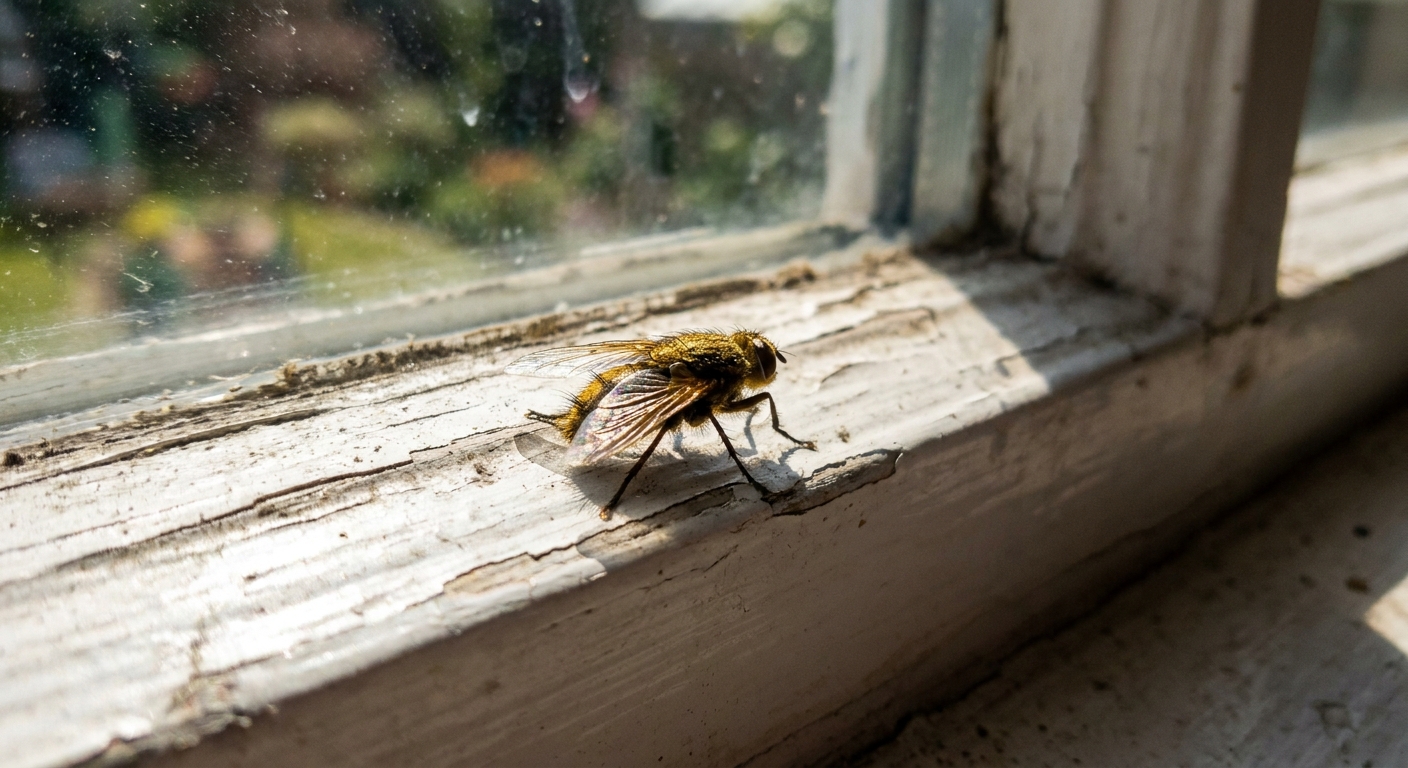
- Behavior: Slow, lazy fliers. Often found at windows, in attics, or crawling on sunny walls.
- Seasonality: Big spike in fall and occasional warm winter days.
- Where you find them: Attic, upper rooms, around recessed lights (can lights), near windows, and sometimes in light fixtures.
- Look: Similar size to a housefly but often a bit “softer” looking. Many have golden or yellowish hairs on the thorax and a slightly checkered abdomen.
Housefly vs cluster fly
Houseflies are more active, show up year-round, and usually point to an indoor attractant like garbage, pet waste, or a dead rodent in a wall. If you have fast, aggressive flies gathering around food, that is a different problem.
Drain fly vs cluster fly
Drain flies are tiny, fuzzy, moth-like and hang around sinks, tubs, and floor drains. If the flies are mostly in bathrooms and kitchens and they look like little triangles on the wall, you are dealing with drains, not attic overwintering.
Quick lookalike: blow flies
Blow flies (often metallic blue or green) tend to show up when something is decaying, like trash, a dead animal, or sometimes pet food left out. If the flies are loud, fast, and shiny, treat it as a “find the source” situation, not a cluster fly situation.
Is this an emergency?
In most homes, cluster flies are a nuisance, not a hazard. They do not bite, they do not chew wood, and they are generally considered low risk compared with filth flies like houseflies.
That said, you should treat it as higher priority if:
- You are seeing hundreds daily in living spaces.
- You suspect a dead animal in a wall or attic (strong odor, greasy stains on drywall, sudden blowfly activity).
- Flies are coming from one specific light fixture or vent in large numbers, suggesting a concentrated cluster in a void that may need targeted access.
How to get rid of cluster flies right now
My goal in an active season is simple: reduce the annoyance without turning your house into a chemical experiment. Here is what works and what is worth skipping.
Quick safety note for attic work
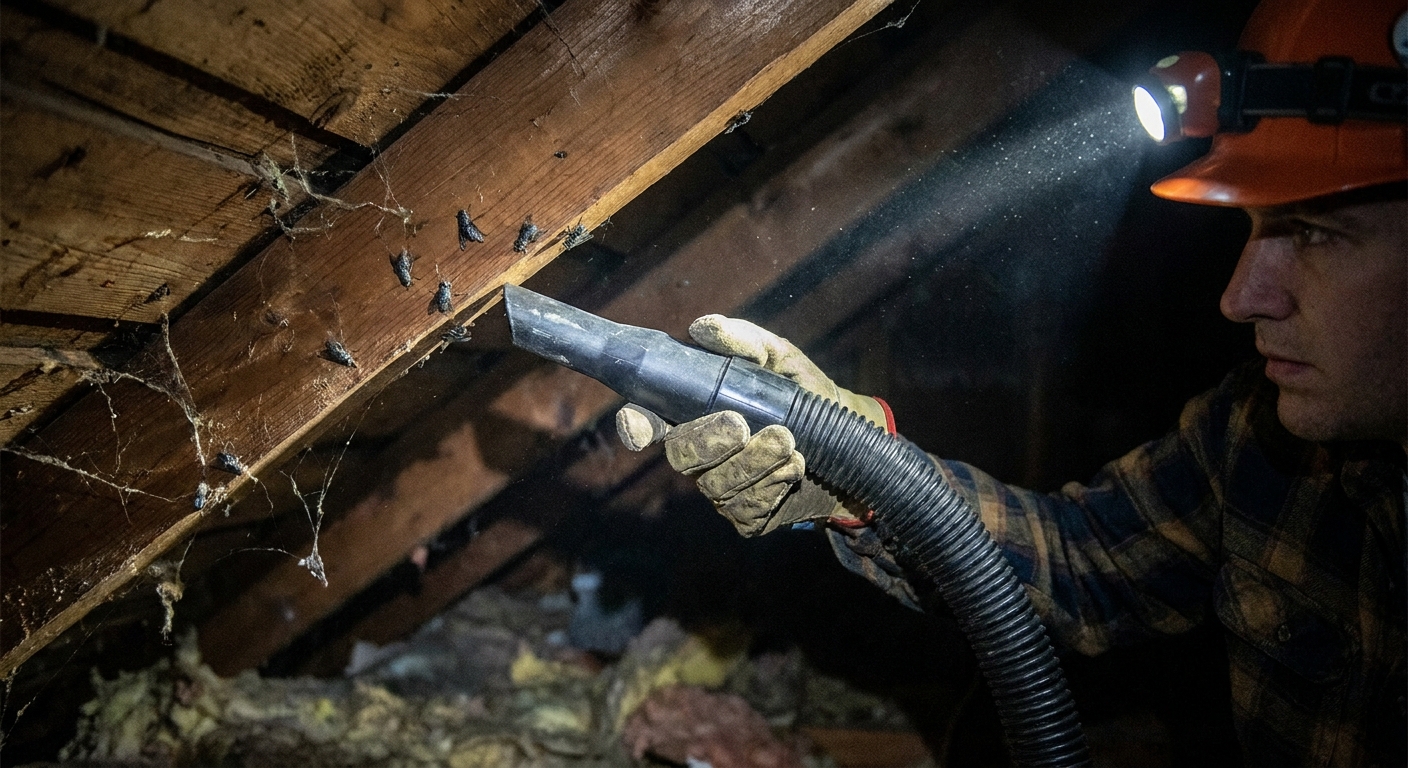
Attics are their own little obstacle course. Wear eye protection and a dust mask or respirator, watch your footing (step only on framing, not drywall), and be mindful of nails, low wires, and recessed light housings.
1) Vacuum them up (my go-to)
A vacuum is the fastest, cleanest way to remove adults, especially in attics and around windows.
- Use a shop vac if you have one, or a household vacuum with a hose.
- If you are vacuuming in finished rooms, add a brush attachment so you do not scuff paint.
- Pro tip: If you have a wet/dry shop vac and your model allows it, you can put 1 to 2 inches of soapy water in the canister to help prevent survivors. Do not add water to a standard indoor vacuum and do not soak filters or motors.
- Empty the vacuum outside immediately. Seal debris in a bag.
My mistake: The first time I vacuumed cluster flies, I left the canister in the garage overnight. The next day, a bunch had crawled back out. Do the dump run the same day.
2) Use light as a funnel, then trap
Cluster flies like light. You can use that against them.
- In the evening, darken the room and leave one lamp on near a window.
- They will drift toward that brighter area.
- Vacuum them from the window or set a sticky trap near the glass (out of reach of kids and pets).
For attics, you can place a work light near the attic access opening and check it periodically. You are not “solving” the attic with a light, but you can concentrate the stragglers for easy removal.
Why indoor sprays often disappoint
Indoor sprays and foggers usually miss the real hiding places. Cluster flies wedge themselves into wall voids and insulation, so you might kill a few you see while the rest stay tucked away. Then, on the next warm day, more wander out and it feels like nothing changed.
Even when sprays work, you can end up with dead flies collecting in voids and attic spaces. In heavy infestations, that mess can sometimes attract scavenger insects like carpet beetles. It is another reason I favor removal and exclusion over repeated indoor chemical use.
What not to do
- Do not fog your attic. Foggers rarely reach where flies are tucked, and you are adding chemicals near insulation and air pathways.
- Do not rely on indoor sprays as a main strategy. You might knock down a few, but you will be repeating it constantly.
- Do not assume you have a drain problem. If the flies are in upper levels in fall, drains are usually a red herring.
Keep them from coming back: sealing and exclusion
Cluster flies are a “find the gap” problem. If you seal the easy entry points, next year gets dramatically quieter.
Where to inspect
- Soffits and fascia: Loose panels, gaps at corners, open seams.
- Gable vents and roof vents: Missing screens, torn mesh, warped frames.
- Attic fans and louvers: Check perimeter caulk and any screw holes.
- Chimney and flashing: Gaps where flashing meets siding or brick.
- Window and door trim (upper levels): Failed caulk, open miters.
- Siding penetrations: Hose bibs, exterior outlets, cable lines, bath fan vents.
My thrifty sealing toolkit
- Exterior-rated silicone or polyurethane caulk for small cracks.
- Backer rod for larger gaps before caulking.
- Hardware cloth and screws or staples for vent screening (avoid standard window screen, it tears too easily).
- Expanding foam for hidden gaps, used carefully and sparingly.
Do not block ventilation
Seal cracks and screen openings, but do not caulk shut intentional vents. When you add screening, choose a mesh that keeps bugs out while still allowing the airflow your vent was designed for. 1/8-inch hardware cloth is excellent for exclusion, but on some larger vents 1/4-inch is a better balance for airflow. When in doubt, match the vent manufacturer’s specs.
Take your time here. Sealing is boring, but it is the part that actually changes next season.

Exterior treatment timing
If you want to add an insecticide step, the timing matters more than the product.
When sprays help most
Exterior perimeter treatments are most effective in late summer to early fall, before the flies find their way inside. Once they are already in your attic walls, spraying outside will not magically pull them back out.
Where to treat (if you choose to)
- Under eaves and soffit lines
- Around gable vents and attic openings
- Along exterior trim and upper window frames
- Cracks and crevices on sun-facing walls where flies rest
Important: Always follow the label. Keep treatments away from gardens where pollinators forage, and avoid spraying on windy days. If you are not comfortable with chemicals on a ladder, hire it out. No DIY win is worth a fall.
Why you may still see a few
This part surprises people: even after you seal the house, you might see a handful of cluster flies for a while. That is because:
- Some were already inside wall voids before sealing.
- Warm winter days wake them up and they wander toward light.
- They can emerge from tiny interior gaps around trim, recessed lights, and attic access points.
As long as the numbers trend down, you are winning. Keep vacuuming stragglers and focus on sealing improvements next season.
When to call a pro
I am all for sweat equity, but bring in a pest pro if:
- You have heavy, recurring infestations every year despite sealing.
- You cannot safely access rooflines, high gables, or steep ladders.
- You suspect another issue like rodents or a dead animal causing fly activity.
A good company will focus on exclusion and timing, not just repeated indoor spraying.
Quick recap
- Cluster flies show up in fall because they are overwintering, not breeding indoors.
- ID matters: Slow flies near attics and windows in cool weather often point to cluster flies, while fast shiny flies can point to blow flies, and tiny fuzzy flies point to drains.
- Best immediate removal: Vacuum and simple light funneling.
- Best long-term fix: Seal roofline gaps and screen vents with hardware cloth without blocking ventilation.
- Best spray timing: Late summer to early fall, before they move in.
The 30-Second Cheat Sheet
Essential takeaways for: Cluster Flies in Your Attic: Identify and Get Rid of Them
What you are probably seeing
Cluster flies are slow, lazy flies that show up in fall and warm winter days, often at attic hatches, upper windows, and light fixtures. They are overwintering indoors, not breeding in your attic.
Fast ID
- Cluster flies: bigger, sluggish, often gather at windows and attics in cool weather.
- Houseflies: active year-round, usually tied to trash, waste, or a dead animal.
- Drain flies: tiny, fuzzy, moth-like, hang around sinks and drains.
Get rid of them today
- Vacuum adults (best method). Empty outside immediately.
- Use light to draw them to a window, then vacuum or use sticky traps near the glass.
- Skip foggers and heavy indoor spraying. It is messy and rarely solves the root cause.
Stop next season’s invasion
- Seal gaps at soffits, fascia, gable vents, chimney flashing, and upper trim.
- Screen vents with hardware cloth that matches your vent needs. 1/8-inch is great for exclusion, but some vents may need 1/4-inch for airflow. Do not block required ventilation.
- Exterior treatment timing: late summer to early fall, before they enter. Spraying after they are inside has limited value.
Call a pro if
- You are getting hundreds repeatedly in living spaces.
- You suspect rodents or a dead animal (odor, stains, sudden heavy fly activity).
- You cannot safely reach rooflines or high vents for sealing.
💡 Tip: Scroll up to read the full article for detailed, step-by-step instructions.
⬆️ Back to top
About Marcus Vance
Content Creator @ Grit & Home
Marcus Vance is a lifelong DIY enthusiast and self-taught home renovator who has spent the last decade transforming a dilapidated 1970s ranch into his family's dream home. He specializes in budget-friendly carpentry, room-by-room renovations, and demystifying power tools for beginners. Through his writing, Marcus shares practical tutorials and hard-learned lessons to help homeowners tackle their own projects with confidence.