
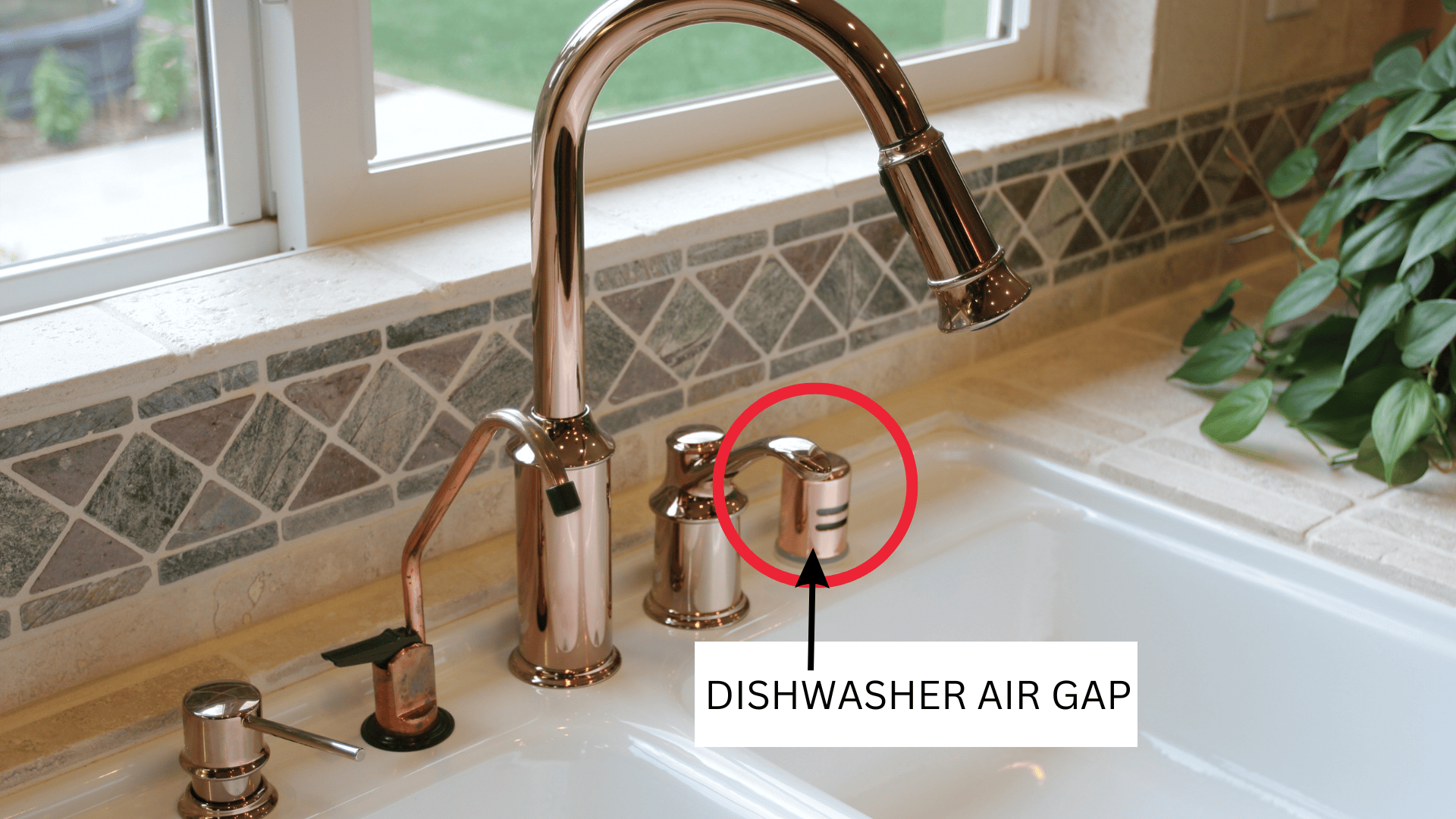
What an air gap does (and why it leaks on purpose)
The little cap on your sink or countertop is not decorative. A dishwasher air gap is a plumbing safety device that creates a physical break between dirty drain water and your clean dishwasher. If the sink drain backs up, the air gap gives that dirty water a place to go that is visible, instead of letting it siphon back into the dishwasher.
So when the air gap overflows, it is doing its job, but it is also telling you: water cannot move freely from the dishwasher to the sink drain or disposal.
Quick symptom decoder
- Air gap spits water during drain cycle: restriction between the air gap and disposal (or tailpiece), or the sink drain is partially clogged.
- Air gap dribbles slowly: can be a loose hose clamp, a cracked air gap body, a leaking connection, or a partial restriction downstream. A hose sag can contribute by holding sludge, but constant dribbling usually means something is not flowing freely.
- Sink gurgles when dishwasher drains: shared drain line is struggling to breathe or move water, often a developing clog past the trap.
Safety first (takes 60 seconds)
Before you start pulling hoses off anything, do these three things. I learned the hard way that dishwasher water plus an unexpected disposal spin is a bad afternoon.
- Kill power to the disposal at the switch and ideally the breaker.
- Empty the cabinet under the sink and lay down a towel or shallow pan.
- Have a flashlight and a small brush ready. A bottle brush or old toothbrush works great.
Also smart: wear eye protection, and assume the water may be hot.
Most common cause: blockage in the air gap or outlet hose
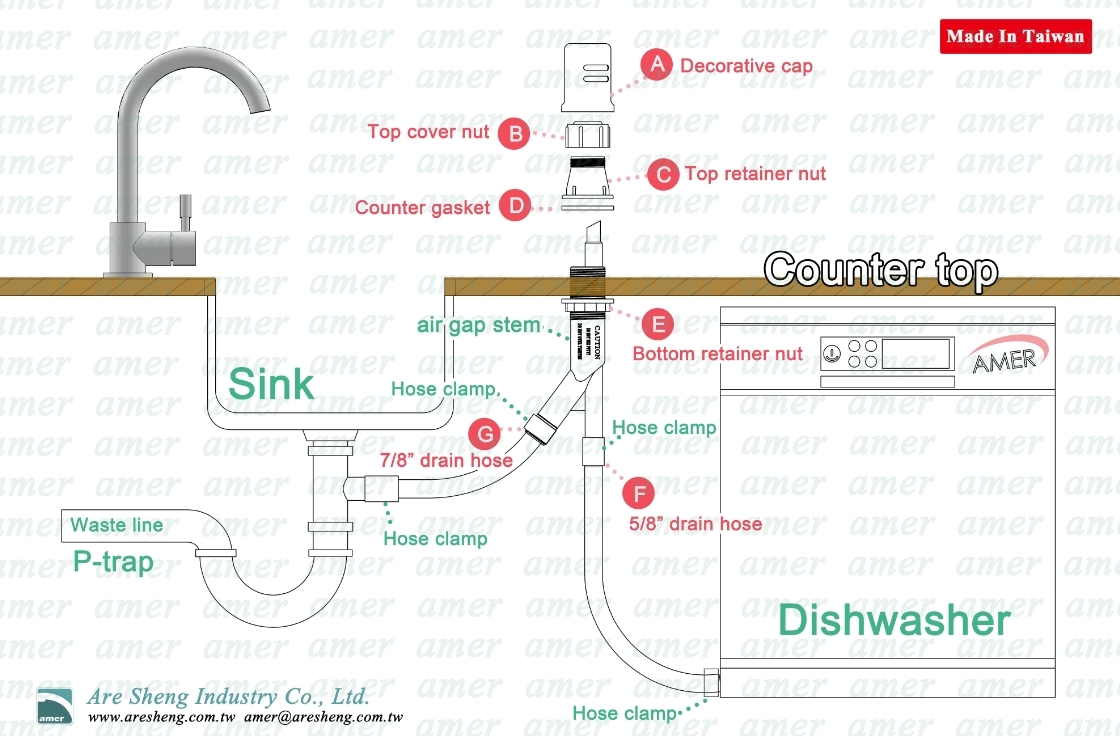
In most homes, the dishwasher drain hose runs up to the air gap, then a second hose runs from the air gap down to a nipple on the garbage disposal or sink tailpiece. When that path gets restricted by gunk, a kink, or a sag that holds sludge, the air gap becomes the overflow point.
Step 1: Pop the air gap cap and check for crud
Remove the decorative cap by lifting it off. Some caps pull straight up, others twist slightly and lift. Under it there is usually a smaller inner cap. Lift that too. You might find grease, seeds, glass-like bits, or a surprise chunk of pasta. Yes, really.
- Wipe the inside clean.
- Use a bottle brush to scrub the inner chamber.
- Rinse with a small cup of water and let it drain.
Step 2: Clear the air gap outlet (to disposal or tailpiece)
If the air gap still overflows, the restriction is usually in the hose that runs from the air gap down to the disposal or tailpiece. It is usually the larger hose, but not always.
- Under the sink, find the hose that comes from the air gap and connects to the disposal inlet or dishwasher tailpiece.
- Loosen the hose clamp and pull the hose off.
- Check for buildup inside the hose and at the inlet nipple.
- Flush the hose in a bucket or at a utility sink, or run water through it from the top (air gap side) if it is easy to remove.
Marcus tip: If you see a greasy, rubbery plug inside that hose, do not just poke a hole through it. Pull it out. A partially removed plug loves to slide right back and clog again two weeks later.
Step 3: Fix kinks, sags, and routing
The hose should run in a smooth path with no sharp bends. A low dip can act like a trap, holding food sludge that eventually narrows the hose.
- Re-route the hose so it runs cleanly, with no pinches, and slopes down toward the disposal or tailpiece.
- Use zip ties or a cabinet clip to support it if it sags.
- Replace the hose if it is soft, cracked, or permanently kinked.
Even with an air gap, good hose routing still matters. A beautifully installed air gap cannot overcome a flattened hose under the cabinet.
Do not skip this: the disposal knockout plug
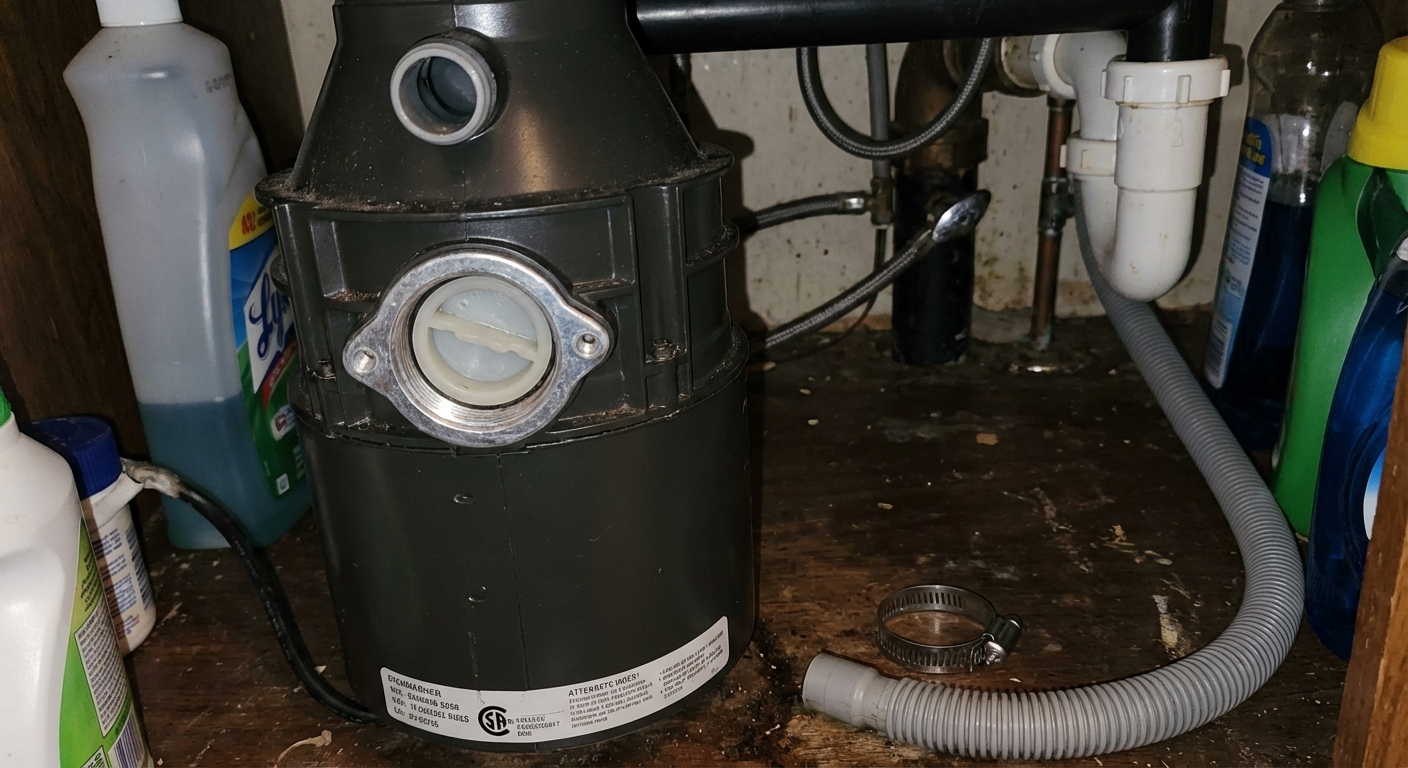
If your dishwasher was installed after the disposal, there is a good chance the installer had to knock out a factory plug inside the disposal dishwasher inlet. When that knockout is not removed, the dishwasher cannot drain correctly and the air gap will often overflow on the first run.
How to tell if the knockout is still in place
- The dishwasher is new or newly hooked up.
- The dishwasher drains poorly from day one.
- You cleaned the air gap and hoses but it still overflows immediately.
How to remove it
With the disposal power off:
- Remove the dishwasher drain hose from the disposal inlet.
- Look into the inlet. If you see a solid plastic disc, the knockout is still there.
- Use a screwdriver and a hammer to tap the plug inward.
- Retrieve the plug safely: do not put your hand inside the disposal. Use needle-nose pliers, tongs, or hemostats. The inside can be sharp even with power off.
High loop vs. air gap
Some homes use a high loop instead of an air gap. That is where the dishwasher drain hose is secured up as high as possible under the countertop before dropping to the disposal or tailpiece. The idea is to reduce the chance of dirty water flowing back toward the dishwasher.
Which one should you have?
This is where local rules and manufacturer instructions come in. Many areas require an air gap for new installations. Others allow a properly installed high loop, often if the dishwasher manufacturer permits it. If your kitchen has an air gap on the counter already, keep it. It is a simple device that gives you a visible warning when something is wrong. When in doubt, check your local plumbing code and your dishwasher install manual.
A high loop will not fix a clogged drain
If the sink line is restricted, the dishwasher still has to push water into that same system. When the drain is slow, water is going to seek the easiest exit. With an air gap, that exit can be right onto your countertop.
If you are using a high loop
- Secure the drain hose tight to the underside of the countertop, as high as it can go.
- Avoid dips after the loop that can collect sludge.
- Confirm the hose still connects to a proper disposal inlet or dishwasher tailpiece.
When the backup is past the trap
If you have cleaned the air gap and confirmed the disposal knockout is removed, yet the air gap still overflows, the problem is often not the dishwasher at all. It is the kitchen drain system downstream.
Signs the clog is deeper
- The sink drains slowly even when the dishwasher is off.
- You hear gurgling in the sink when the dishwasher drains.
- Water backs up into one bowl of a double sink when you use the other.
- The disposal side fills with water and drains slowly.
What is “past the trap”?
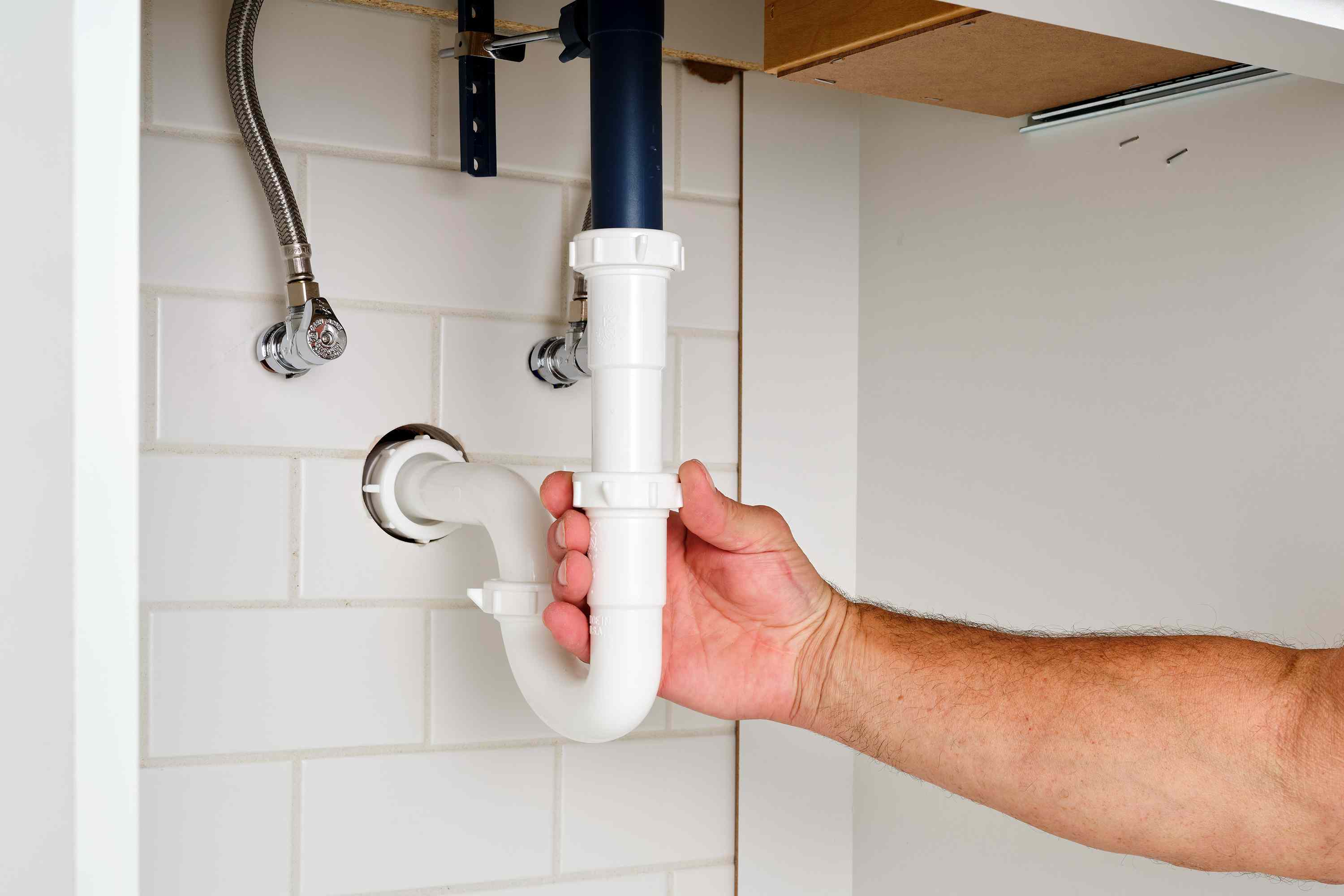
The P-trap under your sink holds water to block sewer gas. A clog can be in the trap itself, in the wall arm after the trap, or further down the branch line. If the restriction is beyond the trap, the dishwasher discharge can push the system over the edge and the air gap becomes the overflow point.
What you can try
- Run the disposal and check inside it: with water running, run the disposal to clear food buildup. If it is jammed, fix that first. A sluggish disposal can absolutely contribute to air gap overflow.
- Clean the P-trap: place a pan under it, loosen the slip nuts, and remove any packed debris.
- Check the wall arm: feel for grease buildup at the trap outlet and the pipe that goes into the wall.
- Use a hand snake into the wall pipe if you are comfortable doing so.
Skip harsh chemical drain cleaners if you can. They are rough on pipes, tough on you, and they can make a future repair messy and dangerous.
Other possible causes
Loose clamps or a split hose
If you see water under the sink during the drain cycle, it may be a clamp that is not tight or a hose that has softened and cracked.
- Tighten worm gear clamps snugly, not so tight they cut the hose.
- Replace brittle hoses. They are inexpensive and not worth gambling on.
Clogged dishwasher filter
Some dishwashers recirculate through a filter that can get packed with food debris. That usually causes standing water inside the machine, but it can contribute to slow draining.
- Pull the lower rack.
- Remove and rinse the filter per your manual.
Improper connection to a tailpiece (no disposal)
If you do not have a disposal, the dishwasher should connect to a dishwasher branch tailpiece or a proper adapter. A bad connection can create restrictions or leaks.
What not to do
- Do not remove an air gap if it is required by local code.
- Do not keep running the dishwasher if the air gap is overflowing. Fix the restriction first, or you will keep pushing water where it does not belong.
- Do not use a power snake carelessly on thin-wall tubular under-sink piping. It is easy to damage.
- Do not stick your hand into a disposal, even with the breaker off.
Fast troubleshooting checklist
- Air gap cap off, inner chamber cleaned
- Hose from air gap to disposal or tailpiece removed and flushed
- No kinks or low sags in either hose
- Disposal knockout plug removed and retrieved (if applicable)
- Disposal runs and drains strongly (if you have one)
- Sink drains strongly on its own
- P-trap checked and cleaned if needed
When to call a pro
I am all for DIY, but there are a few moments when it is smarter to phone a plumber:
- You cleared the air gap and hoses, confirmed the knockout, and the sink still backs up regularly.
- Multiple fixtures back up at once (kitchen sink plus another drain).
- You suspect a clogged vent or you see signs of leaking inside the wall.
- You have galvanized or older fragile piping and slip nuts will not budge without risking damage.
A persistent air gap overflow is often a symptom of a bigger drainage problem. Catching that early can save you from a full-on kitchen sink backup later.
My simple rule of thumb
If the air gap overflows only when the dishwasher drains, start at the air gap and the hose down to the disposal or tailpiece. If it overflows and you also have slow draining or gurgling, treat it like a drain line issue and work downstream.
Once it is cleared, run the dishwasher and watch one full drain cycle. You want a strong, quick discharge sound and zero water at the air gap. When you get that, you are back in business.

About Marcus Vance
Content Creator @ Grit & Home
Marcus Vance is a lifelong DIY enthusiast and self-taught home renovator who has spent the last decade transforming a dilapidated 1970s ranch into his family's dream home. He specializes in budget-friendly carpentry, room-by-room renovations, and demystifying power tools for beginners. Through his writing, Marcus shares practical tutorials and hard-learned lessons to help homeowners tackle their own projects with confidence.