
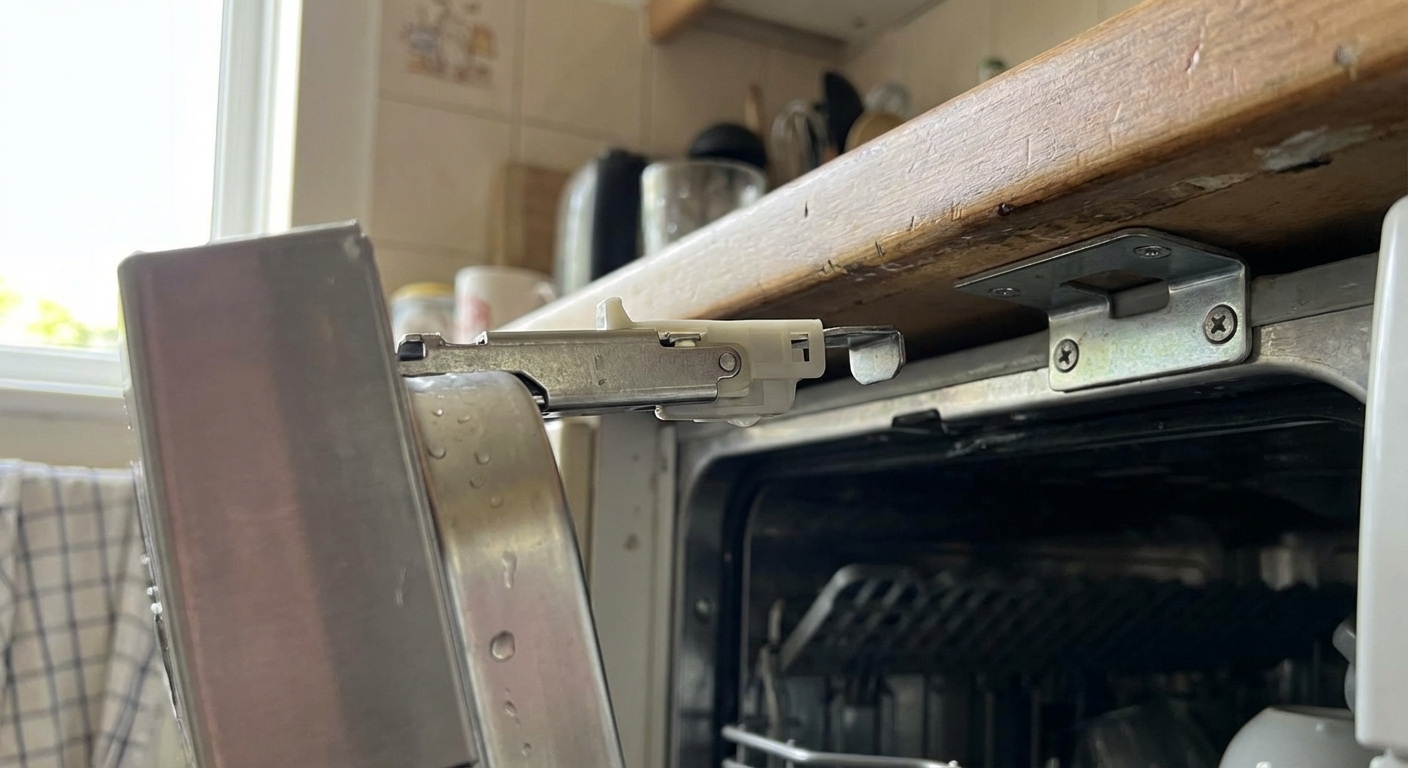
If your dishwasher door will not close or it closes but will not latch, you are usually dealing with one of two things: something is physically blocking the door, or the latch system is not lining up the way it should. The good news is many fixes are simple and do not require pulling the dishwasher out.
I have been there. The first time mine would not latch, I was ready to blame the latch and order parts. Turns out a single tall cutting board in the bottom rack was nudging the inner door. Ten seconds later, problem solved. Start with the easy checks first.
Quick note: When you see a “Marcus tip” below, it is just the shortcut I use after fixing these in my own kitchen.
Safety and quick checks
- Turn off power at the dishwasher breaker before you put hands near the latch, wiring, door switch, or inner door panel.
- Watch for sharp edges inside the door and around the frame if you remove panels.
- Do an empty test first: remove dishes and push both racks fully in. Try closing the door. If it latches empty, the issue is usually loading or rack alignment.
- Then do a rack-movement test: with the dishwasher still empty, pull each rack out a few inches and roll it back in. If the feel changes or the door only closes in one rack position, a wheel may be off track or a rack may not be seating on the rear stops.
- Check the tub gasket: if it is folded, out of its channel, or packed with gunk, the door may feel like it “hits” and rebounds.
- Check the latch area for debris: look for broken glass, food buildup, or a loose label at the latch or strike area that can keep the hook from grabbing.
Tools you may need
- Flashlight
- Phillips or Torx driver (varies by model)
- Small nut driver (some toe-kicks use hex screws)
- Pliers (for springs)
- Level
- Multimeter (optional, for door switch testing)
Common causes
- Dish rack, utensil, or tall item is protruding into the door path
- Debris blocking the latch or strike
- Strike plate is misaligned (commonly top-center, but designs vary)
- Latch assembly is worn or broken
- Hinges or hinge springs are bent, loose, or broken
- Dishwasher is not level or is shifting in the cabinet
- Door is warped or inner panel is loose
- Door switch is faulty or not being pressed by the latch
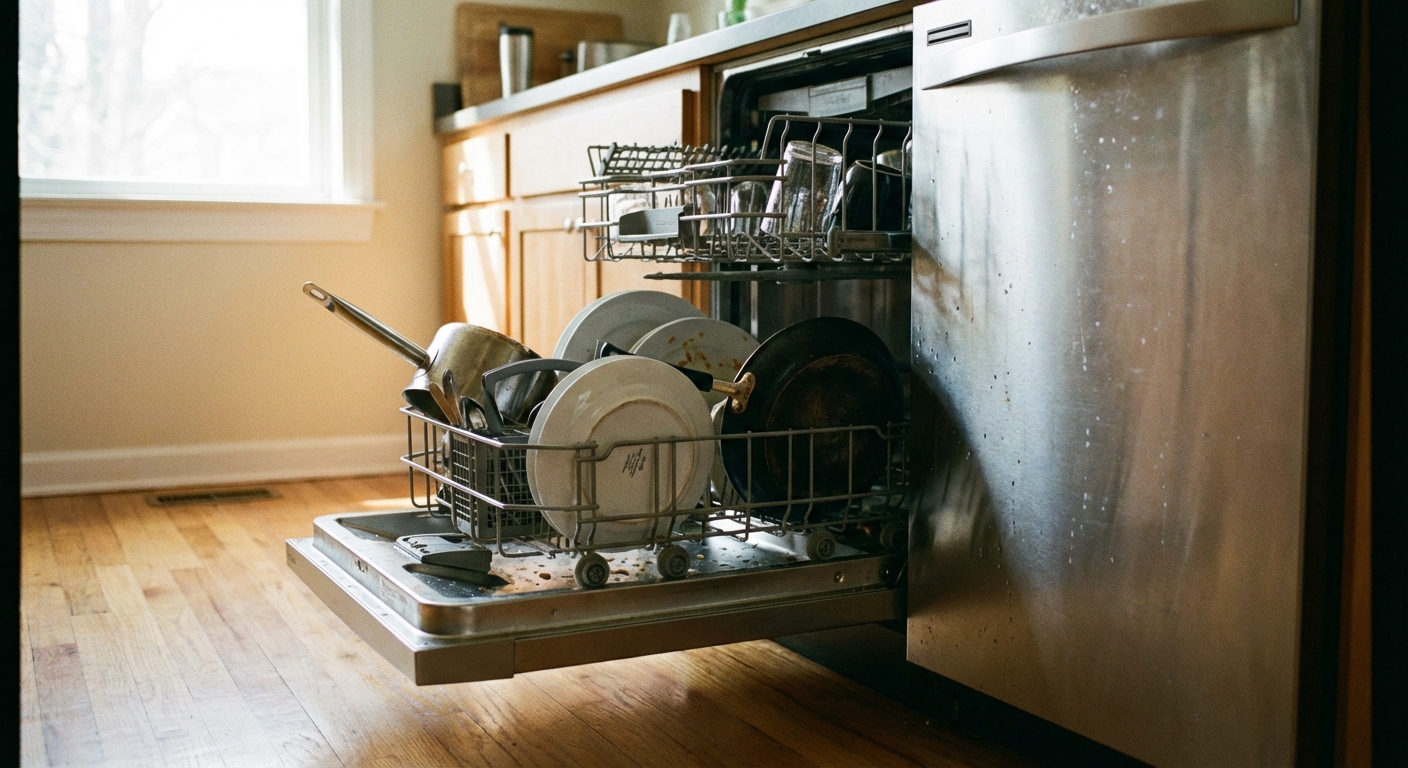
1) Racks or dishes blocking the door
This is the most common culprit, especially after someone else loads the dishwasher or after you adjust rack height.
What to look for
- Bottom rack not fully seated on the rear track stops
- Utensil handle, baking sheet, or cutting board sticking past the rack
- Top rack sprayer arm or tall stemware hitting the inner door
- Detergent door blocked by a pan handle, causing it to sit open and interfere
Fix steps
- Pull out both racks and remove any large items.
- Roll each rack in and out slowly and confirm the wheels sit inside the track the whole way.
- Check the front corners of both racks. If a wheel is off track, lift the rack slightly and guide the wheel back in.
- Make sure nothing extends past the front of the rack, including utensil handles.
- Try closing and latching with the dishwasher empty, then reload carefully.
Marcus tip: If the door only fails to latch when the bottom rack is loaded, look for one item that is slightly taller than the rest. It is usually a pan handle or a baking sheet leaning forward.
2) Latch or strike area blocked
A latch can be perfectly fine and still fail if something is in the way. This is quick to check and worth doing before adjusting anything.
Symptoms
- Door feels like it hits something right at the end
- You get a weak click, or it clicks but will not hold
- You can see grit, a chip of glass, or sticky residue near the latch hook or strike
Fix steps
- With the door open, inspect the latch hook on the door and the strike plate on the tub frame.
- Remove debris carefully (toothpick, cotton swab, or a damp rag). Avoid bending parts.
- Clean greasy buildup with warm water and a little dish soap, then dry the area.
- Close the door gently and listen for a clean, solid click.
3) Strike plate misaligned
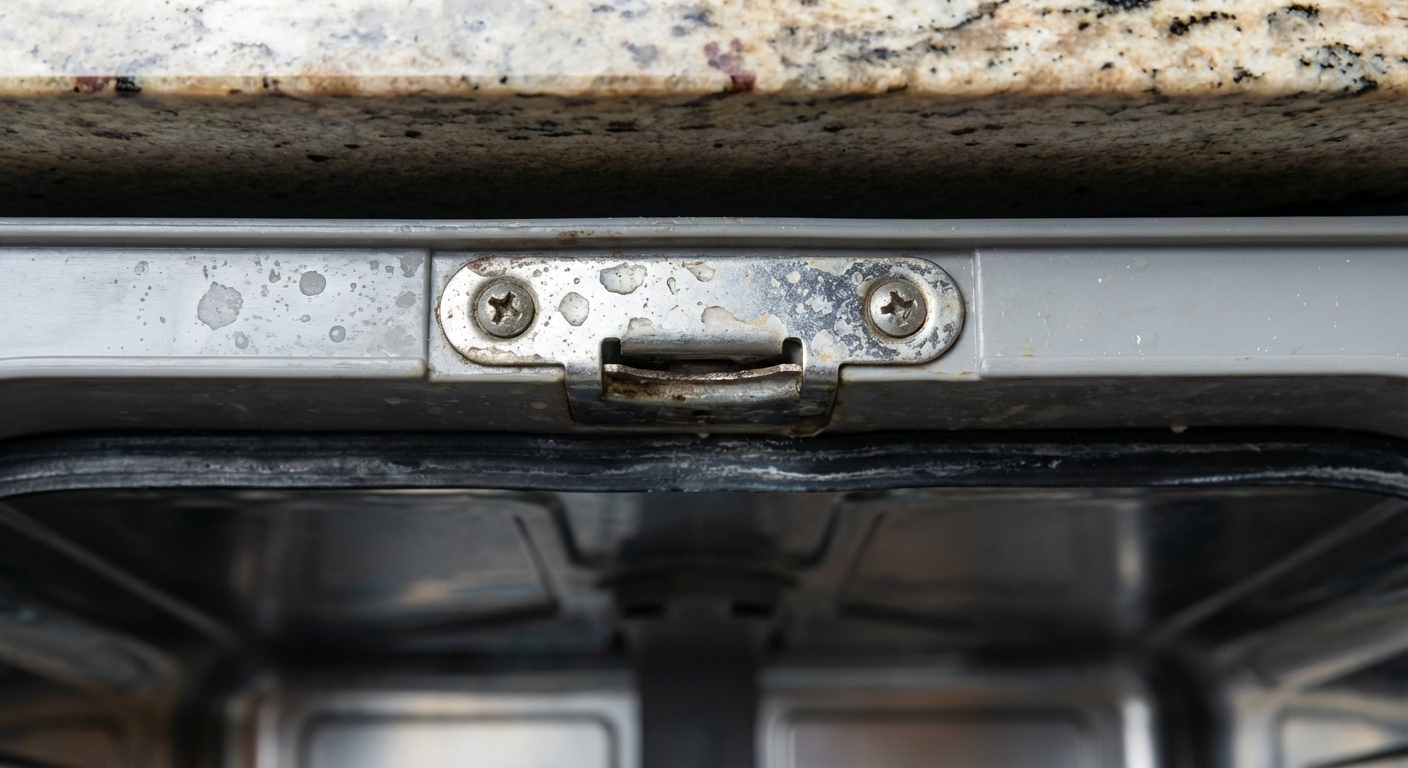
The strike plate is the piece on the tub frame that the latch grabs. Many models use a top-center strike plate, but the exact shape and placement vary. If it shifts even a little, the latch can hit it instead of grabbing it.
Symptoms
- Door clicks but pops back open
- You have to lift or push hard on the door to get it to latch
- You see scrape marks on the strike or latch hook
Fix steps
- With power off, open the door and locate the strike plate on the tub frame.
- Check for looseness. If it wiggles, snug the screws.
- If the plate is slotted for adjustment, loosen the screws slightly (do not remove), then shift the strike plate up or down a tiny amount.
- Close the door gently and see if the latch grabs cleanly. Adjust in small moves until it latches without force.
- Tighten screws fully and re-test.
Common mistake: Over-adjusting. Move the strike plate just a hair at a time. One or two millimeters can be the difference.
4) Dishwasher not level or shifting
If the unit is leaning forward, sitting crooked, or slightly loose in the cabinet, the door can miss the strike even if the latch is fine. This is common after a remodel, new flooring, or someone leaning on an open door.
Symptoms
- Door lines up only if you lift one corner
- The gap around the door is uneven
- The dishwasher moves when you pull the racks out
Fix steps
- With the door open, place a level on the top edge of the tub (not the door). Check left to right and front to back.
- If it is out of level, adjust the front feet (and rear adjuster if your model has one) until the tub is level and the door closes square.
- Check the mounting brackets at the top or sides. Tighten loose screws so the unit cannot tip forward.
- Re-test the latch with the dishwasher empty.
Marcus tip: If it suddenly started after new flooring, the dishwasher may be sitting a hair lower or at a new angle. A small leveling tweak can bring the latch back to life.
5) Worn or broken latch assembly
If the strike is aligned and nothing is blocking the door, the latch itself may be worn. Plastic latch hooks can round off over time, and internal springs can weaken.
Symptoms
- No solid click when closing
- Latch feels mushy or does not spring back
- Door latches, but releases with a light tug
- Visible crack or missing piece on the latch hook
Fix steps (typical method)
- Cut power at the breaker.
- Open the door and remove the screws around the inner door panel (usually Torx or Phillips). Support the outer panel as you remove the last screws.
- Separate the inner panel just enough to access the latch assembly at the top of the door. Watch for sharp edges, and be gentle so insulation does not shift or snag.
- Take a clear photo of wire positions and connector routing.
- Disconnect the wires and remove the latch assembly screws.
- Install the new latch assembly (match by model number), reconnect wires, and reassemble the door.
- Restore power and test closing and starting a cycle.
Thrifty note: Use your dishwasher model number (usually on the door edge) to order the correct latch. “Looks similar” parts are how you end up paying twice.
6) Hinge or spring issues
The hinges and springs control the door’s movement and the final alignment at the top. If one side is weak or bent, the door can twist slightly, which makes the latch miss the strike.
Symptoms
- Door drops too fast or will not stay half open
- You hear a pop or twang (spring issue)
- One side of the door sits higher than the other
- The latch lines up only if you lift one corner
Fix steps
- Turn off power. For extra safety, also shut off the dishwasher water supply if you will pull it out.
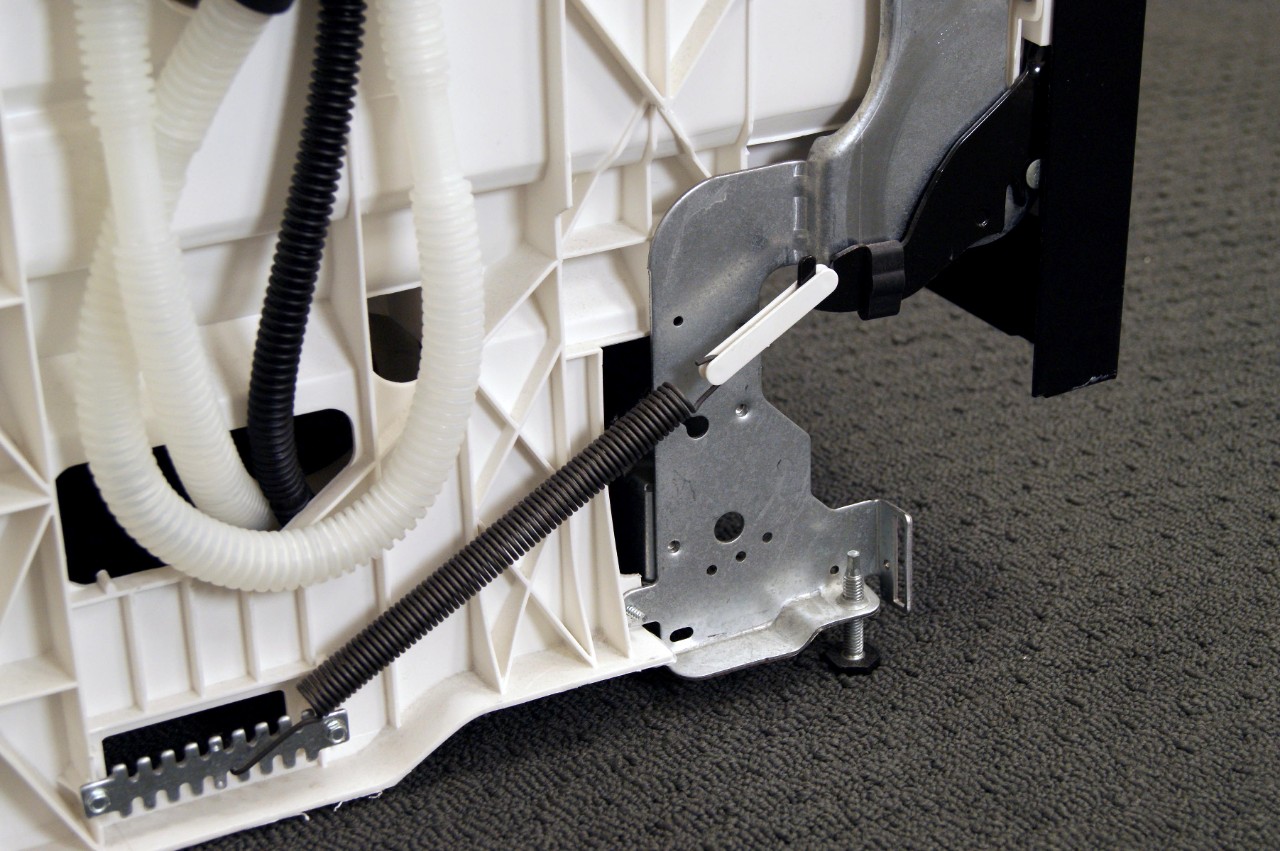
- Remove the toe-kick panel to view the hinge arms and springs on both sides.
- Compare left vs right: springs should match, and hinge arms should mirror each other.
- If a spring is off its mounting point, re-hook it using pliers. If it is stretched or broken, replace it. Many techs replace springs in pairs for even tension, but follow your model’s parts guidance.
- If a hinge arm is bent or cracked, replace the hinge kit for that side.
- After repair, open and close the door slowly and confirm it moves evenly and latches without lifting.
Heads up: Springs are under tension. Keep fingers clear of pinch points, and wear eye protection.
7) Warped door or loose inner panel
A dishwasher door is basically a sandwich: outer panel, inner panel, insulation, and hardware. If the door is warped or the inner panel is loose, the latch may not land where it needs to. Also note that a dishwasher that is out of level can mimic a “warped door” problem, so check level first.
Symptoms
- You see a gap along one side when the door is closed
- Door rubs the tub gasket unevenly
- Door feels flexy, rattly, or loose near the top
Fix steps
- Check the perimeter screws on the inner door panel and snug them evenly. Do not overtighten into plastic.
- Inspect the tub gasket for folds or debris. Clean it with warm water and a little dish soap, then reseat it if it is out of place.
- Check that the dishwasher is mounted securely to the cabinet or countertop brackets so it cannot tip forward.
- If the door itself is visibly bowed (common after heavy leaning or repeated slamming), replacement of the door panel or full door may be required.
8) Door switch issues
Many dishwashers have a door switch that must be pressed by the latch for the machine to run. A bad switch usually does not prevent the door from physically latching, but it can feel like a latch problem because the dishwasher acts dead or starts and stops.
Symptoms
- Door latches, but the dishwasher will not start
- Cycle stops when you press lightly on the door
- Intermittent start issues that get worse over time
Fix steps
- Cut power at the breaker.
- Access the latch area by removing the inner door panel screws (similar to the latch replacement steps).
- Locate the door switch (often a small microswitch attached to the latch bracket).
- Check that the latch physically presses the switch actuator when closed. If not, you may have an alignment problem, not a bad switch.
- If you have a multimeter and are comfortable, test continuity on the switch when pressed. No change indicates a failed switch.
- Replace the switch or latch bracket as needed, then reassemble and test.
If testing wiring makes you uneasy, this is a good spot to call an appliance tech. It is a small job, but it is still electrical.
When to call a pro
- You see cracked plastic around the tub opening or mounting points
- The dishwasher is loose in the cabinet and the mounting brackets are torn out
- You need to pull the unit out and the water line or drain hose looks brittle
- The door will not latch after checking loading, strike alignment, leveling, and latch condition
Prevent it next time
- Do a quick front-edge check before closing: nothing should extend past the rack.
- Avoid using the open door as a step or a shelf for heavy items.
- Clean the gasket and latch area a few times a year so buildup does not change clearances.
- If you adjust rack height, re-check that the rack rolls smoothly and sits fully on the tracks.
60-second flow
- Empty dishwasher, racks fully in, try to latch.
- If it latches empty, fix loading or rack alignment.
- If it does not latch empty, inspect and clean the latch and strike area.
- Check strike plate alignment and tighten screws.
- Check level and mounting stability.
- Inspect hinges and springs for uneven door position.
- If the door is square but still will not latch, replace the latch assembly.
- If it latches but will not run, test the door switch.
If you want, tell me your dishwasher brand and what exactly happens when you close the door (no click, clicks then pops open, or latches but will not start). I can help you narrow it down fast.

About Marcus Vance
Content Creator @ Grit & Home
Marcus Vance is a lifelong DIY enthusiast and self-taught home renovator who has spent the last decade transforming a dilapidated 1970s ranch into his family's dream home. He specializes in budget-friendly carpentry, room-by-room renovations, and demystifying power tools for beginners. Through his writing, Marcus shares practical tutorials and hard-learned lessons to help homeowners tackle their own projects with confidence.