
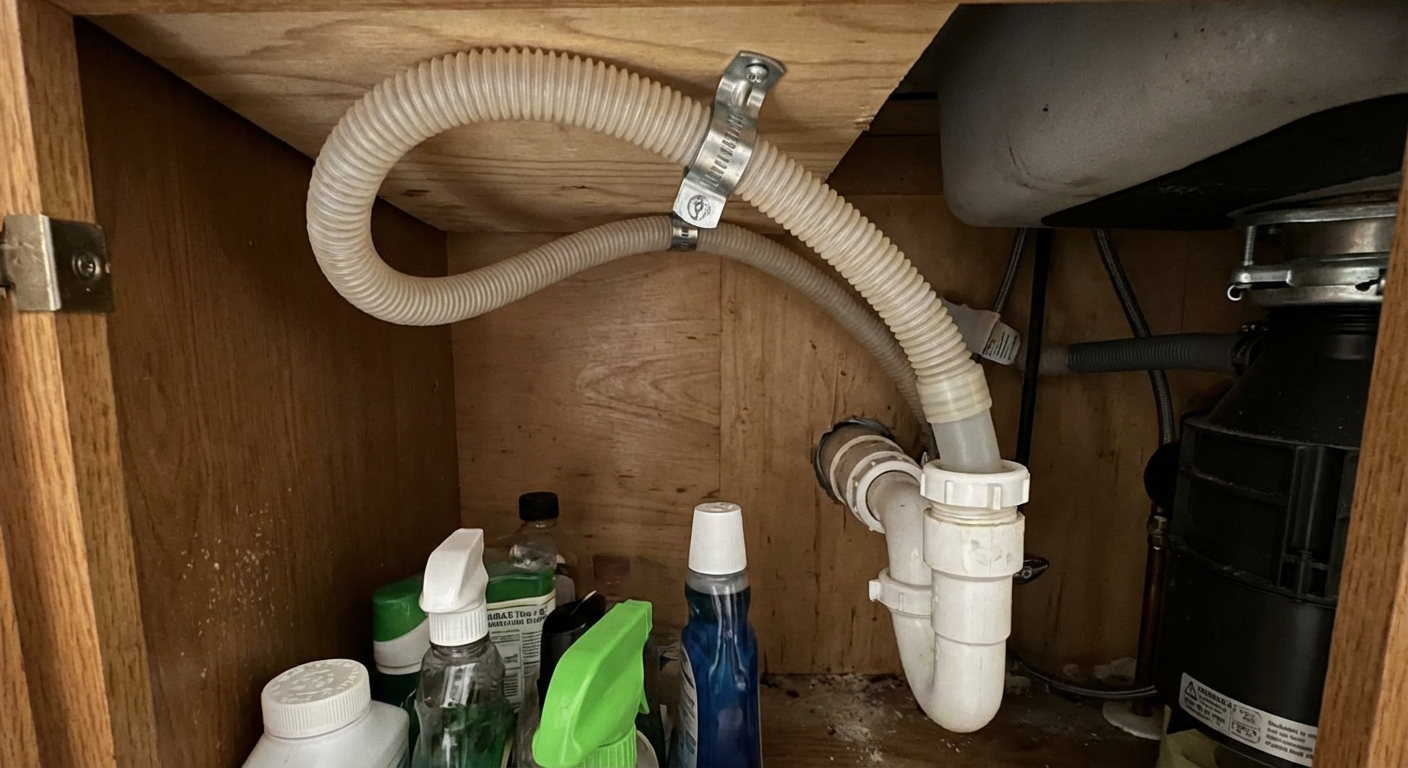
When a dishwasher drain hose is routed too low and there is no proper air break (high loop or air gap), dirty sink water can find its way back into the dishwasher. This usually happens when the sink or disposal drains and creates backpressure or a backflow path into the hose. The result is nasty standing water, gritty debris, bad smells, and sometimes a dishwasher that seems to drain and then mysteriously refills with gross water.
The good news is that most of the time this is not a failed pump. It is a routing problem under the sink, and you can usually fix it with a screwdriver, a couple clamps, and 10 minutes and a little patience.
How low routing causes backflow
Your dishwasher has a drain pump that pushes water out through the drain hose. The trouble starts when the drain hose and connection point sit too low and there is no effective air break. In that situation, wastewater from the sink drain or garbage disposal can push backward into the dishwasher hose, or get pulled back during certain drain events, especially if the hose sags and holds dirty water.
Common symptoms
- Dirty water left in the bottom of the dishwasher after a cycle, sometimes with food bits
- A gurgling sound from the dishwasher when the sink drains
- Water in the dishwasher that smells like the sink or garbage disposal
- Cloudy rinse water even after it “drains”
- The problem gets worse after using the garbage disposal
If you are seeing clean water that simply will not leave, that can be a clog, filter issue, or pump issue. This page is for the situation where water is leaving but dirty water is coming back.
High loop vs air gap
You will hear two terms a lot: high loop and air gap. Both are meant to prevent backflow, but they do it differently and some areas require one over the other.
High loop (most common)
A high loop is exactly what it sounds like. You route the dishwasher drain hose up as high as possible under the countertop, secure it there, then let it drop down to the drain connection. That high point helps keep sink water from flowing backward into the dishwasher.
- Pros: cheap, fast, no countertop hole needed
- Cons: not accepted everywhere as a substitute for an air gap
Height tip: Follow your dishwasher installation instructions and local rules. In general, secure the loop to the underside of the countertop or as high as you can inside the cabinet.
Air gap (often code required)
An air gap is a small fitting mounted above the sink or countertop with two hose connections underneath. It creates a physical air break between the dishwasher and the drain. Even if the drain backs up, wastewater cannot be siphoned into the dishwasher because the path is open to air at the air gap.
- Pros: strongest backflow protection, commonly code compliant
- Cons: costs more, takes more time, needs a mounting hole (often next to the faucet or in a soap dispenser hole)
Important nuance: Even with an air gap, many dishwasher manufacturers still call for a high loop under the counter to keep the hose from sagging and holding dirty water. Use the air gap if you have one or if your area requires it, and still route the hose neatly and high.
Rule of thumb: If your kitchen already has an air gap, use it and make sure it is plumbed correctly. If you do not have one, a high loop is typically the go-to fix in many homes, but local plumbing rules vary. When in doubt, call your local building department or a plumber, especially for rentals or a pending home sale.
Proper routing under the sink
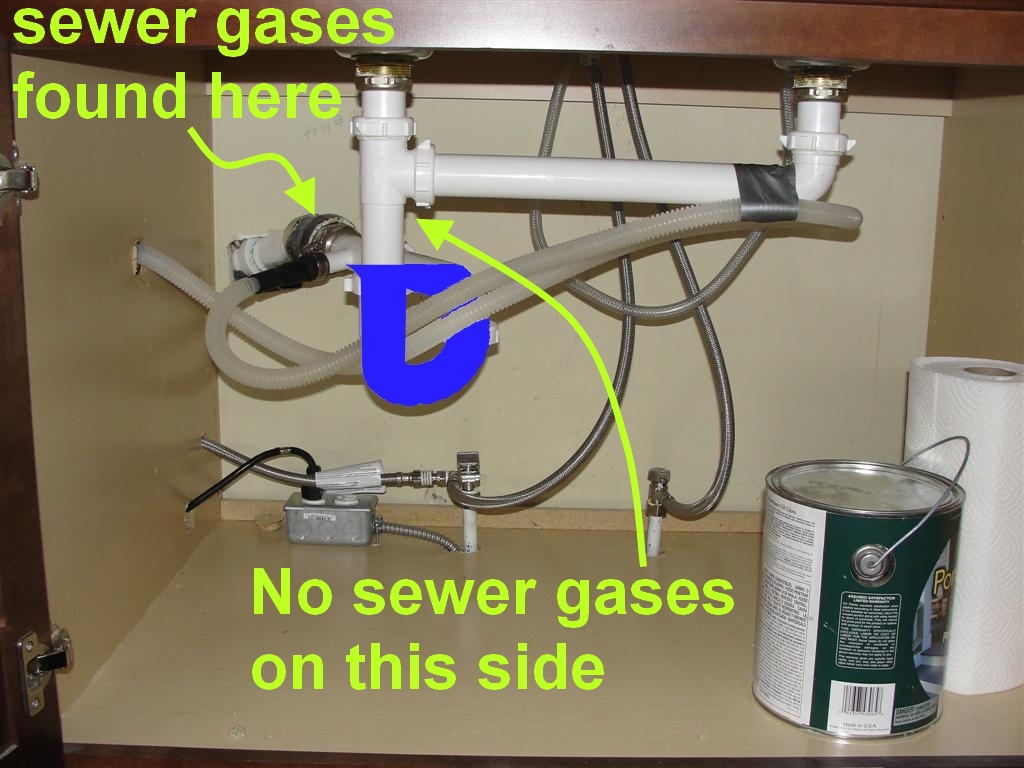
Most setups use one of these patterns (your home may vary, especially if you have an air gap or a nonstandard drain setup):
Pattern A: Dishwasher to disposal inlet
- Drain hose comes from the dishwasher, rises to a high loop (or goes to an air gap), then drops to the small inlet nipple on the side of the garbage disposal.
- The disposal then sends everything out through the sink drain trap.
Pattern B: Dishwasher to tailpiece (no disposal)
- Drain hose comes from the dishwasher, rises to a high loop (or goes to an air gap), then connects to a branch fitting on the sink tailpiece above the P-trap.
Two details that matter
- The high point: The hose should be secured as high as possible under the countertop before it drops down.
- The connection location: The dishwasher should connect to a proper dishwasher branch (disposal inlet or dishwasher tailpiece) before the P-trap. Connecting after the trap can invite standing waste, odors, and backflow issues.
Quick inspection
Grab a flashlight, open the sink cabinet, and trace the hose from the dishwasher toward the drain.
Red flags
- The hose runs low along the cabinet floor with no loop up high.
- The hose dips down, then back up, creating a low spot where water and sludge can sit.
- The hose is zip-tied to plumbing halfway up the cabinet, but still well below the underside of the countertop.
- The hose connects after the P-trap or into an S-trap style setup.
If you have an air gap on the countertop, check under the sink. You should see two hoses: one from dishwasher to air gap, and one larger hose from the air gap to the disposal inlet or tailpiece. If those are swapped, kinked, or sagging, you can get the same dirty-water symptoms.
Also check: If your sink drain is slow or your disposal side backs up easily, fix that first. A partially clogged drain line can force dirty water back toward the dishwasher no matter how nice your hose routing looks.
Fix 1: Make a high loop
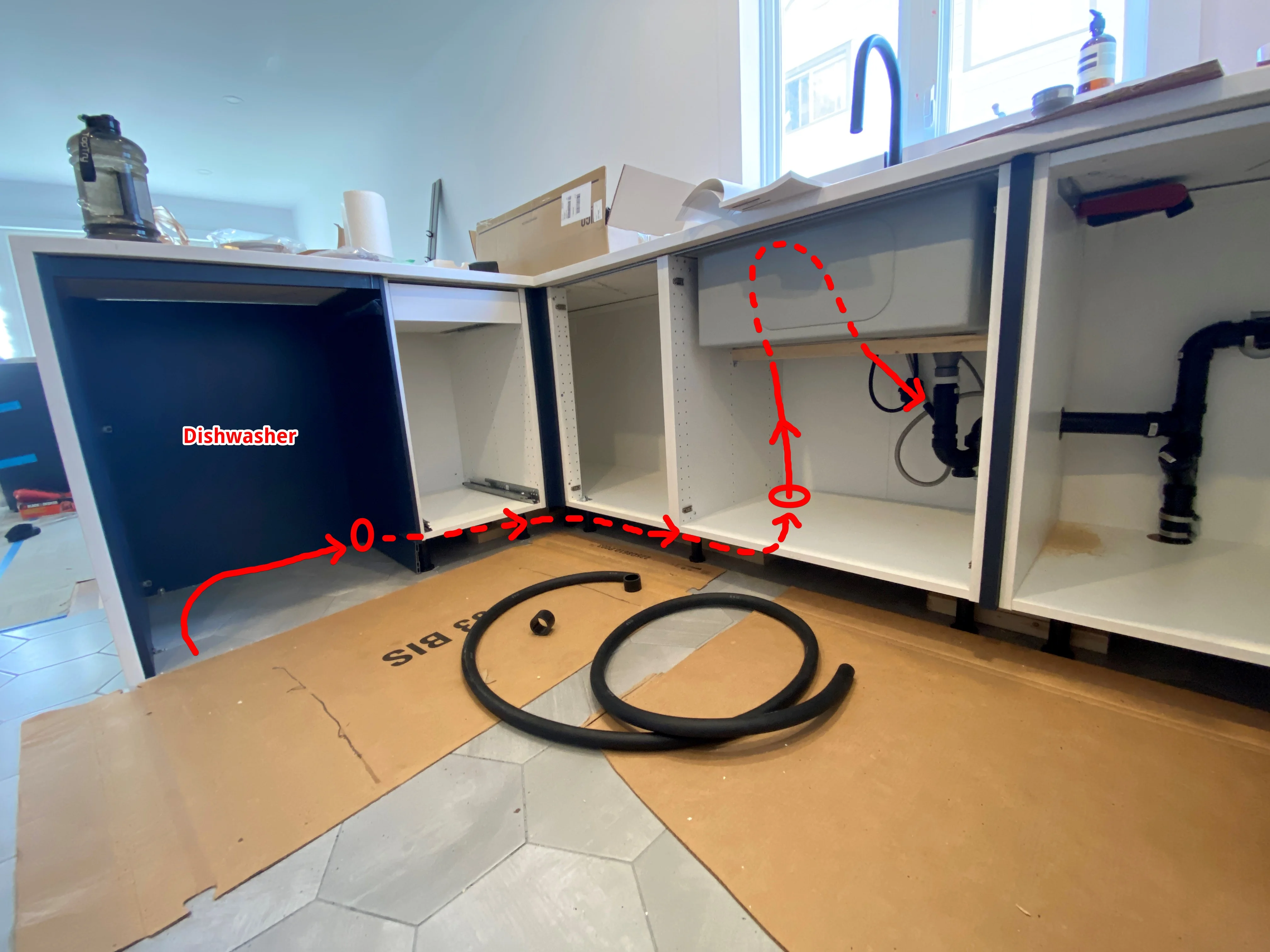
This is my most common fix when I see backflow in a normal residential setup.
What you need
- Screwdriver or drill
- Hose clamp (if your connection is loose or you need to re-seat the hose)
- A clamp strap, pipe hanger strap, or a sturdy cable clamp to secure the hose up high
- A towel and a small pan (expect a little water when you loosen hoses)
Steps
- Turn off power to the dishwasher at the breaker if you will be moving things around near wiring. Also avoid running the dishwasher during the work.
- Put a towel and pan down under the connection point. Even a “dry” hose usually has some funky water in it.
- Pull slack toward the cabinet so you have enough hose to rise high without kinking. If there is no slack, you may need a longer hose or an extension kit rated for dishwashers.
- Route the hose up high to the underside of the countertop. Aim for the highest point you can physically secure inside the cabinet.
- Secure the hose with a strap or clamp so it cannot fall back down over time.
- Maintain a smooth downhill run from the high loop to the disposal inlet or tailpiece. Avoid a second dip that creates a low pocket.
- Check for kinks at the cabinet sidewall and where the hose meets the drain connection.
My rookie mistake: The first time I “fixed” a high loop, I used a flimsy zip tie to a random pipe. Two months later it slipped, the hose sagged, and the dishwasher started smelling like the garbage disposal again. Use something that stays put.
Fix 2: Plumb an air gap correctly
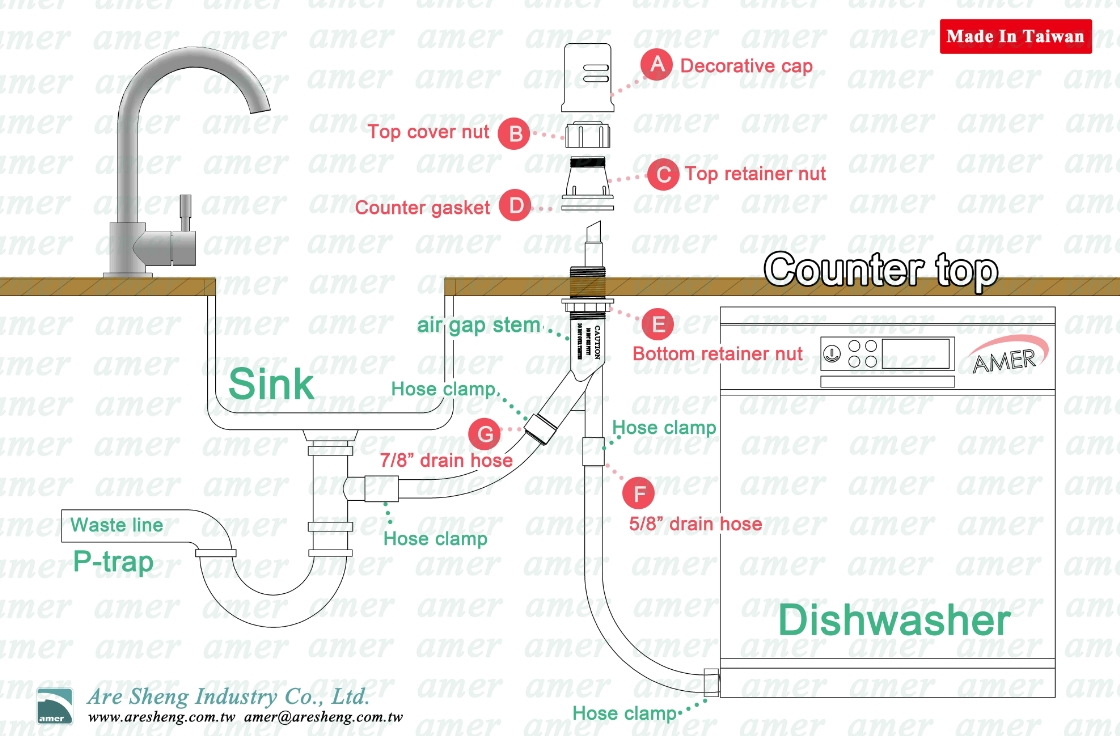
If you already have an air gap, make sure it is doing its job.
Under-sink checklist
- Small hose from dishwasher goes to the smaller air gap barb.
- Larger hose from the air gap goes to the disposal inlet or dishwasher tailpiece.
- The hose from the air gap to the drain should run downhill with no sagging low spots.
- All connections are clamped and snug.
If your air gap spits water into the sink during draining, that typically points to a restriction between the air gap and the disposal inlet or tailpiece, or a clogged disposal inlet. Fixing the restriction and re-routing sagging hoses usually solves it.
Fix 3: Check the connection points
Even with a perfect high loop, a bad connection can invite backflow or slow drainage.
If you connect to a garbage disposal
- Knockout plug: New disposals ship with the dishwasher inlet plug intact. If it was never punched out, the dishwasher may drain poorly or not at all. Remove the hose, punch out the plug, and fish the plastic slug out of the disposal.
- Clogged inlet: Grease and food paste can restrict the small inlet. Clean it out carefully.
If you connect to a tailpiece (no disposal)
- Confirm it is a proper dishwasher branch tailpiece above the P-trap.
- Make sure the barb is not partially blocked with old gunk.
One more thing to keep in mind
Some dishwashers include a check valve or anti-backflow device (often built into the pump or drain path). If your hose routing is correct and the sink drain is healthy, but dirty water still returns, a failed check valve can mimic a “low hose” problem.
What code and instructions expect
I cannot promise what your local inspector will want, but these expectations are common across many jurisdictions and manufacturer instructions:
- Backflow protection via an air gap or a high loop, depending on local rules.
- No cross-connection that allows contaminated water to flow back into the dishwasher.
- Proper fittings designed for dishwasher discharge, not improvised connections.
- Secure hoses with clamps, and route them to avoid kinks and low sags.
If you are renovating, installing a new dishwasher, or trying to pass a plumbing inspection, it is worth looking up your city or county requirement for air gaps versus high loops. In some places, an air gap is not optional. Also check your dishwasher manual, because manufacturers sometimes specify routing details even when an air gap is present.
Test your fix
Once the hose is routed correctly, do a quick, real-world test:
- Run the dishwasher for a few minutes, then cancel and drain.
- Listen for a strong discharge and watch the sink drain connection for leaks.
- After draining, open the dishwasher and check the tub bottom and filter or sump area. A small amount of clean water in the filter or sump area is normal. A tub full of dirty water is not.
- If you have a garbage disposal, run it briefly with water to clear the chamber, then re-check the dishwasher 10 to 15 minutes later for any backflow.
When to call a pro
Routing fixes are very DIY-friendly, but call a plumber or appliance tech if:
- You corrected the high loop or air gap routing and dirty water still returns.
- Your sink drain backs up regularly. The real issue may be a clogged branch line, not the dishwasher.
- You see leaks at the dishwasher connection, disposal inlet, or tailpiece that you cannot stop with a new clamp.
- You have an older home with questionable under-sink plumbing (S-traps, odd tees, or unvented changes) and recurring siphon or odor problems.
Fast recap
- A drain hose that stays low and lacks an air break can let dirty sink water backflow into the dishwasher.
- A high loop is the quickest fix: route the hose up under the countertop and secure it.
- An air gap provides stronger backflow protection and may be required where you live.
- Connect to the disposal inlet or a dishwasher tailpiece above the P-trap, and check the disposal knockout plug if applicable.

About Marcus Vance
Content Creator @ Grit & Home
Marcus Vance is a lifelong DIY enthusiast and self-taught home renovator who has spent the last decade transforming a dilapidated 1970s ranch into his family's dream home. He specializes in budget-friendly carpentry, room-by-room renovations, and demystifying power tools for beginners. Through his writing, Marcus shares practical tutorials and hard-learned lessons to help homeowners tackle their own projects with confidence.