

If your glasses come out of the dishwasher looking like they have a chalky haze, you are not alone. I dealt with this in our 1970s ranch right after we moved in, and I wasted a full month blaming the dishwasher when the real problem was a mix of hard water and too much detergent.
The good news is that most white film is removable mineral buildup, not ruined glass. The key is figuring out which problem you have, then making a couple simple adjustments so it stops happening.
Quick definition: hard water simply means your water has a high mineral content (usually calcium and magnesium). Those minerals are great for geology and terrible for glassware.
Hard water film or etched glass? Do this quick test
Before you buy anything, you want to know whether you are dealing with mineral deposits (usually fixable) or etching (permanent damage to the glass surface).
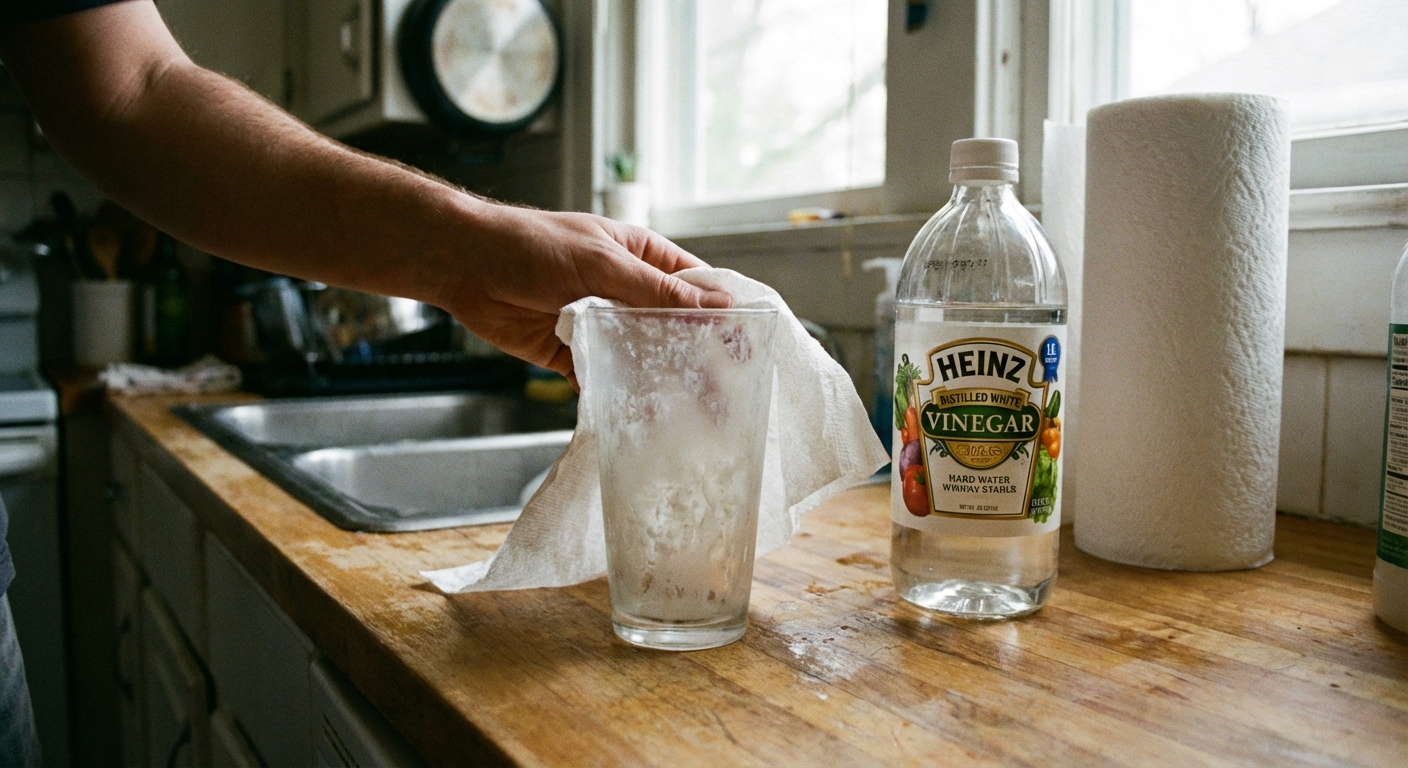
The vinegar test (takes 60 seconds)
- Pick one cloudy glass and dry it.
- Soak a paper towel in white vinegar and wrap it around the cloudy area.
- Wait 1 to 2 minutes, then wipe and rinse.
If the cloudiness improves or wipes away, that is hard water mineral film. If nothing changes, it may be etching, or it could be another stubborn residue (like detergent film or silica) that does not respond much to a short vinegar contact.
What causes each one
- Hard water film (removable): minerals dry onto glass when spotting is not controlled. Often worse in homes with hard water, when rinse aid is empty, or when the dishwasher is not rinsing well.
- Etching (permanent): the glass surface gets microscopically roughened by an aggressive wash environment. Common triggers are too much detergent, very soft water, and high wash heat or long wash contact time.
Fix removable white film (hard water mineral deposits)
If vinegar helped, focus on controlling minerals and improving rinse performance.
1) Fill rinse aid and set it correctly
Rinse aid helps water sheet off glass instead of drying in spots. If your dishwasher has a rinse aid dial, start in the middle and adjust from there.
- If you see streaks or rainbowing: lower the rinse aid setting slightly.
- If you still see spots and film: raise the rinse aid setting one notch and retest for a few loads.
Thrifty tip: store-brand rinse aid is usually fine. The consistency matters more than the brand.
2) Use the right detergent and the right amount
Cloudiness can come from too little detergent or too much. Under-dosing often shows up as a dull, slightly greasy looking film from soil redeposition, while overdosing can leave a dusty, chalky residue that clings to glass.
- Hard water: pods can work well because they are consistent, but they can still overdose some machines. Powder or gel lets you fine-tune the amount.
- If your glasses feel gritty or dusty: you are likely using too much detergent or the dishwasher is not rinsing well.
- If dishes look dull and feel a bit grimy: you may be under-dosing, or the water is not hot enough.
If you use pods and have hard water film, try switching to powder for two weeks so you can reduce the dose slightly. That single change fixed most of our haze.
3) Run a descaling clean
If your dishwasher itself has mineral buildup, it will keep redepositing film. Do one of these:
- Dishwasher cleaner: run a cleaning cycle (or the hottest normal cycle) with a dishwasher descaler used per label.
- Vinegar maintenance run: place a bowl with 1 to 2 cups of white vinegar on the top rack and run a hot cycle with the dishwasher empty. Skip this if your manufacturer warns against vinegar use.
Important: do not mix vinegar with bleach-based products.
If it is etching: how to stop it
Etching looks like a uniform fog that will not wipe off. You cannot reverse it, but you can keep it from spreading to your other glassware.
Dial back the aggressive settings
- Use less detergent: this is the big one. Cut the dose by 25 to 50 percent, especially if you have soft water.
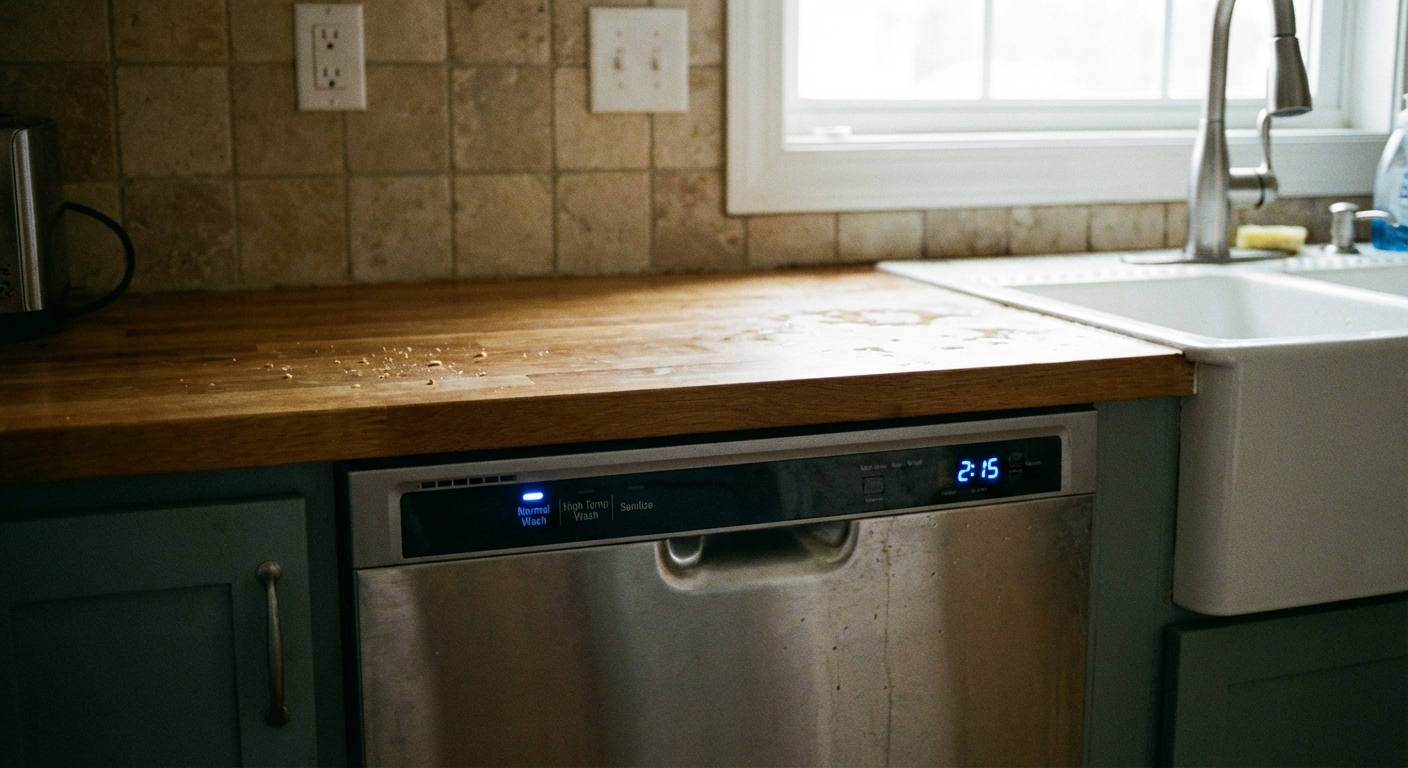
- Turn off extra-hot options: options like Sani Rinse, High Temp Wash, or Steam can push conditions into etching territory.
- Use a normal cycle when you can: long, hot wash cycles can contribute to etching over time.
- Be mindful with heated dry: it is not usually the main cause, but extra heat can add stress in an already aggressive setup. If your machine runs very hot, try air dry or crack the door after the cycle if your model allows.
Consider water softness
Etching is more common in very soft water because detergent becomes more aggressive. If you have a water softener, check your settings. Over-softened water plus a full detergent pod is a classic etching recipe.
Also, avoid over-pre-rinsing. Modern detergents are designed to work with some food soil present. Very clean dishes plus soft water plus a strong detergent dose can increase the risk of etching.
Check water temperature
Your dishwasher needs hot water to dissolve detergent and rinse cleanly. Too cool and you can get leftover detergent and minerals hanging around on glass.
What temperature should it be?
- Many dishwashers perform best with incoming water around 120°F (about 49°C), or whatever your dishwasher manual recommends.
- Some machines boost water temperature internally, but they still benefit from a hot start.
Two quick checks
- Run the kitchen hot water first: before starting the dishwasher, run the sink until it is fully hot. This helps the first fill.
- Verify the water heater setting: if your water heater is set too low, dishwasher performance drops fast. Adjust carefully and follow local safety guidance, especially if children are in the home.
Clean the filter and spray arms
Even a good detergent cannot do its job if the dishwasher is not circulating water properly. A clogged filter or spray arm can cause poor rinsing, which makes film more noticeable on glass.
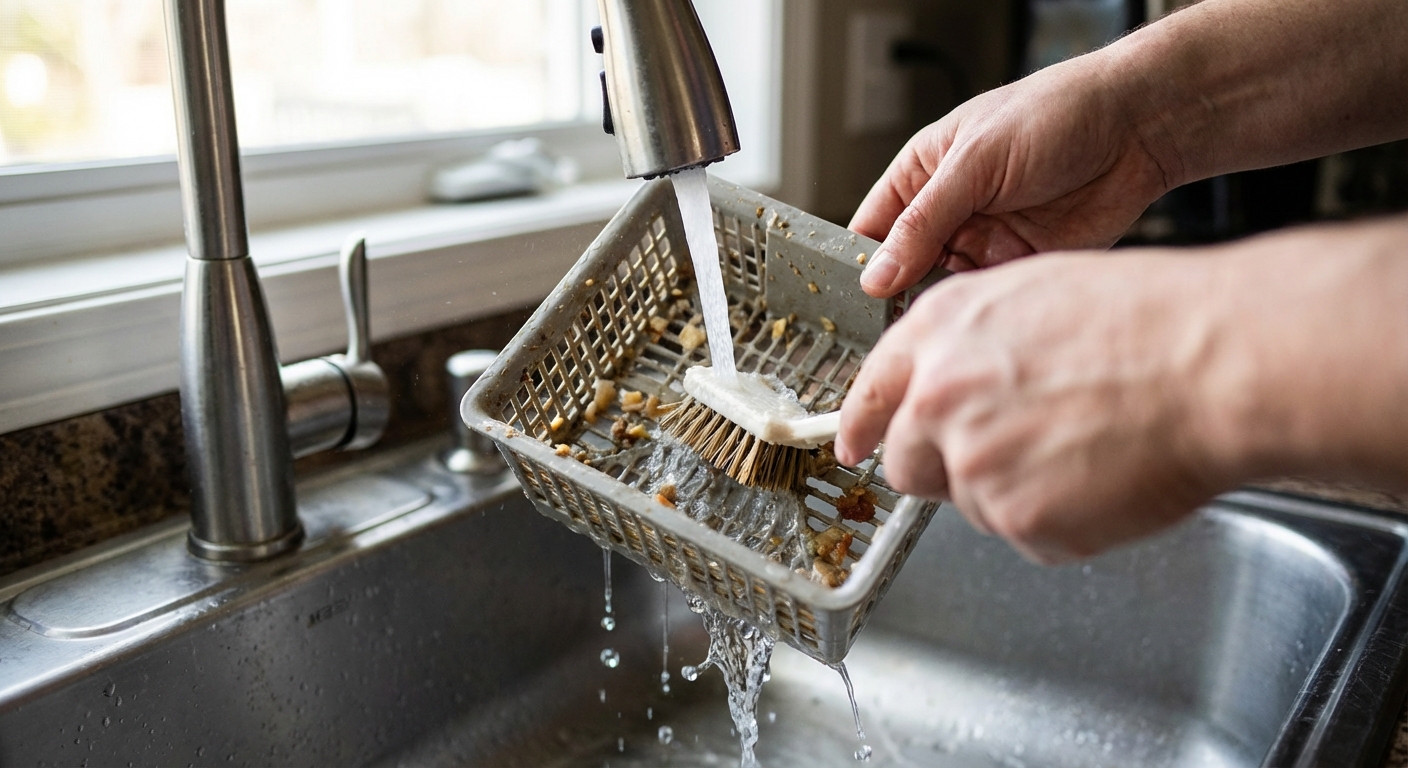
Clean the dishwasher filter
- Pull out the lower rack.
- Twist and lift out the filter assembly (most models are tool-free).
- Rinse under hot water and scrub with an old toothbrush and a drop of dish soap.
- Reinstall it firmly. A loose filter can let debris recirculate.
Clear the spray arm holes
- Spin the spray arms by hand. They should rotate freely.
- Remove the arm if your model allows and rinse it out.
- Use a toothpick to clear mineral plugs from the tiny jet holes.
This is one of those boring maintenance chores that pays you back immediately. The first time I cleaned ours, the water pressure difference was obvious.
Dishwasher salt and built-in softeners
If your dishwasher has a built-in water softener (common in many European models), check whether it uses dishwasher salt. If the salt reservoir is empty or the softener is not set for your local water hardness, you can get spotting, film, or inconsistent results. Use only salt made for dishwashers, and follow your manual for the hardness setting.
Detergent and rinse aid baseline
If you want a simple starting point, here is what I recommend before trying more involved fixes.
- Rinse aid: filled, set to mid-level (then adjust up if you still see spots).
- Detergent: start with a half-dose of powder or gel and adjust based on results.
- Cycle: normal wash for daily loads, heavy only when you need it.
- Start hot: run the sink hot water first.
- Load smart: keep tall items from blocking the detergent door and spray arms.
What not to do
- Do not use abrasive pads on glass. They can scratch and make cloudiness look worse.
- Do not mix cleaners (especially acids like vinegar with bleach-based products).
- Do not overdo vinegar runs: occasional maintenance is fine for many machines, but repeated acid use can be hard on some seals and parts. When in doubt, use a dishwasher cleaner your manufacturer approves.
When to call for service
Most white film issues are water chemistry and maintenance, but sometimes a mechanical problem is behind poor rinsing.
- You cleaned the filter and spray arms, adjusted detergent and rinse aid, and the film is unchanged after 5 to 10 loads.
- The dishwasher is not draining fully or you see standing water at the end of the cycle.
- The spray arms are not moving during operation (you can test by placing them in a known position, running briefly, and checking if they changed position).
- Water is not getting hot, and your model does not have an internal heater or the heater is failing.
- The rinse aid dispenser does not seem to empty over time, or the dispenser is leaking.
- You suspect low water fill, a clogged inlet screen, or a weak circulation pump (often shows up as generally poor cleaning plus residue).
Quick FAQ
Can I remove the film from glasses I already have?
If it is mineral film, yes. Soak in warm vinegar water (or a citric acid solution) and gently scrub. If it is etching, you can only reduce the look a little with polishing products, but the damage is permanent.
Is more detergent better for hard water?
Not always. Hard water may need a bit more cleaning power, but overdoing detergent can leave residue and can contribute to etching if your water is softened. Adjust in small steps and watch the results.
Do pods cause cloudy glass?
Pods are convenient, but they can be a fixed dose that is too much for some water conditions and cycles. If cloudiness started after switching to pods, try powder for a couple weeks so you can fine-tune the amount.

About Marcus Vance
Content Creator @ Grit & Home
Marcus Vance is a lifelong DIY enthusiast and self-taught home renovator who has spent the last decade transforming a dilapidated 1970s ranch into his family's dream home. He specializes in budget-friendly carpentry, room-by-room renovations, and demystifying power tools for beginners. Through his writing, Marcus shares practical tutorials and hard-learned lessons to help homeowners tackle their own projects with confidence.