
If your dishwasher suddenly sounds like it's chewing gravel or playing a snare drum solo, I get it. Weird appliance noises spike your stress fast because you're picturing a flooded kitchen and a pricey service call.
The good news: most dishwasher noises come from a handful of common, fixable issues. Below are the five I run into most, what the noise typically sounds like, and how to confirm the cause before you start ordering parts.
Quick note on model differences: Access steps vary by brand, and not every dishwasher has a chopper or food macerator. If you're unsure what yours has, check your manual or a parts diagram using your model number (usually on the inside edge of the door).
Also worth knowing: some sounds are normal, like gentle swishing during wash and a short drain burst at the end of a phase. You're looking for new, loud, or getting-worse noises.
Before you start
Safety first
- Cut power: Turn off the dishwasher at the breaker or unplug it if yours is plug-in under the sink.
- Shut off water if you'll be disconnecting hoses or pulling the unit.
- Watch for sharp edges around the door frame and under the tub.
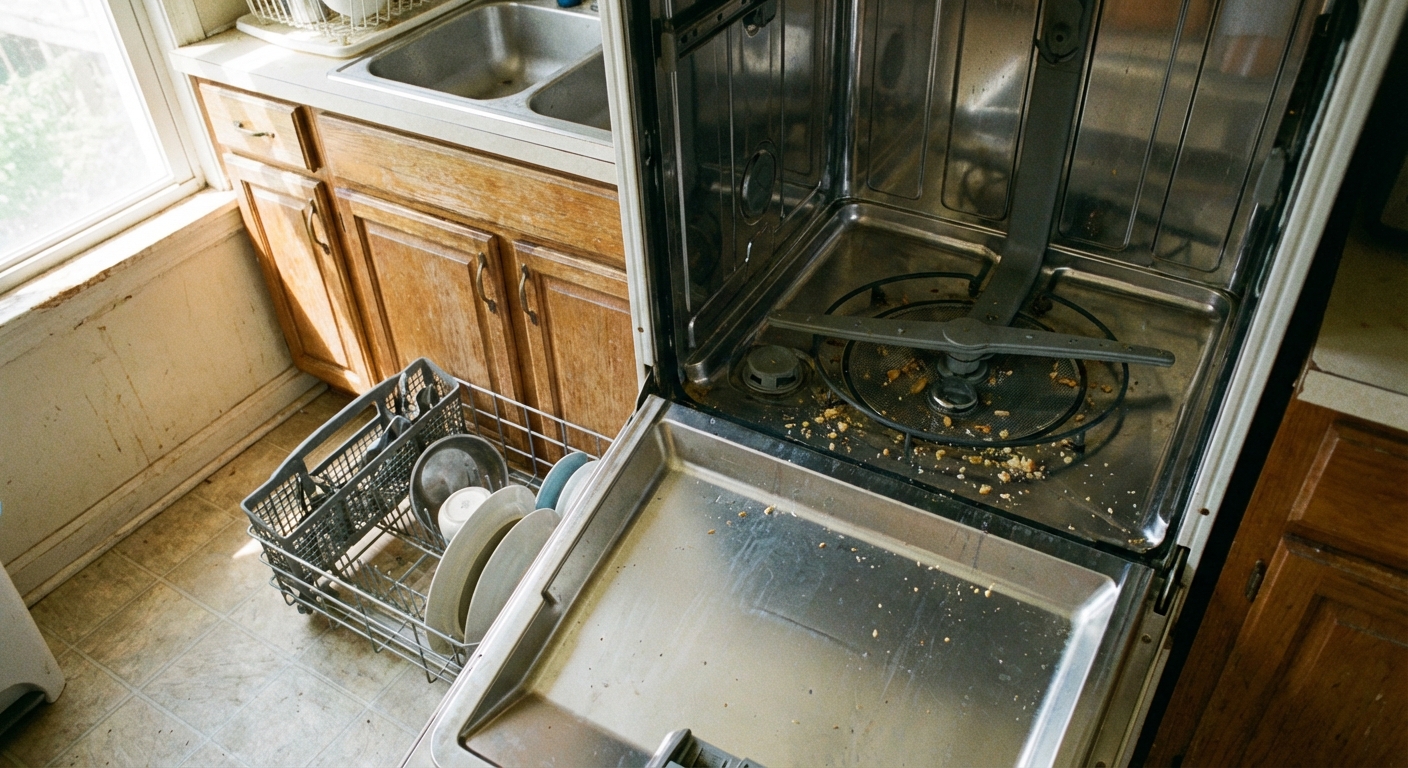
- Be careful around the sump area: glass shards hide in there. If you're reaching near the filter or pump inlet, wear gloves and use pliers or tweezers.
- Don't run a cycle with parts removed (filters, spray arms, covers). Reassemble before testing.
2-minute noise check
This isn't a perfect diagnosis, but it helps you narrow the likely area fast.
- Does it happen only while filling? Think inlet valve noise, water hammer, or a float issue.
- Does it happen only while washing? Think spray arms, debris in the sump, or circulation (wash) pump wear.
- Does it happen only while draining? Think drain pump or something stuck in the drain path.
- Does it stop quickly when you open the door mid-cycle? On many models that suggests the sound is tied to an active internal phase (spraying or draining). It doesn't prove the exact part, but it tells you the noise is happening when the machine is actually running.
- Is it a random rattle or thump that comes and goes? Often a loading issue, not a broken part.
DIY tip from my own mistakes: I've chased “bad pump” noises that were really just a long spatula slowly migrating into the spray arm path. Always check loading first. It's the cheapest fix you'll ever make.
Fast decision guide
- Fill noise (start of cycle): see “Bonus causes” at the end
- Wash noise (spraying): sections 1, 2, 3, 5
- Drain noise (end of cycle or between phases): section 4
1) Rattling or thumping
What it sounds like: Rattling, clacking, or a rhythmic thump that comes and goes during the wash cycle.
Why it happens: Something's moving around in the rack, or a tall utensil is poking through and getting smacked by a spinning spray arm.
How to diagnose
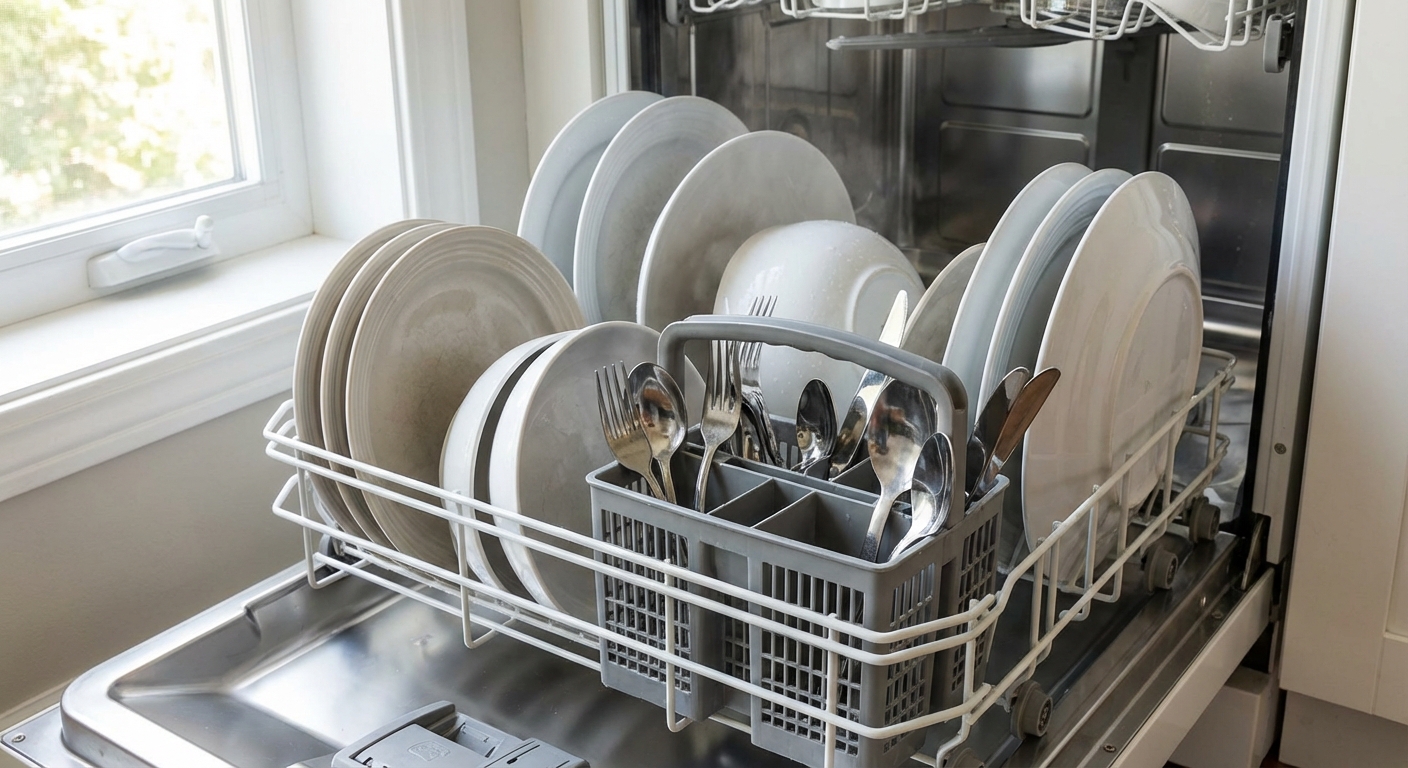
- Pull out both racks and look for anything that can shift: lightweight lids, measuring spoons, baby bottle parts, loose plastic containers.
- Check the bottom rack for tall items that could interfere with the lower spray arm (cookie sheets, cutting boards, sheet pans, tall mixing bowls).
- Spin the spray arms by hand (power off). If you feel them hit anything, you found your thump.
Fix
- Secure small items in a basket or on the top rack.
- Face concave items downward so they don't catch water like a sail and flip.
- Use the utensil rack correctly: spread spoons and forks so they don't nest and then pop loose.
- For lightweight plastics, use a top rack only placement and consider a rack clip if your model has them.
2) Grinding during wash
What it sounds like: A harsh grinding or crunching noise, usually during washing, sometimes right after the motor starts.
Why it happens: Some models use a small chopper blade or food macerator near the pump intake. If glass, a bone fragment, a fruit pit, or hard debris gets in there, it can grind. If the chopper blade breaks or comes loose, it can also make an awful racket. Other models rely on fine filtration instead, and the same kind of debris can still end up in the sump area and make noise.
How to diagnose
- Remove the bottom rack.
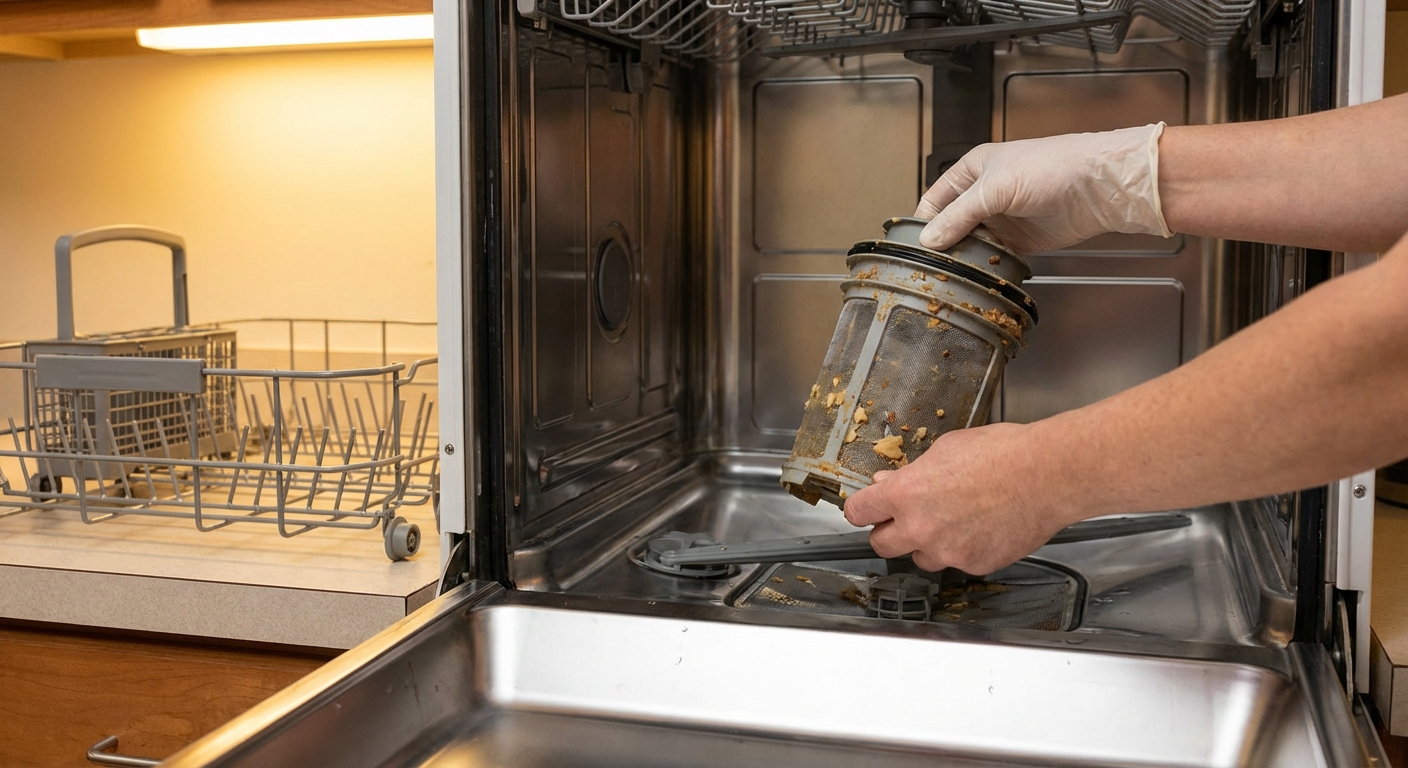
- Take out the lower spray arm and the filter assembly (most twist or unclip).
- Look into the sump area for hard debris: glass bits, labels, seeds, toothpicks.
- If your model has a chopper cover, inspect for broken plastic or metal fragments.
Fix
- Remove debris carefully with needle-nose pliers or tweezers. Don't use your fingers if you suspect glass.
- If the chopper blade is broken or wobbly, replace it. Use the dishwasher model number (inside the door frame) to order the correct part.
- Reassemble the filter and spray arm, then run a short cycle to confirm the noise is gone.
When to stop and call for help: If the grinding continues after debris removal, the issue may be deeper in the pump assembly. At that point, it can turn into a “replace the pump” job.
3) Humming or growling
What it sounds like: A steady humming, growling, or rumbling during the wash portion of the cycle. It often gets louder over weeks or months.
Why it happens: The wash pump motor spins a lot. Over time, the bearings can wear. When they do, the motor still runs but it sounds rough, like a box fan with a tired motor.
How to diagnose
- Confirm the noise occurs during washing (spraying), not just draining.
- Open the door mid-cycle. If the sound stops and returns when you close it, it's likely tied to an active wash phase and often points back toward the wash motor or circulation path.
- Rule out easy stuff first: clear the filters and spray arms. A restricted system can strain the pump and make it louder than it needs to be.
Fix options
- Budget-friendly check: Clean the filters and spray arms, then re-test.
- Lasting repair: Replace the wash pump or circulation pump and motor assembly (varies by brand). Many manufacturers sell it as one unit.
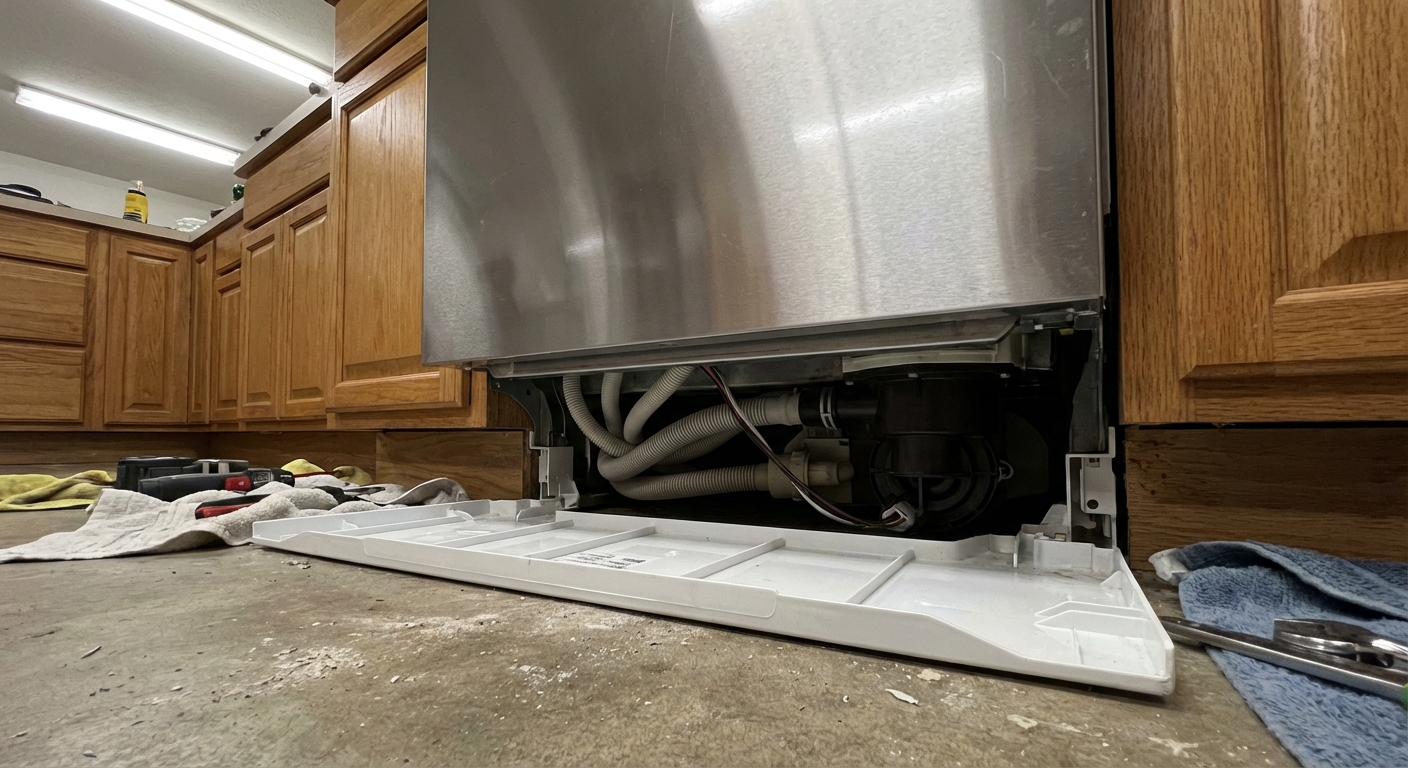
DIY reality check: This repair is doable if you're comfortable pulling the dishwasher out, tipping it, and working under it. If you hate plumbing connections or tight spaces, a service call might be money well spent here.
Signs you should replace rather than limp along: noise is getting rapidly worse, dishes are coming out dirty, or you see leaking underneath (a failing seal plus vibration can start a leak).
4) Buzzing or whining during drain
What it sounds like: A buzzing, whining, or strained motor sound, often at the end of the cycle when the dishwasher drains. Sometimes it's paired with poor draining.
Why it happens: The drain pump can buzz when it's blocked (labels, glass, food bits) or when it's failing internally. A partially blocked drain path can also make the pump work harder than it should.
How to diagnose
- Listen for the noise specifically during the drain phase.
- Check the bottom of the tub for standing water after the cycle.
- Inspect and clean the filter first.
- Check the air gap (if you have one on the sink) and the garbage disposal dishwasher inlet for clogs.
Fix
- Clear the easy clogs: Clean the filter, check the drain hose for kinks, and clear the air gap cap and channel.
- Check for a knockout plug: If the dishwasher was recently installed and drains into a garbage disposal, make sure the disposal knockout plug was removed. A buzzing drain pump plus little or no draining is a classic symptom.
- If the pump is accessible from inside the tub on your model, remove the cover and clear debris.
- If the pump still buzzes and moves little or no water, replace the drain pump.
5) Uneven whooshing or surging spray
What it sounds like: A rough, uneven spray sound, sometimes with a light grinding or ticking as the arm struggles to spin. You may also hear a rhythmic “shh-shh-shh” that changes pitch.
Why it happens: Spray arm holes can clog with food bits, mineral scale, or paper labels. When the jets are partially blocked, the arm can spin inconsistently and sometimes vibrate or tap nearby parts.
How to diagnose
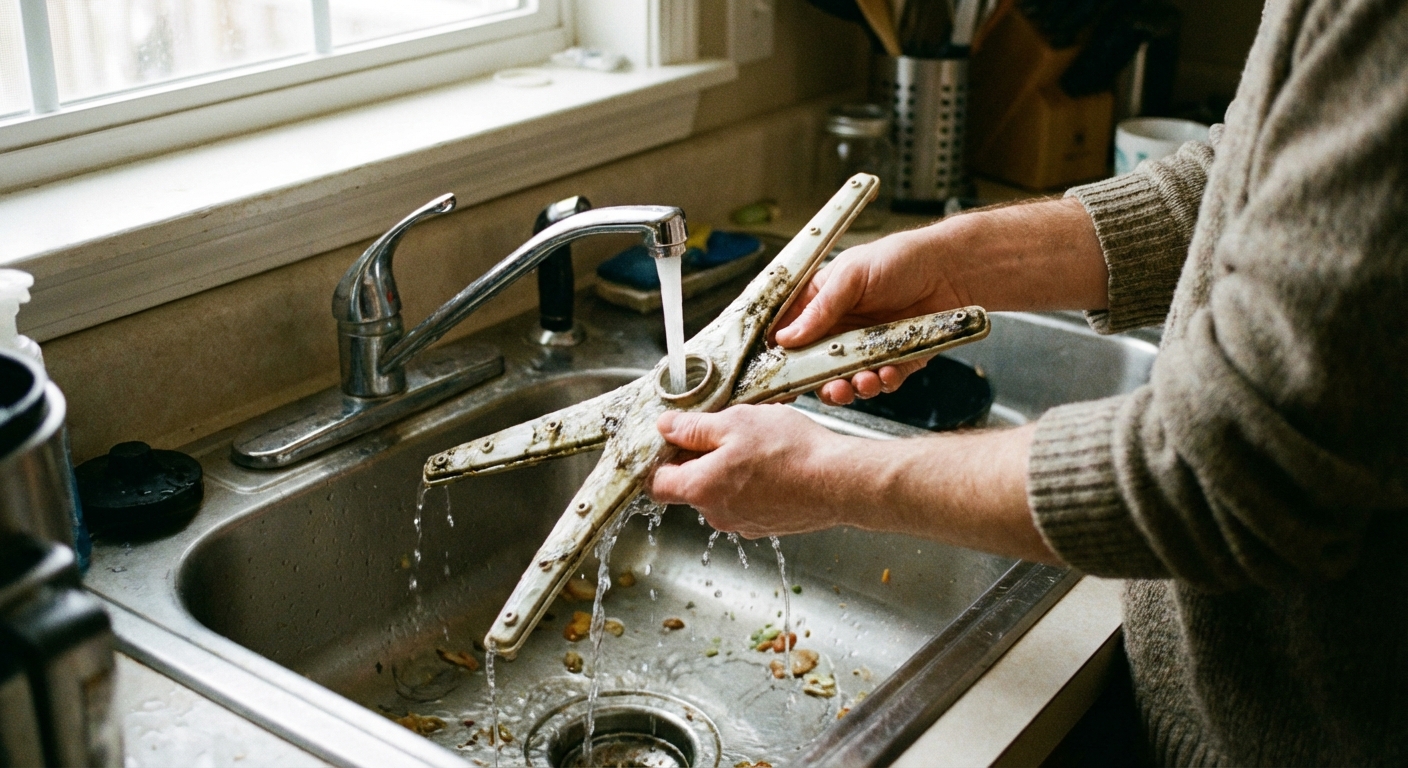
- Remove the spray arms (top and bottom if possible).
- Hold them up to a light and look for blocked holes.
- Check for cracks in the arm. A split seam can change water pressure and create odd noises.
Fix
- Rinse under hot water.
- Use a toothpick or a small zip tie to poke out clogged jets.
- For mineral buildup, use a manufacturer-approved dishwasher cleaner or a citric-acid based cleaner. If you want to use vinegar, first confirm your manufacturer says it's OK for your model.
- If the arm is cracked or the bearing ring is worn, replace the spray arm.
Extra check: Make sure the spray arm spins freely after you reinstall it. I always give it a quick hand spin before putting the racks back in.
Bonus causes (common, often missed)
Inlet valve noise or water hammer (during fill)
What it sounds like: Buzzing, chattering, or a hammering thunk right when the dishwasher fills.
- Quick checks: Make sure the shutoff valve under the sink is fully open, and check your home water pressure if it's known to run high.
- What helps: A water hammer arrestor or addressing high pressure can quiet banging. If the inlet valve itself is failing, it may need replacement.
Float stuck or clicking during fill
What it sounds like: Clicking or cycling during fill, sometimes with weird fill behavior.
- Quick checks: Locate the float inside the tub (usually a small dome or cylinder) and make sure it moves freely and isn't blocked by utensils or gunk.
Vibration against cabinets or hose knocking
What it sounds like: Rattling or buzzing that seems to come from outside the tub.
- Quick checks: Make sure the unit is level and secured, and that the drain hose isn't slapping the cabinet wall during drain.
Noise-to-cause cheat sheet
- Rattling or clacking: loose utensils, lightweight plastics, items hitting the spray arm
- Thumping: tall item interfering with spray arm rotation
- Grinding during wash: debris in sump or chopper area (if equipped), or broken chopper blade (if equipped)
- Humming or growling during wash: strained circulation, worn wash pump bearings
- Buzzing during drain: clogged drain path, debris in drain pump, or failing drain pump (often buzzes with little or no water moving)
- Buzzing or hammering during fill: inlet valve noise or water hammer
When to call a pro
I'm all for DIY, but I'm also a fan of sleeping at night. Consider professional help if:
- You see water underneath the dishwasher or evidence of leaking.
- The unit trips the breaker, smells like hot electrical, or the noise is paired with a burning odor.
- You suspect a pump or motor replacement and you're not comfortable disconnecting water lines or pulling the dishwasher out.
- The dishwasher is under warranty. Opening certain areas can complicate claims.
Quick maintenance routine
- Clean the filter monthly as a starting point (adjust based on buildup and how often you run it).
- Check spray arms for clogs every month or two.
- Run a cleaning cycle with a dishwasher cleaner recommended by your manufacturer.
- Load like you mean it: keep tall utensils out of the spray arm path and secure light plastics up top.
If you're publishing this as a standalone article, consider adding a short “troubleshooting checklist” download or a simple form for readers to describe the sound and when it happens. If you're using it in a support or chat flow, you can keep that interactive next step and tailor it to your setup.

About Marcus Vance
Content Creator @ Grit & Home
Marcus Vance is a lifelong DIY enthusiast and self-taught home renovator who has spent the last decade transforming a dilapidated 1970s ranch into his family's dream home. He specializes in budget-friendly carpentry, room-by-room renovations, and demystifying power tools for beginners. Through his writing, Marcus shares practical tutorials and hard-learned lessons to help homeowners tackle their own projects with confidence.