
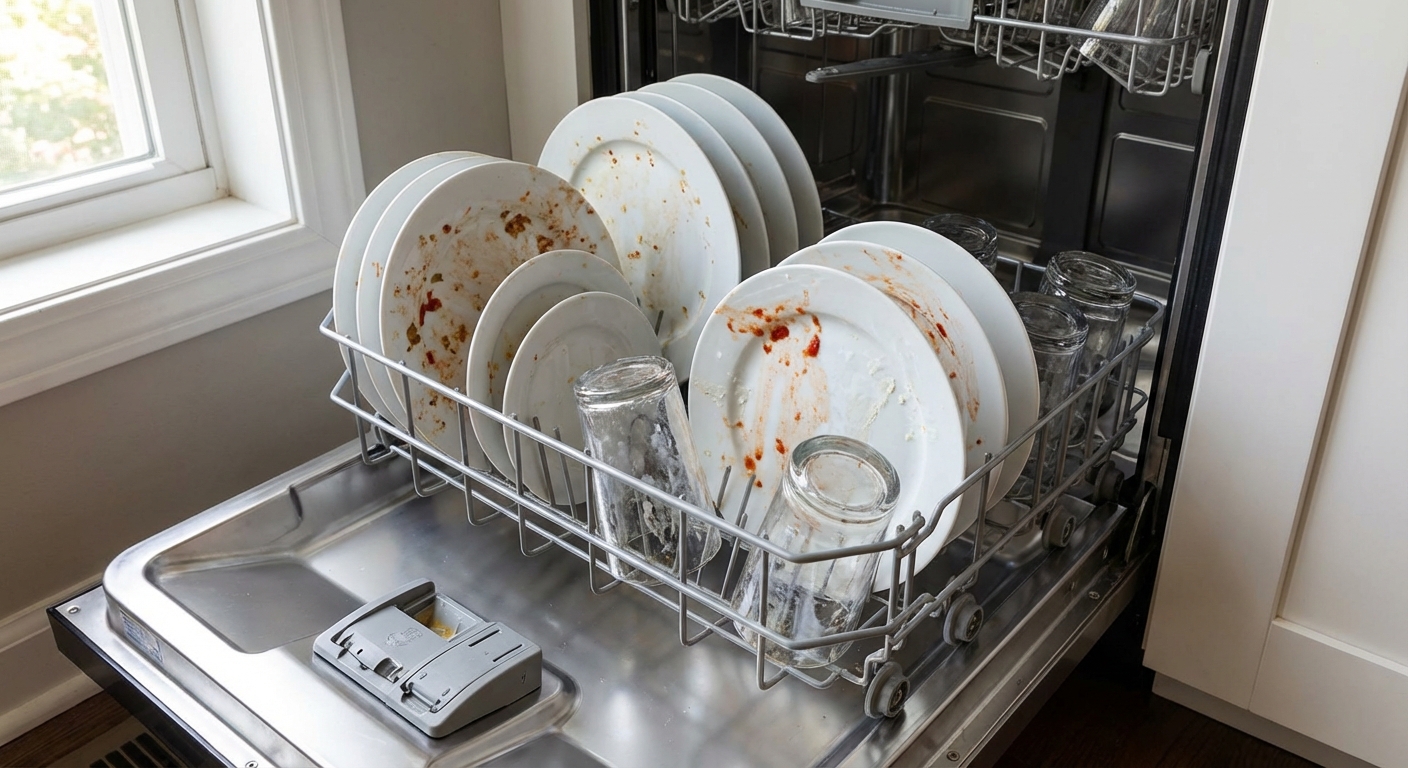
When a dishwasher stops cleaning well, it usually is not a mystery failure. Most of the time it comes down to spray coverage (water cannot reach), chemistry (detergent is not releasing or not working), or buildup (filters and parts are coated in gunk or minerals). And yes, sometimes it is a part starting to fail, but the fixes below knock out the common stuff first.
Below are six fixes I run through in order on my own 1970s-era kitchen setup. They are beginner-friendly, cheap, and they solve the majority of “dishes came out dirty, spotty, or filmy” complaints.
Good news: This page is about cleaning performance, not draining. If your unit is also leaving standing water, that is a separate troubleshooting path.
Before you start: 3 quick checks
- Run the hot water at the sink until it is fully hot before starting the dishwasher. Many machines start washing with whatever temperature is in the line, even if they heat later.
- Confirm the spray arms can spin by hand. If a cookie sheet or tall pan blocks them, you can have a “working” dishwasher that barely sprays anything.
- Skip “Quick” for heavy soil. Fast cycles often underperform on baked-on food, greasy plastics, and casserole dishes. Use Normal, Auto, or Heavy for a real test.
Fix #1: Clean clogged spray arms
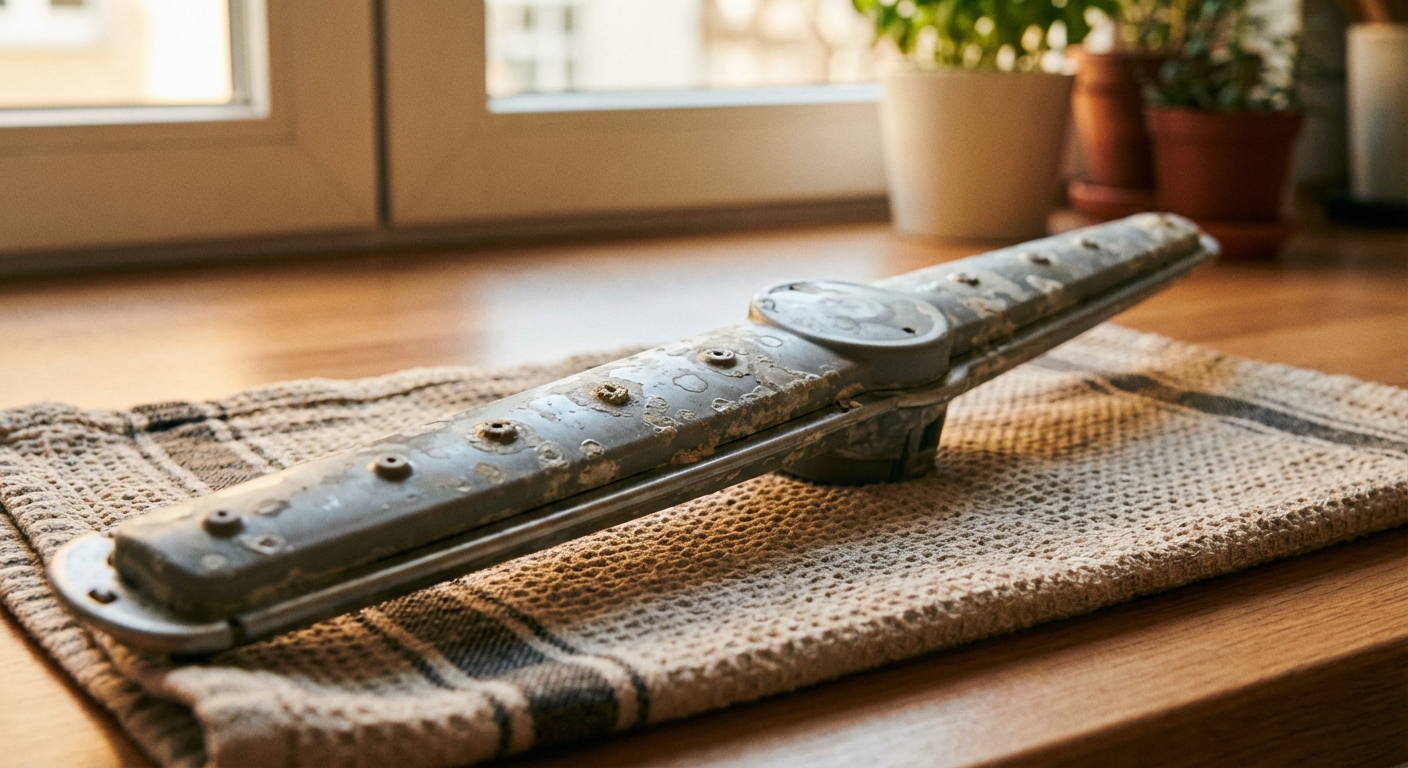
If dishes are dirty in random zones, or the top rack is always worse than the bottom, clogged spray arm holes are a prime suspect. Tiny food bits, labels, and hard water scale can plug the jets so the arm spins weakly or sprays sideways.
How to do it
- Power off at the dishwasher switch or breaker if you will be reaching deep inside.
- Pull out the lower rack. Locate the lower spray arm. Most lift off, twist off, or release with a center nut.
- Remove the upper spray arm if accessible (often attached under the upper rack or to the ceiling of the tub).
- Rinse arms under the sink. Use a toothpick or bamboo skewer to clear each jet hole.
- If you see chalky white buildup, do an occasional soak in warm white vinegar for 20 to 30 minutes, then rinse. If your manufacturer cautions against vinegar, use a manufacturer-approved descaler instead.
- Reinstall and make sure each arm spins freely with a light flick.
Marcus note: The first time I did this, I “cleaned” the arm but forgot one popcorn kernel jammed near the hub. The arm spun by hand but stalled under pressure. Make sure the center area is clean too.
Fix #2: Check the detergent dispenser
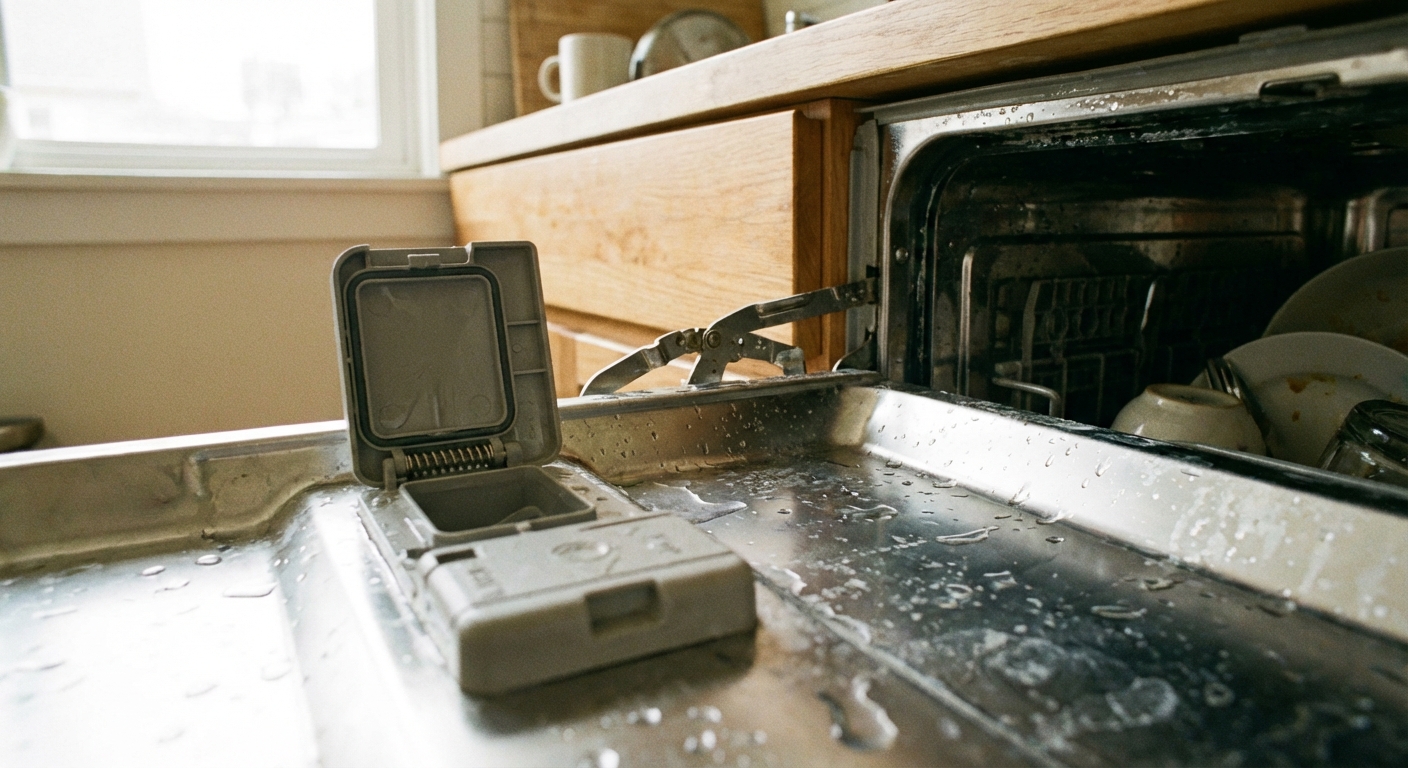
If your detergent pod is still sitting in the cup after the cycle, or you find a half-melted pod stuck in the door, the machine cannot wash correctly even if everything else is fine.
What to check
- Nothing blocks the dispenser door. Big cutting boards, sheet pans, or tall utensils in the front right can prevent it from popping open.
- The latch is not gummed up. Wipe the cup and latch area with hot soapy water. Grease buildup can make it stick.
- Use the right detergent for your water. Pods are convenient, but with hard water it is often easier to dial in results with powder or gel because you can adjust the dose.
- Quick test: If the door seems unreliable, try placing a pod in the tub (not the dispenser) for one test load. If cleaning improves, you likely have a dispenser issue. Long term, follow your manual since some cycles use prewash and main-wash dosing.
If the dispenser never opens and cleaning in-tub works, the fix can be as simple as a new dispenser latch or assembly. That is usually a moderate DIY repair with a screwdriver, but model-to-model it varies.
Fix #3: Use enough detergent
Too little detergent can look like a “broken dishwasher.” Too much can leave residue and, in very soft water, can contribute to glass etching over time. The goal is the right amount for your water and load.
Simple dosing tips
- Match the dose to the soil level. Light loads often need less than you think.
- Hard water usually needs more help. That can mean a slightly higher dose, plus rinse aid, or a detergent made for hard water.
- If your machine has a prewash cup, use it. Many dishwashers clean better when the prewash has a small amount of detergent too. If yours does not, some people sprinkle a pinch in the tub for testing, but follow the manual so you do not create suds or void guidance.
Fix #4: Raise wash temperature
Grease and dried-on food need heat. Many dishwashers perform best when the incoming water is warm, often around 120°F, but results vary by model because many units heat water internally depending on the cycle.
Steps that help
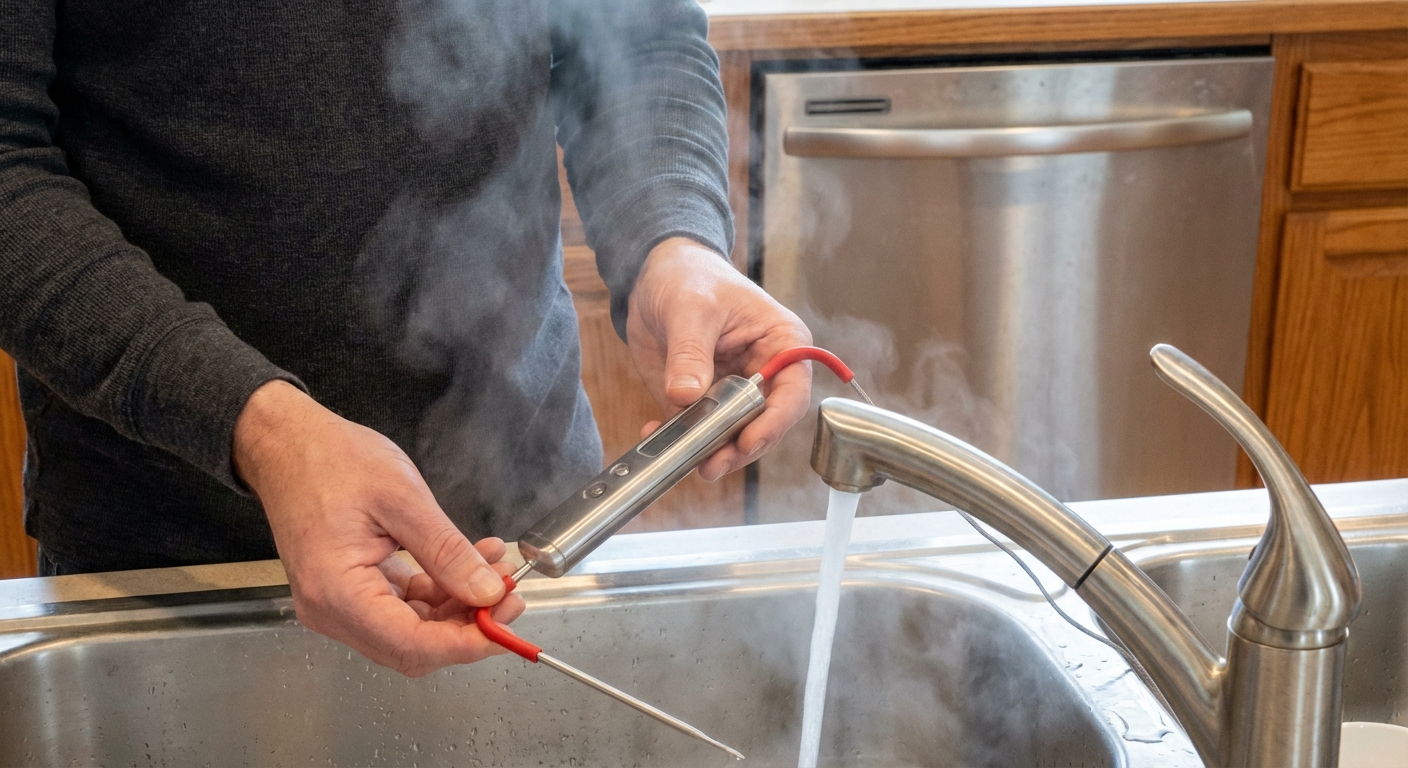
- Use the hot tap first (see quick checks) so the dishwasher starts with warm water.
- Choose a cycle with heated wash or sanitize (if your machine has it) for stubborn loads.
- If you suspect your home water heater is set too low, check the water temperature at the faucet with a thermometer. If it is well under 120°F, you may need to adjust the heater.
Safety note: Do not crank a water heater to unsafe temperatures. If kids or seniors are in the home, consider professional guidance or mixing valve solutions.
Fix #5: Load for spray coverage
This one feels too simple until you see it. A dishwasher cleans by spray coverage. If bowls nest, plates are packed like a vinyl record shelf, or utensils spoon together, water cannot reach the mess.
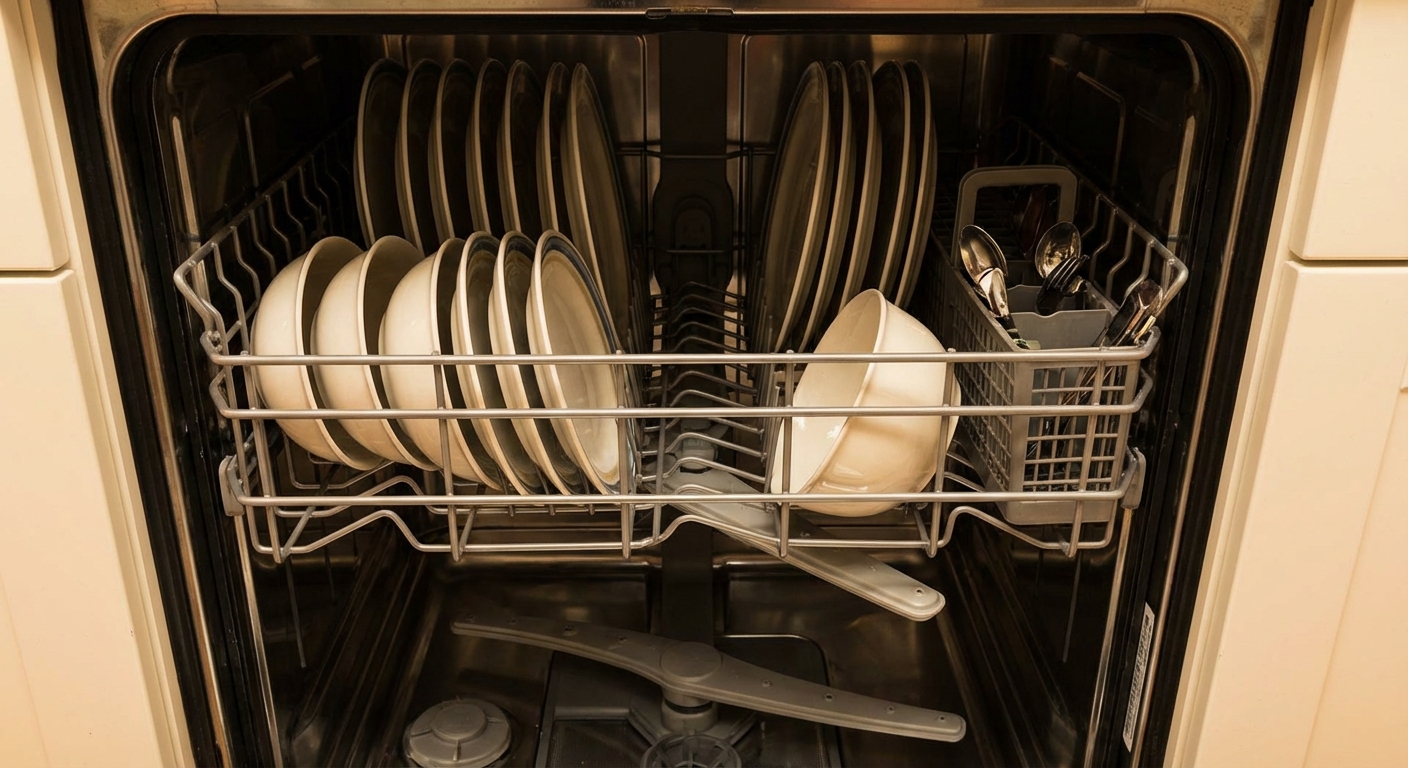
Loading rules that help
- Give every item a lane. If two dishes touch tightly, treat that area as “won’t get clean.”
- Angle bowls and mugs downward so water drains out instead of pooling.
- Keep the center clear so the spray arm can throw water upward.
- Do not block the detergent door with a big item on the front right (common on many models).
- Mix utensils so spoons do not stack together. Handles up or down depends on your basket, but avoid nesting.
My thrifty reminder: You do not need to pre-wash dishes until they squeak. Scrape solids into the trash and rinse off heavy gobs, but let the detergent do its job.
Fix #6: Treat hard water buildup
If your main complaint is spots on glasses, cloudy film, or a gritty feel on dishes, hard water minerals may be the culprit. Scale can also build up inside spray arms, on the heater area, and around filters, quietly reducing performance.
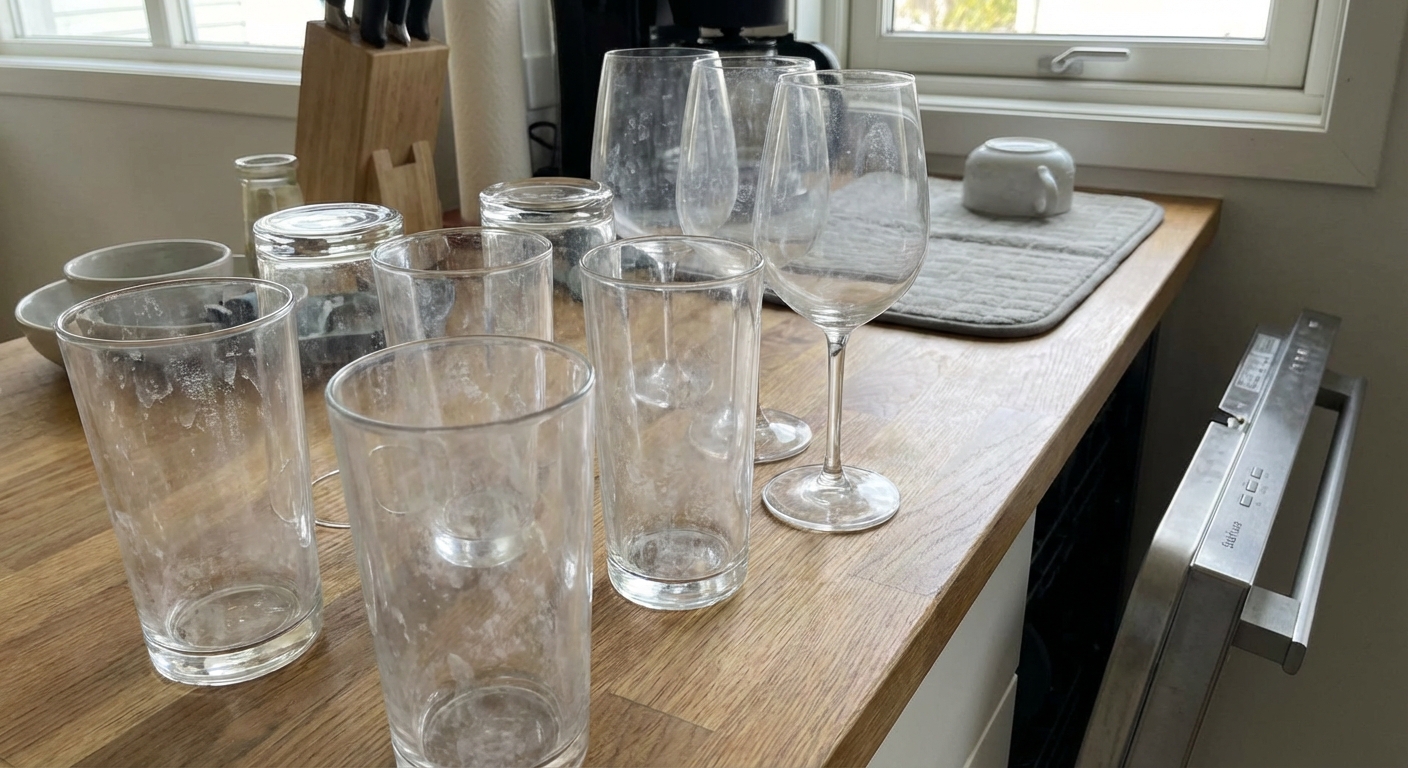
What to do
- Check and fill rinse aid. Rinse aid helps water sheet off dishes so minerals do not dry into spots.
- Run a cleaning cycle with a dishwasher descaler (or a manufacturer-approved cleaner) following the label directions.
- If your dishwasher has a built-in water softener (common in some brands and regions), check the manual for salt requirements and settings.
- If hard water is severe, consider a whole-house softener long term. It helps every fixture, not just the dishwasher.
Important: Cloudy glass can also be etching from harsh detergent and heat over time. Etching is permanent and looks like a frosted surface. Very soft water plus too much detergent can make it worse. If the “cloud” never improves even after descaling, reduce detergent, avoid extra-hot cycles for delicate glass, and make sure rinse aid is dialed in.
Do this too: Clean the filter
Modern dishwashers often have a filter that needs periodic cleaning. When it is clogged, you can get redeposited grime, gritty residue, and that “it ran, but nothing is actually clean” feeling.
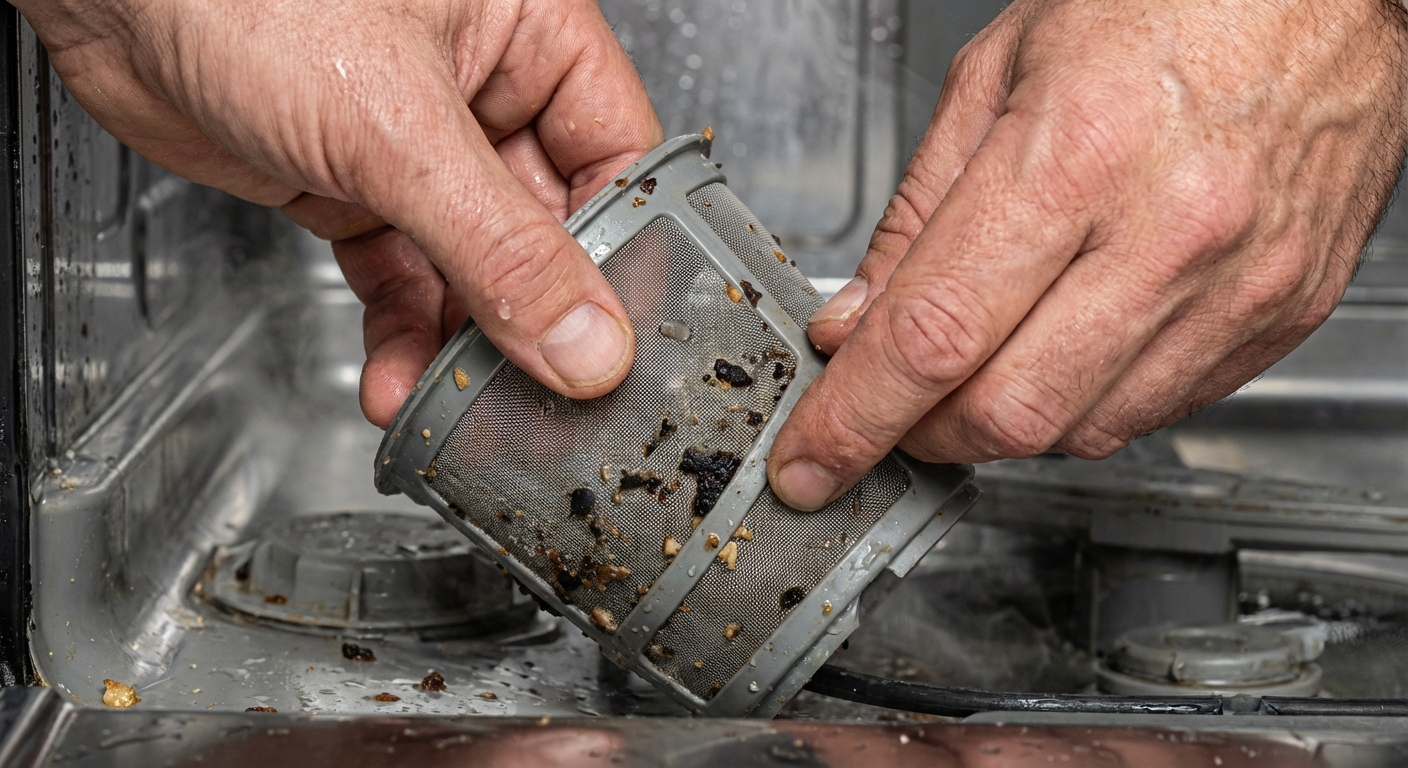
How to clean it
- Pull out the lower rack.
- Twist and lift the filter assembly (most are tool-free, but not all).
- Rinse under hot water. Use a soft brush or old toothbrush with a drop of dish soap.
- Wipe the filter housing area in the tub bottom. The sump is the well at the bottom where water collects, and it can trap seeds, glass shards, and sludge.
- Reinstall firmly. A loose filter can let debris recirculate.
How often? If you run the dishwasher daily, check it monthly. If you are mostly a “scrape and go” household, you may need to clean it more often.
Quick guide by symptom
- Top rack always dirty: Upper spray arm clogged, tall items blocking rotation, low water temp, low fill.
- Grit on dishes: Filter clogged, spray arm jets blocked, heavy soil not scraped.
- White spots: Hard water, no rinse aid, not enough detergent.
- Oily film: Water not hot enough, too much loading, weak detergent dose, filter dirty.
- Pod still in dispenser: Dispenser blocked or sticky, cycle choice, water not hot enough to dissolve quickly.
If spray seems weak: Check fill
If the dishwasher sounds like it is running but spray pressure feels weak, you may be low on water. Low fill can come from a partially closed shutoff valve, a kinked supply line, or a clogged inlet screen, depending on the model.
- Make sure the water shutoff valve is fully open.
- Look for a kinked supply line under the sink.
- If you are comfortable, check your manual for how to inspect the inlet screen. If you are not, this is a good time to stop and call a pro.
When to call a repair pro
If you have cleaned the filter and spray arms, confirmed detergent release and dosing, and verified warm water, yet performance is still poor, you may be looking at a part failure that needs testing.
- Heater not working (water stays lukewarm throughout the cycle).
- Wash pump weak or failing (spray pressure low, arms barely move).
- Inlet valve issues (not enough water entering, especially if you hear the pump struggling).
- Diverter problems (some zones never get clean because water is not being routed correctly).
At that point, look up your model number, check for error codes, and decide whether a service call or replacement makes the most sense for the age of the unit.
My “better washes” routine
If you want a low-effort maintenance rhythm that keeps a dishwasher cleaning like it should, here is what I do at home:
- Weekly: Quick peek at the filter area and remove any visible debris. Wipe the door edges and gasket if you see grime that could re-deposit.
- Monthly: Wash the filter and check spray arm holes.
- Every 2 to 3 months: Run a descaling cleaner if you have hard water, and keep rinse aid topped off.
- Every load: Start with hot water at the sink and avoid blocking the spray arms and detergent door.
Most of the time, these small habits beat any fancy detergent hack, and they cost almost nothing.

About Marcus Vance
Content Creator @ Grit & Home
Marcus Vance is a lifelong DIY enthusiast and self-taught home renovator who has spent the last decade transforming a dilapidated 1970s ranch into his family's dream home. He specializes in budget-friendly carpentry, room-by-room renovations, and demystifying power tools for beginners. Through his writing, Marcus shares practical tutorials and hard-learned lessons to help homeowners tackle their own projects with confidence.