
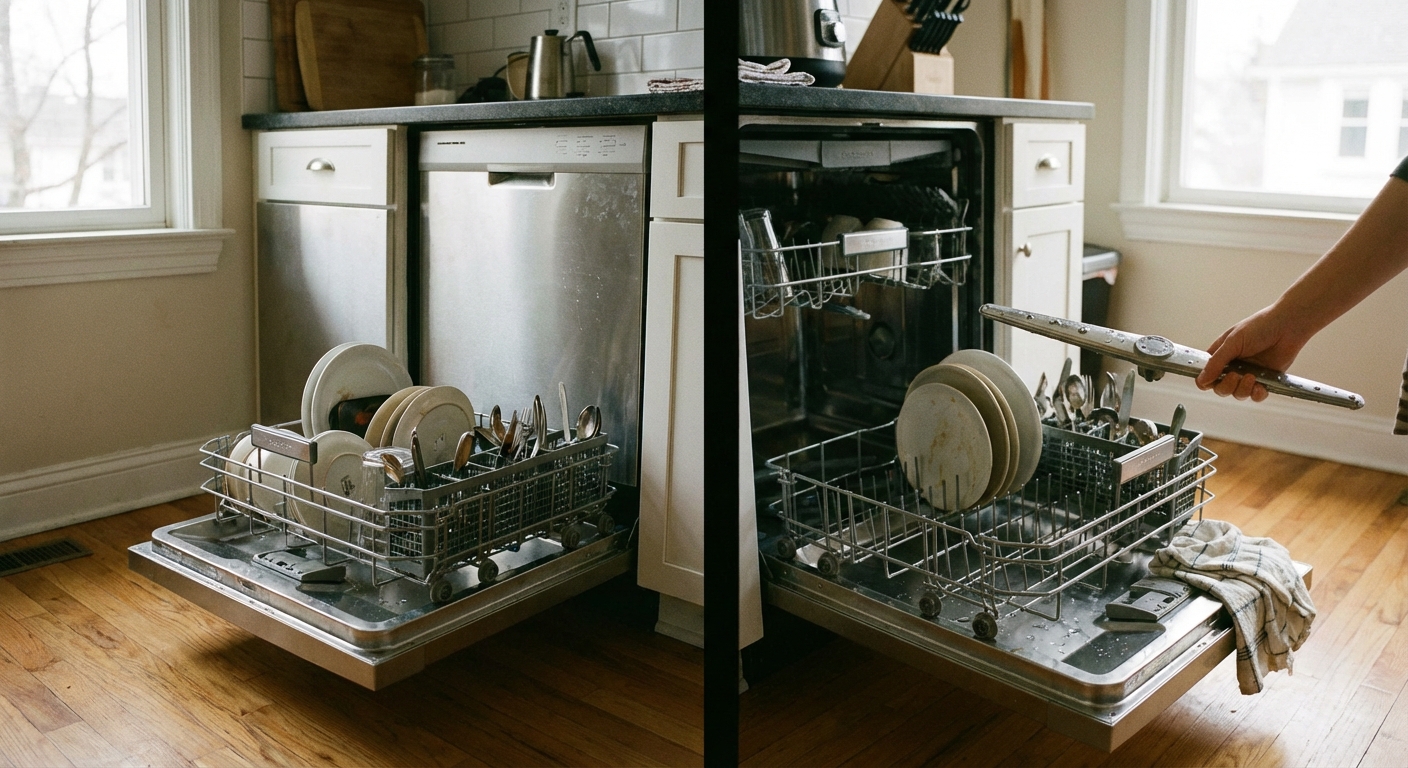
If your dishwasher fills with water but the wash motor sounds like it is running and the water noise is minimal, the spray arms are not moving, or the dishes come out looking like they never got blasted, you are usually dealing with one of four problems.
There may be a blockage in the spray system, a dirty filter or sump, a circulation pump that is struggling, or a supply issue that starves the wash motor.
I have chased this exact issue after a big family pasta night. A single lemon seed jammed in a spray arm hole turned my dishwasher into a quiet, sad soaking tub. The good news is you can check the common culprits in a clean order, from easiest to most likely, without guessing.
Before you start
- Kill power at the breaker before putting hands near the sump, pump, or wiring.
- Turn off water under the sink if you plan to pull the dishwasher out or touch the inlet line.
- Watch for sharp edges under the tub and around brackets. Wear gloves if you have them.
- Grab a flashlight, a small brush or old toothbrush, and a few toothpicks or zip ties for clearing holes.
- Keep towels handy. Even “dry” dishwashers like to spill a little when you pull filters or hoses.
2-minute test: are the spray arms turning?
Open the door mid-cycle (or after you hear the wash motor running for about a minute), then:
- Note the position of the lower spray arm.
- Close the door for 15 to 30 seconds.
- Open again and see if the arm moved.
If it never changes position, keep going. If it moves a little but seems weak, that points to partial blockage, a dirty filter, low water level, or a tired circulation pump.
Step 1: Fix loading issues
This sounds too simple, but it is one of the most common reasons a dishwasher stops spraying effectively, especially on the bottom.
- Spin both spray arms by hand. They should rotate freely without hitting a pan handle, cutting board, or tall plate.
- Keep big items low and to the sides. Cookie sheets and cutting boards can act like a wall that blocks water from reaching the upper rack.
- Do not let utensils nest. A spoon bowl on spoon bowl can create a “roof” that traps food and blocks jets.
Step 2: Clear spray arm clogs
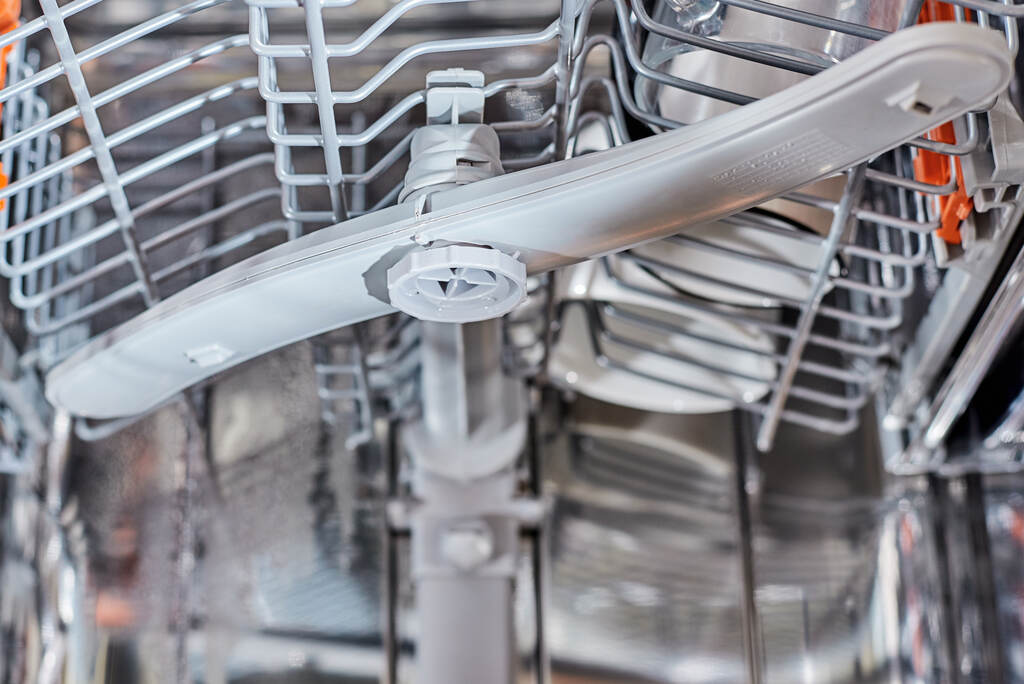
Even if the dishwasher fills normally, clogged jets can prevent the spray arms from building enough force to spin. Hard water scale and food bits are the usual suspects.
Clean the lower spray arm
- Remove the bottom rack.
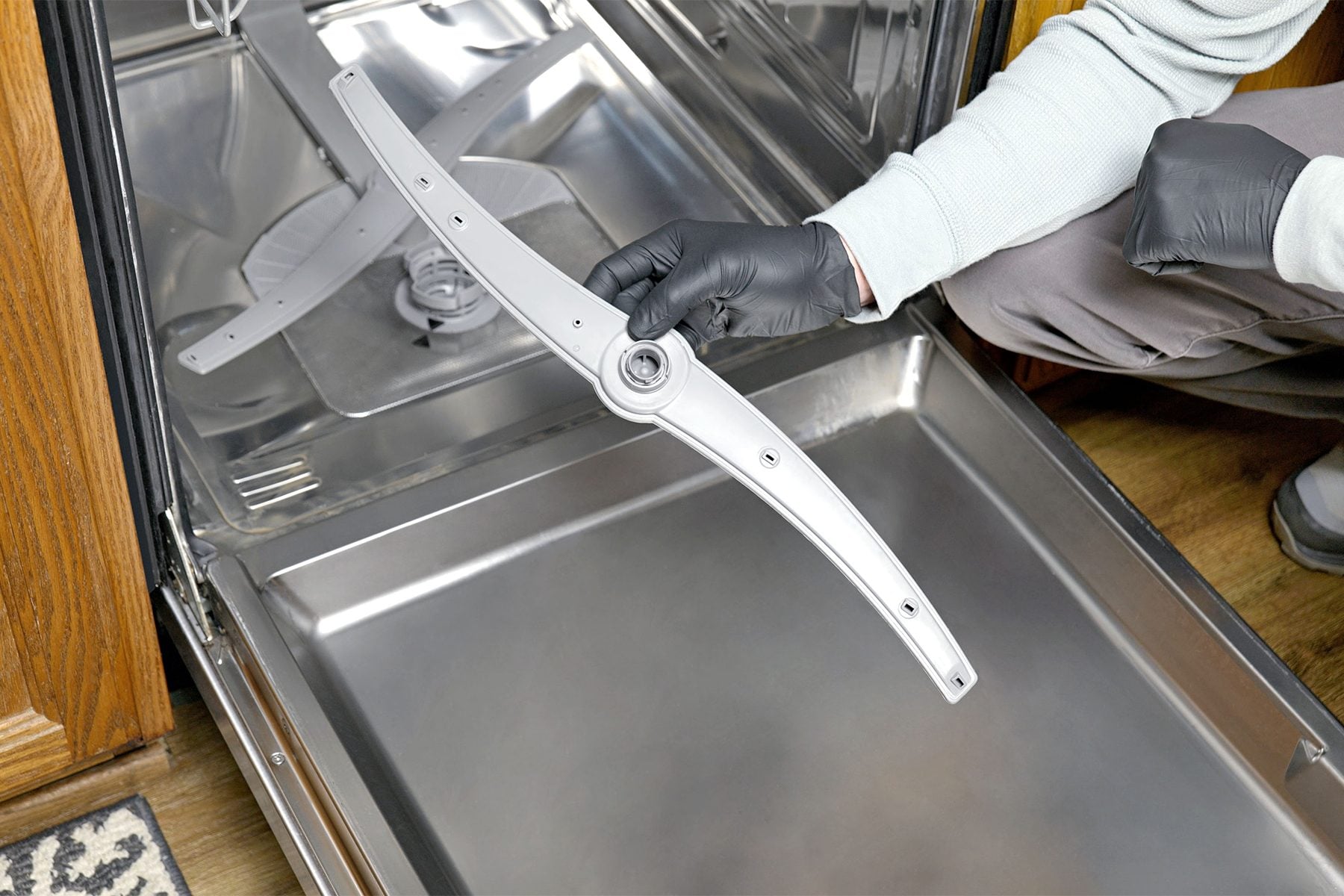
- Twist or unclip the spray arm (varies by brand) and lift it out.
- Rinse under hot water and pick out debris from each hole with a toothpick or a small zip tie.
- Shake it. If you hear rattling inside, debris is trapped in the arm. Keep flushing until it runs clear.
Clean the upper spray arm
- Many upper arms attach to the rack or the water feed tube at the back.
- Pop it off carefully and rinse the same way.
- Check the mounting hub for gunk that can slow rotation.
Pro tip: If your water is hard, an occasional soak in warm white vinegar for 15 to 30 minutes can help loosen mineral scale. Rinse thoroughly and clear the holes again. If your manufacturer warns against vinegar use, follow your manual and use a dishwasher-safe descaler instead.
Step 3: Clean the filter and sump
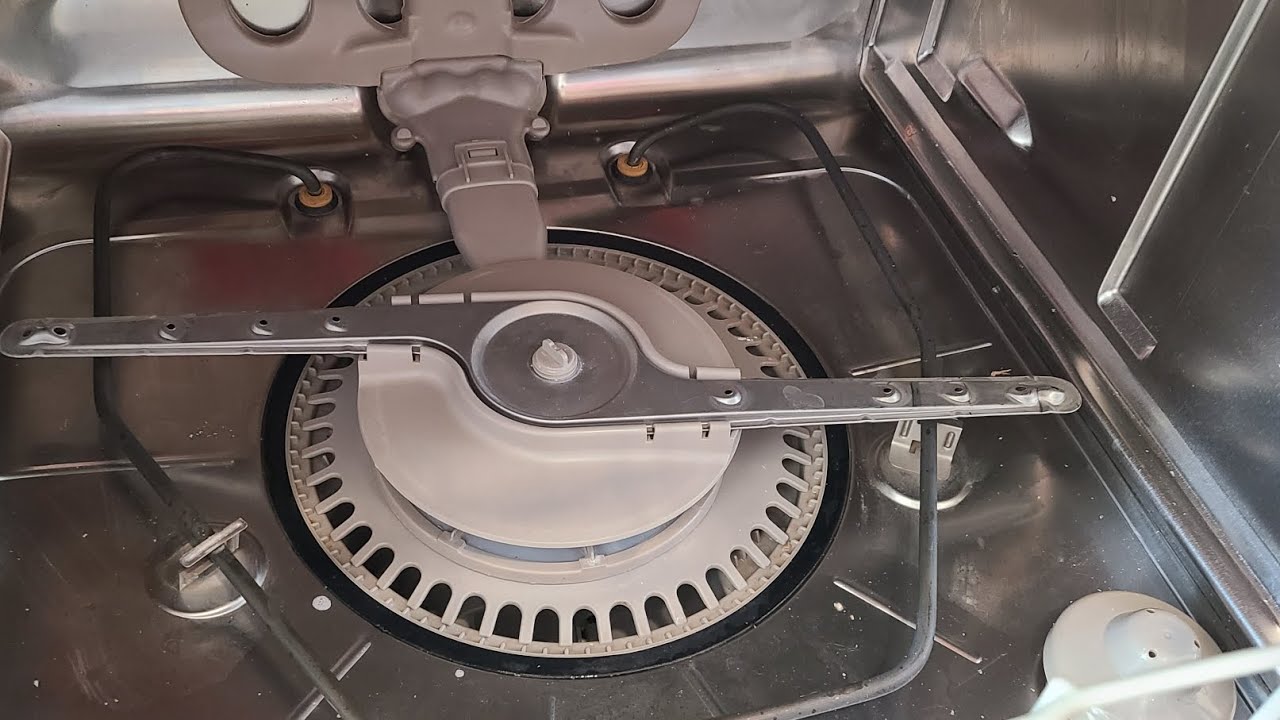
If the spray arms are clear but the machine still is not spraying well, the next bottleneck is usually the filter area. Most modern dishwashers have a removable filter that protects the circulation pump from food debris. When it clogs, water flow drops fast.
Clean the filter
- Pull out the bottom rack.
- Twist the cylindrical filter (and any flat mesh screen) out of the bottom.
- Wash with hot water and dish soap. Use a soft brush to scrub the mesh.
- Reinstall fully. A loose filter can let chunks into the sump and cause repeat clogs.
Check the sump
With the filter removed, shine a flashlight into the sump. You are looking for:
- Glass shards
- Labels from jars
- Bones, seeds, popcorn kernels
- Twist ties or bits of plastic
Carefully remove debris with gloved fingers or needle-nose pliers. Do not reach blindly. Broken glass loves to hide down there.
Step 4: Confirm fill level
A dishwasher can technically “fill” but still be too low for the circulation pump to build strong pressure. Low fill often shows up as weak spray, poor cleaning, and a wash motor that sounds like it is running but not moving much water.
What to look for
- After the fill cycle, open the door. You should see water pooled in the sump area at the bottom of the tub. The exact level is model-dependent, so if you are unsure, check your manual for the specified fill level.
- If it looks skimpy, start looking at the supply and inlet side.
Check the float
- Look for a small float in the front corner or along the side of the tub floor (varies by model).
- Make sure it moves freely and is not stuck up from gunk or a small object. A stuck float can trick the dishwasher into thinking it is already full.
Water supply clues under the sink
- Partially closed shutoff valve: Make sure the dishwasher valve is fully open.
- Kinked supply line: Especially common after cleaning under the sink or pushing the dishwasher back.
- Clogged inlet screen: Some valves have a small screen that can plug with sediment.
If your home has older galvanized plumbing or you recently had water work done, sediment can spike and clog small screens.
Step 5: Listen for pump trouble
The circulation pump is the muscle that takes water from the sump and blasts it through the spray arms. When it fails or gets jammed, the dishwasher may fill and drain normally but never produce strong spray.
Common symptoms
- Humming or buzzing during the wash phase but little to no water movement.
- Intermittent spraying, like it starts strong then fades.
- Grinding noises, often from debris hitting the impeller.
- Weak wash across all racks, even with clean spray arms and filter.
Sometimes the pump is fine and the impeller is just jammed by a small object. Other times the motor windings are failing and it cannot maintain speed.
Budget-friendly check: If you found debris in the sump, clean it thoroughly, reassemble, then run a short cycle. If the sound changes and spray returns, you may have dodged a pump replacement.
DIY boundary: Accessing the pump or impeller is very model-specific. If it requires tipping the unit, pulling it out, or opening the underside, it is easy to create a leak. If your dishwasher has a display, check for error codes and look them up in the manual before you start disassembling.
Step 6: Check the diverter
Many dishwashers use a diverter to direct water between the lower arm, upper arm, and sometimes a third rack or a bottle-jet zone. When the diverter sticks, one area can go dry while another sprays normally.
Signs it is the diverter
- Bottom rack gets cleaned but the top rack stays dirty, or the reverse.
- You can hear water movement, but it never seems to shift between levels.
- The cycle runs longer than usual on some models.
Diverter diagnosis is often model-specific and may require accessing the underside of the machine. If you are comfortable with a screwdriver and taking photos as you disassemble, you can inspect for obvious obstructions. If not, this is a good place to pause and consider a repair tech, especially if the diverter is integrated with the sump assembly.
Step 7: Detergent and suds issues
Detergent cannot usually stop the spray arms from spinning completely, but it can create symptoms that feel like “no spray,” especially when it creates heavy suds or leaves residue that traps debris.
Common detergent problems
- Using dish soap: Even a small amount can create foam that messes with circulation and leaves the wash weak.
- Too much detergent: In soft water, extra detergent can cause buildup and poor rinsing.
- Caked detergent in the dispenser: If the cup does not open cleanly, the wash can be underpowered from the start.
Rinse aid problems
- Empty rinse aid can lead to poor sheeting and more residue, which feeds future clogs.
- Overfilled rinse aid usually causes streaking or film. If it spills into the tub while filling, it can temporarily add to foaming, but suds are far more often from dish soap or detergent overdose.
If you suspect suds, run a rinse-only cycle with no detergent. You can also place a bowl of white vinegar on the top rack during a hot cycle to help cut residual soap film (again, check your manual if your manufacturer discourages vinegar).
Quick checklist
- Make sure nothing blocks spray arm rotation.
- Remove and clean both spray arms, clear every jet hole.
- Remove and scrub the filter, then inspect and clean the sump.
- Confirm fill level, make sure the float moves freely, and check the shutoff valve and supply line for restrictions.
- Listen for circulation pump humming, grinding, or weak operation. Check for error codes if your model shows them.
- If only one rack sprays, suspect the diverter.
- Double-check detergent type, amount, and dispenser operation.
When to call a repair tech
I am all for DIY, but there are a few points where paying for a skilled diagnosis can save you money and prevent leaks.
- Electrical smell, burning odor, or tripped breaker during the wash motor phase.
- Standing water with repeated poor spray after you have cleaned the spray arms, filter, and sump.
- Confirmed low fill that points to a failing inlet valve, float switch issue, or control problem.
- Circulation pump replacement if it requires pulling the dishwasher and tipping it, or if your model uses an integrated sump and pump assembly.
- Leaks appearing after you reassemble parts, especially at the pump seal area.
If you do call, tell them what you already checked. “Spray arms and filter cleaned, sump inspected, still no spray and motor hums” is the kind of sentence that helps a tech show up prepared.
My parting advice
If your dishwasher is not spraying water, do not start by ordering parts. Start by clearing the spray path and cleaning the filter and sump. Those fixes cost almost nothing, and they solve a big chunk of wash-performance problems. If you get stuck, write down what the machine is doing during fill, wash, and drain, and whether it is throwing an error code. The pattern usually points straight to the right component.

About Marcus Vance
Content Creator @ Grit & Home
Marcus Vance is a lifelong DIY enthusiast and self-taught home renovator who has spent the last decade transforming a dilapidated 1970s ranch into his family's dream home. He specializes in budget-friendly carpentry, room-by-room renovations, and demystifying power tools for beginners. Through his writing, Marcus shares practical tutorials and hard-learned lessons to help homeowners tackle their own projects with confidence.