
🚨 In a DIY emergency or rush?
Skip the details and jump straight to our 30-second cheat sheet for the most crucial info.
If you have a dog and a lawn, you’ve probably seen it: a yard that’s suddenly polka-dotted with straw-brown circles, usually right where your pup likes to “sign the guest book.” The frustrating part is you can be doing a lot of things right and still get dog urine spots.
The good news: most urine burn is fixable, and preventing new spots is more about simple habits than expensive products. I’ll walk you through what’s happening in the grass, how to repair the damage, and how to know when the culprit is actually grubs or fungus instead of your dog.
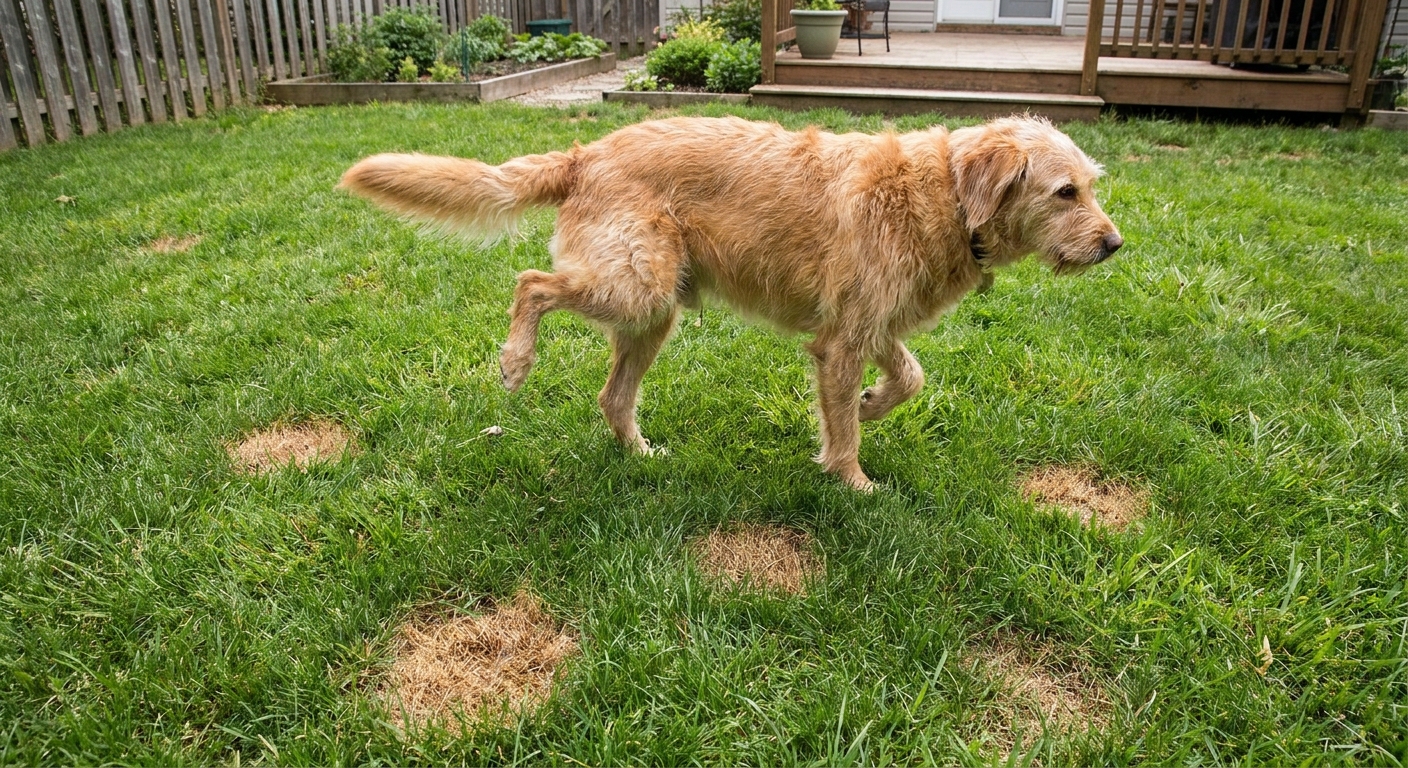
Why dog urine turns grass brown
It’s fertilizer until it’s too much
Dog urine is high in urea, which breaks down into nitrogen in the soil, plus salts and other compounds. In small doses, nitrogen is a good thing. It’s basically fertilizer. In big, concentrated doses, it “burns” grass by dehydrating plant tissue and overwhelming the roots.
This is why many urine spots have a classic pattern:
- A brown dead center where the urine concentration was highest.
- A dark green ring around it where the nitrogen was diluted enough to act like fertilizer.
Salts make the burn worse
Urine contains salts. Over time, repeated hits in the same area can build up salinity in the soil. Salty soil makes it harder for grass roots to absorb water, even if you’re watering regularly. Think of it as the lawn being thirsty while standing in a puddle.
In chronic “same spot” zones, urine can also nudge soil chemistry over time (including pH and microbial balance). If you’re fighting repeat damage in one area, a basic soil test can be worth it.
Why some dogs “burn” lawns more than others
It’s not usually about the dog being “bad” or even their diet. The biggest factors are:
- Where they pee (same spot repeatedly is the fastest way to a dead patch).
- Urine volume (larger dogs and longer pees concentrate more in one place).
- Hydration (more dilute urine is less damaging).
- Turf type (some grasses recover faster than others).
One quick myth-buster: female dogs aren’t automatically the reason. That idea sticks because squatting tends to deposit urine in a smaller area, while some males spread it out. But any dog can cause damage depending on the factors above.
How to fix dog urine brown spots
If the spot is new and the grass is still mostly green, you can often prevent a full burn. If the spot is already brown and crispy, you’re in repair mode.
Step 1: Flush the spot
As soon as you notice a fresh spot, soak the area with water for 30 to 60 seconds. The goal isn’t to drown the yard. You’re trying to dilute and disperse the nitrogen and salts into a larger volume of soil.
- If you’ve got a hose nearby, use the “shower” setting.
- If you don’t, keep a watering can by the door and make it part of the routine.
If the spot is already brown, flushing still helps reduce salt concentration in the soil before you reseed or plug.
Step 2: Check if it’s dead or stressed
Do the “tug test.” Grab a small pinch of grass in the brown area and pull gently.
- If it resists, it may be dormant or stressed and can recover.
- If it pulls up easily, the grass is dead and you’ll need to reseed or re-sod.
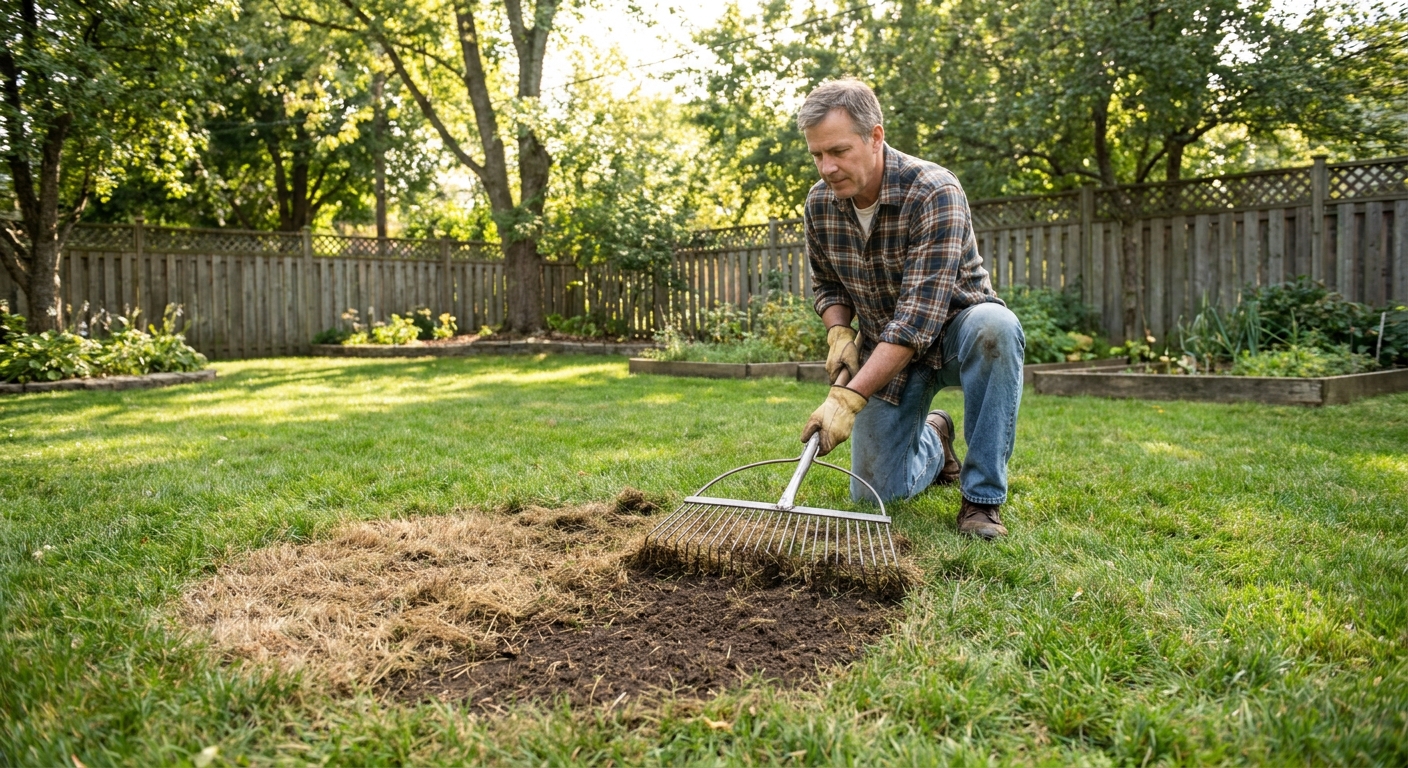
Step 3: Rake out dead material
Use a stiff rake and remove the dead grass down to soil. This is the part most people skip, then wonder why the seed never takes. Seed needs soil contact.
Step 4: Loosen the soil
Scratch up the top 1/2 inch of soil with a hand cultivator or a garden rake. If the soil is crusty or compacted, roots struggle.
Step 5: Add a thin layer of topsoil or compost
I like a 1/4 inch layer. This does two things: it dilutes leftover salts and it gives new seed a friendlier place to germinate.
Overseed so it blends in
Pick the right grass
Match your existing turf as closely as you can. If you’re not sure what you have, bring a handful of grass to a local garden center and ask. In general:
- Cool-season lawns (many northern areas): tall fescue, Kentucky bluegrass, perennial ryegrass mixes are common.
- Warm-season lawns (many southern areas): Bermuda, zoysia, centipede, St. Augustine often do best with plugs or sod when you’re trying to match an existing lawn. Some Bermuda can be seeded, but matching texture and color can be tricky.
How to seed a urine spot
- Broadcast seed a little heavier than you think, since bare spots are unforgiving. Just don’t go crazy: overcrowded seedlings can be prone to issues like damping off (a fungus that takes out baby grass fast).
- Lightly rake so seed is nestled into soil, not sitting on top.
- Topdress with a dusting of compost or clean straw, just enough to hold moisture.
- Water lightly 1 to 2 times per day until germination, then less often but deeper.
Germination depends on the variety and temps. As a rough guide: perennial ryegrass can pop in about 5 to 10 days, tall fescue often takes around 7 to 14 days, and Kentucky bluegrass is the slow one at roughly 14 to 30 days.
Two little tips that help a lot: mark off the repair so nobody tramples it, and mow the surrounding lawn a touch higher for a while since a slightly taller cut helps grass handle stress.
Best time to reseed
Timing matters. For cool-season grass, early fall is usually your sweet spot (spring can work too). For warm-season grass, late spring into early summer is typically best, when it’s actively growing.
When plugs or sod are better
If you’ve got warm-season turf like St. Augustine or zoysia, repairing with plugs or a small piece of sod is often faster and more invisible than trying to seed something that doesn’t match.
Prevent new urine spots
Water after peeing
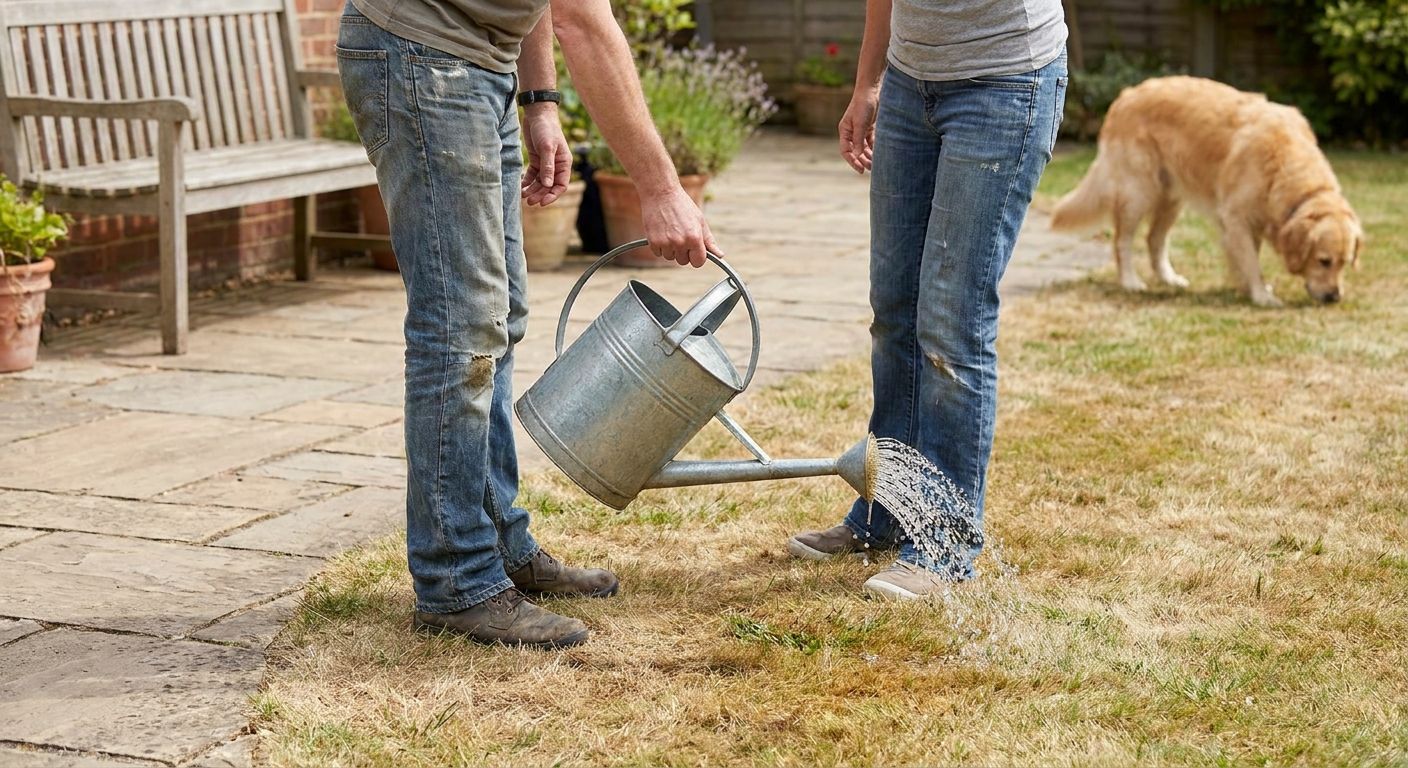
If you do one thing, do this: dilute the urine with water right after your dog goes. It sounds like extra work, but it’s the simplest, cheapest “product” you’ll ever use.
My neighbor trick is leaving a watering can by the back steps. You don’t need a full soak. Just a quick pour over the area.
Create a potty zone
Dogs love routine. If you guide them to one area, you can protect the rest of the lawn.
- Pick a low-visibility spot of the yard.
- Use pea gravel, mulch, or a small patch of tougher groundcover.
- Walk them there on a leash for a week or two and reward them when they go.
This is also how you stop the “same exact circle by the patio” problem that kills grass fast.
Encourage hydration
More water intake usually means more diluted urine. Keep fresh water available, especially during hot months. Don’t restrict water to “save the lawn.” If you’re concerned about excessive thirst or urinary issues, check with your vet.
Adjust fertilizer habits
If you already fertilize heavily and your dog is adding nitrogen on top, you might be stacking the deck against yourself.
- Consider a slower-release fertilizer.
- Avoid over-fertilizing in peak heat.
- Spot-fertilize carefully, don’t over-apply across the whole yard.
Try tougher grass in busy zones
If you’re renovating the yard anyway, consider grass types known for durability in your climate. For many cool-season lawns, tall fescue tends to handle stress better than some alternatives.
Pet-safe lawn products
Gypsum: helpful sometimes
Gypsum (calcium sulfate) is often recommended for salty soils. It can help improve soil structure and is most useful when sodium and soil structure are part of the problem (often confirmed with a soil test). It’s not a magic eraser, and it won’t meaningfully “neutralize” urine.
If you try it, follow bag directions and water it in. And don’t expect gypsum to revive dead grass without reseeding, plugging, or sod.
“Dog spot” treatments
Some products are basically soil conditioners or enzymes. They may help with odor and soil balance, but results vary a lot. I treat them like optional, not essential.
What I avoid is anything that promises to “neutralize” urine with harsh chemicals. Your lawn and your dog both live there.
Dog supplements that claim to stop lawn burn
This is one I’m cautious about. Some supplements aim to change urine pH or composition. That can be risky because pushing urine pH around can contribute to bladder crystals or stones in some dogs. Anything you give your dog should be discussed with your vet first.
In my experience, training and watering habits solve more lawn problems than supplements do.
Skip the home remedy “fixes”
Two common myths: vinegar and baking soda. Both can make things worse by stressing grass and messing with soil chemistry. Stick with dilution (water) and proper repair if the turf is already dead.
When it’s not urine
If you’re seeing brown areas and you’re not sure they’re from pee, here are the tells. The goal isn’t to play lawn detective for fun. It’s to avoid wasting time reseeding when you really have an insect or disease issue.
Signs it might be grubs
- Brown areas that lift like a loose carpet when you pull on the grass.
- You see white C-shaped larvae in the top couple inches of soil.
- Wildlife like raccoons or skunks digging for snacks.
If you suspect grubs, confirm by digging a small square of turf. Treatment depends on the time of year and grub stage.
Signs it might be fungus
- Patches that spread in irregular blobs, not small circles.
- Grass looks greasy or has visible mycelium in early morning.
- The issue worsens during humid weather or after frequent evening watering.
Many fungal issues are made worse by watering at night, mowing too short, or poor airflow. Adjusting watering and mowing often helps as much as treatments.
Signs it might be drought or mower damage
- Brown strips that match your mower path.
- Large areas browning evenly during heat.
- Grass recovers when temps drop and watering improves.
Dog urine spots are usually smaller, more circular, and often show that dark green ring.
My simple plan
If you want the no-drama routine I use, here it is:
- Rinse fresh pee spots when you can.
- Seed small damage early, before it becomes a bigger bare patch.
- Designate a potty area if you’re tired of playing whack-a-mole.
- Do the tug test before you assume you need chemicals.
I’ve made just about every DIY mistake you can make in a yard, including trying to “fix” spots with the wrong product when all I needed was water, a rake, and a handful of seed. Keep it simple, stay consistent, and your lawn will bounce back.
The 30-Second Cheat Sheet
Essential takeaways for: Dog Urine Brown Spots in Your Lawn
What causes the brown spots
- Too much nitrogen in one spot “burns” grass.
- Salts in urine can build up in soil and dehydrate roots.
- Typical pattern: brown center + dark green ring.
Fast fix (already brown)
- Flush with water to dilute and disperse salts and nitrogen.
- Rake out dead grass until you see soil.
- Loosen the top 1/2 inch of soil.
- Add a thin 1/4 inch layer of topsoil or compost.
- Overseed (or use plugs or sod for many warm-season grasses).
- Water lightly daily until germination, then water deeper less often.
Best prevention
- Rinse the spot after your dog pees (watering can or hose).
- Train a designated potty zone to protect the main lawn.
- Avoid over-fertilizing since urine adds nitrogen too.
- Keep your dog well hydrated (never restrict water).
When it might not be urine
- Grubs: turf lifts easily, you find white C-shaped larvae in soil.
- Fungus: irregular spreading patches, worse in humidity, possible morning mycelium.
- Drought or mowing: large areas or stripes, not small circles with a green ring.
💡 Tip: Scroll up to read the full article for detailed, step-by-step instructions.
⬆️ Back to top
About Marcus Vance
Content Creator @ Grit & Home
Marcus Vance is a lifelong DIY enthusiast and self-taught home renovator who has spent the last decade transforming a dilapidated 1970s ranch into his family's dream home. He specializes in budget-friendly carpentry, room-by-room renovations, and demystifying power tools for beginners. Through his writing, Marcus shares practical tutorials and hard-learned lessons to help homeowners tackle their own projects with confidence.