
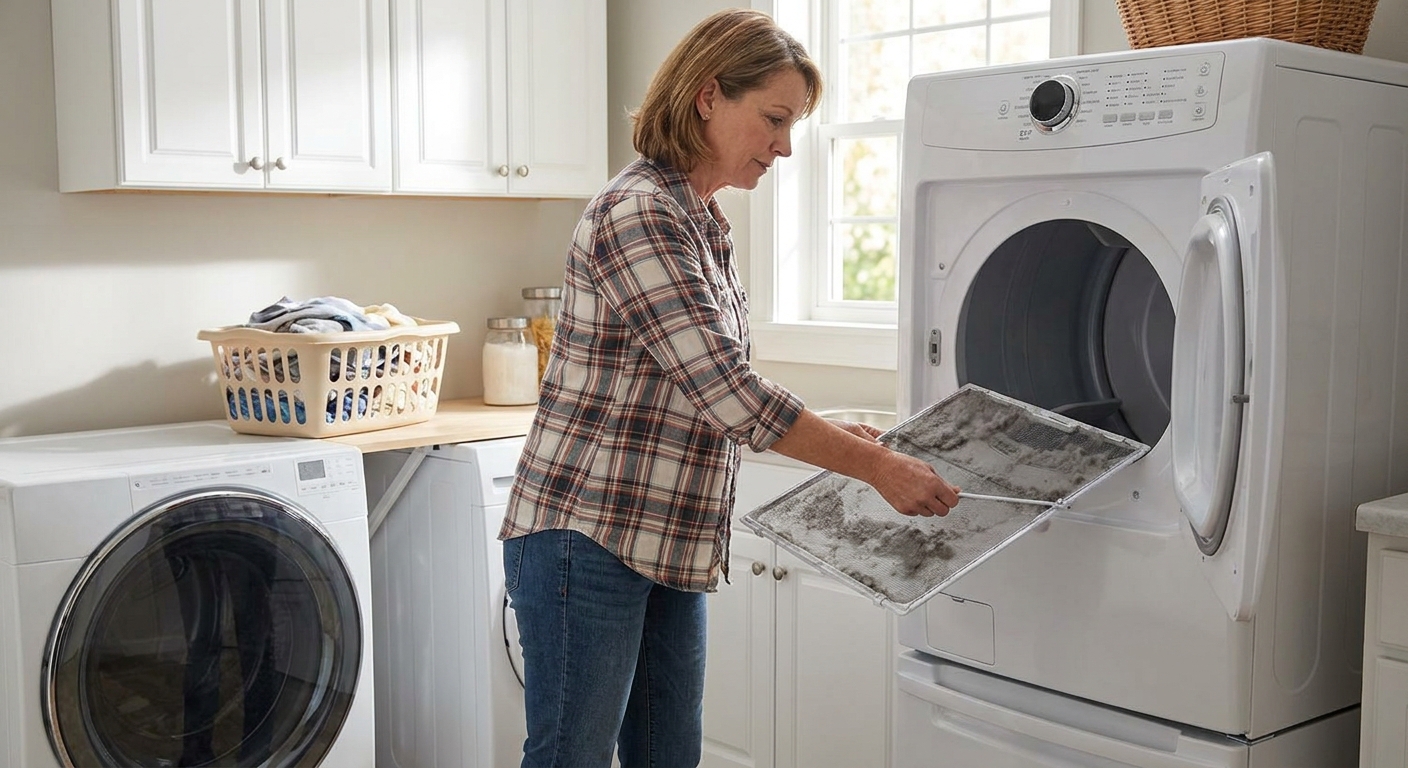
When “no lint” is a warning sign
Most of us are trained to think, “Less lint equals a healthier dryer.” But if your lint screen suddenly comes out almost clean after a normal load, that can mean one of a few things: either your clothes truly are not shedding much (more common with some synthetics and smaller loads), or lint is getting past the filter and heading somewhere it should not.
And when lint goes where it should not, it tends to collect in the places that create heat buildup and fire risk: inside the dryer cabinet, in the blower housing, or packed into the vent line.
Below, I’ll walk you through how airflow is supposed to move through a dryer, why lint can bypass the screen, and the vent blockage red flags that say, “Stop guessing and investigate.”
How dryer airflow should work
Different brands vary, but the basic airflow path is usually the same:
- Air enters the dryer (often from the room).
- It gets heated and pulled through the drum.
- As air leaves the drum, it passes by the lint screen area so fibers get trapped.
- A blower fan moves the air into the exhaust duct.
- Air exits your home through an outside vent hood.
If that airflow is restricted anywhere, your dryer can behave in weird ways. Sometimes it dries slowly. Sometimes it overheats. And sometimes you get that head-scratcher: hardly any lint on the screen. Symptoms vary by dryer design and where the filter sits, so treat the lint screen as a clue, not a final diagnosis.
Why the lint screen misses lint
1) The screen is damaged, warped, or does not fit snugly
The lint screen should sit flush in its frame with minimal gaps. If it is bent, cracked, torn, or the plastic frame is warped from heat, air can take the path of least resistance and pull lint around the edges instead of through the mesh.
- Look for gaps around the perimeter when the screen is seated.
- Hold it up to light and check for rips or a pulled seam.
- If it has been “cleaned” with a brush that snagged the mesh, it may be compromised.
2) The screen is seated wrong or it is the wrong part
This happens more than you would think after a move, a replacement part order, or even a deep clean. A screen that is slightly different can sit “close enough” to slide in, but not sit flush. Same problem: lint bypass.
If you have a used dryer, double-check the model number and make sure the lint screen is the correct part for that machine.
3) Lint is collecting in the chute or housing
In many dryers, the screen is right at the drum exit, so “before the screen” usually means in the lint chute or housing below and around the filter area. If airflow is weak or the passage is partially blocked, lint can settle there instead of landing on the screen where you can remove it safely.
This is one reason a clean screen can be misleading. The lint is still being created. You just are not seeing it.
4) Long vent runs or too many turns
Long duct runs and lots of elbows create friction and slow the exhaust stream. Slower air can make lint drop out in places you do not want, increasing buildup in the duct. Depending on the dryer design, you may see more lint on the screen, less lint, or just longer dry times.
Common culprits in real homes: a laundry room located in the middle of the house, a second-floor laundry, or a vent that jogs around framing and beams.
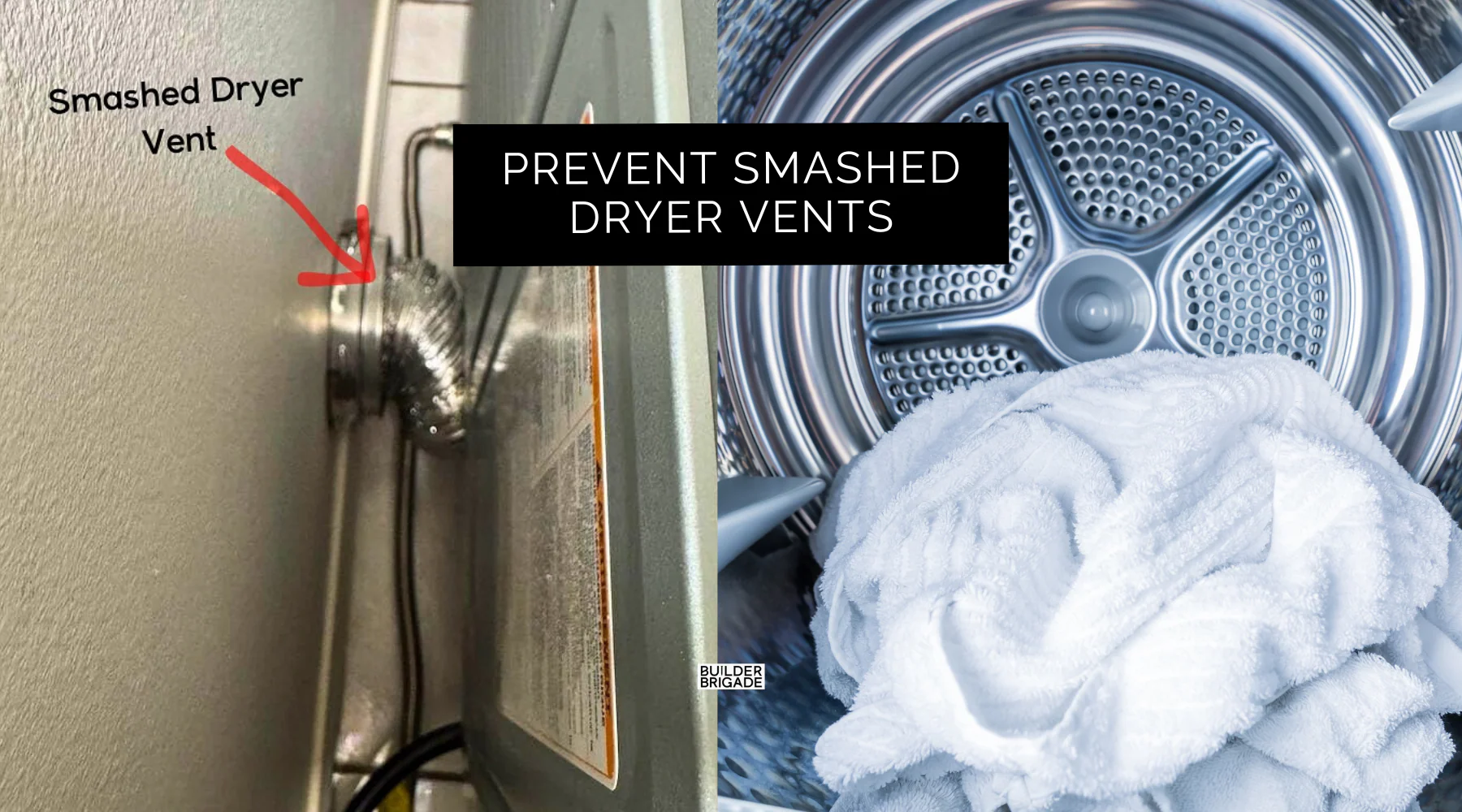
5) A crushed, kinked, or sagging flex hose behind the dryer
I’ve personally “fixed” more than one slow-drying issue by simply pulling the dryer out and re-routing the vent so it is not pinched. If the hose is flattened or sharply bent, the dryer can still run, but exhaust performance tanks.
6) Outside vent hood blockage, including bird nests
Your outside hood is the last stop. If it is stuck shut with lint, jammed by a broken flap, or packed with a nest, the dryer cannot breathe. In spring especially, birds love a warm, protected vent opening.
If your lint screen is clean and your dryer is acting “off,” checking the outside hood is one of the fastest reality checks you can do.
Vent blockage red flags
Any of these symptoms can point to restricted airflow. A few together should move this from “someday” to “today.”
- Dry times suddenly doubled, especially on towels or jeans.
- Clothes are hot at the end of the cycle but still damp.
- Burning smell or a hot, dusty odor in the laundry area.
- Dryer exterior feels unusually warm or the laundry room gets steamy.
- Lint collecting behind the dryer or around the vent connection.
- Outside vent flap barely opens (or does not open at all) when the dryer runs.
- Little to no airflow outdoors even though the dryer is on high heat.
- Moisture or lint staining on the wall around the exterior vent hood.
- Automatic shutoff mid-cycle, or error codes related to airflow (common on newer models).
Why urgency matters: restricted vents trap heat. Trapped heat plus lint is a bad combination. Even if you never see flames, overheating can damage the heating element, sensors, and drum seals, and it can shorten the life of the appliance fast.
Quick checks before you disassemble
Do the lint screen “light test”
Hold the screen under a bright light or sunlight. If you see a cloudy film, it may be coated with residue from dryer sheets or fabric softener. That film can reduce airflow and change how lint behaves.
A coated screen can still look clean but act clogged. If water pools on the mesh instead of flowing through, it is time to wash the screen with warm water and a little dish soap, then let it dry completely.
Check airflow at the outside hood
With the dryer running on high heat, go outside and feel for a strong, steady stream of warm air. Weak airflow or a flap that barely moves is a huge clue.
Look behind the dryer for a pinch point
Unplug the dryer first. Then pull it out carefully and look for:
- a flex hose crushed flat
- a hard kink right at the wall connection
- a sagging section that could collect lint
If the vent line is damaged, replace it. For best safety and performance, use rigid metal duct where you can, or semi-rigid metal where you need some flexibility. Avoid plastic or vinyl venting, and only use foil flex if your local code allows it and you have no better option.
When a clean screen suggests bypass
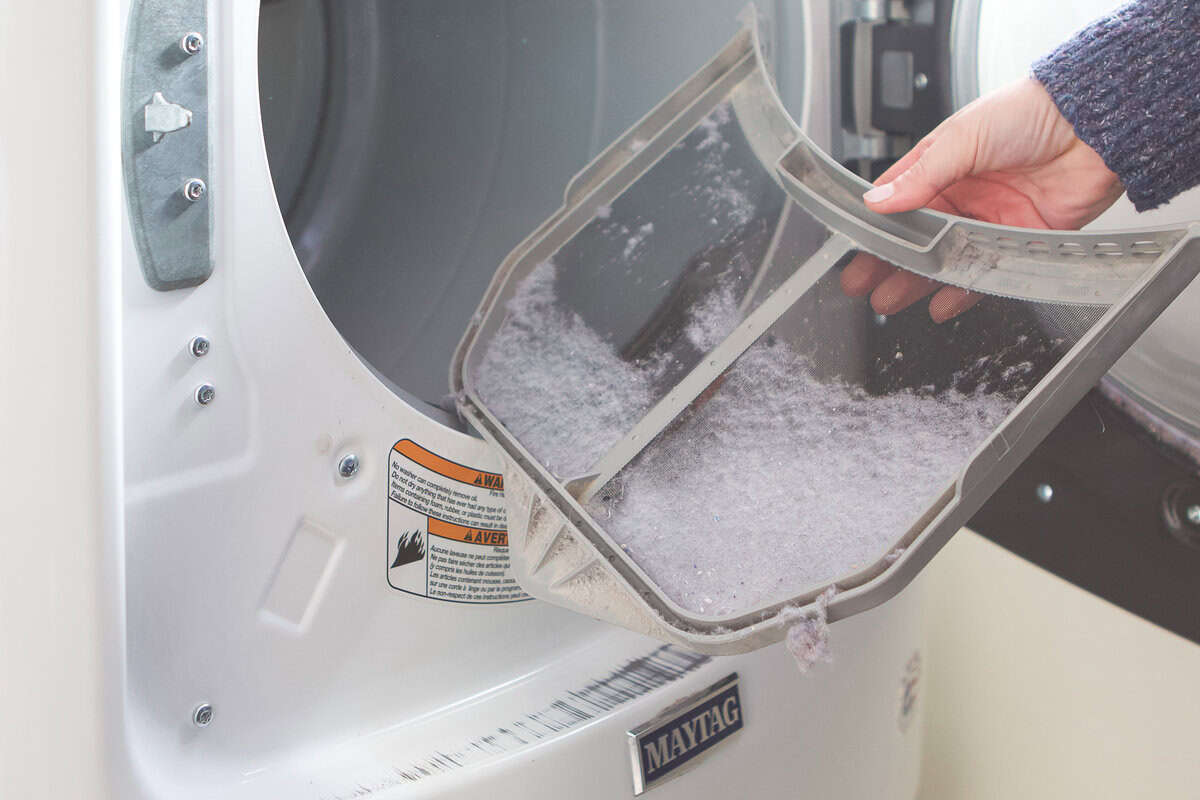
If outside airflow is weak and the lint screen stays strangely clean, there is a decent chance lint is bypassing the screen and collecting inside the machine or in the vent system. That is not something you want to ignore, because internal lint buildup can sit right next to heat sources.
Common reasons include a poor lint screen fit, a missing gasket (on models that use one), or buildup in the lint chute that changes the airflow path.
If you suspect internal buildup and you’re not comfortable opening the cabinet, this is a good moment to call an appliance tech. Paying for one visit can be cheaper than replacing a cooked heating element or dealing with smoke damage.
Vent cleaning basics
Even with perfect habits at the lint screen, the vent line still collects lint over time. If you have long runs, lots of turns, or any of the red flags above, consider a professional vent cleaning. As routine maintenance, many homeowners aim for at least an annual check and cleaning, and more often for heavy use or long vent runs.
Same-day safety situations
- You smell burning during or right after a cycle.
- The dryer shuts off from overheating or the control panel throws airflow-related errors.
- You see lint blowing into the laundry room from behind the dryer.
- No airflow outside even though the dryer is running.
- The vent hood is blocked by a nest or the flap is stuck closed.
If any of these are happening, stop running the dryer until the airflow issue is resolved. This is one of those home maintenance problems where “just one more load” is not worth the gamble.
Extra note for gas dryers: if you smell gas or see smoke, shut the dryer off, ventilate the area, and contact your gas utility or a qualified technician right away.
The takeaway
A lint screen that catches a normal amount of lint is doing its job. A lint screen that catches almost nothing can mean low-shedding laundry, a coated screen, or lint traveling deeper into the system, exactly where you do not want it.
Start with the simple checks: screen condition and fit, airflow at the exterior hood, and the vent hose behind the dryer. If the symptoms point to restriction, treat it as a fire-safety issue and address the vent and airflow problem before you keep drying.

About Marcus Vance
Content Creator @ Grit & Home
Marcus Vance is a lifelong DIY enthusiast and self-taught home renovator who has spent the last decade transforming a dilapidated 1970s ranch into his family's dream home. He specializes in budget-friendly carpentry, room-by-room renovations, and demystifying power tools for beginners. Through his writing, Marcus shares practical tutorials and hard-learned lessons to help homeowners tackle their own projects with confidence.