
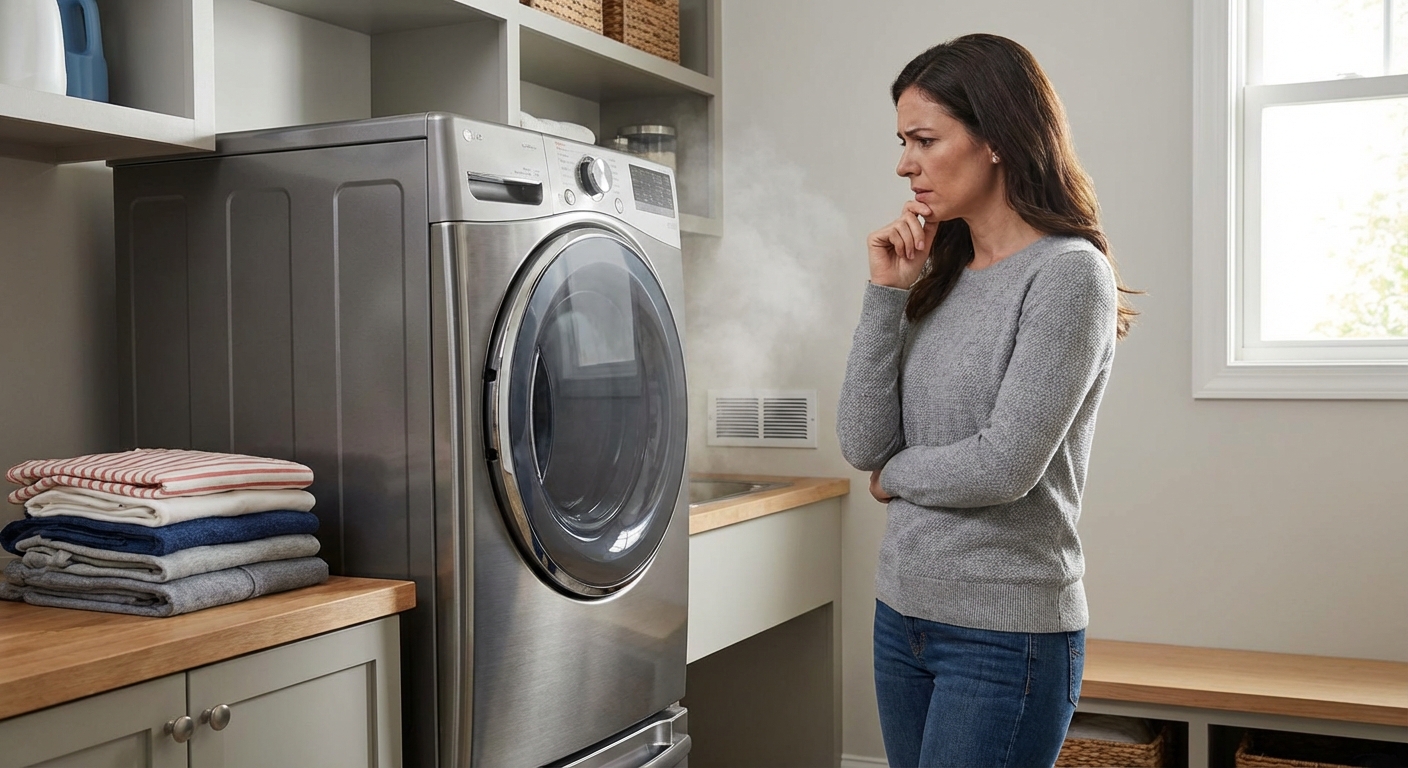
A dryer that smells like it’s burning gets your attention fast, and it should. Sometimes it’s harmless and short-lived, like dust burning off a heating element after the dryer has sat unused. Other times it’s a warning sign for a well-known and preventable dryer fire risk: lint plus heat.
I’m going to walk you through the most likely causes, what you can safely check yourself, and the clear line between “monitor it” and “shut it down right now.”
Stop or keep going?
Stop using the dryer immediately if:
- The smell is sharp and electrical, like hot plastic, melting wires, or “burning electronics.”
- You see smoke, haze, or the smell is getting stronger by the minute.
- The dryer is unusually hot to the touch, especially around the back, sides, or control panel.
- The drum stops and starts, you hear buzzing, or the motor sounds strained.
- The smell continues after you turn the dryer off.
What to do: Turn the dryer off, unplug it (or switch off the breaker for a hardwired unit), and keep the door closed. If you see active smoke or flame, leave the home and call emergency services.
It may be safe to keep using briefly if:
- The smell is faint and goes away within the first 5 to 10 minutes of the first cycle after weeks or months of non-use.
- You recently cleaned the vent and a small amount of loosened lint odor clears out quickly.
Even then, treat it like a yellow flag. If the smell returns on the next load, it’s time to troubleshoot.
What the smell can mean
Most dryer burning smells fall into a few buckets. Identifying the type of smell can help you narrow it down fast, but keep in mind odor descriptions are subjective. Use them as clues, not a diagnosis.
- Hot, dusty smell: can be dust on the heater (often after sitting unused)
- Toast-like or musty hot smell: can indicate lint buildup in the drum, lint housing, vent system, or in-wall duct
- Rubbery smell: can point to a slipping belt, seized drum roller, idler pulley, or something rubbing the drum
- Electrical or hot plastic smell: can involve wiring, control board, terminal block, motor windings, or an overheated outlet
- Burning fabric smell: can happen when an item gets stuck in the drum seal, clothes overheat due to poor venting, or high heat is used on delicates
Quick terms for the vent
To keep things clear, here’s what I mean when I say “vent”:
- Transition duct: the short duct from the back of the dryer to the wall connection
- In-wall duct: the ducting inside the wall, crawlspace, or ceiling that carries air outside
- Exterior vent hood: the flap outside your home
Cause 1: Clogged vent
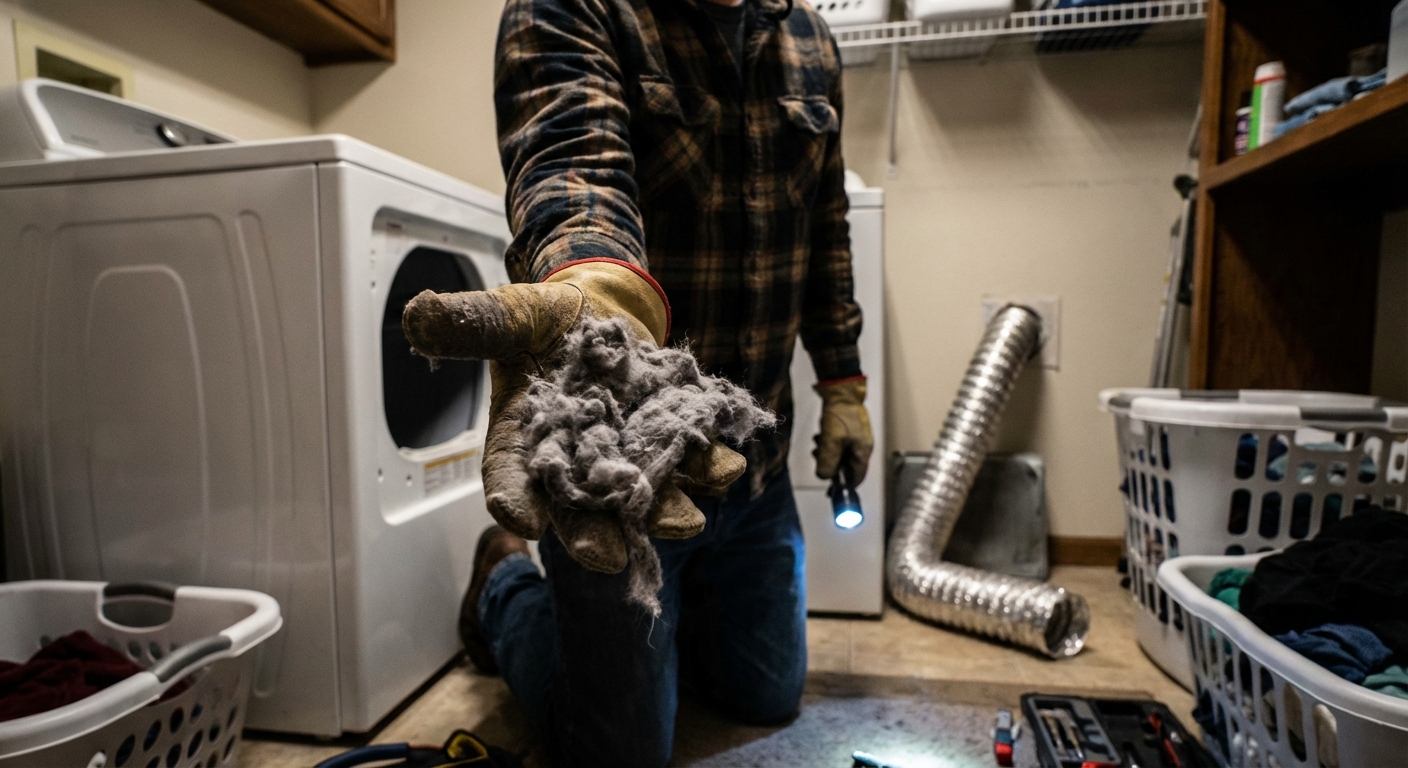
Lint is highly flammable. If your vent is restricted, the dryer runs hotter and longer, and lint near the heater or exhaust path can start to scorch. Even without flames, poor airflow can create that hot, stale “something’s burning” smell.
Clues it’s the vent
- Clothes take longer to dry than usual.
- The laundry room feels humid or warmer during drying.
- The exterior vent hood has weak airflow or doesn’t open fully.
- The smell is strongest near the back of the dryer or near the wall connection.
What to do
- Unplug the dryer.
- Pull it out carefully and disconnect the transition duct.
- Clean lint from the transition duct, the dryer exhaust port, and the wall connection. A vent brush kit and shop vac work great.
- Go outside and clear the vent hood and flap.
- Replace crushed, kinked, or flimsy foil accordion ducting. If you can, upgrade to rigid or semi-rigid metal.
Tip from my own “learned it the hard way” file: If you clean the vent but the transition duct gets smashed back into a tight S-shape when you push the dryer in, you’re right back where you started. Leave enough room or use a periscope-style vent if space is tight.
Also check: A disconnected duct, venting into an attic or crawlspace, or a vent that terminates indoors is not just smelly. It is a real fire and moisture hazard.
Cause 2: Lint inside the cabinet
Even if you clean the lint screen every load, fine lint can escape and collect inside the dryer. Over time, it builds up around the blower housing, heater box, and internal ducts. This is especially common if:
- the lint screen is torn or doesn’t fit snugly
- you use dryer sheets heavily (they can leave residue that traps lint)
- the dryer is older and has never been opened for cleaning
What to do
- Start with vent cleaning (above). It solves a big chunk of these cases.
- If the smell persists, schedule a professional internal cleaning and inspection, or DIY only if you are comfortable removing panels and following the service manual.
Safety note: Gas dryers add an extra layer of “don’t wing it.” If you smell gas, stop. Do not flip switches or unplug anything. Ventilate the area, leave the home, and call your gas utility or a qualified technician.
Cause 3: Something stuck in the drum
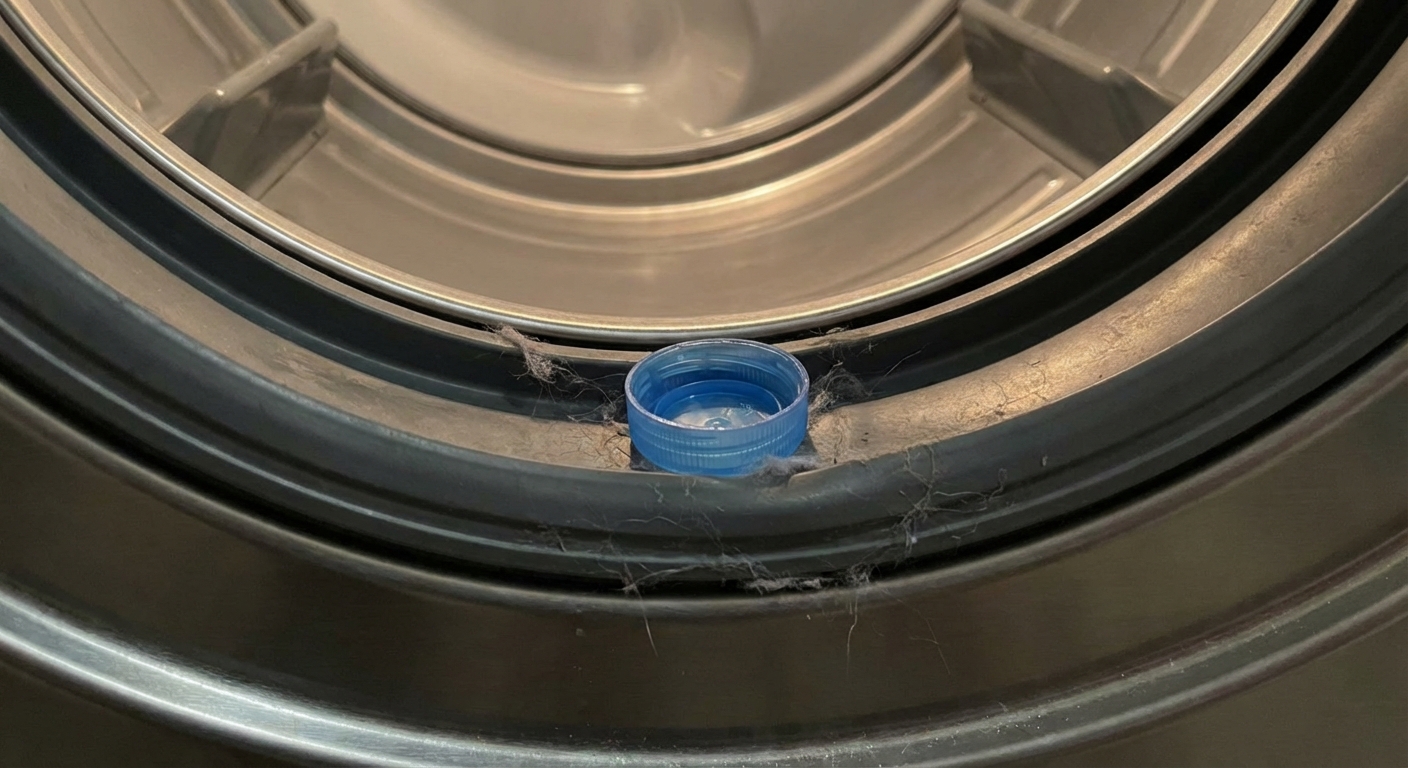
This one is sneaky and common. A crayon, pen, coin, hair clip, underwire, or small plastic piece can get trapped where the drum meets the front or rear seal. As the drum turns, it rubs, heats up, and starts to smell scorched.
Clues it’s an object
- The smell is strongest right at the door opening.
- You hear a light scraping, ticking, or thumping.
- The smell started right after drying a load with kids’ clothes, bras, or pocket-heavy pants.
What to do
- Turn off the dryer and let it cool.
- Check the drum thoroughly: seams, perforations, and the lip around the door.
- Check the lint screen slot and the area just inside it with a flashlight.
- If you suspect something is trapped under the drum, stop and call a tech (or reference your exact model’s service manual before opening anything).
Cause 4: Belt or rollers
A dryer belt that’s worn, misaligned, or slipping can create a classic hot rubber smell. Sometimes the belt is fine and the real culprit is a seized roller or idler pulley forcing the belt to drag.
Clues it’s the belt or supports
- Rubbery or “burning tires” smell.
- Squealing, chirping, or thumping as the drum turns.
- Drum turns, but it feels harder than usual to spin by hand (with the dryer unplugged).
What to do
- Stop using the dryer if the smell is strong or you hear new noises.
- Plan for a belt replacement and inspect rollers and idler pulley at the same time. Many DIYers replace these as a kit because labor is the same and the parts are relatively inexpensive.
- If you’re not comfortable opening the cabinet, this is a good “call a pro” job. Continued use can overheat the motor.
Personal note: the first time I ignored a new squeak, it did not magically get better. It just got louder and more expensive.
Cause 5: Motor or blower
A dryer motor can overheat if it’s failing internally, if airflow is restricted, or if the blower wheel is jammed with lint or a small item. Overheated motors can produce a sharp hot smell and sometimes a humming or buzzing sound.
Clues it’s the motor or blower
- The dryer stops mid-cycle, then runs again after cooling down.
- You hear humming but the drum doesn’t turn.
- There’s a burning smell plus weak airflow.
What to do
- Stop using the dryer.
- Clean the vent system first, since restricted airflow can overheat a healthy motor.
- If the issue continues, schedule service. Motor and blower repairs can involve disassembly and electrical testing.
Cause 6: Overheating controls
Dryers use thermostats, thermistors, and thermal fuses to control temperature and prevent runaway heating. If one of these components is malfunctioning, the dryer can run too hot and create a burning smell, scorched lint odor, or even damage clothes.
Clues it’s overheating
- Clothes feel excessively hot at the end of the cycle.
- Items come out with a scorched smell or slightly “toasted” spots.
- The dryer repeatedly blows the thermal fuse (won’t run until replaced).
What to do
- Stop using the dryer until you address it.
- Check airflow first. Poor venting is a major root cause of overheating and blown fuses.
- If airflow is good, a technician can test temperature sensors and the cycling thermostat with a multimeter and verify the heating circuit is shutting off properly.
Cause 7: Electrical issues
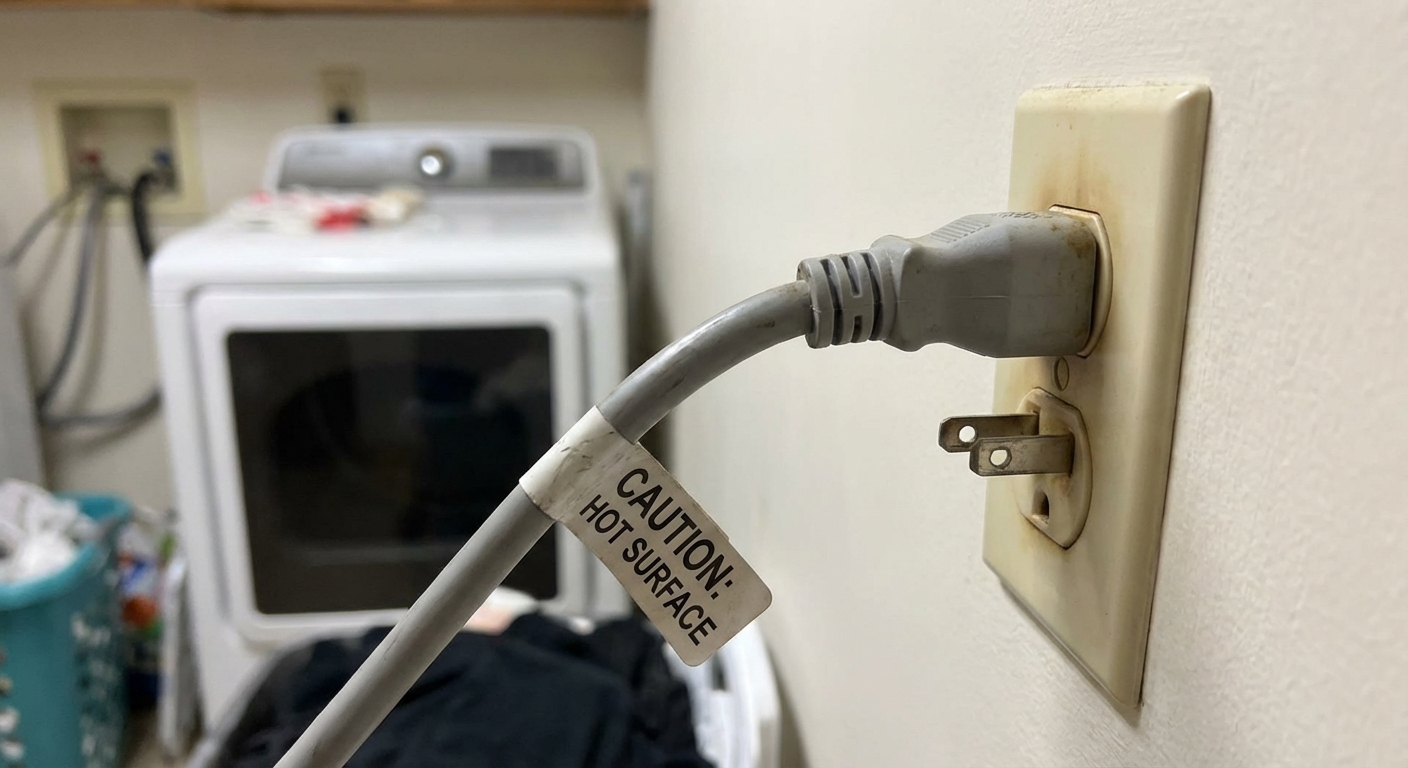
If the smell reminds you of hot plastic, melting insulation, or an overheated extension cord, treat it as an electrical hazard. Common trouble spots include a loose power cord connection at the dryer terminal block, a failing outlet, or damaged wiring.
Clues it’s electrical
- Smell is strongest near the outlet, cord, or dryer control panel.
- Outlet or plug feels hot.
- Lights dim when the dryer starts, or the dryer runs inconsistently.
What to do
- Stop using the dryer immediately.
- Unplug it if safe to do so. If the plug or outlet is hot, switch off the breaker first.
- Call an appliance technician or electrician. Loose connections can arc and damage the terminal block or wiring.
Two easy contributors
Overloading
An overloaded dryer can trap heat and reduce tumbling, which makes drying slower and hotter. If the burning smell shows up only on huge loads, try smaller loads and clean the vent system before you assume something major failed.
Poor venting setup
Crushed transition ducts, long vent runs full of bends, or a duct that falls off behind the dryer can all cause overheating and burning smells. If you move your dryer often, put “check the duct” on your mental checklist. It is an easy thing to miss.
What you can check in 10 minutes
If you do nothing else, do this quick set of checks. It catches the most common, fixable causes without getting deep into disassembly.
Step 1: Power off checks
- Kill power: Unplug the dryer or turn off the breaker before touching anything behind it.
- Clean the lint screen: Wash it with warm water and a little dish soap if it has dryer sheet residue.
- Inspect the transition duct: Look for kinks, crush points, disconnections, or lint packed into the first few feet.
- Quick check for offenders: Look in the drum and door lip for anything plastic, stuck, or rubbing.
- Odor source check: Note where the odor seems strongest (cord and outlet area, behind the dryer at the exhaust, or at the drum door) without leaning in close. If it seems electrical, stop and call a pro.
Step 2: Brief airflow check
- Restore power and run the dryer for 30 to 60 seconds while you stay in the room.
- Go outside and confirm strong airflow at the exterior vent hood, then shut the dryer back down.
- If airflow is weak, focus on cleaning the transition duct, in-wall duct, and vent hood before running more loads.
Maintenance schedule
- Every load: Clean the lint screen.
- Monthly: Check the exterior vent hood flap opens fully and airflow feels strong.
- Every 6 to 12 months: Clean the full vent path (transition duct, wall duct, exterior hood). Do it more often if you have pets, a large household, or a long vent run.
- Any time you move the dryer: Recheck the transition duct for kinks or a loose connection.
Common questions
Why does my dryer smell like burning only on high heat?
High heat can push a marginal issue over the edge: restricted venting, lint near the heater, or a belt and roller starting to bind. If it only happens on high, stop using high heat until you clean the vent and confirm airflow is strong.
Is a “burning dust” smell normal with a new dryer?
Sometimes, yes. A new unit can smell a bit during the first few cycles as manufacturing residues burn off. The smell should be mild and temporary. If it’s strong, smoky, or persists beyond a few loads, troubleshoot venting and stop using it until you’re confident it’s safe.
Can lint really start a fire?
Yes. Lint is highly flammable, and dryers create heat plus airflow. That’s why vent cleaning and proper metal ducting matter so much.
When to call a pro
If you’ve cleaned the lint screen and confirmed good vent airflow and the burning smell still returns, it’s time to bring in a technician. And if the smell is electrical, the dryer shuts off on its own, or you see smoke, do not “run one more load.”
A dryer should smell like warm laundry, not like a campfire or a soldering iron. When in doubt, shut it down and investigate. Your future self will be glad you did.
Safety references (US): For more on dryer fire prevention and venting best practices, see guidance from the U.S. Fire Administration and NFPA.

About Marcus Vance
Content Creator @ Grit & Home
Marcus Vance is a lifelong DIY enthusiast and self-taught home renovator who has spent the last decade transforming a dilapidated 1970s ranch into his family's dream home. He specializes in budget-friendly carpentry, room-by-room renovations, and demystifying power tools for beginners. Through his writing, Marcus shares practical tutorials and hard-learned lessons to help homeowners tackle their own projects with confidence.