
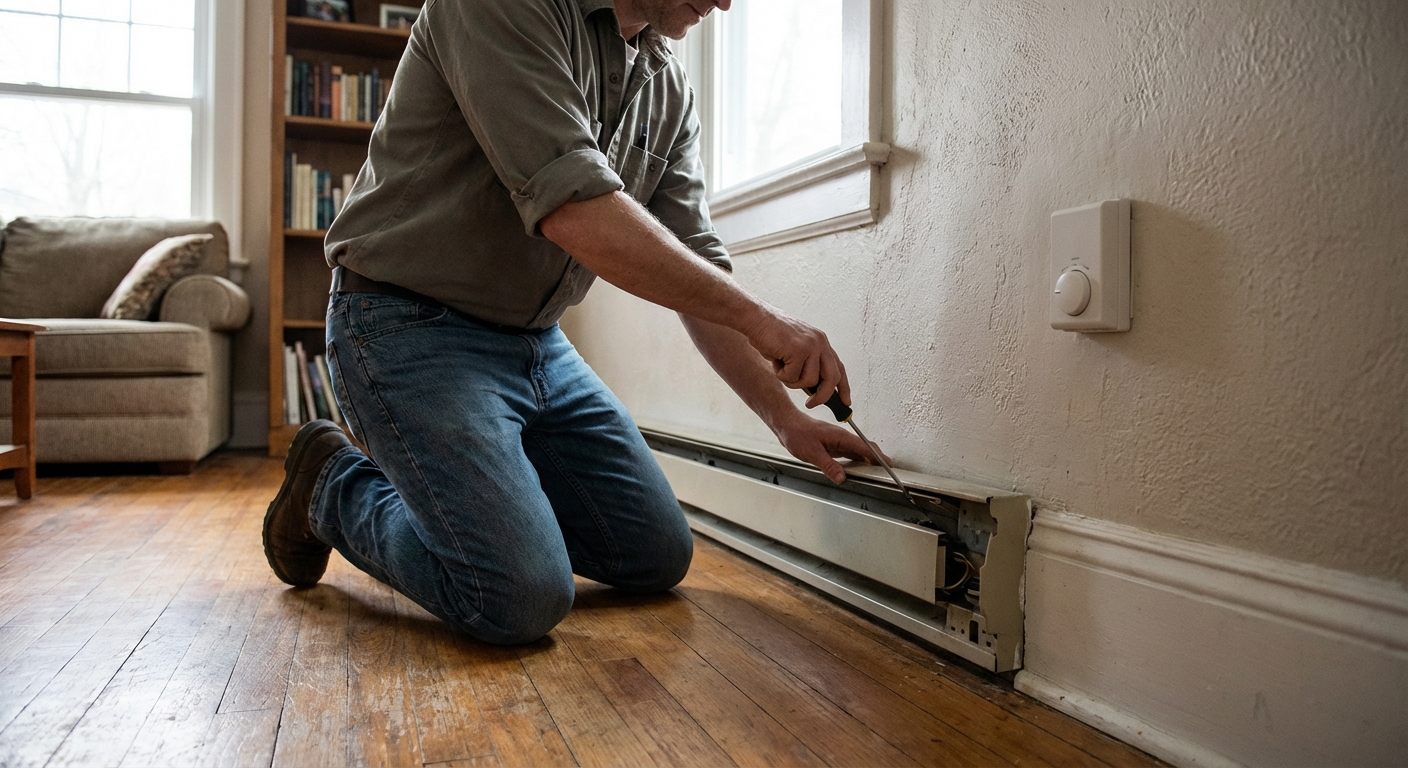
When an electric baseboard heater stops working, it usually feels like it happens overnight. One room goes cold, the rest of the house is fine, and suddenly you are staring at a long metal heater wondering what magic makes it tick.
Good news: most “dead baseboard” problems come from a small handful of causes. We can check them in a safe, organized way without poking around live wires.
Safety note: Many baseboard heaters run on 240 volts. That is not “treat it casually” power. The steps below focus on non-contact checks and visual inspection. If you are unsure at any point, stop and call a licensed electrician.
How baseboard heat works
Electric baseboard heaters are basically rugged toasters mounted along your wall. Power flows through a heating element, the element gets hot, and air naturally rises through the fins and warms the room.
- Power source: typically a 240V double-pole breaker in the main panel (sometimes 120V in small installs).
- Control: a wall thermostat (line-voltage) or a built-in knob on the unit.
- Safety: a high-limit (thermal) switch can shut the heater down if it overheats.
If any of those pieces are not doing their job, you get no heat, weak heat, or heat that keeps cutting out.
Start with quick checks
1) Make sure the thermostat is calling for heat
- Turn the thermostat up several degrees above room temperature.
- If you have an electronic or programmable line-voltage thermostat, confirm it is not set to an “away” schedule.
- If the thermostat has a switch (heat/off), make sure it is on heat.
If you have multiple baseboards controlled by one thermostat, a thermostat issue can take out the whole zone. If only one heater is dead and others on that thermostat work, the issue is likely at the heater itself or its wiring.
2) Reset the breaker
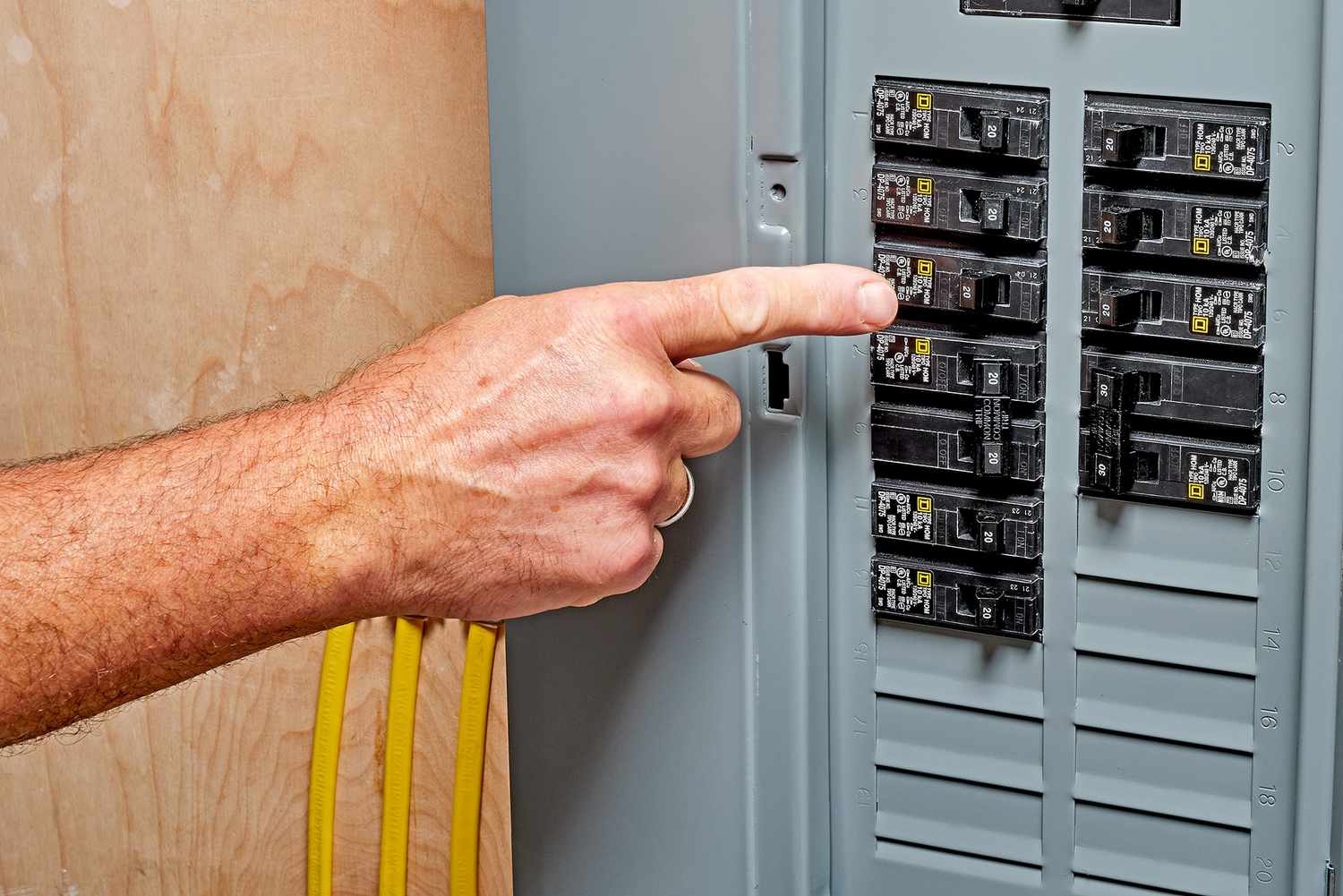
Baseboard heat is commonly on a double-pole breaker (two handles tied together). It can trip in a way that does not look obvious.
- Find the breaker labeled “baseboard,” “heat,” or “zone heat.”
- Flip it fully off, then back fully on.
- If it immediately trips again, leave it off and skip to When to call an electrician.
3) Check AFCI or GFCI protection
Some heating circuits are on an AFCI and/or GFCI breaker (more common in newer panels, renovations, or when local rules call for it). If your heater circuit has this kind of protection and it is tripped, resetting it may restore heat.
It is less common (and not typical) for a fixed baseboard heater circuit to be fed from a regular GFCI receptacle, but if you see one clearly labeled for heat in the area, you can check whether it is tripped.
240V basics
Most electric baseboard heaters use 240V, which is usually delivered by two hot wires (often black and red) and a ground. That is why you see a two-handle breaker.
- Why this matters: if one leg of the 240V supply is lost (bad breaker, loose connection, damaged wire), the heater may produce no heat or sometimes reduced heat in certain setups where controls or other loads end up on 120V.
- What you should not do: do not remove wire nuts, open splice boxes, or pull a thermostat from the wall unless you know how to verify power is off and you are comfortable working inside electrical boxes.
If you want a check that stays in the “safe lane,” a non-contact voltage tester can sometimes suggest that wiring may be energized near a plastic thermostat box. It is not a definitive diagnostic tool, and it cannot confirm 240V, confirm both legs are present, or replace a real meter test.
Important: NCVTs can be especially unreliable through a grounded metal baseboard heater casing. You can get a false negative even when conductors inside are live. That is one reason this guide avoids telling you to open the heater if you are unsure.
Clean it first
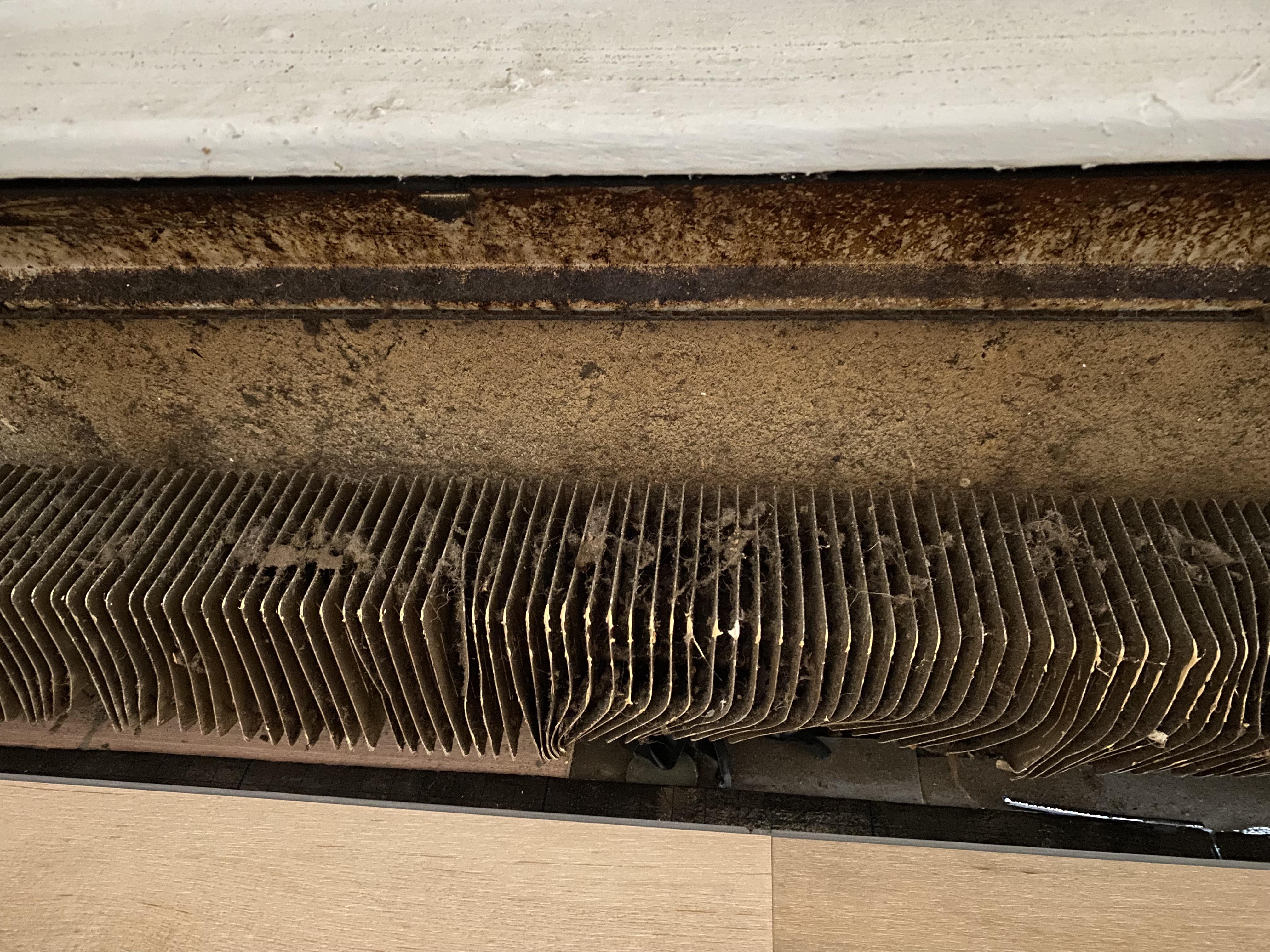
I have seen baseboards look “dead” when they were really just smothered in dust and pet hair. Dust acts like a blanket on the fins, and it can also cause overheating that trips the high-limit safety.
Safe cleaning steps
- Turn the thermostat down and switch the breaker off.
- Let the heater cool fully.
- Vacuum the top slot and the lower intake area using a soft brush attachment.
- If the front cover lifts off easily (many do), remove it per the manufacturer’s method and vacuum inside gently. Do not bend the fins.
- Restore power and test heat again.
Thrifty tip: A cheap paintbrush works great for loosening dust in tight fin areas, then you vacuum it out.
Is it getting power?
The main question is simple: Is the problem upstream (thermostat, breaker, wiring) or inside the heater (limit switch, element)?
Clues it is upstream
- Multiple heaters on the same thermostat are not working.
- The breaker trips repeatedly.
- The thermostat makes no audible click (some do, some do not) and nothing changes at the heater.
Clues it is the heater
- Only one heater in a zone is cold while others work normally.
- You smell a brief “hot dust” smell but the room never warms up.
- The unit heats for a short time, then shuts off and stays off (possible limit trip).
One more real-world gotcha: many baseboards are wired so power feeds from one unit to the next. A loose or failed connection in one heater or junction box can kill heaters downstream. That is not a DIY discovery mission unless you are qualified, but it is very useful to tell an electrician if “the first one works and the rest are dead.”
Limit switch or bad element?
Tripped high-limit
Many baseboards have a built-in thermal limit switch. If airflow is blocked or the heater is packed with dust, it can overheat and shut down.
- Common causes: furniture pushed against the heater, heavy curtains draped over it, dust buildup, or a damaged cover that restricts airflow.
- What happens next: many limit switches auto-reset after the heater cools. Some models, often older or specific designs, have a manual reset button that must be pressed. If you cannot access a reset without opening the unit, that is a job for a pro.
- What you can do: clear obstructions, clean thoroughly, let it cool, then test again.
- What you should not do: do not bypass a limit switch. It is there to keep a hot metal box from becoming a fire starter.
Failed heating element
If the heater has power and airflow is fine but it never warms up, the heating element can fail. This is more likely in older units or units that have been overheated repeatedly.
- Clues: the entire heater stays stone cold, or it never produces meaningful warmth even though the rest of the zone behaves normally.
- Reality check: element replacement is often doable, but it involves opening the unit and working with line-voltage wiring. For many homeowners, this is a “call a pro” moment.
Thermostat issues
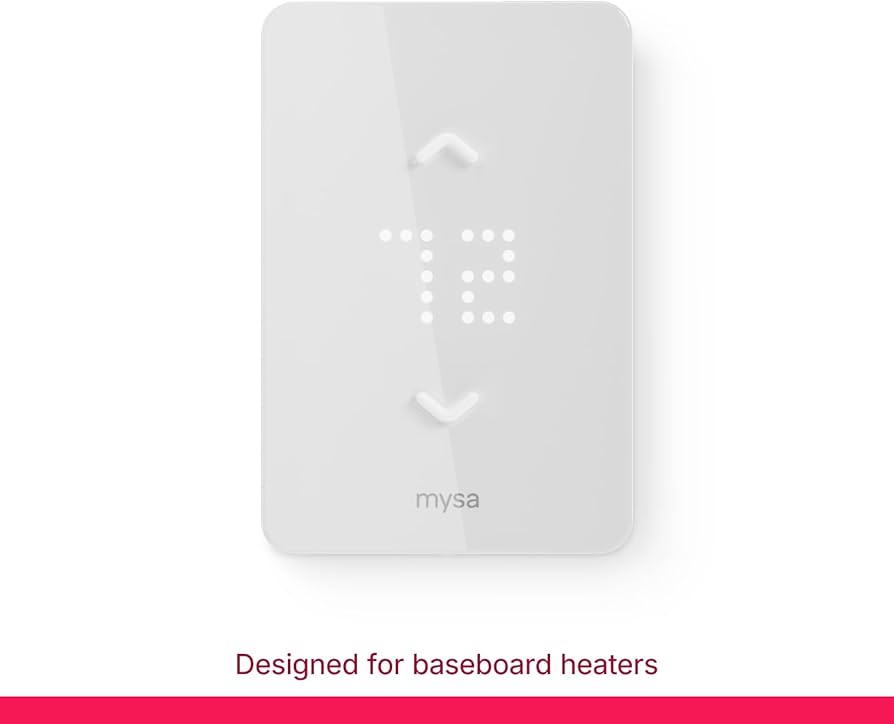
Baseboard thermostats are usually line-voltage thermostats, meaning they switch the heater’s high voltage directly. They are not the same as the low-voltage thermostats used with furnaces and central air.
- Wrong thermostat type: if someone installed a low-voltage thermostat on a line-voltage circuit, the heater will not work correctly and it can be unsafe.
- Wrong rating: the thermostat should match the system voltage (120V vs 240V) and be rated for the circuit amperage. A mismatch can cause poor performance or failure.
- Loose connections: thermostats can develop loose splices over time. That creates heat, arcing risk, and intermittent operation.
- Worn contacts: older mechanical thermostats can stop closing the circuit reliably.
If you suspect the thermostat, the safest homeowner step is to confirm the breaker is on, confirm the thermostat is turned up, and note whether other heaters on the same control are affected. Replacing or rewiring a line-voltage thermostat is a common electrician task and typically quick.
Clearances and airflow
Baseboard heaters need breathing room. If air cannot enter at the bottom and exit at the top, the heater runs hotter than intended, which can trip the limit.
- Keep at least 12 inches of clearance in front of electric baseboards, or follow the manufacturer label if it calls for more.
- Keep rugs, pet beds, and storage bins from blocking the lower intake.
- Avoid long curtains draping directly over the heater.
- Make sure the front cover is not bent inward against the fins.
Weak heat problems
If the heater is technically working but the room still feels chilly, the issue is often not a “broken heater” at all.
- Heater too small: baseboards are sized by wattage. A small unit in a drafty room will run constantly and still feel behind.
- Drafts and insulation: leaky windows, a cold basement below, or poor insulation can outrun the heater.
- Thermostat location: a thermostat in a sunny spot, near a lamp, or in a dead-air corner can misread the room.
Overheating or won't turn off
If a baseboard seems too hot, smells hot, or will not shut off when the thermostat is turned down, treat it as a safety issue.
- Turn the thermostat down.
- If it keeps heating, shut the breaker off.
- Call an electrician. A stuck thermostat or wiring fault is not something to ignore.
When to call an electrician
I love DIY, but I also love not getting lit up by 240V. Call a licensed electrician if any of the following are true:
- The breaker trips repeatedly after a reset.
- You smell burning plastic, see scorch marks, or hear buzzing or crackling at the heater or thermostat.
- The thermostat box feels warm to the touch or the wall shows discoloration near it.
- You need to open the heater wiring compartment or thermostat to test voltage with a meter.
- You are unsure whether your system is 120V or 240V, or you suspect incorrect wiring.
What to tell the electrician: which rooms are affected, whether other heaters on the same thermostat work, whether the breaker trips, and what you already tried (thermostat up, breaker reset, cleaning, obstructions removed). Also mention if heaters “down the line” are out, which can point to a failed connection in the run.
Quick checklist
- Thermostat turned up and set to heat.
- Breaker fully off then fully on (double-pole).
- Check for a tripped AFCI or GFCI breaker protecting that circuit.
- Turn power off and vacuum dust from fins and vents.
- Clear airflow and keep 12 inches in front of the heater.
- Note whether one heater is out or the whole zone is out.
- Stop and call an electrician if the breaker trips, you notice burning signs, or testing requires opening electrical compartments.
My most common “fix”
In our old ranch, the number one reason a baseboard “failed” was not a bad element. It was dust plus blocked airflow. A vacuum, a paintbrush, and moving a sofa far enough away brought heaters back to life more than once.
If you work through the checks above in order, you will either solve it quickly or you will have the exact information an electrician needs to repair it safely.

About Marcus Vance
Content Creator @ Grit & Home
Marcus Vance is a lifelong DIY enthusiast and self-taught home renovator who has spent the last decade transforming a dilapidated 1970s ranch into his family's dream home. He specializes in budget-friendly carpentry, room-by-room renovations, and demystifying power tools for beginners. Through his writing, Marcus shares practical tutorials and hard-learned lessons to help homeowners tackle their own projects with confidence.