
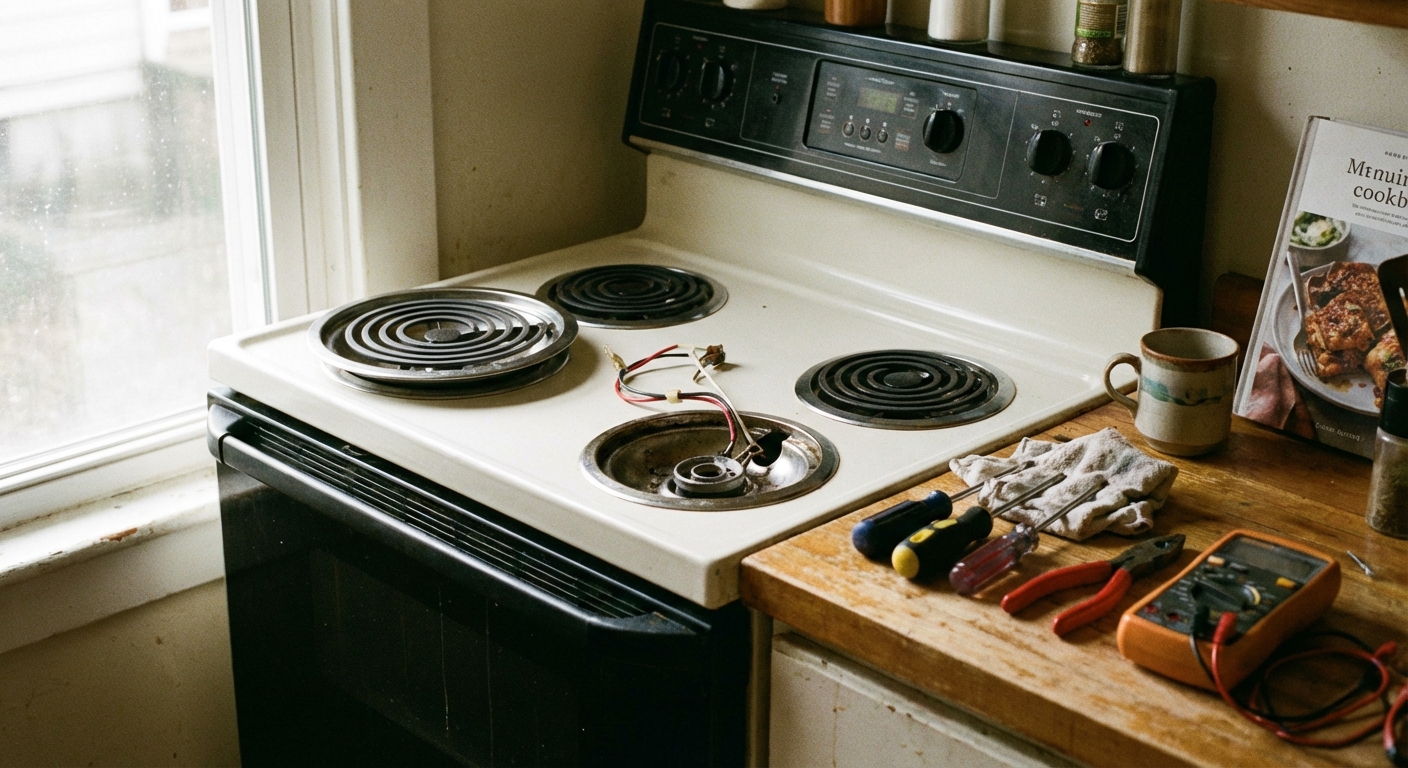
If a gas burner won't light, you chase spark and gas. If an electric stove burner won't heat, you chase power and continuity. The good news is most fixes are straightforward once you know what part does what.
In this guide I'll cover the most common culprits for both electric coil burners and glass-top radiant burners:
- Burned-out element
- Faulty burner socket or receptacle (coil ranges)
- Bad infinite switch (the burner control knob) on many models
- Loose or overheated wiring
- Failed (open) radiant surface element (glass-top ranges)
- Limiter or sensor issues (some glass-top ranges)
Safety note: Electric ranges are typically supplied by 240V, but many also have 120V components (lights, controls, and some electronics). Either way, it can seriously injure you. If you aren't comfortable testing for live power, stick to the unplugged checks and call an appliance tech.
Before you start: quick, safe checks
Tools you may want
- Screwdriver set (Phillips and flat)
- Needle-nose pliers
- Multimeter (for resistance and, if you're experienced, voltage)
- Work gloves
- Phone camera (take photos before moving wires)
- Painter's tape and a marker (label wires)
Power down the right way
- Unplug the range if you can reach the plug.
- If you can't unplug it easily, turn OFF the double-pole breaker labeled “Range” or “Oven” in your electrical panel.
- Verify the cooktop is cool before touching anything.
Rule out the easy stuff
- Swap test (coil-top): Swap a same-size, known working coil element from another position into the dead position. If the problem follows the element, it's the element. If it stays at that position, it's the receptacle, switch, limiter, or wiring.
- Check control lock on some glass-top models. If the whole cooktop is dead, look for a lock icon or “Control Lock” button.
- Look for obvious damage: blistered coil, pitted prongs, melted plastic around the receptacle, or burned connectors under the glass-top.
How the burner circuit works
Whether it's a coil-top or glass-top, the idea is the same:
- Power comes in and is routed through a control. On many ranges that's an infinite switch (the knob control). On some glass-top models it's an electronic control board and relays instead of a classic infinite switch for each burner.
- The control sends power to a heating element. For coil ranges that's the coil element. For glass-top ranges it's a radiant surface element mounted under the glass.
- Some models also use temperature limiters or sensors to prevent overheating (especially on glass-top ranges).
When a burner won't heat, you're usually dealing with an open element, a bad connection, a limiter that's opened, or a control that's not passing power.
Fix 1: Burned-out coil element (coil-top ranges)
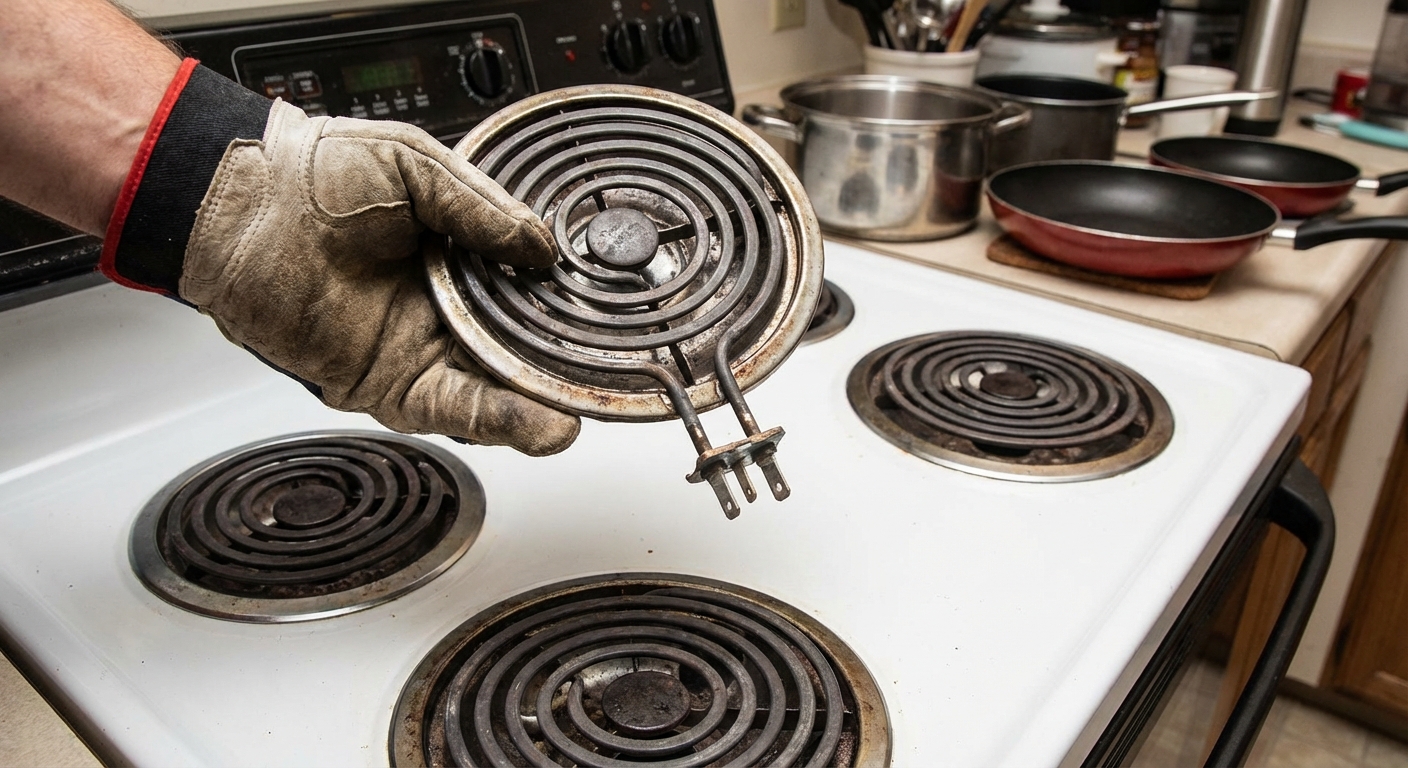
Common symptoms
- That burner stays cold while other burners work
- Visible bubbles, blisters, cracks, or separated sections on the coil
- Burner works only sometimes when wiggled
Safe diagnostic steps
- Turn off power (unplug or breaker off).
- Let the burner cool completely.
- Lift the outer edge of the coil and pull it straight out of the receptacle.
- Inspect the prongs. If they're badly pitted or burned, replace the element and inspect the receptacle too.
- Swap test: Plug a known working, same-size coil into the dead burner's receptacle. If it heats, your original element is bad.
Replacement steps
- Match the new element by size (6 inch or 8 inch) and terminal/prong style. Naming varies by retailer, so don't rely on labels. Match the prongs exactly, or bring the old one with you.
- With power off, plug the new coil's prongs firmly into the receptacle.
- Set the coil into the drip pan and make sure it sits level.
- Restore power and test on Low, then Medium.
A classic Marcus mistake: I once bought the right diameter coil with the wrong plug end. It looked close until I tried to insert it. Save yourself the return trip and match the prongs exactly.
Fix 2: Bad burner receptacle (coil-top ranges)
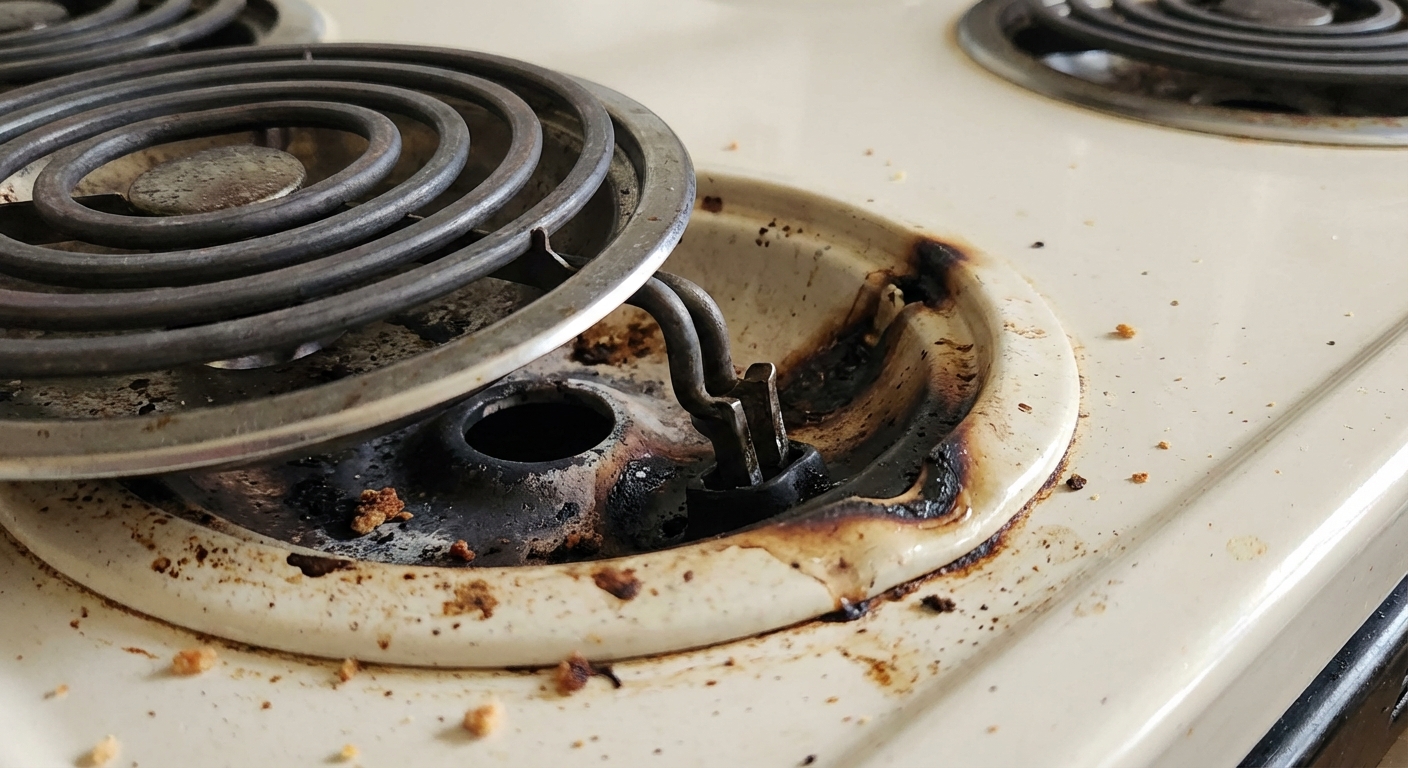
Common symptoms
- Element prongs look fine, but the burner works only if you jiggle it
- Arcing or sparking at the plug connection
- Melted plastic, char marks, or a loose-feeling connection
Safe diagnostic steps
- Turn off power.
- Remove the coil element.
- Inspect the receptacle slots. If they're widened, burned, or the body is cracked, replace the receptacle.
- Gently tug the receptacle. If it's loose, the mounting or wiring connection may be compromised.
Replacement steps (typical plug-in harness style)
Many coil ranges use a receptacle that plugs into a short wiring harness with high-temp connectors. Exact access varies by model.
- Turn off power and confirm the cooktop is cool.
- Lift the cooktop (some lift like a car hood) or remove the back panel, depending on your range design.
- Take a clear photo of the wiring path and connector orientation.
- Disconnect the old receptacle from its harness connector.
- Install the new receptacle, route wires away from hot surfaces, and secure any clips or screws.
- Reinstall panels, plug in the coil, restore power, and test.
Important: If you see brittle insulation, blackened wire, or melted connectors, replace the receptacle and the damaged wire harness (or have it repaired properly). A loose, overheated connection is a fire risk.
Fix 3: Bad infinite switch (burner control knob)
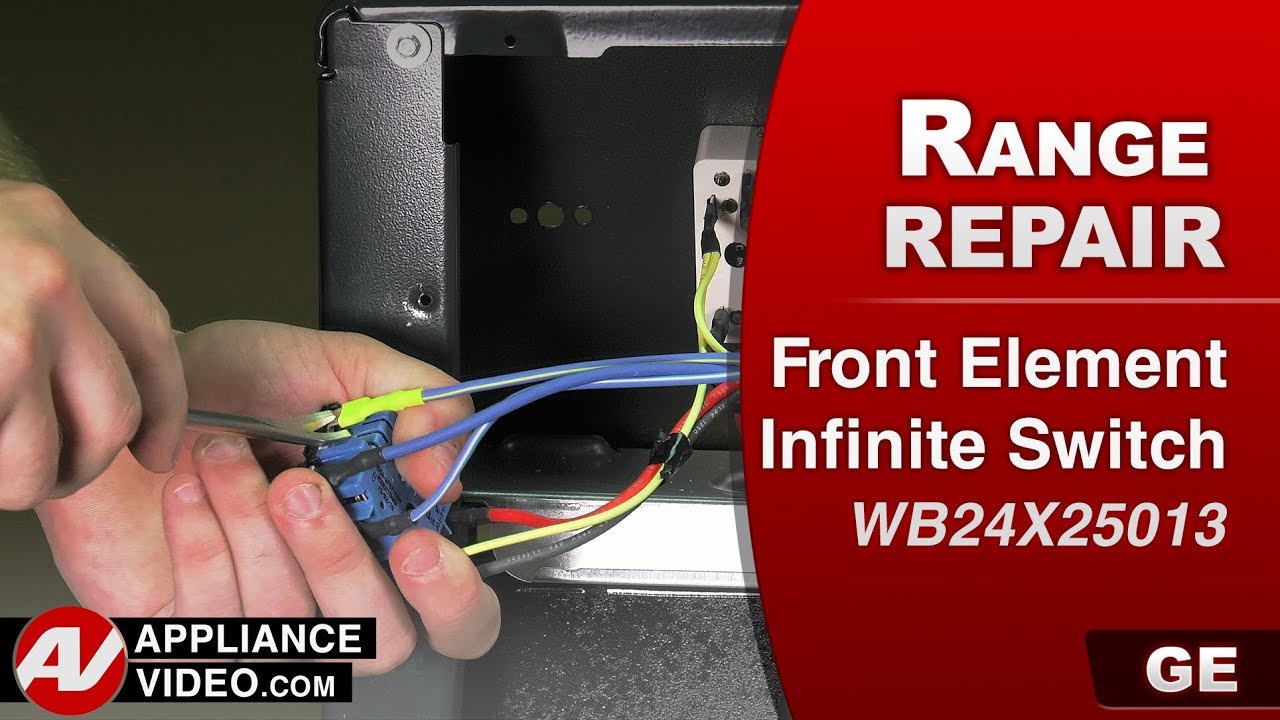
What the infinite switch does
An infinite switch cycles power to the element to control heat level. When it fails, a burner may not heat at all, may only heat on High, or may behave erratically. Some glass-top ranges use an electronic board instead of an infinite switch, but the symptoms can look similar.
Common symptoms
- Burner does nothing at any setting, but the element and receptacle look good
- Burner stuck on High or won't turn off (turn power off immediately at the breaker if that happens)
- Knob feels loose or the switch shaft spins inconsistently
- Burner works on some settings but not others
Safe diagnostic steps
- Turn off power at breaker or unplug.
- Pull the knob straight off (most are friction fit).
- Access the switch from behind the control panel (often rear panel or control console screws).
- Look for heat damage: browned terminals, melted plastic, or a burned odor.
- If you have a multimeter and the wiring diagram for your model, you can test continuity across the correct terminals in different knob positions. Label wires, take a photo, and if you're checking resistance, disconnect at least one wire from the part you're testing so you don't read back through the circuit.
Replacement steps
- Buy the correct switch using your range model number. Infinite switches aren't universal.
- With power off, take a photo of each wire on the old switch.
- Move wires one at a time from the old switch to the matching terminal on the new switch.
- Mount the new switch, reinstall the panel, and push the knob back on.
- Restore power and test Low through High.
When to call a pro: If any wires are burned or terminals are loose, it's worth having a technician verify the repair. Loose spade connections can overheat again even with a new switch.
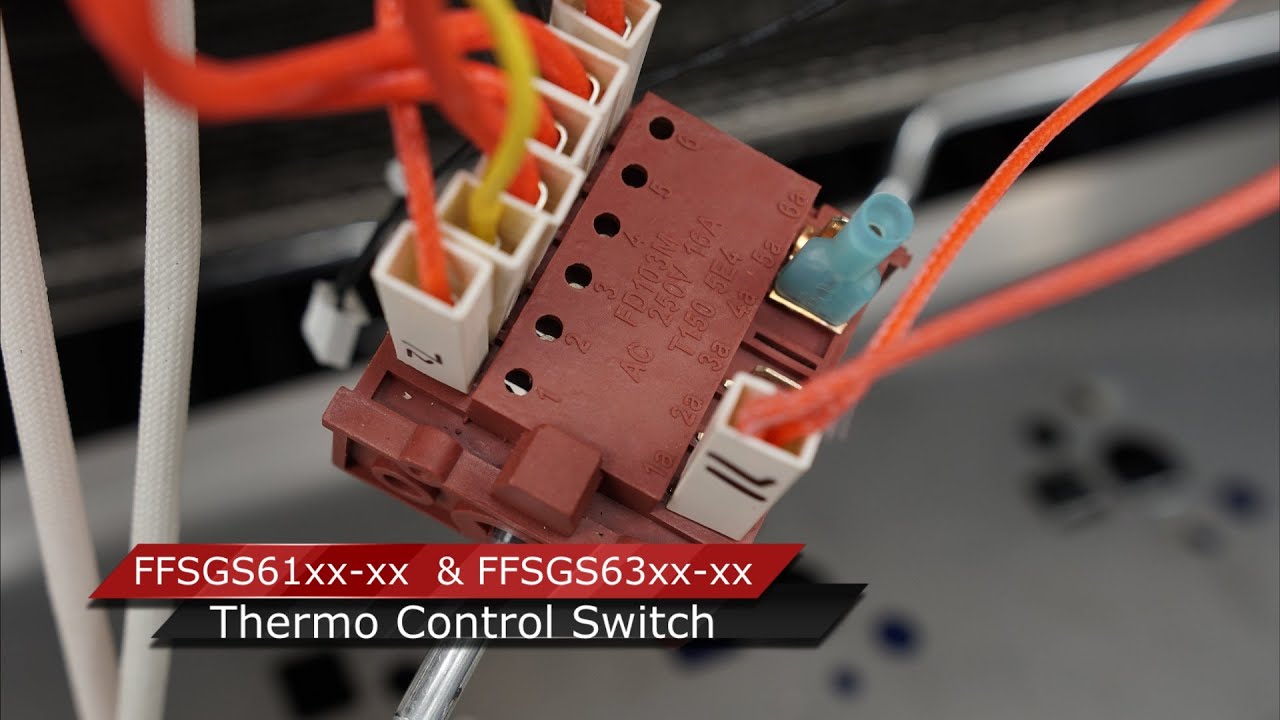
Fix 4: Loose, burned, or broken wiring
Common symptoms
- Burner is completely dead and you see discoloration at connectors
- Intermittent heating, especially after the cooktop has been running a while
- Crackling sound, arcing, or a hot electrical smell
What to do (and what not to do)
- Do: Turn off power immediately if you smell burning or see arcing.
- Do: Inspect wire terminals at the receptacle (coil-top), at the radiant element (glass-top), and at the switch or relay.
- Don't: Twist wires together and wrap with electrical tape as a permanent fix. Ranges need proper high-temperature terminals and insulation.
Safe repair approach
- Kill power at the breaker or unplug.
- Open the access panel needed to see the wiring to the affected burner.
- If a connector is loose but not heat-damaged, remove it and gently crimp it tighter or replace it with the correct high-temp terminal.
- If insulation is brittle, blackened, or crumbling, replace that section of wire with the correct high-temperature appliance wire and proper connectors, or have a pro do it.
- Route wires away from hot surfaces and moving parts, then secure with existing clips.
Red flag: Melted wire nuts, scorched harnesses, or repeated burning at the same connection often points to an underlying issue like a loose terminal, wrong connector type, or a failing switch drawing heat at the contacts.
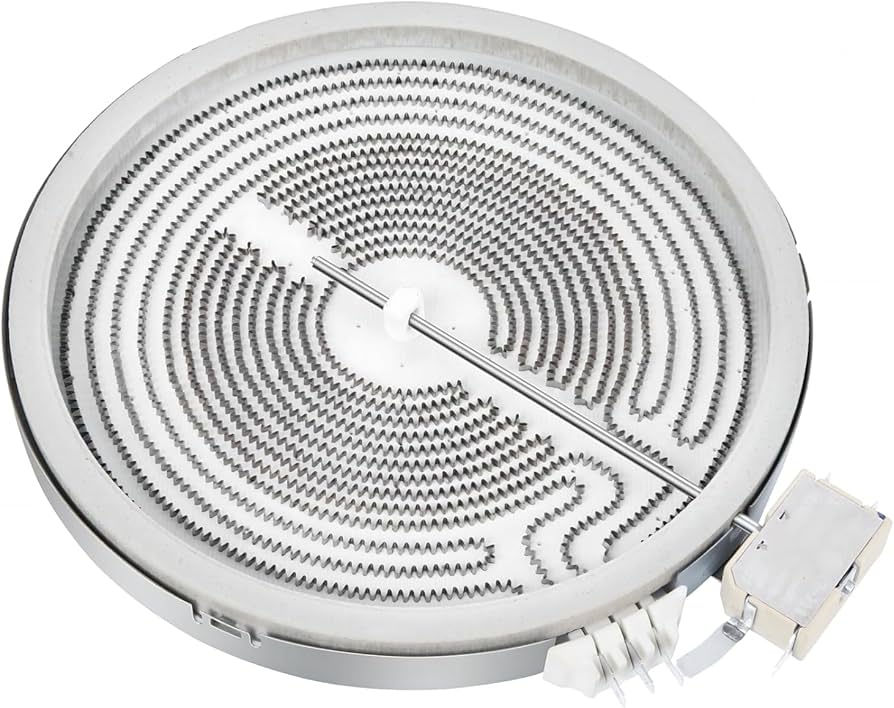
Fix 5: Failed radiant element (glass-top ranges)
Common symptoms
- One burner doesn't heat, but the hot surface light may still come on
- Uneven heating or only part of the ring glows (on some models)
- Visible burned spots or damaged connectors under the glass-top
- A crack in the glass itself near the burner (treat this seriously)
If the glass-top is cracked
If the glass surface is cracked, stop using the cooktop. Liquids can seep in and create a shock hazard. In most cases you're looking at replacing the glass-top, and I recommend calling a professional unless you're very comfortable with appliance disassembly.
Safe diagnostic steps (radiant element)
- Turn off power at the breaker.
- Lift the cooktop if your model allows it (many hinge up once you remove a couple of screws). Support it securely.
- Inspect the radiant element for obvious damage, burned spots, or overheated connectors.
- Check connections for looseness or heat discoloration.
- If you have a multimeter, test the element for continuity (resistance) with power off and wires disconnected. Disconnect at least one lead so you don't read through the rest of the circuit.
Typical resistance (quick reference)
This varies by wattage and design, but many surface elements land roughly in the 10 to 50 ohms range. If your meter reads open (often shown as OL), the element is likely failed. If it reads near 0 ohms, something's wrong too. When in doubt, match your findings to your model's tech sheet.
Replacement steps (general)
- Order the correct radiant element using the range model number. Radiant elements vary by wattage, size, and mounting brackets.
- Turn off power.
- Lift the cooktop and take a photo of the element wiring and mounting points.
- Disconnect the element wires (usually spade connectors). Pull on the connector, not the wire.
- Remove mounting screws or release clips holding the element to the cooktop frame.
- Install the new element in the same orientation, reconnect wires firmly, and make sure no wire can touch the element.
- Lower the cooktop, restore power, and test.
Fix 6: Limiter or sensor issue (some glass-top ranges)
What it is
Some radiant burners have a limiter (sometimes called a temperature limiter or sensor) that opens the circuit if things get too hot. If it fails, you can get a burner that won't heat, cycles off too quickly, or never gets past lukewarm.
Clues it's the limiter
- Element tests good for continuity, but the burner still won't heat
- Burner heats for a short time, then quits long before it should
- Problem is isolated to one burner and wiring looks intact
What to check
- Turn off power at the breaker.
- Lift the glass-top and locate the limiter attached to or near the element (model dependent).
- Inspect for heat damage and loose connectors.
- If your tech sheet shows the limiter is a simple on off device, you can check it for continuity at room temperature. Disconnect at least one wire before testing.
- If your model uses an electronic sensor instead, testing may require the service manual specs. At that point, replacement by model number or a pro diagnosis is often the fastest route.
If multiple burners are dead
If more than one burner is out, or burners seem weak across the board, don't assume you have multiple bad parts at once. Start here:
- Breaker: A range breaker can look “on” when it's actually tripped. Flip it fully OFF, then back ON.
- Terminal block and power cord: With power off, check for signs of overheating where the cord connects to the range (the terminal block). Loose connections can cause partial power and weak or dead burners.
- Control board or relay issue (some glass-top models): If the cooktop is board-controlled, multiple dead burners can point to a relay board or control problem.
If you see melted insulation, char marks, or a cooked terminal block, stop and call a pro. That's not a “wiggle it and see” situation.
Troubleshooting map
If you have a coil-top range
- Swap the coil with a known working, same-size one
- Inspect and, if needed, replace the receptacle
- Inspect wiring at the receptacle and switch
- Replace the infinite switch for that burner
If you have a glass-top range
- Check control lock and basic settings
- Inspect for cracked glass-top (stop if cracked)
- Test radiant element continuity
- Check the limiter or sensor (if equipped)
- Inspect wiring and connectors
- Replace the infinite switch or troubleshoot the control board, depending on the design
When to stop and call a pro
- You see melted wiring, scorched insulation, or signs of arcing
- The burner is stuck on and won't shut off
- The glass-top is cracked
- You need to do live voltage testing and you aren't trained or comfortable
- The range trips the breaker repeatedly
There's no shame in tapping out. The goal is a safe, reliable stove, not a heroic story.
Parts and model numbers
The fastest way to avoid wrong parts is to find your range model number, usually located:
- On the frame behind the oven door (open the door and look around the door jamb)
- On a sticker behind the storage drawer (if your range has one)
- On the back of the appliance
Search parts by model number, then match:
- Element size and wattage
- Receptacle style
- Infinite switch part number and terminal layout
- Limiter or sensor part number (if your burner uses one)
FAQ
Why does my electric burner heat sometimes and not others?
Intermittent heat is usually a loose connection at the coil receptacle, a worn infinite switch, or a heat-damaged spade connector that loses contact when it warms up. On some glass-top ranges, a failing limiter can also cause short cycling.
Can I keep using a burner that sparks at the receptacle?
No. Sparking means arcing, and arcing creates heat that can melt the receptacle and wiring. Turn off power and replace the damaged receptacle and any compromised connectors.
My glass-top burner doesn't glow red, but it warms a little. Is that normal?
Some radiant elements cycle and may not glow brightly at low settings. But if it's noticeably weaker than before, or only part of the ring heats, suspect a failing element, limiter, or control.
What if my oven works but the cooktop doesn't (or vice versa)?
That can happen with a failed cooktop control, relay, or wiring issue, even if the range still has power. If multiple burners are out, also check the breaker and look for overheating at the terminal block and power cord connection (with power off).

About Marcus Vance
Content Creator @ Grit & Home
Marcus Vance is a lifelong DIY enthusiast and self-taught home renovator who has spent the last decade transforming a dilapidated 1970s ranch into his family's dream home. He specializes in budget-friendly carpentry, room-by-room renovations, and demystifying power tools for beginners. Through his writing, Marcus shares practical tutorials and hard-learned lessons to help homeowners tackle their own projects with confidence.