
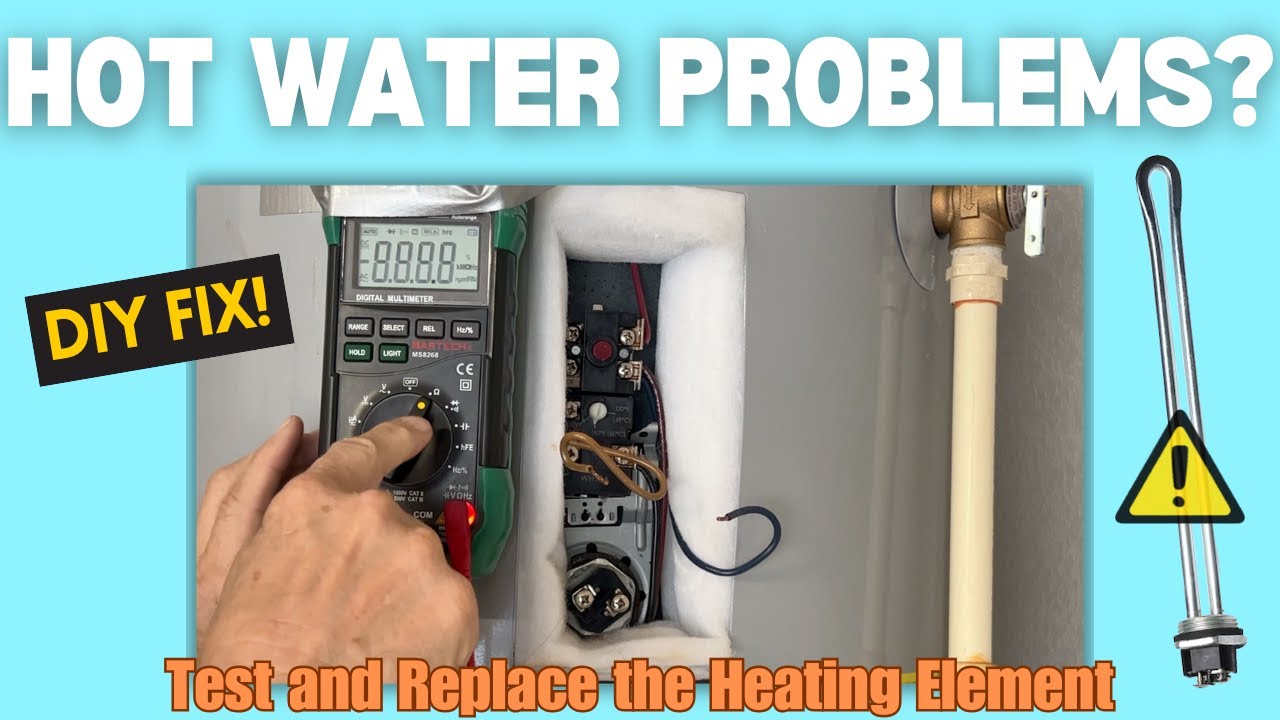
If your electric water heater keeps tripping the breaker, it is not just annoying. It is your electrical system telling you something is wrong. Most of the time the culprit is one of five things: a heating element failing and leaking current to the tank or ground, loose or burned wiring, a thermostat problem, a breaker that is failing, or a higher-wattage element on an undersized circuit.
I have chased this exact issue in my own 1970s ranch, and the biggest mistake I made early on was resetting the breaker over and over “to get through the weekend.” Don’t do that. Repeated trips can mean heat buildup in the wiring or breaker, and that is how small problems turn into expensive ones.
Safety first (please read before touching anything)
- Turn off the water heater breaker before removing any water heater access panels.
- Verify power is off with a non-contact voltage tester first, then confirm with a multimeter if you have one.
- Do not touch bare wires or thermostat screws unless you have confirmed the circuit is dead.
- If the tank is leaking or you see water near electrical parts, stop and shut off power at the breaker. Water plus 240V is a hard no.
- If you smell melting plastic, see scorching, or the breaker will not reset firmly, stop and call an electrician.
Most residential electric water heaters are 240V on a double-pole breaker. That means there are two hot legs. Even if one side has an issue, you still need to treat the entire circuit as dangerous until proven otherwise.
Quick “what happened?” checklist
Before you grab tools, answer these. They point you toward the likely cause.
- Trips instantly when you flip the breaker on: often a hard short, commonly damaged wiring, a failed element, or a fault in the junction box.
- Runs for minutes, then trips: often an element starting to fail under heat, a loose connection heating up, or a weak breaker.
- Trips only when hot water is used (shower, laundry): points toward an element or thermostat engaging under load.
- Breaker feels hot or trips more in summer: could be a weak breaker or a loose connection at the breaker or heater junction box.
- Recent work done on the heater: loose wire nut, pinched wire, wrong element wattage, or a thermostat not seated tightly.
Reset steps
1) Reset the breaker correctly
A tripped breaker often sits halfway. To reset it:
- Push the handle firmly to OFF.
- Then push it firmly to ON.
If it immediately trips again, stop. That is your cue to find the fault, not keep trying.
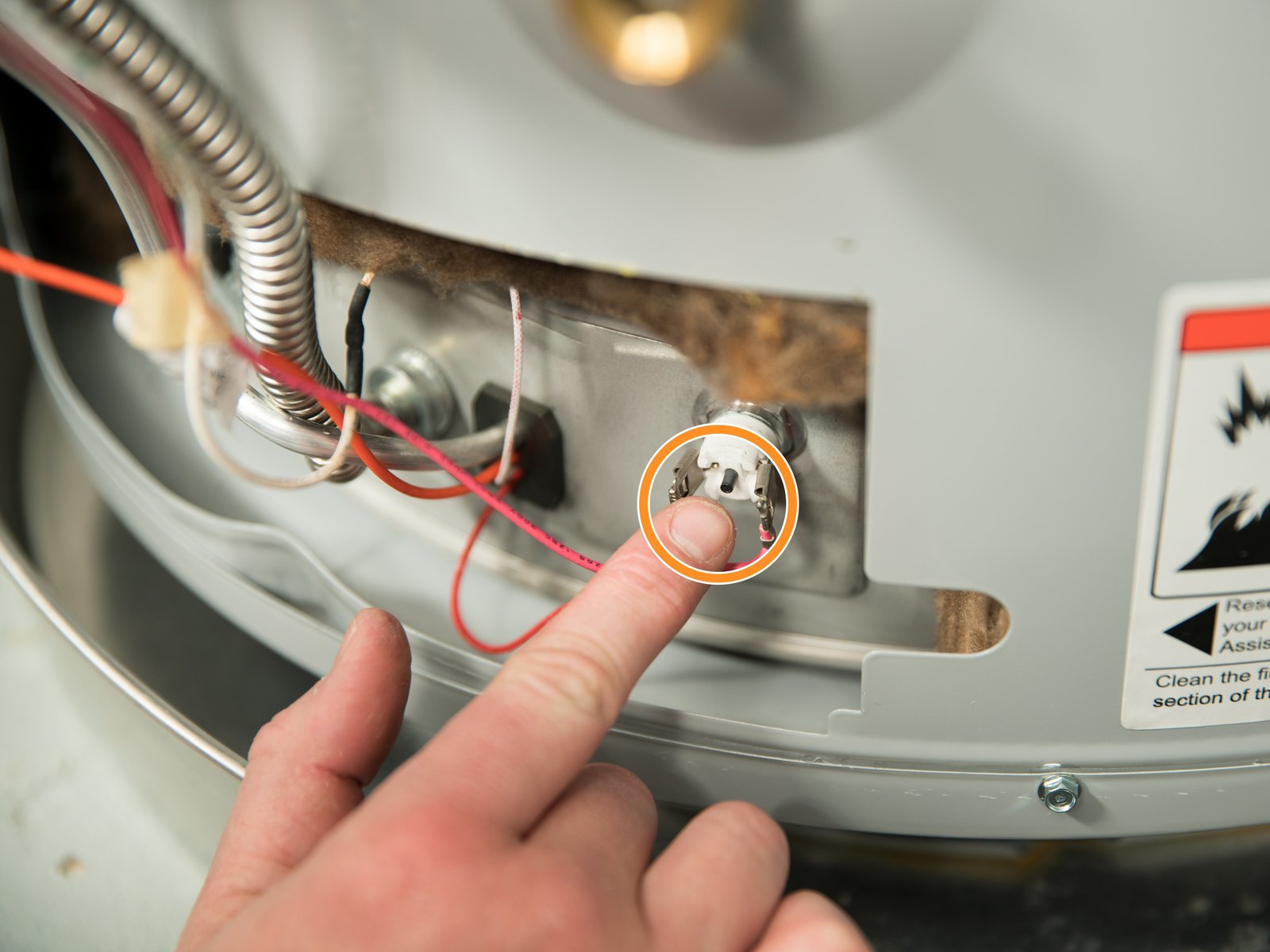
2) Check the high-limit reset (ECO)
Many electric water heaters have a manual reset on the upper thermostat, often labeled ECO. This is the high-limit safety that shuts the heater down if it senses overheating.
To check it:
- Turn the breaker OFF.
- Remove the upper access panel and insulation.
- Press the small reset button. If it clicks, it had tripped.
Important: If the ECO trips repeatedly, it is usually a thermostat issue, wiring issue, or heating problem. Do not keep resetting it without fixing the cause.
Common causes (and how to confirm)
Cause #1: A heating element is leaking to ground or shorted
This is a big one. When an element fails, it can crack or corrode and start leaking current to the metal tank. If the tank is properly bonded and grounded, that fault current can trip a standard breaker. If your water heater is on a GFCI breaker (more common now), a smaller amount of leakage can trip it too, even when a standard breaker might not.
Clues: trips when the heater calls for heat, hot water is inconsistent, problem gets worse over time. With a GFCI breaker, it may trip sooner and more often.
How to test (power OFF):
- Turn off the breaker and confirm power is off.
- Remove the access panels and insulation.
- Disconnect the two wires from the element screws (take a quick photo first).
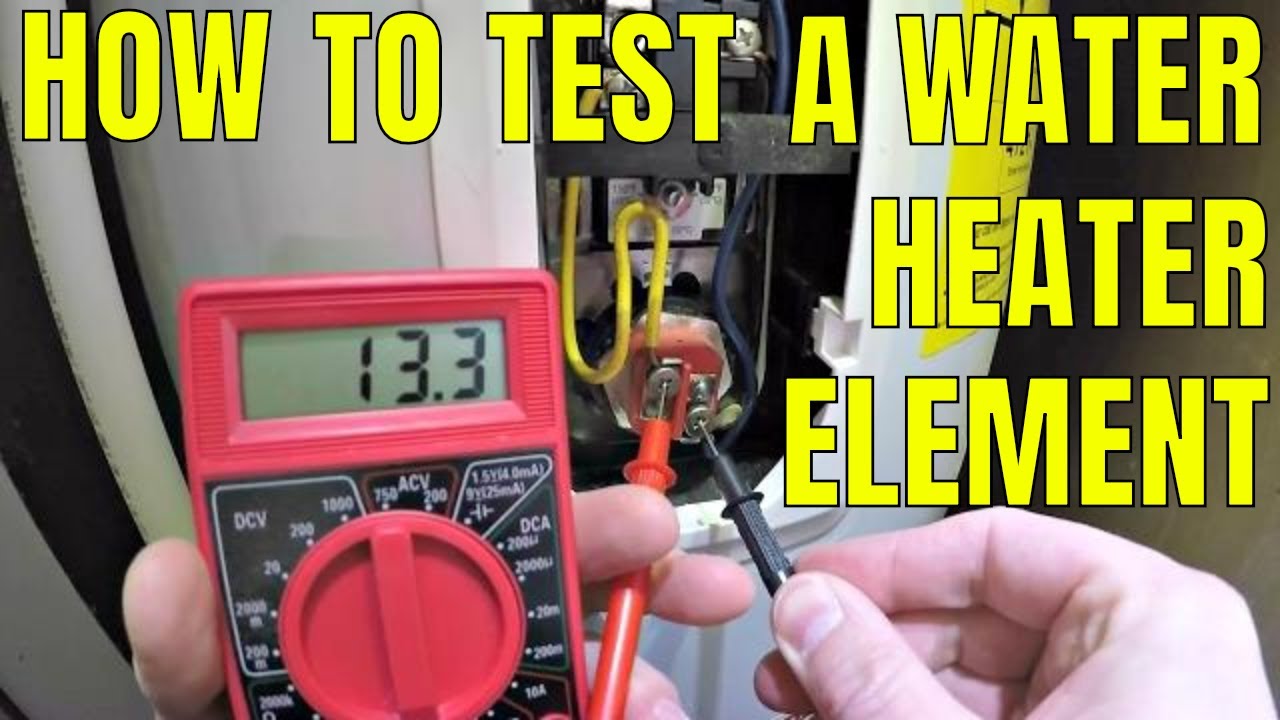
- Set your multimeter to resistance (ohms).
- Test element screw to element screw for resistance (you should see a steady value, not “OL”).
- Then test each element screw to the metal tank. You should read OL/no continuity. If you get continuity to the tank, that element is shorted or leaking to ground.
Quick ohms reference (rough guide): at 240V, a 4500W element is typically about 12 to 13 ohms. A 5500W element is typically about 10 to 11 ohms. Different elements vary, so use this as a sanity check, not a courtroom verdict.
Fix: Replace the failed element with the same voltage and wattage rating. Most common residential sizes are 240V elements in 3500W, 4500W, or 5500W. Match what is on the water heater label, and do not “upgrade” wattage unless you are sure the wiring and breaker are sized for it.
Cause #2: Loose or burned wiring (heater or panel)
Electric water heaters pull a lot of current for long stretches. A slightly loose connection can heat up fast. Heat causes more looseness, which causes more heat. Eventually the breaker trips, wires discolor, or wire nuts fail.
Where to look (power OFF):
- At the heater’s top junction box under the small cover.
- At the thermostat and element terminals behind the access panels.
- At the breaker and bus connections inside the service panel (electrician territory if you are not comfortable).
What to look for: melted wire insulation, darkened copper, crispy wire nuts, a hot electrical smell, or visibly loose screws.
Fix: Tighten manufacturer terminal screws to spec if provided, replace any heat-damaged conductors, and redo splices with the correct connector size. If there is damage in the service panel or you see scorching at the breaker, call an electrician.
Cause #3: A failing thermostat or poor contact
Thermostats on electric water heaters must sit flat against the tank to sense temperature correctly. If one is loose, it can “think” the water is cooler than it is, heat too long, and trip the high-limit (ECO). In some failure modes it can also contribute to nuisance trips.
Clues: very hot water sometimes, ECO reset button tripping, temperature swings, or tripping after long heating cycles.
What to check (power OFF):
- Make sure the thermostat is firmly clipped to the tank and not sitting on insulation.
- Look for brittle wires or overheated terminals at the thermostat.
- Confirm both upper and lower thermostats are set reasonably, usually around 120°F for most households.
Fix: Reseat the thermostat and replace it if there are burn marks, corrosion, or repeated ECO trips. On older units, some homeowners replace thermostats as a best-practice while they are already inside the access panels, but it is not required if testing and inspection look good.
Cause #4: A weak or failing breaker
Breakers wear out. After years of heating and cooling cycles, a breaker can become more sensitive and trip under a normal load. This is especially common if it has been tripping for a while.
Clues: breaker trips even after you replace elements and confirm wiring is good, breaker handle feels loose, breaker is warm to the touch compared to neighbors, or the panel shows heat discoloration near that breaker.
Fix: Have the breaker evaluated and replaced by a qualified person. In many jurisdictions, working inside the panel is best left to a licensed electrician.
Cause #5: Circuit sizing issues
This one sounds backwards, so let’s make it plain:
- Undersized breaker (too small) can trip during normal operation.
- Oversized breaker (too large) may not trip when it should, which is a safety hazard because the wiring could overheat before the breaker trips.
Many electric water heaters end up on a 30-amp double-pole breaker with 10-gauge copper wire when using common 4500W elements. But do not assume. The rule is: follow the water heater nameplate and manufacturer instructions. Some models specify something like a minimum circuit ampacity (often 25A for 4500W) and a maximum breaker (often 30A), and local code requirements can vary.
What to do:
- Check the water heater label for total wattage and required circuit (MCA and max OCPD if listed).
- Confirm the breaker size matches manufacturer requirements and local code.
- If someone installed higher wattage elements without upgrading wiring, correct that.
When to call a pro: If you suspect wrong wire gauge, wrong breaker size, or you are unsure how to verify conductor size safely.
GFCI and AFCI notes
If your water heater is on a GFCI breaker (or a combo AFCI/GFCI), trips can happen for reasons a standard breaker might ignore.
- GFCI trips can point to a failing element leaking current to the tank, moisture in a wiring compartment, or a damaged cable.
- AFCI trips can happen with arcing from a loose connection, burned terminal, or failing switch contact inside a thermostat.
Bottom line: if you have GFCI or AFCI protection and the breaker trips, take element leakage tests and wiring inspections extra seriously.
Troubleshooting order (cheap to expensive)
If you want the most organized route, here is the order I use so you do not replace parts blindly.
- Stop the repeat resets. Reset once to confirm the symptom, then move on.
- Look for water and leaks. If there is water near wiring, keep power off and address the leak first.
- Inspect the heater junction box for loose wire nuts, scorched insulation, or a ground touching a hot lead.
- Inspect thermostat and element wiring for burn marks and loose terminals.
- Test elements for shorts to ground with a multimeter.
- Check thermostat seating and ECO history. If ECO keeps tripping, plan on thermostat testing or replacement.
- Evaluate the breaker if the heater checks out, especially if it is older or warm.
- Verify circuit sizing against the nameplate if anything looks mismatched.
If you replace an element
I am not going to pretend element replacement is hard, but it does have a couple “do not skip” steps. If you swap an element without draining the tank below it, you will have a bad time.
- Power OFF at the breaker and verify it.
- Shut off the cold water supply to the heater.
- Relieve pressure by opening a hot faucet, then crack the T&P relief valve briefly if needed.
- Drain water until the level is below the element you are removing (use the drain valve and a hose).
- Use the correct element wrench and replace the gasket.
- Refill the tank fully and purge air from a hot faucet before turning the breaker back on. Dry-firing an element (powering it on without water) can kill it fast.
Tip: If you are unsure what wattage element you have, check the water heater nameplate first. Many replacement elements also have wattage stamped on the flange, but the nameplate is your north star.
When it is time to replace the heater
Sometimes you can fix a trip with a $25 element. Other times the tank has simply reached the end of the road.
- Active tank leak from the body of the tank, not a fitting: replacement time.
- Heavy corrosion around element ports or under access covers: replacement is often smarter than chasing faults.
- Repeated element failures in a short period: could be sediment, water chemistry, or a failing tank affecting element life.
- Heater is near or past typical lifespan (often 8 to 12 years, sometimes longer with good water and maintenance): weigh the cost of parts and time against a new unit.
Prevention (so you do not see this again)
Sediment buildup can make elements run hotter and fail sooner, especially in hard water areas. A periodic flush (when your setup and local conditions allow it) plus checking the anode rod now and then can help your heater run cooler and last longer. It is not magic, but it does tilt the odds in your favor.
Call a pro if you see this
- Water leaking onto electrical components or pooling near the heater.
- Burned smell, melted insulation, or visible charring at the heater or breaker panel.
- The breaker will not reset, will not stay on, or feels loose or unusually hot.
- You are not comfortable using a multimeter around 240V equipment.
- You suspect incorrect breaker size or wire gauge.
I am all for DIY, but I am even more for going home safe at the end of the day. If the evidence points to the panel, scorched wiring, or an unclear fault, an electrician is money well spent.
FAQ
Is it safe to keep resetting the breaker?
No. A breaker trips for a reason. Repeated resets can overheat weak connections, worsen damage, and create a fire risk.
Can a water heater trip the breaker even if it still makes hot water?
Yes. An element can be failing intermittently, or a loose connection can heat up and trip after a period of normal operation.
What is the most common cause?
A failed element leaking to ground and loose or burned connections are both extremely common. The good news is they are usually diagnosable with a careful visual inspection and a basic meter test.
Should I replace both elements and thermostats at the same time?
Not automatically. If one part has clearly failed, fix what is bad and inspect everything else while you are in there. If the heater is older and you see heat damage, corrosion, or repeated ECO trips, replacing thermostats and the second element can be smart preventive maintenance. If the tank is nearing the end of its life, put that money toward a replacement.
My bottom line
A tripping breaker is usually a straightforward diagnosis if you move in order: inspect, test for element leakage, check wiring, then evaluate the breaker and circuit sizing. Take it slow, keep the power off while you work, and do not ignore leaks. The goal is not just hot water. It is hot water that is safe, consistent, and not one reset away from a bigger problem.

About Marcus Vance
Content Creator @ Grit & Home
Marcus Vance is a lifelong DIY enthusiast and self-taught home renovator who has spent the last decade transforming a dilapidated 1970s ranch into his family's dream home. He specializes in budget-friendly carpentry, room-by-room renovations, and demystifying power tools for beginners. Through his writing, Marcus shares practical tutorials and hard-learned lessons to help homeowners tackle their own projects with confidence.