
🚨 In a DIY emergency or rush?
Skip the details and jump straight to our 30-second cheat sheet for the most crucial info.
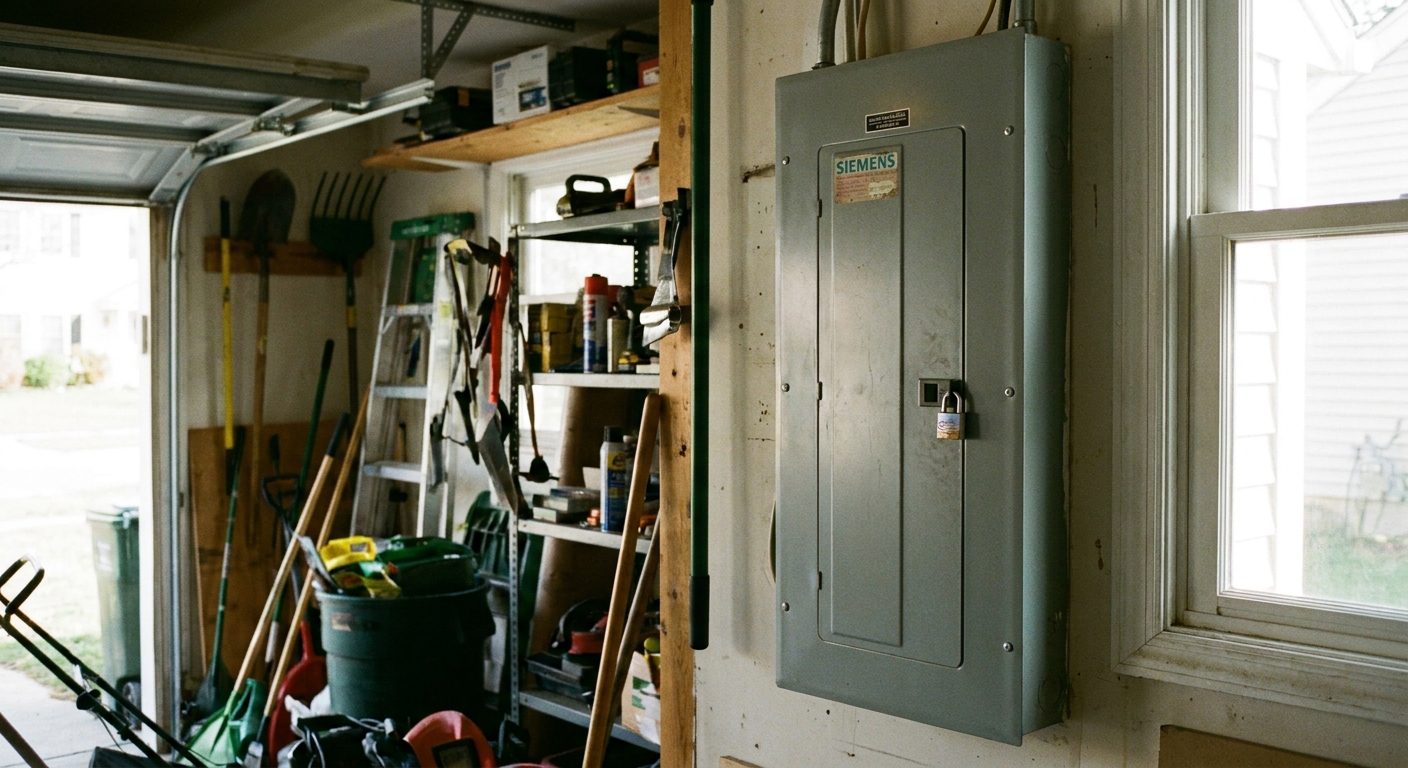
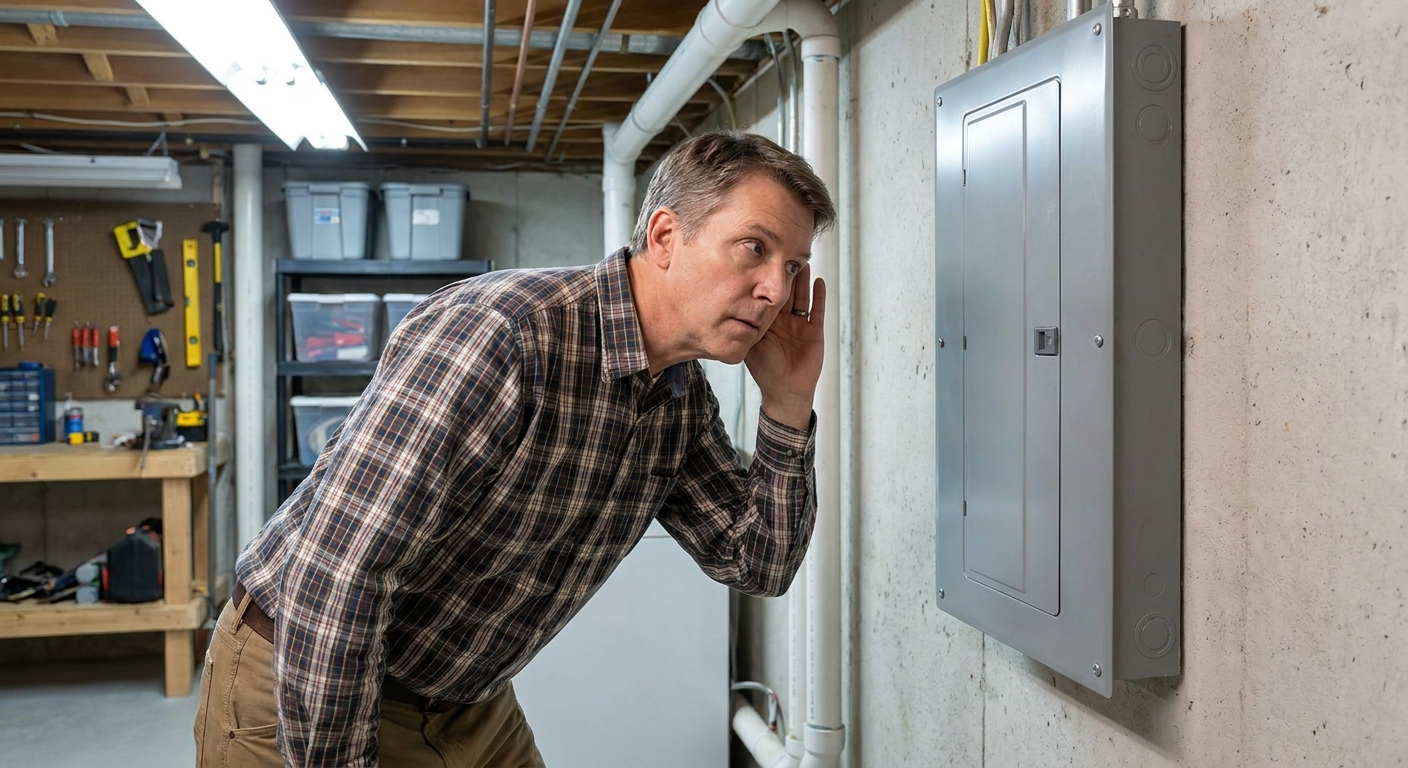
If you’ve ever walked past your electrical panel and thought, “Was it always making that noise?” you’re not alone. A faint hum can be normal. A sharp buzz, sizzle, or a noise that shows up with heat or smell is not.
I’ve learned to treat panel noises the same way I treat weird sounds from a car. If it’s new, louder than usual, or paired with other symptoms, you don’t ignore it.
Quick answer
Here’s the homeowner-friendly rule of thumb:
- Often normal: a soft, steady hum that’s been there forever, especially when big loads are running (HVAC, dryer, oven).
- Often not normal: a new buzzing, crackling, sizzling, or a hum that gets louder over days or weeks.
- Act fast: noise plus burning smell (often described as fishy or “electrical”), heat, visible smoke, scorch marks, flickering lights across the house, or a breaker that won’t stay reset.
Why panels hum or breakers buzz
Electrical equipment can make noise for a few different reasons. Some are benign. Some are the start of real failure.
1) Heavy load vibration
When a circuit is pulling a lot of current, magnetic forces inside breakers and panel components can cause a low, smooth hum. You might notice it when:
- The HVAC starts up
- The electric dryer or oven is running
- A space heater is on high
- EV charging starts
Normal hum is usually: low volume, steady, and it stops or reduces when the heavy load shuts off.
2) Loose connection at a breaker or neutral bar
This is one of the big ones. A loose terminal screw or a poor connection can create intermittent arcing under load. That can sound like buzzing, sizzling, or crackling. It also creates heat, which can damage the breaker, bus bar, or wire insulation.
Key point: You cannot safely confirm tightness without removing the cover. That’s electrician territory.
3) Aging or failing breaker
Breakers wear out. Springs fatigue, contact surfaces pit, and plastics age from heat cycles. A failing breaker may buzz under load, run hot, or trip for no obvious reason.
This is more common in older panels, circuits that are frequently near capacity, or breakers that have been tripped a lot.
4) AFCI or GFCI behavior
AFCI and GFCI breakers contain electronics. Some models may make a faint sound, and some can hum lightly with certain loads.
- AFCI breakers can react to things like treadmills, vacuums, old motors, and some LED drivers.
- GFCI breakers can react to small leakage currents from appliances, moisture, or long cable runs.
That said, an AFCI or GFCI breaker that is noticeably buzzing, hot, or tripping repeatedly is not “just being picky.” Treat it like a problem.
5) Transformer or utility equipment noise
Sometimes the “panel hum” is actually coming from:
- A doorbell transformer
- A low-voltage landscape lighting transformer
- A nearby utility transformer outside
If the noise seems to come from a different box or a wall cavity near the panel, you may be chasing the wrong source.
6) Arcing or bus bar damage inside the panel
Arcing is uncontrolled electricity jumping through air. It can be triggered by loose connections, corrosion, water intrusion, or damaged components. This is where you can get the classic scary symptoms: crackle, pop, odor, and heat.
When to shut it down
If you notice any urgent signs below, skip troubleshooting. Your goal is to stop overheating and get a pro involved.
- Burning smell (plastic, “electrical,” often described as fishy)
- Smoke or haze near the panel
- Sizzling, crackling, popping, or a buzz that sounds like sparking
- Heat on the panel cover or wall near the panel
- Scorch marks, discoloration, or melted plastic visible through openings
- Lights flickering throughout the home, or multiple circuits acting weird at once
- Breaker won’t reset or trips immediately with minimal load
- Water present on the floor, wall, or dripping near the panel
How to de-energize
- Do not approach if you see water, active leaking, smoke, charring, or anything that makes you hesitate. Back away and call.
- If the area is dry and you can approach safely, stand to the side of the panel door, not directly in front of it.
- Wear dry shoes and stand on a dry surface.
- If safe, turn off the main breaker using one hand.
- Call a licensed electrician. If there’s smoke or fire risk, call emergency services.
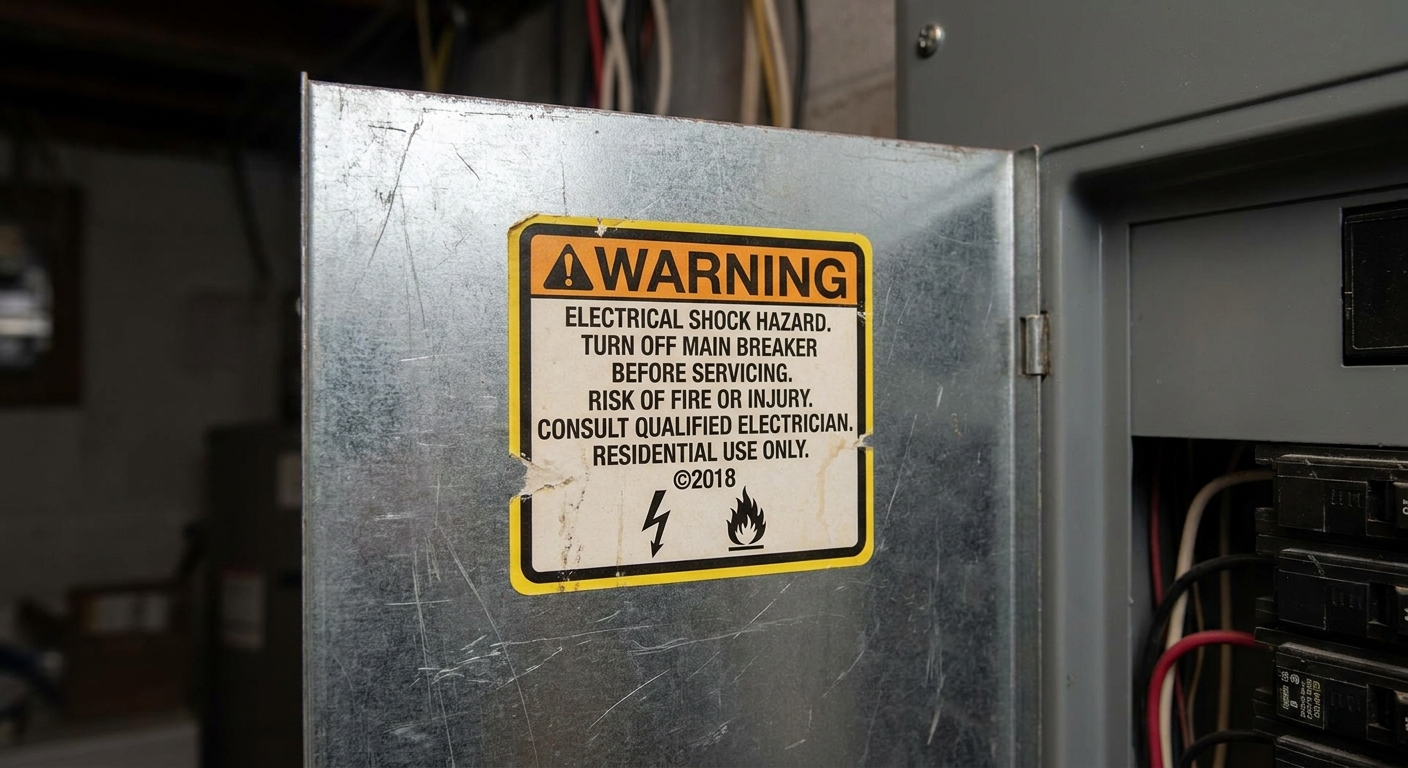
Important: Turning off the main shuts down branch circuits, but the service conductors ahead of the main can still be energized. This is one reason homeowners should not remove the dead front cover.
What not to touch
I’m all for DIY, but this is a hard line. If you’re hearing buzzing in a panel, the temptation is to “just snug a screw.” Don’t.
- Do not remove the dead front cover (the inner cover with the breaker openings).
- Do not touch the service wires coming into the panel, even with the main off.
- Do not press on breakers to “seat them” or try to wiggle them quiet.
- Do not spray anything (cleaner, air duster, bug spray) into the panel.
- Do not keep resetting a breaker that trips immediately.
Safe checks (cover on)
Only do the steps below if you do not have urgent signs like heat, burning smell, smoke, or water. Otherwise, jump up to the shut-down section and make the call.
You can still gather a lot of useful information without opening anything. Here’s my cover-on checklist.
1) Pinpoint the sound
- Is it the whole panel, a single breaker area, or something nearby like a transformer?
- Does it happen only when a specific appliance runs?
2) Use your nose and the back of your hand
- Smell: any burnt odor is a stop sign.
- Heat: without touching openings, hover the back of your hand near the panel cover. If it feels warm in one spot, note where.
3) Look for clues
- Any discoloration around breaker openings?
- Any gaps where a breaker doesn’t sit flush with the opening?
- Any rust or signs of moisture on the door or around the panel?
4) Identify the circuit, then reduce the load
If it sounds like one breaker area, you can do a controlled test:
- Turn off or unplug high-draw items on that circuit (space heater, microwave, hair dryer).
- Listen: does the buzzing reduce or stop?
- If you can’t identify what’s on that circuit, turn the suspect breaker off and see if the noise stops.
If turning a breaker off stops the noise, leave it off and call an electrician. You’ve just learned something valuable without taking anything apart.
5) Watch for house-wide symptoms
- Lights dimming when the fridge kicks on
- Random electronics restarting
- Multiple circuits flickering at the same time
Those clues can point to a bigger issue like a failing main connection or a utility-side problem.
Common scenarios
Buzzing from one breaker
- Often: loose connection at that breaker, overloaded circuit, or failing breaker.
- What you can do: reduce load, turn that breaker off if noise persists, call a pro.
Humming under heavy load
- Often: magnetic vibration when the dryer or AC is running.
- What you can do: if it’s mild and consistent, keep an eye on it. If it’s new or loud, schedule an electrician to inspect and torque connections.
Buzzing plus flickering lights
- Often: loose neutral, loose main connection, failing breaker, or a utility issue.
- What you can do: treat as urgent. Turn off sensitive electronics and call an electrician. If you’re seeing house-wide flicker or you suspect a service neutral issue, you may also need to contact the utility after an electrician’s triage.
AFCI or GFCI hums and trips
- Often: an appliance causing leakage or an arc signature, shared neutral issues, or a breaker nearing end-of-life.
- What you can do: unplug devices on that circuit one at a time to see if a specific item correlates with the noise or trips. Still plan on a pro diagnosis if it continues.
Age and panel factors
Not all panels and breakers age the same. If your setup is older, shows signs of past overheating, or you’ve heard about reliability concerns with your panel line, treat new noises with extra urgency. You don’t need to diagnose the brand history yourself. Just mention the panel brand and approximate age when you call.
Why “just tighten it” is a bad move
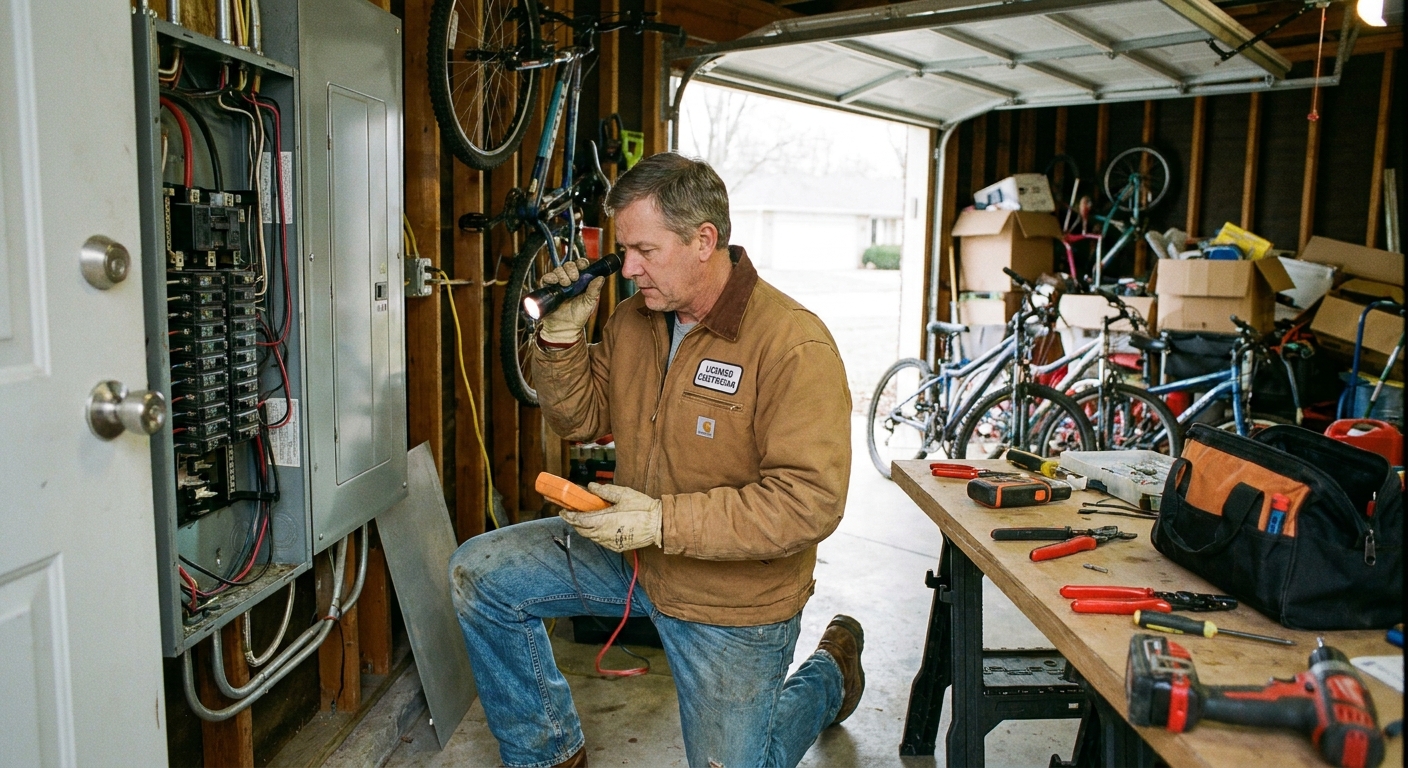
I’ll be honest: early in my fixer-upper days, I thought the fix for anything electrical was “turn off the breaker and snug the screw.” The problem is that buzzing is often happening at a point you can’t see, and the most dangerous parts of the panel can still be energized even with the main off.
An electrician isn’t just tightening things. They’re checking for:
- Overheating damage on the breaker and bus
- Correct torque on terminals
- Proper wire size for breaker rating
- Neutral and grounding issues
- Water intrusion or corrosion
How to talk to an electrician
When you call, the clearer you are, the faster they can zero in.
- Where is the sound coming from (whole panel vs specific breaker position)?
- When does it happen (constant vs only under load)?
- Any smell, heat, or flicker?
- What major loads were running (dryer, oven, AC, EV charger)?
- Panel brand and approximate age (if you know it).
Bottom line
A quiet, steady hum that comes and goes with heavy loads can be normal. A new buzz, any crackling or sizzling, any heat, or any burning smell is your cue to shut it down and get professional help.
If you take nothing else from this: you can do a lot of useful troubleshooting with the cover on, and that’s exactly how it should stay when weird noises start.
The 30-Second Cheat Sheet
Essential takeaways for: Electrical Breaker Buzzing or Panel Humming: Normal vs Dangerous
What’s normal
- Soft, steady hum from the panel that happens only when big loads run (AC, dryer, oven) and goes away after.
- Some AFCI/GFCI breakers may make a very faint sound (model dependent), but it should not be loud and it should not come with heat, odor, or tripping.
What’s dangerous
- New or worsening buzzing from a breaker or panel
- Crackling, sizzling, popping sounds
- Burning smell (often described as fishy or “electrical”)
- Heat on the panel cover or a hot spot near a breaker opening
- Flickering lights across multiple rooms or circuits
- Breaker won’t reset or trips immediately
- Any moisture near the panel
Do this right now
- Keep the cover on. Do not remove the dead front (the inner cover with the breaker openings).
- Reduce load: turn off big appliances, space heaters, and high-draw devices.
- If noise seems tied to one circuit, turn that breaker off. If the noise is severe or you smell burning, consider turning off the main (only if it’s safe and the area is dry).
- Call a licensed electrician. If there’s smoke or fire risk, call emergency services.
Safe checks (cover on)
- Listen: whole panel or one breaker area?
- Smell for any burnt odor.
- Hover the back of your hand near the cover to detect heat.
- Note whether it happens only when AC, dryer, oven, or EV charging runs.
Never do this
- Do not open the panel cover.
- Do not “tighten a screw” inside the panel.
- Do not spray cleaners or insect spray into the panel.
- Do not keep resetting a breaker that trips immediately.
💡 Tip: Scroll up to read the full article for detailed, step-by-step instructions.
⬆️ Back to top
About Marcus Vance
Content Creator @ Grit & Home
Marcus Vance is a lifelong DIY enthusiast and self-taught home renovator who has spent the last decade transforming a dilapidated 1970s ranch into his family's dream home. He specializes in budget-friendly carpentry, room-by-room renovations, and demystifying power tools for beginners. Through his writing, Marcus shares practical tutorials and hard-learned lessons to help homeowners tackle their own projects with confidence.