
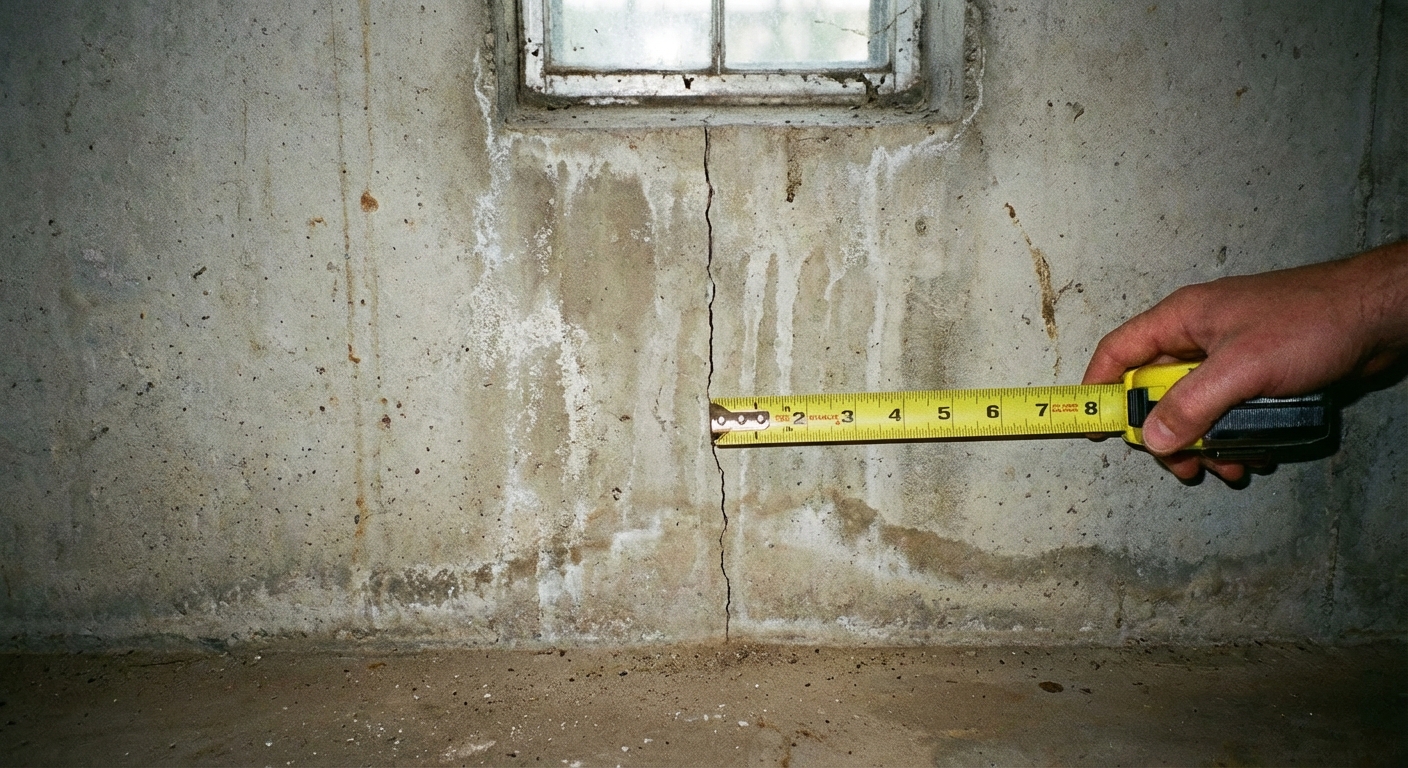
First, take a breath
Most homes experience some settling. Concrete shrinks as it cures, soil expands and contracts, and seasonal moisture changes tug on foundations year after year. That means cracks are common, and many are harmless.
The trick is learning to separate the normal stuff from the cracks that are trying to tell you, “Hey, something is moving in a bad way.” This guide will help you identify the most common crack patterns, what they usually mean, and what to do next.
My rule as a DIY renovator: if a crack is changing, letting water in, or paired with other symptoms like sticking doors or sloped floors, I stop guessing and start documenting.
Quick glossary
- Poured concrete walls often show vertical shrinkage cracks that are often structurally minor but can let water in.
- Concrete block (CMU) walls can crack along mortar joints, and they can bow under lateral soil pressure.
- Brick or stone veneer shows movement as stair-step cracks in the mortar.
- Slab foundations often show interior hairline cracks that can be cosmetic, but elevation changes and heave can be a bigger deal.
Decision flow
Use this as a simple first pass. It is not a substitute for an on-site professional evaluation, but it will keep you from spiraling.
-
Is the crack horizontal in a foundation wall, or is the wall bowing or bulging?
- Yes: Document it and contact a structural engineer or reputable foundation professional soon.
- No: Keep going.
-
Is the crack wide, offset, or clearly growing?
- Rule of thumb for width: roughly 1/8 to 1/4 inch (3 to 6 mm) or more gets my attention, especially if it is new, spreading fast, or paired with other symptoms.
- Yes: Engineer recommended, especially if there is displacement or a pattern forming.
- No: Keep going.
-
Is there water coming through, dampness, efflorescence, or a moldy smell?
- Yes: Address drainage first. Consider DIY sealing or injection for stable vertical cracks. Call a pro if active leaks persist.
- No: Keep going.
-
Is it a thin vertical or diagonal hairline crack with no movement symptoms?
- Yes: Usually cosmetic or typical settling. Monitor and optionally seal.
- No: Keep going.
-
Is it a stair-step crack in brick or block plus other symptoms like sticking doors or sloped floors?
- Yes: Engineer recommended.
- No: Monitor and maintain drainage. Consider masonry repair as maintenance.
Quick anchor: Most thin vertical hairline cracks are monitor and seal. Horizontal cracks, bowing, displacement, or fast change are the ones I stop DIY-ing and get evaluated.
How to inspect a crack
Tools you already have
- Flashlight or headlamp
- Tape measure or ruler
- Phone camera
- Pencil and painter’s tape
- Optional: crack gauge, or just a dated photo with a coin for scale
Step-by-step
- Find the full length of the crack. Follow it up, down, and around corners.
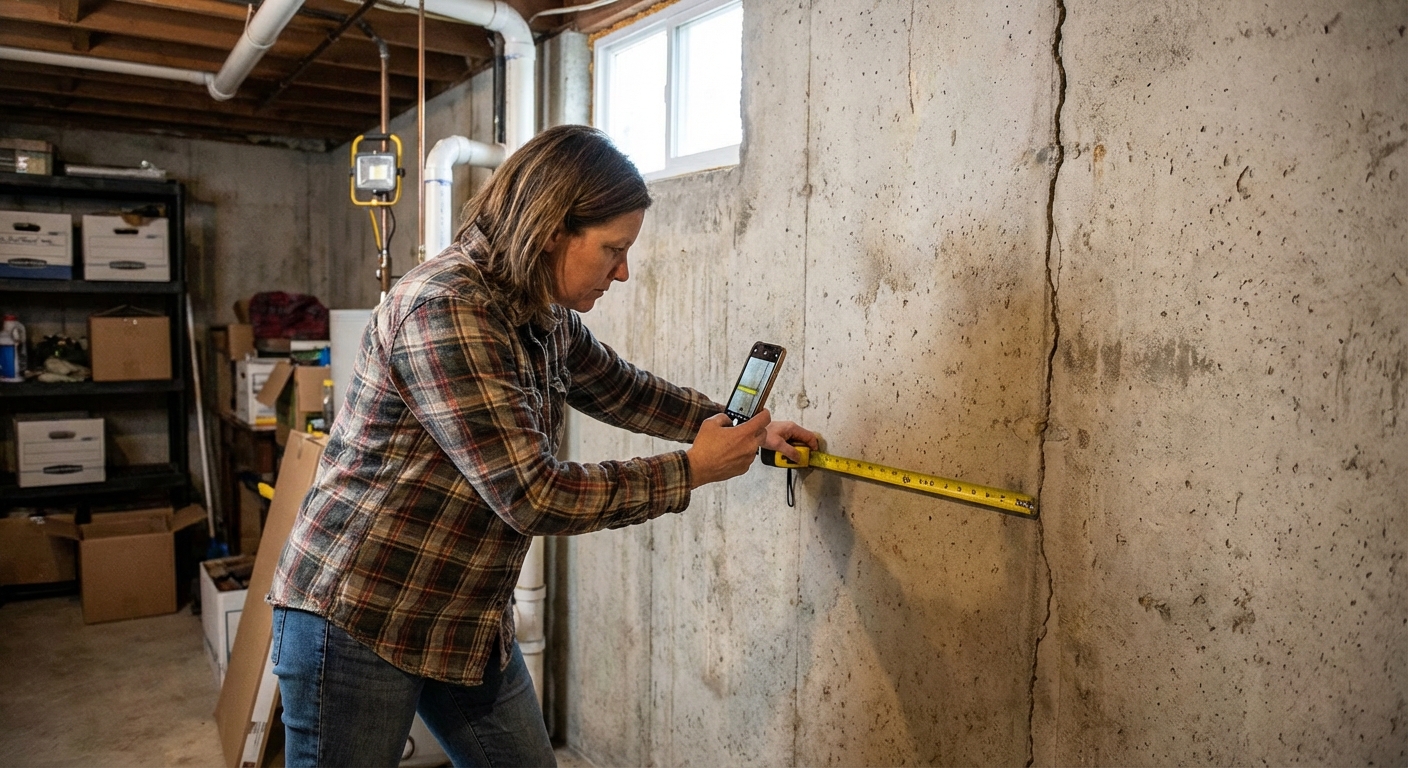
- Measure the widest point and write it down.
- Check for displacement, meaning one side is pushed in or out, or higher than the other.
- Check for bowing. Hold a long straightedge, level, or even a taut string line vertically against the wall. If you can see a gap in the middle, note the location and the largest gap you can measure.
- Look for water clues: damp streaks, white powdery deposits (efflorescence), peeling paint, rusty nails, musty smell.
- Check the rest of the house: new door rubbing, window that suddenly fights you, new drywall cracks above openings, uneven floors.
- Document: take a photo straight-on and one wider shot showing where the crack is on the wall. Date it.
Monitoring tip: Put a small piece of painter’s tape next to the crack and write the date and width. Re-check after heavy rain seasons and after winter.
Crack types and meaning
1) Hairline settling cracks
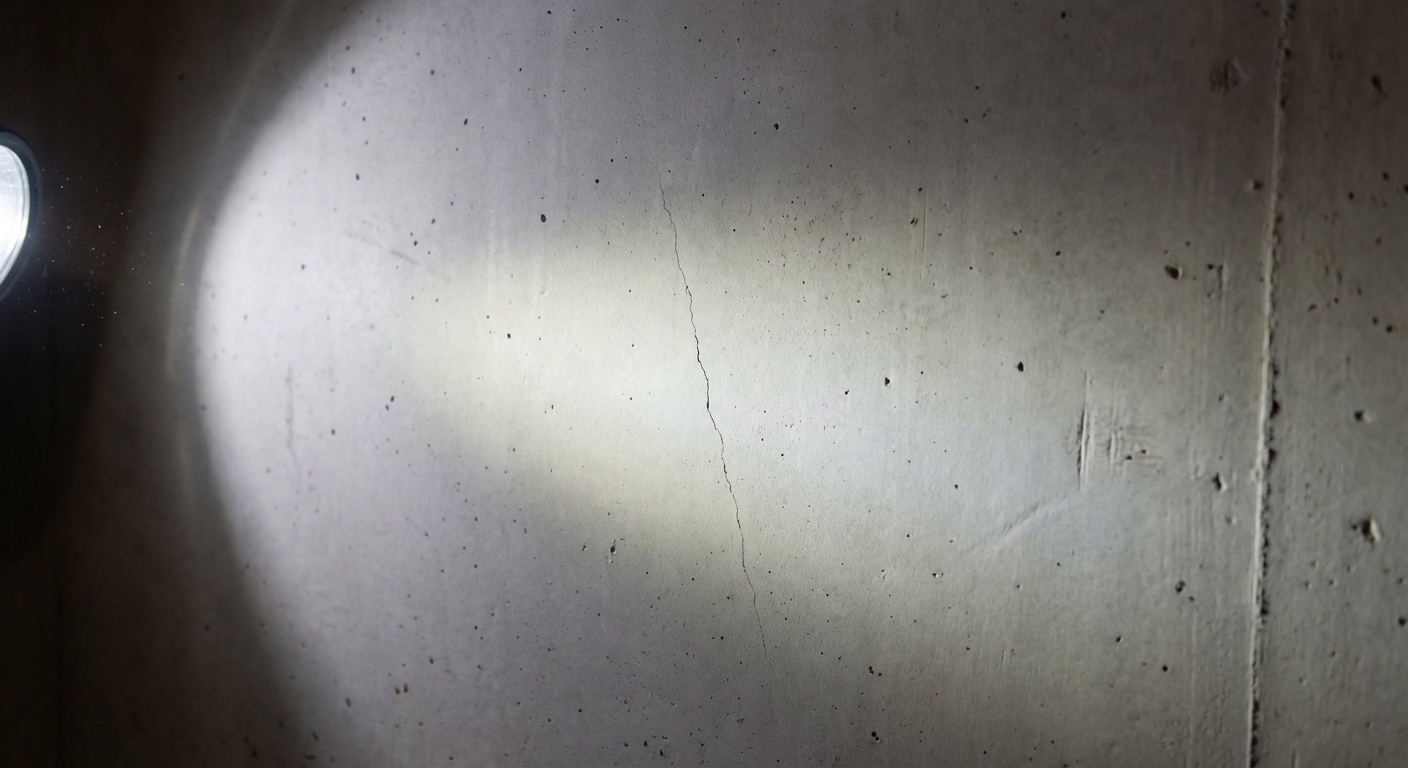
What they look like: very thin, sometimes web-like, sometimes random, sometimes straight. Common in new concrete and older homes alike.
What they usually mean: shrinkage during curing or minor settling over time. Most of these are cosmetic.
When they are still worth attention:
- They are in a basement wall and you see moisture or efflorescence.
- They are spreading quickly over months, not years.
- You see multiple new cracks at once after a major event (flooding, excavation next door, earthquake).
Typical next step: Monitor. Seal if you want to reduce moisture or radon entry, but do not expect cosmetics to solve movement.
2) Vertical foundation cracks
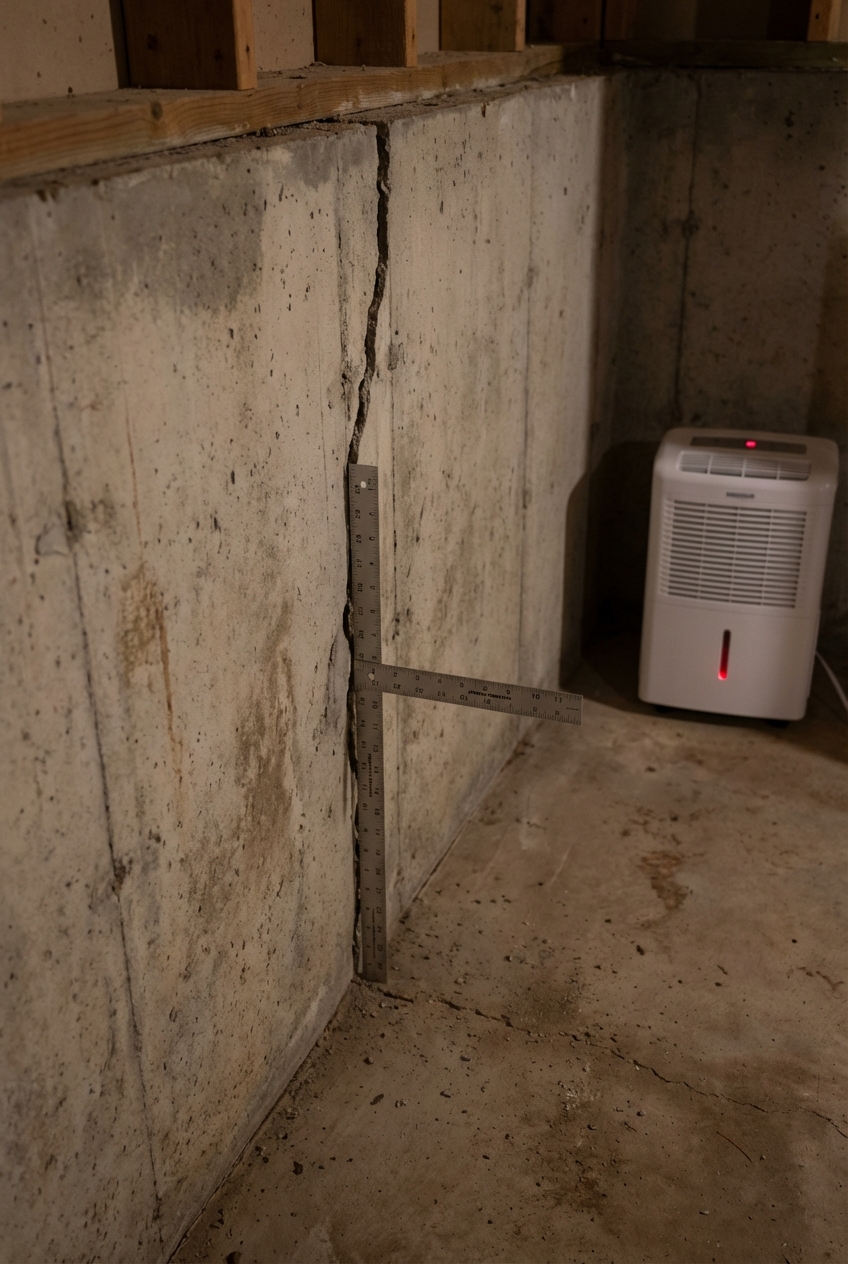
What they look like: mostly straight up and down. Sometimes slightly diagonal. Often in poured concrete.
What they usually mean: shrinkage, temperature effects, or settling. These are commonly structurally minor, but they can be a water pathway.
DIY is appropriate when:
- The crack is not widening over time.
- There is no wall bowing.
- It is primarily a leak problem, not a movement problem.
Call a pro when: the crack is wide, shows displacement, is paired with significant interior symptoms (doors suddenly sticking, floors sloping), or appears with multiple cracks after a change in drainage or landscaping.
3) Horizontal cracks
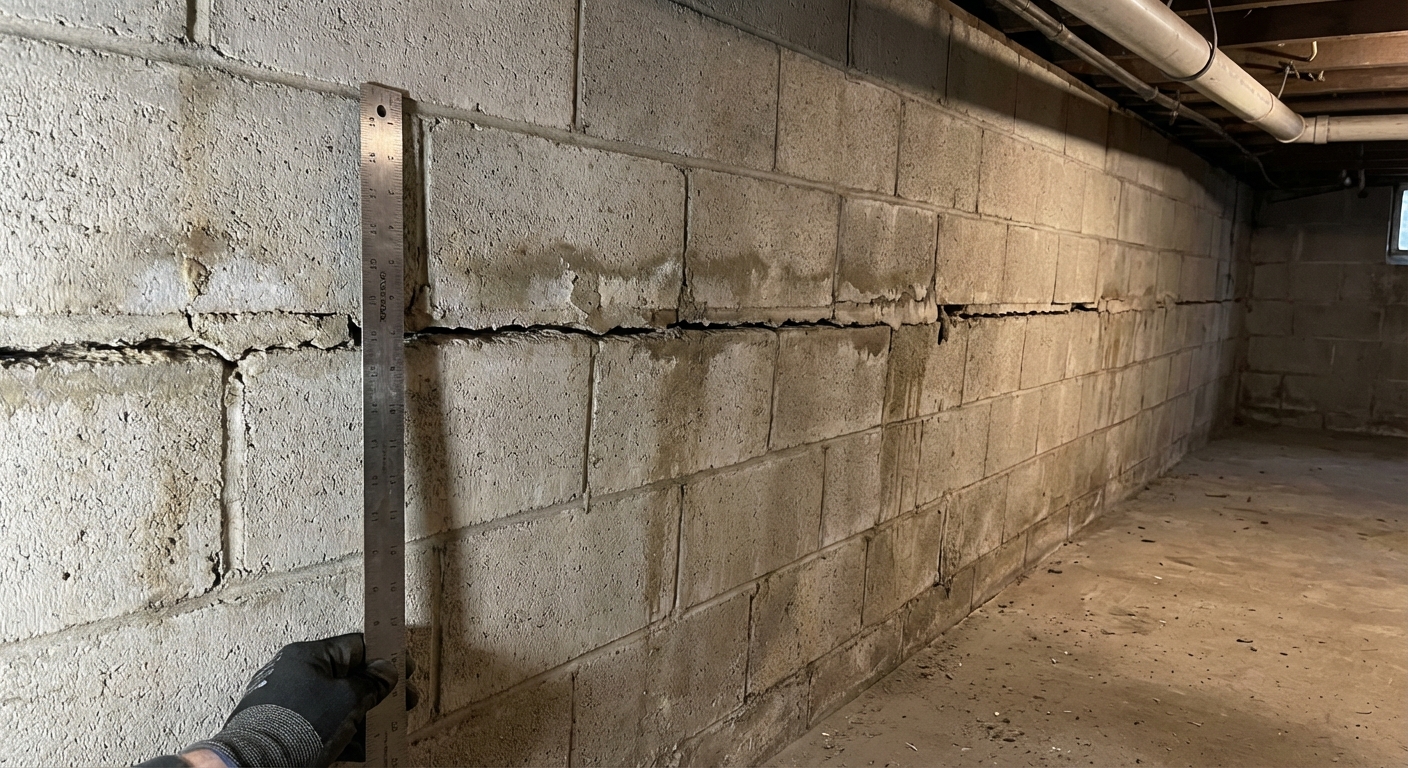
What they look like: left-to-right cracks, often mid-wall. In block walls, they may follow a mortar joint. In poured walls, they may run long and fairly straight.
What they usually mean: lateral pressure from soil and water pushing inward. This is one of the biggest red flags because it can indicate wall bowing or shear stress.
What to do: Document it and contact a structural engineer or a reputable foundation professional for evaluation. DIY patching does not address the pressure causing the crack.
4) Stair-step cracks in brick or block
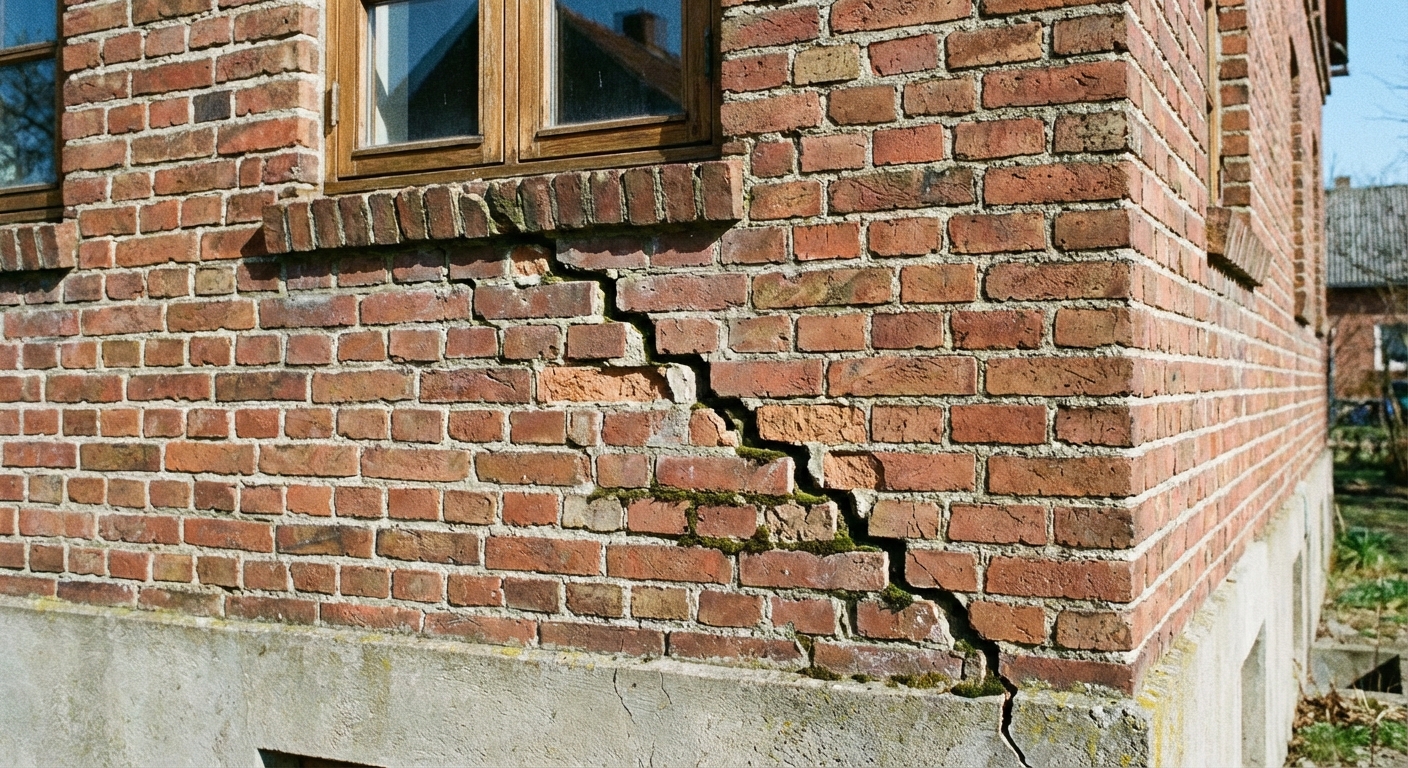
What they look like: a “staircase” pattern along mortar joints, typically in brick veneer or block walls.
What they usually mean: differential movement. One part of the foundation or wall is moving differently than another. That can be minor settlement, or it can be a sign of ongoing foundation movement.
Usually cosmetic when:
- The crack is thin and stable year to year.
- There are no matching symptoms inside (no new drywall cracking, no sticking windows).
- Drainage around the home is good and consistent.
More concerning when:
- The crack is widening or spreading.
- You see cracks radiating from window or door corners.
- Doors and windows are suddenly out of square.
What to do: If stable, you can repoint mortar and seal as maintenance. If active or paired with other symptoms, bring in an engineer.
5) Wide structural cracks
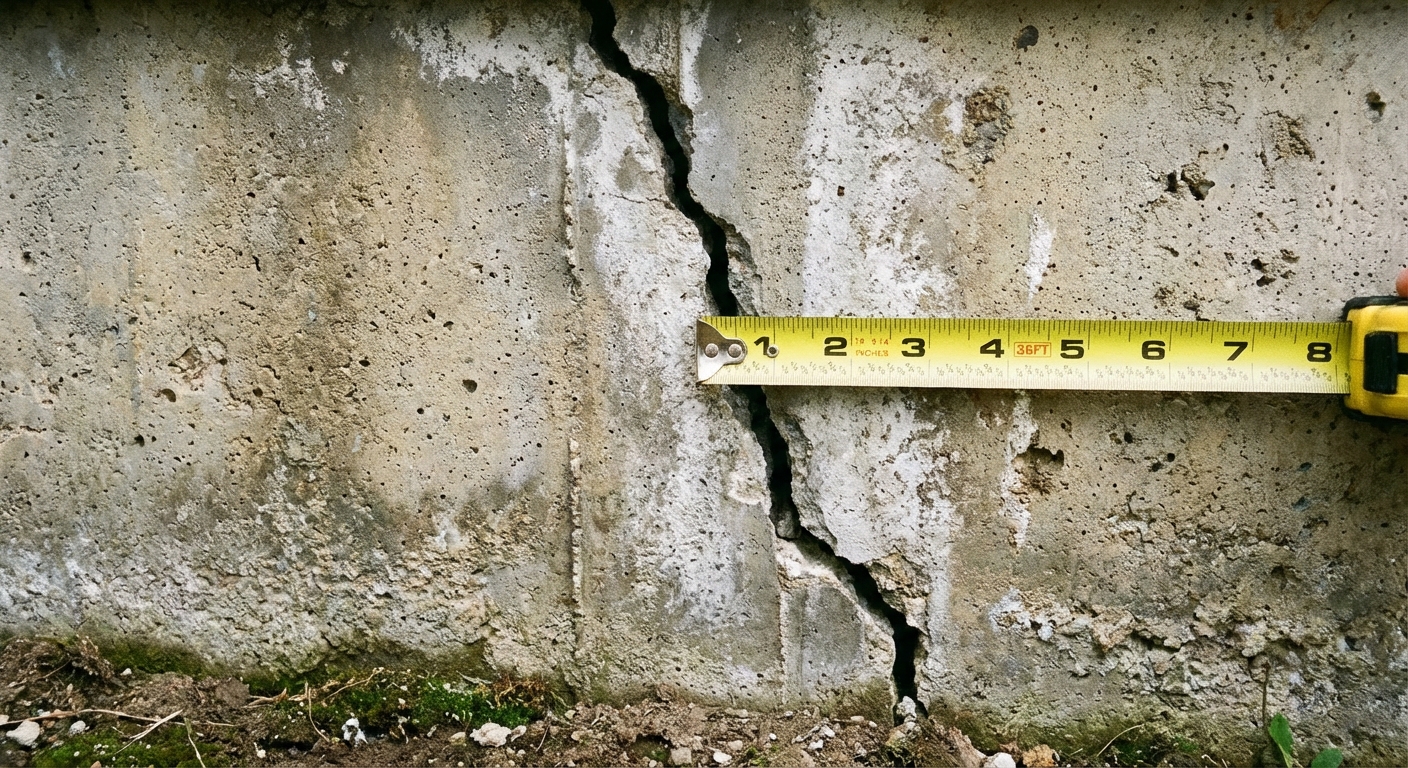
What they look like: wide openings, cracks with offset, or cracks that keep reopening after repair. Sometimes you can feel an edge if you run your finger across it.
What they usually mean: movement that may be ongoing, settlement, heaving, or structural stress. The wider and more displaced, the more urgent the evaluation.
What to do: Get professional eyes on it. A structural engineer can tell you whether the fix is drainage, reinforcement, underpinning, or simply sealing.
Drywall and slab notes
Two quick context points that can keep you from blaming the foundation for everything:
- Drywall and plaster cracks can happen from normal seasonal framing movement, drywall joints, and humidity changes. They still matter as a symptom, especially when they are new, repeating, or concentrated above doors and windows.
- Slab-on-grade homes can show red flags besides a visible crack. Watch for tile tenting, new soft spots or heave, noticeable differential elevation, and doors suddenly dragging across the floor.
Severity cheat sheet
Usually low concern
- Hairline cracks in poured concrete with no water intrusion
- Small vertical cracks that are stable and show no displacement
- Minor mortar cracking in brick veneer that does not grow
Worth a call
- Horizontal cracks in foundation walls
- Any crack with noticeable wall bowing
- Stair-step cracks paired with sticking doors or sloping floors
- Cracks that are widening over months
- Cracks with offset or differential height across the crack
Safety note: If you see sudden major movement after a flood, landslide, earthquake, or you suspect structural instability, prioritize safety and get professional help. If you suspect a gas leak or damaged utilities, leave and contact your utility provider or local emergency services.
When DIY makes sense
DIY can be great for sealing and stopping minor water intrusion. DIY is not great for correcting forces that are bending or moving a wall.
DIY is a good fit for
- Vertical cracks in poured concrete that leak during rain
- Small shrinkage cracks you want to seal for moisture control
- Minor surface spalling or small holes where water seeps
DIY is not a good fit for
- Horizontal cracks
- Bowing, bulging, or leaning walls
- Wide cracks with displacement
- Repeated re-cracking after you patch it
DIY repair options
Epoxy vs polyurethane injection
These are injection systems that fill the crack from the inside.
- Epoxy injection cures hard. It can provide structural bonding for certain non-moving cracks when properly installed, but it is not for actively leaking cracks and it is not a great match for cracks that are still moving.
- Polyurethane injection stays flexible and is great for stopping water, including in damp or actively leaking conditions. Many homeowners use it primarily as a waterproofing fix.
My practical take: If your main problem is an occasional leak through a stable vertical crack, polyurethane is commonly the more forgiving DIY choice. If you suspect ongoing movement, flexibility is your friend, but movement still needs to be addressed at the source.
Hydraulic cement
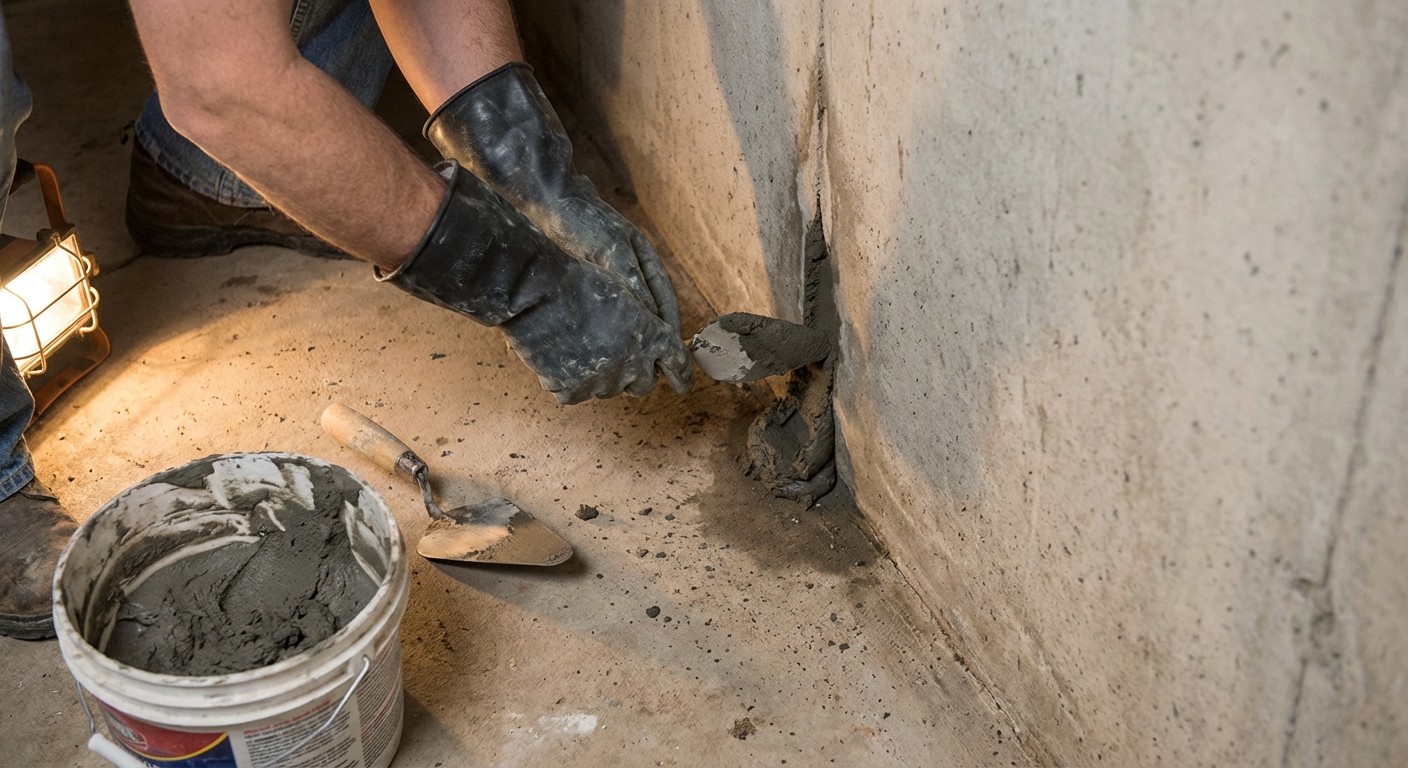
Many hydraulic cement products expand slightly as they cure, which helps plug small leaks. It works best for:
- Seepage at the wall-to-floor joint
- Small holes or honeycombing in concrete
- Spot repairs where water is coming through a defined point
Watch-out: It sets fast. Mix small batches, prep everything first, and follow the product directions. Also, think of it as a plug, not a magic fix. If you have serious hydrostatic pressure, the long-term solution is usually drainage and waterproofing, not stronger plugging.
Surface patching
Concrete patch and mortar repairs can improve appearance, but they do not stop movement. Use them when the crack is stable and you are basically doing maintenance.
Don’t skip the real fix
In my experience, many “foundation crack” problems are really drainage problems wearing a scary costume.
High-impact checks
- Gutters: clean them and make sure they are not dumping right at the foundation.
- Downspouts: extend them well away from the house.
- Grading: soil should slope away from the home so water does not pool at the wall.
- Sprinklers: avoid watering the foundation line.
- Mulch beds: do not build a “mulch dam” that holds water against the house.
If you reduce water around the foundation, you reduce hydrostatic pressure and soil movement, which reduces the forces that create and worsen cracks.
When to call an engineer
A structural engineer is your “diagnosis first” option. Engineers often provide evaluation and guidance without selling the repair work itself, which can reduce conflicts of interest. Some firms do offer repairs or have affiliations, so it is always fair to ask how they are compensated.
Call an engineer if you have
- Horizontal cracks
- Bowing or leaning foundation walls
- Wide cracks or cracks with offset or displacement
- Stair-step cracking plus interior symptoms (sticking doors, sloped floors, major drywall cracks)
- Rapid change over a single season
- Repeated repairs failing
What to bring: your dated photos, measurements, notes about when you first noticed it, and any history (recent grading, plumbing leaks, big storms).
Photo checklist
- Close-up photo with a ruler or tape measure
- Mid-range photo showing the crack within the full wall
- Exterior photo of the same area (if accessible)
- Any nearby downspouts, grading issues, or pooling water
- Interior symptoms: drywall cracks, door gaps, window corners
Common questions
Is any foundation crack normal?
Yes. Hairline shrinkage cracks and small vertical settling cracks are common. The goal is to spot the patterns that suggest pressure, movement, or water problems.
Can I just fill a crack and be done?
You can seal many cracks successfully, especially vertical ones. But if the cause is ongoing movement or lateral pressure, the crack will often return unless you address drainage or structural support.
Are cracks worse after heavy rain or winter?
They can be. Saturated soil pushes harder, and freeze-thaw cycles can expand small defects. That is why seasonal monitoring is so useful.
The calm takeaway
If your crack is thin, mostly vertical, and not changing, you can usually monitor it and optionally seal it for moisture control. If your crack is horizontal, wide, displaced, or paired with bowing and interior symptoms, it is time for an expert evaluation.
Document what you see, manage water around the foundation, and choose the right level of response. Most importantly, do not let a scary-looking line in concrete steal your weekend before you gather the facts.
Disclaimer: This article is general information, not professional advice. When in doubt, especially with signs of structural instability or utility damage, consult qualified local professionals.

About Marcus Vance
Content Creator @ Grit & Home
Marcus Vance is a lifelong DIY enthusiast and self-taught home renovator who has spent the last decade transforming a dilapidated 1970s ranch into his family's dream home. He specializes in budget-friendly carpentry, room-by-room renovations, and demystifying power tools for beginners. Through his writing, Marcus shares practical tutorials and hard-learned lessons to help homeowners tackle their own projects with confidence.