
🚨 In a DIY emergency or rush?
Skip the details and jump straight to our 30-second cheat sheet for the most crucial info.
I still remember the first time my garage chest freezer started beeping like a smoke alarm. I did the classic homeowner move: opened it, stared at the perfectly frozen chicken, and thought, "Why are you yelling at me?" The truth is a freezer alarm is often a warning about conditions, not proof your food is thawed.
This guide helps you decode the most common freezer beeps and high-temp alarms on fridge-freezers and chest freezers, then walk you through checks that usually solve it.
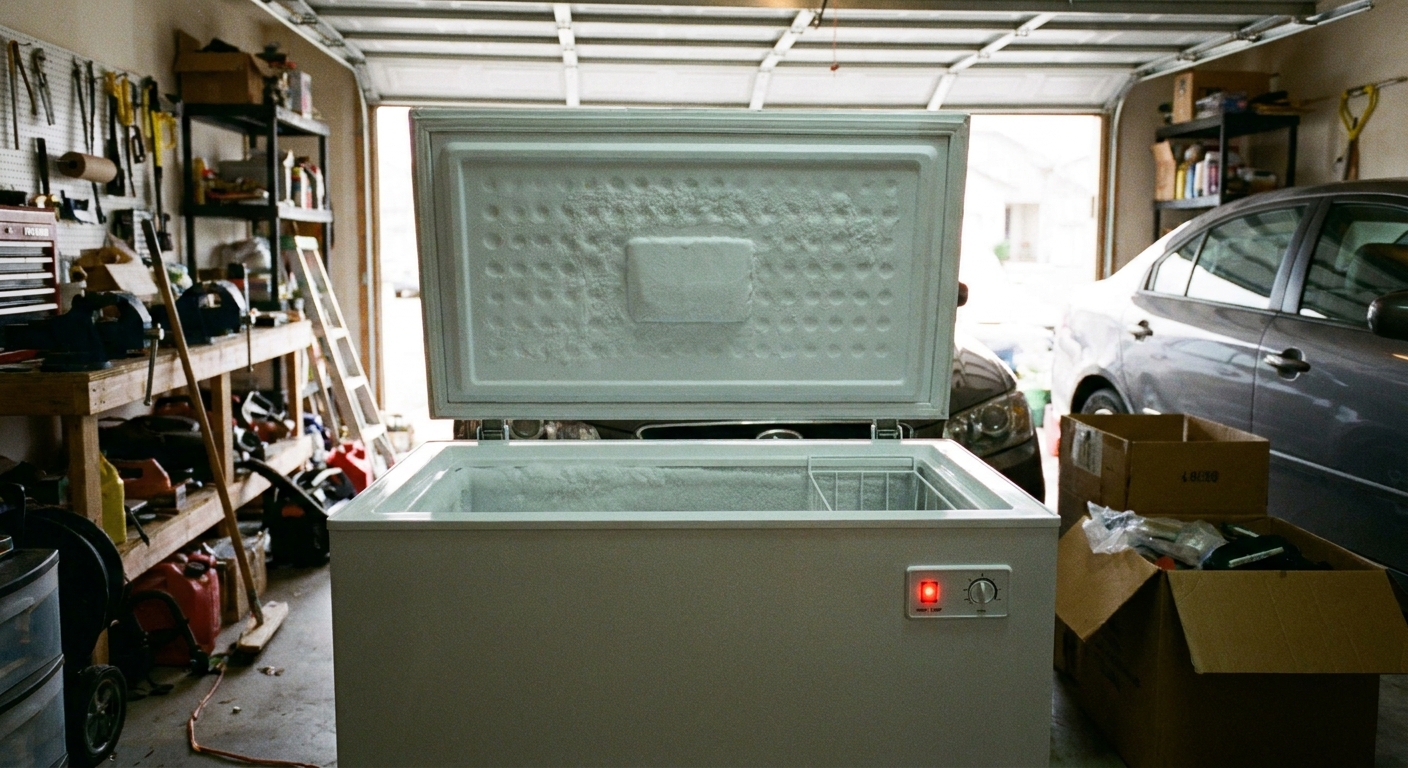
First, figure out what kind of alarm it is
Manufacturers use different patterns, but most alarms fall into three buckets. The quickest way to narrow it down is to answer two questions:
- Is the door or lid truly closed and latched?
- Is the freezer temperature actually rising, or did something temporary happen?
Quick note: On many models you can mute the alarm with an “Alarm,” “Mute,” or “Reset” button, and some require holding it for about 3 seconds. Some displays also show the warmest temperature reached since the alarm triggered.
1) Door-ajar alarm (chirps when the door looks shut)
This one is common on upright fridge-freezers. (Many chest freezers do not have a door-ajar switch, so they are more likely to alarm for temperature or power instead.)
- What it sounds like: repeating chirp or beep-beep-beep that stops when the door switch is pressed or the door is firmly closed.
- What it means: the freezer thinks warm room air is leaking in because the door is not sealing or the door switch is not registering “closed.”
2) High-temp alarm (freezer too warm)
Many units have a red light, “HI,” “H,” or a thermometer icon, sometimes with beeping.
- What it sounds like: steady beeping until you press an “Alarm,” “Reset,” or “Mute” button. Some will beep periodically as a reminder. This varies by model.
- What it means: the air temperature in the freezer has risen above a preset threshold for long enough to trigger the alarm.
3) Power-failure alarm (after an outage or unplug)
Some freezers remember that power was interrupted and will beep even after they are cold again.
- What it sounds like: beeping when power returns, sometimes with a blinking display or a “PF” style indicator on some models.
- What it means: power was lost long enough that the unit cannot guarantee temperatures stayed safe, so it wants you to check food.
Quick safety check: is food actually warming?
Before you get deep into troubleshooting, do a fast reality check. The alarm can be annoying, but the goal is food safety.
- Check the display temp if your unit shows it. Aim for 0°F in a freezer.
- Feel a couple of items in different zones. Rock-hard is good. Soft edges or wet packaging means you need to take this seriously.
- Look for melt and refreeze clues like frost melt lines on boxes or ice cream that looks re-frozen and gritty.
If you have a freezer thermometer, use it. I keep one in both my kitchen freezer and chest freezer because alarms are not always precise, and they can be conservative.
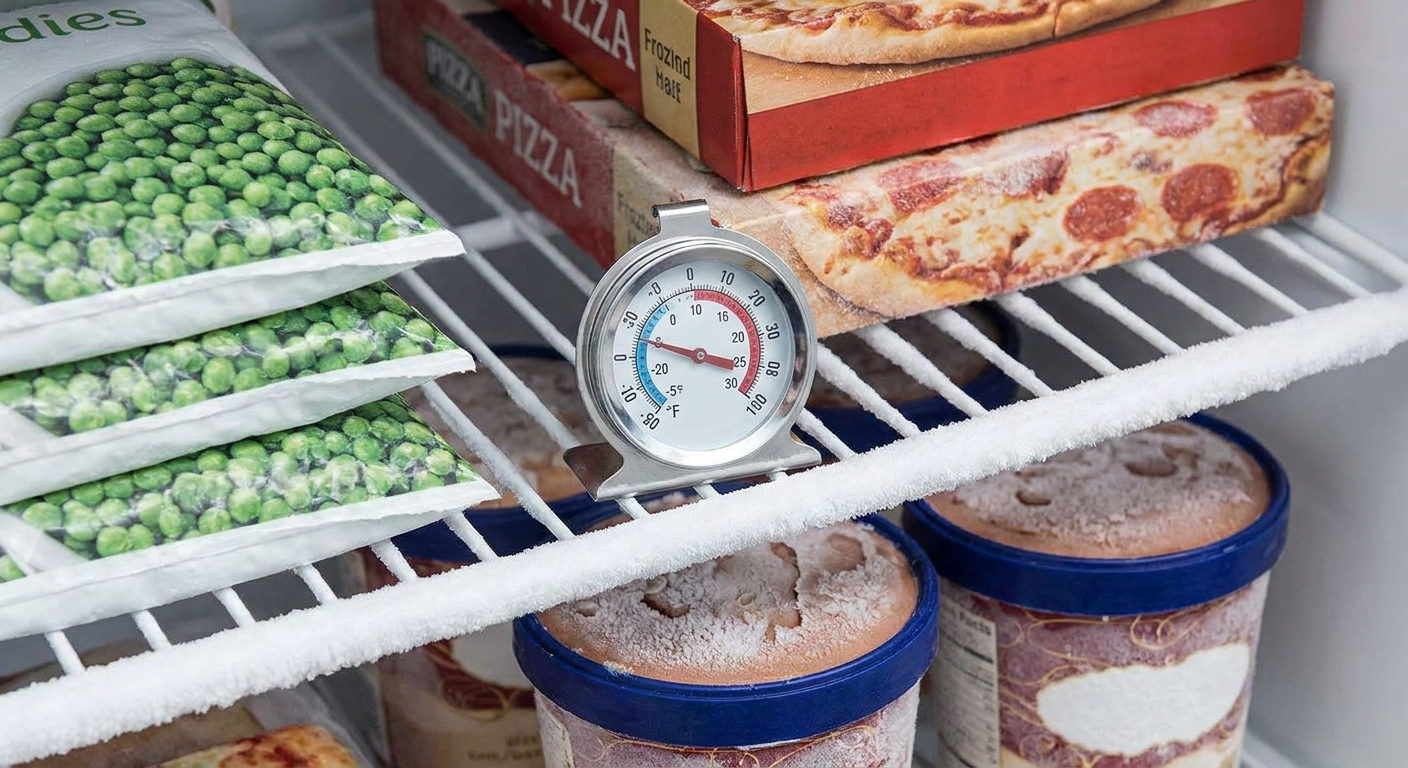
Food safety rule of thumb: Frozen food kept at 0°F stays safe indefinitely, although quality can decline. If food fully thaws and warms into refrigerator range, the common guidance is to treat it like any other perishable food and be cautious about anything that sat above 40°F for around 2 hours. When in doubt, throw it out.
Door-ajar beeping: what to check (even when it looks closed)
Start with the simple stuff
- Packages blocking the close: Pizza boxes, ice bins, or a bag caught at the edge can keep the seal from compressing.
- Drawer not fully seated: In uprights, a freezer drawer that is off its track can hold the door open by an eighth of an inch.
- Fridge not level: If the front feet are too low, some doors drift open. A slight backward tilt helps doors self-close.
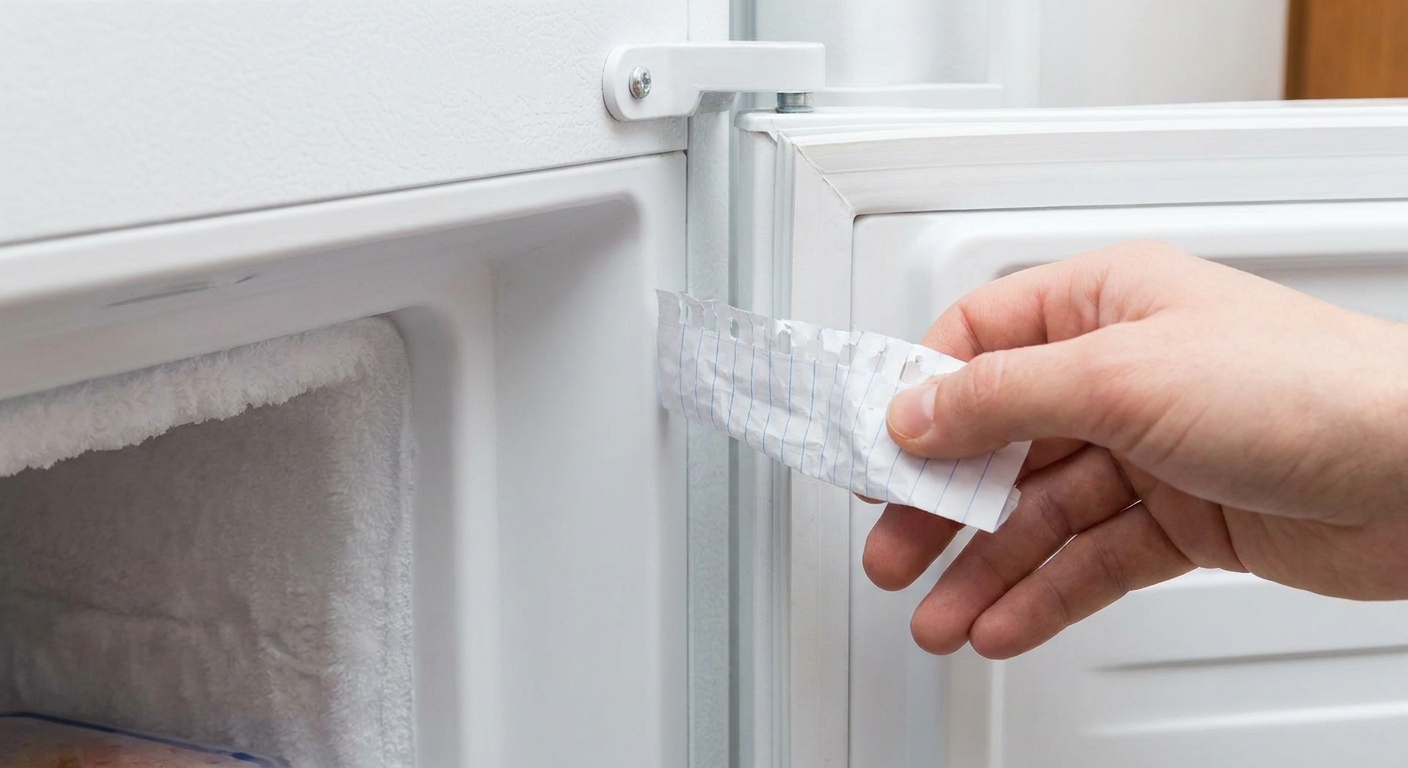
Do the paper test on the gasket
Close the door on a strip of paper (a dollar bill works too) and gently pull.
- If it slides out easily, that spot is not sealing well.
- Test all four sides, especially the corners.
Clean and soften a dirty gasket
Grease and crumbs prevent a good seal. Clean the gasket folds with warm soapy water, wipe dry, and check again. If the gasket is stiff, gently warming it with a hair dryer on low can help it re-seat, but do not overheat it.
Check the door switch
Many freezer alarms rely on the door switch, not the gasket. If the interior light stays on when the door is shut, or the alarm stops when you press the switch with your finger, the switch may be sticking or failing.
- Press it a few times and listen for a consistent click.
- Make sure the switch is not jammed with ice or grime.
High-temp alarm: the most common causes
You just loaded warm food
This is the “false alarm” that is not really false. Adding room-temperature meat, a big pot of leftovers, or several bags of groceries dumps heat into the freezer. The sensor sees the air warm up and sounds the alarm, even though your food may still be safe.
- What to do: Press “Alarm” or “Mute,” then keep the door shut and let the freezer recover.
- How long recovery takes: It depends on load size and the freezer, but several hours is normal.
- Tip: Spread new items out so cold air can circulate. Avoid stacking warm items into a solid block.
The door was cracked open longer than you realized
If someone grabbed an ice tray and did not fully close the door, the freezer can warm enough to trip the alarm without completely thawing everything.
Heavy frost or ice buildup is reducing cooling
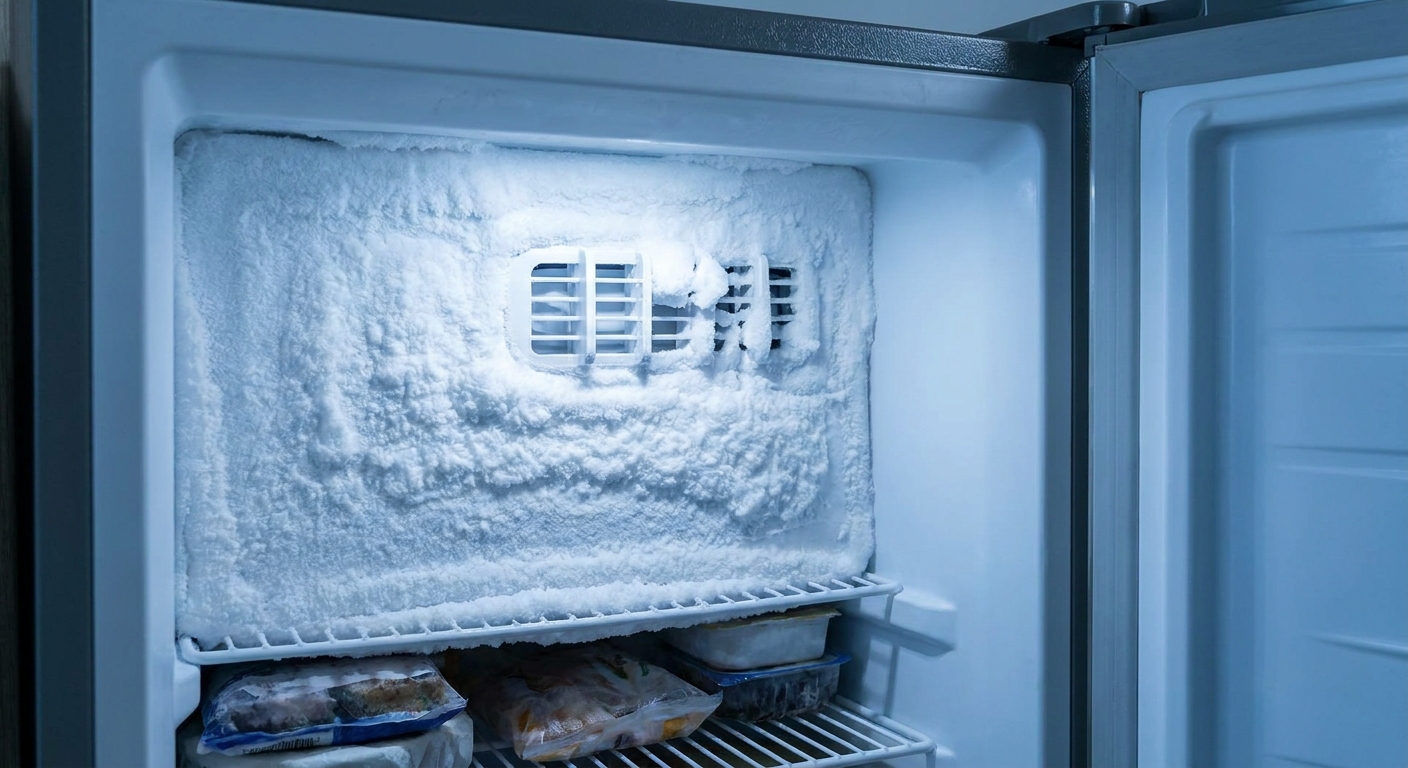
Thick frost can block vents and trap the fan behind ice. If you see snow-like frost blankets or a solid sheet of ice on the back wall of an upright, airflow is likely getting choked.
- Quick fix: Move food to coolers, unplug, and let it fully defrost with towels down.
- Important: Do not chip ice with knives or screwdrivers. It is too easy to puncture a liner or coil.
Heads up for uprights: If you fully defrost it and the back wall or vents ice back up quickly again, that often points to a defrost-system problem (heater, thermostat, sensor, or timer/control) or a fan issue. That is when I stop calling it “maintenance” and start thinking “service call.”
Airflow around the freezer is restricted
On a fridge-freezer, dusty condenser coils can make the whole system struggle, especially in homes with pets. On a chest freezer in a tight closet, poor ventilation can also hurt performance.
- Vacuum coils and the intake grill if accessible.
- Give the unit breathing room per the manual, often a few inches.
The room is too hot or it is a garage setup issue
Location can matter. In very hot garages, any freezer can struggle. In very cold garages, some refrigerator-freezer combos (especially those controlled primarily by a thermostat in the fresh-food section) may not run often enough, which can let the freezer section creep warmer.
This is not universal. “Garage-ready” models and many chest freezers tolerate garages better than some fridge-freezer combos. If the beeping happens mainly during heat waves or cold snaps, location might be part of the story.
Power-failure beeps: what to do after an outage
Power loss alarms are basically your freezer saying, “Something happened while I was off.” The right response is part reset, part food check.
Step 1: Confirm power is stable
- Make sure the cord is firmly seated.
- Check the outlet and breaker.
- If the outlet is GFCI protected and it tripped, reset it and watch it. If it keeps nuisance-tripping, look for other loads on the circuit and consider a dedicated circuit. Do not bypass required safety protection. If you are unsure what your local code allows, call an electrician.
Step 2: Mute the alarm, then verify temperature
Press “Alarm,” “Reset,” or “Mute.” If the freezer is still warming, the alarm will return later, which is helpful.
Step 3: How long food stays frozen
If the door stays shut, a commonly cited guideline is about 48 hours for a full freezer and about 24 hours for a half-full freezer. Real-world time depends on the freezer, room temperature, and how often it was opened, but this gives you a sanity check.
Step 4: Use the ice cube test if you are unsure
A simple trick: keep a small cup of water frozen in the freezer. If it ever melts and re-freezes, you will see the shape change. You can also freeze a coin on top of an ice cube in a cup. If the coin sank, the ice melted significantly.
This is not a lab instrument, but it is a solid, low-effort indicator that temperatures rose enough to thaw.
When the alarm means food is actually at risk
Alarms are designed to be early, but you should assume food safety becomes a real concern when any of these are true:
- The freezer interior feels cool instead of cold, and items are no longer rock-solid.
- The thermometer reads well above 0°F for an extended period.
- Ice cream is soft, then re-freezes with a gritty texture.
- You see water pooling, dripping, or obvious thaw in the bottom of an upright or in a chest freezer basket.
If you suspect food has warmed above safe temperatures, follow standard food safety guidance for thawed foods. As a general rule, if perishable food spent about 2 hours or more above 40°F, it is time to be ruthless. It hurts, but it is cheaper than getting sick.
If there is no alarm but your freezer is not cold
If your main symptom is poor freezing with little or no alarm activity, that is a different troubleshooting path. Head over to our dedicated guide: Freezer Not Freezing? 6 Fixes to Try First.
Call a pro if you see any of these signs
- Clicking plus no cooling (compressor start issues can be involved).
- Burning smell, hot cord, or visible scorch marks near the outlet.
- Oily residue near the compressor or refrigerant lines, or a strong chemical odor along with poor cooling.
- Repeated high-temp alarms that return within hours even with the door closed and vents clear.
- Rapid frost return after a full manual defrost on an upright.
My DIY rule is simple: I will happily clean, defrost, level, and test switches. Once it looks like sealed-system or electrical diagnosis, I bring in someone with the right tools.
FAQ
Why is my freezer beeping but everything is still frozen?
Most often, it is a door-ajar alarm caused by a poor seal, a drawer not seated, or a switch not registering closed. It can also be a high-temp alarm triggered by adding warm food or holding the door open too long, even though the food mass stayed frozen.
How long can a freezer be warm before food starts to thaw?
It depends on how full the freezer is, how often it is opened, and room temperature. A full freezer holds temp longer than a half-empty one. During an outage with the door shut, a rough guideline is about 48 hours (full) or 24 hours (half-full). Instead of guessing, check a thermometer and the texture of several items.
My door is shut but the alarm keeps going. What is the fastest check?
Press on the door firmly, then try the paper test around the gasket. Also press the door switch by hand (if your model has one). If the alarm stops with the switch pressed, the switch or its alignment is a prime suspect.
Should I silence the alarm?
Yes, after you understand what it is warning you about. Mute it so you can work, but do not ignore a recurring high-temp alarm. It is there for a reason.
The 30-Second Cheat Sheet
Essential takeaways for: Freezer Beeping or High-Temp Alarm? What to Check
Identify the beep fast
- Door-ajar chirp: Stops when the door is firmly shut or when you press the door switch. (Many chest freezers do not use a door switch, so this is more common on uprights.)
- High-temp alarm: “HI” light or display, beeps until muted. Means freezer air temp rose above a threshold. (Varies by model.)
- Power-failure beep: Starts when power returns after an outage. Wants you to check temps and food. (Some models show “PF.”)
30-second checks
- Confirm the door is truly closed: no boxes, drawers seated, nothing pinched in the seal.
- Check for a weak seal: do the paper test around the gasket.
- Press the door switch by hand (if your unit has one). If the alarm changes, the switch may be sticking or misaligned.
- If you just added groceries or left the door open: mute, keep it shut, and wait. Recovery can take hours.
When to worry about food
- Items are no longer rock-hard.
- Thermometer stays well above 0°F.
- Ice cream is soft or re-frozen gritty.
If it is not beeping, just not cold
That is a different problem. Use our guide Freezer Not Freezing? 6 Fixes to Try First.
Call a pro if
- Burning smell, hot cord, or outlet damage.
- Oily residue near the compressor or lines, or a sharp chemical smell with poor cooling.
- High-temp alarm returns quickly even after clearing airflow and confirming the door seal.
💡 Tip: Scroll up to read the full article for detailed, step-by-step instructions.
⬆️ Back to top
About Grit
Content Creator @ Grit & Home
Grit is Grit & Home’s little blue clay courier, delivering big questions about the place you call home. Expect practical ideas, a raised eyebrow, and a satchel full of curiosity.