
🚨 In a DIY emergency or rush?
Skip the details and jump straight to our 30-second cheat sheet for the most crucial info.
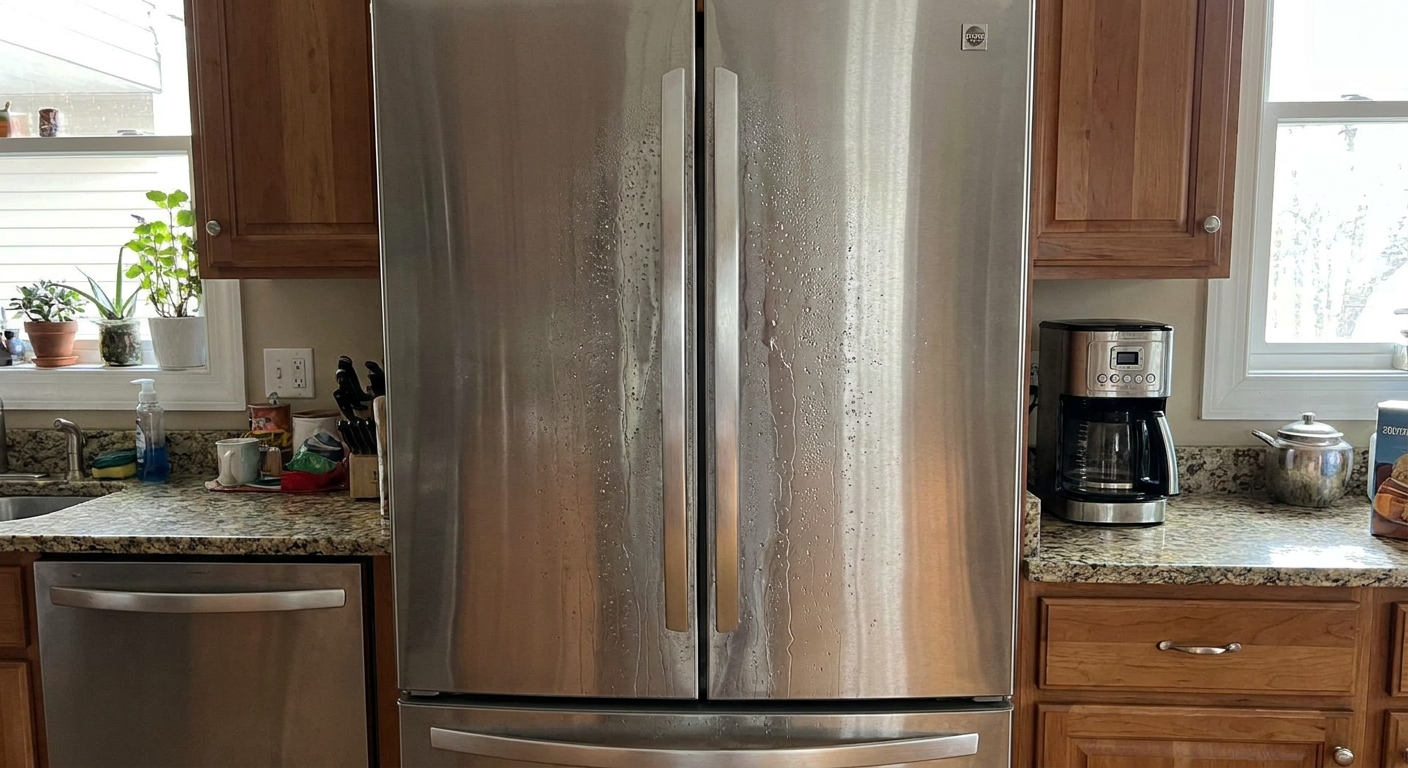
If you’ve ever grabbed the vertical strip where the two French doors meet and thought, why is this thing warm or why is it wet, you’re not alone. That center strip is one of the most common “is my fridge dying?” panic moments I hear about.
Here’s the good news: in many cases, a warm center strip is normal. It can even be intentional. But a center strip that’s too hot to keep your hand on, constantly sweating, or leaving puddles is a sign to check a few specific trouble spots.
Quick note: designs vary by brand and model. Some units use an electric anti-sweat heater, some route a bit of sealed-system heat through cabinet edges, and some only warm this area under certain conditions or settings. When in doubt, your owner’s manual is the tie-breaker.
What the center strip is
On most French door refrigerators, the “center strip” is called the mullion or mullion flap. Depending on the model, it may be:
- A fixed center post attached to the cabinet
- A flip mullion attached to one door that swings into place when you close it
Manufacturers often add a small amount of warmth here. The goal is simple: keep the seal area warm enough that humid kitchen air does not condense into water droplets right where the doors meet.
So if the strip feels slightly warm at times, that can be perfectly normal.
Normal vs problem
Usually normal
- The strip feels mildly warm, not painful to touch
- Warmth comes and goes, especially during humid weather or heavy use
- No water droplets, no dripping, no staining
Likely a problem
- The strip is very hot for long periods, or too hot to keep your hand on
- There is visible sweating (droplets) or water running down the front
- You notice frost near the inner edges of the doors or on the mullion flap
- The doors feel like they are not closing cleanly unless you push them
- You have to wipe the center strip daily
Common causes
1) Anti-sweat heat is doing its job
Many refrigerators warm the mullion area as part of normal operation, but how they do it varies. Some use a dedicated heater, some use a thermostat-controlled circuit, and some tie it to a setting like Energy Saver or Humidity Control. Not all models have humidity sensors.
If your kitchen is humid or you have lots of door openings, the fridge may run longer and the center strip may feel warmer.
2) Door alignment is slightly off
French door fridges are picky about alignment. If one door sits a touch higher, lower, or sticking out, the gaskets may not compress evenly along the center seam. That tiny gap lets humid air leak in, which leads to condensation and can make the warm strip more noticeable.
What you’ll notice: one door looks like it is sticking out, or the center seam is not consistent top to bottom.
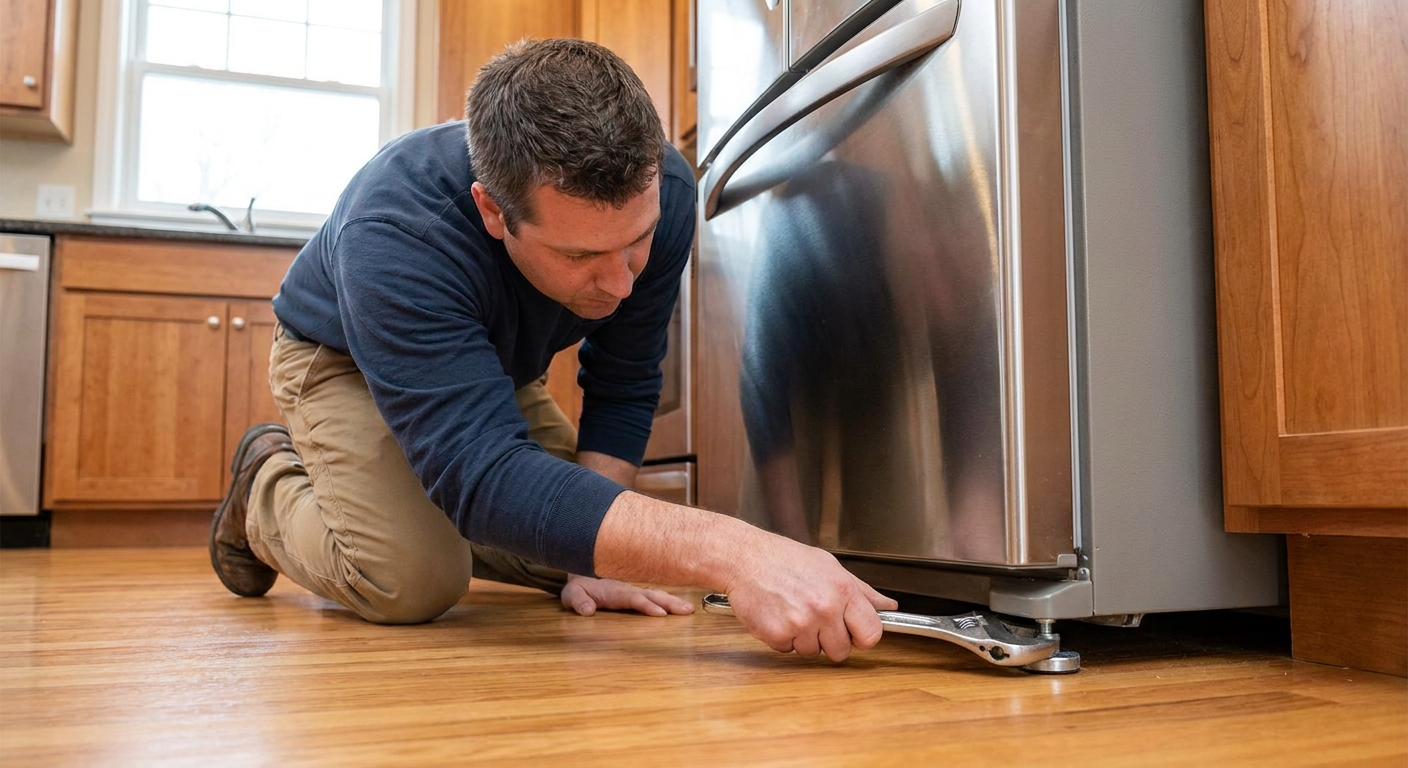
DIY fix: level the cabinet so it is stable and very slightly tilted back (many manufacturers recommend this so doors self-close). If your model has door height adjustment cams or screws, fine-tune the door so the top edges and center seam line up.
Manual reminder: door adjustment methods vary a lot. Check your manual before you start cranking on bolts.
- Empty the door bins enough to reduce weight while adjusting.
- Make small changes and re-check the seal.
3) Gasket gaps, tears, or dirty sealing surfaces
This is the big one. If the door gasket is not sealing at the center, humid room air keeps sneaking into the seam area and condensing. That can also make the center strip feel warmer, since the fridge is working harder to control moisture and temperature.
Quick tests:
- Flashlight test: put a flashlight in the fridge, turn off the kitchen lights, and look for light leaking at the center seam.
- Dollar-bill test: close a dollar bill in the gasket at the center seam. You should feel firm resistance when you pull it out. Test top, middle, and bottom.
DIY fixes:
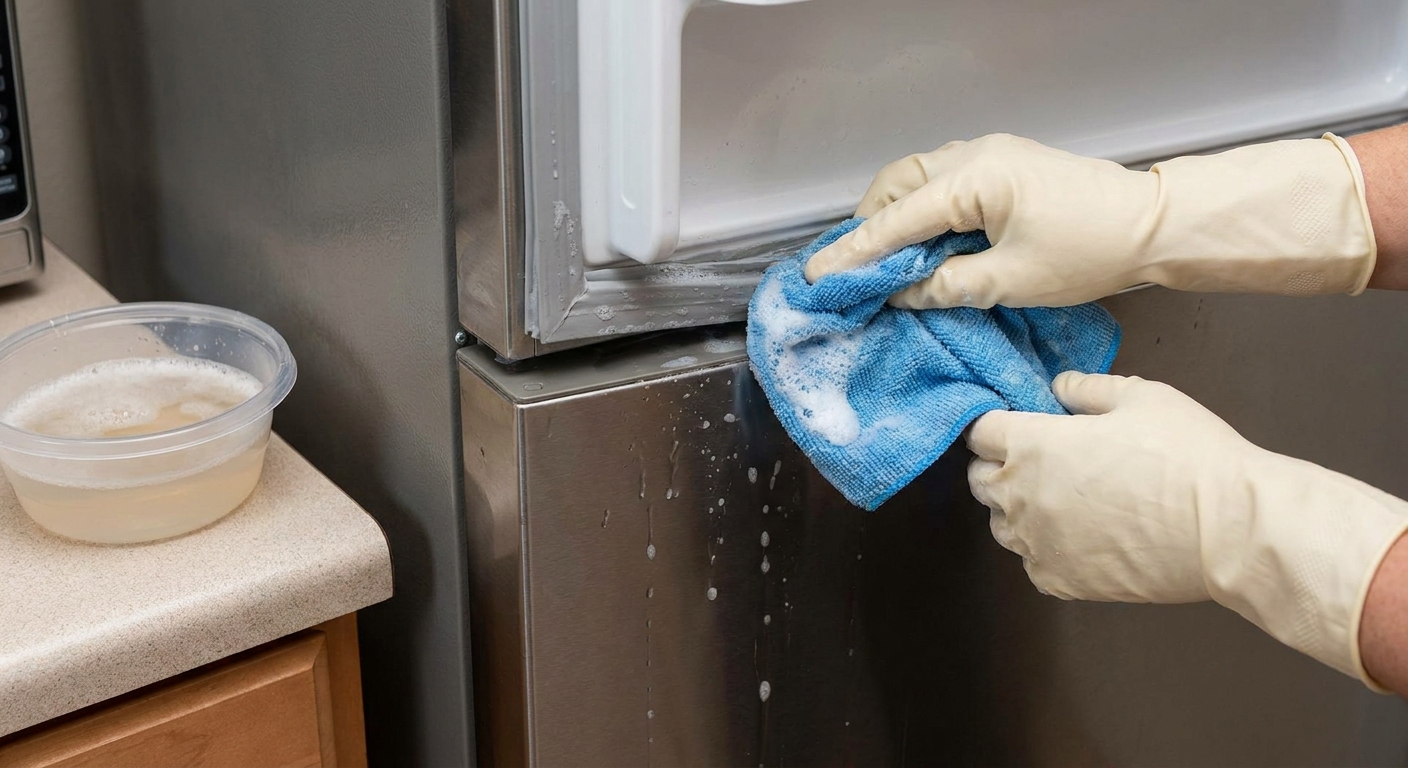
- Clean the gasket and mating surface with warm soapy water, then dry. Sticky spills can hold the gasket open.
- Warm and reshape a slightly warped gasket using a hair dryer on low. Keep it moving and do not overheat one spot.
- Replace the gasket if it is torn, hardened, or permanently deformed.
4) Flip mullion is not closing right (model-specific)
On many French door units, the mullion flap on one door needs to flip into position when the door closes. If it is not flipping, it can:
- Leave a gap that causes sweating
- Cause the door to bounce back open
- Lead to frost along the inner edges
Some flip mullions also have a small heater built in. If it fails, you may see condensation or light icing right where the two doors meet.
DIY checks:
- Open the right and left doors and watch the mullion flap as you close. It should move freely and sit flat.
- Check for food packaging, bins, or a shelf edge preventing the door from closing fully.
- Look for sticky residue on the hinge side of the flap and clean it.
If the mullion heater has failed: this usually moves from DIY into “order parts or call service” territory, because access varies and some mullions are wired through the door.
5) Kitchen humidity is high
Even a perfectly sealing fridge can sweat at the center strip if the room is humid enough. Common culprits:
- Cooking without using an exhaust fan
- A basement kitchen or laundry area with high humidity
- Seasonal humidity spikes
- HVAC supply vents blowing moist air directly at the fridge
DIY fixes:
- Run your range hood while boiling or simmering.
- Use a dehumidifier and aim for roughly 30 to 50 percent indoor humidity. Lower than that can feel dry for some people.
- Make sure your fridge is not shoved tight against a wall where airflow and heat shedding are restricted.
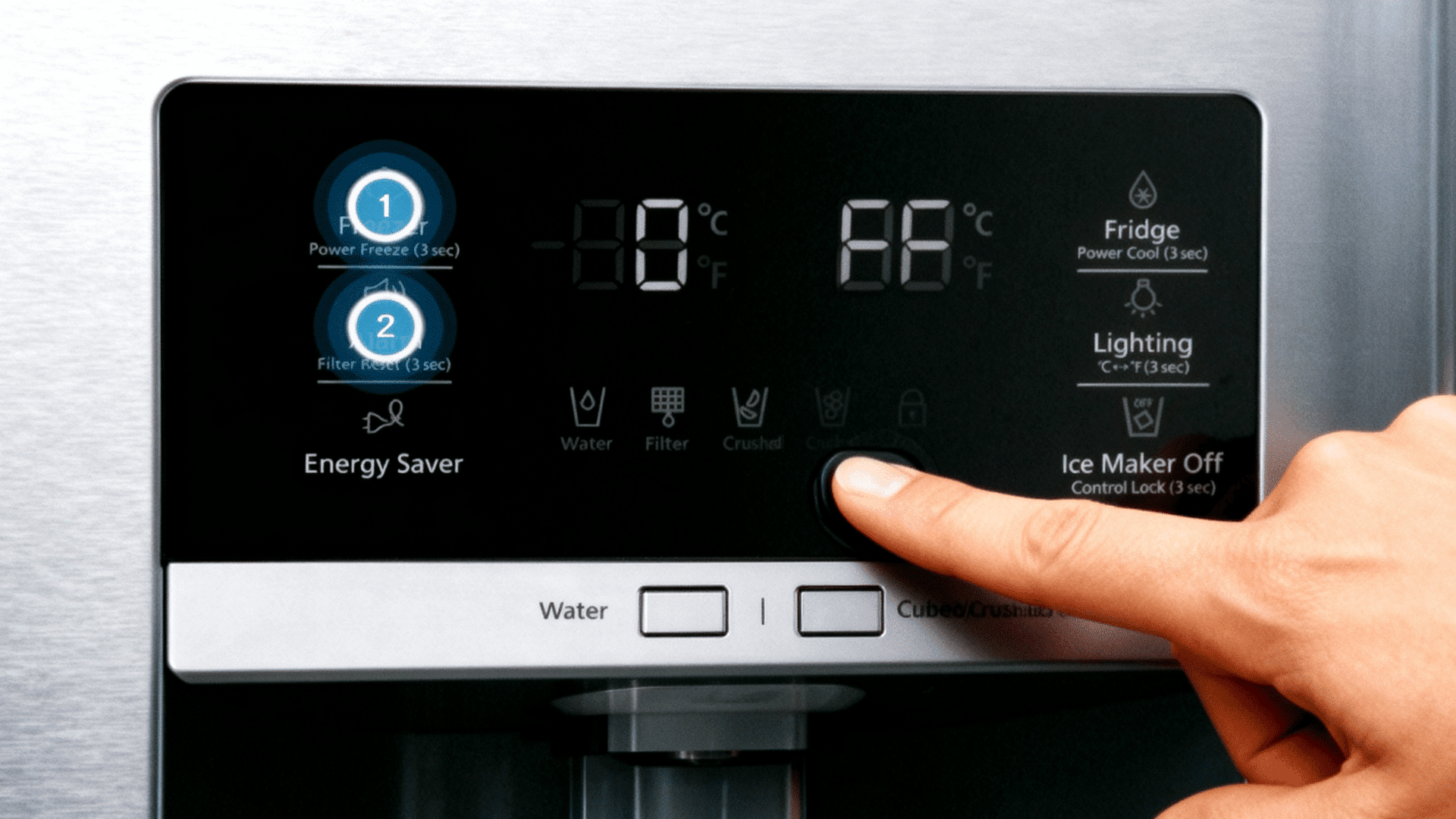
6) Energy Saver settings are confusing on purpose
This one trips people up because brands label it differently.
- On some refrigerators, turning Energy Saver ON reduces anti-sweat heat, which can increase sweating in humid conditions.
- On other models, a Humidity Control setting may increase heater use to reduce condensation.
Practical move: if you are getting condensation, toggle the setting and monitor for 24 hours. You are not “breaking” anything, you are just changing how aggressively the fridge prevents sweat.
7) Temp settings are too cold
If the fresh-food section is set unusually cold, you can increase the odds of condensation or frost around the seam, especially if the seal is not perfect. As a general baseline, many manufacturers target about 37°F (3°C) for the fridge and 0°F (-18°C) for the freezer, but follow your manual if it recommends something different.
8) Airflow issues and dirty condenser coils
If condenser coils are packed with dust, or if the toe-kick vents are blocked, the refrigerator may run hotter and longer. That can make cabinet-edge warmth more noticeable and can contribute to condensation problems.
DIY fix: vacuum the condenser coils (location varies: behind a grille at the bottom front, or on the back), and keep the toe-kick area clear. If you are not sure where yours are, check the manual.
First 15 minutes
- Wipe it dry so you can tell if it returns quickly.
- Check door closure for bins hitting, a drawer not fully shut, or food sticking out.
- Clean the gaskets and the cabinet surface they seal against.
- Do the dollar-bill test at the center seam (top, middle, bottom).
- Confirm the fridge is level and slightly tilted back so doors self-close.
- Toggle Energy Saver or Humidity Control and observe for a day.
- Verify temp settings are reasonable (around 37°F and 0°F, unless your manual says otherwise).
- Check airflow and clean coils if they are dusty.
When to call service
I’m all for DIY, but there are a few signs that point to a component problem instead of a simple seal or humidity issue.
Call service or schedule a repair if:
- The center strip becomes too hot to comfortably touch or smells like hot plastic
- Condensation is heavy and constant even after cleaning, leveling, coil airflow checks, and confirming a good seal
- The mullion flap is broken, loose, or the door wiring looks damaged
- You see error codes related to door heaters, mullion heaters, or humidity control
- There is water inside near the center seam plus icing, which can indicate airflow or defrost issues beyond the mullion
Safety note: if you suspect an electrical fault, unplug the refrigerator and do not keep “testing” it by touching the hot area.
FAQ
Should the center mullion be warm?
Often, yes. Many French door fridges warm the center strip to reduce condensation, either with a small heater or by routing system heat nearby. It should feel mildly warm, not dangerously hot.
Why does it sweat only in summer?
Summer humidity is the usual culprit. Higher indoor humidity plus frequent door openings can overwhelm the seals and trigger condensation. Adjusting humidity or anti-sweat settings and confirming a tight seal typically fixes it.
Can a bad gasket cause a warm center strip?
Yes. If the gasket leaks, humid air enters the seam area and condenses. That moisture problem can also make the strip feel warmer during operation.
Is it okay to turn off anti-sweat heat?
On models with an “Energy Saver” toggle, reducing heater use can save a little power, but it can also cause sweating in humid climates. If you see condensation, you generally want the anti-sweat function more active, not less.
Bottom line
A warm center strip on a French door refrigerator is often normal. It is frequently the fridge preventing condensation at the seam, although the exact design varies by model.
A sweaty strip, though, is your fridge telling you one of a few things: the seal is leaking, the doors are slightly out of alignment, the settings are not ideal, airflow is restricted, or your kitchen humidity is high.
Start with the simple stuff: clean the gasket, verify the seal with the dollar-bill test, level the fridge, check your Energy Saver or humidity setting, confirm reasonable temperature setpoints, and make sure the condenser area can breathe. If the strip is uncomfortably hot or the sweating never stops, that is when it is time to bring in service to check the mullion heater and door components.
The 30-Second Cheat Sheet
Essential takeaways for: French Door Fridge Hot or Sweaty Center Strip: Causes and Fixes
What’s normal
- Slight warmth on the vertical center strip where the doors meet (the mullion) can be normal. Many French door fridges use an anti-sweat heater or route a little system heat through this area to prevent condensation.
- Warmth may increase during humid weather, long run times, or heavy door use.
What’s not normal
- Center strip is too hot to keep your hand on comfortably
- Constant sweating, dripping, or puddles
- Frost/ice along the inner door edges or mullion flap
Fast DIY checks (in order)
- Wipe it dry so you can tell how fast moisture returns.
- Clean door gaskets and the surfaces they seal against.
- Dollar-bill test at the center seam (top, middle, bottom). Weak grip = air leak.
- Check alignment: doors should be even and close smoothly. Level the fridge and tilt slightly back so doors self-close.
- Inspect flip mullion (if equipped): it must swing freely and sit flat when closed.
- Toggle “Energy Saver” or “Humidity Control” and monitor for 24 hours (labels vary by brand).
- Check temp settings: aim around 37°F (3°C) fridge, 0°F (-18°C) freezer, or follow your manual.
- Improve airflow: clean condenser coils and keep the toe-kick vents clear.
- Lower room humidity: run range hood, use a dehumidifier, aim for ~30 to 50 percent.
When to call service
- Strip is scorching hot, smells hot, or you suspect an electrical issue
- Sweating continues after gasket cleaning, sealing checks, leveling, airflow checks, and temp verification
- Mullion flap is broken or you suspect a failed mullion heater
- Error codes related to door or heater functions
💡 Tip: Scroll up to read the full article for detailed, step-by-step instructions.
⬆️ Back to top
About Marcus Vance
Content Creator @ Grit & Home
Marcus Vance is a lifelong DIY enthusiast and self-taught home renovator who has spent the last decade transforming a dilapidated 1970s ranch into his family's dream home. He specializes in budget-friendly carpentry, room-by-room renovations, and demystifying power tools for beginners. Through his writing, Marcus shares practical tutorials and hard-learned lessons to help homeowners tackle their own projects with confidence.