
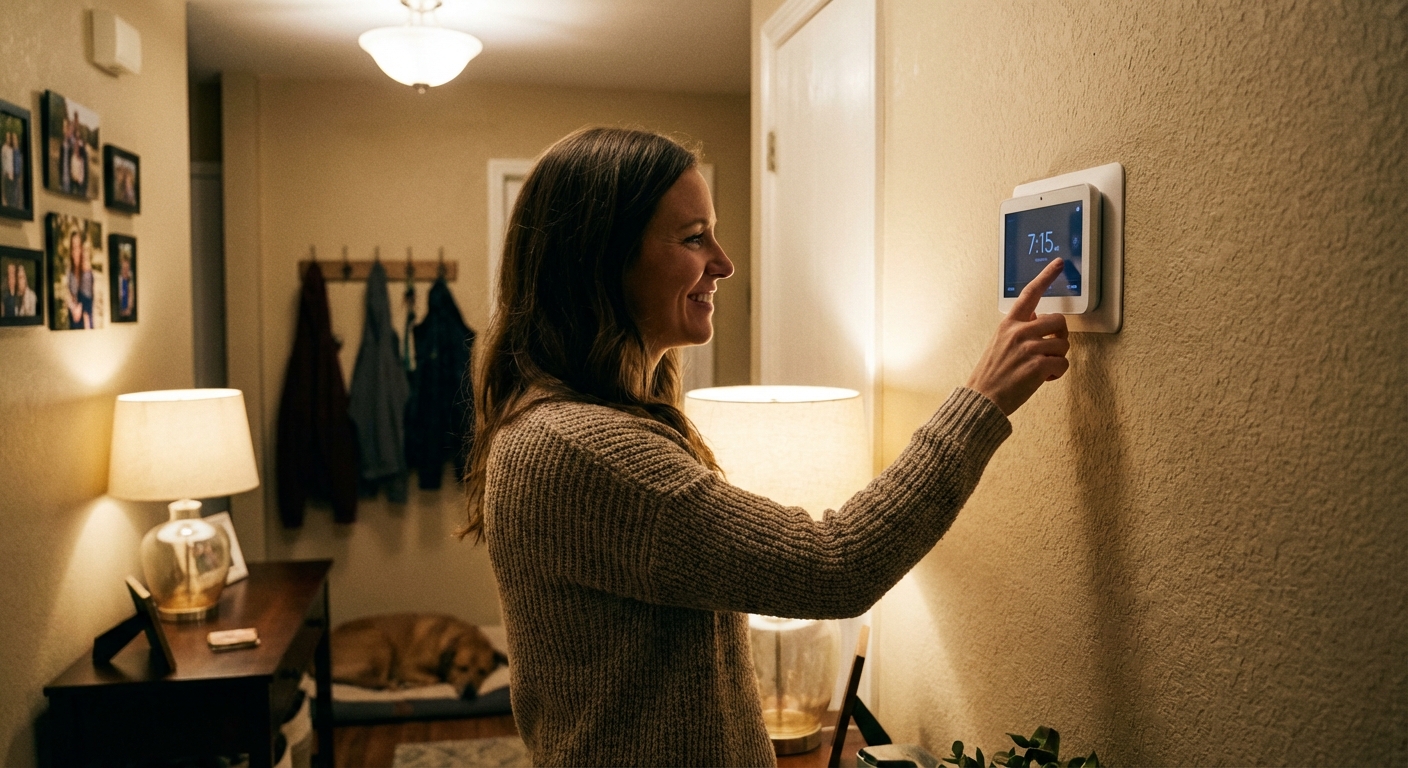
Nothing makes your stomach drop like hearing the furnace kick on, then feeling cold air coming out of the vents. The good news: this specific symptom usually narrows the problem down fast.
This guide is for when your furnace turns on and blows air, but it is not heating it. If your furnace will not power on at all (no fan, no sound, no airflow), skip to the section near the end on that difference, because you will troubleshoot it differently.
First, a quick safety gut check
I am all for DIY, but I am also all for keeping your eyebrows and your house.
- If you smell gas (rotten egg smell), leave the house and call your gas utility or emergency services from outside. Do not flip switches, light anything, or use your phone inside.
- If you see soot around the furnace, or you have headaches or nausea when it runs, shut it down and call a pro. Those can be combustion or venting issues.
- Before opening panels, turn power off at the furnace switch or breaker.
For everything below, if you ever feel unsure, it is completely fine to stop and call an HVAC tech. A service call is cheaper than guessing wrong around flame and gas.
Why it blows cold air even though it is running
In a typical forced-air furnace, there are two main jobs happening:
- The blower fan moves air through your ductwork.
- The burner and heat exchanger heat the air before it gets sent through the house.
When you get cold air, it often means the blower is doing its job, but the burner is not lighting, is shutting off quickly, or the heat is not making it to the rooms.
Fix #0: Check gas supply (quick and common)
Before you get deep into parts and panels, make sure the furnace can actually get fuel.
- Gas shutoff valve: Look for the manual gas cock on the pipe near the furnace. The handle should be parallel with the pipe (open), not perpendicular (closed).
- Propane homes: Check your tank level or delivery status. An empty tank can look exactly like a furnace problem.
Fix #1: Thermostat settings and simple gotchas
This feels almost too basic, but it catches a surprising number of problems, especially after a power outage or when someone bumped settings while dusting.
What to check
- Mode: Set to HEAT, not COOL or OFF.
- Fan: Set fan to AUTO, not ON. (Fan ON can run the blower continuously, which can feel like cold air between heating cycles.)
- Set temperature: Raise it 3 to 5 degrees above room temp to force a heat call.
- Batteries: If your thermostat uses batteries, swap them. Weak batteries can cause weird behavior.
- Schedule: Make sure you are not stuck in an energy-saver program that is set low.
What normal looks like
Many furnaces run the blower a short time after ignition, once the heat exchanger warms up. If you stand over a vent immediately, it may start as room-temperature air for a minute before getting warm. That is normal.
Fix #2: Replace a dirty air filter
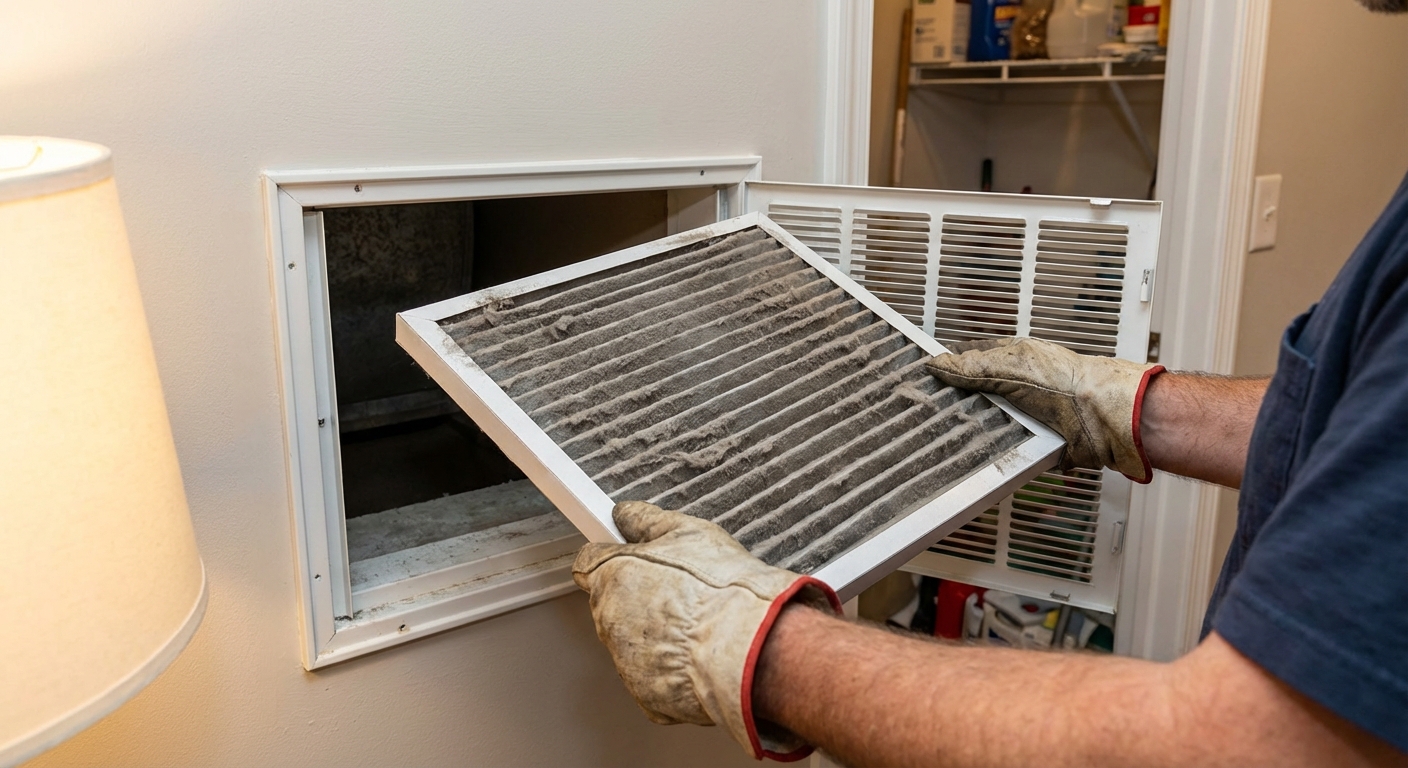
A clogged filter is one of the most common reasons a furnace blows unheated air. Here is the chain reaction: restricted airflow makes the furnace overheat, and the system trips a safety limit switch. The burner shuts off to protect the unit, but the blower may keep running, pushing cool air.
Good to know: that limit switch usually resets automatically once the furnace cools down. Most of the time you are not hunting for a magic reset button. You fix the airflow problem, then the furnace can heat normally again.
What to do
- Turn the furnace off at the switch or thermostat.
- Find the filter at the return grille, the blower compartment, or the filter slot on the duct near the furnace.
- Swap in the same size filter. Make sure the airflow arrow on the filter points toward the furnace.
- Turn the furnace back on and wait a few minutes. Depending on your system, you may feel warmth quickly, but a full heat cycle can take 5 to 10 minutes.
Hard-earned experience
I once bought a “high MERV” filter thinking I was upgrading my air quality. My older system hated it. If your furnace is older or your ductwork is marginal, overly restrictive filters can cause problems. When in doubt, use a basic pleated filter and change it more often.
Fix #3: Relight a pilot or reset ignition
This depends on your furnace type.
- Standing pilot (older): There is a small pilot flame that stays lit all the time.
- Electronic ignition (newer): No pilot light. It uses a hot surface igniter or spark ignition when heat is needed.
If you have a standing pilot
Look for a small access panel and a gas control knob with positions like OFF, PILOT, and ON. Many furnaces have relighting instructions on the inside panel.
- Turn the knob to OFF and wait 5 minutes.
- Turn to PILOT, then press and hold the knob while lighting the pilot per the manufacturer instructions.
- Keep holding for 30 to 60 seconds so the thermocouple warms up.
- Turn the knob to ON and call for heat.
If the pilot will not stay lit, stop there. That often points to a bad thermocouple, a dirty pilot assembly, or gas supply issues.
If you have electronic ignition
You are not relighting anything by hand. Try a simple reset:
- Turn the thermostat to OFF.
- Turn off power to the furnace at the switch or breaker for 60 seconds.
- Turn power back on, set thermostat to HEAT, and call for heat.
If your furnace has a sight glass, you can often watch the sequence safely: inducer starts, igniter glows or sparks, burners light. If you do not see ignition after the igniter tries, move to the later sections (high-efficiency venting, error codes, or call a pro).
Fix #4: Clean the flame sensor
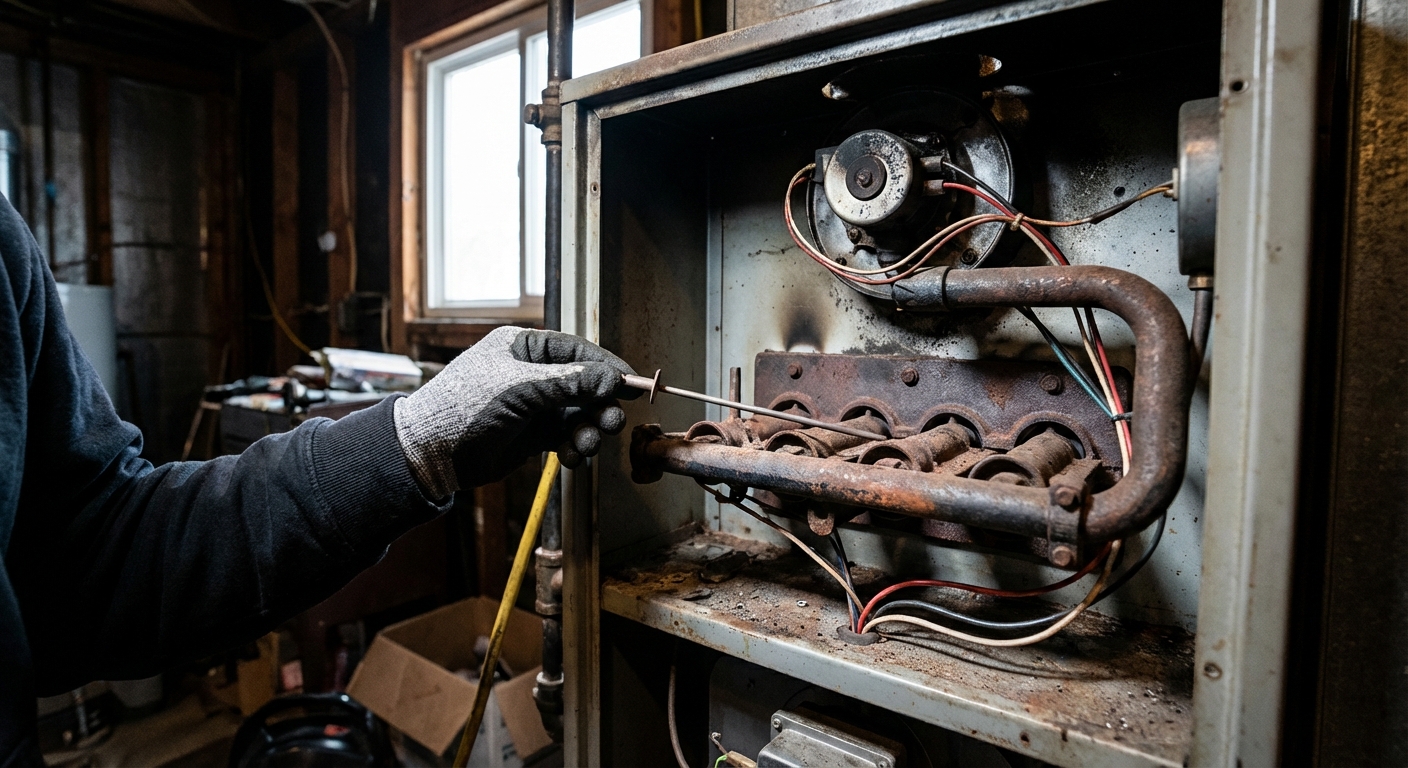
If your furnace lights for a moment and then shuts the flame off, a dirty flame sensor is high on the suspect list. The flame sensor is a small metal rod that sits in the path of the burner flame. If it is coated in oxidation, it cannot reliably prove flame, so the control board shuts the gas off as a safety measure.
Symptoms that match
- You hear ignition, and the burners light briefly.
- After a few seconds, the flames shut off.
- The blower keeps running and you feel cool air.
How to clean it (DIY-friendly)
- Turn off power to the furnace.
- Remove the access panel.
- Locate the flame sensor: usually a single rod mounted with one screw, connected by one wire, near the burners.
- Remove the screw and gently pull the sensor out.
- Lightly clean the rod with fine steel wool or a Scotch-Brite pad. In a pinch, rubbing it with a clean dollar bill can help. Avoid sandpaper and anything with gritty residue.
- Wipe it clean, reinstall, restore power, and test.
If it still will not stay lit, you may have an igniter issue, gas pressure issue, control board problem, or a more complex combustion problem. That is usually pro territory.
Fix #5: Check heat at the source (quick diagnostic)
Before you chase ductwork, confirm whether the furnace is actually producing heat.
- Closest register test: Check the supply vent closest to the furnace after it has been running a few minutes. If that one is not warm, you likely have an ignition or safety shutdown issue.
- Basement or utility room check: If you can safely access the area, feel the larger supply trunk leaving the furnace. It should feel noticeably warm when the burners are running.
If the furnace is making heat near the unit, but rooms are still cold, then delivery is the problem. That is where duct leaks, closed registers, or airflow issues show up.
Fix #6: Look for duct leaks or disconnected runs
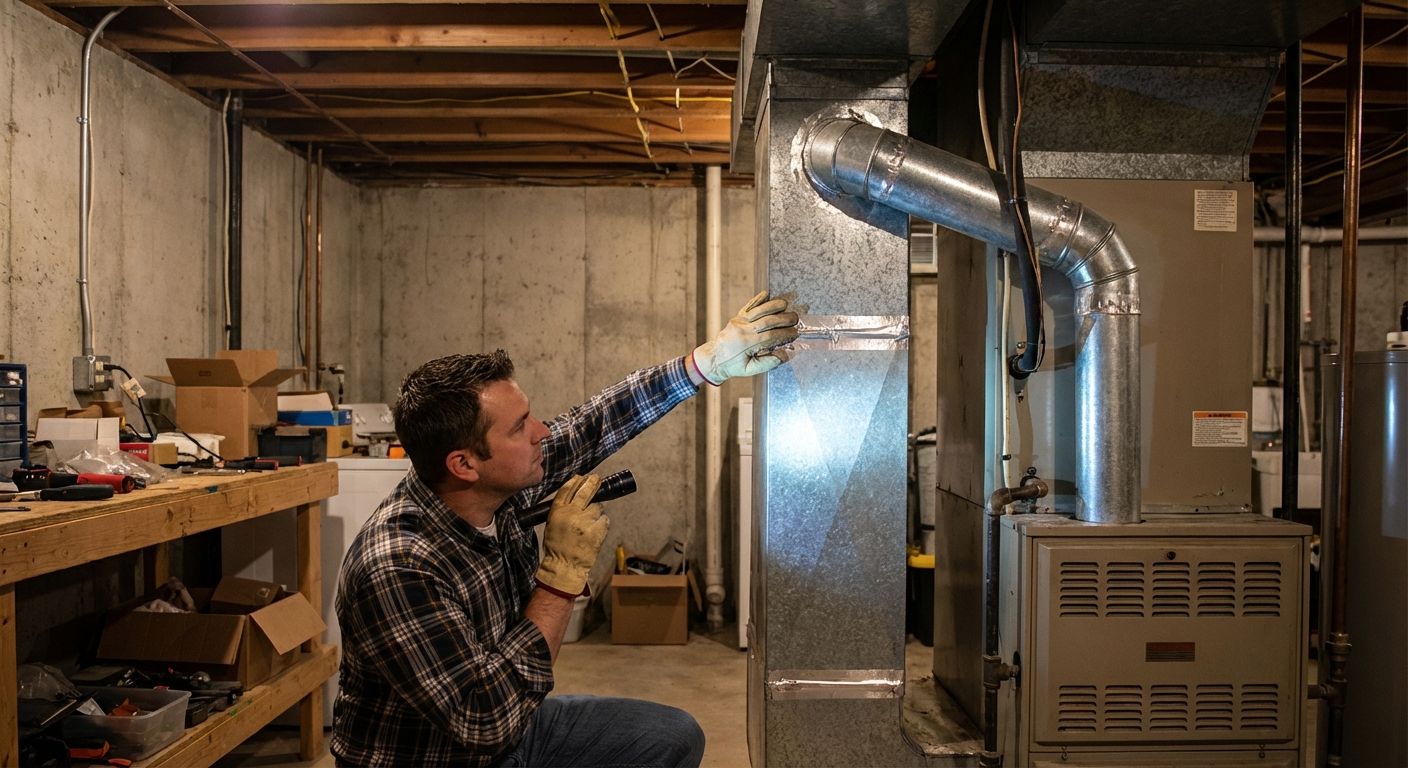
Sometimes the furnace is actually making heat, but that heat is not reaching your rooms. Leaky or disconnected ducts can dump warmed air into an attic, crawlspace, or basement. Meanwhile, what you feel at a register can seem lukewarm, especially far from the furnace or if return air is mixing in the room.
Quick checks
- While the furnace is running, walk the house and note which rooms are coldest. That can point to one duct branch with an issue.
- Check exposed ductwork for a joint that has slipped apart, especially near the furnace plenum.
- Feel for air blasting out of seams in accessible areas.
- Make sure supply registers are open and not blocked by rugs or furniture.
Basic DIY fixes
- Reconnect a slipped duct and secure it with sheet metal screws where appropriate.
- Seal joints with UL-181 foil HVAC tape or mastic. Do not use cloth duct tape, it fails quickly in heat.
- If the leak is in a hard-to-reach attic run, consider a pro. Attics can be tight, hot, and full of surprises.
Fix #7: High-efficiency furnace checks (PVC pipes)
If your furnace has white PVC intake and exhaust pipes, a few specific issues can prevent ignition even though the system seems like it is trying to run.
- Blocked intake or exhaust: Check outside terminations for snow, ice, leaves, or nests.
- Condensate drain backup: A clogged drain or trap can trigger a safety switch and stop the burners.
Do not disassemble sealed combustion parts. If you clear obvious blockages and it still will not fire, move to the error-code section or call a pro.
Fix #8: Check the LED error code
Many furnaces have a small viewing window or panel where an LED blinks a code. There is often a code chart on the inside of the furnace door. That little chart can save you a lot of guessing.
How this differs from my furnace will not turn on
If you have no airflow at all, you are not chasing the same problem. Start here instead:
- Check the furnace switch (it looks like a light switch, often near the unit).
- Check the breaker for the furnace and the blower circuit.
- Confirm the thermostat has power and is calling for heat.
- If you have a condensate safety switch (common on high-efficiency units), a drain backup can shut the system down.
For a will not turn on situation, the blower motor, capacitor, control board, or safety switches are more likely suspects than the fixes in this article.
When to call an HVAC pro
I love saving money with DIY. I also know when I am about to step into the deep end.
- You smell gas or suspect a combustion issue.
- The furnace repeatedly short-cycles (starts, stops, starts) even with a clean filter and open registers.
- You cleaned the flame sensor and it still will not keep flame.
- You see an error code you cannot interpret, or the fix involves gas pressure, a control board, or a cracked heat exchanger.
- You are not comfortable removing panels or working around burners.
If you want to help the tech help you, jot down what you observed: thermostat settings, whether burners light, how long they stay lit, and any flashing LED code on the control board.
A simple troubleshooting order (10-minute version)
- Set thermostat to HEAT and fan to AUTO.
- Check the furnace gas valve (and propane level if applicable).
- Replace the air filter and make sure registers are open.
- If standing pilot, relight it. If electronic ignition, power-cycle the furnace.
- If flames start then shut off, clean the flame sensor.
- Check the closest register for heat, then look for duct leaks or disconnects.
- If you have PVC venting, check intake, exhaust, and condensate drain basics.
- Look up the LED error code on the door chart.
Work through those in order and you will solve a big chunk of runs-but-blows-cold calls without throwing parts at the problem.

About Marcus Vance
Content Creator @ Grit & Home
Marcus Vance is a lifelong DIY enthusiast and self-taught home renovator who has spent the last decade transforming a dilapidated 1970s ranch into his family's dream home. He specializes in budget-friendly carpentry, room-by-room renovations, and demystifying power tools for beginners. Through his writing, Marcus shares practical tutorials and hard-learned lessons to help homeowners tackle their own projects with confidence.