
When a furnace starts, runs for a minute or two, shuts off, then repeats over and over, that is called short cycling. It is more than an annoyance. Short cycling wastes fuel, and it increases wear on ignition components and the blower motor and controls. Most of the time it means the furnace is tripping a safety or getting bad information from a sensor.
I have been the guy standing in the hallway at 2 a.m. watching the furnace kick on and off like it is playing a prank. The good news is that a lot of the common causes are either DIY-fixable or easy to diagnose, so you know when it is time to call a pro.
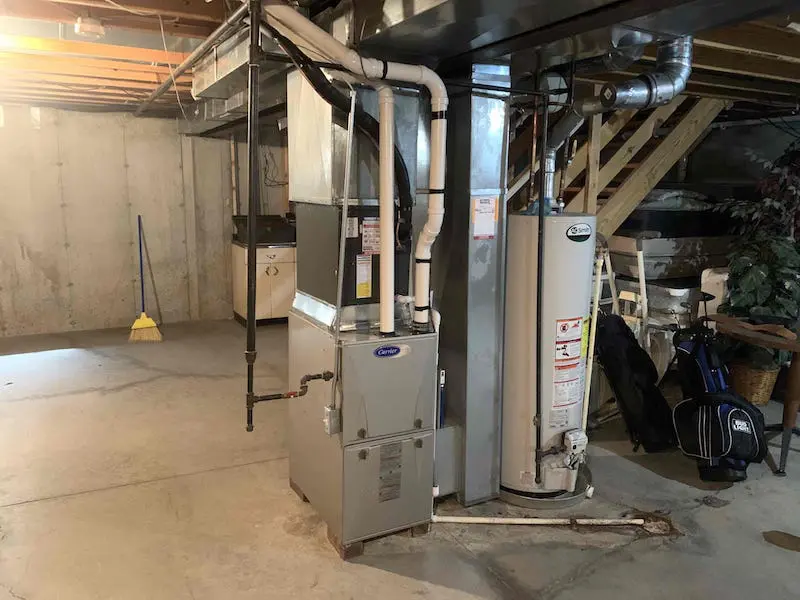
Important safety note: If you smell gas, see soot around the furnace, feel dizzy or get headaches indoors, or your carbon monoxide alarm chirps or alarms, shut the system off, leave the area, and contact your gas utility or HVAC professional immediately.
Before you start: For anything beyond thermostat settings, shut off power at the furnace switch or breaker. Avoid touching the gas valve or burner components if you are unsure. When in doubt, stop.
What short cycling looks like
You will usually notice one or more of these:
- Heat comes on, then shuts off before the house warms up.
- The furnace runs 30 seconds to 5 minutes at a time.
- You hear repeated clicking or ignition attempts.
- The blower may run, then stop, then restart shortly after.
- Higher-than-normal gas or electric bills.
Most furnaces short cycle because a safety switch is opening (overheat, pressure switch, flame sensing, condensate safety) or a control input is wrong (thermostat configuration, wiring, oversizing).
Quick reality check: Run times vary with outdoor temperature. On mild days, some shorter cycles can be normal. Two-stage and modulating furnaces may run longer on low fire and can look different from older single-stage units. Short cycling is more like rapid, repetitive on-off behavior that never settles into a steady run.
Quick checks before you open anything
1) Thermostat basics
- Mode: Set to Heat (not Auto with an unexpected schedule).
- Fan: Set to Auto for troubleshooting.
- Batteries: Replace if your thermostat uses them. Low batteries can cause erratic calls for heat.
- Location: If a space heater, sunny window, or lamp is heating the thermostat, it can shut the furnace off early.
- Cycle rate settings (mostly older stats): Older mechanical thermostats may have a heat anticipator. Many digital thermostats use cycle rate or CPH. If you recently installed a new thermostat, confirm it is set for your system type (gas forced air vs heat pump).
- Smart thermostat setup: Focus here on configuration, not convenience features. A thermostat set up for the wrong equipment type, wrong staging (W1/W2), or incorrect wiring can cause odd run patterns.
2) Filter and return air
If I had to pick the most common DIY cause of short cycling, it is restricted airflow. A clogged filter can make the heat exchanger overheat and trip the high-limit switch, which shuts the burners down.
- Turn the furnace off at the thermostat.
- Slide out the filter and check it against a light. If you cannot see light through it, replace it.
- Make sure return grilles are not blocked by rugs, furniture, or curtains.
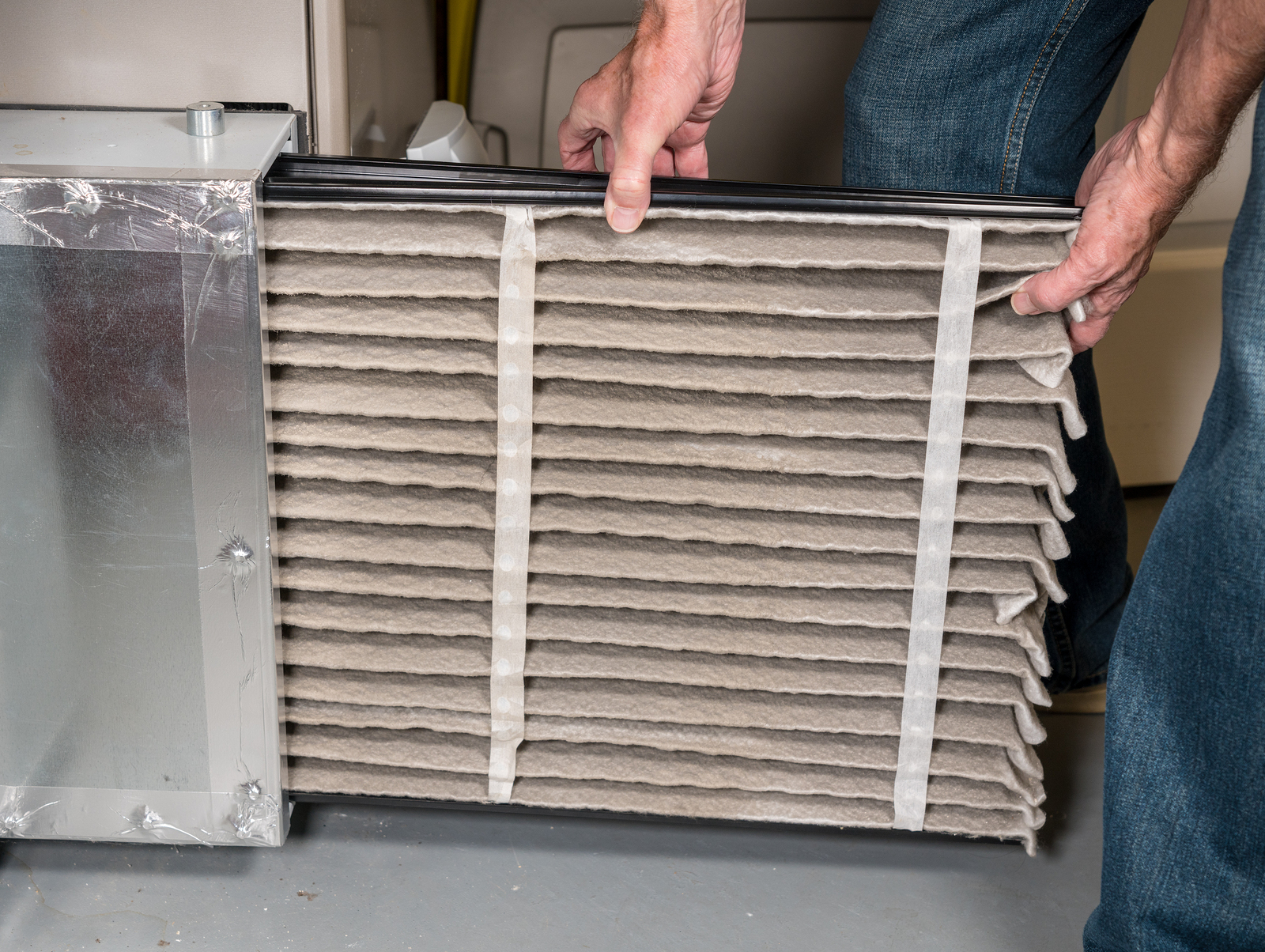
Thrifty tip: A super high MERV filter can be too restrictive for some systems. If short cycling started after you upgraded filters, try a slightly lower MERV rating and see if run time improves.
3) Supply vents
Walk the house and open supply registers. Closing a bunch of vents to “push” air to one room often backfires and can raise furnace temperature enough to trip the high limit.
Common causes and fixes
Dirty flame sensor
On many gas furnaces, a dirty flame sensor is the classic “runs briefly, then shuts off” culprit. The furnace lights, but the control board does not reliably detect flame, so it shuts the gas off as a safety measure.
Typical symptom: Burners ignite, run 2 to 10 seconds, then shut off. Sometimes it can be longer, but the quick shutdown is the classic tell. The blower may keep running briefly.
DIY difficulty: Easy. This is one of the best beginner-friendly furnace fixes.
Overheating from restricted airflow
If the furnace cannot move enough air across the heat exchanger, it overheats. The high-limit switch opens, burners shut off, then the furnace tries again after it cools. This can repeat every few minutes.
Common causes:
- Dirty filter
- Blocked return air
- Closed supply registers
- Dirty evaporator coil (AC coil above the furnace) restricting airflow
- Blower wheel caked with dust
- Undersized ductwork (more of a pro diagnosis)
What you can do now: Replace filter, open vents, clear returns. If it persists, an HVAC tech can measure temperature rise and static pressure to pinpoint the restriction.
Limit switch note: Limit switches do not usually “fail randomly.” They open because the furnace is too hot. Replacing a limit without fixing airflow is the classic trap that keeps the problem coming back.
Thermostat or wiring issues
Loose thermostat wiring, a failing thermostat, or an incorrectly configured new thermostat can cause rapid on-off behavior.
What to check:
- Gently remove the thermostat face and confirm wires are tight in terminals.
- Look for damaged thermostat wire near the furnace (staples through wire happen).
- If it is a smart thermostat, confirm system type and staging are correct, and that W1/W2 (or equivalent) are wired correctly if your furnace uses them.
DIY note: Turn off power to the furnace at the switch or breaker before touching thermostat wires at the furnace control board.
Venting or pressure switch issues (high efficiency)
High efficiency furnaces use a pressure switch to confirm proper venting. A blocked exhaust or intake pipe can make the furnace shut down quickly to prevent unsafe venting.
Common causes:
- Snow or ice covering the termination outside
- Bird nest or debris in the pipe
- Condensate drain clog backing up water (can also trigger a safety switch)
What you can do safely: Go outside and confirm the PVC intake and exhaust terminations are clear of snow, leaves, and obvious debris. Do not disassemble venting unless you are comfortable and permitted to do so.
Condensate drain or float switch (high efficiency)
Many condensing furnaces have a condensate drain and sometimes a float switch or other condensate safety. If water backs up, that safety can shut the furnace down and it may restart once things shift, dry, or reset.
Clues: You see water in the cabinet, gurgling at the drain, or the shutdowns happen after the unit has been running long enough to make a lot of condensate.
What you can do: Check for obvious kinks in the drain line and a clogged trap if it is accessible. If you are not sure what you are looking at, this is a good call-a-pro moment, because the trap and tubing layout matter.
Oversized furnace
Sometimes everything is “working,” but the furnace is simply too big for the house. It heats the air near the thermostat quickly, shuts off, then starts again a short time later. This can be worse in mild weather.
Clues you may be oversized:
- Very short run times even with a clean filter and no error codes
- Big temperature swings from room to room
- Noisy airflow, “whoosh” at registers
- Furnace replaced recently without ductwork changes or load calculations
Fix: This is a design issue. A pro can confirm with a Manual J load calculation and may suggest blower adjustments, staging changes (if available), zoning, duct improvements, or in some cases equipment replacement.
Other causes worth knowing
- Dirty burners or flame rollout switch trip: Safety shutdown if flames behave improperly.
- Failing inducer motor or pressure switch: Furnace starts then shuts down during pre-purge or ignition.
- Loose electrical connections: Intermittent power causes resets and short cycles.
- Cracked heat exchanger: Can trigger unusual behavior and is a serious safety concern. This is a call-a-pro situation.
Fast diagnosis by timing
- Runs 2 to 10 seconds, then shuts down and retries: Often flame sensor, flame signal, or ignition proving issue.
- Runs 2 to 5 minutes, burners shut off but blower keeps running: Often overheating and the high-limit switch opening due to airflow restriction.
- Inducer starts, then it quits before ignition or right at ignition: Often pressure switch, venting, intake, or condensate related.
- Seems to cycle normally but the house never feels even: Possible oversizing, thermostat placement, or duct balance issues.
Clean a flame sensor
This is the fix I reach for first when I see a gas furnace that lights, then quickly shuts down and retries. The flame sensor is a small metal rod that sits in front of the burner flame. Over time, it gets a thin coating of oxidation that makes it “blind.” Cleaning it usually takes 10 to 20 minutes.
Tools and supplies
- Screwdriver or nut driver (often 1/4 inch)
- Fine abrasive pad or very fine sandpaper (about 400 to 600 grit)
- Clean paper towel or lint-free rag
- Optional: flashlight
1) Shut off power
Turn the thermostat to Off. Then shut off power to the furnace at the switch near the unit or at the breaker. You want the furnace fully dead while your hands are inside.
2) Remove the access panel
Most furnaces have a lower blower door and an upper burner door. Remove the burner compartment panel. Set screws aside where they will not vanish into the dust bunnies.
3) Find the flame sensor
Look near the burners for a thin metal rod held by one screw with a single wire attached. It usually sits at the edge of one burner flame.
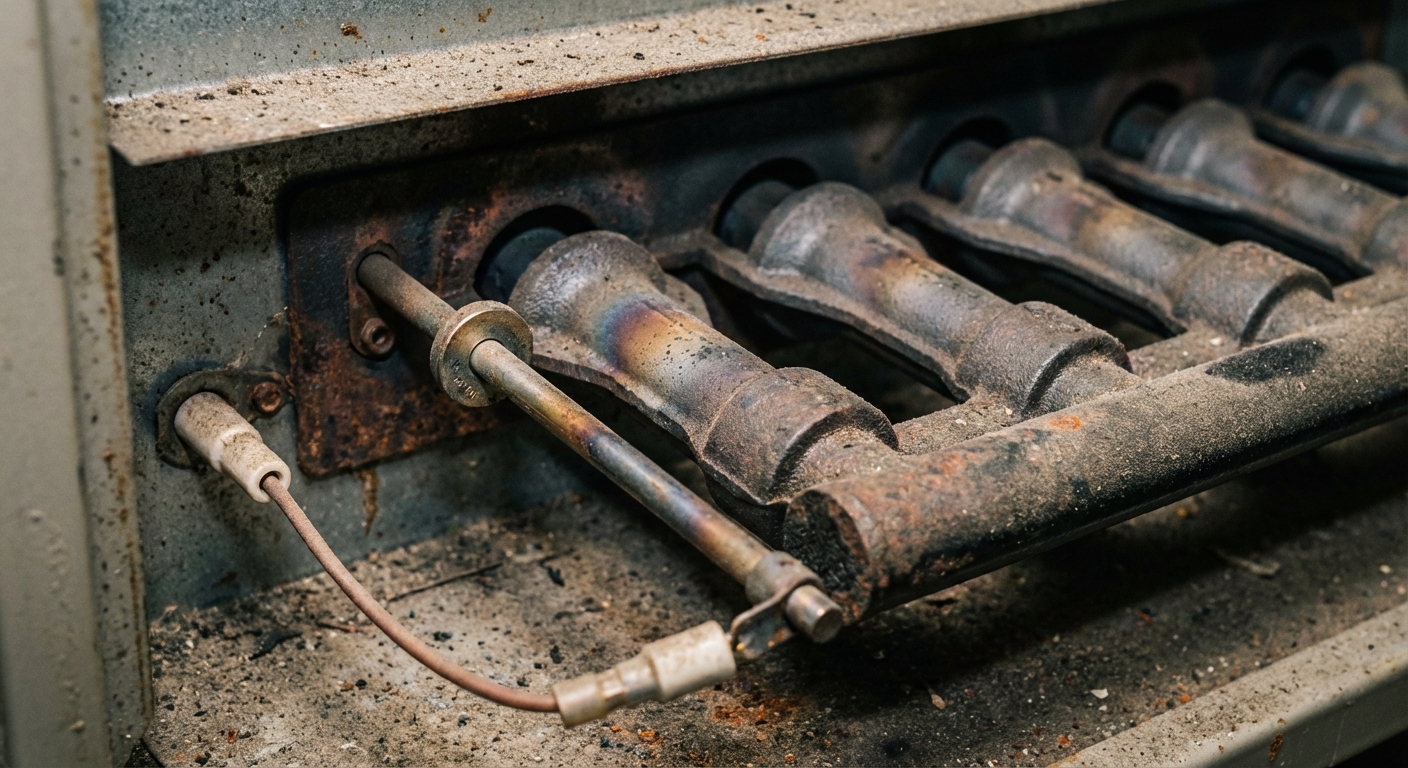
Pro tip from my own mistake: Do not confuse the flame sensor with the igniter. The igniter is often a fragile ceramic and can break easily. The flame sensor is a sturdier metal rod.
4) Disconnect the wire and remove the sensor
Gently pull the wire connector off the sensor terminal. Remove the mounting screw and carefully slide the sensor out.
5) Clean the rod
Lightly polish the metal rod with your abrasive pad or fine sandpaper until it looks clean and smooth. You are removing oxidation, not grinding metal away.
- Do not use heavy grit.
- Do not soak it in harsh chemicals.
- Wipe it clean with a dry paper towel afterward.
6) Reinstall
Slide the flame sensor back into place, tighten the screw snug (not gorilla tight), and reconnect the wire.
7) Restore power and test
Put the access panel back on (many furnaces will not run with the door switch open). Turn power back on. Set the thermostat to call for heat.
What you want to see: Burners ignite and stay lit, then the blower comes on and you get a normal run cycle.
If cleaning does not fix it
If the furnace still short cycles and you see repeated ignition attempts, the flame sensor could be failing, the control board could be weak, or you may have a separate airflow or venting issue. At that point, pulling the error code from the furnace control board door label becomes your best next step.
Read error codes
Most modern furnaces have a small viewing window, or you can look through the cabinet opening to see an LED blinking pattern on the control board. That blink pattern corresponds to a fault code listed on a sticker inside the door.
- Turn the thermostat down so the furnace is not actively firing.
- Look for the LED on the control board and count the blinks.
- Match the blink code to the chart on the door.
Door switch heads up: On many furnaces the blower door must be on for the LED to flash normally. If you need to view the board with the door off, you may have to hold the door switch in carefully, or use the sight glass if your unit has one.
Common short cycling related codes mention limit switch open, pressure switch stuck open or closed, flame sensed with gas off, condensate safety open, or ignition failure. If you can tell me the code, you can usually narrow the cause quickly.
Call a pro
I am all for sweat equity, but furnaces have real safety stakes. Call an HVAC technician if:
- The furnace is tripping a limit switch even with a new filter and open vents.
- You suspect venting, pressure switch, or condensate issues you cannot easily clear.
- You see soot, scorching, or smell exhaust indoors.
- The unit is short cycling with loud bangs, booms, or flame rollout.
- Error codes point to pressure switch, inducer, rollout, condensate safety, or control board problems.
- You think the furnace is oversized and want confirmation and options.
Prevent short cycling
- Change filters on a schedule that matches your home (pets and renovations mean more often).
- Keep return grilles clear and do not “close off” half the house with supply vents.
- Once a year, vacuum dust around the furnace and keep the area clear.
- In winter storms, check that high efficiency intake and exhaust pipes are not buried.
- Schedule periodic professional maintenance, especially for older units.
If you want to troubleshoot further, grab your furnace make and model and the LED blink code. With those two details, you can usually move from guessing to diagnosing.

About Marcus Vance
Content Creator @ Grit & Home
Marcus Vance is a lifelong DIY enthusiast and self-taught home renovator who has spent the last decade transforming a dilapidated 1970s ranch into his family's dream home. He specializes in budget-friendly carpentry, room-by-room renovations, and demystifying power tools for beginners. Through his writing, Marcus shares practical tutorials and hard-learned lessons to help homeowners tackle their own projects with confidence.