
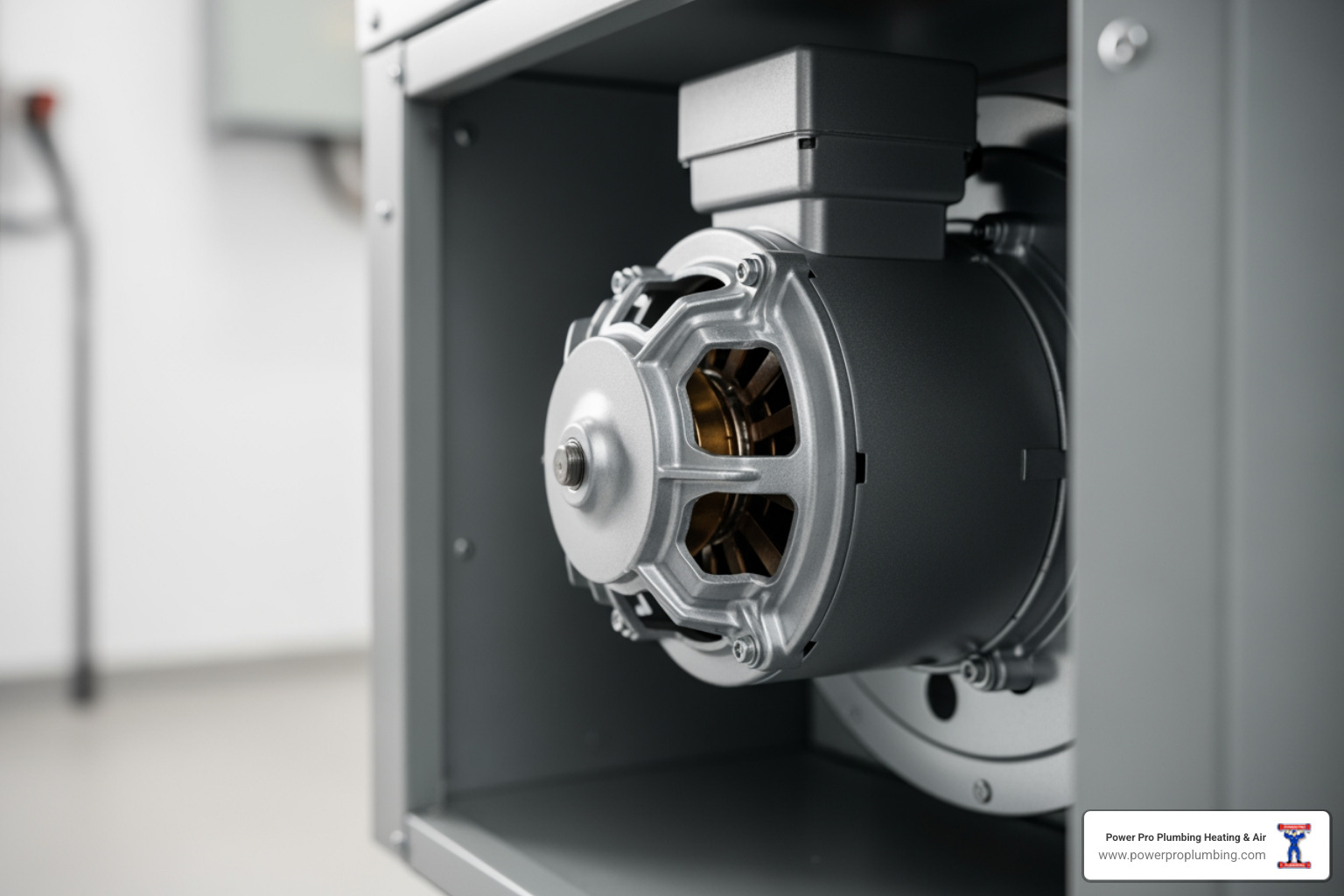
An HVAC blower that won’t shut off can feel like your house is haunted. You turn the thermostat down, the heat stops, but the fan keeps pushing air. Sometimes that is normal. Often it is your system trying to protect itself, a setting you did not realize was enabled, or a control that is stuck.
Below is the same troubleshooting path I use on my own 1970s ranch: start with the easy thermostat stuff, then split into heating vs cooling failure modes, because the causes are different.
Safety first
- You can do: thermostat checks, replacing the air filter, checking supply and return vents, and visually inspecting accessible components after shutting power off.
- Do not do: bypass safety switches, jumper terminals, or open sealed refrigerant components.
- Turn power off at the furnace switch and the breaker before removing any access panels. Many furnaces have 120V inside even when the thermostat is “off.”
If you smell burning, hear squealing or grinding, see melted wires, or the blower is running with no doors secured, shut it down and call a pro.
Quick triage
1) Check the thermostat FAN setting
This is the most common cause, and it is almost always accidental.
- FAN = ON means the blower runs continuously, even when there is no heating or cooling call.
- FAN = AUTO means the blower runs only during a heat or cool call (plus a short “after-run”).
- FAN = CIRC or “circulate” (on some thermostats) runs the fan periodically for air mixing.
Fix: Set FAN to AUTO. Wait 2 to 5 minutes. Many systems have a built-in off delay, especially after heating.
2) Know what “normal after-run” looks like
After a heating cycle, a furnace often keeps the blower running for a short cooldown to pull leftover heat off the heat exchanger. That is normal and good for the furnace. It is often around 30 to 180+ seconds, depending on model and settings.
3) Check the furnace error light
Many furnaces have an LED status light you can see through a small window. The blink code chart is usually on the blower door. You do not need to touch anything to read it.
4) Identify what is actually running
If you have central AC or a heat pump, step outside by the outdoor unit. If you do not have one, skip this.
- If the indoor blower is running but the outdoor unit is silent, you are likely dealing with a thermostat, accessory, furnace control issue, or a safety condition.
- If the outdoor unit is also running nonstop, you may have a cooling control problem like a stuck contactor, a thermostat call that will not end, or a low-voltage wiring issue.
If the blower won’t stop in heating season
In heating mode, a “never stops” blower is often tied to a safety condition, a control setting, or a control that is stuck on.
Cause A: Airflow restriction and limit trips
When airflow is too low, the furnace can get too hot and trip a safety called the high-limit switch. A common behavior is: the burners shut off, but the blower keeps running to cool the furnace down. If the restriction is bad enough, the cycle repeats and the blower seems like it never stops.
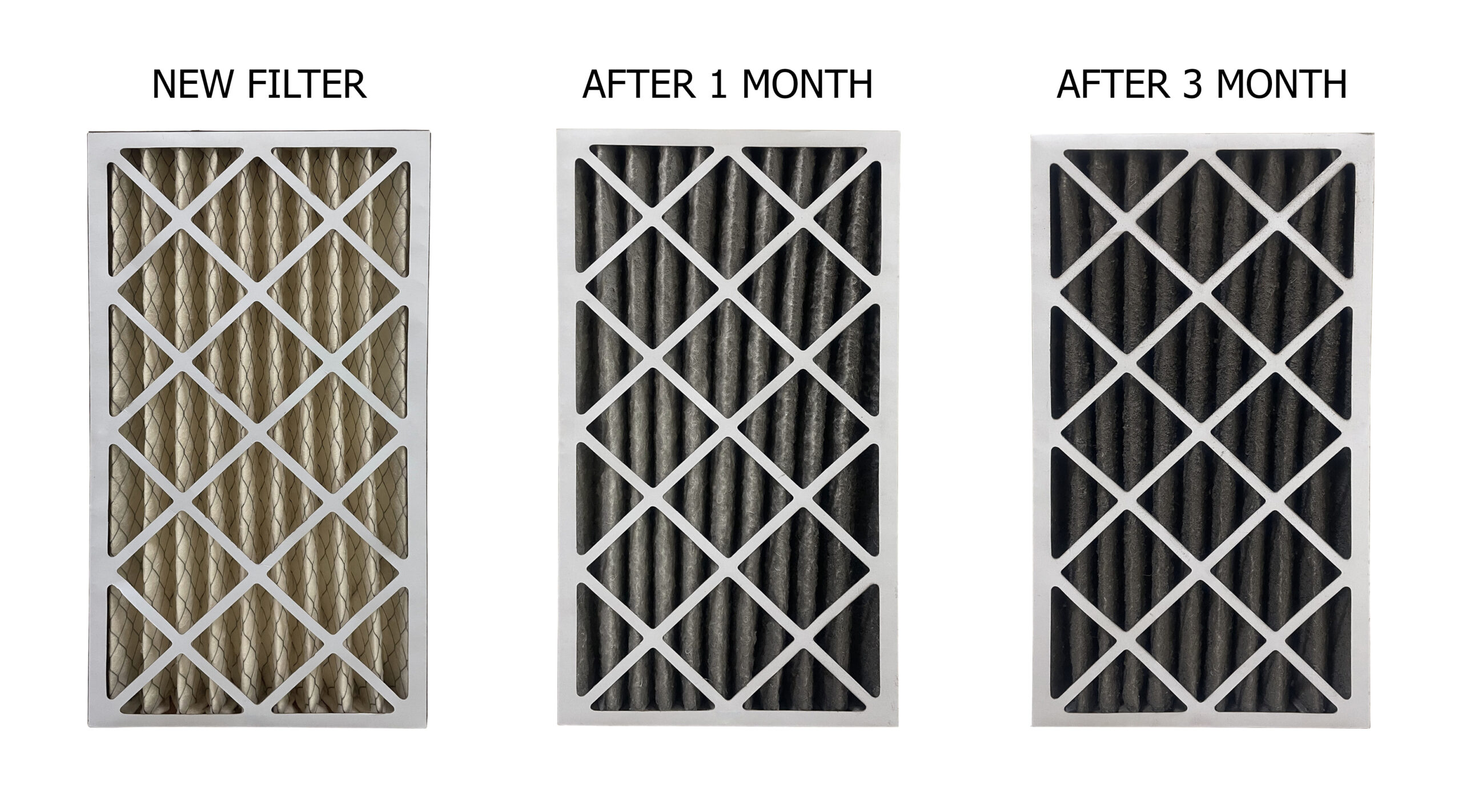
What to check:
- Air filter: clogged, collapsed, installed backwards, or too high-MERV for your system.
- Supply registers: too many closed.
- Return grilles: blocked by furniture or rugs.
- Evaporator coil (often in an A-coil above the furnace): can be packed with dust if the filter has been missing or bypassed.
Fix: Replace the filter with the correct size. If you are not sure, use a basic pleated filter (often MERV 8) as a safe starting point. Open registers. Clear returns. If the blower still runs for long stretches and the furnace short cycles, you likely need a technician to check temperature rise, blower speed, and coil condition.
Cause B: Control board relay stuck
Most modern furnaces use an integrated control board with relays that switch the blower on and off. If a relay welds closed or the board fails, the blower can run continuously even with the thermostat satisfied.
Clues:
- Thermostat is set to OFF and FAN is AUTO, but the blower keeps running for hours.
- Power-cycling the furnace (off at switch for 30 seconds, then on) may temporarily change behavior, then it returns.
- LED error code on the control board may be flashing a fault.
Fix: Record the LED blink code and look it up on the furnace door chart. If it points to a control fault, you are generally looking at a board replacement or professional diagnosis. Homeowners can safely read codes, but board-level testing is where I stop and call a pro.
Cause C: Safety switch problems (limit or rollout)
If the furnace thinks it is overheated, some models will run the blower as a protective response. A tripping or failing limit switch, a rollout safety issue, or improper airflow can keep the system in that protective state.
Fix: Start with airflow basics (filter and vents). If the problem persists, schedule service. Safety switches are not “try it and see” parts.
Cause D: Thermostat wiring short (G wire energized)
The thermostat terminal G is the fan call. If the thermostat is miswired, damaged, or a staple nicked the cable, the blower can run like FAN is always ON.
Fix: With power off, confirm thermostat wiring matches the furnace board terminals and the thermostat manual. If you suspect a cable short in the wall, that is a good point to bring in a technician.
Cause E: It is configured for continuous circulation
Some systems are intentionally set up to run the blower at low speed for air mixing, filtration, or comfort. This is common with ECM blower motors and some control boards, and it can look like a problem if you did not ask for it.
What to check: Thermostat “Circulate” features, installer settings, and any “continuous fan” options on the furnace control (these can be dip switches or menu settings, depending on model).
If the blower won’t stop in cooling season
Cooling adds one more player: the outdoor condenser and its control circuit. You can have (1) the indoor blower stuck on, (2) the outdoor unit stuck on, or (3) both.
Step 1: Is the outdoor unit running too?
- Indoor blower only: look at thermostat FAN settings, continuous circulation settings, accessories (humidifier or air cleaner), a control board relay, or a fan call stuck on G.
- Outdoor unit also running: suspect a thermostat call that will not end, a low-voltage short (like R to Y), or a stuck contactor.
Cause A: Stuck contactor in the outdoor condenser
The contactor is an electrical switch that pulls in when your thermostat calls for cooling. If it welds shut, the condenser can run nonstop even after the thermostat stops calling.
Important nuance: with a truly welded contactor, the thermostat call usually drops, so the indoor blower often shuts off normally while the outdoor unit keeps running. That mismatch is one reason the evaporator coil can freeze fast.
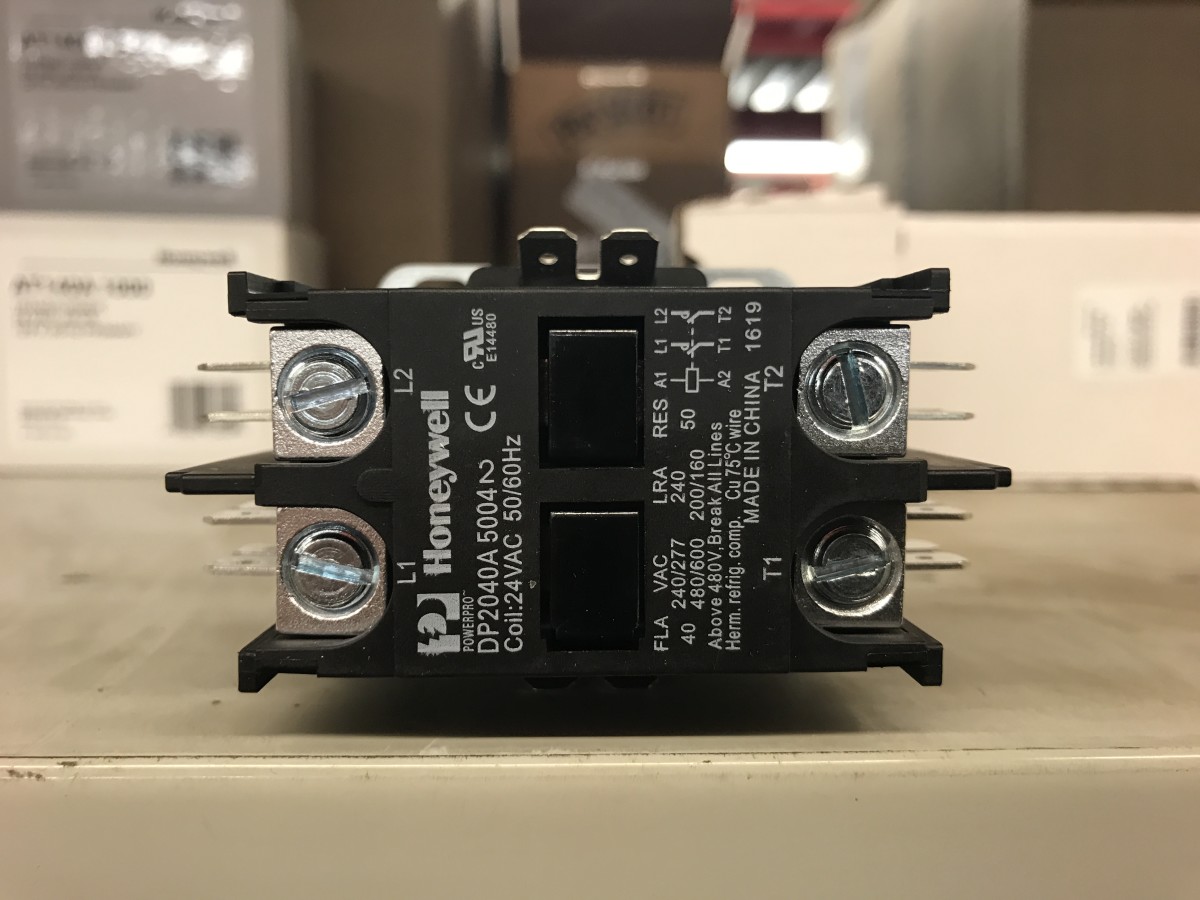
Clues:
- Thermostat is OFF, but the outdoor unit still hums or runs.
- Shutting off the furnace switch does not stop the outdoor unit, but pulling the outdoor disconnect or flipping the AC breaker does.
Fix: Turn off the AC breaker and call a pro. A stuck contactor is a common repair, but the outdoor cabinet contains high voltage and capacitors that can hold a charge.
Cause B: Thermostat or low-voltage short keeping cooling on
If the thermostat is malfunctioning, misconfigured, or there is a wiring short (often R to Y), the system may keep calling for cooling. In this case, you can see both the outdoor unit and indoor blower running when they should not.
Fix:
- Raise the setpoint above room temperature and wait a few minutes.
- Check that the thermostat is set to COOL (not AUTO changeover with odd schedules) and the schedule is what you expect.
- If it is battery powered, replace the batteries.
Cause C: Frozen evaporator coil
A frozen indoor coil is usually tied to low airflow (dirty filter, closed vents) or low refrigerant. When the coil freezes, you can get weak airflow, long runtimes, and the blower may seem like it runs forever because the system never satisfies.
Fix: Turn cooling off and let it thaw. If airflow is decent, you can set FAN to ON to speed thawing. If airflow is very weak, leave the fan on AUTO or OFF and call for service so you do not make an icing problem worse. If it refreezes after thawing, schedule service.
Cause D: Heat pump defrost confusion
If you have a heat pump, defrost cycles can look weird. Depending on the setup, you might hear the outdoor unit change sound, see steam, and notice the indoor blower behavior shift briefly. That is often normal. If the blower runs nonstop in mild weather or you see frequent defrosting, that is worth a service check.
Simple homeowner fixes
1) Set FAN to AUTO and reset the system
- Thermostat: FAN to AUTO, mode to OFF for a minute, then back to HEAT or COOL.
- If needed: turn furnace switch off for 30 seconds, then on.
2) Replace the air filter
If I could put one reminder on every return grille, it would be this: a dirty filter causes more “mystery HVAC problems” than most homeowners realize.
3) Check airflow around the house
- Open supply registers.
- Make sure return grilles are not blocked.
- Vacuum pet hair and dust off the return grille face.
4) Look for obvious cooling control issues
- Is the outdoor unit running when it should not be? If yes, shut off the AC breaker and call for service.
- Is the thermostat behaving strangely or blanking out? Replace batteries and recheck settings.
5) Consider accessories and settings
- Whole-house humidifiers, air cleaners, and ventilation controls can command the blower to run. If you have add-ons, check their settings too.
- If your system has an ECM blower, it may be set up for low-speed continuous fan. That is a feature, not a failure.
When to call a pro
Call an HVAC tech if the fan runs continuously with FAN set to AUTO and a clean filter installed, if the outdoor unit runs when the thermostat is OFF, or if any safety fault is suspected.
Here is the info that speeds up a service call:
- Does the blower run in HEAT, COOL, and OFF modes?
- Is the outdoor unit running too?
- Any furnace control board LED blink codes (and what the door chart says they mean)?
- Filter size and when it was last replaced.
- Any recent power outages or electrical storms (boards and contactors do not love surges).
One technician-style diagnostic you may hear about: isolating whether the blower is being commanded by the thermostat fan circuit (G) versus the furnace control board. That involves wiring checks at the control board and is not something I recommend as a homeowner DIY step.
FAQ
Is it bad if my blower fan runs all the time?
Not always. Continuous fan can help air mixing and filtration, but it uses electricity and can add humidity in summer if your coil is wet. If it is running due to a fault, you want to fix the cause.
Why does the fan keep running after the heat shuts off?
That is usually a normal off-delay cooldown. If it runs for a long time or the furnace keeps clicking on and off, look for airflow issues and possible limit trips.
Will a dirty filter really make the blower run nonstop?
Yes, it can. Low airflow can trip the high-limit switch during heating, which shuts burners off but keeps the blower running to cool the furnace. It can feel like the fan never stops.
My neighbor-to-neighbor takeaway
Start with the thermostat FAN setting and a fresh filter. If the blower still will not shut off, you are usually looking at a safety condition (like a limit issue), a configured continuous-fan feature, an accessory calling for airflow, or a failed control that is keeping the fan energized. Separate heat vs cool symptoms, and you will get to the right fix faster.

About Marcus Vance
Content Creator @ Grit & Home
Marcus Vance is a lifelong DIY enthusiast and self-taught home renovator who has spent the last decade transforming a dilapidated 1970s ranch into his family's dream home. He specializes in budget-friendly carpentry, room-by-room renovations, and demystifying power tools for beginners. Through his writing, Marcus shares practical tutorials and hard-learned lessons to help homeowners tackle their own projects with confidence.