
🚨 In a DIY emergency or rush?
Skip the details and jump straight to our 30-second cheat sheet for the most crucial info.
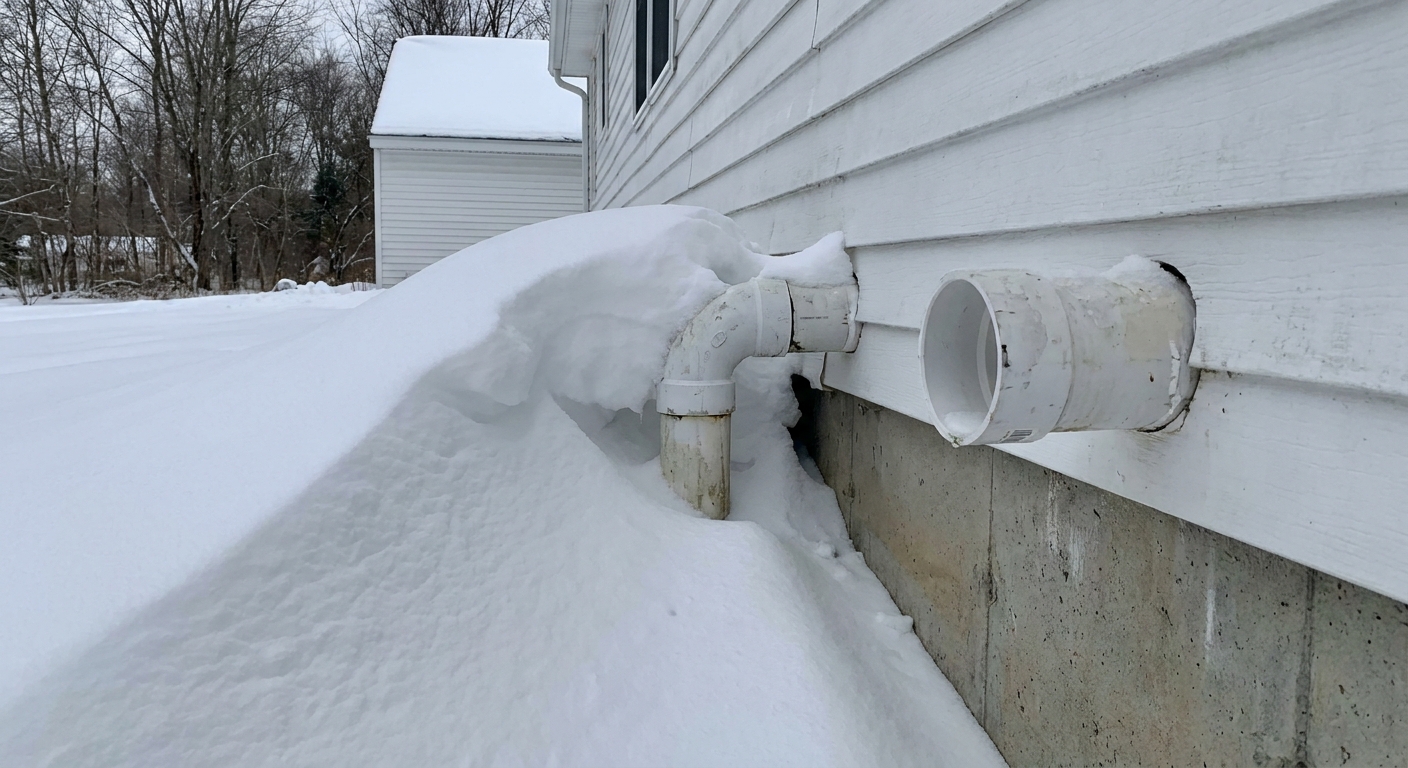
If your high-efficiency furnace or boiler suddenly quits during a snowstorm, there is a good chance the problem is not “the whole unit” but the venting that lets it breathe. Condensing appliances commonly vent through plastic piping to the outdoors, and that termination can be blocked by snow drift, ice, or a critter nest. When airflow is restricted, the system often shuts down on purpose to protect your home.
This is one of those homeowner checks that can be totally reasonable to do, as long as you treat it like what it is: a venting and carbon monoxide safety issue, not just a comfort issue.
First, a quick safety reset
- If you smell exhaust fumes, feel dizzy, get a headache, or your CO alarm is sounding, leave the house and call emergency services or your utility company.
- If you are unsure what you are looking at, or the appliance space feels tight or stuffy, shut it off and call an HVAC tech. Do not troubleshoot with the unit running in a confined area.
- Never cap, tape, or “reduce” a vent termination to keep snow out. That can create dangerous backpressure and improper combustion.
- Use a plastic shovel or a gloved hand around vent piping. A metal shovel and frozen plastic are a bad mix.
- If your termination is on the roof or otherwise unsafe to access, do not climb. Call a pro.
CO detector note: If you do not have working carbon monoxide detectors on each level of your home, this is your sign. Put that on the shopping list today.
How these systems vent
Older equipment often used a metal flue that relied on hot exhaust rising up a chimney. A condensing furnace or boiler extracts more heat, so the exhaust is cooler and commonly vented through plastic such as PVC, CPVC, or polypropylene, depending on the manufacturer and local code. Many setups are “direct vent,” meaning the unit uses outside air and a powered exhaust.
In plain English, you might see any of these outside:
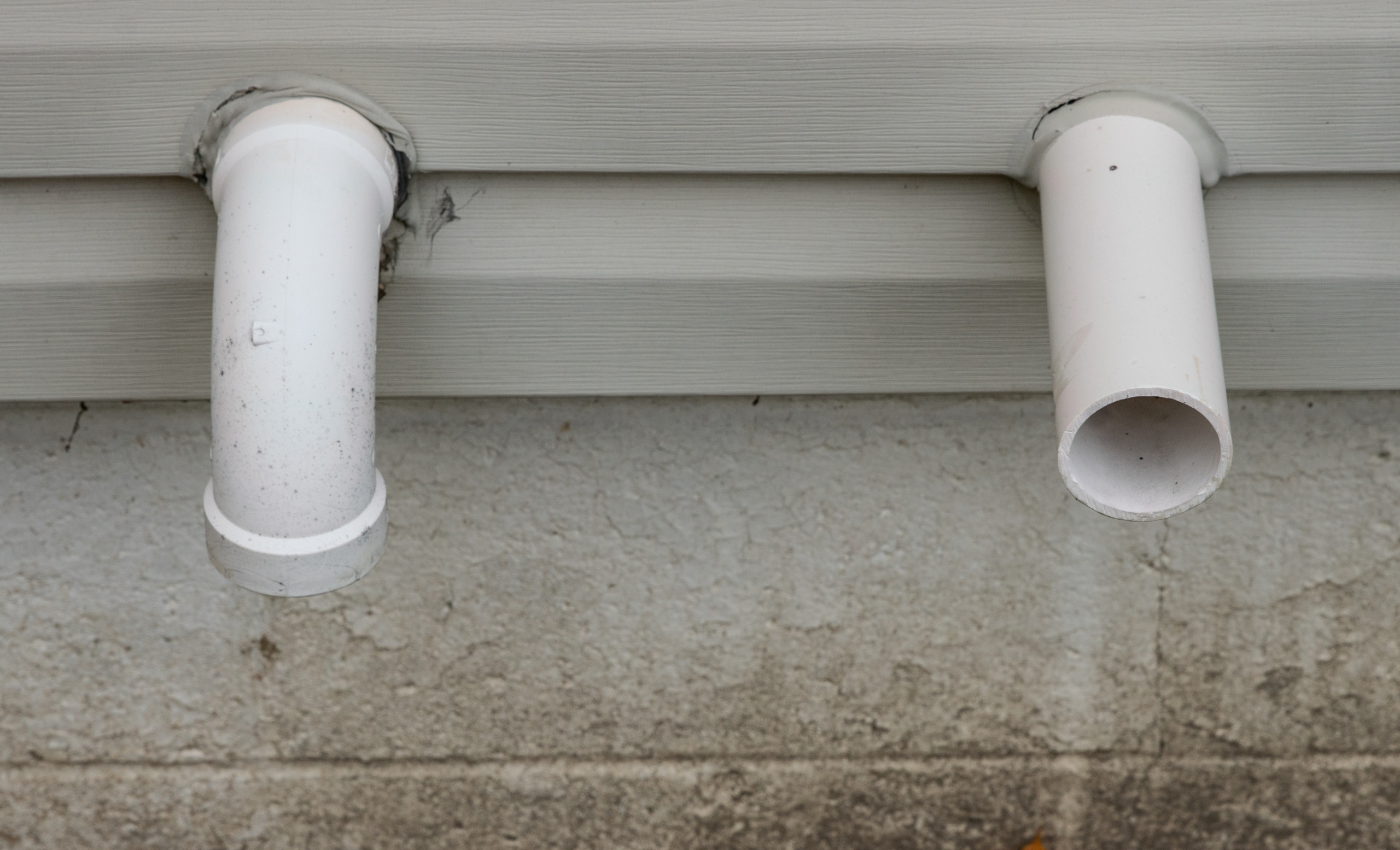
- Two-pipe: One pipe brings fresh air in (intake) and the other sends flue gas out (exhaust).
- Concentric: Intake and exhaust share one termination fitting.
- Single-pipe exhaust: Exhaust vents outside, but combustion air comes from inside the home. This exists in the real world, even if it is not ideal for every house.
Those pipes typically terminate through a side wall or roof. In windy weather, side-wall terminations near grade are especially prone to snow drifting up and packing around them.
Quick identification tip: Do not confuse furnace or boiler venting with a plumbing vent stack, a dryer vent, or radon piping. If you are not sure, stop and call a pro.
Common winter blockages
1) Snow drift or plowed snow
Even if the opening is well above the ground on a calm day, a single drift can bury it. Also watch for:
- Snow piled by a sidewalk shovel or snowblower
- Snow sliding off a roof line and stacking at the wall
- Wind that consistently loads one side of the house
2) Ice at the termination
Condensing appliances produce water vapor. When that warm moist exhaust hits frigid air, it can create frost and ice right at the outlet. Over time, that can narrow the opening enough to cause pressure issues and shutdowns.
3) Nests and debris
Terminations can catch:
- Lint and airborne fluff
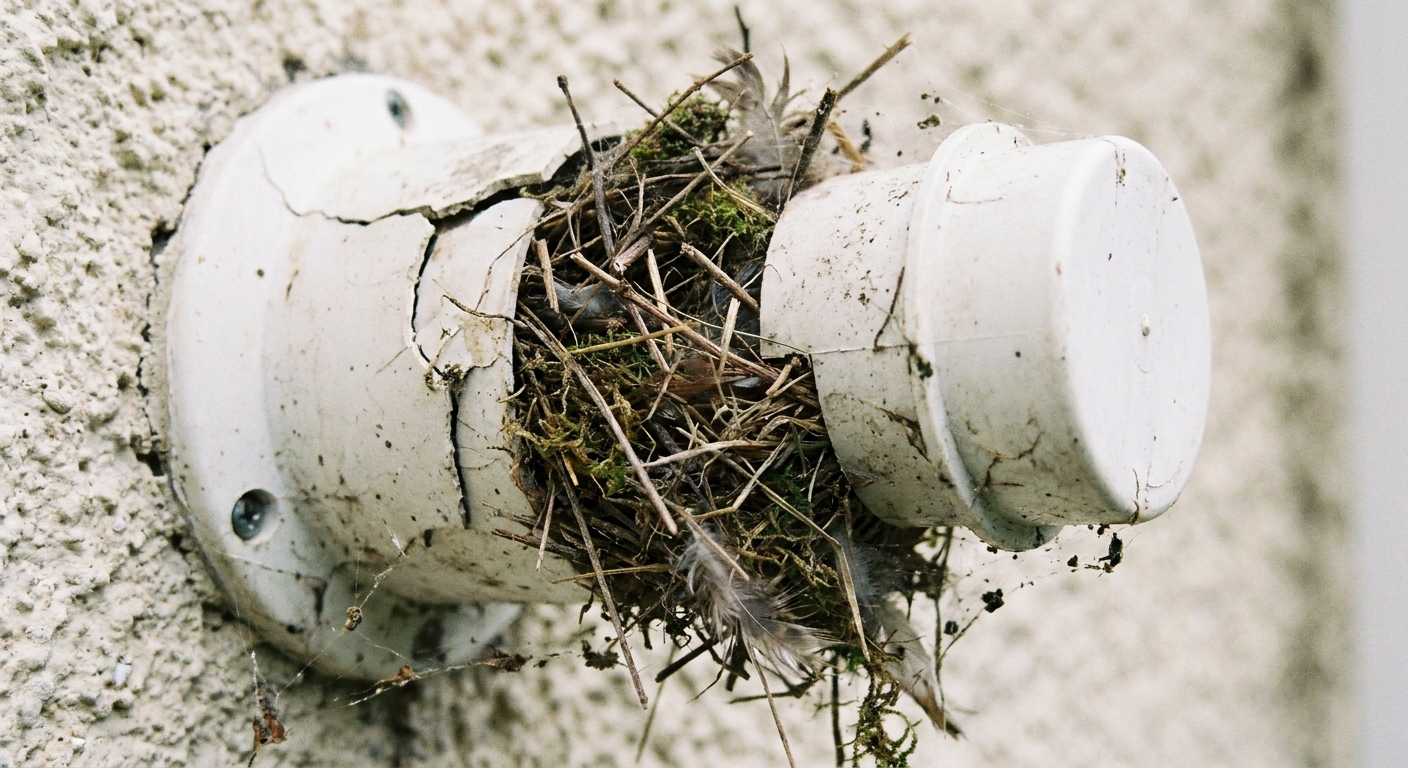
- Spider webs and mud dauber nests
- Leaves, needles, and small debris
Some terminations use a screen to keep pests out, and some manufacturers specifically do not allow screens because they can ice over. Bottom line: follow the installation manual for your unit and termination style.
Symptoms of a blocked vent
When airflow is wrong, modern equipment usually protects itself by refusing to run. Here are the signs homeowners typically notice first:
- Lockout or short cycling: It tries to start, runs briefly, then shuts down.
- Error code on the control board: Often related to pressure switch, venting, or combustion air (the exact wording depends on brand).
- No heat but the thermostat is calling for it.
- Unusual condensate staining: White streaks, damp marks, or frozen drips on siding near the termination.
- More fan noise than normal as it struggles to move air.
If you can safely access your unit, a quick look at the inside door panel often shows a flash code chart that points you toward “pressure switch” or “vent” issues.
5 to 10 minute outside check
I like to keep this simple and repeatable, especially when it is cold, dark, and you are already stressed.
Step 1: Find the termination(s)
Look for two pipes, one pipe, or a concentric termination near the mechanical room side of the house. Common locations:
- On a side wall near the furnace or boiler
- Near a corner of the house
- On the roof (skip DIY access in winter)
If you are not sure you found the right pipes, stop. A plumbing vent or radon pipe can look similar at a glance.
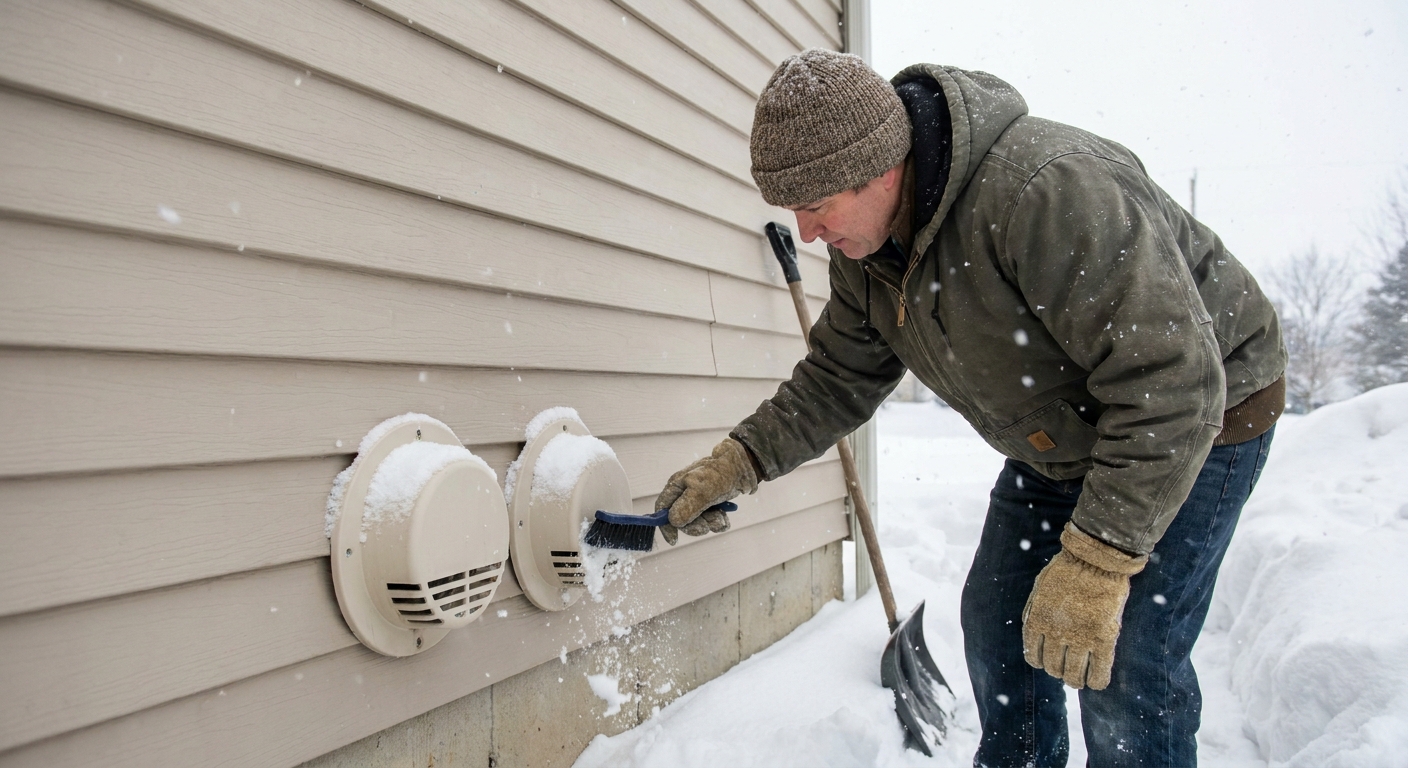
Step 2: Clear snow back generously
Do not just poke a hole. Create breathing room:
- Clear a wide area around the opening, not just the face
- Make sure drifting cannot immediately refill the area
- Check that the outlet is not pointing into a snowbank
Step 3: Check for ice buildup
Look for a ring of ice or a narrowed opening. If you see ice:
- Gently remove loose frost by hand
- Do not chip aggressively with tools that can crack the vent material
- If ice keeps returning quickly, it may be a termination location or setup issue that needs a pro evaluation
Step 4: Check any screen or guard
If your termination has a screen or guard, look for lint, leaves, webs, or nesting material. Clean only what is accessible without forcing parts.
Important: Follow the installation manual. Some manufacturers require a screen. Others explicitly prohibit screens because they ice over. If you are dealing with repeat clogging or icing, that is a “fix the root cause” situation, not a “delete the part” situation.
Step 5: Restart and watch one full cycle
After clearing blockages, restore power and call for heat. Confirm it starts and stays running. If you need to listen for normal operation, do it from a safe spot and do not hang out in a tight utility space.
What not to do
- Do not run the unit with the exhaust blocked “just for a bit.” Safety controls may shut it down quickly, but a blocked vent can still create dangerous conditions.
- Do not extend pipes randomly with spare fittings unless you understand the manufacturer requirements for length, slope, and termination style.
- Do not aim a heat gun or torch at plastic venting to melt ice. You can deform the pipe or create a failure that leaks flue gas.
- Do not assume intake and exhaust are interchangeable. Mixing them up during a repair can create serious combustion issues.
When to call an HVAC pro
Call for service if any of these are true:
- You cleared snow and visible ice, but the unit still locks out
- The vent pipes look cracked, sagging, disconnected, or improperly sloped
- You see heavy staining, heat damage, or discoloration near a termination
- Your CO alarm has sounded, even once
- The termination is on a roof or unsafe to access
Venting rules depend on the appliance, fuel type, pipe sizing, total run length, and how many elbows are in the system. Termination height above grade and clearances from openings like doors and windows are also manufacturer and code specific. A pro can verify the installation against the manual and local code, which is especially important if this is a repeat winter issue.
Prevent repeat problems
Keep a vent zone clear
- After each storm, do a quick walk-around and clear around terminations
- Teach whoever shovels that area to avoid piling snow near the pipes
- If you use a snowblower, do not blast the terminations directly
Check for debris seasonally
I like to check in late fall and again mid-winter. It takes two minutes and can save a no-heat call on the coldest night of the year.
Upgrade detectors
Working CO detectors, replaced on schedule, are cheap peace of mind. If your home has bedrooms on a different level than the furnace, make sure you have proper coverage where people sleep.
My quick takeaway
When a condensing furnace or boiler quits in winter, always think “airflow” before you assume the worst. A blocked termination outside can shut down the whole show. Clear snow, check for ice, check for nests or debris, then restart and watch a full cycle. If anything smells off, looks damaged, feels unsafe to access, or repeats, bring in a pro. Heat is important, but safe venting is non-negotiable.
The 30-Second Cheat Sheet
Essential takeaways for: Furnace or Boiler Vent Blocked? Quick Snow, Ice, and Nest Checks
Most common cause
High-efficiency (condensing) furnaces and boilers often have one or two plastic vent pipes outside, depending on the model and how it was installed: a two-pipe setup (intake and exhaust), a concentric termination (both in one fitting), or sometimes a single-pipe exhaust that uses indoor air for combustion. In winter, snow drifts, ice at the exhaust, and nests or debris (including clogged screens, if present) can block airflow and cause a protective shutdown.
Red-flag symptoms
- Unit locks out or starts then stops
- Error code related to pressure switch, venting, or combustion air
- No heat during or after a storm
- Condensation stains or frozen drip marks near the termination
5-minute outside check
- Find the termination(s) (two pipes, one pipe, or a concentric fitting). Do not confuse these with plumbing vents or radon piping.
- Clear snow broadly around them. Do not just poke a hole.
- Look for ice narrowing the outlet. Gently remove loose frost by hand.
- Check any screen for lint, webs, leaves, or nesting material, but follow the installation manual since some manufacturers require screens and others forbid them due to icing.
- Restart and watch a full cycle. If it locks out again, stop and call a pro.
Safety rules
- If a CO alarm sounds or you feel ill, leave the home and call emergency help.
- Never cap, tape, or reduce vent openings to keep snow out.
- Do not chip ice with tools that can crack plastic venting.
When to call HVAC
- Still no heat after clearing visible blockage
- Cracked, sagging, disconnected, or questionable vent piping
- Repeat icing or repeat blockages every storm
- Any CO alarm event
💡 Tip: Scroll up to read the full article for detailed, step-by-step instructions.
⬆️ Back to top
About Marcus Vance
Content Creator @ Grit & Home
Marcus Vance is a lifelong DIY enthusiast and self-taught home renovator who has spent the last decade transforming a dilapidated 1970s ranch into his family's dream home. He specializes in budget-friendly carpentry, room-by-room renovations, and demystifying power tools for beginners. Through his writing, Marcus shares practical tutorials and hard-learned lessons to help homeowners tackle their own projects with confidence.