
🚨 In a DIY emergency or rush?
Skip the details and jump straight to our 30-second cheat sheet for the most crucial info.
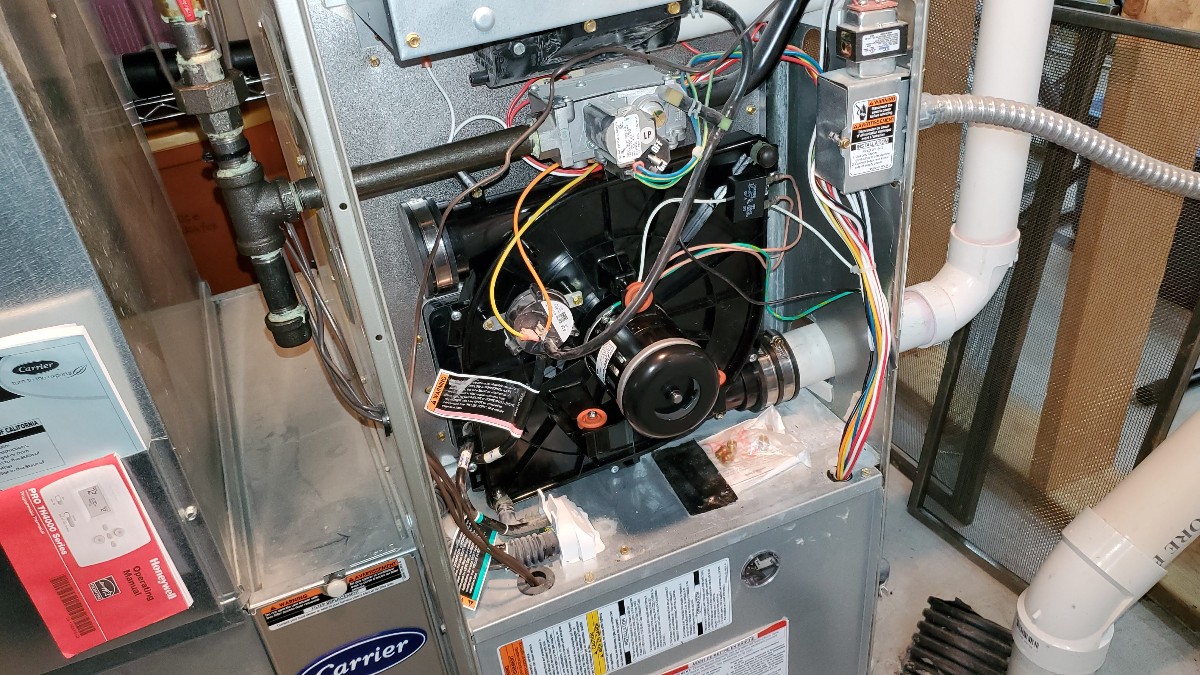
When a furnace tries to start but never lights, the pressure switch and draft inducer are near the top of my suspect list. They work together to prove the furnace can safely vent exhaust before the burners fire. If that proof fails, the control board shuts the party down.
This guide focuses on what you can check first, without getting into risky gas or combustion adjustments. I will also tell you exactly where the DIY line is. Also, quick scope note: “won’t light” can be caused by other problems too (igniter, flame sensor, gas valve, control board). This article is specifically about the draft proving sequence that happens before ignition.
Safety first (please read)
- If you smell gas: leave the house and contact your gas utility or a licensed HVAC pro.
- If you see soot, melted plastic, scorch marks, or the burner area looks “smoky”: shut the furnace off and call a pro. That can point to serious venting or combustion problems.
- Carbon monoxide alarms going off: treat it as an emergency. Get outside and call for help.
- Turn off power at the furnace switch or breaker before opening panels or touching wiring.
- If you have a high-efficiency (90%+) condensing furnace, extra water and condensate drains are part of the system. Don’t ignore standing water, slime-clogged traps, or frozen drain lines.
What the pressure switch and inducer do
Here is the simple version:
- The draft inducer is a small blower that starts first. It pulls combustion air through the heat exchanger and pushes exhaust out the vent.
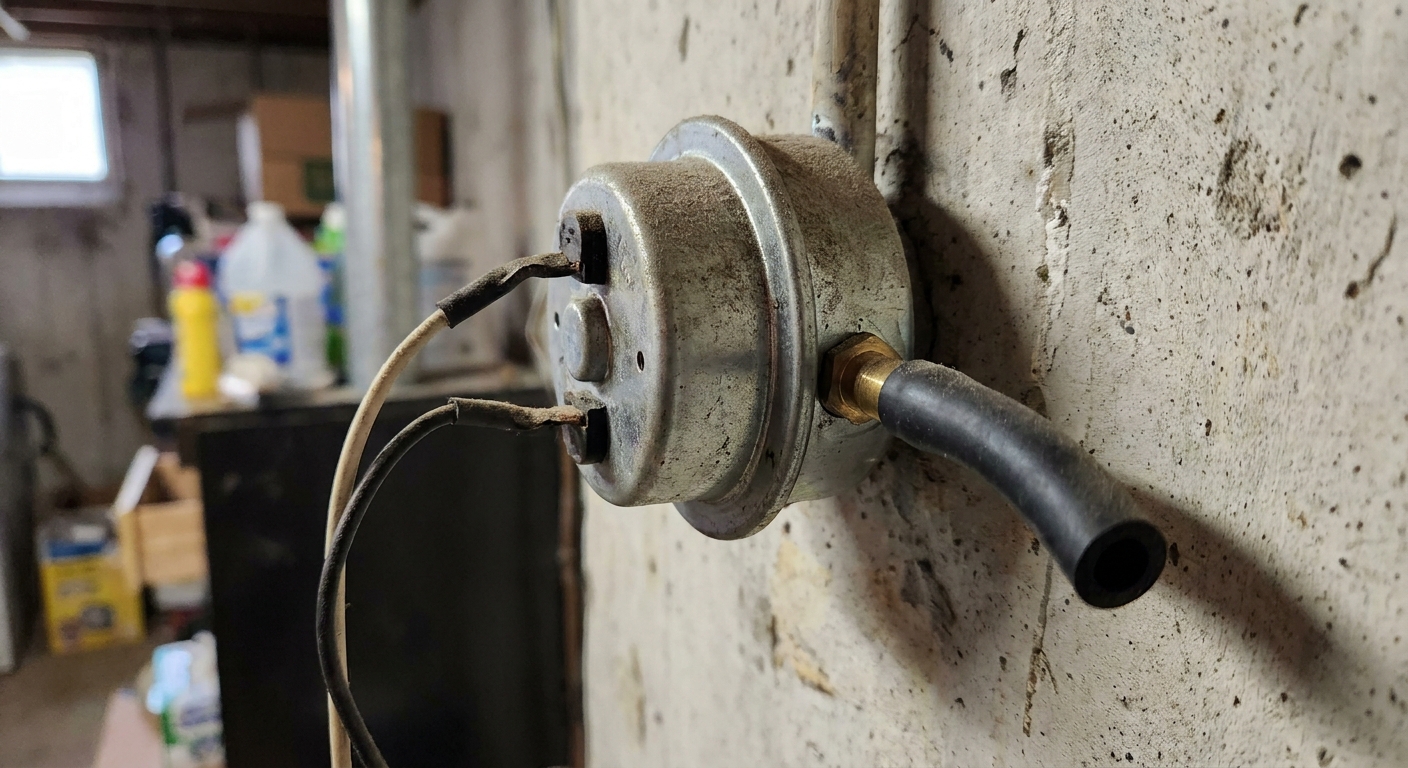
- The pressure switch senses that draft through a tiny rubber or silicone hose. When draft is strong enough, the switch closes (like flipping a tiny internal contact) and tells the control board, “venting is OK.”
If the inducer cannot move air or the switch cannot “see” that airflow, the furnace will usually stop before ignition or it will shut down shortly after trying.
Blink codes that point here
Every brand uses different blink codes, so your furnace door sticker is the boss here. But across many boards, these patterns commonly relate to the draft and pressure switch chain:
- “Pressure switch open” (often a code that appears during the call for heat): the board expected the switch to close, but it stayed open.
- “Pressure switch stuck closed” (often before inducer even starts): the board sees the switch closed when it should be open. This can be a failed switch, a hose/port issue, water in the hose, a cracked or misrouted hose that creates a constant pressure signal, or (less commonly) a wiring or control board input issue.
- “Inducer fault” or “failed to prove draft”: inducer may not be spinning, may be weak, or the intake or vent path is blocked.
- Short cycling early in startup: inducer runs, maybe you hear a click, then it quits and retries. That often means the switch closes briefly, then opens again because draft is unstable.
Quick tip: take a photo of the LED blink code and the furnace’s code chart before you start. It saves you from guessing later.
Your first checks
1) Thermostat, power, and door switch
- Thermostat set to Heat, temperature set above room temp.
- Furnace switch on, breaker not tripped.
- Door panel fully seated. Many furnaces have a door safety switch that kills power when the panel is off or loose.
2) Listen for the inducer
With the call for heat, the inducer should typically start within seconds. You are listening for a small motor ramping up, like a bathroom fan or a distant vacuum.
- No inducer sound at all: could be a bad inducer motor, seized wheel, control board issue, or no power to the inducer.
- Hums but won’t spin: could be seized bearings, jammed wheel, or a failing motor. Stop and call a pro. Forcing it can damage parts.
- Runs but sounds rough, rattly, or screaming: failing bearings or debris. It might still “work” intermittently and drive you crazy.
3) Check intake and exhaust outside
This is one of the most common “nothing is broken” causes I see in cold snaps.
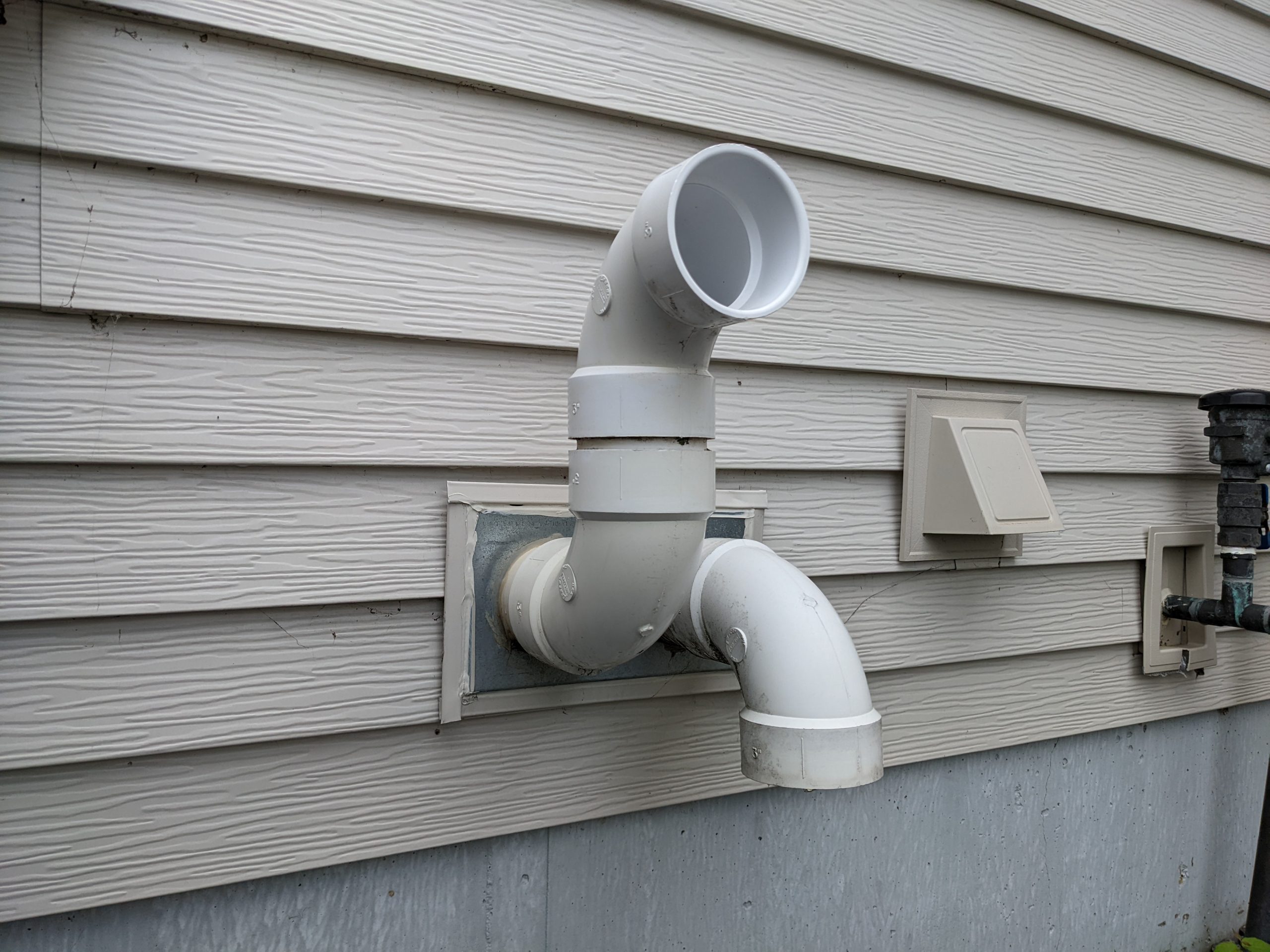
- Clear snow drifts, leaves, nests, and ice from the termination.
- For high-efficiency furnaces with two PVC pipes, check both the intake and the exhaust. A blocked intake can also fail the pressure switch.
- Look for a sagging PVC run that could hold water. Standing water can choke the vent.
- Check for obvious damage or recent work issues: landscaping, snow banks, new siding, or a “helpful” screen or mesh that is now frosted over.
4) Quick airflow sanity check
This is not a pressure switch fix, but it prevents wild goose chases. If your filter is completely plugged, the furnace can behave strangely and homeowners often blame the wrong part.
- Check the air filter. If it is packed with dust, replace it.
- Make sure supply registers and return grilles are not blocked by rugs, furniture, or boxes.
Pressure switch checks (DIY-safe)
Step 1: Find the switch and hose
The pressure switch is usually a small round or oval plastic part with one or two hose nipples and two wire terminals. One hose typically runs to the inducer housing or collector box.
Heads up: on two-stage or modulating furnaces, it is common to see two or more pressure switches (or a multi-port setup). If you expected “one little round switch” and you see a small cluster, that is normal. Match what you see to the wiring diagram and error code for your model.
Step 2: Inspect the hose like you mean it
- Look for cracks, splits, soft spots, or a hose that is kinked behind a wire bundle.
- Make sure it is firmly seated on both ends. A loose hose is basically a vacuum leak.
- If the hose has water in it, that is a red flag on condensing furnaces. The switch cannot sense the negative pressure through water trapped in the tube.
Step 3: Check the port where the hose connects
Even when the hose looks fine, the tiny port it connects to can clog with rust flakes, white condensate scale, or sludge.
- With power off, gently remove the hose.
- Use a flashlight to look at the nipple or port.
- If it is gunked up, clean it carefully. A wooden toothpick or a small zip tie tip can work. Avoid drilling it out or enlarging the hole.
- Avoid “testing” by blowing into hoses or the switch with your mouth. Moisture is not your friend here. Also do not blast compressed air into the pressure switch.
Step 4: Do not bypass the switch
I know the internet loves a “quick test” where you jump the switch wires. Do not do it. The pressure switch is a safety device that helps prevent exhaust and carbon monoxide problems. If the furnace cannot prove draft, you want it to shut down.
Condensate issues (90%+ furnaces)
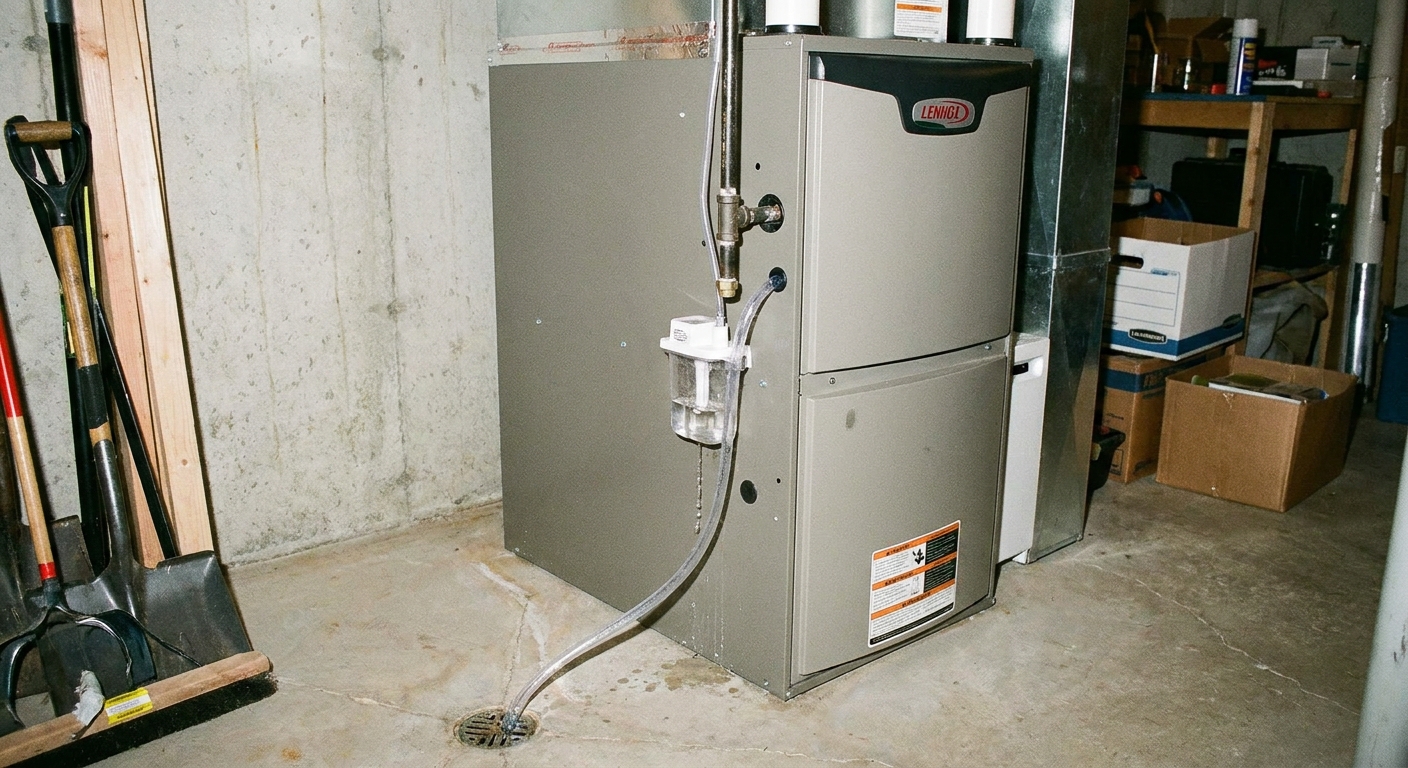
If you have a condensing furnace, the pressure switch system is tied into condensate management. Water where air is supposed to flow equals false pressure switch errors.
What to check
- Condensate trap: it can clog with slime. Some traps are clear plastic, which makes inspection easier.
- Drain line: look for kinks, sags, or a frozen section near an exterior wall.
- Collector box tubing: small tubes can plug up with debris.
- Water near the inducer or collector: a small amount of moisture can be normal on some models, but pooling, overflowing, or water dripping where it never used to is not. That points to a blockage or a trap or drain issue that needs attention.
Some installs also include a drain overflow safety switch (float switch). If it trips, it can stop the cycle and look like “the furnace just won’t start.” If you see a switch in the drain pan or on the condensate line, treat it as a clue that a drain problem may be the real cause.
If you are unsure how to safely open and service the trap for your model, this is a good “call a pro” moment. A misassembled trap can cause leaks and venting problems.
Draft inducer problems
Signs the inducer is weak
- Furnace tries to start, then stops, then retries multiple times.
- You hear the pressure switch click, then it clicks back off.
- Inducer sounds louder than it used to, or has a grinding squeal.
Simple checks
- Intake or exhaust screens (if installed): clear lint, frost, and debris. Screens can ice over.
- Vent connection at the inducer: look for obvious disconnections, sagging, staining, or leakage.
- Indoor vent path: if you can see the PVC run, look for obvious separations, cracked fittings, or a section that slipped out of a coupling. Do not start cutting or re-gluing pipe if you are not trained for it.
- Debris: with power off, you can visually inspect for leaves or nesting material near the outside outlet. Do not reach into the inducer wheel area.
Inducer replacement is usually a straightforward job for a trained tech, but diagnosing why it failed and confirming safe venting afterward is where experience matters.
Quick decision tree
- Inducer does not run → Check power, door switch, error code. If power is present but motor will not run, call a pro.
- Inducer runs, but pressure switch code persists → Check intake and exhaust outside first, then hose condition, then hose port clog, then condensate trap and drains (condensing units), then suspect inducer weakness or a deeper venting issue.
- Pressure switch “stuck closed” code → Check for water in the hose, cracked hose, hose routed to the wrong port, or wiring issues. If it still reads stuck, call a pro.
- Issue happens only during deep cold → Suspect frost or ice at the outside outlet, a partially blocked vent, an iced-over screen, or a frozen condensate drain.
When to call a pro
These are the lines I do not cross in my own house without backup:
- Any signs of exhaust leakage, soot, or recurring CO alarm events.
- You suspect a blocked flue inside a wall or attic or a damaged vent run.
- Inducer motor is humming, overheating, tripping, or the wiring looks burnt.
- The furnace shows multiple fault codes and you are not sure what is primary.
- You have cleaned the hose and port, confirmed the outside outlets are clear, and it still will not prove draft.
At that point, a tech can verify draft with proper instruments, inspect the heat exchanger area, and confirm the furnace is venting safely after repair.
My hard-learned lesson
Years ago, I chased a “bad pressure switch” for an embarrassing amount of time. The switch was fine. The real culprit was a tiny clog at the inducer port, basically a little crusty ring of condensate scale that a quick cleaning would have fixed in five minutes. Since then, I always start with the simple airflow and hose checks before I start pricing parts.
Tools and supplies
- Flashlight or headlamp
- Small zip ties or a toothpick for gentle port cleaning
- Nut driver or screwdriver for panel removal
- Shop vacuum for cleanup around the furnace (not for bypassing safety devices)
If you are comfortable using a multimeter or manometer, those can help a pro-level diagnosis. But for most homeowners, the checks in this article cover the high-probability causes safely.
The 30-Second Cheat Sheet
Essential takeaways for: Furnace Pressure Switch or Draft Inducer Problems: What to Check First
What’s happening
If your furnace won’t ignite and the board points to a pressure switch or draft inducer, it means the furnace cannot prove safe venting. The inducer has to move air, and the pressure switch has to sense that draft.
Check these first (in order)
- Look up the exact blink code on the furnace door chart. Take a photo of it.
- Listen for the inducer during a call for heat.
- Silent or humming only: likely inducer or power issue.
- Runs but shuts down repeatedly: draft is weak or unstable.
- Go outside: clear snow, leaves, nests, and ice from exhaust and intake terminations (90%+ furnaces often have two PVC pipes). Also look for screens or mesh iced over.
- Inspect the pressure switch hose: cracks, loose ends, kinks, or water in the hose.
- Clean the hose port where it connects at the inducer or collector box. Tiny clogs cause big headaches.
- Condensing furnace only: check condensate trap and drain line for clogs or freezing. Water plugs can cause pressure switch faults.
Do NOT do this
- Do not bypass or jump the pressure switch. It is a safety device tied to venting and CO risk.
- Do not keep resetting and running a furnace that shows soot, scorch marks, or CO alarm events.
Call a pro if
- Inducer motor will not run, screams, grinds, or overheats.
- You suspect a blocked flue inside the home, or you see exhaust staining or soot.
- You cleared terminations, checked hose and port, verified drains, and it still will not prove draft.
💡 Tip: Scroll up to read the full article for detailed, step-by-step instructions.
⬆️ Back to top
About Marcus Vance
Content Creator @ Grit & Home
Marcus Vance is a lifelong DIY enthusiast and self-taught home renovator who has spent the last decade transforming a dilapidated 1970s ranch into his family's dream home. He specializes in budget-friendly carpentry, room-by-room renovations, and demystifying power tools for beginners. Through his writing, Marcus shares practical tutorials and hard-learned lessons to help homeowners tackle their own projects with confidence.