
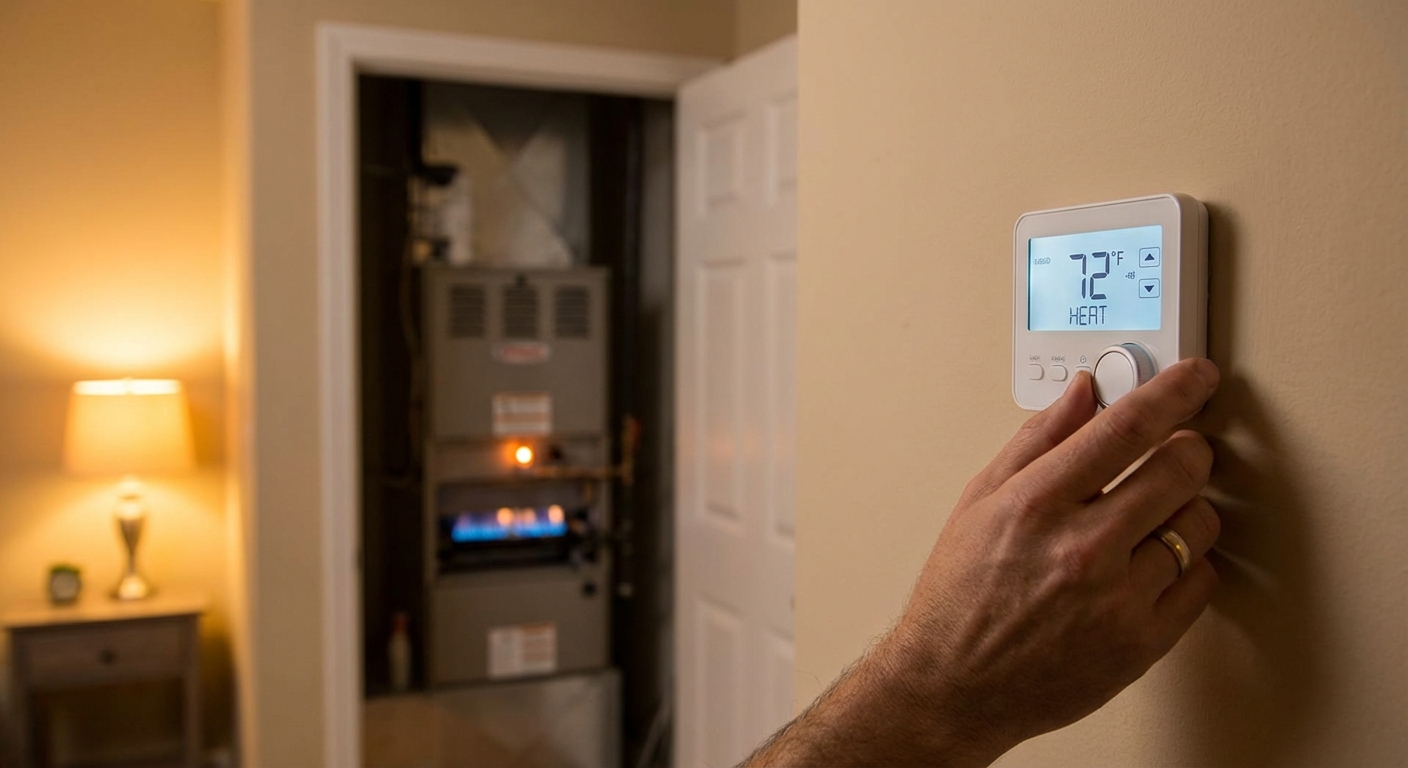
If your furnace smells like it’s burning when it kicks on, your brain is doing exactly what it should do: getting your attention. Sometimes it is totally normal, especially the first cold snap of the year. Other times it is a genuine safety issue that needs a hard stop.
I’ve lived through both. The normal one smells like warm, dusty air for a minute or two. The not-normal one smells sharp, plasticky, or like hot wiring and it makes your stomach drop. Let’s sort out which one you have and what to do next.
First, decide: harmless or dangerous?
Usually harmless
- Dust burn-off at season start: a dry, dusty smell for a short time.
- Light “new heat” odor: if parts were recently serviced or replaced, a brief hot-metal smell can happen.
Potentially dangerous: shut it down and investigate
- Electrical or plastic smell: like hot wiring, melting insulation, or burning electronics.
- Strong smoke smell or visible smoke: not normal, even once.
- Oil or fuel smell: especially if it is strong, persistent, or increasing.
- Gas odor (rotten egg smell): treat as an emergency.
- Symptoms with the smell: headaches, nausea, soot around vents, or a carbon monoxide alarm going off.
When in doubt: turn the thermostat to OFF, shut off power at the furnace switch or breaker, and call a licensed HVAC tech.
What to do right now (safe checklist)
- Smell from a distance: Is it dusty and fades fast, or sharp and persistent?
- Check for smoke: look around supply vents, the furnace cabinet seams, and the burner area (do not open sealed combustion panels if you are not comfortable).
- Check floor registers for dropped stuff: plastic toys, wrappers, pet hair clumps, and socks can land on or near warm airflow and create a very real “burning plastic” smell.
- Swap the filter if it is dirty: this is the most common DIY fix.
- Listen: squealing, grinding, or a struggling blower can point to motor or airflow issues.
- Watch the timeline: dust burn-off should fade within minutes. Anything that lingers or gets worse deserves a shutdown and a call.
Cause #1: Dust burn-off (normal at season start)
This is the classic fall furnace smell. During spring and summer, dust settles inside the furnace cabinet, on hot surfaces near the burners and heat exchanger area, and sometimes in nearby duct runs. The first few heating cycles warm that dust and you get a “burning dust” odor.
How to confirm
- It happens only after the first heat call of the season or after months of no use.
- The smell is mild and fades in a few minutes.
- No smoke, no strange noises, no tripped breaker.
What to do
- Run the furnace for 10 to 15 minutes with a clean filter installed.
- Crack a window for ventilation if you are sensitive to smells.
- If the smell continues after a day of normal cycling, move to the next sections.
Cause #2: Dirty air filter (common and fixable)
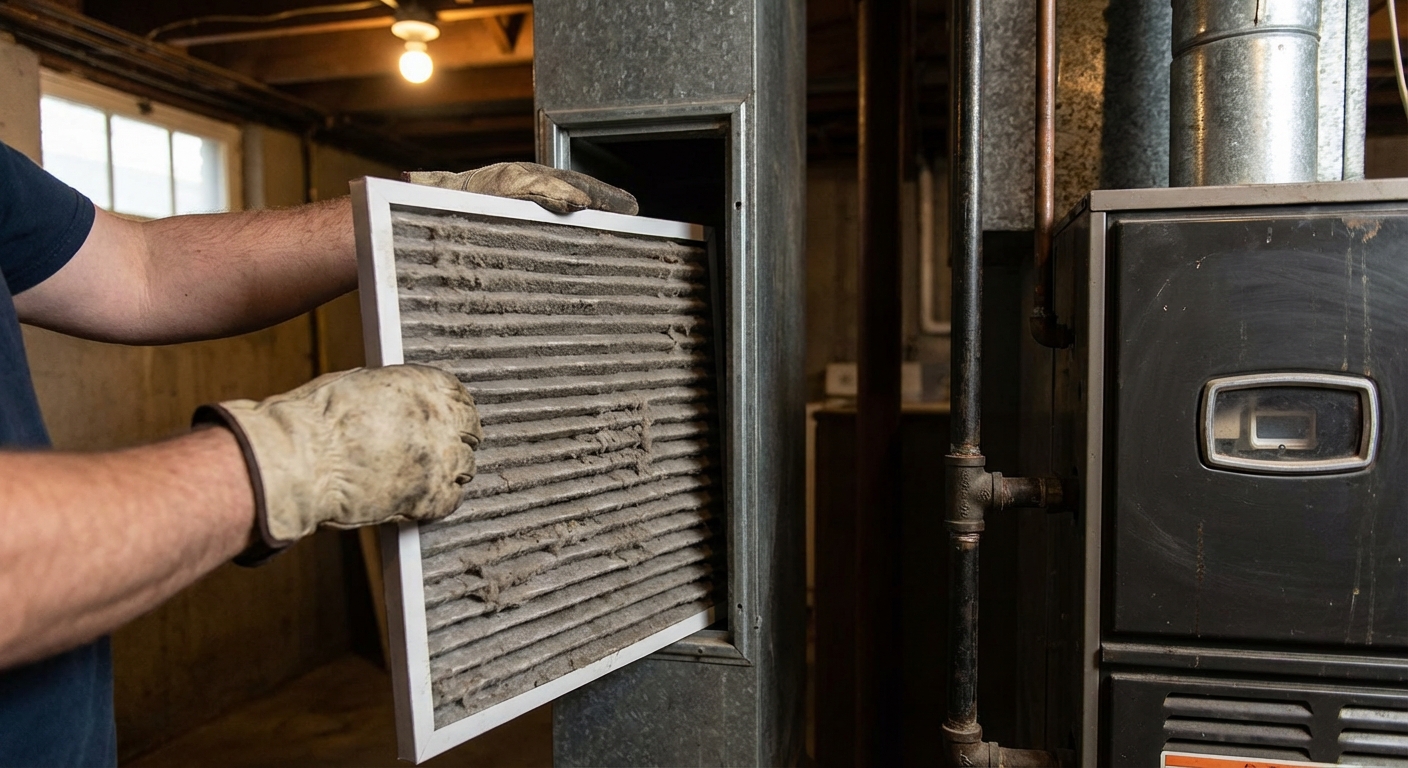
A clogged filter chokes airflow. Low airflow can make the furnace run hotter than it should, which can create a hot, dusty smell and in some cases trigger the high-limit safety switch (short cycling).
How to check
- Turn the system off.
- Find your filter. It may be in a slot at the furnace, in a return duct near the unit, or behind a large return grille in a hallway or ceiling.
- Pull the filter and hold it up to a light. If you can’t see light through much of it, it’s time.
- Make sure the arrow on the filter frame points toward the furnace blower.
Fix
- Replace with the same size. The size is printed on the filter frame (example: 16x25x1).
- Do not jump to the most restrictive filter you can find. For many systems, a basic pleated filter is the sweet spot for airflow and protection.
- If filters load up fast, check that return vents are not blocked and consider having ducts cleaned only if there is confirmed heavy buildup.
Cause #3: Blower motor or belt overheating
The blower motor moves air across the heat exchanger and through your home. If it is struggling, it can overheat and produce a “hot electrical” or “hot dust and metal” smell. Older furnaces may also have a belt that can slip and smell like hot rubber.
Clues you will notice
- Squealing, squeaking, grinding, or rattling when the fan starts.
- Weak airflow from vents.
- Burning smell that shows up with the blower, not just at ignition.
- Furnace shuts off and restarts (overheat protection tripping).
What you can do safely
- Replace the filter and make sure supply and return vents are open.
- Check floor registers for debris (pet hair, toys, wrappers) and clear them.
- Make sure the furnace area is not packed with stored items that block airflow.
- If the smell persists, turn the system off and call a pro. Overheating can damage wiring and control boards.
Cause #4: Electrical burning smell (urgent)
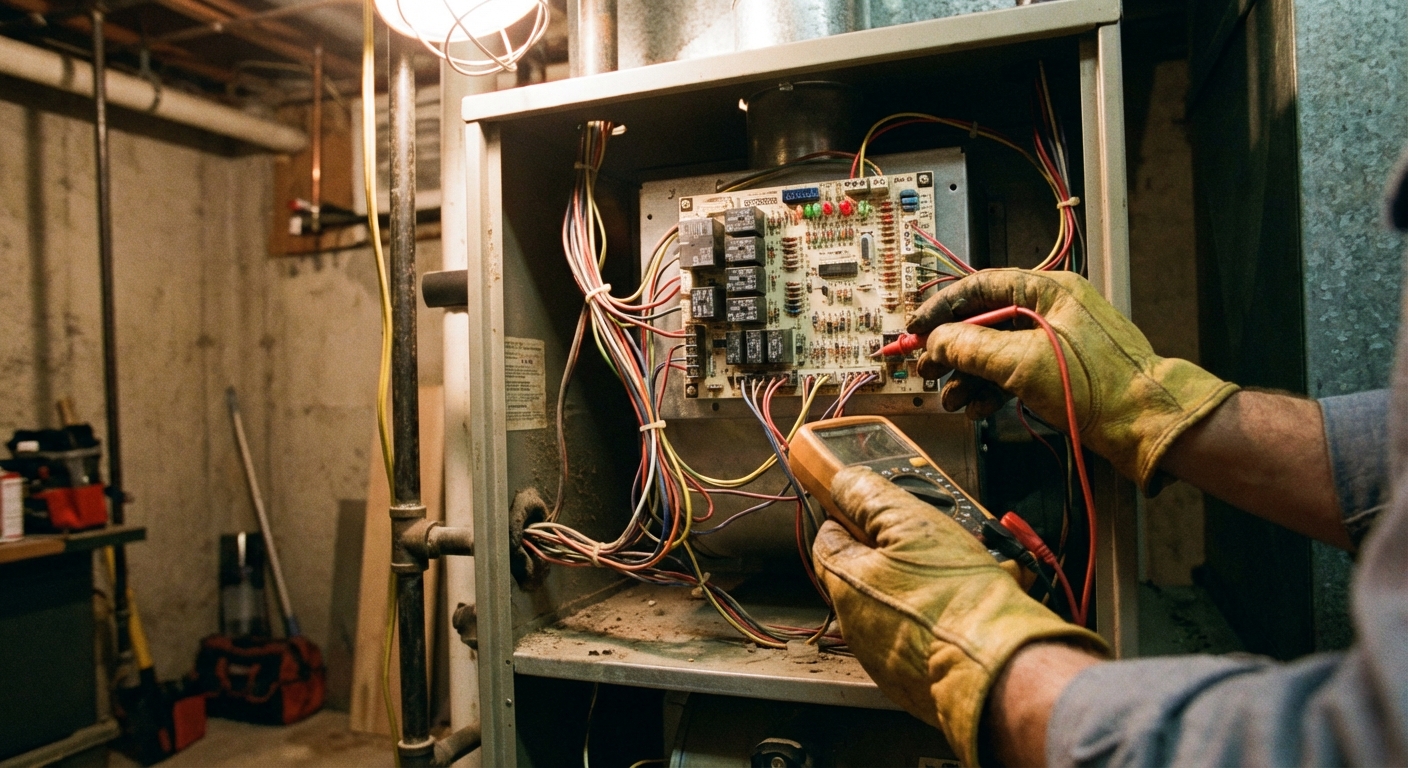
An electrical burning smell is usually sharper than dust. People describe it as “hot plastic,” “burning wires,” or “electronics.” Common fault points include motors, capacitors, loose connections, arcing, and control board components.
Before you assume it is the furnace
- Walk the house and check floor registers. A surprising number of “melting plastic” smells come from a toy, wrapper, or other object sitting in the register boot where warm air hits it.
- If you find something, turn the heat off, remove it, and air out the area. If the smell returns, treat it as a furnace issue and continue below.
What to do
- Turn the thermostat to OFF.
- Shut off power at the furnace switch or breaker.
- Do not keep restarting the system “to see if it goes away.”
- Call an HVAC technician. Electrical faults can become a fire risk.
Cause #5: Cracked heat exchanger (danger)
This is the one homeowners fear, and for good reason. A cracked heat exchanger can allow combustion gases, including carbon monoxide, to mix with the air circulated through your home.
What it can smell like
- Sometimes a sharp, “hot metal” or “chemical” smell.
- Sometimes you smell nothing at all. That is why carbon monoxide alarms matter.
Red flags
- Carbon monoxide alarm goes off or you have symptoms (headache, dizziness, nausea).
- Sooty residue around the furnace or supply registers.
- Flame looks unstable or “rolls out” when the blower comes on.
- Repeated tripping of safety switches with no obvious airflow problem.
What to do
- If a CO alarm is sounding: get everyone outside for fresh air immediately and call emergency services or your gas utility from outside. Do not try to troubleshoot first.
- If you suspect combustion gases but no alarm is sounding, turn the furnace off, ventilate, and call a licensed HVAC pro for inspection.
- Heat exchanger evaluation is not a casual DIY job.
Cause #6: Gas odors and “rotten eggs”
Natural gas is odorized with mercaptan so you can smell leaks. If you smell rotten eggs or a strong sulfur odor, take it seriously.
What to do if you smell gas
- Do not flip switches on or off, including lights, fans, or the furnace switch. Avoid anything that could create a spark.
- Do not use lighters, matches, or open flames.
- If possible, avoid using phones or other electronics inside the home.
- Leave the home and get to fresh air.
- Call your gas utility emergency line or local emergency services from outside.
- Do not re-enter until you are told it is safe.
Note: A brief whiff right at ignition can happen on some systems, especially at first seasonal startup. It should not linger, and it should not be happening repeatedly. Any sustained or recurring gas odor needs inspection.
Cause #7: Oil or fuel smells
If you have an oil furnace, a fuel odor can mean a small leak at the filter canister, pump, or line fittings, or a delayed ignition situation that leaves unburned oil smell.
What to do
- Do not keep running the system to “burn it off.”
- Check for visible drips around the oil tank, filter housing, and lines.
- Call your oil service company. Oil leaks are messy, costly, and can be a fire hazard.
Quick smell guide
- Dusty, dry, fades fast: seasonal dust burn-off (usually normal).
- Hot plastic or electrical: first check floor registers for dropped plastic items, then shut down and call for service if it continues.
- Hot rubber: possible belt issue (older units) or overheating component, schedule service.
- Smoke or burning paper smell: shut down, check for foreign objects near heat sources and registers, call if unresolved.
- Rotten eggs: leave home and call gas emergency line.
- Fuel oil smell: shut down and call oil service.
DIY fixes you can safely try
Safe homeowner steps
- Replace the filter and confirm correct airflow direction arrow.
- Clear airflow: open registers, unblock returns, keep the furnace area clear.
- Check floor registers: remove toys, wrappers, pet hair, and anything else that could heat up and stink.
- Check the exhaust vent outside (high efficiency furnaces): make sure it is not blocked by snow, leaves, or a critter nest.
- Vacuum around the furnace cabinet with the power off to reduce loose dust nearby.
Skip these unless you are trained
- Electrical diagnostics inside the cabinet.
- Heat exchanger inspection beyond a basic visual look for obvious soot or corrosion.
- Gas valve adjustments or burner tuning.
When to call a pro (my line)
If any of the items below are true, I stop tinkering and make the call:
- The smell is electrical, plasticky, or makes your eyes water.
- The furnace trips the breaker or shuts down repeatedly.
- You see smoke or scorching on wiring or the cabinet.
- You suspect gas, oil, or carbon monoxide.
- The smell lasts longer than 15 minutes or gets stronger each cycle.
HVAC service calls are not fun money, I get it. But a burning smell is one of those times where “wait and see” can turn into a much bigger bill.
Prevention for next season
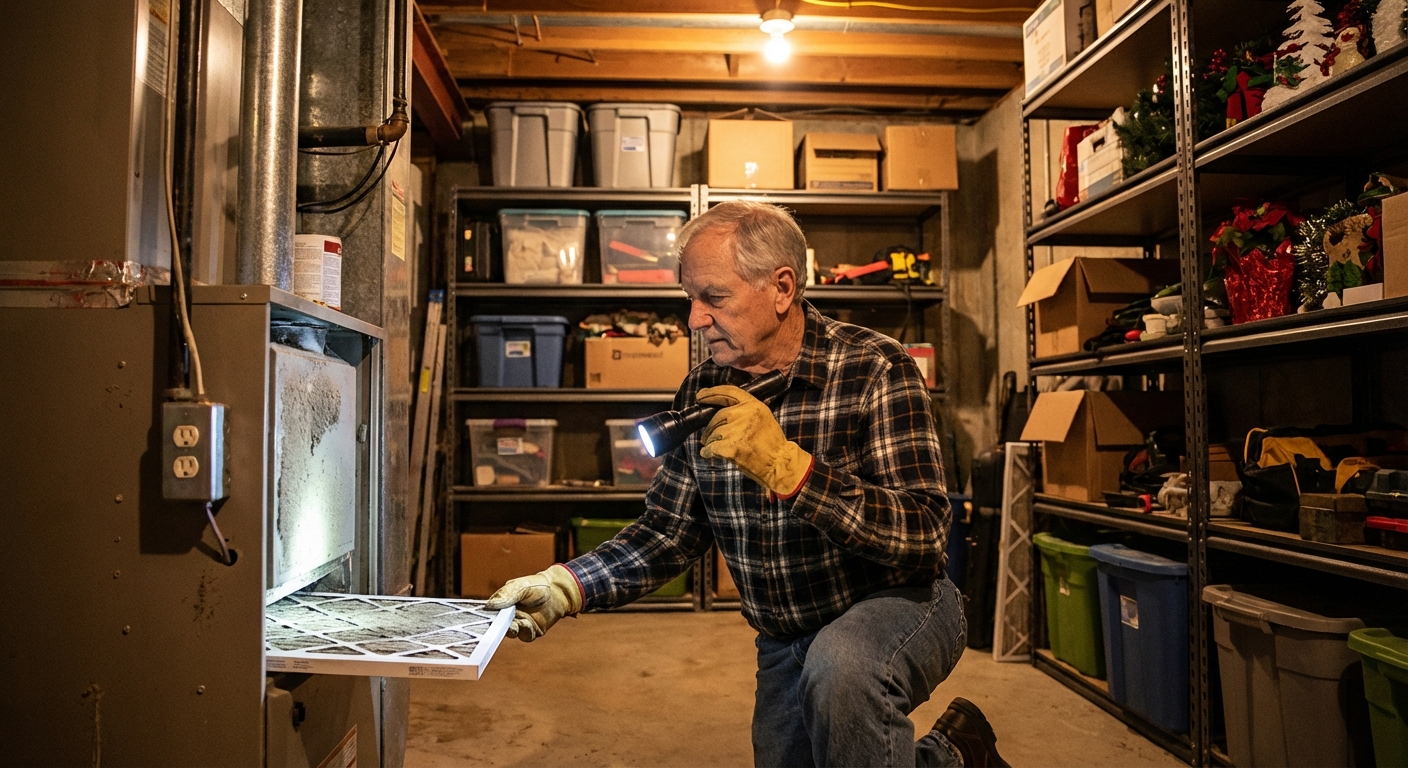
- Change filters on a schedule: commonly every 1 to 3 months, depending on pets, dust, and filter type.
- Do a fall test run: run heat for 10 minutes on a mild day so you catch issues before a freezing night.
- Annual maintenance: a pro cleaning and safety check can catch overheating parts and combustion issues early.
- Install and test carbon monoxide alarms: one on each floor, and near sleeping areas.
FAQ
How long should the “burning dust” smell last?
Typically a few minutes on the first heating cycle of the season. If it lasts beyond 10 to 15 minutes or returns every time the furnace runs, treat it as a troubleshooting issue, not normal burn-off.
Can a dirty filter cause a burning smell?
Yes. Restricted airflow can overheat the furnace and make dust and components run hotter than intended. Replace the filter first since it is quick, cheap, and often the fix.
Is a burning smell always carbon monoxide?
No. Carbon monoxide is always odorless. That’s why alarms matter. A burning smell can be dust, electrical overheating, a motor issue, or a serious combustion problem. Use the red-flag list above to decide when to turn the system off and call.

About Marcus Vance
Content Creator @ Grit & Home
Marcus Vance is a lifelong DIY enthusiast and self-taught home renovator who has spent the last decade transforming a dilapidated 1970s ranch into his family's dream home. He specializes in budget-friendly carpentry, room-by-room renovations, and demystifying power tools for beginners. Through his writing, Marcus shares practical tutorials and hard-learned lessons to help homeowners tackle their own projects with confidence.