
🚨 In a DIY emergency or rush?
Skip the details and jump straight to our 30-second cheat sheet for the most crucial info.
When a garage door cable goes loose, frays, or hops off the drum, it is tempting to grab pliers and “just wind it back on.” I get it. I have had that same itch to fix something right now so the house can get back to normal.
But cable problems are one of those garage door issues where the safest, smartest DIY move is to slow down and stabilize the situation first. Cables work directly with the springs, and springs store enough energy to seriously injure you if something lets go.
What each part does (cable vs spring vs opener)
Before you troubleshoot, it helps to know who does what. A lot of homeowners blame the opener first, but cable and drum issues are their own category.
The cables
Garage door lift cables are steel cables that connect the bottom of the door to the drums at the top corners (on torsion spring systems). Their job is simple: carry the lifting force so the door rises evenly. If one cable is loose or off the drum, the door can lift crooked, jam in the tracks, or drop on one side.
The springs
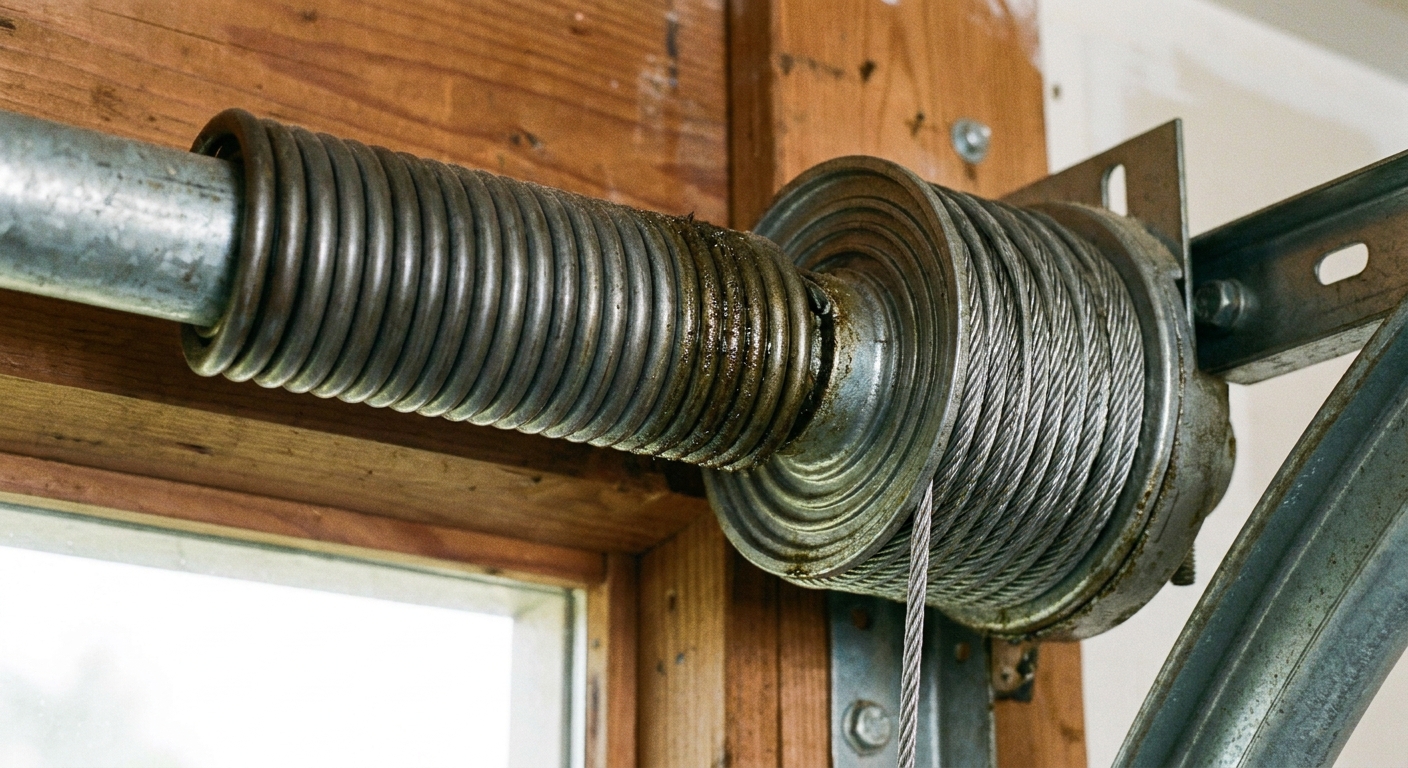
The springs do the heavy lifting. On most modern doors, you will have a torsion spring mounted on a shaft above the door. Springs store torque so the door feels light enough to lift by hand. Cables do not “replace” the spring. They transmit the spring’s lifting force to the door.
The opener
The opener is basically a motorized guide. It is meant to move a balanced door, not muscle up a stuck or uneven one. When a cable is off the drum, the opener can bend the top section, pull the door crooked, or strip gears because it keeps trying to lift an unbalanced load.
Stop signs that mean “do not run the door”
If you notice any of the issues below, treat the door as unsafe until it is secured.
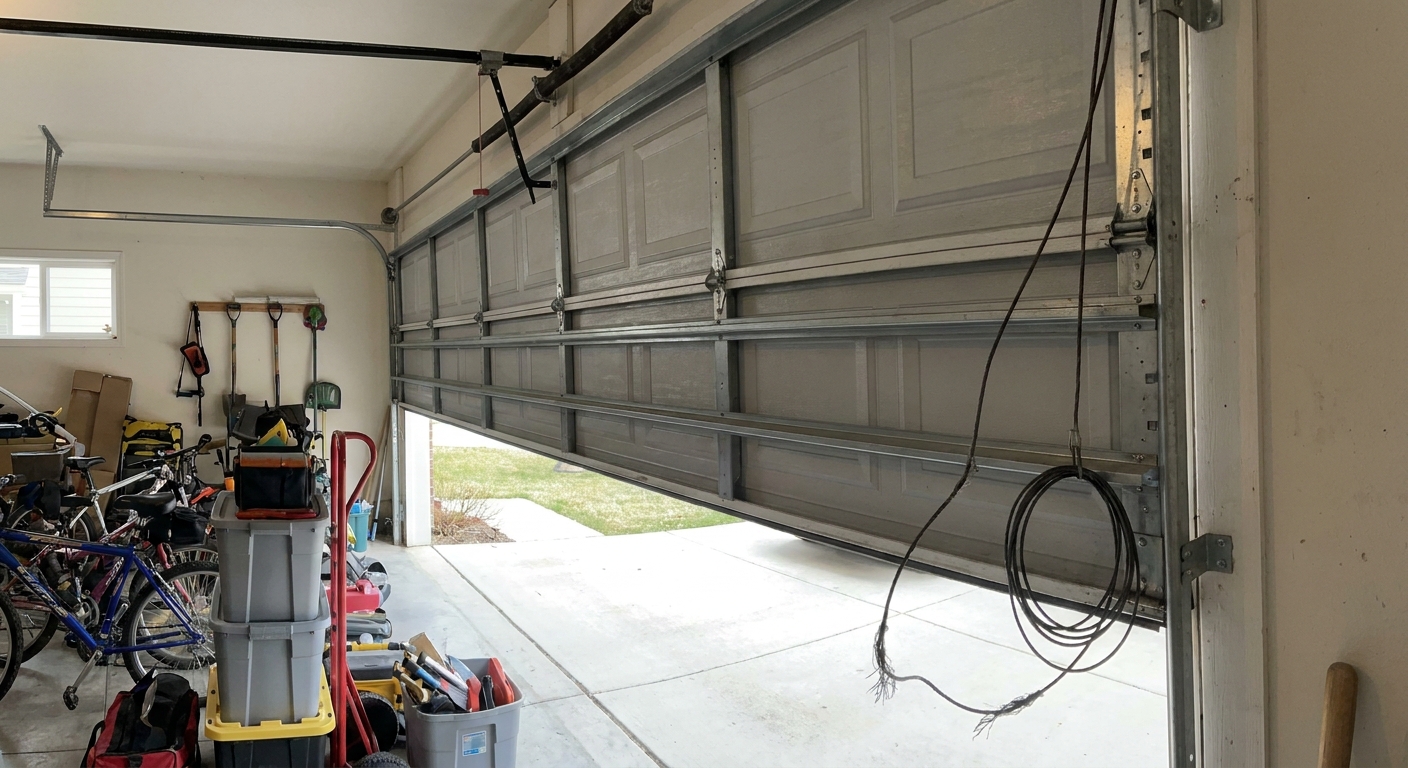
- One side of the door is higher than the other (door looks “racked” or twisted in the opening).
- A cable is visibly slack or you can see it hanging away from the drum.
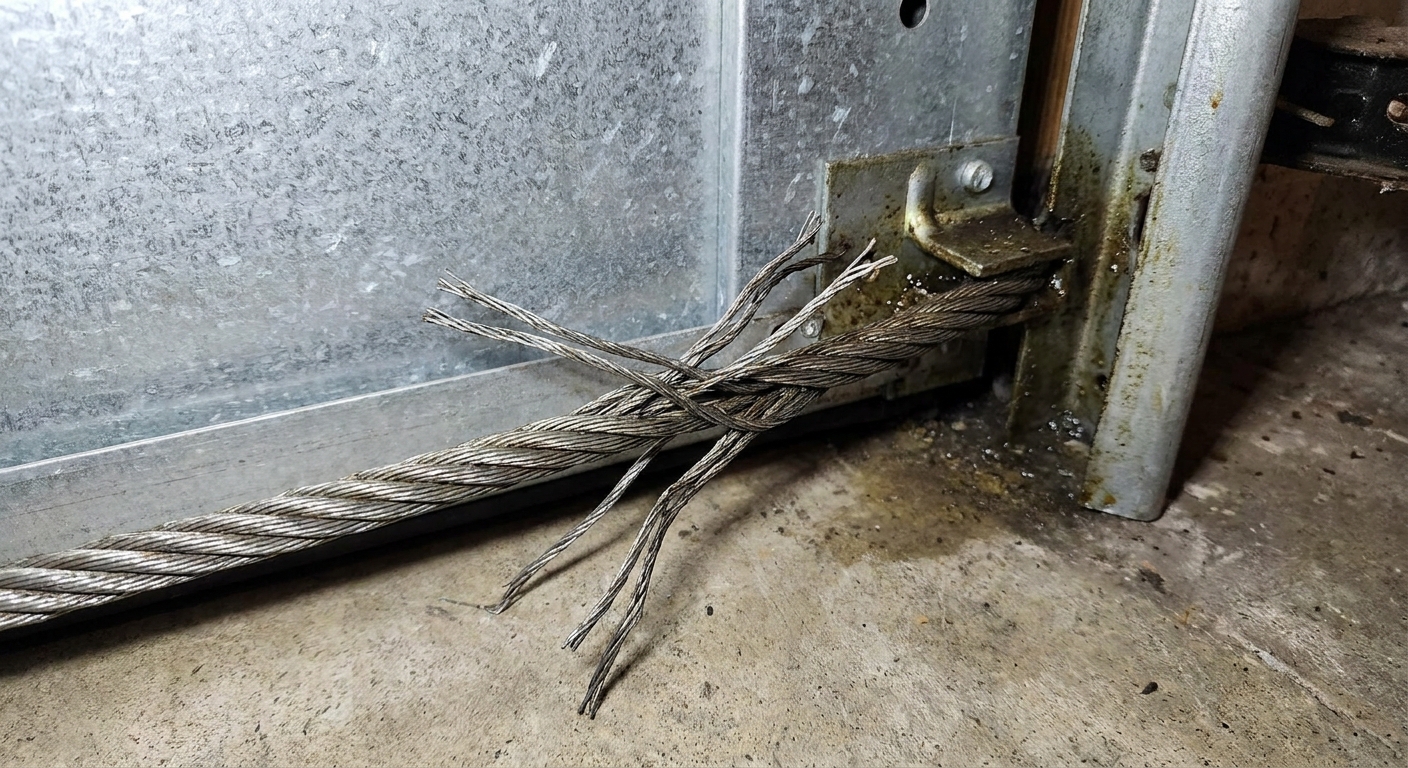
- Frayed strands on the cable, especially near the bottom bracket or where it wraps the drum.
- Door is jammed halfway and will not go up or down evenly.
- Loud snap or bang right before the problem started (could be spring related).
- Bottom corner hardware is bent or the track is visibly pulled.
In these situations, forcing the door usually makes the repair bigger and more expensive.
Quick visual safety checks (no tools, no touching)
These checks are designed to answer one question: Is this likely a cable-only issue, or is something bigger going on? Keep your hands off the spring, shaft, drums, and bottom brackets.
1) Look at the torsion spring(s) above the door
From a safe distance, see if the spring looks intact. A broken torsion spring often shows a visible gap of 1 to 3 inches in the coil. If you see a gap, stop here. That is not a “re-seat the cable” day.
2) Check if the door is sitting uneven in the opening
If one side is up and the other is down, the cable may be off the drum, a cable may have stretched or snapped, or a drum set screw may have slipped. Any of those can let the door bind in the tracks.
3) Inspect the cable condition from the floor
Look for rust, kinks, or “hairy” spots where strands are broken. A frayed cable is living on borrowed time. If it breaks, the door can drop on that side.
4) Look at the drum area (top corners)
On a torsion system, the cable should be neatly wrapped in the grooves of the drum. If you see it piled, crossed, or hanging off, that is a clear drum seating issue.
Why you should not force the door (even “just a little”)
Here is what forcing the door often does when a cable is loose, frayed, or off the drum:
- Makes the door rack harder, which can pop rollers out of the track.
- Unspools the cable further, creating a tangled mess on the drum.
- Overloads the opener, potentially bending the top panel or rail.
- Turns a simple cable replacement into track and section repair.
And the big one: if the spring system is involved, any sudden release can cause parts to whip or the door to drop.
Safe first steps (what I recommend homeowners do immediately)
Your goal is to prevent movement. Movement is what hurts people and breaks doors.
Step 1: Keep everyone away from the door
Kids, pets, and well-meaning helpers should be out of the garage and away from the door opening. If your garage is your main entry, use another door for now.
Step 2: Do not press the wall button or remote
If the opener is already struggling, one more click can twist the door or pull it off the track.
Step 3: If the door is closed, leave it closed
A closed door is usually the safest position. If you can live with it shut until a tech arrives, that is the best case.
Step 4: If the door is stuck open, secure it before you do anything else
If the door is partially or fully open, it can fall. Here is the cautious way to stabilize it:
- Unplug the opener so no one accidentally activates it.
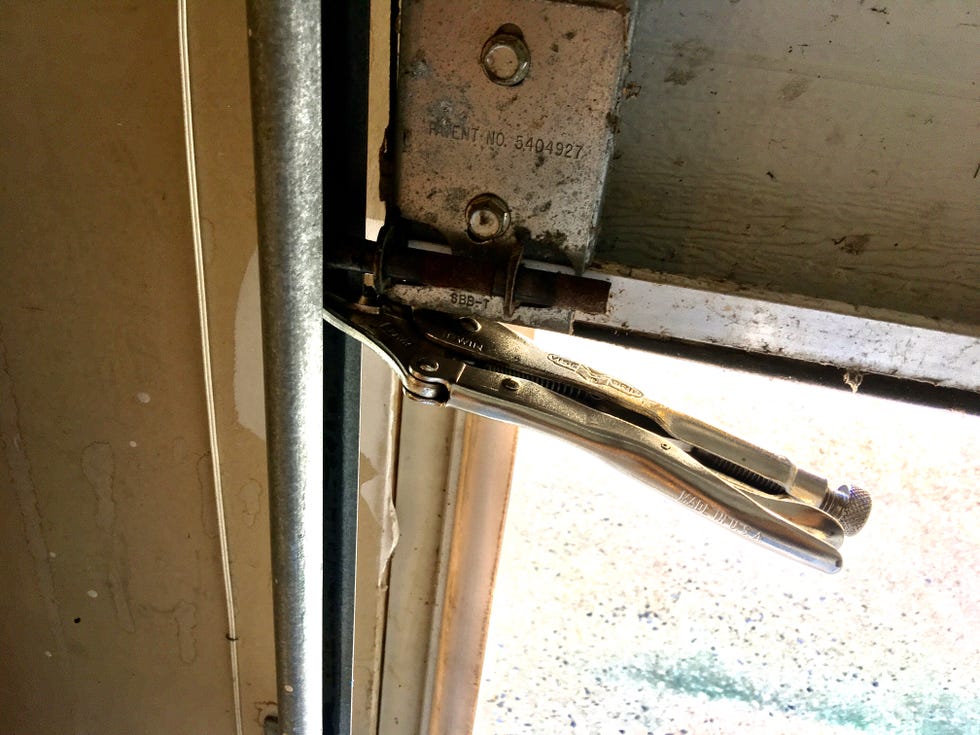
- Clamp the tracks on both sides using locking pliers or C-clamps placed just below the bottom roller. This creates a physical stop that helps prevent the door from dropping.
- Add support under the door if you can do it without getting under the door. A pair of sturdy step ladders near the ends can help, or a 2x4 post cut slightly long and wedged under a strong part of the door. Do not crawl under a compromised door to place supports.
If you cannot secure it confidently, back out and call a pro right away. An open, unstable door is an urgent situation.
What not to touch (seriously)
Here is my personal “hands off” list for homeowners when cables are involved:
- Bottom brackets where the cable terminates. These are under spring tension on many systems.
- Set screws on the cable drums.
- Torsion spring winding cones and the torsion shaft.
- The cable itself if it is frayed. Broken strands can slice fingers, and tension changes can happen fast.
If you take nothing else from this article, take this: cable problems are spring-adjacent problems. Treat them with the same respect you would a spring repair.
What causes a cable to go loose or off the drum?
Most cable issues are symptoms of something else. Common causes include:
- Door was operated with a broken spring, letting the cable lose proper tension and slip.
- Door hit an obstruction (trash can, bike handlebar, frozen bottom seal), causing a sudden stop and uneven tension.
- Worn rollers or track misalignment that makes one side bind.
- Frayed, stretched, or rusty cables that no longer spool cleanly.
- Drum or bearing wear, or a drum that slipped on the shaft.
That is why “just wrap it back on” often does not hold. The root cause is still there.
Is this ever a DIY fix?
In my DIY life, I have learned to separate “DIY-able with patience” from “DIY-able with specialized tools and risk.” Re-seating a cable on a torsion system usually lands in the second category because correct tension and drum alignment matter, and mistakes can be dangerous.
There are a few homeowner-friendly situations:
- Obvious obstruction removed and the door is fully closed and stable, and you are only documenting the problem for a technician.
- Basic cleanup like clearing debris from the tracks (not forcing rollers back in, not loosening hardware).
But if a cable is off the drum, frayed, or the door is crooked, I treat that as a professional repair.
What a professional typically repairs (and what it usually costs)
A garage door tech will normally do more than “put the cable back.” The goal is to restore safe, even lift.
Common scope of work
- Replace both lift cables as a matched pair (even if only one looks bad).
- Re-seat cables on drums and ensure proper wrap and alignment.
- Check and adjust spring tension so the door is balanced.
- Inspect drums, bearings, and shaft for wear or slippage.
- Track and roller inspection to confirm nothing is bent or binding.
- Opener force and travel check after the door is balanced again.
Typical cost range (ballpark)
Pricing varies by region and door size, but many homeowners see cable and drum related service fall roughly in the $150 to $350 range for a standard residential door when it is primarily a cable replacement and re-seat. If there is track damage, a bent door section, or a spring replacement involved, costs can climb.
When you call, describe it like this: “One cable is loose/off the drum and the door is uneven.” That helps dispatch the right technician with the right parts.
If you must get a car out (risk-managed)
I am going to be blunt: the safest answer is to not operate the door until it is repaired. But real life happens. If your car is trapped and you are considering moving the door, here is the least-bad path.
- Stop if the door is crooked, jammed, or already partly open. That is where sudden drops and track pull-outs happen.
- Understand the imbalance. With one loose or broken cable, the door can become wildly uneven. The intact side may still get spring assistance and want to rise, while the problem side can feel like dead weight. That weight difference can be extreme, and it can twist the door fast.
- Disconnect the opener correctly. Unplugging is good so no one hits the button, but it does not free the door. You must pull the red emergency release cord to disengage the trolley from the opener rail (only do this if the door is fully closed and stable).
- Have two capable adults. One person per side, hands clear of pinch points.
- Lift only a few inches first. If the door immediately racks, binds, or one side shoots up, stop and lower it back down.
- Do not go under the door unless it is securely clamped and supported.
If any part of this feels sketchy, trust that instinct and call a pro. A trapped car is frustrating. A falling door is worse.
What to tell the technician (and what photos to take)
A few details can speed up scheduling and reduce surprises:
- Single car or double car door, and approximate width if you know it.
- Torsion spring above the door, or extension springs along the tracks.
- Is the door stuck open, stuck closed, or crooked in the opening?
- Any loud bang before the issue.
Helpful photos to take from a safe distance:
- The full door from inside the garage.
- Each top corner showing the drum area.
- The cable near the bottom bracket (do not touch it).
- The torsion spring area above the door.
My bottom line
A loose, frayed, or off-drum garage door cable is not just an inconvenience. It is a sign the lifting system is no longer balanced and the door can move unpredictably.
The best homeowner move is to stop using the door, secure it in place, and call a pro. You are not failing the DIY test. You are making the kind of call that keeps fingers, cars, and door sections intact.
The 30-Second Cheat Sheet
Essential takeaways for: Garage Door Cable Loose, Frayed, or Off the Drum? Safe First Steps
What’s happening
- Springs provide the lifting power.
- Cables transfer that power so the door lifts evenly.
- Opener only guides a balanced door. It should not “power through” a cable issue.
Do this first
- Stop operating the door (no remote, no wall button).
- Keep the door closed if it is already closed.
- If the door is open, unplug the opener and clamp both tracks just below the bottom roller to prevent dropping.
- Keep kids and pets away from the area.
Fast visual checks (no touching)
- Look for a gap in the torsion spring above the door (often means broken spring).
- Check if the door is crooked in the opening.
- Look for frayed strands, rust, or kinks in the cable.
- Look at the drum: cable should be neatly wrapped in the grooves, not crossed or hanging.
Do not touch
- Bottom brackets (cable anchor point).
- Drum set screws.
- Torsion spring, winding cones, or shaft.
Why not to force it
- Forcing the door can rack it harder, pop rollers out, unspool the cable, and damage the opener or door sections.
What a pro usually does
- Re-seat cable(s) on drums and align drums.
- Replace cables as a matched pair.
- Balance the door by adjusting spring tension.
- Inspect tracks, rollers, bearings, and drums for root cause.
What to say when you call
“One garage door cable is loose/off the drum and the door is uneven. Door is currently (open/closed/stuck).”
💡 Tip: Scroll up to read the full article for detailed, step-by-step instructions.
⬆️ Back to top
About Marcus Vance
Content Creator @ Grit & Home
Marcus Vance is a lifelong DIY enthusiast and self-taught home renovator who has spent the last decade transforming a dilapidated 1970s ranch into his family's dream home. He specializes in budget-friendly carpentry, room-by-room renovations, and demystifying power tools for beginners. Through his writing, Marcus shares practical tutorials and hard-learned lessons to help homeowners tackle their own projects with confidence.