
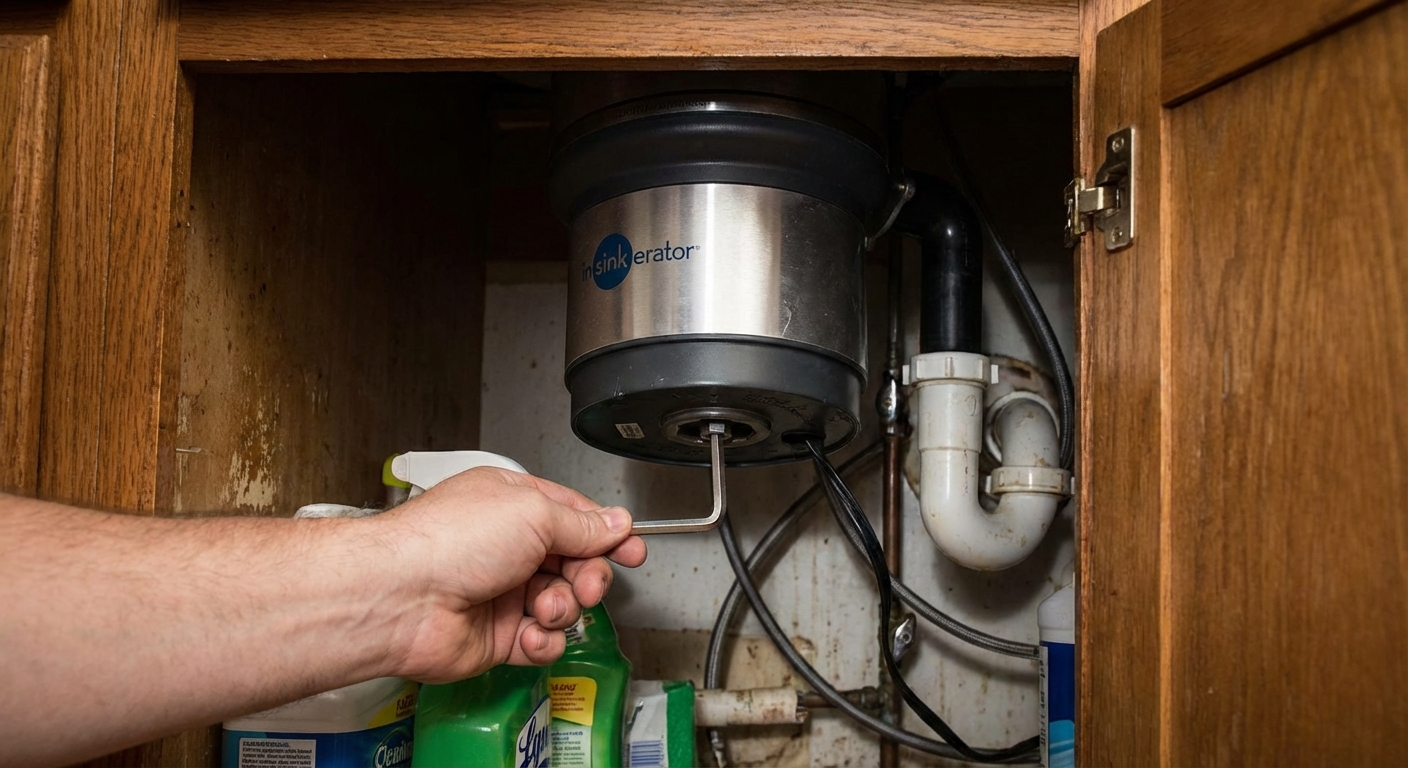
A garbage disposal that hums but does not grind is actually giving you a helpful clue: it is getting power, the motor is trying to spin, but something is stopping the grind plate (also called the flywheel) from turning. That is usually a simple jam, and it is often fixable in 10 to 20 minutes with basic hand tools.
Quick warning before you start: do not pour chemical drain cleaners into a disposal you may need to work on. They can splash back or sit in the trap, which turns a simple jam into a hazardous cleanup.
In this guide, I’ll walk you through the most common causes, the safe step-by-step fix (including the Allen wrench trick), and how to tell the difference between humming versus a disposal that is totally dead.
Humming vs. dead
Before you start, make sure you are solving the right problem. These symptoms point to different fixes.
When it hums
- The switch makes a steady hum or low buzz.
- Sometimes the lights may dim slightly when you flip the switch.
- No grinding sound, and water may back up because nothing is moving.
Meaning: The unit has power, but the motor cannot rotate. Think jammed grind plate (flywheel), stuck impellers, or a failing start system.
When it will not turn on
- No sound at all.
- No vibration.
- Often caused by a tripped breaker, bad switch, loose wire, or the unit’s overload being tripped without any hum.
Meaning: That is a “no power” troubleshooting path, not an unjamming path.
Safety first
I know it sounds obvious, but the fastest way to ruin your day is reaching into a disposal that could kick on. Do this every time.
- Turn off power to the disposal at the switch and unplug it under the sink. If it is hardwired, flip the breaker off and verify it is dead before you touch anything.
- Never put your hand inside the grinding chamber. Use tongs or pliers if you need to pull something out.
- Let it cool if it has been humming for more than a few seconds. A stalled motor heats up fast.
- Keep the area dry under the sink so you are not working around standing water.
- If it is hardwired: do not open a junction box unless you are comfortable doing basic electrical work. When in doubt, stop and call a pro.
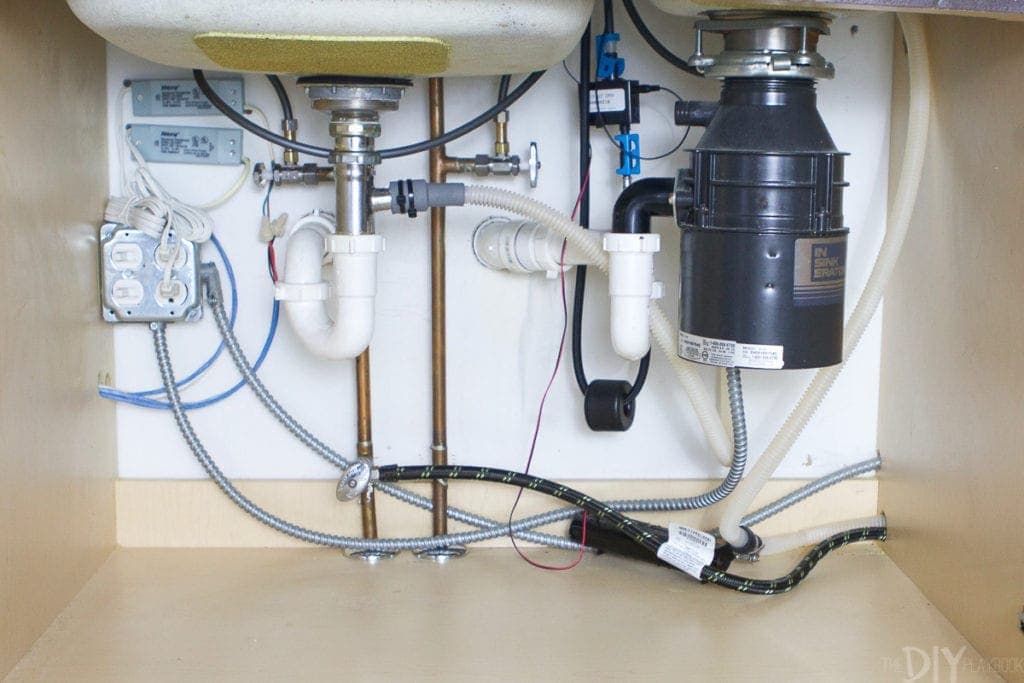
Why it hums
1) Jammed grind plate (flywheel)
This is the most common culprit. A hard object wedges between the grind plate and the shredder ring, so the motor cannot rotate.
Common jam items: bones, fruit pits, popcorn kernels, silverware, bottle caps, pull tabs, too many potato peels, or fibrous celery.
2) Stuck impellers
Disposals have little swinging pieces that help push food into the grind area. If something sticky dries out, or a hard chunk wedges in place, those impellers can stick and stall the motor.
3) Overload trip (reset)
If the motor stalls and overheats, many units trip an internal overload. If you keep trying to run it, it may hum for a moment and then click off.
4) Weak start system or failing motor
Some disposals use a start capacitor or other start components to help the motor begin spinning. If the start system is weak, the motor may hum but not start turning, especially under load. Other times the motor windings are failing and the unit is on its way out.
Clues it might be electrical: you can free the unit mechanically, but it still only hums, or it starts only briefly and then stalls again.
5) Seized from corrosion or internal damage
If the unit has been leaking or sitting wet for a long time, internal parts can corrode and bind up. If you see leaks from the body or from the bottom center area, replacement is often the realistic fix.
Quick checklist
- With power OFF, look into the disposal with a flashlight.
- Remove any obvious object using tongs or pliers.
- Manually free the grind plate using an Allen socket, a jam-buster knob/slot (if equipped), or a wooden spoon handle from above.
- Press the reset button.
- Restore power and test with cold water running.
Fix 1: Use the bottom socket or knob
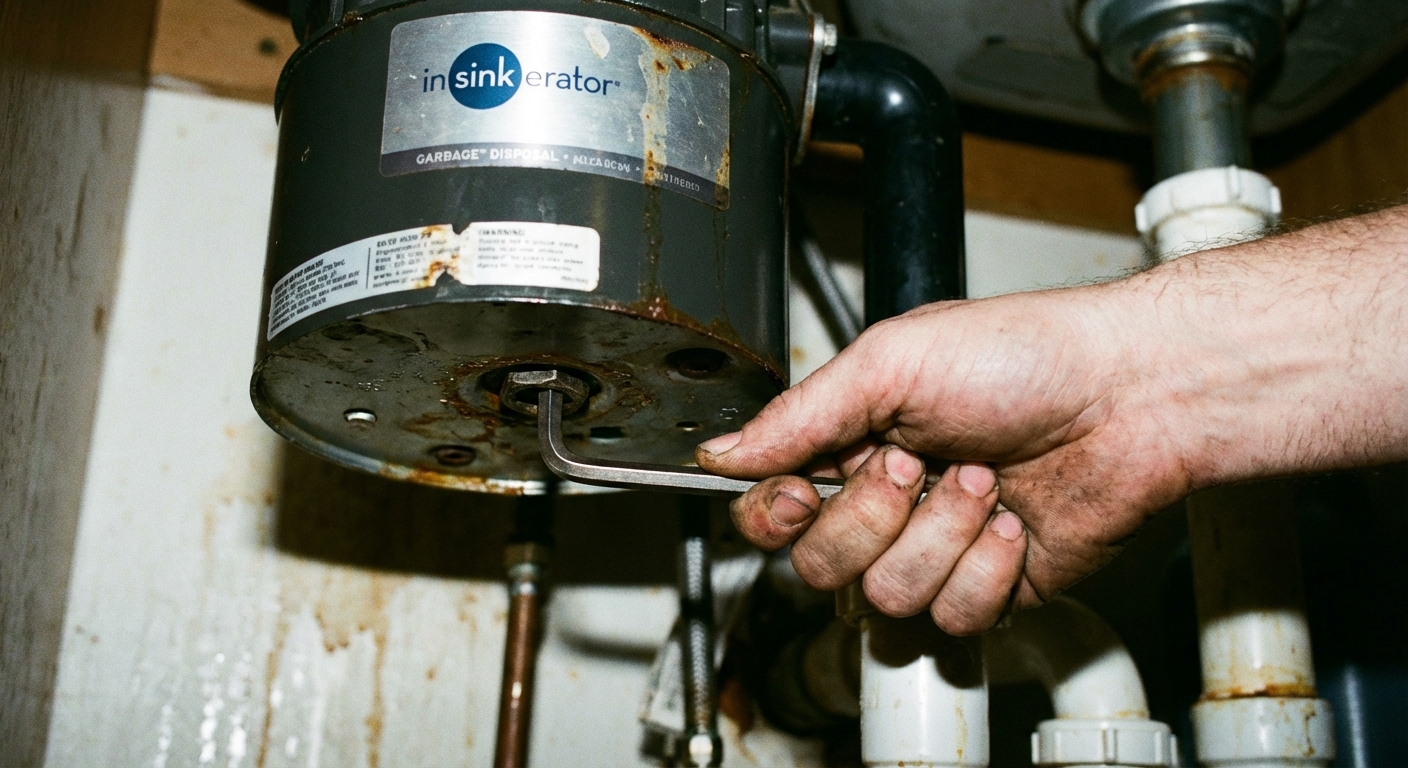
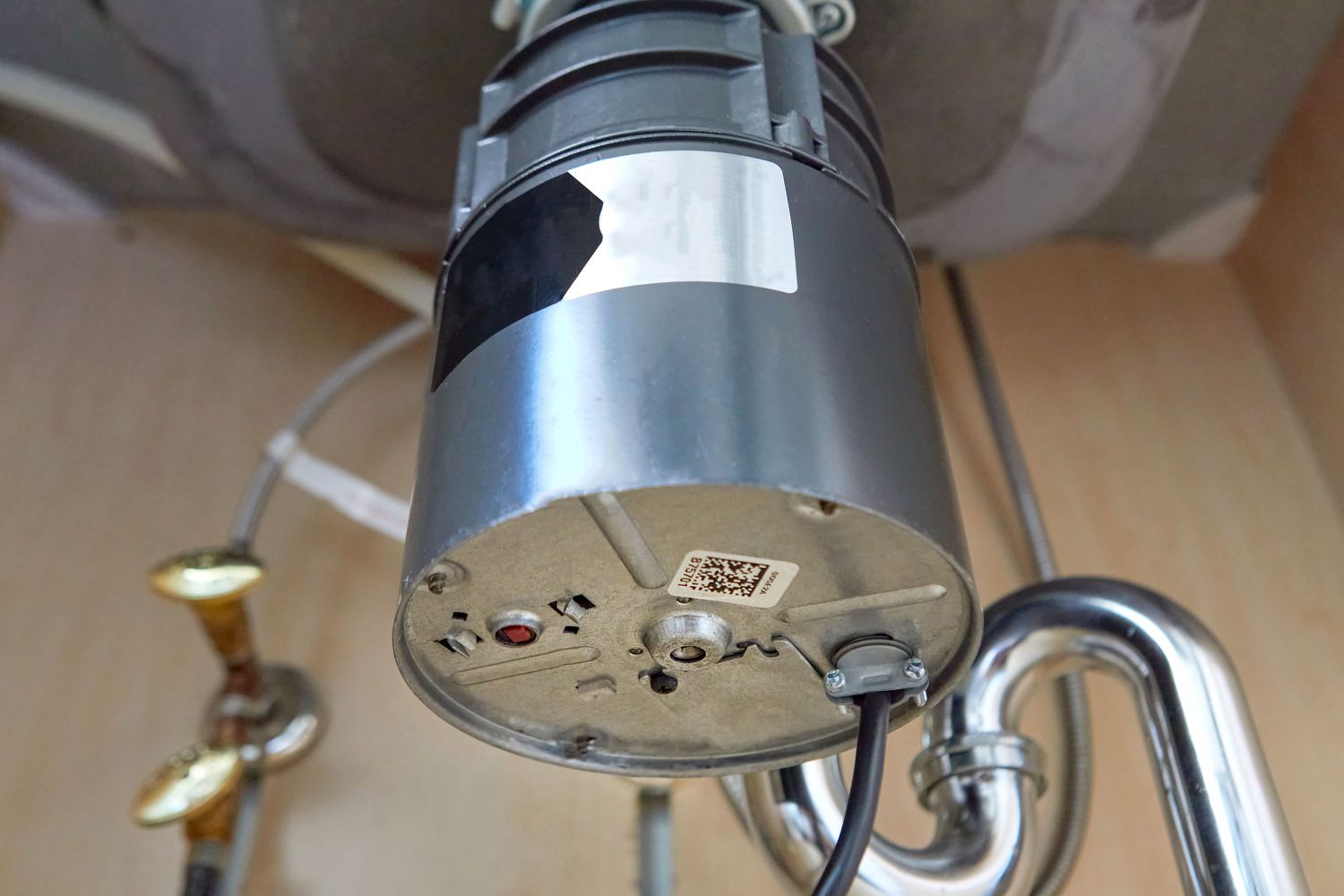
Many disposals have a hex socket on the bottom center made for this exact scenario. Some use a built-in “jam-buster” style knob or slot instead. Not every model has either, so check your manual or look at the bottom of the unit.
What you need
- Allen wrench (usually 1/4 inch, sometimes 5/16 inch, or the wrench that came with the unit)
- Flashlight
- Tongs or needle-nose pliers
- Optional: small bucket and towel
Steps
- Kill the power. Unplug the unit or turn off the breaker.
- Find the drive point. Look at the bottom of the disposal, dead center.
- If you see a hex socket, insert the Allen wrench fully.
- If you see a knob/slot, use it per the manufacturer’s instructions to rotate the plate back and forth.
- Work it back and forth. Turn clockwise and counterclockwise. At first it may barely move. Keep steady pressure until it loosens.
- Rotate through several full turns. Once it breaks free, rotate a few times both directions so you know it is not still catching.
- Check inside again. Shine a flashlight into the disposal and remove debris you can grab with tongs.
Tip from the school of hard knocks: If you only free it a tiny bit and stop, it can re-jam the moment you power it up. I like to rotate it several full turns until it feels smooth.
Fix 2: Unjam from above
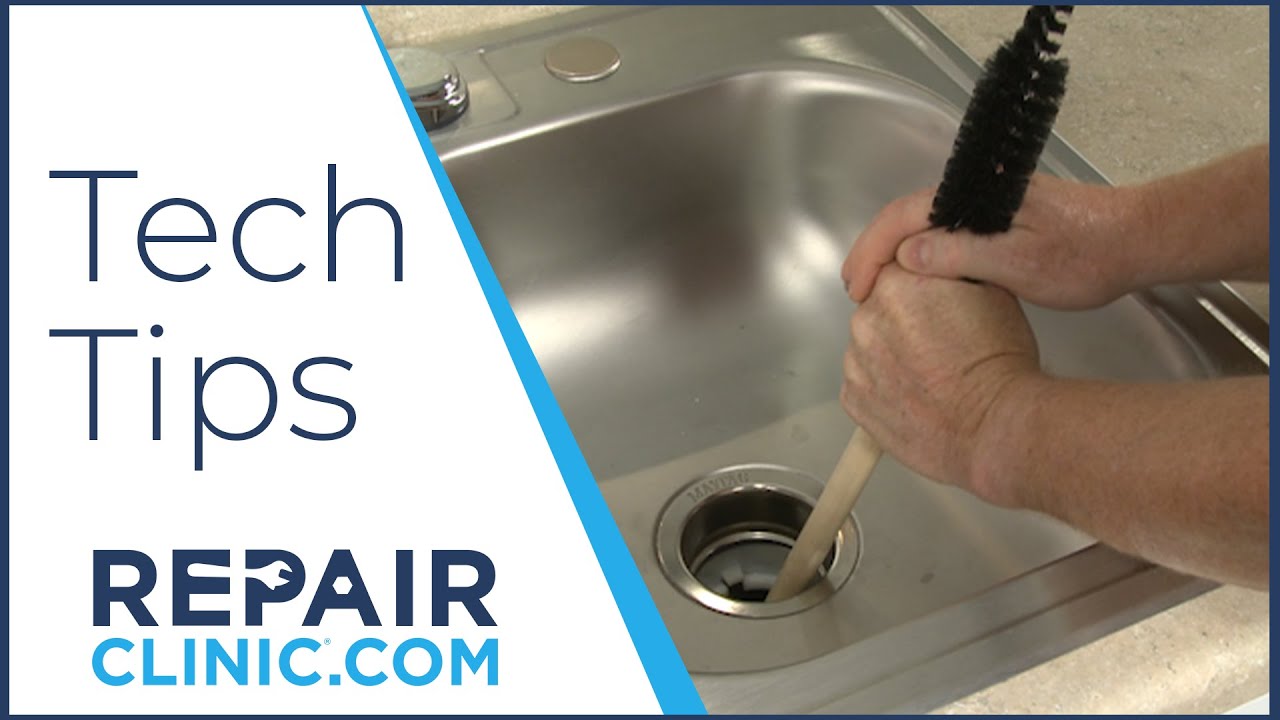
Some units do not have a bottom hex socket or knob. You can still free a jam safely.
- Power off and unplug (or breaker off for hardwired).
- Use a flashlight to look inside.
- Use a wooden spoon handle or a sturdy broom handle to push against one of the impellers and nudge the grind plate around.
- Work it back and forth until it turns freely.
- Remove the jammed item with tongs or pliers.
Do not use your hand. Even with the power off, sharp edges and hidden objects are a quick way to get cut.
Fix 3: Press reset
After you free the jam, reset the overload. Most disposals have a small button on the bottom, usually red.
- With power still off, feel for the reset button on the bottom of the unit.
- Press it firmly. If it was tripped, you will often feel a click.
- Wait 1 to 2 minutes if the motor was hot.
- Restore power and test.
Test it the right way
- Run cold water first. Get a steady stream going.
- Turn on the disposal. Listen for a smooth ramp-up to normal grinding sound.
- Let it run 10 to 15 seconds. This flushes out small bits.
- Turn off the disposal first, then let water run another 10 seconds.
If it still hums, shut it off immediately. Repeating long hum attempts can overheat and damage the motor.
Hums then clicks off?
That is commonly the overload doing its job. It usually means the motor is stalled (jam or seized) and heating up fast.
- Stop trying to run it.
- Let it cool, clear the jam, then press reset.
- If it trips again immediately after you have freed the grind plate, suspect a failing motor or start system.
When it is not a jam
If the grind plate turns freely by hand with the wrench or knob, you have likely removed any jam. If the unit still hums and will not start, you are probably dealing with a start problem or a motor problem.
Signs it is more than a jam
- You can rotate the grind plate smoothly with little resistance.
- The reset button is not tripped, or it trips again immediately.
- The disposal starts sometimes, but stalls under even a small load.
- It smells like hot insulation, or it gets very warm quickly.
- It leaks from the body or bottom area, or shows heavy corrosion.
What you can do
- Confirm power: test the outlet under the sink with a lamp or outlet tester (or verify the breaker is on for hardwired units).
- Check wiring: if hardwired, inspect only if you are comfortable and the breaker is OFF. Loose connections can mimic “bad disposal” symptoms.
- Consider replacement: many disposals are not worth deep electrical repair. If it is older, noisy, leaking, or repeatedly overheating, a new unit is often the thrifty move.
About capacitors: Some disposals have internal capacitors that are not designed to be serviced by homeowners. If you suspect a start component is failing, the practical DIY decision is usually replacement unless you are experienced and your manufacturer supports parts and service.
Common questions
Is it bad to run a humming disposal?
Yes. A hum without spinning means the motor is stalled. Stalled motors heat up fast and can burn out. Turn it off within a few seconds and troubleshoot.
What if water is backing up?
Stop running water, shut the unit off, and clear the jam first. If it still does not drain after the disposal spins freely, you may also have a clog downstream in the trap or branch line.
Can I use Drano or chemical cleaner?
I avoid it. It can be hard on some pipes and seals, and it is hazardous if you later have to open the trap or remove the disposal. Mechanical clearing is safer and usually faster.
Why does it hum only sometimes?
Intermittent humming often points to a partial jam, sticky impellers, or a weak start system that struggles more as the unit ages.
Prevent the next jam
- Run cold water while grinding and for 10 seconds after.
- Feed in small batches instead of dumping a whole plate of scraps at once.
- Avoid fibrous foods like celery and corn husks, and starchy peels in big quantities.
- Keep hard stuff out like bones, fruit pits, and shells.
- Do a quick rinse grind once in a while: a few ice cubes with cold water can help knock gunk loose.
Another tip from experience: the fastest way to jam a disposal is treating it like a trash can. It is a helper, not a landfill.
When to call a pro
If you have freed the grind plate, reset the unit, verified power, and it still only hums, it is reasonable to stop and call a plumber or replace the disposal. Also call for help if you see:
- Leaks from the disposal body (housing crack or seal failure)
- Burning smell, smoke, or repeated breaker trips
- Loose mounting, severe corrosion, or damaged wiring
My rule: if it is humming and hot more than once, I do not keep trying it. That is how a simple jam becomes a cooked motor.

About Marcus Vance
Content Creator @ Grit & Home
Marcus Vance is a lifelong DIY enthusiast and self-taught home renovator who has spent the last decade transforming a dilapidated 1970s ranch into his family's dream home. He specializes in budget-friendly carpentry, room-by-room renovations, and demystifying power tools for beginners. Through his writing, Marcus shares practical tutorials and hard-learned lessons to help homeowners tackle their own projects with confidence.