
If your garbage disposal smells bad, it is rarely because the unit is “going bad.” Most of the time it is old food and biofilm stuck in one of three places: under the rubber splash guard, on the inside grinding ring, or in the short stretch of plumbing right below the sink where gunk can settle and rot.
The good news: you can usually get rid of most disposal odor in under 10 minutes with one of the quick methods below. I will walk you through the fast fixes first, then the deeper clean that solves the “it keeps coming back” smell.
Before you start: safety
- Power off means power off. Turn off the disposal at the switch. If you will be cleaning inside or removing plumbing, unplug it under the sink or switch off the breaker.
- Never put your hand inside the disposal. Even with the power off. Use tongs, a brush, or a rag held with tongs.
- No bleach inside the disposal. It can react with other cleaners and it is rough on rubber parts over time.
- Skip harsh drain openers. If you suspect a clog, handle that separately. These chemicals can damage plumbing and are unpleasant to work around.
What kind of smell is it?
Matching the method to the smell saves time.
- Rotten food smell (most common): buildup under the splash guard and on the grinding ring.
- Sour, funky drain smell: slime and grease sitting in the drain connection or P-trap.
- Musty smell: standing water or residue in the dishwasher drain hose or disposal inlet.
Fast fixes (start here)
1) Ice and salt scrub
This is not a real pressure wash. Think of it as an inside-the-chamber scrub. Ice knocks grime loose and salt adds gentle abrasion.
- Drop 2 cups of ice into the disposal.
- Add 1/2 cup of coarse salt (kosher salt is perfect).
- Run cold water, then switch on the disposal for 15 to 30 seconds.
- Let cold water run for another 10 seconds to rinse.
Why cold water? It helps keep fats more solid so they are more likely to break up and flush out instead of smearing around. The real key, though, is not putting grease or oil into the disposal in the first place. Wipe greasy pans first and toss the paper towel.
2) Baking soda and vinegar flush
This is great when the stink feels more like the drain than the disposal chamber.
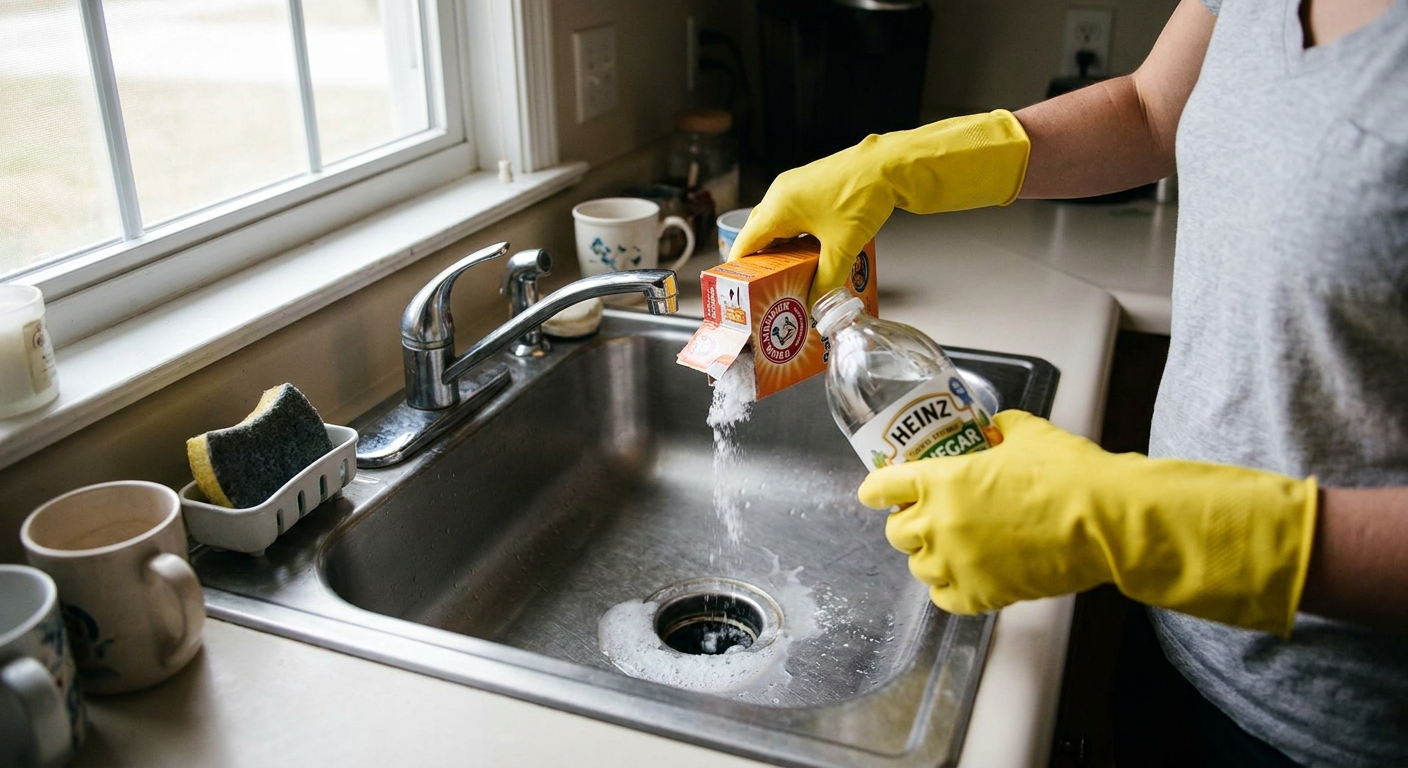
- Pour 1/2 cup baking soda into the disposal.
- Add 1 cup white vinegar and let it foam for 5 to 10 minutes.
- Rinse with a strong stream of hot water for 30 to 60 seconds.
If your sink is prone to grease buildup, follow with a 10-second blast of cold water at the end to help carry everything down the line.
3) Citrus peel grinding
Citrus makes the kitchen smell better fast, but it does not remove the main gunk by itself. Use it after you clean.
- Cut a lemon, lime, or orange peel into small pieces.
- Run cold water and grind a few pieces at a time.
- Flush with cold water for 15 to 20 seconds.
Thrifty tip: Freeze leftover citrus peels in a bag and use them as needed.
4) Clean the splash guard
If I had to bet lunch money on where the smell is coming from, it is the underside of that black rubber flap. Food sticks there, dries, then turns into a warm-weather science project.
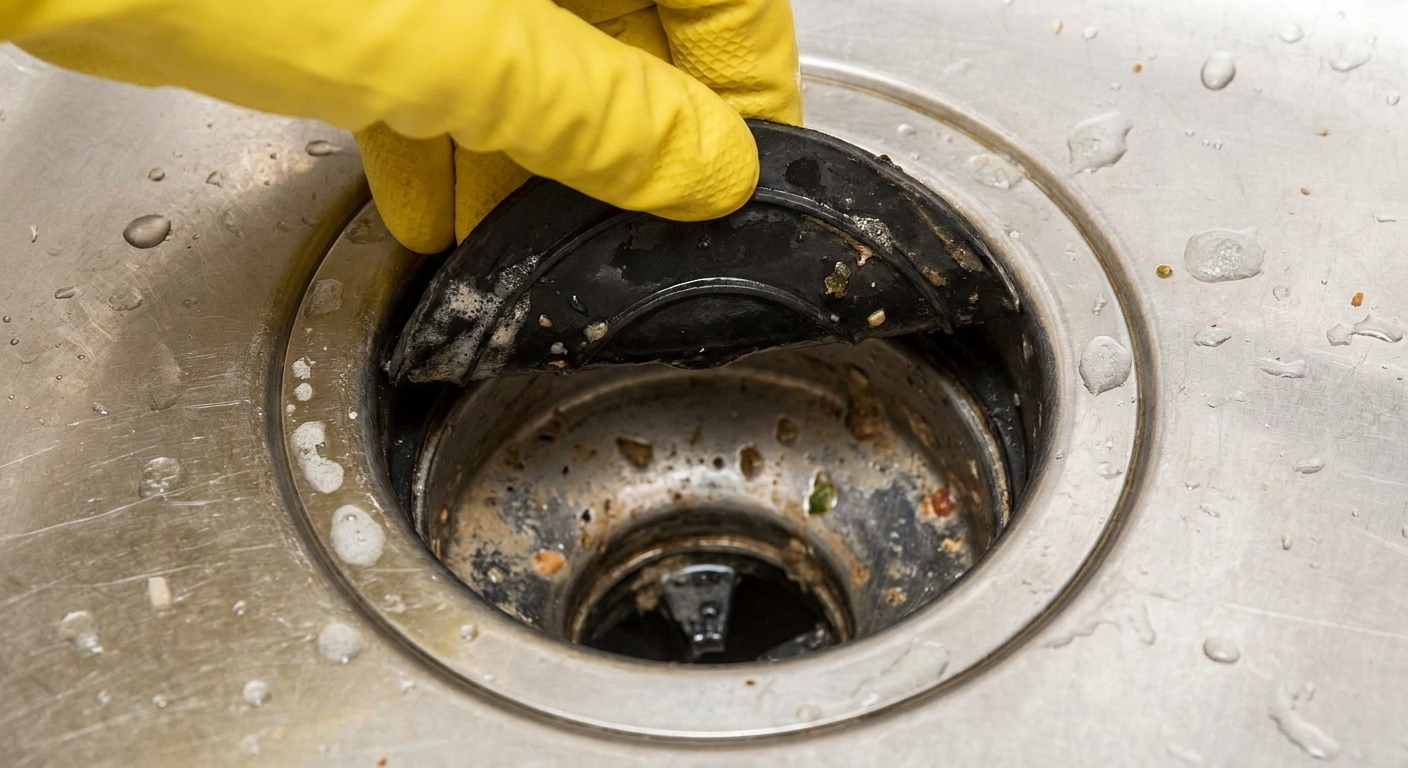
- Turn off the disposal and lift the rubber flaps.
- Scrub the underside with an old toothbrush and dish soap.
- Rinse with hot water.
- If it is cracked, stiff, or warped, replace the splash guard.
Note: Some guards are removable inserts and some are built-in baffles. If yours does not “pop out,” just scrub what you can reach under the flaps. Do not force it.
My first disposal “mystery smell” was solved right here. I cleaned everything else and kept missing the gunk under the guard because I did not think to flip it up.
5) Scrub the grinding ring
If the smell hangs on after ice and vinegar, the grinding ring usually needs a quick physical scrub.
- With the power off, squirt a little dish soap onto a long-handled dish brush.
- Push the splash guard flaps up and scrub the metal ring and inner walls.
- Rinse with hot water, then run cold water and the disposal for 10 seconds.
Deep clean: under the sink
If the smell returns within a day or two, the problem is often in the plumbing immediately below the disposal where sludge settles. This is also the fix for odors that smell more like sewer gas or a dirty drain than old food.
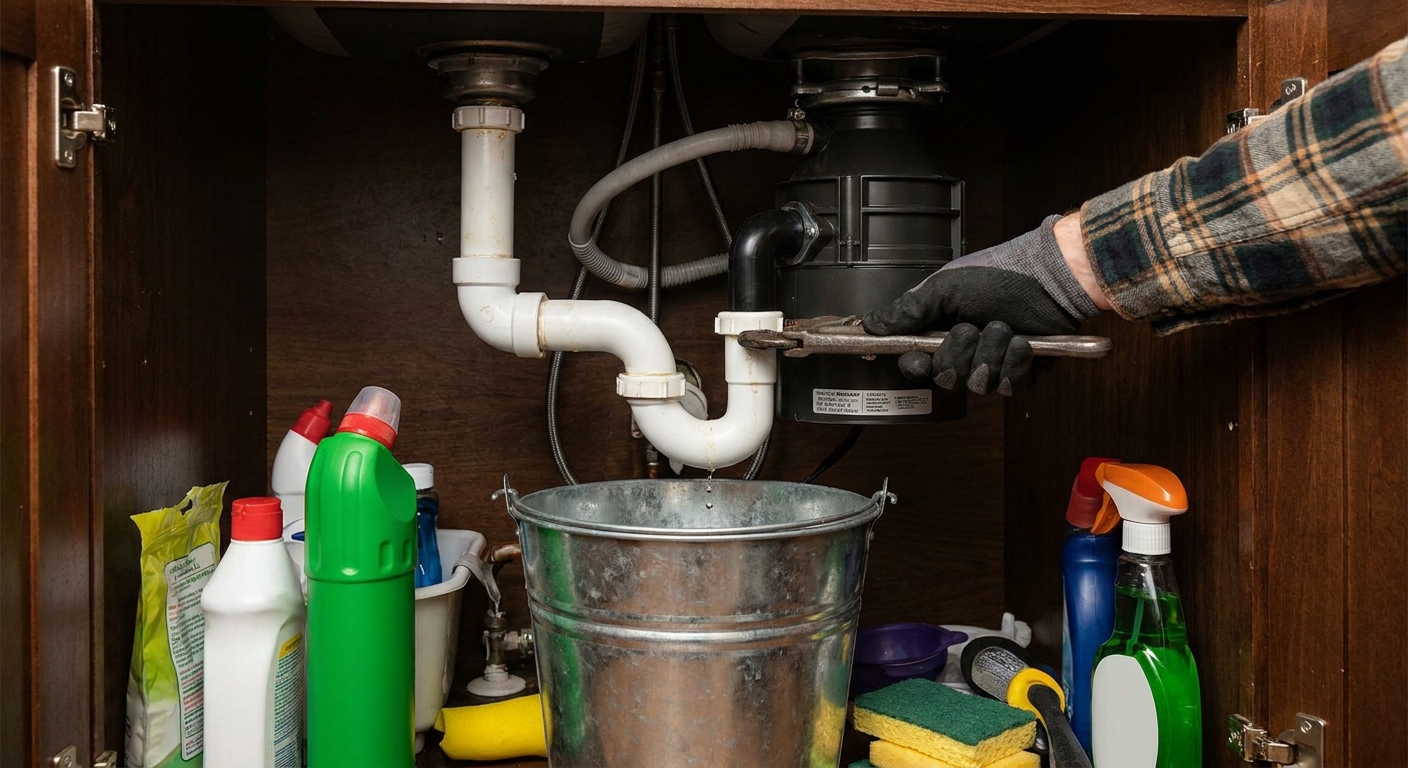
What you need: bucket, old towel, channel-lock pliers or screwdriver (depending on clamp type), dish soap, bottle brush or small scrub brush.
Thrifty move: Take a quick photo before you loosen anything so reassembly is painless.
Step-by-step
- Put a bucket under the trap. You will catch a little water and a lot of stink.
- Loosen the slip nuts on the P-trap (usually hand tight, sometimes need pliers).
- Remove the trap and dump it into the bucket.
- Scrub the inside of the trap and the disposal outlet pipe with dish soap and a brush.
- Check the dishwasher inlet (small side port on the disposal if you have a dishwasher). Slime can hang out there too.
- Reassemble, making sure the slip-joint washers are seated correctly, then snug the slip nuts.
- Run water and check for leaks. Tighten a little more if needed, but do not crank the nuts like you are changing a tire.
If you smell sewer gas: Make sure your P-trap is actually holding water. A dry trap can let odors come up. Run water for 30 seconds and see if the smell improves.
If you have a double sink: Peek under the sink for a sagging horizontal run that can hold sludge. If you see a belly in the pipe, that can be a repeat-odor factory.
Still smells? Troubleshoot
Check for stuck debris
A trapped piece of food can sit and rot. With power off, use tongs or pliers to pull out anything you can see. Never use your hand.
If it hums: unjam it first
If the disposal hums or struggles, it is usually jammed. The reset button alone will not fix a mechanical jam.
- Turn off power and unplug the unit.
- Look under the disposal for the hex socket (many models have one).
- Insert the correct Allen wrench and work it back and forth until it turns freely.
- Then press the reset button on the bottom.
- Run cold water and test the disposal.
If your model does not have a hex socket, check the manual. Some use a jam-buster wrench from the top.
Consider the dishwasher hose
If the smell is strongest after running the dishwasher, the issue may be the dishwasher drain hose or a missing high loop. That is a separate fix, but it is worth investigating if disposal cleaning does not touch the odor.
Prevention habits
- Run water before, during, and after. A good rule is 10 seconds before, grind, then 20 to 30 seconds after.
- Use cold water when grinding food. It helps keep fats from liquefying and coating the disposal and pipes.
- Keep grease out. Do not pour oil, pan drippings, or greasy sauces into the disposal. Wipe it out first, then wash.
- Do not treat the disposal like a trash can. Scrape plates into the bin, then use the disposal for small leftovers.
- Once a week: ice and salt, or a baking soda rinse.
- Once a month: clean the splash guard underside with soap and a brush.
- Avoid common clog makers: In many homes, grease, coffee grounds, eggshells, rice, pasta, potato peels, and fibrous stuff like celery are frequent troublemakers.
My “thrifty homeowner” mindset is simple here: a disposal lasts longer when it is boring. Small scraps, plenty of water, and a quick weekly clean beats emergency plumbing every time.
When to call a plumber
- Persistent sewer-gas smell even after confirming the P-trap is holding water
- Slow draining that keeps coming back (possible partial blockage or venting issue)
- Leaks under the sink, a cracked disposal body, or signs of a failing seal
- Repeated jams or a motor that overheats or trips the reset often
FAQ
Can I use boiling water to clean a garbage disposal?
Hot water is fine for rinsing. I avoid repeatedly dumping straight boiling water into the disposal because it can soften grease and move it farther down the line where it cools and hardens. If you want to use very hot water, do it after you have physically removed gunk and keep grease out of the system.
Are disposal cleaning pods worth it?
They can help with light odor, but they usually do less than a splash guard scrub and an ice-and-salt run. If you already have pods, use them after you physically remove the gunk.
How often should I clean my garbage disposal?
Light cleaning weekly and a splash guard scrub monthly is a solid rhythm for most homes. If you cook a lot or rinse plates heavily in the sink, bump it up.

About Marcus Vance
Content Creator @ Grit & Home
Marcus Vance is a lifelong DIY enthusiast and self-taught home renovator who has spent the last decade transforming a dilapidated 1970s ranch into his family's dream home. He specializes in budget-friendly carpentry, room-by-room renovations, and demystifying power tools for beginners. Through his writing, Marcus shares practical tutorials and hard-learned lessons to help homeowners tackle their own projects with confidence.