
If your gas fireplace is acting up, will not start, starts and immediately quits, or runs for a bit and then goes out, you are often dealing with one of a few repeat offenders: a dirty pilot assembly, a weak thermopile or thermocouple signal, a switch or remote issue, low fuel pressure, a control-module lockout, or a safety shutdown caused by airflow, oxygen, or venting problems.
I am all for DIY, but I am also big on “safe first, savings second.” Gas appliances can produce carbon monoxide (CO), and a venting problem can turn a simple troubleshooting session into a dangerous one.
Quick tip before you start: Find your make and model (usually on a rating plate behind the lower access panel) and pull up the manual. The right reset procedure, glass-front rules, and wiring type vary by unit.
Safety first (please do not skip)
Stop and call a pro now if
- You smell gas (rotten egg odor). Turn the unit off, shut off the gas supply valve if you can do so safely, ventilate the room, and contact your gas utility or a licensed technician.
- Your CO alarm is sounding an emergency alarm (not just low-battery or end-of-life chirps), or anyone has symptoms like headache, nausea, dizziness, or fatigue. Get outside and call emergency services. If it is “just chirping,” replace the battery or the alarm right away and do not keep troubleshooting without a working CO alarm.
- Sooting, scorch marks, or melted wiring around the firebox or venting.
- Venting is damaged or disconnected on a direct-vent or B-vent unit.
- The glass front is cracked or the gasket looks compromised on a sealed unit.
Quick DIY safety checklist
- Let everything cool completely before you put hands near the burner or logs.
- Turn off power to the fireplace at the switch or breaker if it has a blower, receiver, or electronic ignition module.
- Know where your gas shutoff valve is (usually in the fireplace cavity, the basement below, or nearby in the wall).
- Install a carbon monoxide alarm on each level of your home and one near sleeping areas. If you are troubleshooting a finicky fireplace, a working CO alarm is strongly recommended.
Identify your ignition type
This matters because the “right” fix depends on whether you have a standing pilot, an intermittent pilot, or a pilotless ignition system.
- Standing pilot: A small pilot flame burns all the time (unless you shut it off seasonally). When you turn the fireplace on, the main burner lights from that pilot.
- Intermittent pilot (IPI): The pilot only lights when you call for heat. You will usually hear clicking and see a spark, then a pilot flame, then the main burner.
- Pilotless ignition (hot-surface or direct spark): No pilot flame. The burner lights with an igniter system when called.
If you have a valve knob with OFF / PILOT / ON, you likely have a pilot system (standing pilot or IPI). If you have a wall switch plus a receiver box and remote, you could have several setups, so the manual is your friend here.
Fixes to try first
1) Check power, switch, and remote
You would be amazed how many “dead fireplace” problems come down to one of these:
- Wall switch: Flip it on and off a few times. If it feels loose or crunchy, it might be failing.
- Receiver and remote: Replace remote batteries and receiver batteries (many use AA). Make sure the receiver slider is set to ON or REMOTE, not OFF.
- House power: Some models need 120V for the control module, while others can run on batteries (and 120V is only for the blower or accessories). Check the breaker and any nearby GFCI outlet that might have tripped, and check the manual for your specific power requirements.
- Thermostat call: If controlled by a thermostat, raise it several degrees above room temperature.
DIY note (switch bypass): Only do this if you are sure you are working with a low-voltage or millivolt switch circuit. Do not touch any line-voltage (120V) wiring. With power to the unit turned off, you can move the two low-voltage wires off the wall switch and touch them together briefly to “call” the fireplace on. If it works, the switch or wiring is the problem. If you are not sure what you are looking at, stop and call a tech.
2) Confirm the gas supply is on
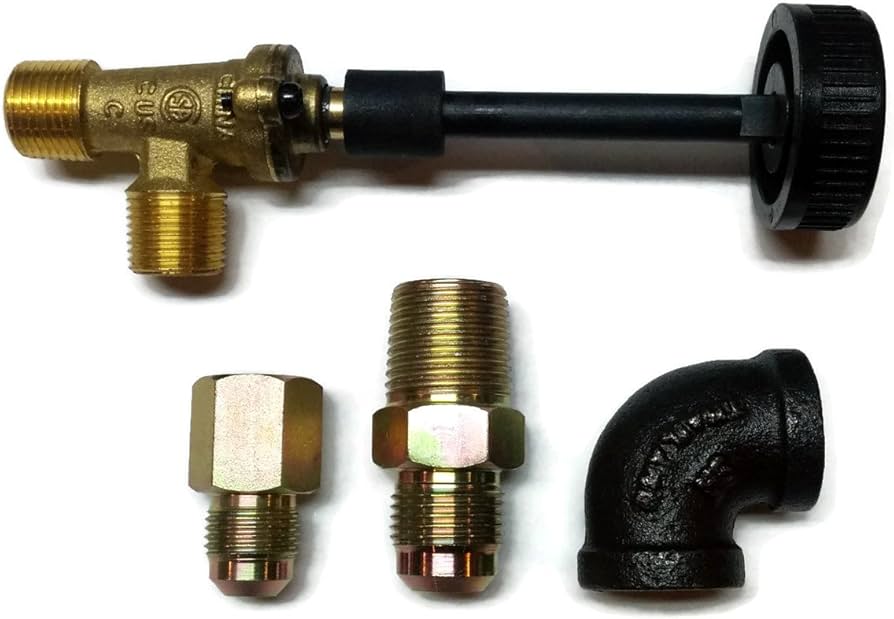
- Appliance shutoff valve: The handle should be parallel to the pipe to be ON.
- Main gas service: If other gas appliances are not working, the issue may be upstream.
- Propane tank: Make sure the tank valve is open and the tank is not empty. Cold weather and heavy demand can also reduce vaporization and cause pressure problems, especially with smaller tanks.
If you just had propane delivered or you ran out recently, you can also have air in the line. A technician may need to safely purge and verify pressure.
3) Check for IPI lockout and reset (common)
Many IPI control modules go into lockout after several failed ignition attempts. The fireplace may click, try, then stop trying until it is reset.
- Follow your manual first.
- Common reset methods include turning the wall switch off for a bit, or power-cycling the unit at the switch or breaker (or removing batteries, then reinstalling).
Safety note: If you smell gas at any point, stop, shut the unit down, ventilate, and call for service.
Pilot assembly basics
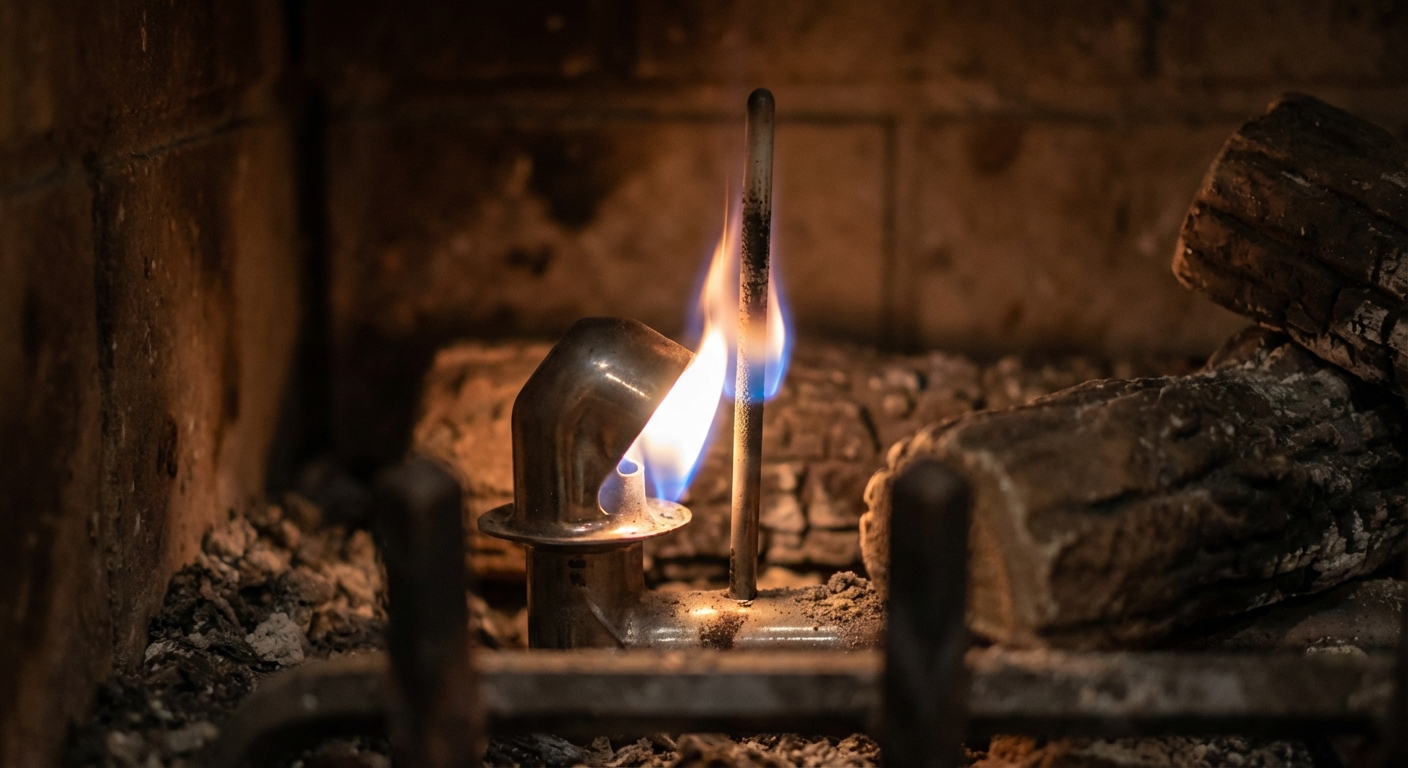
The pilot assembly is the small cluster near the burner that typically includes:
- Pilot hood or pilot burner (where the pilot flame comes out)
- Thermocouple (safety sensor on many standing-pilot systems)
- Thermopile (also called a generator on many millivolt systems, makes a small amount of electricity)
- Spark electrode (on intermittent pilot systems)
- Flame sensor (on many IPI systems, sometimes integrated with the electrode)
If any of those parts are dirty, misaligned, or weak, the fireplace may light and then quit, or refuse to light at all.
Lights then goes out: thermocouple vs thermopile
Thermocouple (common on standing pilot)
A thermocouple is a safety device. It sits in the pilot flame and generates a tiny voltage. If the pilot flame goes out, the thermocouple cools down and the gas valve shuts off to prevent raw gas from flowing.
Typical symptom: Pilot will not stay lit after you release the pilot knob, or the main burner starts and then everything drops out quickly.
Thermopile (common on millivolt systems)
A thermopile makes more voltage than a thermocouple and can power the gas valve and wall switch circuit without household electricity. If it is weak, the pilot may stay lit but the main burner may not stay on, especially after the unit warms up.
Typical symptom: Pilot stays lit, but the burner will not turn on reliably or shuts off during operation.
Thrifty homeowner tip: Before replacing parts, clean and inspect. A dirty pilot flame that is not hitting the sensor properly can mimic a “bad” thermocouple or thermopile.
Clean the pilot and burner area
Dust, pet hair, and carpet fuzz love to collect in fireplace control compartments. That debris can restrict the pilot flame, block the pilot air intake, and reduce the heat hitting the sensor.
What to do
- Turn the fireplace OFF and let it cool.
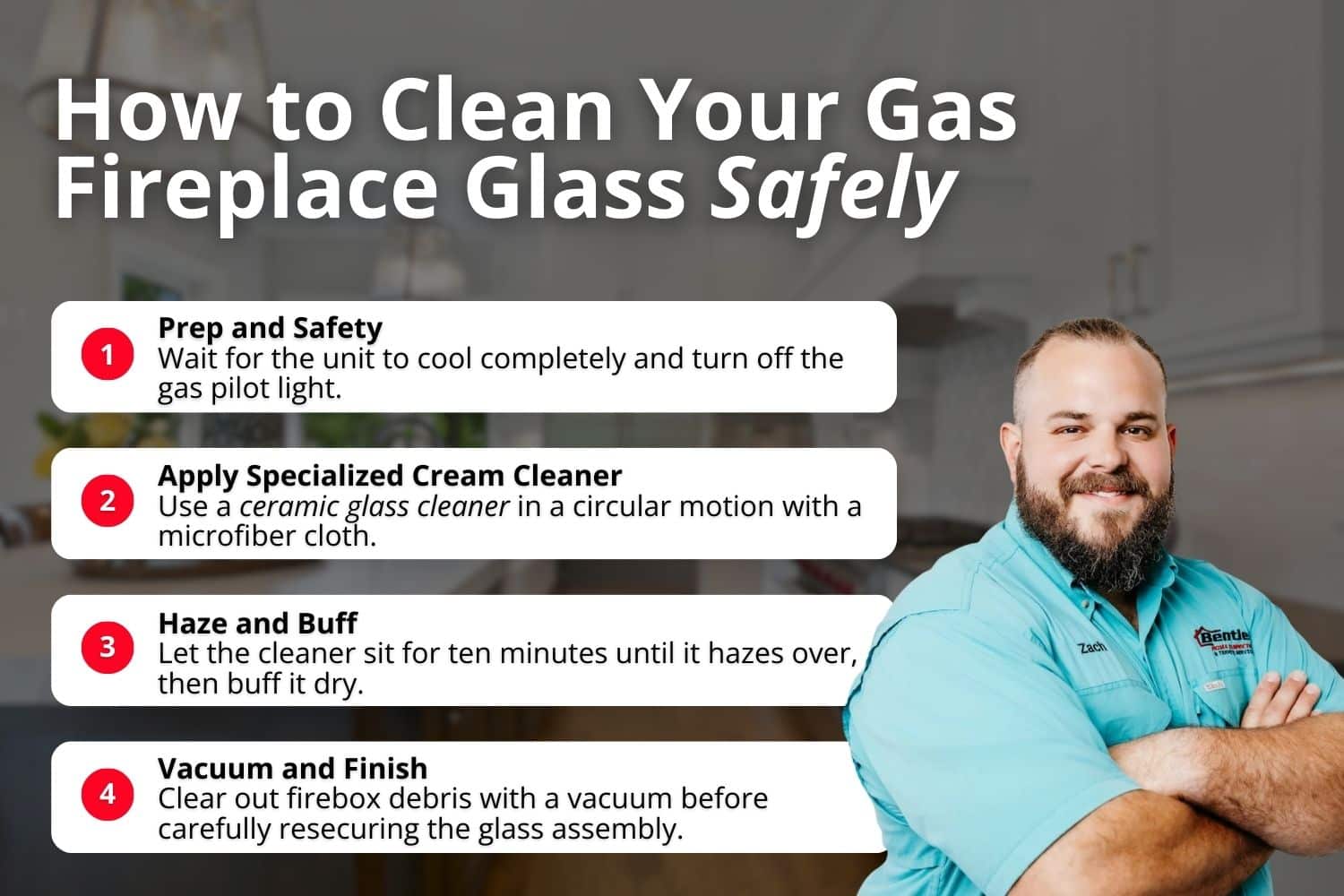
- Remove the glass front and logs exactly as the manufacturer describes. Take a quick photo first so you can put everything back the same way.
- Do not operate a sealed unit with the glass removed. Reinstall the glass and latch it correctly before you fire it back up, unless your manual explicitly says otherwise.
- Use a vacuum with a hose and a soft brush to remove dust from the firebox floor, around the burner, and near the pilot assembly.
- Use compressed air in short bursts to blow dust away from the pilot hood and air openings. Keep your face out of the line of fire. The dust cloud is real.
Check the pilot flame shape
After cleaning and reassembly, relight and look at the pilot flame (through the glass if required by your model). You want a steady flame that properly engulfs the thermocouple or thermopile tip, or properly covers the flame sensor on IPI systems.
- Good: steady, mostly blue flame that contacts the sensor.
- Bad: tiny flame, lazy yellow flame, or flame that does not reach the sensor.
If the flame is weak after cleaning, that can point to low gas pressure, a partially blocked pilot orifice, or a regulator issue, which is a good time to call a technician.
Also check log placement: Logs and ember material must be placed exactly as shown in the manual. Misplaced logs can cause sooting, odd flame patterns, and nuisance shutdowns on some units.
Check sensor alignment
On intermittent pilot systems, the spark electrode and flame sensor positioning matters. If the gap is off, the pilot may not light reliably. If the flame sensor is not being engulfed by flame, the control module thinks there is no flame and shuts the gas off.
What you can safely check
- Look for a bent electrode or sensor rod.
- Confirm nothing is physically touching the electrode.
- Make sure ceramic insulators are not cracked.
Do not wing it with bending parts unless you can clearly see what moved and you are following your manual. If you are unsure, this is a quick service call and cheaper than breaking a brittle ceramic igniter.
Propane vs natural gas
Both fuels can run a fireplace safely, but they behave differently, and that can show up as different symptoms.
Natural gas (NG)
- Typically supplied by a utility with fairly steady pressure.
- If the fireplace suddenly acts weak and other appliances do too, suspect a supply issue or a regulator problem upstream.
Propane (LP)
- Stored in a tank. Cold temperatures can reduce how well the tank vaporizes propane under load, and very low tank levels can make performance worse when demand is high.
- After a run-out, air in the line can cause repeated failed ignitions until properly addressed.
Critical: A propane fireplace must have the correct orifices and regulator settings for LP. If you moved into a home and do not know whether the unit was converted correctly, get it verified before you chase smaller problems.
Airflow and venting shutdowns
Many fireplaces have safety logic that shuts the burner down if combustion is not happening correctly. The exact method depends on your unit type, but these are common real-world causes.
1) Venting problems on direct-vent units
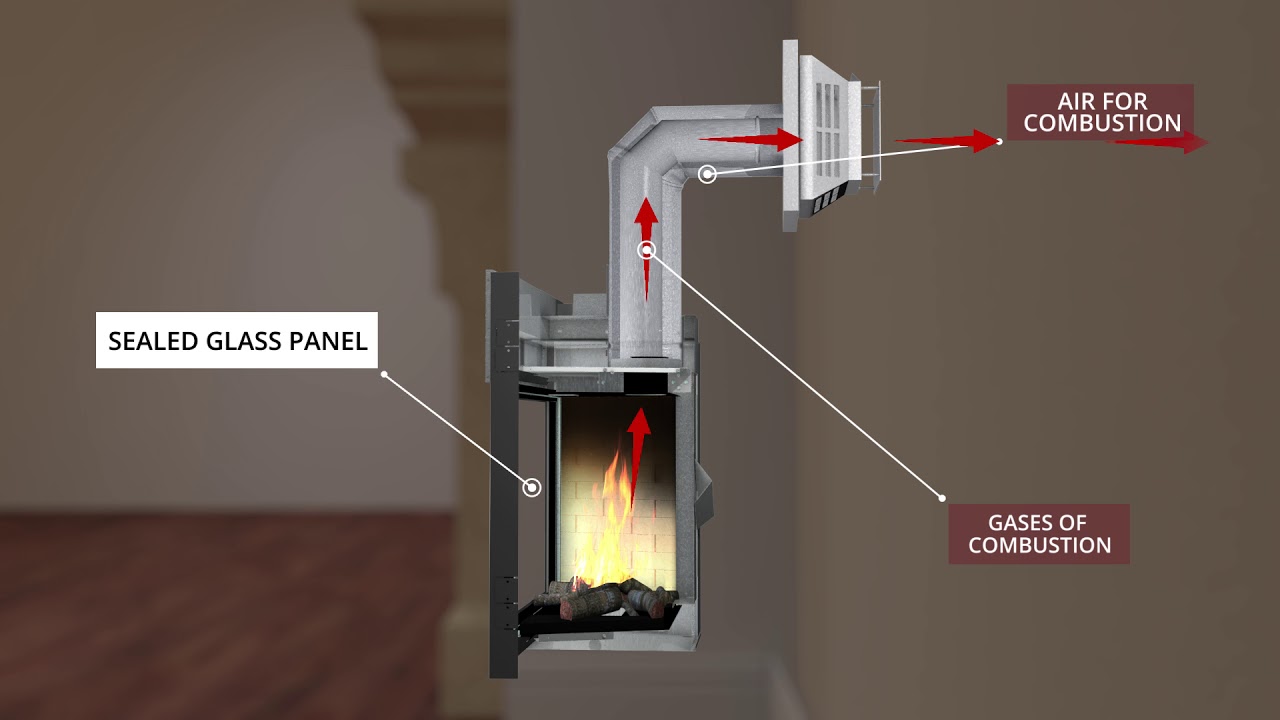
Direct-vent fireplaces use a sealed direct-vent system that brings in combustion air and exhausts combustion gases (often coaxial, but sometimes co-linear or two-pipe). If intake or exhaust is restricted, the unit can shut down.
- Outside termination blocked by leaves, snow, bird nests, or landscaping.
- Improperly seated glass front or damaged gasket causing draft issues.
- Disconnected or corroded venting in the chase.
DIY-safe step: Inspect the outside vent termination for obvious blockage. Do not disassemble venting unless you are qualified.
2) Dust and lint in the control compartment
Debris can overheat components, interfere with flame sensing, or restrict airflow around the burner.
3) Room air issues on vent-free units
Vent-free fireplaces (where permitted) are especially sensitive to room oxygen and cleanliness. Many use an ODS (oxygen depletion sensor) that will shut the unit down if oxygen levels drop or the pilot flame pattern changes.
- Closed-up tight rooms, heavy exhaust fans, or negative pressure.
- A dirty pilot that changes the flame signature and trips the sensor.
Safety note: If you suspect an ODS issue or you see frequent shutdowns on a vent-free unit, it is worth having a pro inspect and confirm safe operation. Vent-free products require strict adherence to placement and clearance rules.
Symptom to fix checklist
No click, no sound, nothing happens
- Check breaker, GFCI, and receiver batteries.
- Confirm wall switch and receiver are set correctly.
- Verify low-voltage wires are connected.
- Check the manual for lockout status and reset steps (especially on IPI).
Clicks and sparks, but never lights
- Confirm gas is on.
- Clean pilot area and check electrode alignment.
- If you are on propane, confirm tank level and note cold-weather performance issues.
Lights, then goes out in seconds
- Dirty pilot or weak flame hitting the thermocouple, thermopile, or flame sensor.
- Thermocouple or flame sensor issue.
- Drafting or glass seal issue on sealed units.
Pilot stays on, burner shuts off later
- Weak thermopile output on millivolt systems.
- Overheating, airflow issues, or vent restriction.
- Remote receiver overheating or failing.
When to stop DIY
I love saving money as much as the next person, but these are the lines I do not cross in my own house:
- You have repeated failed ignition attempts. Some systems time out, but unburned gas can still accumulate briefly in enclosed spaces. Stop and follow the manual shutdown and ventilation steps.
- You suspect a gas pressure or regulator issue.
- You see signs of improper combustion: soot, strong odor, excessive condensation on glass, or headaches while running.
- Any venting or sealed combustion component looks compromised.
A qualified gas technician can check manifold pressure, confirm venting, test thermopile millivolts per the manufacturer’s specs, verify combustion, and spot issues that are easy to miss as a homeowner.
Once-a-year maintenance
This is the boring stuff that prevents the frustrating stuff.
- Vacuum the firebox and control compartment gently (with power off and unit cool).
- Inspect the pilot flame and burner flame for a steady pattern.
- Replace remote and receiver batteries at the start of the heating season.
- Check the outside vent termination for blockage.
- Confirm logs and ember material are positioned per the manual.
- Test CO alarms and replace them when they hit their end-of-life date.
If your unit is older or heavily used, a professional annual service is money well spent, especially if it is your main heat source in the winter.

About Marcus Vance
Content Creator @ Grit & Home
Marcus Vance is a lifelong DIY enthusiast and self-taught home renovator who has spent the last decade transforming a dilapidated 1970s ranch into his family's dream home. He specializes in budget-friendly carpentry, room-by-room renovations, and demystifying power tools for beginners. Through his writing, Marcus shares practical tutorials and hard-learned lessons to help homeowners tackle their own projects with confidence.