
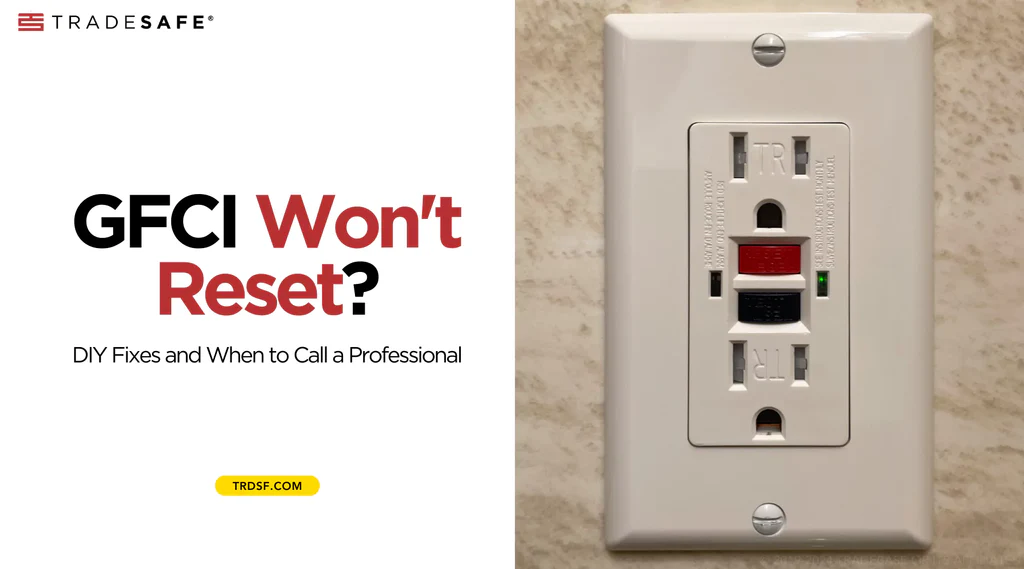
What a tripping GFCI is actually telling you
A GFCI outlet is a safety device. It compares the current leaving on the hot wire to the current returning on the neutral. If those numbers do not match, it assumes some current is leaking somewhere it should not, possibly through water, metal, or a person, and it shuts off fast.
So when a GFCI keeps tripping, it is usually doing its job. The goal is to figure out whether the problem is the load (something plugged in), the environment (moisture), the wiring (neutral/ground issues), or the device itself (a worn-out GFCI).
One concrete detail (optional, but useful): Most household (Class A) GFCIs trip at very small leakage levels, typically in the few-milliamp range (about 4 to 6 mA). That is why tiny issues like moisture or a nicked cord can set them off.
Two quick terms that make troubleshooting easier
- Line: the wires bringing power from the panel into the GFCI.
- Load: optional terminals that feed power to other outlets downstream (those outlets are protected by the GFCI too).
Safety first (please read before you touch anything)
- If you see burn marks, smell melting plastic, hear crackling, or the outlet is hot, stop and call an electrician.
- If the outlet is in a wet area and there is standing water or a leak, shut off power at the breaker before investigating.
- Do not keep mashing RESET over and over if it trips immediately. That is your signal to stop and troubleshoot.
- Never take the outlet out of the wall unless you are comfortable working around wiring and can shut off the breaker and verify power is off.
- If this outlet powers something critical (sump pump, freezer, medical equipment), do not guess. Get a pro involved quickly.
Reset and test steps (in order)
Step 1: Unplug everything on that GFCI circuit
Unplug items from the GFCI itself and from any nearby outlets that might be downstream. A bathroom GFCI can feed another bathroom, a garage outlet, or even an exterior receptacle depending on how the house was wired.
Step 2: Make sure the outlet actually has power
Many GFCIs will not reset unless they have incoming power on the line side. Check that the breaker is fully on (switch it off, then on), and use a plug-in tester or a lamp on a known-good outlet to confirm you are not chasing a tripped breaker or a dead circuit.
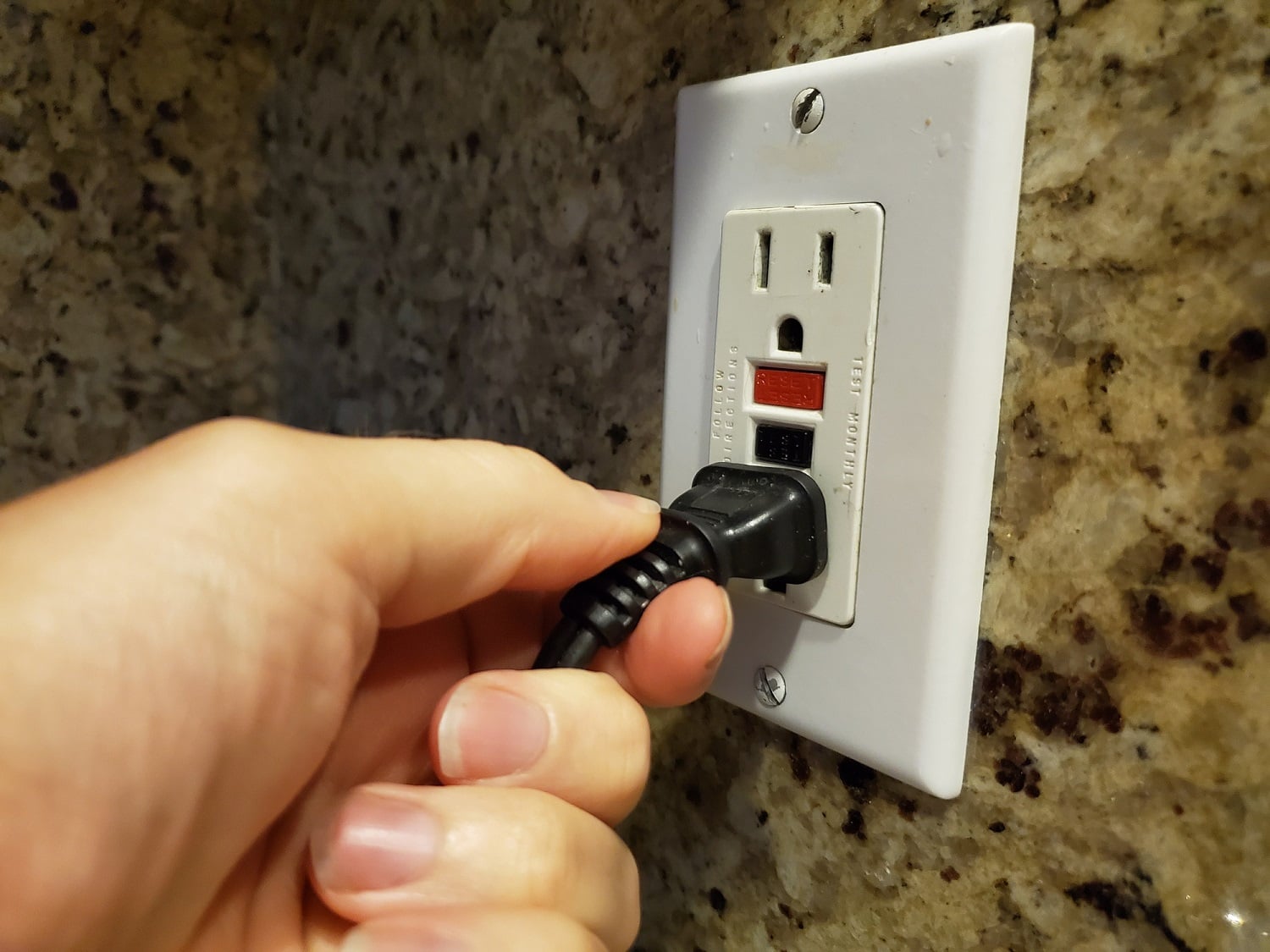
Step 3: Press RESET firmly
Some GFCIs need a good, deliberate push until you feel or hear a click. If it immediately trips with nothing plugged in, skip ahead to the wiring and device sections below.
Step 4: Press TEST, then RESET again
- Pressing TEST should trip it and cut power.
- Pressing RESET should restore power.
If TEST does nothing or the buttons feel mushy, the device may be failed or miswired.
Step 5: Plug items back in one at a time
Start with the simplest load first (like a lamp) and work toward the usual suspects (hair dryer, space heater, toaster oven, pressure washer). When it trips, you just found the likely trigger.
Most common causes of repeated GFCI tripping
1) A bad appliance or tool (the #1 culprit)
Anything with a heating element or motor can develop tiny leakage paths as it ages. I have chased mystery trips that ended up being a damp shop vac filter and once a bargain extension cord with a nicked jacket.
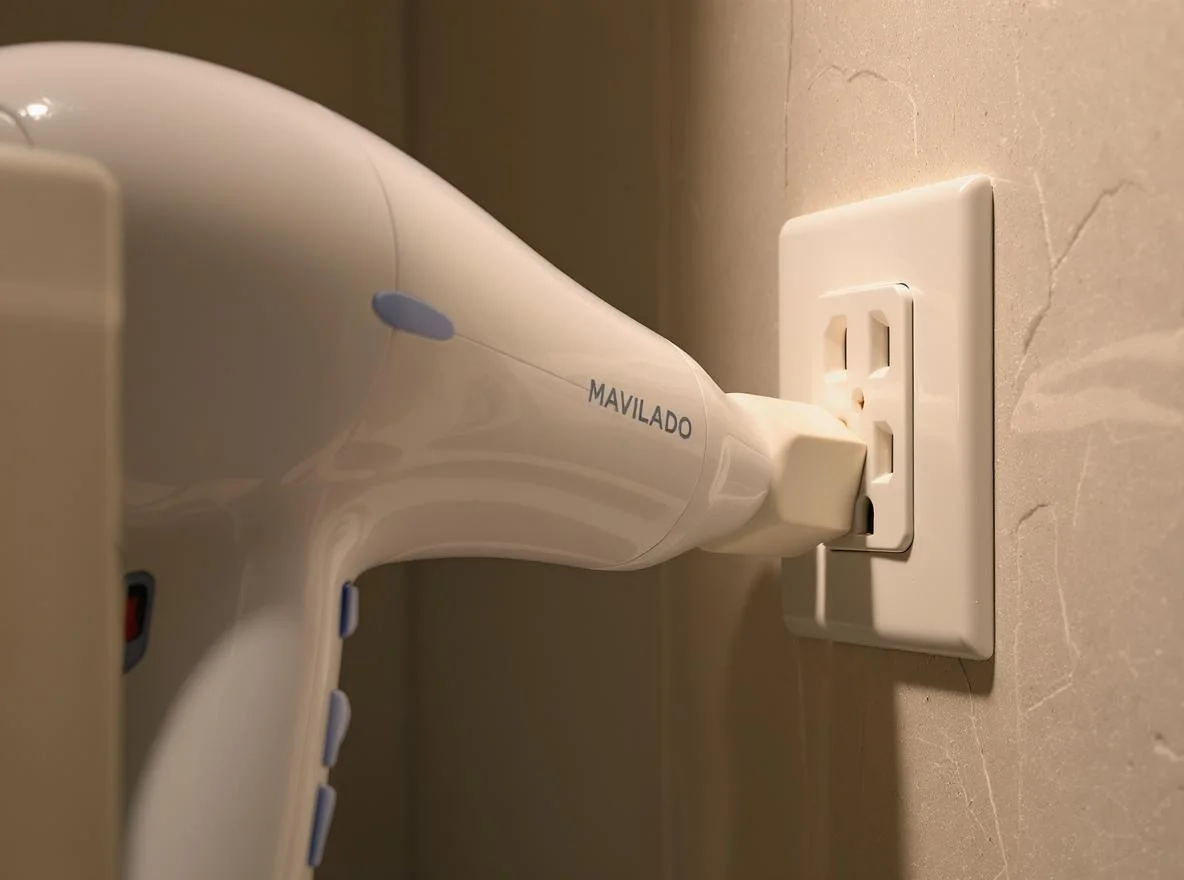
- Common offenders: hair dryers, curling irons, coffee makers, toasters, air fryers, kettles, space heaters, window AC units, older dishwashers, pressure washers, shop vacs, outdoor power tools.
- Quick check: plug the device into a different GFCI circuit (not the same outlet chain) and see if it trips there too.
2) Moisture in the box, receptacle, or cord
Bathrooms, kitchens, garages, basements, and outdoor outlets are moisture magnets. Steam, condensation, a slow leak in the wall, or a damp exterior cover can all create enough leakage to trip.
- Bathroom: steam from showers, wet hands, wet countertop.
- Kitchen: backsplash splashes, sink sprayer leaks, dishwasher drain or steam issues.
- Garage/basement: humidity, damp concrete, dehumidifier condensate problems.
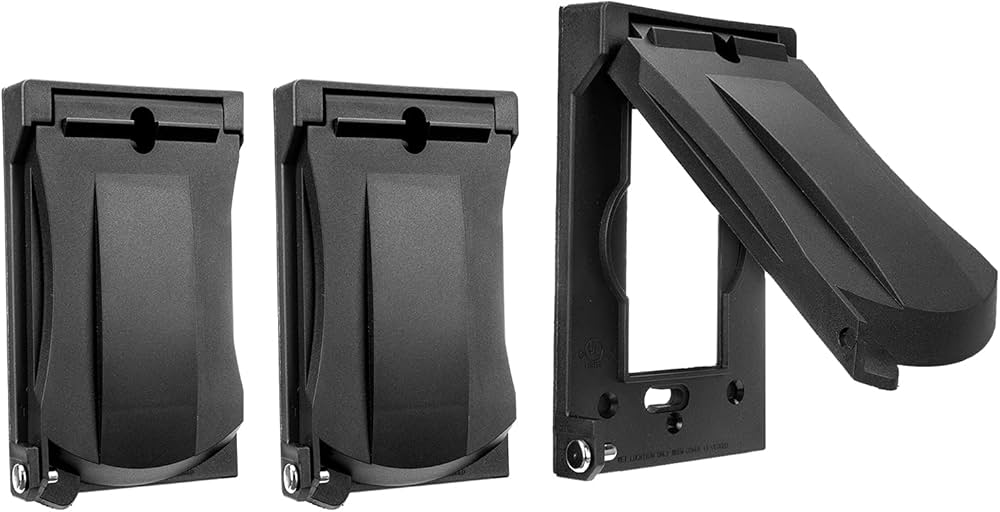
- Outdoor: rain intrusion, cracked in-use cover, missing gasket, sprinkler overspray.
DIY-friendly fix: If you suspect moisture, leave everything unplugged and let the outlet area dry fully. For outdoor receptacles, check that the cover closes correctly and the foam gasket is intact. If the tripping stops on dry days and returns on wet days, that is a big clue.
3) Nuisance tripping from certain loads
Some devices naturally create a little electrical noise or leakage. A modern GFCI is sensitive by design, so a borderline device can trip it even though it seems to run fine on a standard outlet.
- Long extension cords or multiple cords chained together
- Equipment with variable speed drives or electronic controls (some treadmills, older freezers, certain washing machines)
- Tools used outdoors where the cord or plug gets damp
What to do: Reduce cord length, avoid daisy-chaining, keep connections off wet ground, and test the device on another GFCI. If only one GFCI trips and the device is known-good, the outlet may be weak or failing.
4) The GFCI is worn out or defective
GFCIs do not last forever. A device that trips randomly, will not reset reliably, or fails the TEST button check may simply be at end-of-life.
- How long they last: many make it around a decade, but damp locations, heavy use, and product quality can shorten that.
- Clues: RESET will not latch with no load, intermittent trips with nothing plugged in, TEST does not trip.
Good to know: Many GFCIs made in the last decade include a self-testing feature. If the internal safety circuitry fails, some models intentionally block RESET (a lockout) so the outlet cannot be used without protection. To a homeowner, it looks like it just will not reset no matter what.
5) Miswired line and load
If the incoming power wires (line) and outgoing wires (load) are swapped, a GFCI can behave strangely, including refusing to reset. This is more common after a DIY replacement or when a box is crowded and wires get moved.
Best move: If you are not 100 percent comfortable identifying line vs load with a meter, this is an electrician call.
6) Shared neutral, loose neutral, or neutral-to-ground contact
Neutral issues are a classic reason a GFCI will trip with nothing wrong at the outlet. If a circuit shares a neutral (a multi-wire branch circuit), it can be perfectly code-compliant when it is wired correctly and protected correctly. Problems show up when neutrals get mixed between circuits, a neutral connection is loose somewhere, or neutral touches ground downstream (even by accident inside a receptacle box or device). Any of those can send return current down an unexpected path. The GFCI senses the mismatch and trips.
- Clues: tripping when a different appliance turns on, flickering lights, multiple outlets acting odd, tripping with nothing plugged into the GFCI itself.
- Why it matters: loose neutrals can overheat and are not a casual DIY fix.
7) Ground fault in downstream wiring or a downstream receptacle
If your GFCI protects other outlets, one of those downstream points may have moisture, a nicked cable, a backstabbed loose connection, or a failing receptacle. You reset the GFCI, but the fault is still present, so it trips again.
DIY-friendly first step: identify which outlets lose power when the GFCI trips. Unplug everything on that chain, then try the reset steps again.
What homeowners can try (safe fixes)
Isolate the trigger
Use the reset and test steps above, especially unplugging everything and adding items back one-by-one. It feels almost too basic, but it finds the problem faster than swapping parts.
Dry it out and inspect the obvious
- Wipe down splash zones and keep the outlet dry for 24 hours.
- For outdoor outlets, confirm the cover closes and the gasket is seated.
- Check cords for cuts, crushed spots, or loose prongs.
Reduce extension cord drama
- Use the shortest, heaviest-gauge cord that fits the job.
- Avoid coiling cords while running high draw tools.
- Keep plugs off wet concrete and away from puddles.
Replace the GFCI (only if you are confident and local code allows)
If the outlet fails the TEST/RESET behavior, will not latch with no load, or is clearly old, replacing it can be a reasonable DIY project for experienced homeowners. If you do not regularly work with wiring, this is one of those jobs where paying an electrician is money well spent.
Important: Always shut off the breaker and verify power is off with a tester before touching conductors. Take a clear photo of the wiring before removing anything so you can match line and load correctly.
When to call an electrician
- The GFCI trips immediately with nothing plugged in, and after you have let the area dry.
- The outlet won’t reset, you confirmed the breaker is on, and you are not sure about line vs load wiring.
- Tripping happens when other rooms or appliances turn on (often shared neutral, neutral-to-ground contact, or a wiring fault).
- You notice flickering lights, warm outlets, buzzing, or burning smells.
- The GFCI protects multiple outlets and you cannot locate the downstream fault quickly.
- It is feeding a critical load like a sump pump or freezer and you need reliability.
Electricians have the tools to test leakage current, trace downstream loads, and identify neutral/ground issues without guesswork.
Decision checklist by symptom
It trips only when you plug in one specific thing
- Likely cause: faulty appliance, damp tool, damaged cord
- Try: test the device on a different GFCI circuit, inspect cord and plug, replace the device if it keeps tripping
It trips after a shower, rain, or when the sink area is wet
- Likely cause: moisture in box, cover, or cord connection
- Try: dry out for 24 hours, improve ventilation, check outdoor cover and gasket, look for leaks above or behind the outlet
It trips randomly with nothing plugged in
- Likely cause: failing GFCI, moisture you cannot see, downstream wiring fault, neutral-to-ground contact downstream
- Try: dry out, confirm which outlets are downstream and unplug everything, consider GFCI replacement
- Call: if it still trips, especially in older wiring or multi-outlet chains
It won’t reset at all
- Likely cause: breaker off or tripped, miswired line/load, internal lockout on a self-testing GFCI, hard fault downstream
- Try: check the breaker, unplug downstream loads, press RESET firmly
- Call: if the breaker is on and it still will not latch
It trips when another appliance starts (fridge, vacuum, microwave, garage tool)
- Likely cause: leakage from the appliance, shared neutral issues, loose neutral, neutral-to-ground contact, or a downstream wiring fault that only shows up under load
- Try: note what triggers it and stop using that combination until it is sorted
- Call: this is a troubleshooting job for a licensed electrician
A quick note from my own weekend mistakes
The first time I fought a bad GFCI, I replaced it twice and still had trips. The real culprit was an outdoor extension cord that had been pinched in a door. The lesson I keep coming back to is simple: start with the load. Unplug everything, then add back one item at a time. If it trips immediately with nothing plugged in, take that seriously and stop forcing resets.
FAQ
Can a GFCI wear out and start nuisance tripping?
Yes. Age, moisture, and heavy use can make a GFCI less reliable. If it fails the TEST button check or trips with no load and no moisture issue, replacement is often the next step.
Why does my bathroom GFCI trip but nothing is plugged in?
Many bathroom GFCIs protect other outlets. Something downstream could be causing leakage, there could be moisture in a downstream box, or there could be a neutral issue (including neutral-to-ground contact) somewhere on the protected side. If it is truly isolated and still trips, suspect the device or wiring.
Is it okay to replace a GFCI with a regular outlet to stop the problem?
No. A GFCI is there to reduce shock risk, and many locations require it by code (bathrooms, kitchens, garages, basements, outdoors, laundry areas). If it keeps tripping, fix the cause rather than removing the protection.
What about fridges and freezers on a GFCI?
Rules and real-world practice vary by location and situation, and nuisance trips can be a food-safety headache. If a refrigerator or freezer is on a GFCI and it is tripping, treat it as a real troubleshooting problem, not something to bypass. An electrician can help you verify the cause and the best code-compliant solution for your home.

About Marcus Vance
Content Creator @ Grit & Home
Marcus Vance is a lifelong DIY enthusiast and self-taught home renovator who has spent the last decade transforming a dilapidated 1970s ranch into his family's dream home. He specializes in budget-friendly carpentry, room-by-room renovations, and demystifying power tools for beginners. Through his writing, Marcus shares practical tutorials and hard-learned lessons to help homeowners tackle their own projects with confidence.