
🚨 In a DIY emergency or rush?
Skip the details and jump straight to our 30-second cheat sheet for the most crucial info.
Small courier. Big home questions.
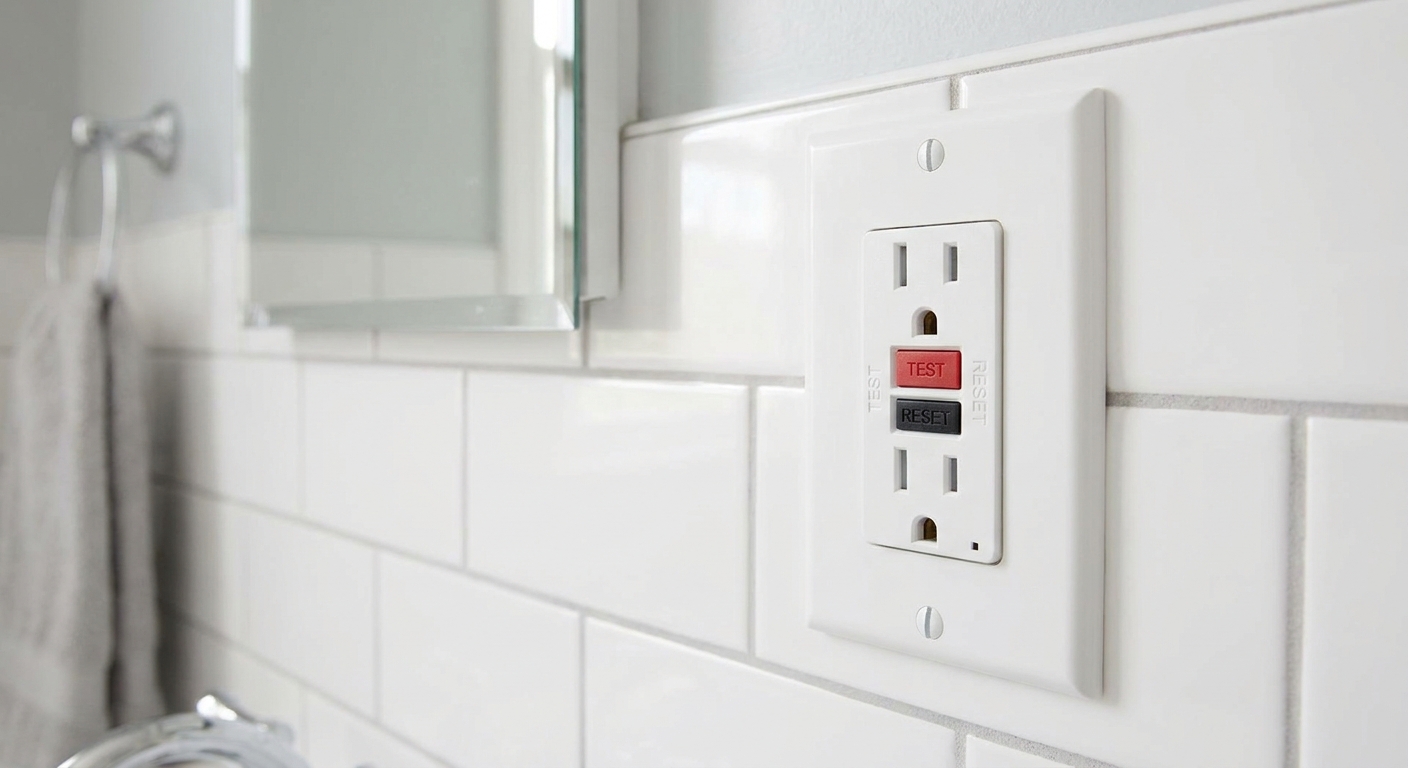
If you press the TEST button on a GFCI outlet and nothing happens, I want you to hear this in your bones: that outlet is not proving it can protect you.
A working GFCI should trip when you press TEST. If it does not, the issue usually falls into a few common buckets: the device has no power, it is miswired (often line and load are mixed up), or the GFCI itself has failed. There are other possibilities too, like a neutral issue or a shared-neutral circuit that gets complicated fast. Let’s sort what you have, without turning this into an installation tutorial.
Safety first
You will be working around live electrical parts if you open the box. If you are not comfortable identifying a breaker, confirming power is off, or using a meter, it is completely reasonable to stop and call an electrician.
- Turn off the breaker before removing the cover plate or pulling the outlet forward.
- Confirm power is off with a plug-in tester or a non-contact voltage tester, and ideally a multimeter.
- If anything looks overheated (melted plastic, brown scorch marks, a burnt smell), stop and do not keep using the circuit.
- Measuring live voltage can be hazardous. If you are not trained and confident, let a pro handle it.
Quick triage
People describe three different problems as “the test button doesn’t work.” Your next steps depend on which one you have.
Case A: TEST does nothing, and the outlet still has power
Example: your hair dryer still runs right now, the night light still glows right now, and pressing TEST changes nothing. This points to miswiring or a failed GFCI.
Case B: TEST does nothing because the outlet is dead
No power, no lights, nothing works. In this case, the TEST button cannot trip what is not energized. You are looking for a tripped upstream GFCI, a tripped breaker (including a GFCI breaker), a lost neutral, or a bad connection.
Case C: TEST trips (or seems to), but RESET will not bring it back
That is a different diagnosis path. This article stays focused on the button that does nothing.
Step 1: Confirm power
Before blaming the outlet, make sure it is actually receiving power from the panel.
Check upstream first
- Breaker panel: find the breaker and fully switch it OFF, then ON. If you have a GFCI breaker (or dual-function AFCI/GFCI), reset it too.
- Other GFCIs: bathrooms, garage, basement, exterior, kitchen, laundry. A downstream outlet may be protected by a different upstream GFCI, and that upstream device may be tripped.
- Wall switch: occasionally a switched receptacle feeds a GFCI location. If there is a nearby switch, try it.
Use a tester or multimeter
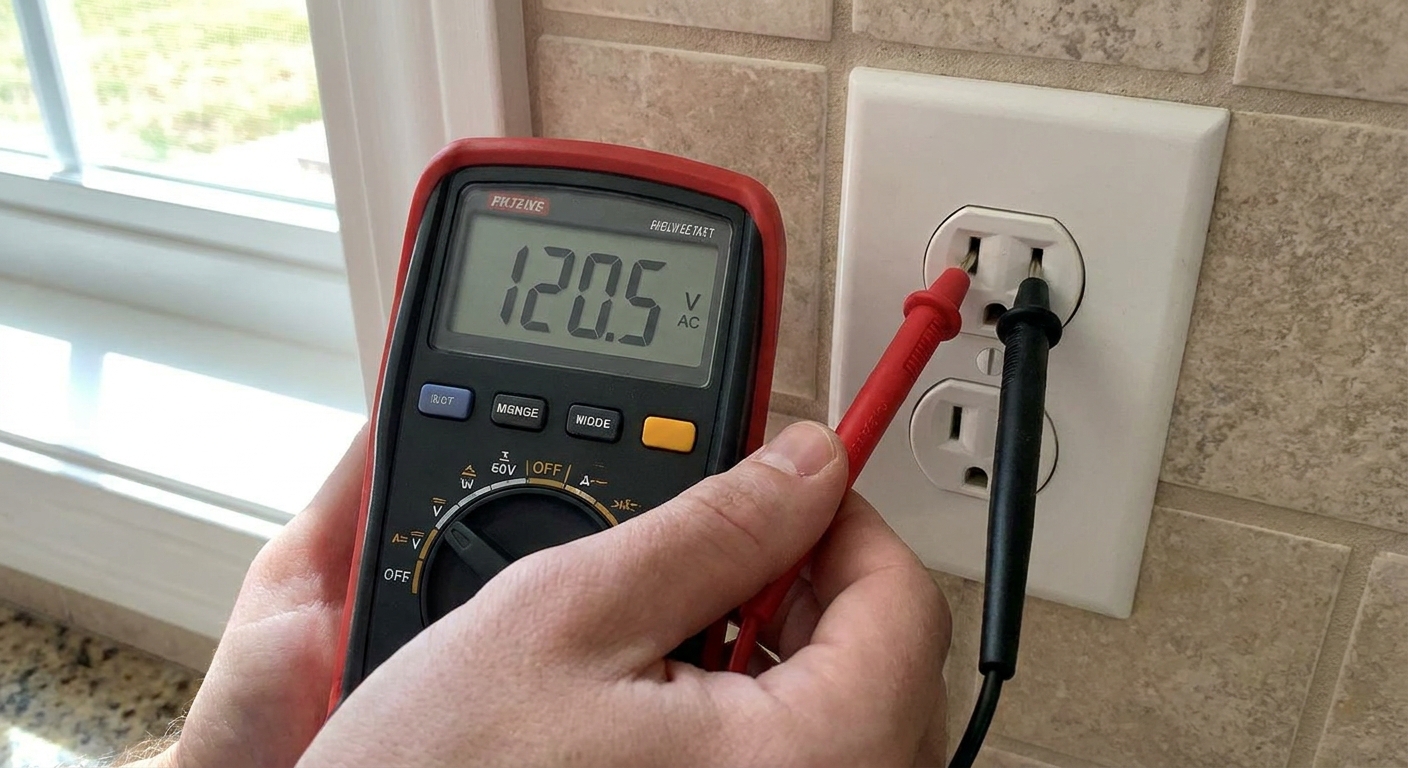
A plug-in outlet tester can tell you if you have basic power. A multimeter can give you a more reliable picture.
- At the face of the receptacle: hot to neutral should read roughly 110 to 125V in much of North America (or your local nominal voltage elsewhere).
- If you have 0V: the GFCI is not powered, so TEST cannot trip it. Your issue is upstream or a wiring connection problem in the box.
Step 2: Read the light, lightly
Many GFCIs have a small status light. Different brands use different meanings, so the light is a hint, not a verdict.
- Light off: could be no power, could be a tripped device, could be a failed device.
- Light on: could mean “powered,” and still be miswired or failed in a way that prevents proper tripping.
- Flashing or red: often indicates end-of-life, miswire, or internal fault. If the device indicates a fault, replacement is usually the right move.
Step 3: Check for miswiring
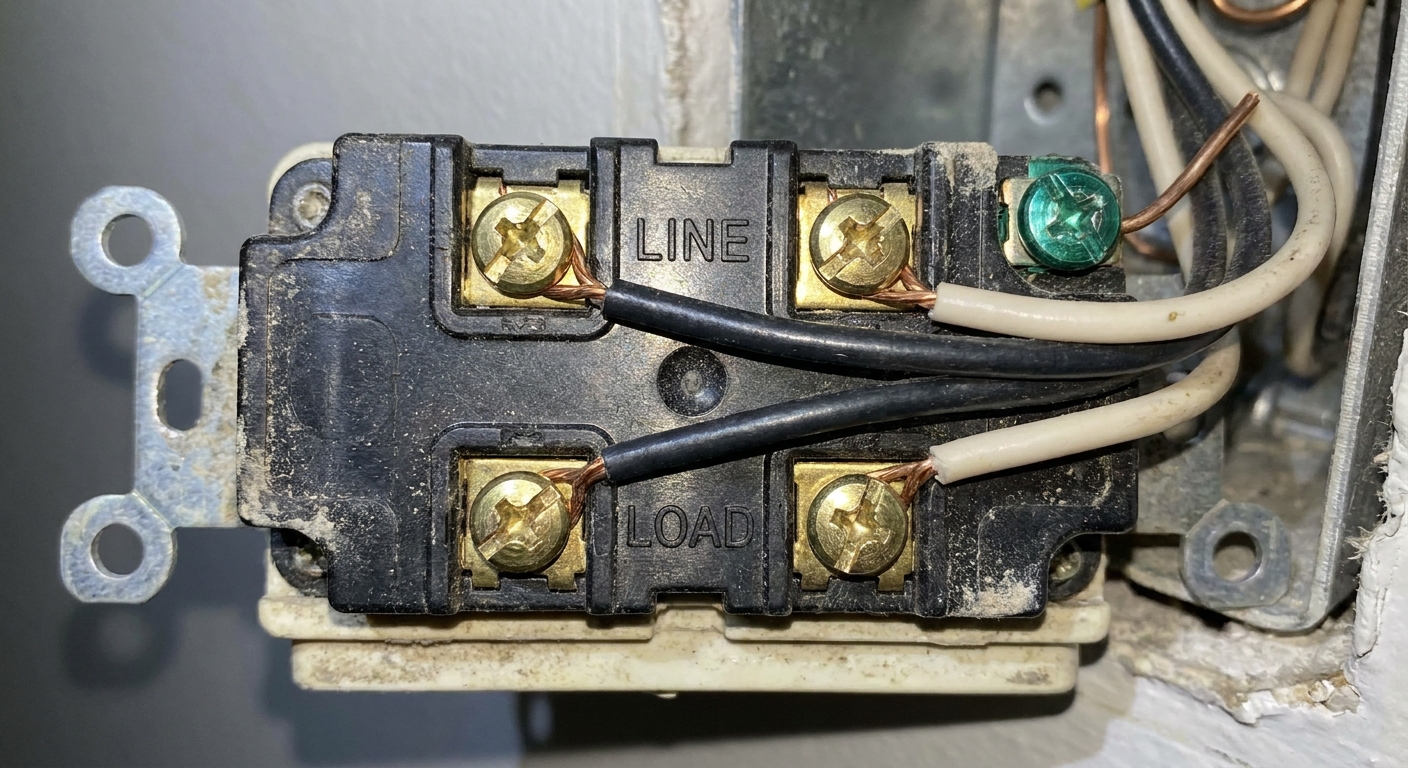
A GFCI has two sets of terminals:
- LINE: the incoming power from the panel
- LOAD: optional outgoing power to protect downstream outlets
If the incoming feed is accidentally landed on the LOAD terminals, outcomes vary. Some older devices may still provide power at the face while failing to protect properly. Many newer devices have miswire protection and may refuse to energize at all when LINE and LOAD are reversed. Either way, it is a wiring problem, not a button problem.
How to check LINE vs LOAD safely
If you are comfortable opening the box:
- Turn OFF the breaker and verify power is off.
- Remove the cover plate, then gently pull the GFCI forward.
- Look for molded markings on the device that say LINE and LOAD.
- There should be a cable bringing power in. The hot (often black) and neutral (often white) from that feed should be on LINE.
If you cannot confidently identify which cable is the feed, that is a good stopping point for an electrician. Guessing here is how “quick checks” become expensive surprises.
Step 4: Check hot and neutral
A receptacle-type GFCI needs a solid hot and neutral relationship to behave normally, including tripping correctly during self-testing. If the neutral is open or loose upstream, you can get confusing results: odd readings, intermittent power, or a device that appears alive but cannot prove protection.
What to look for (power off)
- Loose conductors: wires that wiggle at the terminal screws or in wire connectors
- Push-in connections: “backstab” terminations are the push-in holes on the back of some devices, and they can loosen over time
- Burn marks or brittle insulation: signs of heat and arcing
What to verify (only if you know how)
- Voltage hot to neutral at the LINE side
- Voltage hot to ground at the LINE side
If you see voltage hot to ground but not hot to neutral, suspect a neutral problem. Neutral issues are not a “keep poking” situation for most DIYers, especially on shared-neutral circuits.
Step 5: The GFCI may be bad
GFCIs do not last forever. Internal components age, especially in damp or high-use areas like bathrooms, kitchens, garages, and outdoors.
If the device is receiving correct power on LINE and is wired correctly, but pressing TEST still does nothing, treat that as a failed protective function. Replacement is the safe end point.
Clues it is time to replace
- Correct voltage present at LINE, but TEST does not trip
- Status light indicates fault or end-of-life
- Buttons feel physically broken, jammed, or mushy
- Visible overheating or damage
- The unit is older and has lived in a rough environment (outdoors, garage, frequently splashed locations)
One raised eyebrow detail: if your outlet still provides power but will not trip with TEST, you cannot trust it. Replace it or have it replaced.
What not to do
- Do not keep using the outlet for anything risky (hair dryer near a sink, power tools in a garage, anything outdoors) until it can be proven or restored to working protection.
- Do not bypass GFCI protection by swapping in a standard receptacle as a “temporary fix.”
- Do not swap wires around randomly to see if it starts working. If line and load identification is unclear, stop.
When to call a pro
Call an electrician if any of these are true:
- You cannot identify which cable is the incoming feed to LINE
- You suspect a neutral problem in the circuit
- The box contains multiple cables, a shared neutral, or anything that suggests a multi-wire branch circuit (MWBC) and you are not sure what feeds what
- There are signs of heat damage, arcing, or melted insulation
- The outlet is on an important circuit and you need certainty fast
FAQ
Can a GFCI outlet have power and still be bad?
Yes. It can pass power like a regular outlet but fail to trip properly. The TEST button is one of the simplest ways to check that the protective function still works.
Does a TEST button only work when something is plugged in?
No. The built-in TEST function should trip the device whether or not anything is plugged in.
If the TEST button does nothing, is it automatically miswired?
Not automatically. No power, miswiring (including line and load reversal or hot and neutral issues), a neutral problem, or a failed device can all produce “nothing happens.” That is why the order matters: confirm power first, then check for miswiring, then consider replacement.
Is replacement always the right answer?
If you confirm correct power at LINE and correct wiring and it still will not trip, replacement is the safe end point. A GFCI that cannot demonstrate tripping is not doing its job.
The 30-Second Cheat Sheet
Essential takeaways for: GFCI Test Button Does Nothing? What to Check
What it usually means
- If pressing TEST does nothing, the GFCI is not proving it can protect you. Treat it as a safety issue.
- Most common causes: no power to the device, miswiring (often LINE/LOAD reversed), a neutral problem, or a failed GFCI.
- Less common but real: hot/neutral reversed, shared neutral/MWBC issues, or panel-based GFCI protection (a GFCI breaker) involved upstream.
Fast checks in the right order
- Confirm power: check the breaker, then reset any upstream GFCIs (bath, garage, basement, exterior), including a GFCI breaker if your panel has one.
- Test for voltage: use a plug-in tester or multimeter. If the outlet is dead, TEST cannot trip it.
- Open the box only if you are comfortable: with breaker off, confirm the incoming feed is on LINE, not LOAD.
- Look for loose connections: especially neutrals and push-in “backstab” terminations.
Safe end point
- If correct power is present at LINE and wiring is correct but TEST still does nothing, replace the GFCI or call an electrician.
- If you see heat damage, smell burning, have a shared neutral/MWBC you are unsure about, or cannot confidently identify the feed cable, stop and call a pro.
💡 Tip: Scroll up to read the full article for detailed, step-by-step instructions.
⬆️ Back to top
About Grit
Content Creator @ Grit & Home
Grit is Grit & Home’s little blue clay courier, delivering big questions about the place you call home. Expect practical ideas, a raised eyebrow, and a satchel full of curiosity.