

When gutters overflow in a light rain, I immediately suspect a clog. When they overflow only in a heavy rain, it gets trickier. You might still have debris, but you can also be dealing with a system that simply cannot move water fast enough, or a gutter that is pitched the wrong way and acting like a shallow bathtub.
This page focuses on why overflow happens specifically during downpours and what to do about it. If you have not cleaned your gutters in a while, do that first as basic maintenance. A clean system is the only way to know whether you have a capacity or installation problem.
What overflow tells you
Gutters do a lot for a house, but their main jobs are simple: catch roof runoff and carry it to a downspout so water stays off your siding, entryways, and foundation. If water is going over the front edge, one of these is happening:
- The water cannot get to the downspout (clogs, standing water from bad pitch, or a sagging section).
- The water reaches the downspout but cannot go down fast enough (downspout bottleneck, underground line restriction, too few downspouts).
- The gutter is too small for the roof area and rainfall intensity (undersized gutter or high-volume roof features like valleys).
- Water is skipping the gutter entirely (roof edge details, worn shingles at the eave, or a “shooting” valley that overshoots).
Good news: you can narrow this down with a few safe checks and one controlled water test.
First: rule out the easy stuff
Safety setup
- Work dry, not during the storm. Wet ladders and wet shingles are a bad mix.
- Use a stable extension ladder. Level ground, proper angle, and a helper if you can.
- Maintain three points of contact. Do not overreach. Climb down and move the ladder instead.
- Wear eye protection and gloves. Sharp grit and hidden debris can cut you.
- Skip the roof if you can. Most diagnosis can be done from the ladder at the eave.
Quick visual checks
Before you pull a single leaf, look for clues:
- Overflow is localized at one corner: likely a clog near that downspout or a sag that creates a low spot.
- Overflow happens along a long stretch: likely incorrect slope, too few downspouts, or undersized gutter.
- Water spills behind the gutter: possible clogged gutter, a drip edge detail issue, or the gutter is mounted too low.
- Overflow is worst under a roof valley: common sign of a high-volume area that can overwhelm the system during intense rain.
Cause 1: Clogs in downpours
Even a “mostly clear” gutter can choke during heavy rain. A small mat of pine needles, shingle grit, or a half-blocked downspout elbow can behave fine in mild weather, then turn into a dam during a cloudburst.
Where clogs hide
- Downspout outlet and drop: the last 12 inches before the downspout opening is a usual suspect.
- Downspout elbows: especially the tight elbow at the bottom that turns toward a splash block or extension.
- Gutter guards: the guard can look clear while the trough underneath is packed with grit.
- Underground drain tie-ins: if your downspout disappears into the ground, the blockage may be out of sight.
How to confirm
After cleaning the visible trough, run a hose into the gutter a few feet away from the downspout. If water backs up and rises quickly, you have a restriction downstream.
Fixes
- Clear the downspout from the top. A downspout scoop, a plumber’s snake, or a strong jet nozzle can break up packed debris.
- Disconnect the bottom elbow. If you have a clog in the elbow, popping it off often reveals the whole problem fast.
- Check underground lines. If the pipe is slow, you may need to flush it or reroute above grade to confirm it is the bottleneck.
Cause 2: Downspout bottlenecks
I have seen spotless gutters overflow because the downspout setup could not keep up with a big roof section. Think of it like a kitchen sink: the basin can be huge, but if the drain is tiny, it still overflows.
Common bottleneck scenarios
- Too few downspouts on long gutter runs.
- Small downspouts on high-volume roof areas.
- Crushed or dented downspouts from ladders, hail, or a friendly backing truck.
- Extensions that are too narrow or corrugated and trap debris.
- Underground drains that cannot accept storm volume or are partially collapsed.
What to look for during a hose test
Run the hose into the gutter and watch the downspout discharge. If the gutter level rises high while the discharge stays weak, the restriction is in the downspout or beyond it.
Fixes that usually work
- Add a second downspout on that run, especially near a valley or the middle of a long stretch.
- Upgrade the downspout size if your system supports it. For example, moving from a common 2x3 downspout to a 3x4 can noticeably increase flow, but you may also need a matching outlet and elbows.
- Simplify the bottom turn. Fewer tight elbows means fewer clogs and better flow.
- Rethink underground routing. If you suspect the buried line is the choke point, temporarily discharge above grade to confirm before you dig.
Cause 3: Undersized gutters
Sometimes the gutter is clean, the downspout is open, and it still looks like Niagara Falls. That is usually a capacity issue. A big roof plane dumping into one gutter, steep pitches, and roof valleys can concentrate water into a fast, heavy sheet that overwhelms smaller gutters.
Clues it is capacity
- Overflow happens across a long section even after cleaning.
- Overflow is consistent every time it pours, not random.
- Worst overflow is under valleys where two roof sections meet.
- Water shoots past the gutter at a specific spot during intense rain.
Fix options
- Add downspouts to reduce how much roof area feeds one outlet.
- Upgrade gutter size on problem runs, especially under valleys and long roof planes.
- Install a rain diverter or valley splash guard if water is overshooting at one repeatable spot.
If you are not sure what size you have, measure the gutter opening and check the downspout dimensions. A local gutter pro can also size by roof area and pitch for your region’s rainfall intensity.
Cause 4: Bad slope and sags
Gutters need a gentle pitch toward the downspout. Too flat and they hold water, grit, and leaves. Too steep is less common, but it can contribute to uneven flow and can pull against hangers over time if the run is not supported well.
How much slope is normal?
Installers vary, but many aim for a slight pitch that is hard to see from the ground. If you want a ballpark reference, you will often hear about 1/16 inch to 1/8 inch per foot toward the downspout. The goal is simple: no standing water after the rain stops.
Signs of bad pitch or sagging
- Water line marks or staining that shows the gutter routinely sits full.
- Plants growing in one section even though you clean regularly.
- Overflow in the middle of a run, not at the end.
- Dripping long after rain stops because the gutter never fully drains.
Fixes
- Add or replace hangers to eliminate low spots. On older systems, spacing is often too wide.
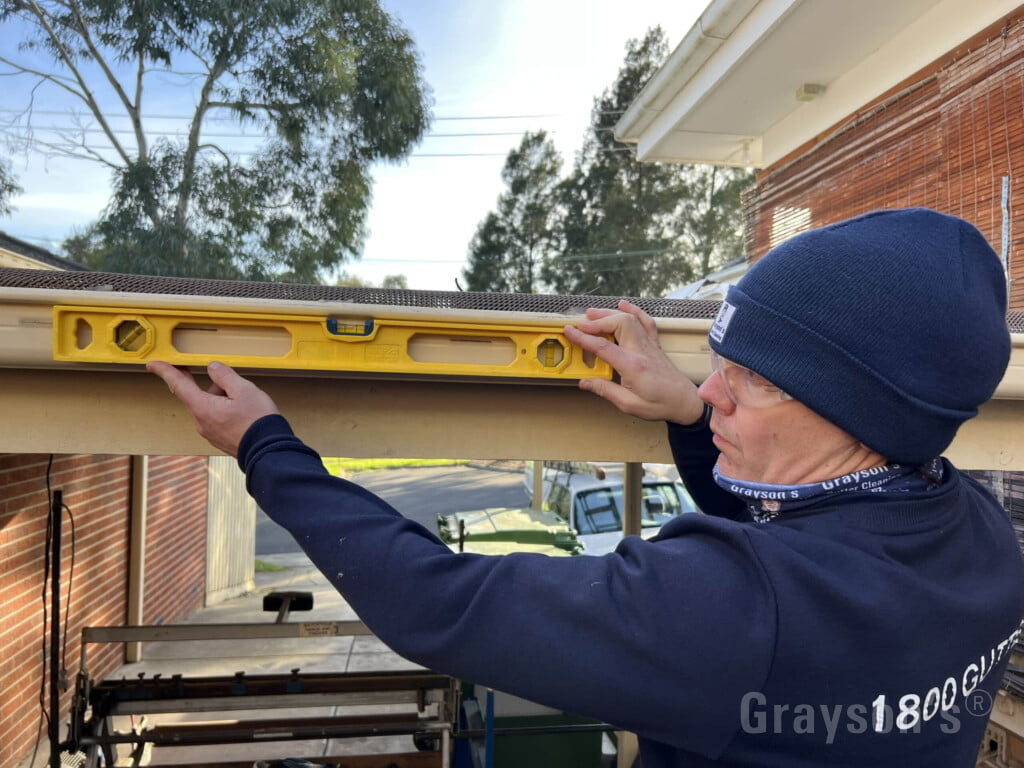
- Re-pitch the run so water moves toward the downspout. A small level helps you see the problem quickly.
- Check seams and end caps after adjustment. Moving a gutter can open up an old joint that was barely holding.
Cause 5: Water behind the gutter
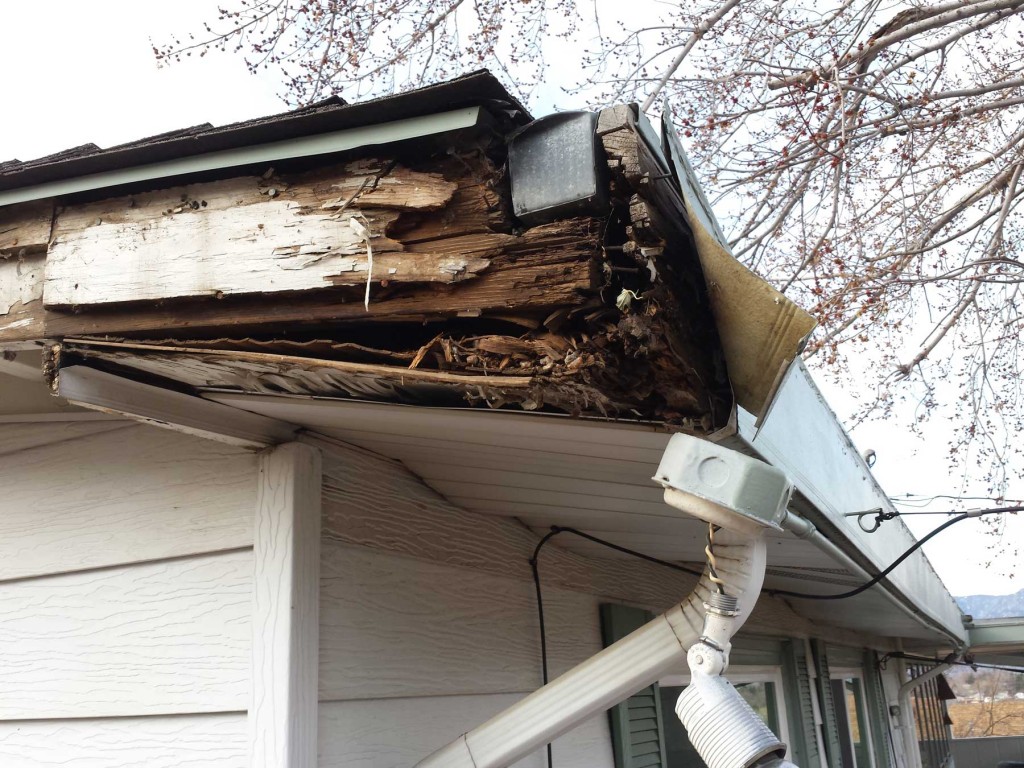
Overflow is obvious. The sneakier problem is water running behind the gutter, soaking your fascia and the top edge of the soffit. That can rot wood, invite ants, and eventually loosen the gutter so it overflows even more.
What causes water to run behind
- Clogs that raise the water level above the back edge.
- Drip edge problems, including missing drip edge, drip edge that is not directing into the gutter, or drip edge that is lapped correctly but the gutter sits too low to catch the water cleanly.
- Mounting height issues that let fast runoff skim past the front lip or slip behind the back edge depending on roof edge details.
- Fascia rot that pulls hangers loose and changes the gutter angle.
One more nuance I see a lot: some gutter guards can encourage water to “hug” the cover during a downpour and overshoot the gutter. It depends on the design, roof pitch, and how the guard is installed, but if overflow started after guards went on, put that on your suspect list.
When to treat it as damage
Move into fix-it-now mode if you see any of the following:
- Peeling paint or swollen fascia boards behind the gutter.
- Soft wood when you press gently with a screwdriver (do not jab, just check).
- Moldy soffit vents or water staining on soffit panels.
- Interior clues like water stains near exterior walls or musty smells in the attic.
If fascia is compromised, the right fix may involve carpentry and flashing work, not just gutter cleaning.
Fast diagnosis guide
- One spot overflowing: check the nearest downspout opening, elbows, and any low spot or sag.
- Whole run overflowing: check pitch, downspout count, and gutter size.
- Overflow under a valley: treat it like a high-volume zone and consider an extra downspout, larger gutter, or a splash guard.
- Water behind the gutter: check for clogs first, then look closely at drip edge and gutter mounting height.
- Downspout dribbles or gurgles: suspect a restriction in the downspout, extension, or underground drain.
Troubleshooting order
If you want a simple path that avoids wasted effort, here is the order I use on my own house:
- Clean the gutter trough and check screens or guards. You need a baseline.
- Flush each downspout. Confirm strong flow at discharge.
- Do a hose test starting at the far end. Watch where water first backs up or spills.
- Check pitch and hanger spacing. Fix sags and low spots.
- Identify high-volume roof areas like valleys and long roof planes. Consider additional downspouts or a size upgrade.
- Look for behind-the-gutter leakage and fascia condition, plus drip edge and mounting height details.
Keep water off the foundation
Even a perfect gutter system can create problems if the discharge dumps water next to the house. The fix is usually cheap and immediate.
Minimum discharge upgrades
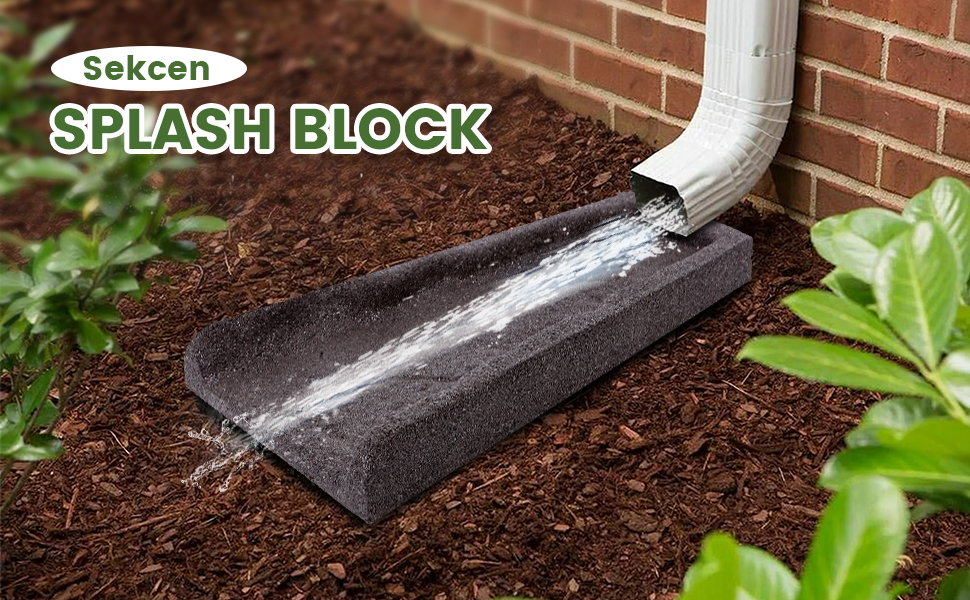
- Add a splash block where the downspout hits soil or mulch.
- Use an extension to move water farther from the foundation. More distance is usually better, as long as you are not dumping onto a neighbor.
- Correct the grade so soil slopes away from the house near the downspout area.
When you might need more
If your yard holds water or you get window well flooding or basement seepage, the downspout area is often just the beginning. This is when drainage solutions like a French drain, downspout pop-up emitter, or regrading can make a bigger difference than any gutter tweak.
Cold weather note
If the “overflow” shows up during freezing weather, do not skip the ice-dam angle. Ice can block gutters and downspouts, forcing water to spill over edges or run behind the gutter. In that case, you may be looking at insulation, air sealing, ventilation, and safe ice management, not just gutter flow.
When to call a pro
I love DIY, but gutters are one of those projects where a small mistake can send water into the wrong place for years. Consider bringing in help if:
- You need to add downspouts and cut new outlets, especially on tall homes.
- You suspect fascia rot or you see gutters pulling away from the roofline.
- Your downspouts tie into underground drains and you cannot verify the route or condition.
- Overflow persists after cleaning, flushing, and pitch checks. That usually points to sizing or roof-edge details.
Storm checklist
- Gutters clean and free of standing water
- Downspouts discharge strongly and do not gurgle or back up
- No repeat overflow under valleys or along long runs
- No water running behind gutters at the fascia
- Downspout water carried away from the foundation using splash blocks or extensions
If you do those five things, you will be in the top tier of “my house handles heavy rain well.” And from experience, that peace of mind is worth a Saturday morning on a ladder.

About Marcus Vance
Content Creator @ Grit & Home
Marcus Vance is a lifelong DIY enthusiast and self-taught home renovator who has spent the last decade transforming a dilapidated 1970s ranch into his family's dream home. He specializes in budget-friendly carpentry, room-by-room renovations, and demystifying power tools for beginners. Through his writing, Marcus shares practical tutorials and hard-learned lessons to help homeowners tackle their own projects with confidence.