
🚨 In a DIY emergency or rush?
Skip the details and jump straight to our 30-second cheat sheet for the most crucial info.
I remember the first winter after we installed a heat pump, I walked outside, saw the unit wearing a crusty white sweater, and immediately assumed we were headed for an expensive repair. Turns out, some frost is part of normal operation. The trick is knowing when you are seeing a routine defrost cycle and when you are seeing a problem that will not fix itself.
This guide will help you spot the difference, do a few safe homeowner checks, and recognize the warning signs that call for a pro.
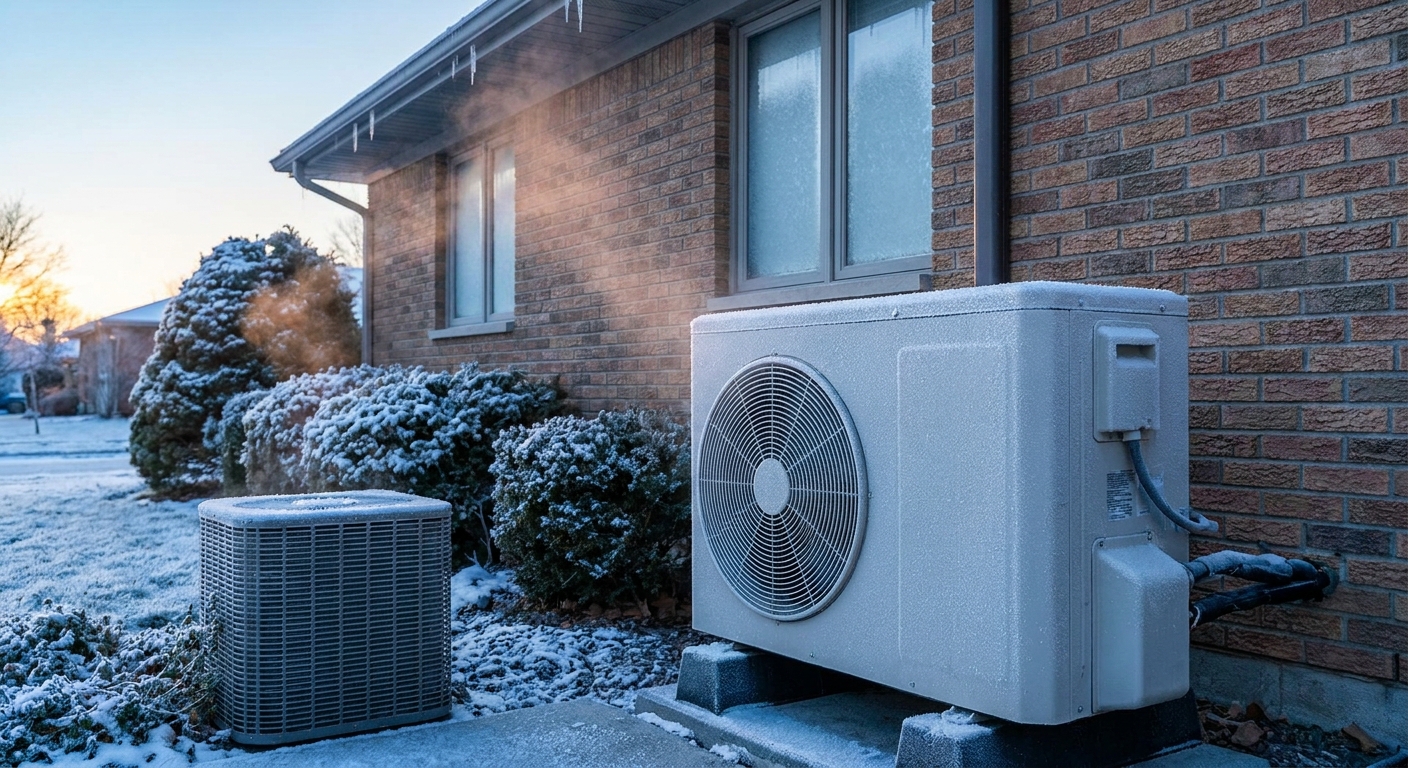
Quick reality check: frost is normal, thick ice is not
In heating mode, your outdoor unit is acting like an air conditioner running backward. The outdoor coil gets cold so it can pull heat from outdoor air. When that coil temperature drops below freezing and there is moisture in the air, frost forms.
A quick nuance that saves a lot of worry: in freezing rain or very humid near-freezing weather, you may see a thin glaze of ice for a short time. That can still be normal if the system clears it during defrost and performance stays steady.
Normal frost
- Looks like: a thin, even white layer on the coil or the base pan, usually after damp, near-freezing weather.
- Behavior: the system periodically clears it off during a defrost cycle and goes back to normal.
- Timeframe: frost comes and goes throughout the day.
Problem ice buildup
- Looks like: thick ice, clear ice, or a solid block that wraps the coil, fan grille, or refrigerant lines.
- Behavior: it does not melt away during defrost, or it refreezes quickly and keeps getting worse.
- Timeframe: days of buildup, reduced heat indoors, rising electric bills.
Rule of thumb: if you can still see the coil fins through the frost, you are usually in “normal” territory. If the coil looks like a frozen lasagna pan, you are not.
One more clue: frost pattern matters. A fairly even coat across the coil is common in normal operation. Frost or ice on only one section of the coil can point to an airflow issue, a defrost problem, or a refrigerant issue that needs a technician.
What a normal defrost looks and sounds like
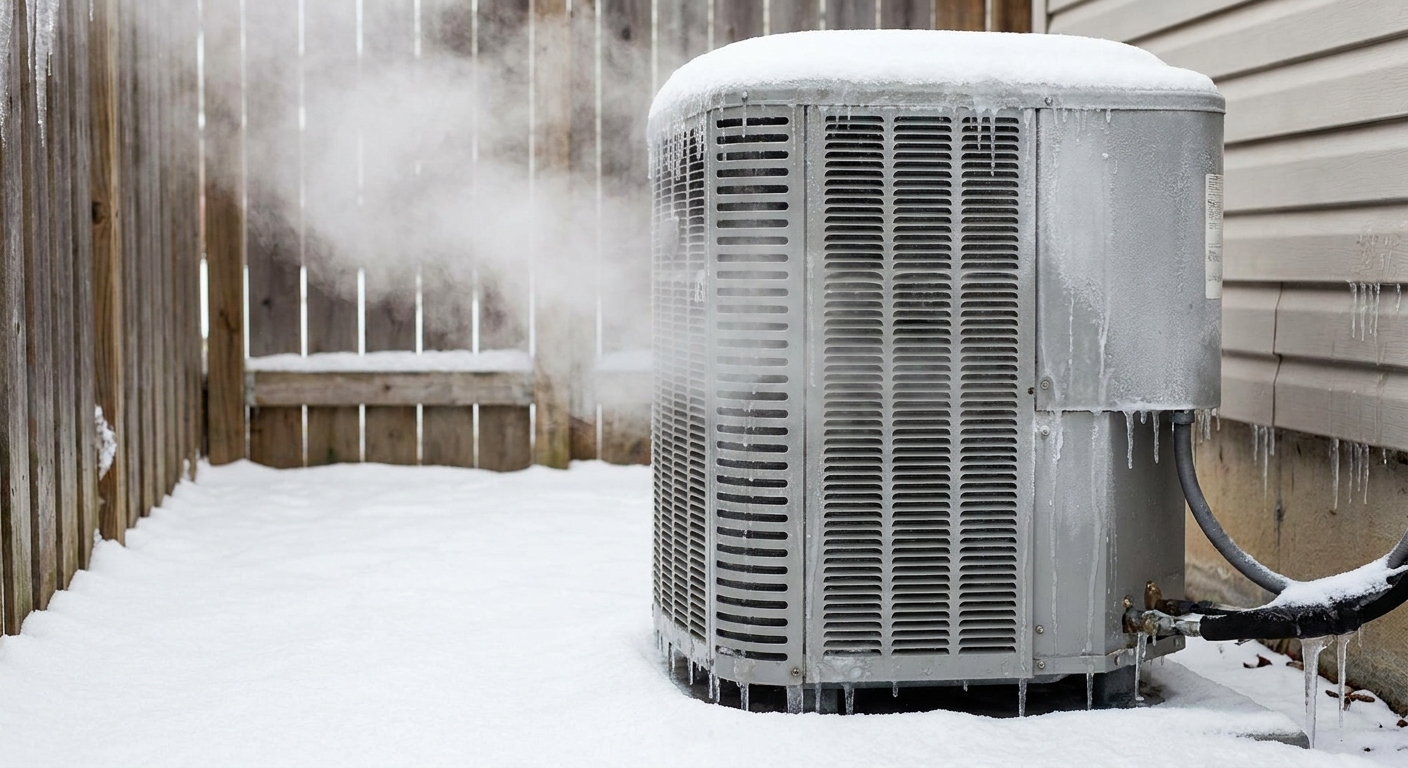
Defrost is the heat pump’s way of warming the outdoor coil long enough to melt frost. Many modern systems run defrost based on sensors and runtime, although some models still use more timer-driven logic with temperature termination. Either way, the goal is the same: melt the frost and get back to heating.
During defrost, the heat pump temporarily switches into cooling mode to send hot refrigerant through the outdoor coil. That is why defrost can look dramatic outside.
Common signs of a normal defrost
- Steam or fog: you may see a brief cloud of steam as frost melts. That is normal.
- Whoosh or change in sound: the system may sound different as it switches modes.
- Outdoor fan may stop: many units pause the outdoor fan during defrost to speed melting, but not all do. This varies by model.
- Dripping water: you should see water draining from the unit afterward.
- Indoor air feels cooler temporarily: because the system is temporarily in cooling mode, some homes feel a short dip in supply air temperature. Many systems automatically bring on auxiliary heat strips or a backup furnace to keep things comfortable, but you may still notice it for a few minutes.
Defrost duration is often a few minutes to around 15 minutes, depending on brand, outdoor conditions, and system design. If your system seems to defrost constantly or for long stretches, that is a clue something else is going on.
Defrost basics: the key parts
You do not need to be an HVAC tech to understand the main parts involved in defrost. Knowing what they do helps you describe symptoms clearly when you call for service.
Reversing valve
This valve switches your system between heating and cooling mode. During defrost, the system temporarily shifts so hot refrigerant flows through the outdoor coil and melts frost.
What can go wrong: a reversing valve that sticks or fails can lead to poor heating, odd temperature swings, and messy defrost behavior.
Defrost sensor (or coil temperature sensor)
This sensor tells the system when the outdoor coil is cold enough and frosty enough to need defrost, and when it is warm enough to stop.
What can go wrong: if the sensor reads wrong or is poorly attached to the coil, the system may not defrost when it should, or it may defrost too often.
Defrost control board
This is the “decision maker” that runs the defrost sequence based on sensor readings and the logic built into the equipment.
What can go wrong: a failing board can cause short cycling, defrost that never ends, or defrost that never starts.
Start with the homeowner-friendly checks
Before you assume a major issue, do a few basics. These fixes solve a surprising number of “icing” complaints because winter problems often trace back to airflow, clearance, or drainage.
1) Check your air filter and return vents
- Replace a dirty filter, even if it is not “that old.” Winter heating can load filters faster than you expect.
- Make sure return grilles are not blocked by rugs, pet beds, or furniture.
Why it matters: restricted indoor airflow mainly reduces heating capacity and pushes longer runtimes. Longer runtimes mean the outdoor coil spends more time cold, which gives frost more chances to form. It is an indirect link, but it is real.
2) Verify supply vents are open
Closing vents in unused rooms often backfires. It can increase static pressure and reduce total airflow across the indoor coil, which reduces comfort and efficiency.
3) Clear the outdoor unit like you mean it
- Remove leaves, tall grass, and windblown debris from the sides of the unit.
- Keep at least 18 to 24 inches of clear space around the unit, and more is better.
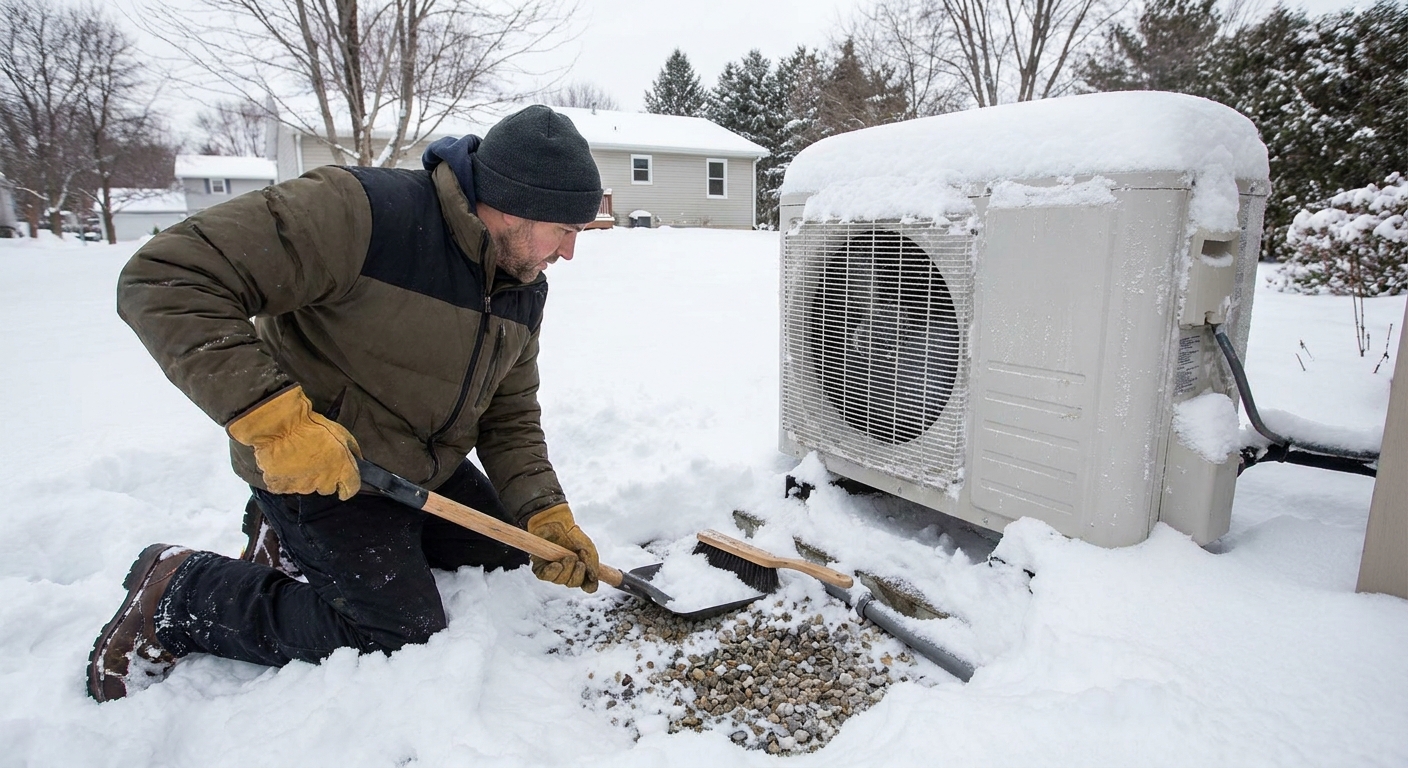
- After heavy snow, gently clear snow drifts around the cabinet and away from the coil.
- Avoid building a snow “wall” around the unit. It blocks airflow and can trap meltwater that refreezes.
- If your unit regularly gets buried, consider having it professionally elevated or set on a proper stand so it sits above the typical snow line and drains well.
Do not: chip ice with a screwdriver or pound on the coil. The fins bend easily and refrigerant lines are not forgiving.
4) Look for obvious drainage problems
During defrost, melted frost becomes water that needs to drain out of the base pan. If that water refreezes and builds up, you can end up with an ice block that interferes with the fan.
- If the unit sits in a low spot where meltwater pools, that can contribute to refreezing.
- If the base pan is packed with ice, the unit may need a technician to address drainage, unit leveling, or install a manufacturer-approved base pan heater kit if applicable.
Aux heat cues
Many heat pumps use auxiliary heat (often electric resistance strips) or a backup furnace when it is very cold outside or during defrost. Seeing it occasionally is not automatically bad.
Thermostats and systems also vary. Some automatically bring on AUX during defrost. Dual-fuel setups may switch to the furnace below a set outdoor temperature (an outdoor lockout), and that can look different from one home to the next.
Normal auxiliary heat situations
- Outdoor temps near or below your system’s efficient range.
- During defrost cycles to prevent cold air from blowing inside.
- After a big thermostat setback, like going from 62°F to 70°F quickly.
When auxiliary heat becomes a clue
- Aux heat is on constantly even in mild winter temps.
- Indoor temperature keeps dropping while the system runs.
- Electric bill spikes sharply compared to similar weather last year.
If your thermostat shows “AUX,” “EM HEAT,” or “Emergency Heat,” make a note of when it happens and for how long. That information is gold for diagnosing icing and defrost issues.
Why a heat pump can ice up badly
Here are the usual suspects, in plain English.
Outdoor airflow restriction
Outdoor airflow can be restricted by debris, fencing too close, snow drifts, or a dirty outdoor coil. When the coil cannot breathe, heat transfer drops, the unit struggles, and frost has an easier time building and sticking around.
Indoor airflow problems
Dirty filters, closed vents, and blower issues usually show up as reduced comfort and longer runtimes. That extra runtime increases the chances of frost forming outside, and it can make defrost work harder than it should.
Defrost sensor or control issues
If the system cannot accurately detect coil conditions, it may skip defrost or run it at the wrong time. Either way, ice tends to win.
Low refrigerant charge or a refrigerant restriction
This is a big one, and it is not a DIY fix. When refrigerant levels are wrong or flow is restricted, coil temperatures and system operation can get out of whack, making icing more likely and reducing heat output.
Clue: the system runs a lot, but your house never quite catches up, especially in weather it used to handle.
Outdoor fan problems
If the outdoor fan motor is failing, intermittently stopping, or the fan blade is damaged, the unit cannot move enough air. Frost can turn into ice quickly.
Base pan refreeze issues
In certain climates, melted defrost water refreezes in the base pan. Over time it can build into a thick ice mass. Some setups need improved drainage, unit elevation, or a manufacturer-approved heater kit.
What not to do
- Do not pour hot water on the unit. The rapid temperature change can damage components, and the water can refreeze into a worse problem. If a technician instructs you to use warm water in a specific situation, follow their directions.
- Do not chip ice off the coil. Bent fins reduce efficiency, and puncturing the coil turns a nuisance into a major repair.
- Do not run “Emergency Heat” as a permanent workaround. It is expensive and it does not solve the underlying issue.
- Do not ignore a fan hitting ice. If you hear grinding or ticking, shut the system off and call for service.
If you are staring at a blocked fan or a scary-looking ice block, the safest homeowner move is usually hands-off: turn the system off at the thermostat and call a pro. If you know exactly what you are doing and can do it safely, you can also shut off power at the outdoor disconnect, but do not experiment with high voltage equipment.
Red flags that mean it is time to call for service
I am all for DIY where it makes sense. But heat pumps are a sealed refrigerant system with high voltage components. When you hit these signs, the smart play is professional diagnosis.
- Solid ice that returns quickly after you clear snow and verify airflow.
- No visible defrost cycles for hours in icy conditions, or defrost cycles that seem constant.
- Outdoor fan not running when the system is calling for heat (note: some units stop the fan during defrost, so watch for normal operation outside of defrost).
- Buzzing, grinding, or fan blade strikes from the outdoor unit.
- Heat output drops sharply and the house cannot maintain temperature.
- Aux heat running nonstop during relatively mild weather.
- Heavy icing on refrigerant lines or ice spreading well beyond a light, temporary coating. (A small amount of frost near the unit can happen, but thick or expanding ice is not a great sign.)
- Uneven coil icing, like one side frozen while the rest is mostly clear.
If you do call, tell the tech: outdoor temperature, whether it was snowing or foggy, how long the unit ran before icing, whether you saw steam during defrost, and what your thermostat displayed (AUX, EM HEAT, etc.).
A simple “is this normal?” checklist
If you want a quick gut-check, walk through this list:
- Is it a thin, even frost layer rather than solid ice?
- Is the outdoor unit clear of debris and snow with breathing room?
- Is your filter clean and your vents open?
- Do you occasionally see steam and dripping water that suggests defrost is happening?
- Does the frost look fairly even across the coil, not isolated to one section?
- Is your home staying comfortable without aux heat running constantly?
If most answers are “yes,” you are probably seeing normal winter operation. If several are “no,” you likely have a real problem worth addressing now before it turns into a no-heat call on the coldest night of the year.
The 30-Second Cheat Sheet
Essential takeaways for: Heat Pump Icing Up in Winter: Normal Defrost or Trouble?
Normal vs. not normal
- Normal: light, even frost on the outdoor coil that comes and goes. A thin glaze of ice can also happen briefly in freezing rain or very humid near-freezing weather, as long as it clears.
- Not normal: thick, solid ice that covers the coil, fan grille, or lines and does not melt away after a defrost cycle.
What a normal defrost looks like
- Short burst of steam outside
- Outdoor fan may stop briefly (varies by model)
- Water dripping from the unit afterward
- May last roughly a few minutes to about 15 minutes depending on conditions
First DIY checks (safe)
- Replace/clean the air filter.
- Make sure return grilles and supply vents are not blocked.
- Clear leaves, debris, and snow around the outdoor unit. Give it at least 18 to 24 inches of space.
- Look for base pan ice caused by refreezing meltwater.
- Notice the frost pattern: even frost is more typical; frost on only one side can be a clue of airflow or refrigerant issues.
Aux heat cues
- Normal: AUX kicks on during defrost, after big temperature setbacks, or in extreme cold.
- Red flag: AUX is on constantly in mild winter weather or your bill spikes sharply.
Call for service if you see these
- Ice does not clear or returns quickly.
- Outdoor fan does not run (outside of defrost) or hits ice.
- Defrost seems to never happen or happens constantly.
- Home cannot hold temperature, or you suspect low refrigerant (not a DIY fix).
Do not do this
- Do not chip ice off the coil.
- Do not pour hot water on the unit unless a technician specifically instructs you.
- Do not run Emergency Heat as a long-term workaround.
💡 Tip: Scroll up to read the full article for detailed, step-by-step instructions.
⬆️ Back to top
About Marcus Vance
Content Creator @ Grit & Home
Marcus Vance is a lifelong DIY enthusiast and self-taught home renovator who has spent the last decade transforming a dilapidated 1970s ranch into his family's dream home. He specializes in budget-friendly carpentry, room-by-room renovations, and demystifying power tools for beginners. Through his writing, Marcus shares practical tutorials and hard-learned lessons to help homeowners tackle their own projects with confidence.