

If your heat pump is “running” but the house still feels chilly, you are not alone. Heat pumps can be a little weird the first time you live with one, especially in cold snaps. They do not always deliver the blast-furnace heat people expect from a gas furnace, and some normal operating modes can feel like it is blowing cool air.
That said, there is a big difference between normal warm-ish air and a system that is truly not heating. Below is the same checklist I use at my own place: start with the easy thermostat and airflow stuff, then move toward the problems that need a technician.
First: is it actually not heating?
What normal can feel like
- Supply air temperature: Many heat pumps deliver air that feels lukewarm (often around 85 to 105°F at the vent, depending on outdoor temp, airflow, and system type) instead of the 110 to 140°F you might remember from a furnace. It can feel cool on your skin because your skin is about 98.6°F, even though it is heating the room. Also, a quick vent reading can be misleading because of duct losses and air mixing.
- Longer run times: Heat pumps like to run steadily. Short bursts are not the goal.
Quick reality checks
- Check the return air: Put your hand at the return grille. If return air is room temp but supply air is noticeably warmer after 10 to 15 minutes, the system may be fine.
- Confirm the thermostat is calling for heat: Set the thermostat to Heat and raise the setpoint 3 to 5°F above room temperature.
- Look for error codes: Many mini-splits and some thermostats show a fault light or code. Write it down before you reset anything.
DIY troubleshooting, step by step
Safety note: If you are uncomfortable around electrical panels or you smell burning, stop and call a pro.
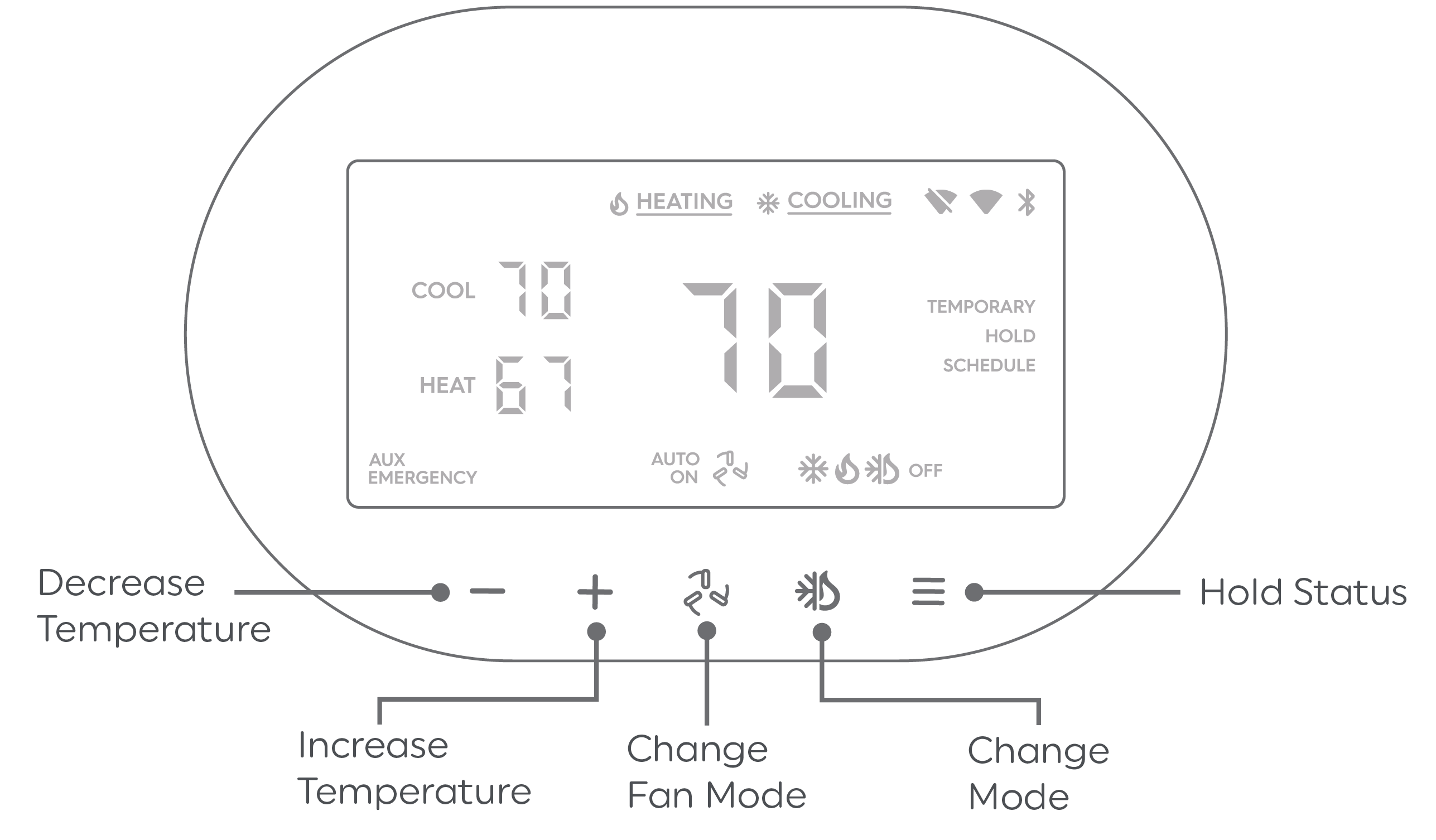
1) Thermostat settings and simple controls
This is the most common “facepalm” fix. I have done it myself after a long day.
- Mode: Make sure it is on Heat, not Cool or Auto.
- Fan setting: Set fan to Auto. If it is set to On, the blower can run between heating cycles and feel like it is “blowing cold air.”
- Schedule/eco settings: Temporarily disable schedules, Eco, or “Smart” setbacks while troubleshooting.
- Aux/E-Heat settings (if you have them): If it is extremely cold and the heat pump cannot keep up, you may need auxiliary heat. If your thermostat has an “Emergency Heat” mode, use it only if the outdoor unit has completely failed (or you are waiting on service) or the outdoor unit is encased in solid ice and cannot run. Emergency Heat often locks out the heat pump and runs expensive electric heat strips.
- Thermostat setup (heat pump vs conventional): If the thermostat was recently replaced or rewired, double-check the installer setup. A wrong heat pump setting (including the O/B reversing valve setting) can cause confusing heating behavior. When in doubt, call the installer or a tech rather than guessing.
- Batteries: If the thermostat uses batteries, replace them. Low power can cause odd behavior.
2) Airflow problems
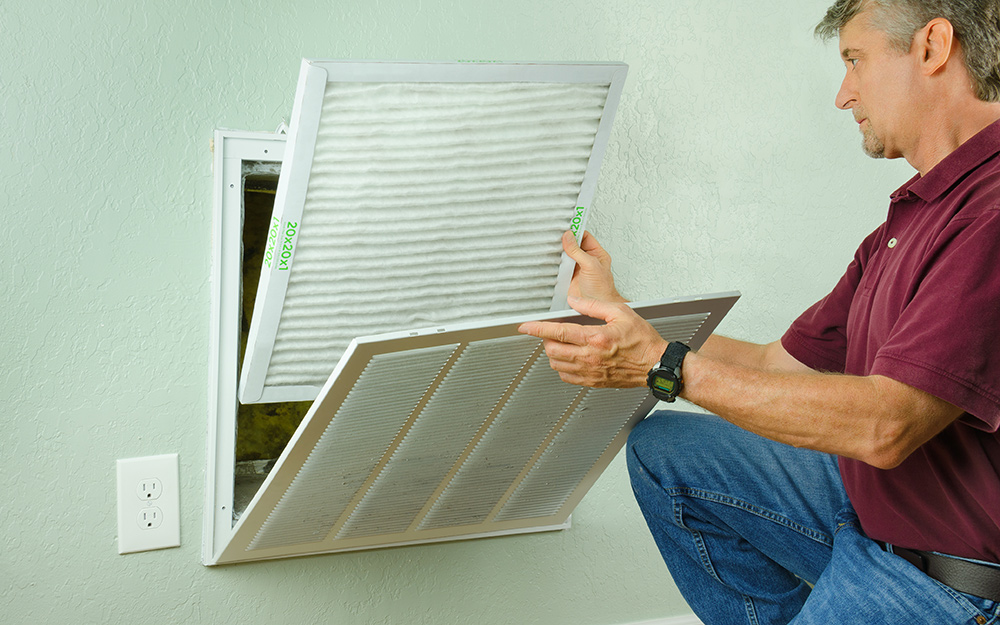
A clogged filter is like trying to breathe through a pillow. Airflow drops, the indoor coil can get too cold, and the system performance tanks.
- Replace or clean the filter: Turn the system off first. Slide out the filter, check for heavy dust, and replace it if in doubt. Most 1-inch filters should be changed every 1 to 3 months.
- Open supply registers: Closing lots of vents can reduce airflow and cause problems.
- Check the return grille: Make sure it is not blocked by a rug, furniture, or pet hair build-up.
- Ducted system check: If you have ducts, look for obvious issues like a disconnected duct in an attic or crawlspace, a big rip in flex duct, a damper that got closed, or a zoning system stuck in the wrong position.
- Mini-split quick check: Clean the small mesh filters in the indoor head (they clog faster than people expect). Also make sure the louvers are not aimed straight up or at a wall where the air short-cycles.
- Indoor coil icing: If you see frost on the indoor unit (or the large copper line is icing up), shut the system off and let it thaw. Then address airflow and call a pro if it returns.
3) Outdoor unit power and airflow
This is the bridge between “easy stuff” and “technician stuff.” A heat pump needs outdoor power and clear airflow to do its job.
- Confirm it has power: Check for a half-tripped breaker (flip fully off, then on) and make sure the outdoor disconnect switch is on. If it trips again, stop and call a pro.
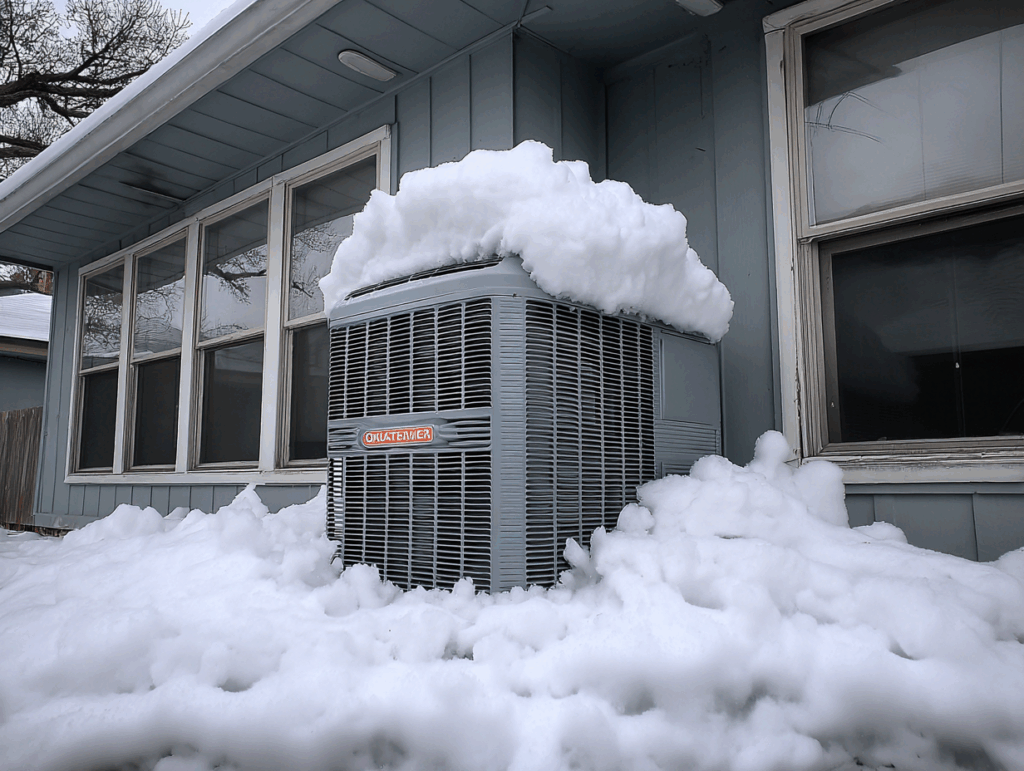
- Clear airflow: Remove leaves, grass clippings, or snow piled against the unit. Follow the manufacturer clearance specs if you can. As a rule of thumb, keep at least 2 feet of clearance on the sides and keep the top clear.
- Some frost is normal: In heating mode, the outdoor coil runs cold and can frost up. A solid block of ice is not.
- Do not chip ice: Do not use a screwdriver, ice pick, or hammer. Also avoid salt or de-icers because they can corrode the coil and cabinet.
- Safe thaw method: Turn the system off and let it thaw naturally. If you must speed it up, use lukewarm water gently and avoid spraying electrical components. Do not do this if the water will just refreeze into a bigger ice problem.
- Check the base pan drain: Some units have drain holes that can clog and refreeze. If you see a thick ice slab at the bottom, that is a clue.
Thrifty tip: If drifting snow is a constant issue, a simple wind baffle or relocating downspout discharge can prevent repeat freeze-ups.
When it runs but air feels cold
If you made it through the steps above, here are the more likely “real problems.” This is also where a lot of normal heat pump behavior gets misread as a failure.
Defrost cycle issues
Heat pumps periodically go into defrost mode to melt frost off the outdoor coil. During defrost, many systems temporarily blow cooler air inside or rely on auxiliary heat to prevent cold drafts.
- What you might notice: The outdoor fan may stop, you may see steam rising from the outdoor unit, and indoor air may feel cooler for a few minutes.
- What is normal: Defrost now and then, often a few minutes and sometimes up to about 15 minutes depending on conditions.
- What is not normal: Defrost happening constantly, the outdoor unit turning into a solid ice brick, or the system never recovering afterward.
If you suspect defrost problems, this is usually a technician call. Common causes include a bad defrost control board, a failed sensor, or airflow issues outside.
Low refrigerant (leak)
Low refrigerant is not a “top it off and forget it” situation. If it is low, it leaked out. That can reduce heating capacity and sometimes cause icing.
Signs that point toward low refrigerant:
- System runs constantly but cannot raise indoor temperature
- Indoor coil or refrigerant lines ice up even with a clean filter
- Hissing or bubbling sound near the indoor or outdoor unit
DIY or pro? Pro. Refrigerant handling requires EPA certification in the US, and the real fix is finding and repairing the leak.
Faulty reversing valve (stuck in cooling)
The reversing valve is what allows a heat pump to switch between heating and cooling. If it sticks or the solenoid fails, the system can act like it is in the wrong mode.
Clues:
- You have strong cooling performance in summer, but in winter it blows room-temp or cool air no matter what
- The outdoor unit seems to run, but supply air never gets comfortably warm
- You hear a distinct changeover sound when switching modes, but nothing changes in performance
DIY or pro? Pro. Diagnosis often involves electrical checks and refrigerant-side evaluation.
Multi-zone mini-split mode conflicts
If you have a multi-zone system, one head calling for cooling can sometimes limit or prevent another head from heating (depends on system type). Make sure all zones are set to the same mode while troubleshooting.
Cold weather limits
Heat pumps have improved a lot, but outdoor temperature still matters. If it is very cold, your system might be working properly and still not keep up without backup heat.
- Know your system type: “Cold climate” heat pumps perform better at low temps. Older units may struggle as temps drop.
- Aux heat may be required: If you have electric heat strips or a dual-fuel setup, the thermostat may stage them on automatically (based on settings like balance point and lockouts).
- Do not crank the thermostat way up: Some thermostats respond by engaging auxiliary heat sooner and longer, which can spike your bill.
Quick checks you can do today
- Set thermostat to Heat, raise setpoint 3 to 5°F, and set fan to Auto
- Replace the air filter and confirm returns and registers are open
- If ducted, look for obvious duct leaks, disconnected runs, or closed dampers
- Clear snow, leaves, and debris from the outdoor unit
- Gently thaw ice if present (system off, lukewarm water only, avoid electrical parts, stop if it will refreeze)
- Give it 10 to 15 minutes after changes, then re-check supply air
- Power-cycle only once if needed (turn system off at thermostat, then at breaker for 2 to 3 minutes, then restore). If it trips breakers or throws codes again, stop.
When to call a technician
I am all for DIY, but HVAC has a clear line where the smart, budget-friendly move is calling in a licensed pro.
Call for service if you see any of these
- Outdoor unit is a solid block of ice that returns after thawing
- Indoor coil or refrigerant lines keep icing up
- System blows cold air in heat mode for more than 15 to 20 minutes with a clean filter and correct settings
- You suspect low refrigerant, or you hear hissing near the equipment
- Breaker trips, burning smell, or electrical buzzing
- Error codes you cannot clear by addressing airflow and settings
- You suspect thermostat configuration issues (heat pump setup, O/B setting, aux lockouts) and you are not sure how to verify safely
What to tell the tech
- Outdoor temperature and weather conditions (snow, freezing rain, heavy wind)
- Thermostat make and model and what settings you tried
- Whether you saw ice on the outdoor unit or indoor coil
- Any fault codes or flashing light patterns
- When the filter was last replaced
FAQ
Why is my heat pump blowing cold air when it is set to heat?
Common causes include the thermostat fan set to On, the system being in defrost mode, a dirty air filter restricting airflow, or a more serious issue like low refrigerant or a reversing valve problem. Also remember the big gotcha: normal heat pump supply air is often around 85 to 105°F, which can feel “cold” on 98.6°F skin even when the system is heating.
Is it normal for a heat pump to blow cool air sometimes?
Yes. Heat pumps often supply air that feels lukewarm compared to a furnace, and during defrost mode the indoor air can feel cooler briefly.
Can I hose off my outdoor heat pump in winter?
You can use gentle, lukewarm water to help melt ice if the system is off, but avoid high pressure sprays, avoid soaking electrical components, and never use hot water. If icing is frequent, the underlying cause needs attention.

About Marcus Vance
Content Creator @ Grit & Home
Marcus Vance is a lifelong DIY enthusiast and self-taught home renovator who has spent the last decade transforming a dilapidated 1970s ranch into his family's dream home. He specializes in budget-friendly carpentry, room-by-room renovations, and demystifying power tools for beginners. Through his writing, Marcus shares practical tutorials and hard-learned lessons to help homeowners tackle their own projects with confidence.