
🚨 In a DIY emergency or rush?
Skip the details and jump straight to our 30-second cheat sheet for the most crucial info.
Nothing kills a relaxing soak faster than stepping into a lukewarm tub and seeing the water temp stuck in the 80s. I have been there. When my own spa quit heating after a windy cold snap, I assumed the heater was dead. Turned out it was a clogged filter choking the flow and tripping the safety limits.
This guide follows the troubleshooting order I wish I had used from the start: safest, cheapest checks first, then the deeper diagnostics that tell you when to stop and call a pro.
Quick expectation check: If you just refilled in cold weather, it may take longer than you think to recover, especially with the cover off or jets running.
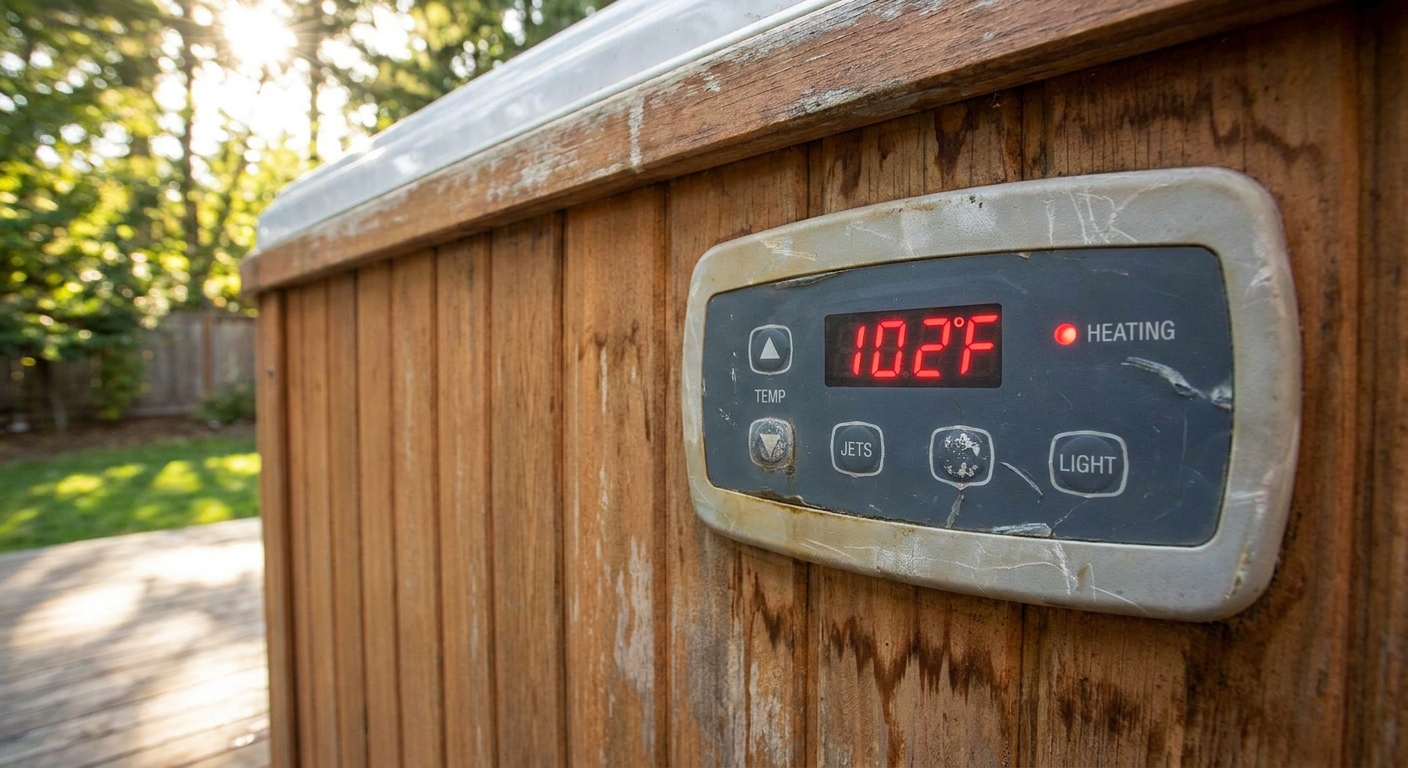
Safety first: what to do before you touch anything
Hot tubs mix water, high amperage electricity, and often tight equipment bays. Treat it like a serious electrical appliance.
- Kill power at the disconnect or breaker panel before opening the equipment compartment or removing a filter housing lid.
- Keep the area dry. Do not kneel in puddles while you troubleshoot.
- If you smell burning plastic, see smoke, or hear loud buzzing, shut it down and call a technician.
- Do not bypass safety devices like pressure switches, flow switches, or high-limit sensors.
- When in doubt, stop. Spa packs and heaters are not forgiving.
Tools that help: flashlight, clean rag, garden hose, basic Phillips and nut driver set, and a non-contact voltage tester. A multimeter is useful, but only if you are comfortable using it safely.
Quick read: what “not heating” usually means
Most no-heat complaints fall into one of these buckets:
- No power to the spa or heater circuit.
- Heater is disabled by a safety condition like low flow, air in the lines, or an overheated sensor.
- Heat is being made, but you are losing it faster than the tub can keep up due to an uncovered tub, cold weather, wind, or bad insulation.
- Heater or controls have failed (element, relay, board, sensors).
One more factor: 120V plug-and-play tubs often heat slower and may pause heating when jets are running. Many 240V tubs heat faster and can usually heat while circulating, depending on how they are configured.
Step 1: Confirm settings and mode (the free fix)
Before you open anything, rule out the easy stuff.
Check your set temperature and heat mode
- Verify the set temp is actually higher than the current water temp.
- Look for Economy, Sleep, or Away modes. These can heat only during filter cycles or hold a lower temp.
- On older topsides, modes are often abbreviated: St (Standard), Ec or Ecn (Economy), Sl (Sleep).
- Make sure the spa is not in a cooldown or summer logic mode if your brand uses it.
Reset obvious timer and schedule settings
On some systems, a filter cycle schedule change can reduce heating time. If you recently changed programming or had a power outage, set it back to a default schedule and watch for the heat indicator.
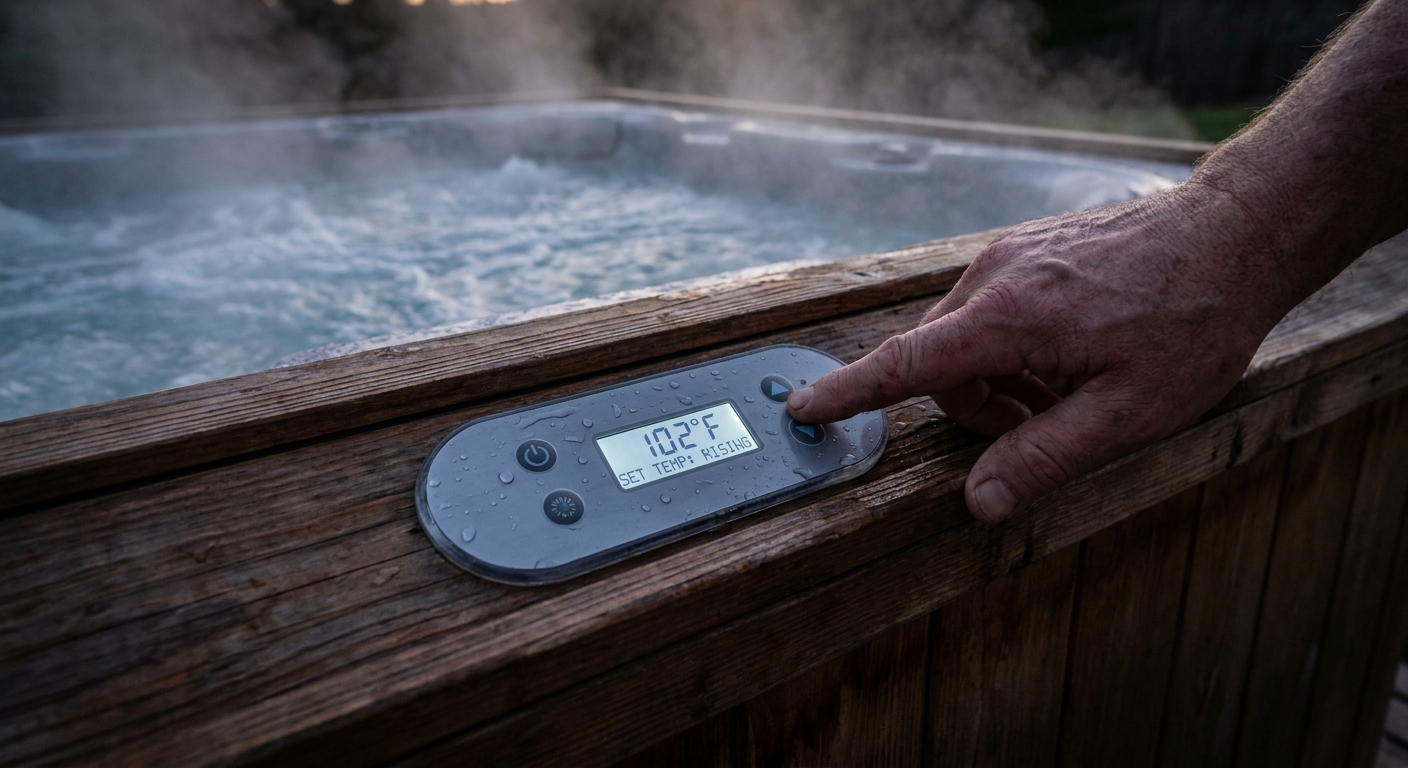
Step 2: Check power, breaker, and GFCI the right way
If the tub is blank or acting off, start here. Even if the display works, many 240V spas can lose one leg of power and still run some components while the heater will not heat.
At the main panel and spa disconnect
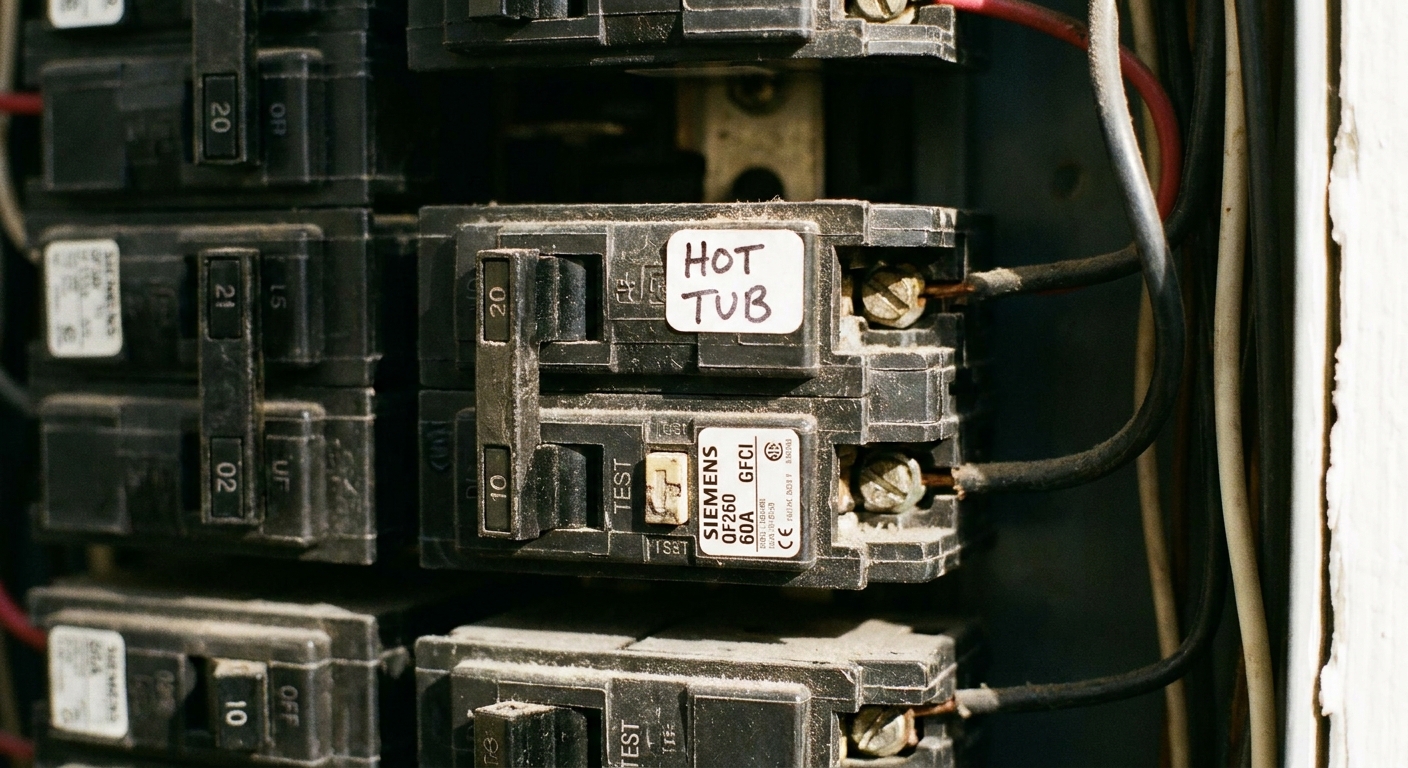
- Look for a tripped breaker. Reset by switching fully OFF, then ON.
- Check the GFCI. Press TEST then RESET. If it will not reset, stop.
- If you have a spa disconnect box near the tub, open the cover and check for a tripped GFCI or pulled fuse block, but do not touch internal wiring.
What repeated trips usually mean
- Trips immediately: likely shorted heater, damaged wiring, failed pump, or water intrusion in the pack.
- Trips after a few minutes: heater drawing too much current, moisture, or a failing component heating up under load.
If it trips more than once after a reset, that is your cue to stop DIY and call a spa tech. Repeated resets can damage components and it is an electrical safety hazard.
Step 3: Look for error codes and warning lights
Your topside display is basically telling you what the spa pack is unhappy about. Common messages vary by brand, but the patterns are similar. If you have the owner’s manual, check the code list for your exact model.
- Flow errors (often “FLO”, “FL”, “DR”, “Dry”, “LF”): heater is being blocked because it cannot confirm water movement.
- Overheat or high-limit (often “OH”, “HL”, “HIL”, “OHH”): water in the heater tube or at the sensor got too hot.
- Sensor errors (often “SN”, “SENSOR”, “S1/S2”): temperature sensors disagree or are out of range.
- Heater errors (sometimes “HEr”, “Htr”, “No Heat”): pack is calling for heat but not seeing expected temperature rise.
Tip: Write down the exact code and your spa model. If you end up calling a tech, that one detail saves time and money.
Step 4: Fix the most common cause of no heat: low flow
Hot tub heaters are usually locked out unless the spa proves it has adequate water flow. That is a good thing. It prevents a heater from cooking itself dry.
Clean or replace the filter
If you only do one thing from this article, do this first.
- Turn off power.
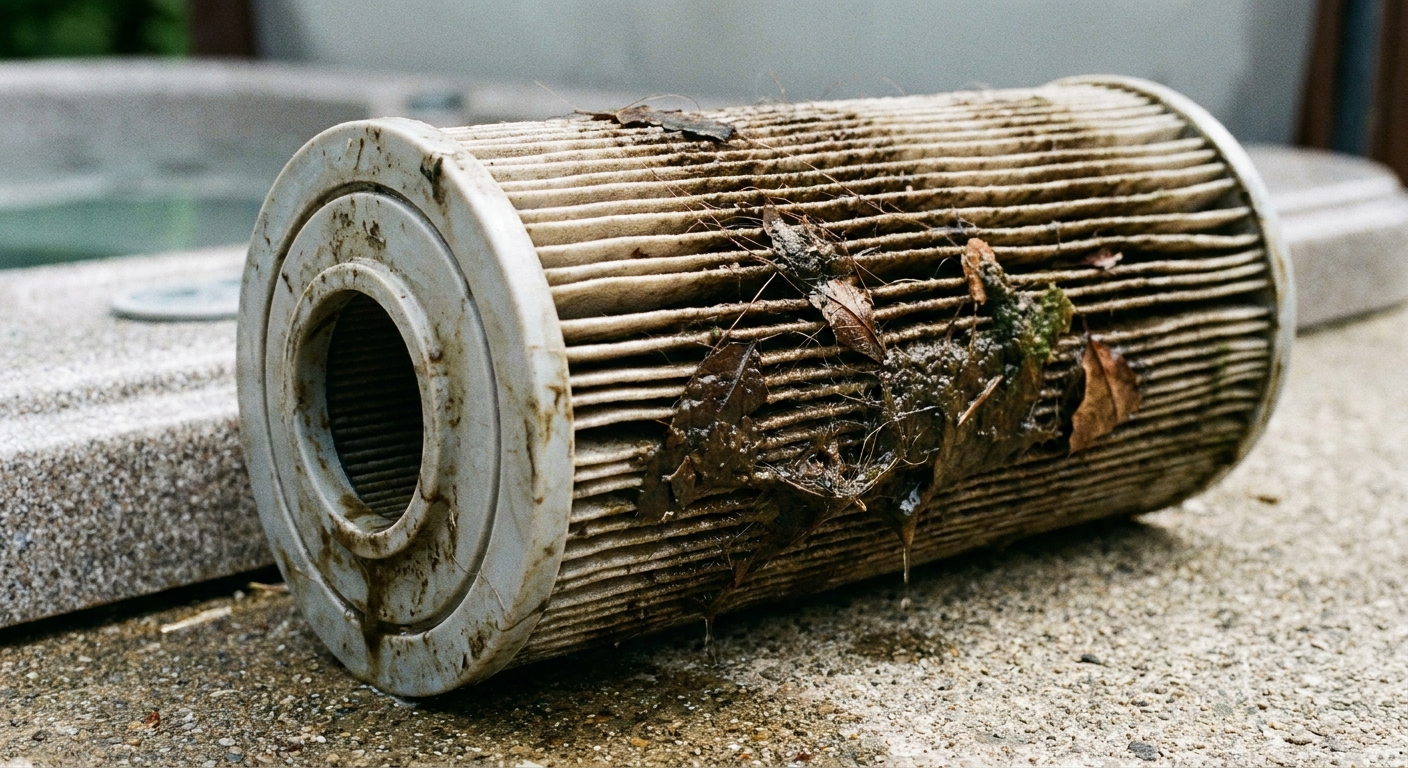
- Remove the filter and inspect for slimy buildup, collapsed pleats, or heavy debris.
- Rinse thoroughly with a hose from top to bottom, spreading pleats.
- Do not stop at a hose rinse if the filter looks “fine” but still restricts flow. Body oils, sunscreen, and lotion can clog cartridges in a way you cannot see. A filter cleaner spray or overnight soak often brings them back.
- If it is older, stiff, collapsed, or still looks dirty after cleaning, replace it.
Quick diagnostic: With the filter removed (and the tub filled properly), restore power briefly and see if the flow error clears and heating begins. Do not run long-term without a filter, but this is a great troubleshooting step.
Check water level and open valves
- Water should typically be above the highest jet or at the manufacturer’s fill line.
- Look in the equipment bay for slice valves on either side of the pump or heater. If someone closed them during service and forgot to reopen, flow will be weak or zero. Even a partially closed valve can create borderline flow that trips a pressure or flow switch.
Purge air lock after refilling
If your problem started right after draining and refilling, you may have an air lock. Common fixes:
- Fill through the filter well using a hose to push water into the plumbing.
- With power OFF, some owners carefully loosen a pump union slightly until air hisses and water seeps, then retighten.
Caution: Some manufacturers recommend specific bleed procedures, and loosening unions can pinch an O-ring or create a leak if you are not careful. If your manual gives a method, follow that. If you are not comfortable cracking unions, book service. A small leak in that bay becomes a big headache fast.
Step 5: Check circulation and pump behavior
Some tubs have a dedicated circulation pump. Others use a low-speed setting on a two-speed pump. Either way, if the spa cannot move water, it usually cannot heat.
What to look and listen for
- Strong return flow at the heater return or small circulation outlet.
- Gurgling can mean air in the lines.
- Humming but no movement can mean a stuck impeller, failed capacitor, or seized motor.
- Intermittent surging can indicate a clogged intake, dirty filter, or low water.
If the pump is not running when it should, and there are no simple air lock or filter issues, it is often technician time. Pumps and spa packs are expensive, and misdiagnosis is even more expensive.
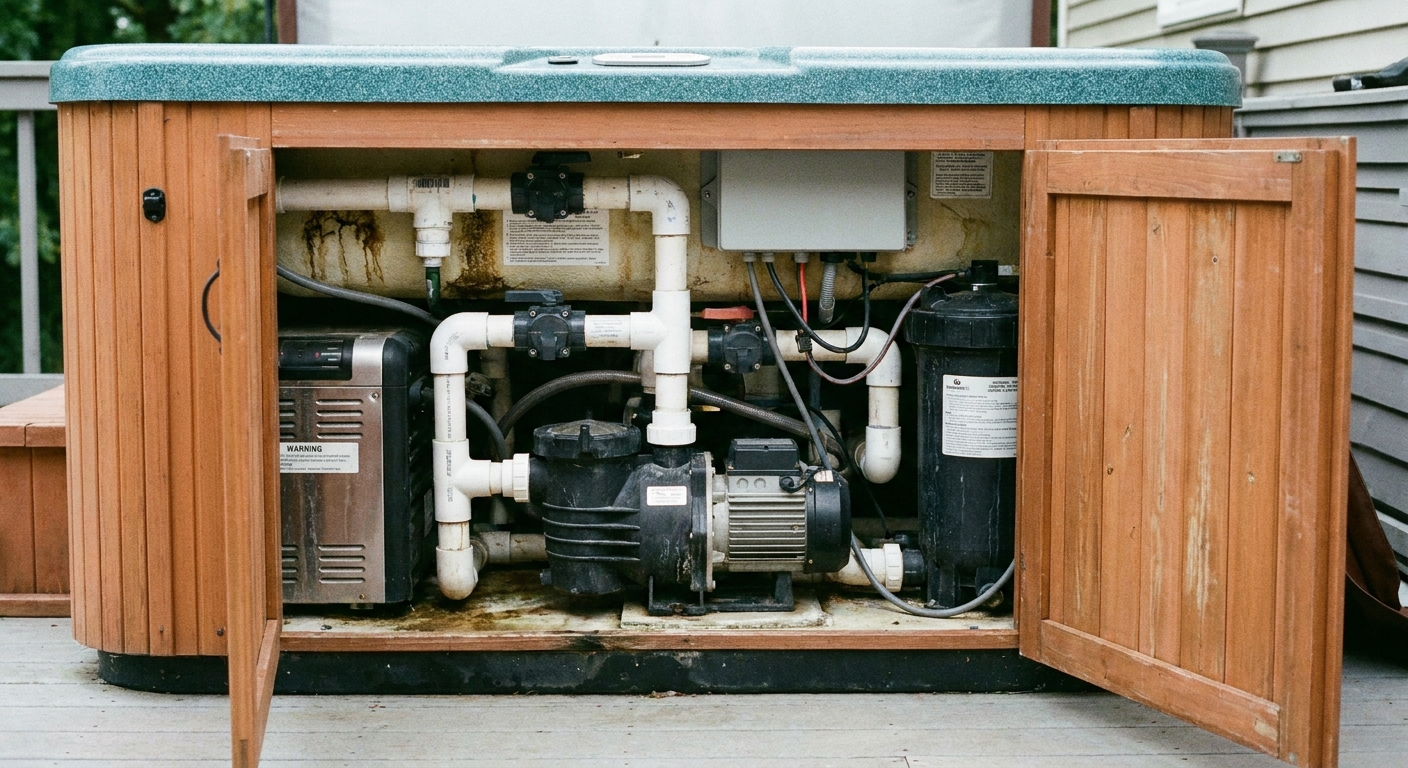
Step 6: Reset a high-limit trip (only after you fix the cause)
High-limit protection shuts the heater down if water inside the heater tube gets too hot. This can happen with low flow, a clogged filter, closed valves, or running the spa with a blocked intake.
How high-limit reset works
- Many modern spa packs reset by power cycling after the water cools.
- Some systems have a manual reset button on the heater assembly or inside the pack area.
Important: Do not just reset and walk away. If the underlying cause is still there, it will trip again, and repeated overheating is hard on heaters and boards.
Step 7: Rule out heat loss, not heat failure
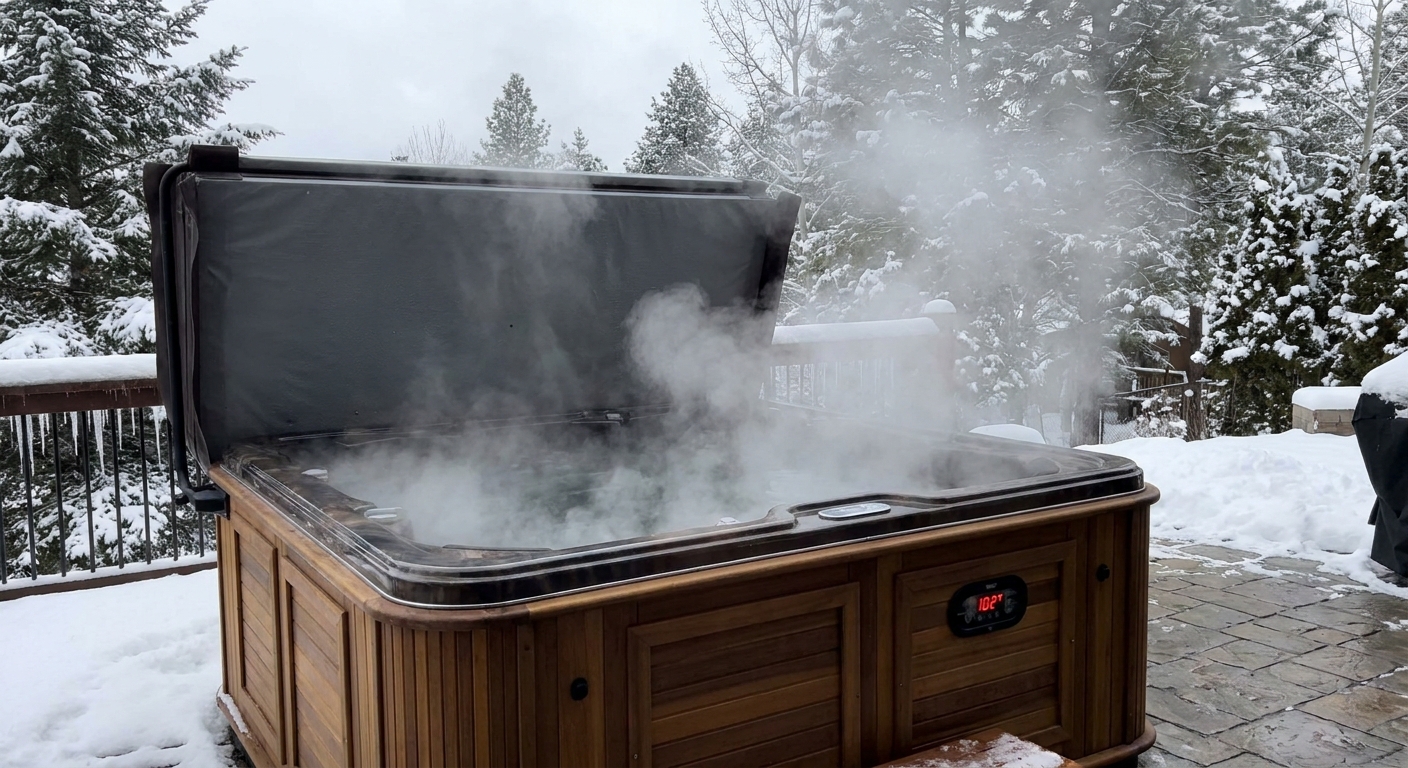
In cold weather, a tub can be “heating” but still losing ground.
Cover fit and condition
- Make sure the cover is fully seated with no big gaps.
- A cover that feels waterlogged and heavy has likely absorbed water and lost insulating value.
- Use cover straps to keep wind from lifting an edge.
Wind and air temperature realities
Heating rate depends on your voltage, heater size, insulation, starting temperature, weather, and whether the cover is on. Many 240V tubs with 4 kW to 5.5 kW heaters heat roughly 3 to 6 degrees F per hour in decent conditions. 120V plug-and-play tubs are often closer to 1 to 2 degrees F per hour, and any tub can be slower in strong wind, very cold air, or with the cover off and jets blasting.
Freeze protection mode
Some tubs run pumps automatically to prevent freezing. If you are getting freeze warnings, prioritize:
- Keeping the tub powered
- Keeping the cover on
- Ensuring water level is correct
If you suspect ice in plumbing, or the pumps cannot move water, stop forcing the system and call a technician. Running a pump against a blockage can crack fittings or damage the pump.
Step 8: Heater clues you can check without getting in over your head
If power is solid, flow is good, and settings are correct, the heater assembly becomes a suspect. Here is what you can observe safely.
Signs the heater may be bad
- Water temp does not rise even though the display shows heating.
- GFCI trips when heat engages.
- Visible corrosion or scale around heater unions, suggesting leaks or chronic moisture.
- Burnt smell near the spa pack, discolored wiring, or melted connectors (shut down immediately).
Scale buildup can reduce heater efficiency
Hard water can coat a heater element and reduce heat transfer. If your water tends to scale, keep an eye on basics like pH and calcium hardness, and stay on top of filter cleaning. It is cheaper than a heater swap.
What I do not recommend for beginners: pulling the heater, testing element resistance, or probing live voltage at the spa pack. Those steps can be done safely by an experienced person, but they are where most DIYers get hurt or accidentally damage a control board.
When to stop and call a spa technician
I love DIY, but hot tub heating problems have a few hard stop signs. Call a pro if:
- The GFCI will not reset or trips repeatedly.
- You see burnt wires, melted insulation, or smell electrical burning.
- There is water inside the control pack area.
- The pump hums but will not spin and you have already ruled out air lock and filter issues.
- Error codes point to sensor failure or board failure, and you cannot confirm with basic checks.
- You suspect frozen plumbing, or circulation is blocked.
Money-saving tip: When you schedule service, tell them your model, the exact error code, your current temp and set temp, and what you already tried (filter cleaned or removed for test, valves checked, power cycled). It speeds up diagnosis and can reduce billable time.
My go-to troubleshooting order (printable mental checklist)
- Confirm set temp, mode (St, Ec, Sl), and schedule.
- Check breaker and GFCI, reset once.
- Read and write down error codes.
- Clean, chemically soak, or remove filter for a quick test.
- Verify water level, open valves, purge air lock if refill was recent (follow your manual if it specifies a method).
- Confirm circulation and return flow.
- Address high-limit trip only after fixing flow.
- Check cover and heat loss factors (and keep expectations realistic for 120V tubs).
- Stop and call a tech if electrical trips, burning smells, water in pack, blocked circulation, or freeze issues show up.
The 30-Second Cheat Sheet
Essential takeaways for: Hot Tub Not Heating? Causes and Fixes to Try First
Do this first (safe, fast, cheap)
- Raise set temp and confirm you are not in Economy, Sleep, or Away mode (often shown as Ec or Ecn, Sl, St for Standard).
- Check breaker and GFCI: reset once. If it trips again, stop and call a spa tech.
- Read the error code and write it down.
Most common no-heat cause: low flow
- Power OFF, pull the filter, rinse it hard, and consider a filter cleaner spray or soak to remove oils and lotions. Replace the filter if it is old or collapsed.
- Test briefly with filter removed: if heating starts, your filter was choking flow.
- Confirm water level is above the highest jets.
- Check that any slice valves in the equipment bay are fully open (partially closed can still trip flow/pressure switches).
- If you just refilled, you may have an air lock. Fill through the filter well or follow your manual’s bleed steps (or have a tech purge it).
High-limit trips and overheat
- Fix the flow issue first, then power cycle to reset.
- Do not keep resetting a high-limit that keeps tripping.
Heat loss reality check
- Keep the cover fully on while heating. Wind and cold can outrun the heater.
- A heavy, waterlogged cover often means poor insulation.
Stop DIY and call a technician if
- GFCI will not reset or trips repeatedly.
- You smell burning, see melted wires, or find water in the control pack.
- Pumps hum but do not move water after you rule out filter, water level, and air lock.
- You suspect frozen plumbing or ice in lines, or water cannot circulate.
💡 Tip: Scroll up to read the full article for detailed, step-by-step instructions.
⬆️ Back to top
About Marcus Vance
Content Creator @ Grit & Home
Marcus Vance is a lifelong DIY enthusiast and self-taught home renovator who has spent the last decade transforming a dilapidated 1970s ranch into his family's dream home. He specializes in budget-friendly carpentry, room-by-room renovations, and demystifying power tools for beginners. Through his writing, Marcus shares practical tutorials and hard-learned lessons to help homeowners tackle their own projects with confidence.